

The SWOT analysis is a fundamental tool in strategic planning for businesses. It provides a structured framework to assess internal strengths and weaknesses, as well as external opportunities and threats. This analysis plays a pivotal role in shaping effective strategies that leverage strengths, mitigate weaknesses, seize opportunities, and prepare for potential challenges.
In this article, we will delve into a comprehensive SWOT matrix for Coca-Cola, one of the world's most renowned beverage companies. This analysis will shed light on the key factors influencing Coca-Cola's market position and strategic decisions. Keep reading.
What Is the SWOT Analysis
The SWOT analysis is a strategic planning tool used by organizations to assess their internal strengths and weaknesses, as well as external opportunities and threats. "SWOT" stands for Strengths, Weaknesses, Opportunities, and Threats. Strengths refer to internal advantages like strong brand reputation, while weaknesses denote internal limitations such as outdated technology. Opportunities encompass external trends like emerging markets, and threats represent external challenges like intense competition. This analysis provides a comprehensive view of an organization's position, guiding the formulation of effective strategies that leverage strengths, address weaknesses, seize opportunities, and prepare for potential threats in the dynamic business environment.

An Overview of Coca Cola
The Coca-Cola drink originated in 1886; The Coca-Cola Company was incorporated in 1892. The company is headquartered in Atlanta, Georgia. It has grown into one of the most iconic and recognizable brands worldwide. The company's diverse product portfolio includes an array of non-alcoholic beverages, ranging from its flagship Coca-Cola soda to a wide variety of juices, teas, and energy drinks. The company says its drinks are consumed in more than 200 countries and territories, supported by its bottling network. Beyond its products, Coca-Cola is recognized for its commitment to sustainability and community initiatives, contributing to its status as a leading player in both the business and social spheres.

Coca Cola SWOT Analysis
Explore the strategic landscape of Coca Cola SWOT analysis. Gain insights into the company's internal strengths, weaknesses, as well as external opportunities and threats.
Strengths of Coca Cola
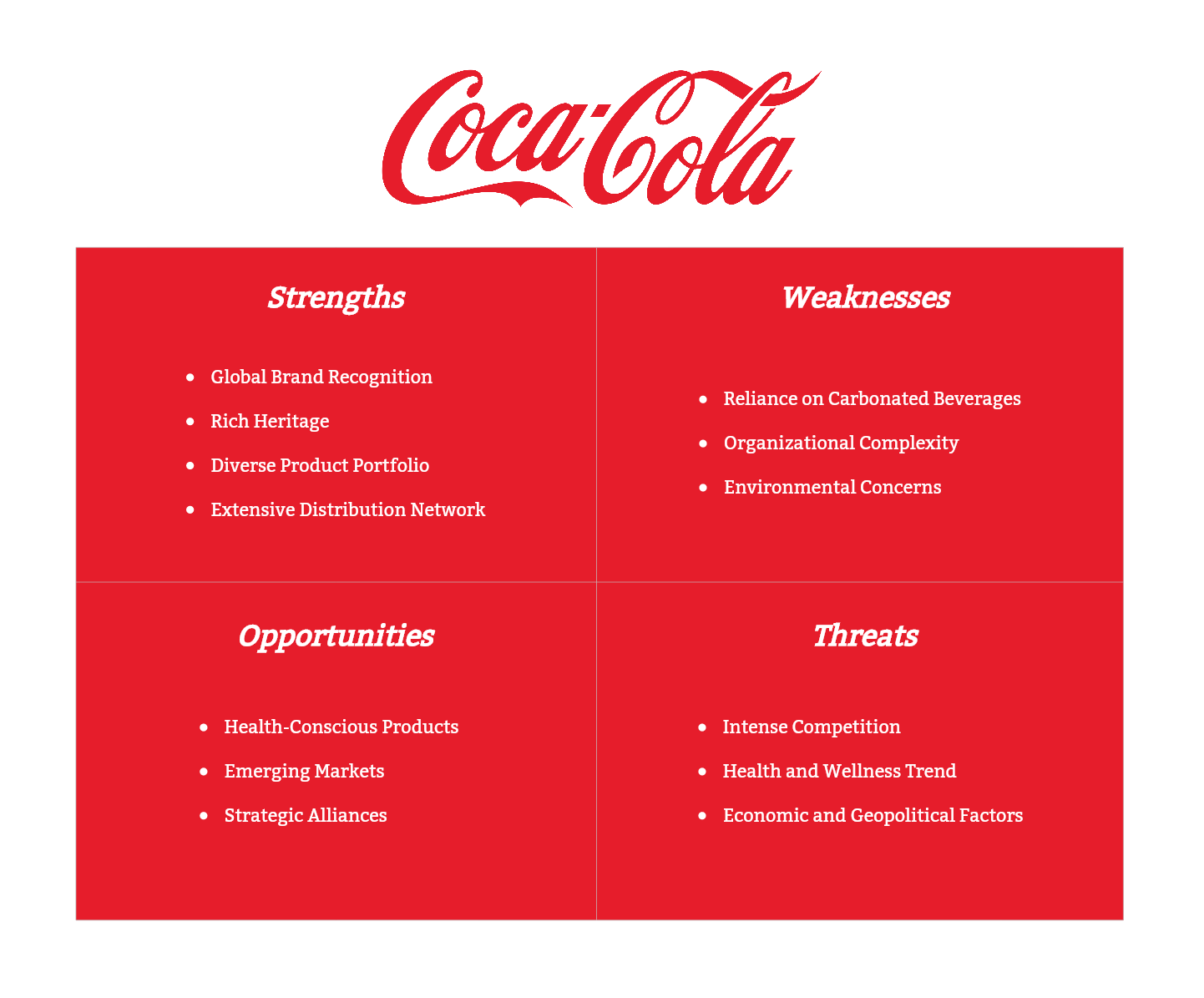
- Global Brand Recognition: Coca-Cola's brand is synonymous with soft drinks for many around the world. This recognition has been achieved through decades of consistent branding, massive advertising campaigns, and a universal logo that is recognized across different cultures and languages. Brand recognition can help new products gain attention and support discussions with retailers, though it does not guarantee shelf space.
- Rich Heritage: With its inception in the late 19th century, Coca-Cola has weathered economic downturns, wars, and changing global landscapes. This heritage not only imparts trust but also provides a historical context for its marketing campaigns, further resonating with multiple generations of consumers.
- Diverse Product Portfolio: Over the decades, Coca-Cola has acquired or developed a wide range of beverages, from bottled water to energy drinks. This diversity is strategic, enabling the company to tap into different market segments and respond to changing consumer preferences without relying solely on its flagship product.
- Extensive Distribution Network: The company's distribution channels, honed over decades, are so expansive that it's often said that "Coca-Cola is within arm's reach of desire." Their beverages are sold in the remotest of areas, from tiny villages in developing countries to major urban centers, showcasing their logistical excellence.
Weaknesses of Coca Cola
- Reliance on Carbonated Beverages: Sparkling soft drinks remain a prominent part of the company's beverage portfolio. In a world growing increasingly health-conscious, these sugary drinks face potential backlash, both from consumers and regulatory bodies.
- Organizational Complexity: The sheer size and global span of Coca-Cola can be a double-edged sword. While it gives them global reach, it can also introduce complexities in communication, decision-making, and management, potentially making the company slower in responding to market changes.
- Environmental Concerns: Beverage packaging creates material-use and waste-management challenges. Coca-Cola's environmental strategy includes recycled materials and support for container collection and recycling; the SWOT assessment should examine how those efforts perform in each market.
Opportunities of Coca Cola
- Health-Conscious Products: Coca-Cola says it is reducing added sugar and developing new drinks. Reformulation and lower-sugar options offer a direction to test against local customer preferences, price expectations and repeat purchases.
- Emerging Markets: While Coca-Cola has a presence in almost every country, there's still untapped potential in terms of product variations tailored for local preferences in emerging markets.
- Strategic Alliances: The global beverage industry sees continuous innovation. By collaborating with or acquiring upcoming brands or startups, Coca-Cola can infuse fresh ideas, technologies, and products into its portfolio.
Threats of Coca Cola
- Intense Competition: Beyond traditional competitors like PepsiCo, there are numerous local brands and emerging health-focused drinks that vie for consumer attention and loyalty.
- Health and Wellness Trend: With rising obesity and related health concerns, sugary beverages face potential regulatory challenges, like sugar taxes or advertising restrictions, in various countries.
- Economic and Geopolitical Factors: Trade wars, economic recessions, or geopolitical conflicts can disrupt supply chains, introduce tariffs, or even lead to bans in certain markets.
SWOT Analysis Template & Tool
Boardmix provides a shared canvas for a SWOT analysis. Start with a four-quadrant template, add the team's notes and supporting sources, and discuss changes together. The team interprets the evidence and chooses the priorities.
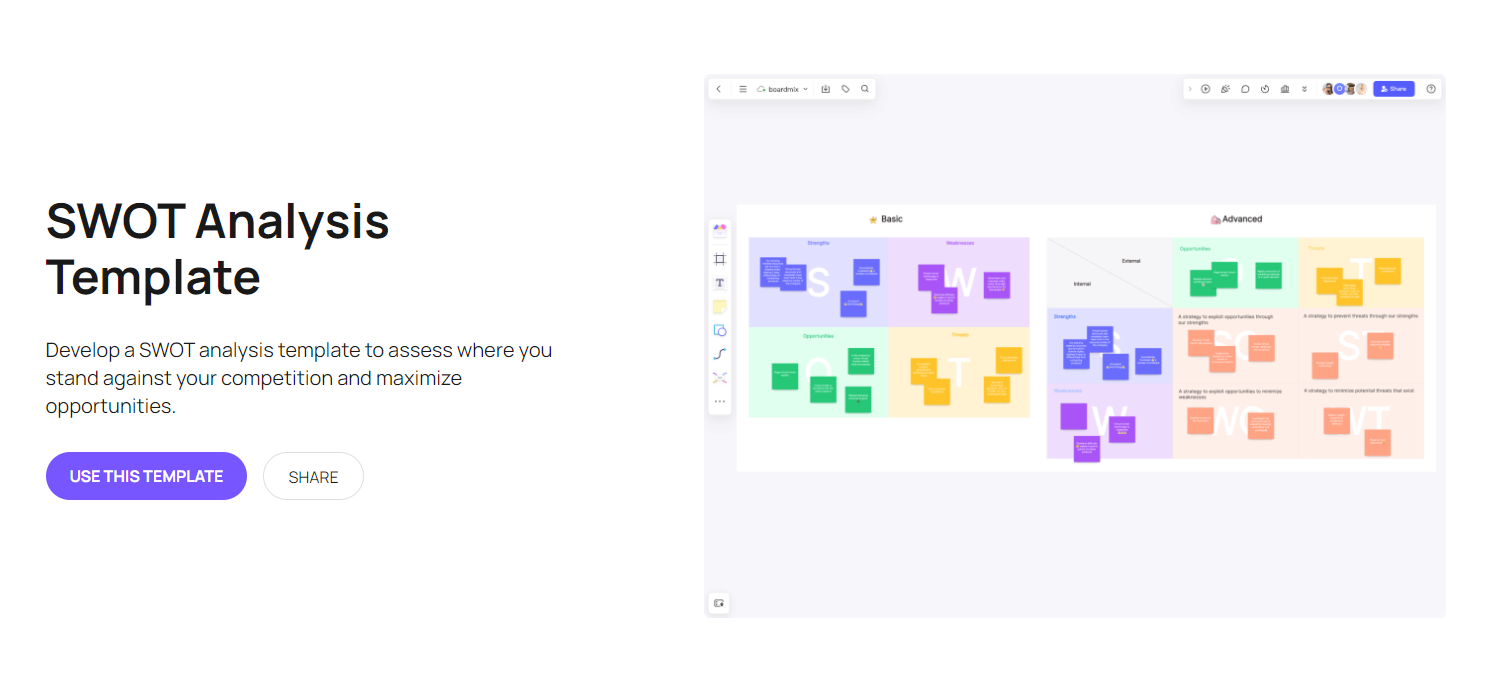
For this example, place brand and distribution evidence under strengths, packaging challenges under weaknesses, and market-specific preferences or regulations under opportunities and threats. Add source links beside the notes and use comments to resolve disagreements about their classification.
Final Conclusion
This Coca-Cola example points to three questions for a strategy discussion: which lower-sugar options fit the selected market, how packaging collection can improve, and where the distribution network can support a proposed launch. On the Boardmix SWOT board, connect each proposed action to its evidence, a responsible person and the next decision.