


Nearly 70% of projects experience scope creep — and most teams don't notice it happening until the budget is already bleeding. It rarely arrives as a dramatic pivot. Instead, it comes as one "small" stakeholder request. Then another. Then a revised brief that quietly doubles the workload.
Scope creep is the uncontrolled expansion of a project's scope after work has begun, occurring without corresponding adjustments to time, cost, or resources. In scope creep project management terms, it's not a single event — it's a pattern of incremental change that compounds until deadlines slip, teams burn out, and deliverables fall short of expectations.
Understanding the scope creep meaning goes beyond knowing the definition. It means recognizing the conditions that invite it — unclear requirements, informal stakeholder requests, weak change control — and having a system to shut it down before it accelerates.
This guide covers everything a project manager needs: what scope creep is, why it happens, how to identify the early warning signs, and the concrete strategies that actually prevent it.
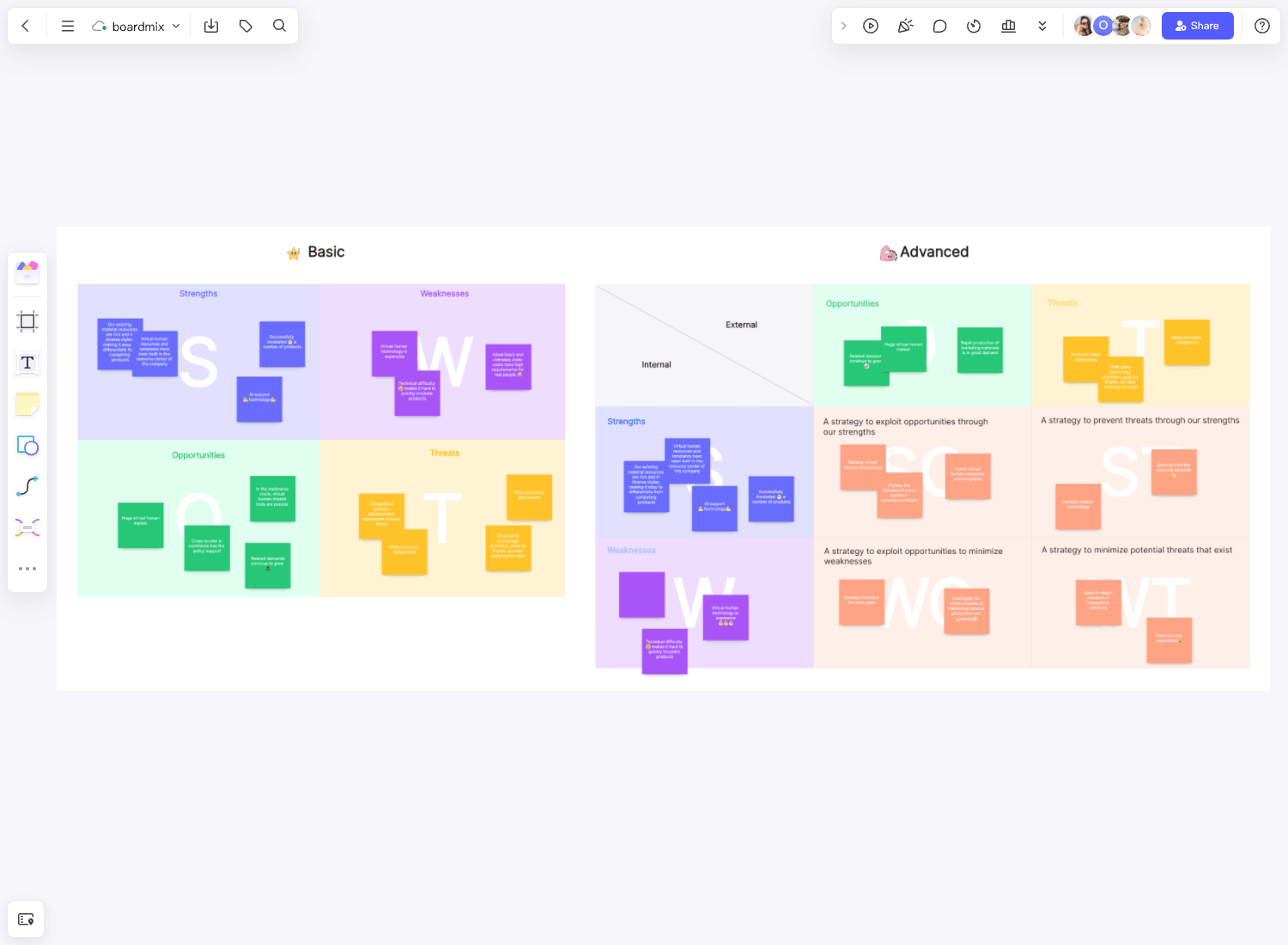
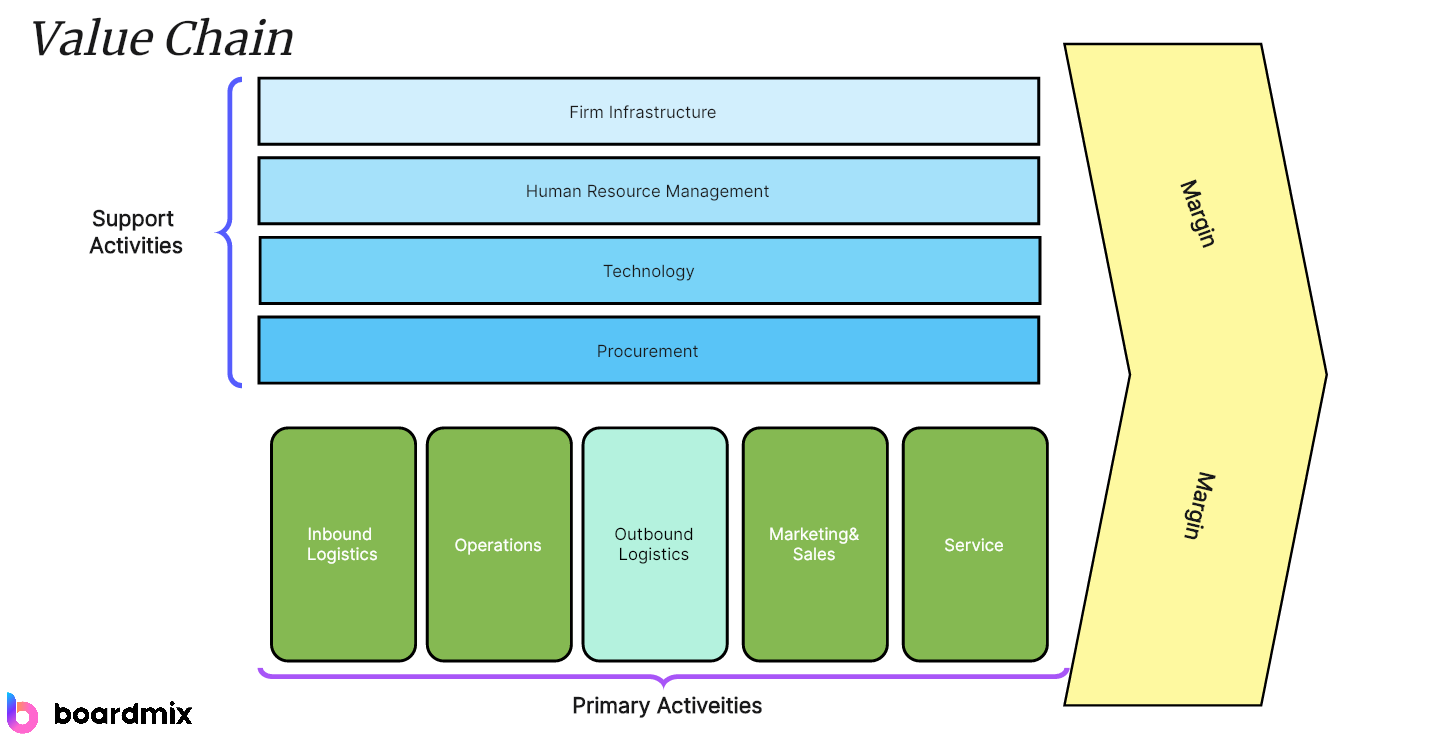
Teams that visualize their project scope from day one — mapping requirements, boundaries, and dependencies on a shared canvas — catch scope drift faster and align stakeholders before small changes become expensive ones. Boardmix's collaborative whiteboards are built exactly for that kind of early clarity.
Part 1. What Is Scope Creep? (Definition + Meaning)
Scope creep is the gradual, uncontrolled expansion of a project’s scope after the initial scope has been agreed upon, without corresponding adjustments to schedule, budget, or resources. It occurs when new requirements, features, or deliverables are added incrementally — often without formal approval — causing the project to grow beyond its original boundaries.
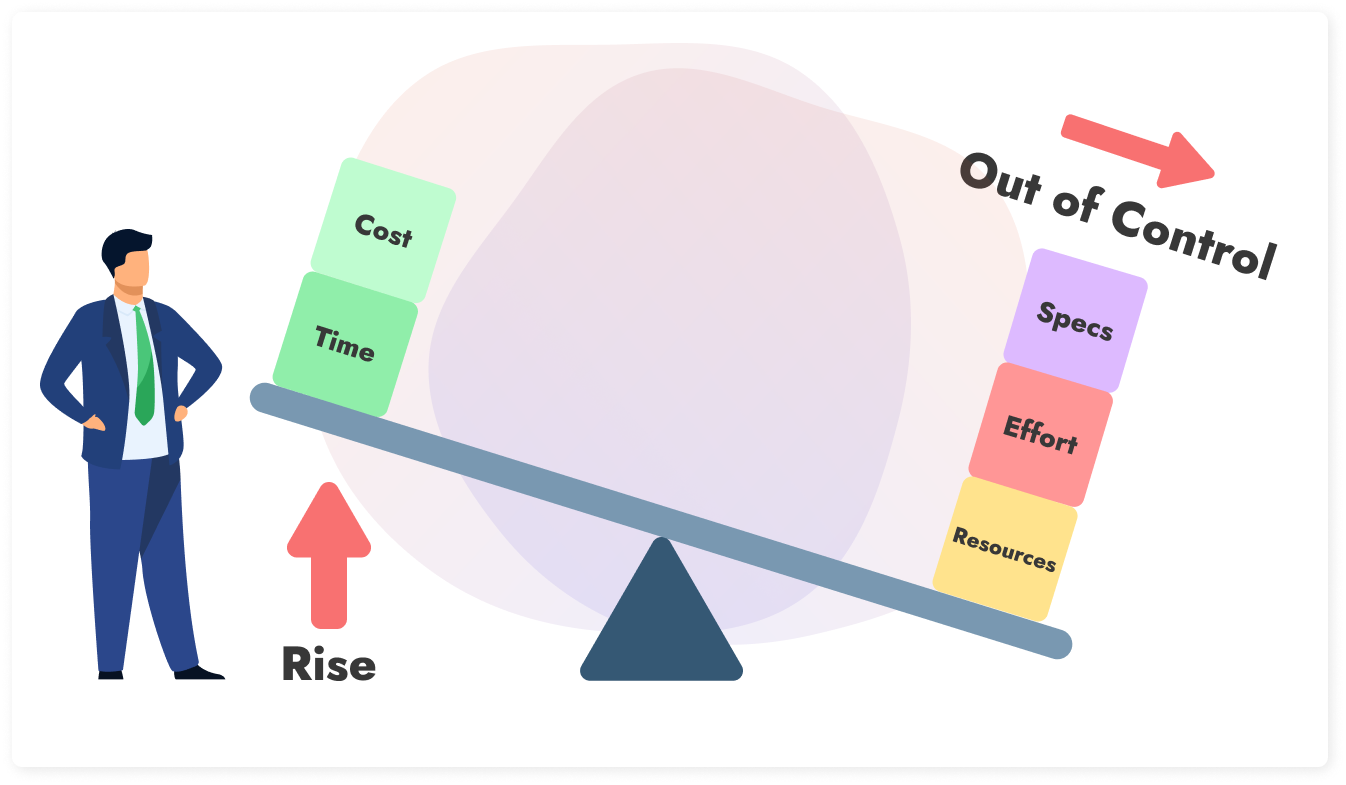
That’s the textbook answer. In practice, the scope creep meaning is felt more than it’s read. It’s the moment a project manager looks at the task list on week six and realizes it bears no resemblance to what was scoped in week one.
Scope creep doesn’t announce itself. A stakeholder asks for “one small addition.” A developer implements a feature that wasn’t in the spec because it seemed obvious. A client reinterprets a deliverable mid-project. Each change feels minor. Collectively, they rewrite the project.
Scope Creep vs. Scope Change
Not every shift in scope is scope creep. The distinction matters, because treating every change as a threat leads to rigid, unresponsive project management — while treating every change as acceptable leads to the chaos described above.
| Dimension | Scope Creep | Scope Change |
|---|---|---|
| Origin | Informal, unplanned | Formal request or business need |
| Approval | None — added without process | Reviewed and approved through change control |
| Documentation | Not recorded | Logged in change log / scope baseline update |
| Impact Assessment | Skipped | Budget, timeline, and resource impact evaluated |
| Visibility | Hidden from stakeholders | Communicated to all relevant parties |
| Risk | High — cumulative and uncontrolled | Managed — risk absorbed deliberately |
| Example | Client verbally asks for a new dashboard mid-sprint | Client submits a change request; PM re-estimates and adjusts timeline |
The difference is process, not intent. A stakeholder who wants an additional feature isn’t creating scope creep by asking. Scope creep happens when that request bypasses the change control process and goes straight into the work queue.
Part 2. What Causes Scope Creep in Projects?
Scope creep in project management rarely has a single cause. It’s usually the product of several overlapping weaknesses in how a project was set up and governed. These are the most common root causes.
Vague Initial Requirements
When the project scope is defined at a high level without specificity, every stakeholder fills in the blanks differently. What one person interprets as “a simple reporting feature” another sees as a full analytics suite. Vague requirements create legitimate disagreements about what was originally agreed — and scope expands to resolve those disagreements, usually in the direction of doing more work.
Stakeholder Pressure
Stakeholders — clients, executives, product owners — often request additions outside the original agreement, sometimes without realizing the implications. The pressure to accommodate a senior stakeholder or a key client is real, and project teams frequently absorb small requests rather than escalate them through formal channels. Over time, this accommodation becomes the default mode of operation.
Poor Change Control
A project without a functioning change control process has no filter between a request and the work queue. Without a formal mechanism to log, assess, and approve changes, additions accumulate at the speed of conversation. PMI research consistently shows that projects with mature change management practices deliver within scope at significantly higher rates than those without.
Feature Creep in Software Projects
In software and product development specifically, teams often add functionality because it seems valuable, technically interesting, or “almost done anyway.” This is sometimes called feature creep — a subset of scope creep driven from within the team rather than from stakeholder requests. Without strict adherence to a defined backlog and a scope baseline, these internal additions compound quickly.
Communication Breakdowns
When project updates are siloed, infrequent, or verbal rather than documented, different team members and stakeholders operate from different versions of the scope. A developer who missed a key clarification meeting builds based on assumptions. A stakeholder who didn’t see the latest scope document makes requests that were already decided against. Gaps in stakeholder communication reliably produce scope drift.
Unclear Roles and Ownership
If no single person has accountability for scope integrity, everyone assumes someone else is managing it. Project teams where scope ownership is shared informally — rather than assigned explicitly to a project manager or product owner — are especially vulnerable. Without a clear owner to evaluate requests against the scope management plan, additions slip through by default.
Part 3. How Does Scope Creep Impact Your Project?
The downstream effects of scope creep are predictable and well-documented. They also compound: a small scope expansion affects the timeline, which strains the budget, which demoralizes the team, which degrades the quality of output.
Budget Overrun
Every addition that wasn’t in the original scope requires time and resources that weren’t budgeted for. A 20% expansion in scope doesn’t produce a 20% cost increase — it often produces a larger one, because unplanned work disrupts workflows, requires rework, and consumes management bandwidth that was allocated elsewhere. Budget overrun is the most visible consequence of uncontrolled scope growth.
Project Timeline Slippage
New deliverables push deadlines. Teams absorb additional tasks without corresponding timeline extensions, so something either gets cut or gets late. When deadlines are fixed — as they often are — scope creep results in compressed delivery timelines, increased error rates, and missed milestones. The project timeline becomes a running negotiation rather than a management baseline.
Team Morale and Burnout
Teams that absorb scope additions without capacity relief end up working longer hours to deliver against an expanding target. The psychological toll is significant. When team members feel the scope is constantly moving, they lose confidence in the project’s direction and motivation to invest in quality work. Burnout and attrition follow.
Quality Degradation
Quality suffers when time is compressed and scope is bloated. Features get tested less thoroughly. Documentation gets skipped. Work that needed careful attention gets rushed. The final project deliverables frequently fall short of what was possible when the team was focused on a clearly defined scope.
Real-World Example: Denver International Airport
The Denver International Airport baggage handling system is one of the most cited scope creep case studies in project management. The automated baggage system was added mid-project as an expansion of the original airport design — without adequate integration into the overall construction timeline or budget. The addition resulted in a 16-month delay to the airport’s opening and cost overruns exceeding $560 million on the baggage system alone. The system never functioned as intended and was eventually shut down in 2005.
The lesson isn’t that the feature was a bad idea. It’s that adding a complex, technically novel system to an already-in-progress megaproject — without rigorous change control and impact assessment — is exactly how scope creep creates irreversible damage.
Downstream Effects at a Glance
- Budget overruns that exceed original estimates by 20–50%
- Missed deadlines and compressed delivery schedules
- Team burnout from absorbing unplanned work
- Quality issues from rushed execution
- Stakeholder dissatisfaction when the final product doesn’t match expectations
- Loss of team credibility and trust in future project estimates
Part 4. 7 Warning Signs of Scope Creep (Spot It Early)
Catching scope creep early is almost always cheaper than correcting it after it compounds. These are the signs that a project’s scope boundaries are eroding.
1. The task list keeps growing without timeline or budget adjustments.
New items appear in the backlog or task tracker regularly, but the delivery date and budget haven’t moved. This is the clearest early signal — work is being added without corresponding resource allocation. Every addition that doesn’t trigger a change assessment is potential scope creep.
2. Stakeholders frequently make verbal or informal requests.
When requests arrive by Slack message, in passing conversation, or through “can you just quickly add…” emails rather than through a formal process, the change control mechanism isn’t functioning. Informal requests bypass documentation, cost assessment, and approval — and they accumulate faster than formal ones.
3. The project team is consistently working overtime.
Sustained unplanned overtime means the team is absorbing more work than was originally scoped. If a team that was resourced for a 40-hour-per-week delivery is consistently running at 50–55 hours, the scope has likely expanded beyond the original plan.
4. Original project objectives have become unclear or contested.
When team members disagree about what the project is supposed to deliver, or when stakeholders reference different versions of the scope, the scope baseline has lost its authority. Scope creep often produces a kind of organizational amnesia about original objectives.
5. Change requests are approved without formal impact assessment.
If the team is saying yes to changes without evaluating the cost, time, and resource implications, every approval is a risk. A change control process that approves without assessing is functionally the same as having no process at all.
6. The project deliverables no longer match the original scope document.
Compare what the team is currently building against the signed-off scope document. If there’s a significant gap between the two — features added, requirements reinterpreted, deliverables expanded — the project has drifted. This comparison should happen at regular intervals, not just at retrospectives.
7. The project manager is regularly negotiating timelines or resources mid-project.
A pattern of timeline extensions, emergency resource requests, or budget conversations that weren’t anticipated in the plan is a lagging indicator of scope creep already in motion. By the time these conversations are happening, multiple small expansions have typically already occurred.
Part 5. Scope Creep vs. Scope Change: How to Tell the Difference
The comparison table in the previous section draws a sharp line. But in practice, the distinction can feel blurry — especially when a stakeholder presents a change request with urgency, or when a team member adds something that seems obviously aligned with the project’s goals.
The clearest test is process: Was the change formally submitted, assessed for impact, and approved by an authorized decision-maker before work began? If yes, it’s a scope change. If no, it’s scope creep — regardless of whether the addition was reasonable or even valuable.
When Change Is Legitimate
A scope change is appropriate when:
- A genuine business need has evolved that wasn’t foreseeable at project initiation
- A regulatory or compliance requirement has been introduced
- A critical flaw in the original scope has been identified that affects the project’s viability
- The client or sponsor formally requests a change and accepts the corresponding cost and timeline implications
When It’s Creep
A request becomes scope creep when:
- It arrives informally, without documentation
- The team begins work before impact is assessed
- The requester hasn’t acknowledged the trade-offs involved
- It’s treated as an addition rather than a substitution
How to Evaluate a Change Request Formally
Every change request should answer four questions before approval:
- What is being added or changed? (Clear description, not vague intent)
- What is the cost and time impact? (Estimated hours, resource needs, timeline effect)
- What is the risk of not doing it? (Business consequence of declining)
- Who has authority to approve it? (Defined decision-maker, not consensus)
Only when all four are answered — and the authorized approver signs off — does a change request become a legitimate scope change rather than the beginning of scope creep.
Part 6. How to Prevent Scope Creep: 7 Proven Strategies
Prevention is the highest-leverage point in scope management. These steps, applied at project initiation and maintained throughout delivery, eliminate most of the conditions that allow scope creep to develop.
Step 1: Define the Project Scope in Precise, Specific Terms
A scope statement that uses vague language — “user-friendly interface,” “comprehensive reporting,” “as needed” — is an open invitation for divergent interpretation. Define what the project will deliver, what it will not deliver, and the specific criteria that constitute completion. The more concrete the language, the less room there is for scope to drift through reinterpretation. Review the scope statement with all key stakeholders before work begins and get written sign-off.
Step 2: Create a Scope Management Plan
The scope management plan is the governance document that defines how scope will be defined, validated, and controlled throughout the project lifecycle. It specifies who can submit change requests, how those requests are evaluated, who holds approval authority, and how approved changes are reflected in the project baseline. Without this document, scope management is informal — and informal scope management always loses to stakeholder pressure. Use a project management template to structure this document from project initiation.
Step 3: Establish a Formal Change Control Process
Every change to project scope must pass through a defined process: submission, impact assessment, approval or rejection, and documentation. The process doesn’t need to be bureaucratic — a simple change request form and a weekly review meeting can be sufficient for smaller projects. What matters is that no scope addition goes directly from request to execution without assessment. The change control process is the single most effective mechanism for preventing scope creep.
Step 4: Build a Work Breakdown Structure (WBS)
A work breakdown structure (WBS) decomposes the total scope of work into discrete, manageable components. When scope is represented at this level of granularity, additions become immediately visible — there’s nowhere to hide an extra feature or an undocumented deliverable. A WBS also makes scope changes easier to assess, because the impact of an addition can be located precisely within the existing structure. Explore Boardmix’s project planning templates to build a WBS collaboratively with your team.
Step 5: Communicate With Stakeholders on a Regular Schedule
Scope creep often accelerates in communication vacuums. When stakeholders don’t have regular visibility into project progress, they fill that gap with requests — sometimes adding work to compensate for uncertainty about whether their existing requirements are being met. Scheduled status updates, milestone reviews, and sprint demos give stakeholders a channel to raise concerns within a structured framework rather than through ad hoc requests.
Step 6: Document Everything
Verbal agreements don’t exist in project management. Every decision about scope, every change discussed in a meeting, every stakeholder request — documented, timestamped, and acknowledged. This isn’t administrative overhead; it’s the record that allows a project manager to point to a specific decision when a stakeholder claims “we always wanted that.” Meeting notes, email trails, and a maintained change log are the practical tools that make scope enforcement possible.
Step 7: Use Visual Project Planning Tools
When the project scope lives in a dense text document that few people read, it has almost no protective power. When it’s mapped visually — with requirements, boundaries, dependencies, and deliverables laid out on a shared canvas — stakeholders can see the full picture, and additions become immediately visible against that context. This is where tools like Boardmix create a practical advantage. A shared online whiteboard turns the abstract scope document into a living, visible reference point that the entire team works from. Scope drift that would be invisible in a spreadsheet becomes obvious on a canvas.
Part 7. How to Manage Scope Creep When It’s Already Happening
Sometimes a project manager inherits scope creep in progress, or the conditions for it develop faster than prevention measures can be put in place. When the project is already in scope creep territory, the priority shifts from prevention to recovery — and recovery requires honest, structured action.
Step 1: Reassess the Current Scope Against the Baseline
Pull the original scope document and compare it line by line against what the team is currently building. Identify every addition that wasn’t formally approved. Quantify the gap in hours, cost, and timeline. This diagnostic step is uncomfortable, but it’s the only way to understand the actual scale of the problem — and to have an honest conversation with stakeholders about the path forward.
Step 2: Communicate the Impact Transparently
Once the gap is understood, it needs to be surfaced. Project managers who absorb scope additions without communicating the impact to sponsors and stakeholders are taking on risk that belongs to the project, not to them. Bring the data: here is what was originally scoped, here is what has been added, here is the cost and timeline consequence. Stakeholders can only make good decisions when they have accurate information.
Step 3: Triage the Change Requests
Not all additions that have crept in are equal. Some may be genuinely critical to project success. Others may be nice-to-haves that can be deferred. Evaluate each addition on two axes: business value and implementation cost. High-value, low-cost additions may deserve formal approval and integration into the revised scope. Low-value additions should be removed or logged for a future phase. A shared whiteboard in Boardmix works particularly well for this triage process — the team can surface all outstanding items on sticky notes, group them by priority, and vote on what stays and what gets deferred, all in a single collaborative session.
Step 4: Rebaseline the Project If Necessary
If the scope expansion is significant enough that the original plan is no longer a realistic benchmark, the project needs a formal rebaseline. This means updating the scope baseline, revising the schedule and budget to reflect the actual scope, and getting re-approval from the project sponsor. Rebaselining acknowledges reality — it’s not an admission of failure. It’s the mechanism that restores the plan’s usefulness as a management tool.
Step 5: Run a Scope Retrospective
Once the immediate crisis is managed, hold a structured retrospective focused specifically on how scope creep entered the project. What process failed? Where did informal requests bypass change control? Were requirements vague enough that additions seemed legitimate? The answers inform how the scope management plan and change control process need to be strengthened for the remainder of the project — and for the next one.
Part 8. How Boardmix Helps Teams Prevent and Manage Scope Creep
Scope creep is fundamentally a visibility and communication problem. When project scope is defined in isolation, stored in a static document, and communicated through a chain of meetings and emails, it degrades. Requirements get reinterpreted. Boundaries blur. Stakeholders work from different assumptions about what was agreed.
Boardmix addresses this at the root by making scope visible, shared, and continuously accessible to everyone involved in the project.
Visual Scope Definition Workshops
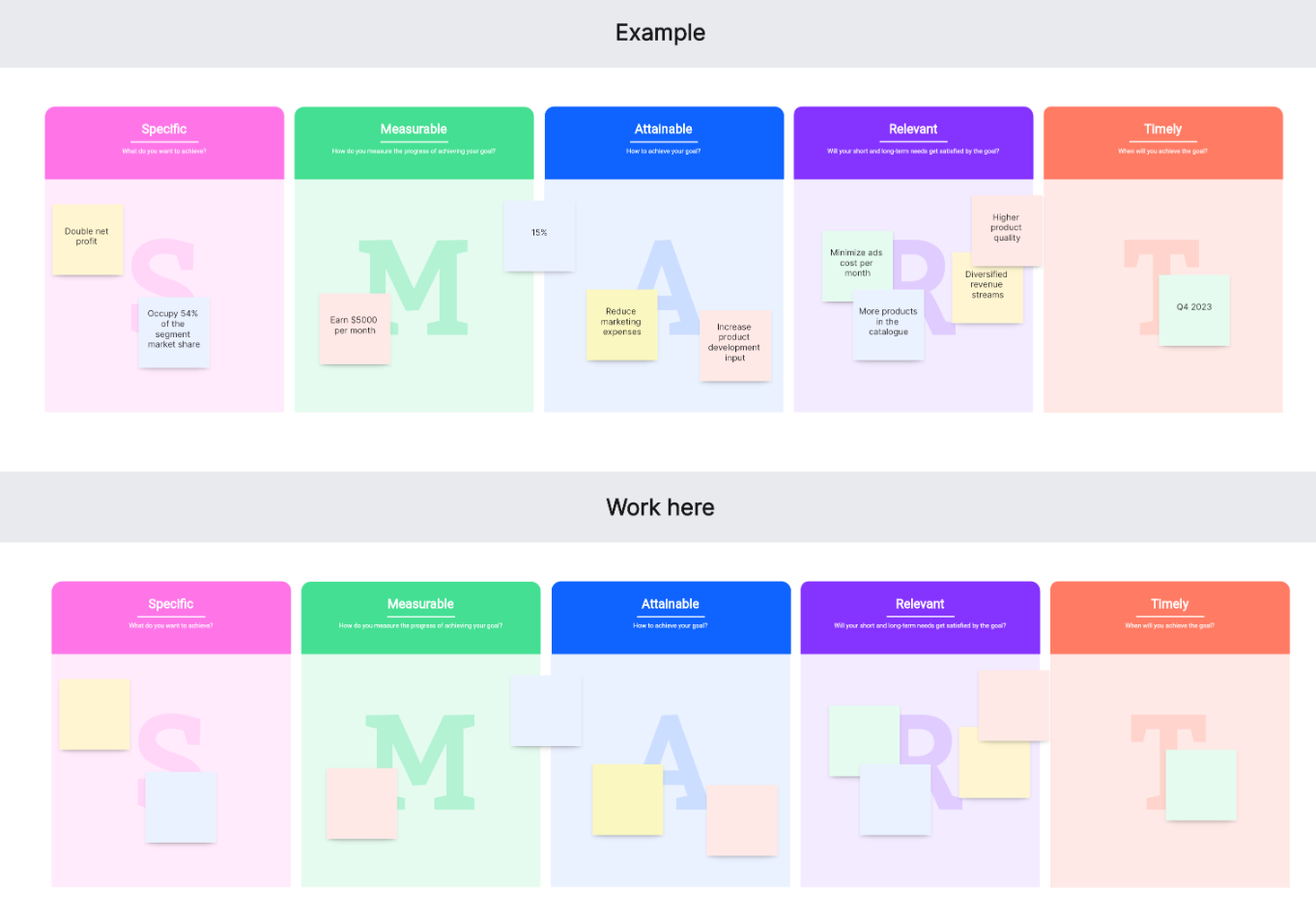
At project initiation, teams use Boardmix’s infinite canvas to map scope in real time — placing requirements, deliverables, boundaries, and constraints as visual elements that everyone can see and respond to simultaneously. This isn’t just more engaging than a document review; it surfaces disagreements that would otherwise surface mid-project as scope disputes. When a stakeholder sees a requirement mapped visually and says “that’s not what I meant,” that’s a problem solved in week one instead of week six.
Real-Time Stakeholder Alignment
Boardmix’s real-time collaboration means that stakeholders, project managers, and team members can review the scope canvas together — whether they’re in the same room or distributed across time zones. Changes to scope are visible the moment they’re proposed, and the shared canvas creates a single source of truth that replaces the fragmented email chains and conflicting document versions that enable scope creep.
Change Request Triage With Sticky Notes and Voting
When change requests need to be evaluated, Boardmix’s sticky notes and built-in voting features let teams surface all pending requests, assess them collectively, and prioritize based on value and feasibility — without a lengthy meeting. Each request becomes a visible card. The team votes. Decisions get documented in the same workspace.
WBS Visualization
Boardmix’s mind mapping and diagramming tools make it straightforward to build and maintain a work breakdown structure that the whole team can navigate. When scope is decomposed visually, additions stand out against the existing structure instead of disappearing into a list.
AI Assistant for Meeting Notes and Action Capture
Boardmix’s AI Agent captures meeting notes, summarizes decisions, and logs action items directly within the project workspace. This closes the documentation gap that allows verbal scope changes to go unrecorded — one of the most common entry points for scope creep.
Ready to start your next project with clear scope boundaries and the whole team aligned from day one? Try Boardmix free and see how visual collaboration changes scope management in practice.
Frequently Asked Questions About Scope Creep
What is scope creep?
Scope creep is the uncontrolled, incremental expansion of a project’s scope after the initial scope has been agreed upon, without corresponding adjustments to time, cost, or resources. It typically occurs when new requirements are added informally — without formal change control — causing the project to grow beyond its planned boundaries and leading to budget overruns, timeline slippage, and reduced quality.
What is an example of scope creep?
A software development team agrees to build a customer dashboard with four specified views. Midway through delivery, the client informally requests an export function, then a notification system, then a mobile-responsive layout — none of which were in the original scope. Each request seems small. Combined, they represent weeks of unplanned work, delivered without budget or timeline adjustment. This is textbook scope creep.
What causes scope creep?
The most common causes are vague initial requirements that leave room for reinterpretation, the absence of a formal change control process, stakeholder pressure to add features without acknowledging the cost, poor documentation of what was agreed, and communication gaps that allow different parties to operate from different versions of the scope. In software projects, feature creep from within the team is an additional driver.
How do you prevent scope creep?
Prevention requires a combination of upfront rigor and ongoing discipline: define the project scope in specific, unambiguous terms before work begins; create a scope management plan that governs how changes are evaluated; establish a formal change control process that every request must pass through; build a work breakdown structure to make scope visible; and communicate with stakeholders on a regular schedule. Documenting every decision and using visual tools to keep scope accessible to the whole team reinforces all of the above.
Is scope creep always bad?
Not inherently — the problem isn’t change itself, it’s uncontrolled change. A project that rigidly refuses all scope adjustments can deliver something technically correct but commercially irrelevant. The goal is not to eliminate change but to run every change through a process that assesses its impact and gets explicit approval before work begins. A scope change that goes through formal change control and gets approved with realistic timeline and budget adjustments is healthy project management, not scope creep.
Conclusion
Scope creep is one of the most common and most preventable causes of project failure. It rarely announces itself — it builds through small decisions, informal requests, and process gaps until the original plan no longer reflects reality. By the time teams notice the signs, they’re already managing the consequences.
The antidote is structure: a precise scope definition, a scope management plan with teeth, a change control process that every request must pass through, and consistent stakeholder communication that keeps everyone working from the same version of the truth. These aren’t heavyweight bureaucratic mechanisms — they’re the minimum governance that keeps a project on track.
Visualization makes every one of these practices more effective. When scope is mapped on a shared canvas rather than buried in a static document, the whole team can see what was agreed, spot what’s drifting, and align quickly when decisions need to be made.
Boardmix is built for exactly this kind of collaborative clarity. From scope definition workshops at project kickoff to change request triage mid-project, the platform keeps scope visible, decisions documented, and stakeholders aligned.
Start your next project in Boardmix — and build the scope clarity that prevents scope creep before it starts.