


BOARDMIX · AI SMART GOALS
AI SMART Goal Generator
Turn a broad ambition into a specific, measurable goal. Describe what you want to achieve, draft it with AI, and build the plan with your team on one online whiteboard.
FIVE QUESTIONS. ONE CLEAR OBJECTIVE.
What makes a goal SMART?
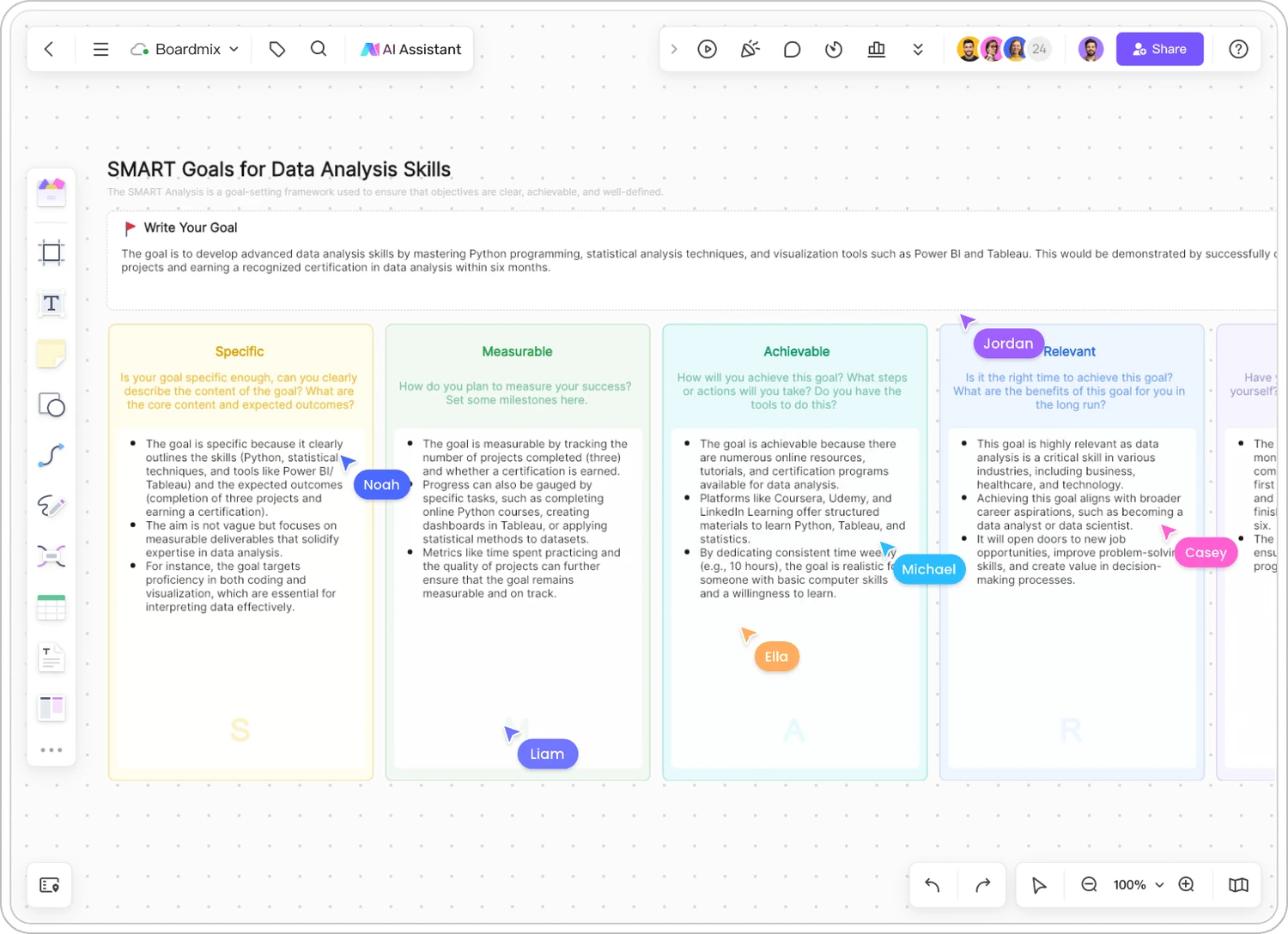
SMART means Specific, Measurable, Achievable, Relevant, and Time-bound. An AI SMART goal generator helps you organize an intention around those five criteria. Boardmix keeps the draft editable on an online collaborative whiteboard, so the people doing the work can shape the goal too.
Specific
What will change?
Measurable
How will you know?
Achievable
Can you resource it?
Relevant
Why does it matter?
Time-bound
When is it due?
FROM VAGUE TO ACTIONABLE
“Improve onboarding” is a starting point—not yet a SMART goal.
Here is an illustrative product-team example. The starting rate, target, and resources are part of the brief, not facts supplied by AI.
The brief
“Help our product team write a SMART goal for new-workspace onboarding. Our current completion rate is 40%; we want to reach 55% within 12 weeks. Completion means creating a board and inviting a teammate within seven days. One designer and two engineers are available for a six-week improvement project. Focus on simplifying setup and testing a guided checklist.”
Make the outcome, measure, and deadline explicit.
Within 12 weeks, increase seven-day onboarding completion for new workspaces from 40% to 55% by simplifying setup and testing a guided checklist.
Count workspaces that have had a full seven days to complete onboarding. Use the same definition at the start and at the final review.
- S Specific
- Improve one journey: a new workspace creates its first board and invites a teammate.
- M Measurable
- Track completion from a 40% baseline toward a 55% target using a consistent seven-day window.
- A Achievable
- Keep the improvement project within the available design and engineering capacity. Test the approach before expanding its scope.
- R Relevant
- Help new teams reach their first shared working session, rather than simply increasing sign-ups.
- T Time-bound
- Deliver the initial changes in six weeks and evaluate the outcome at week 12.
The outcome is completion. The checklist is one way to improve it.
Put the goal above the work: map the setup steps, assign the changes, and keep review notes beside the target. If the checklist does not help, the team can change the approach without losing sight of the outcome.
START WITH THE CONTEXT YOU HAVE
How to generate a SMART goal with AI
A useful prompt explains the situation. It does not need to sound like a finished goal.
- 01
Describe the ambition
Say who the goal is for and what you want to improve. Include your current position, desired result, deadline, and practical constraints.
- 02
Generate a structured draft
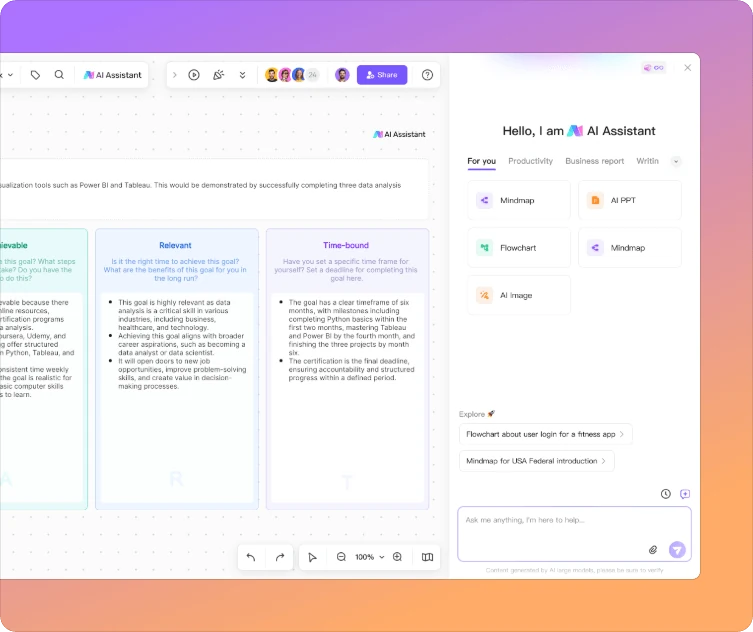
Use the input above to open Boardmix AI. Review how the draft expresses the five SMART criteria, and add context where it is missing.
- 03
Agree on a realistic target
Replace suggested figures with numbers you can justify. If you do not know your baseline, start by measuring it instead of treating a guessed target as a commitment.
- 04
Plan the next actions
Bring the goal onto a shared board. Add tasks, responsibilities, and review dates, then update the plan as your team learns.
Help [person or team] write a SMART goal to [desired outcome]. Our starting point is [baseline]. We aim for [target] by [deadline], with [resources and constraints]. Flag missing information rather than inventing it.
AI FOR A STRONGER FIRST DRAFT
Give your ambition a structure you can edit
A goal such as “learn data analysis” needs more than polished wording. Use AI to organize the outcome, evidence of progress, and time frame. Then refine the draft to match your experience, time, and resources.
- One goal at a time. Separate unrelated ambitions so each has a clear measure.
- Your context matters. Include what you already know and what you can realistically commit.
- Keep it editable. Adjust the goal and its supporting notes as the plan becomes clearer.
MORE THAN A GOAL-WRITING TOOL
Put the goal and the work on the same whiteboard
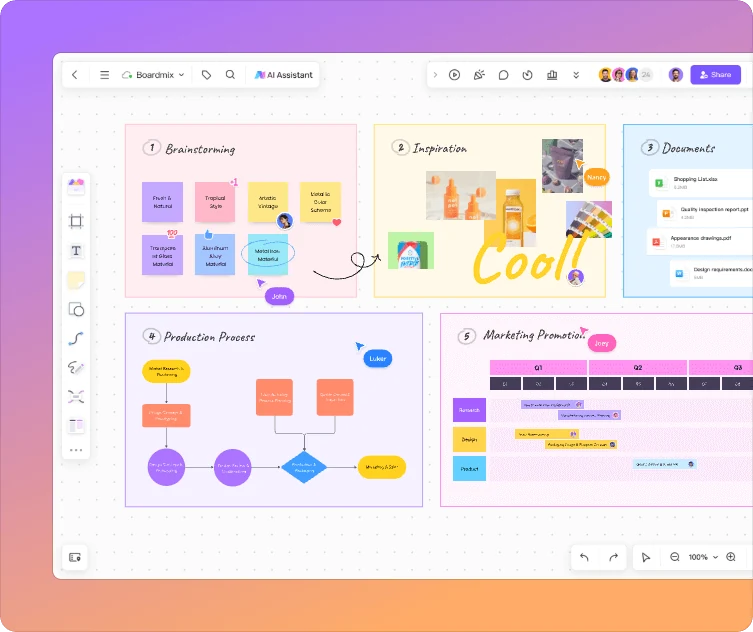
A well-written sentence is only the beginning. Add a mind map of possible actions, sketch a workflow, and arrange milestones alongside the goal. Research and discussion stay visible instead of disappearing into separate documents.
- Show how individual tasks contribute to the desired result.
- Keep assumptions and dependencies beside the plan.
- Use Boardmix’s visual SMART goal planning tools to develop and review the goal with your team.
SHARED GOALS NEED SHARED UNDERSTANDING
Let the team shape the commitment
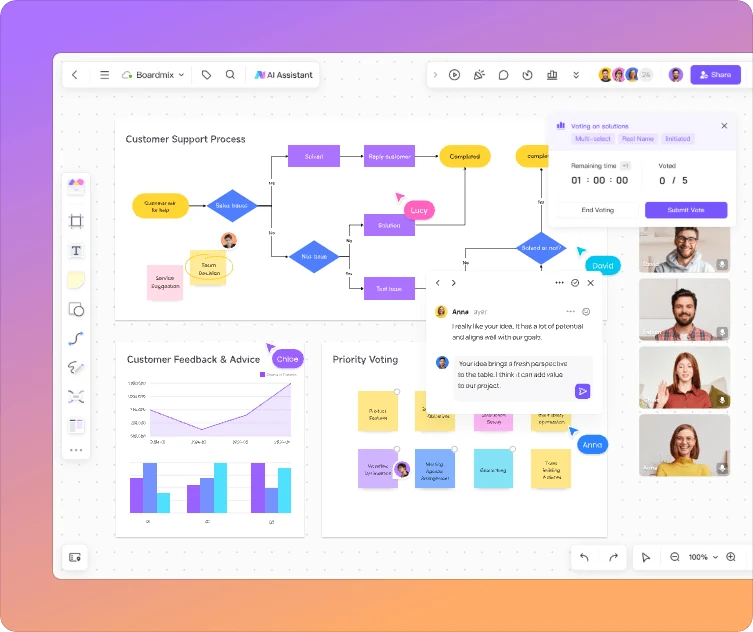
A manager, designer, and engineer may read the same target differently. Collaborate on the whiteboard, add comments, and clarify the measure and scope before agreeing on the work.
- Before kickoff: share the draft, baseline, and constraints.
- During planning: agree on the outcome and divide the work.
- At review: bring current results to the board and decide what to change.
Keep progress updates with the plan; your team supplies the latest results.
FIND A STARTING POINT THAT FITS
SMART goal examples for work, learning, and business
Explore the original Boardmix examples below, then adapt the outcome, measures, and deadline to your situation. For a deeper explanation of the framework, read the SMART goals template guide.
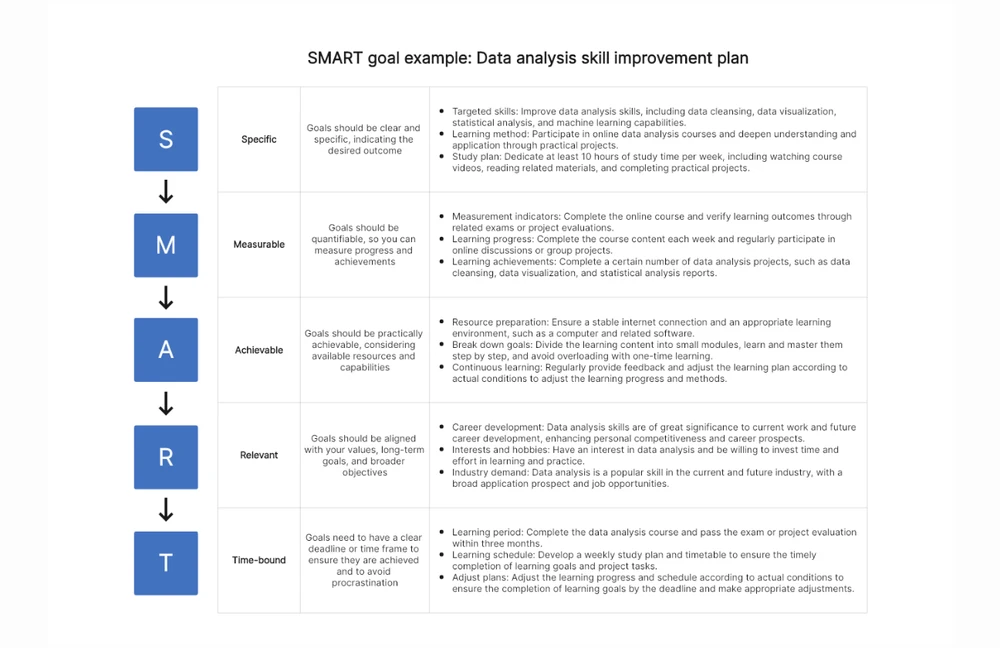
Data analysis skills
Define a learning outcome and the work that will demonstrate it.
View example ↗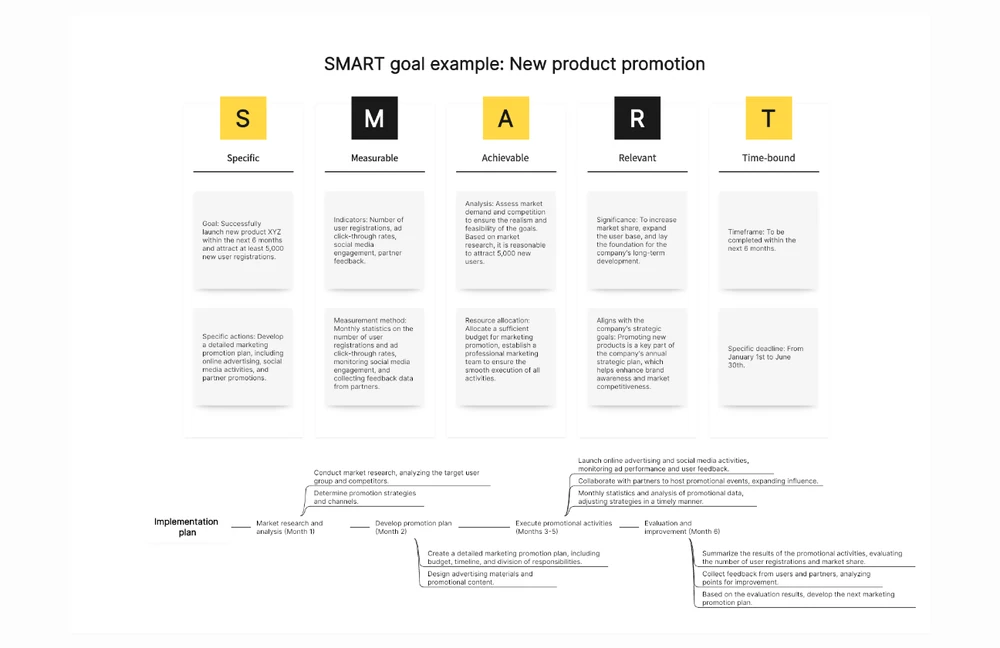
Product launch
Connect launch milestones to a specific business objective.
View example ↗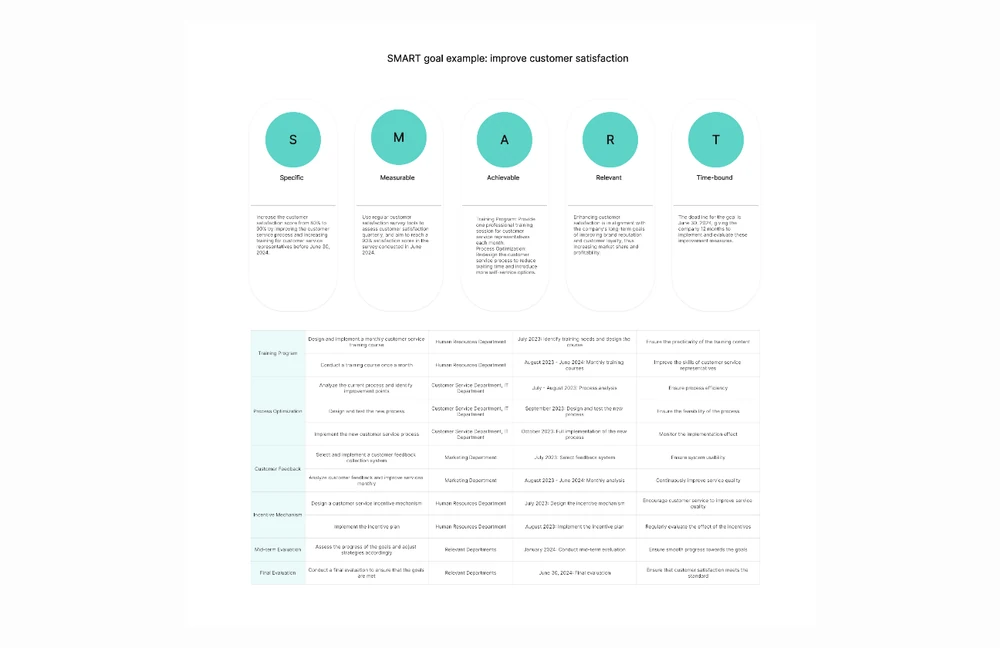
Customer satisfaction
Choose a service measure and a consistent review period.
View example ↗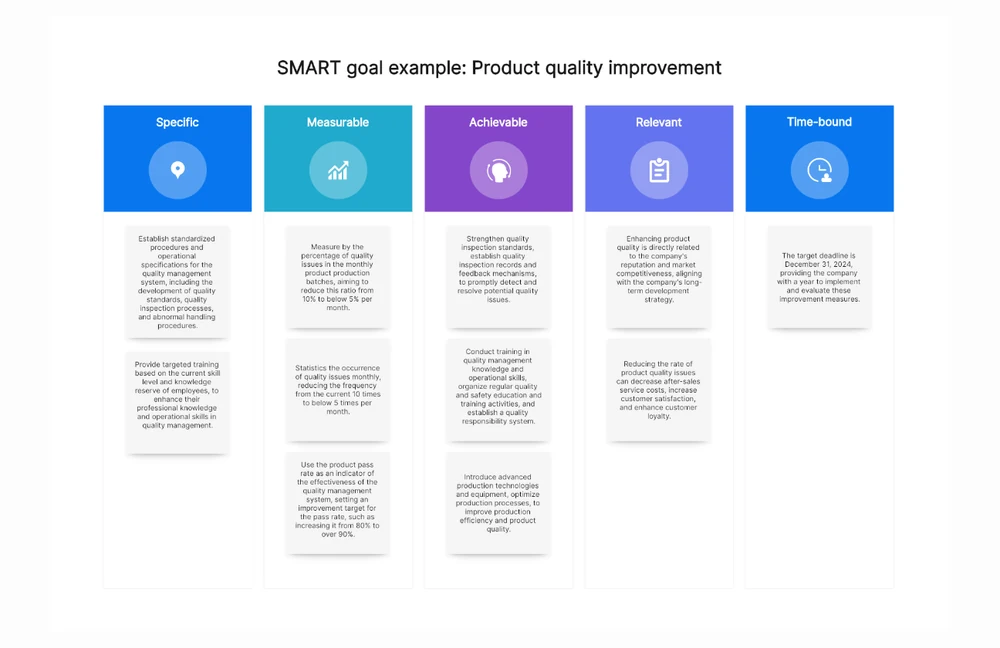
Product quality
Define the quality issue and what improvement should look like.
View example ↗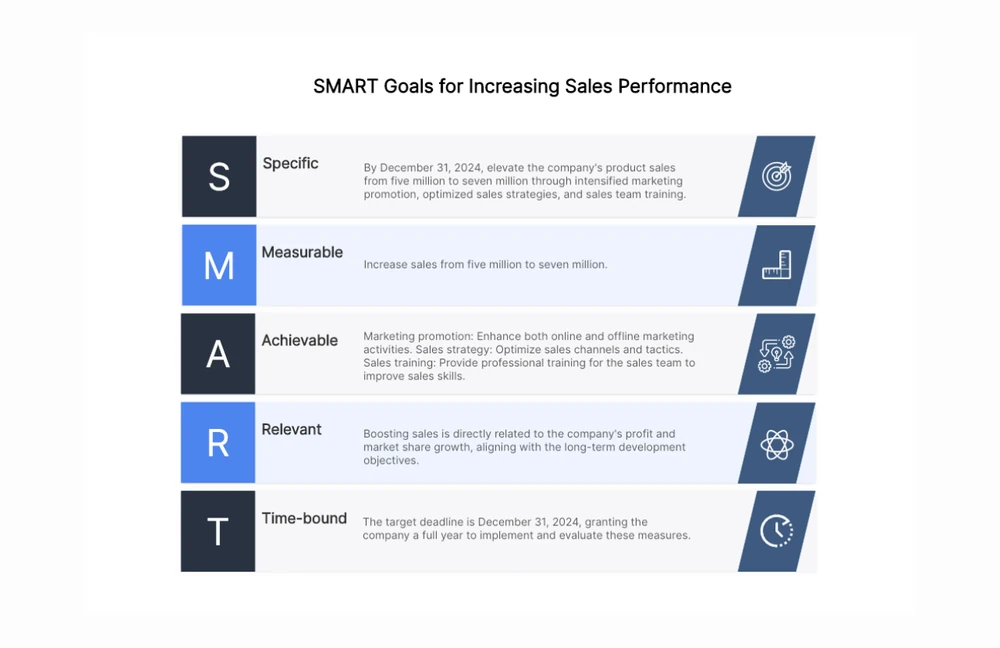
Sales performance
Make the sales target, scope, and time horizon explicit.
View example ↗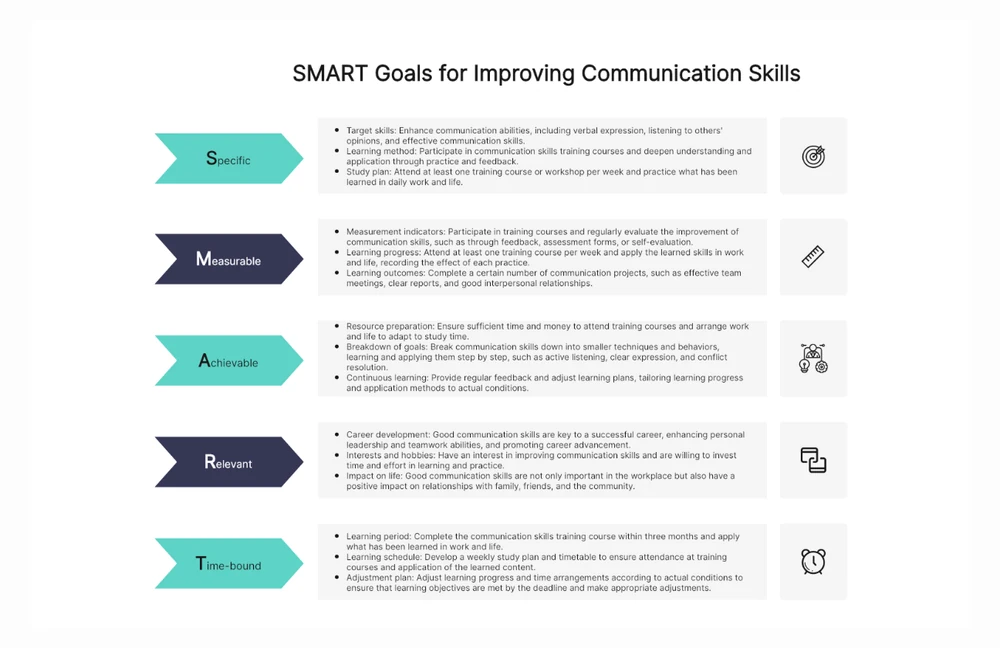
Communication skills
Turn a broad development aim into observable practice.
View example ↗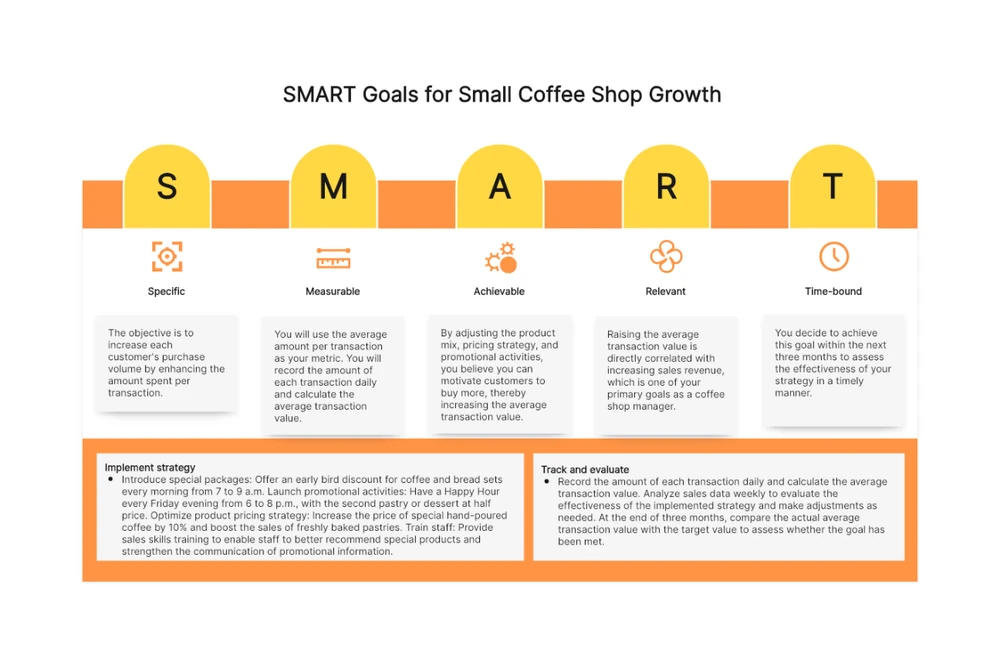
Small-business growth
Frame a growth goal around the capacity of a local business.
View example ↗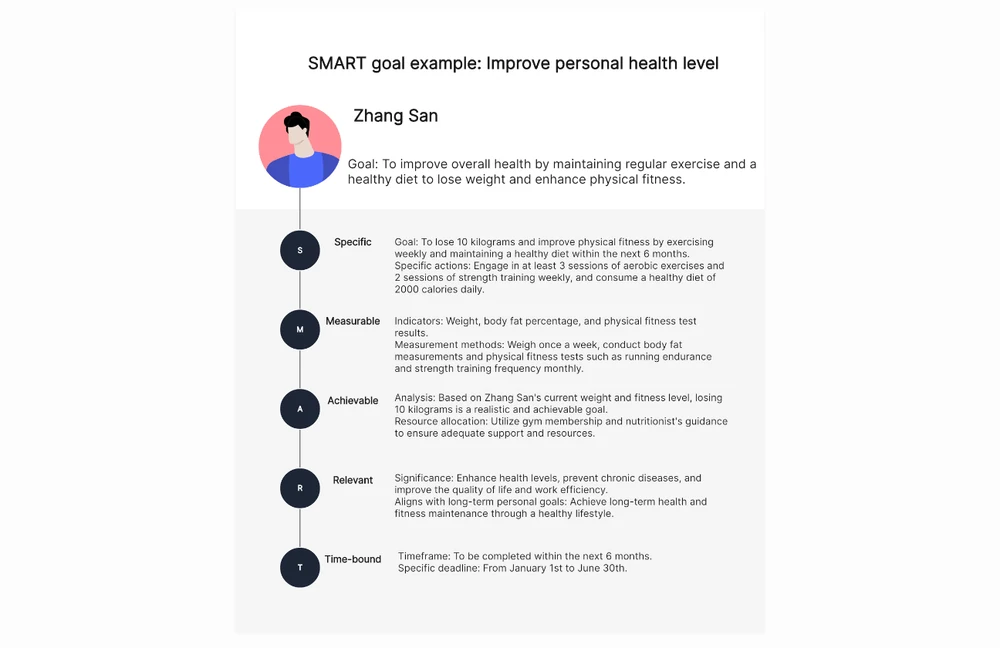
Personal wellbeing
Explore a planning structure for a personal habit or routine.
View example ↗CLEAR ANSWERS BEFORE YOU START
AI SMART goal generator FAQ
Know what to put in, what to expect, and how to make the result your own.
What does an AI SMART goal generator do?
It helps turn a description of an ambition into a draft organized around Specific, Measurable, Achievable, Relevant, and Time-bound criteria. In Boardmix, you can refine the goal on a visual whiteboard and plan the work with other people.
Can I use it for work, study, or personal goals?
Yes. Explain the context: a team might want to improve onboarding, a student might want to complete a practice project, and an individual might want to develop a professional skill. Give each goal its own measure, deadline, and realistic scope.
What if I do not know my baseline or target?
Say what is missing in your prompt. Start with a goal to establish the baseline or test a small change, then choose a target using what you learn. A precise number is not automatically a realistic goal, and AI cannot infer private results you have not provided.
What is the difference between a SMART goal and an action plan?
The goal describes the result and when you want to achieve it. The action plan describes the tasks, responsibilities, and sequence that may get you there. Keep both on the board so you can change the approach without confusing activity with progress.
Can my team edit goals together in Boardmix?
Yes. Use shared whiteboards, real-time collaboration, and comments to refine the draft and discuss the plan. Bring your latest measurements into the review; the page does not automatically connect to your business systems or calculate goal progress.
Is the AI SMART goal generator free?
Boardmix offers a free plan. Access to AI generation depends on your account’s available credits and current plan limits. Check Boardmix pricing for the current options.
MAKE THE NEXT STEP CLEARER
Start with an ambition. Leave with a goal to work on.
Draft it with AI, refine it with your team, and keep the plan in view.