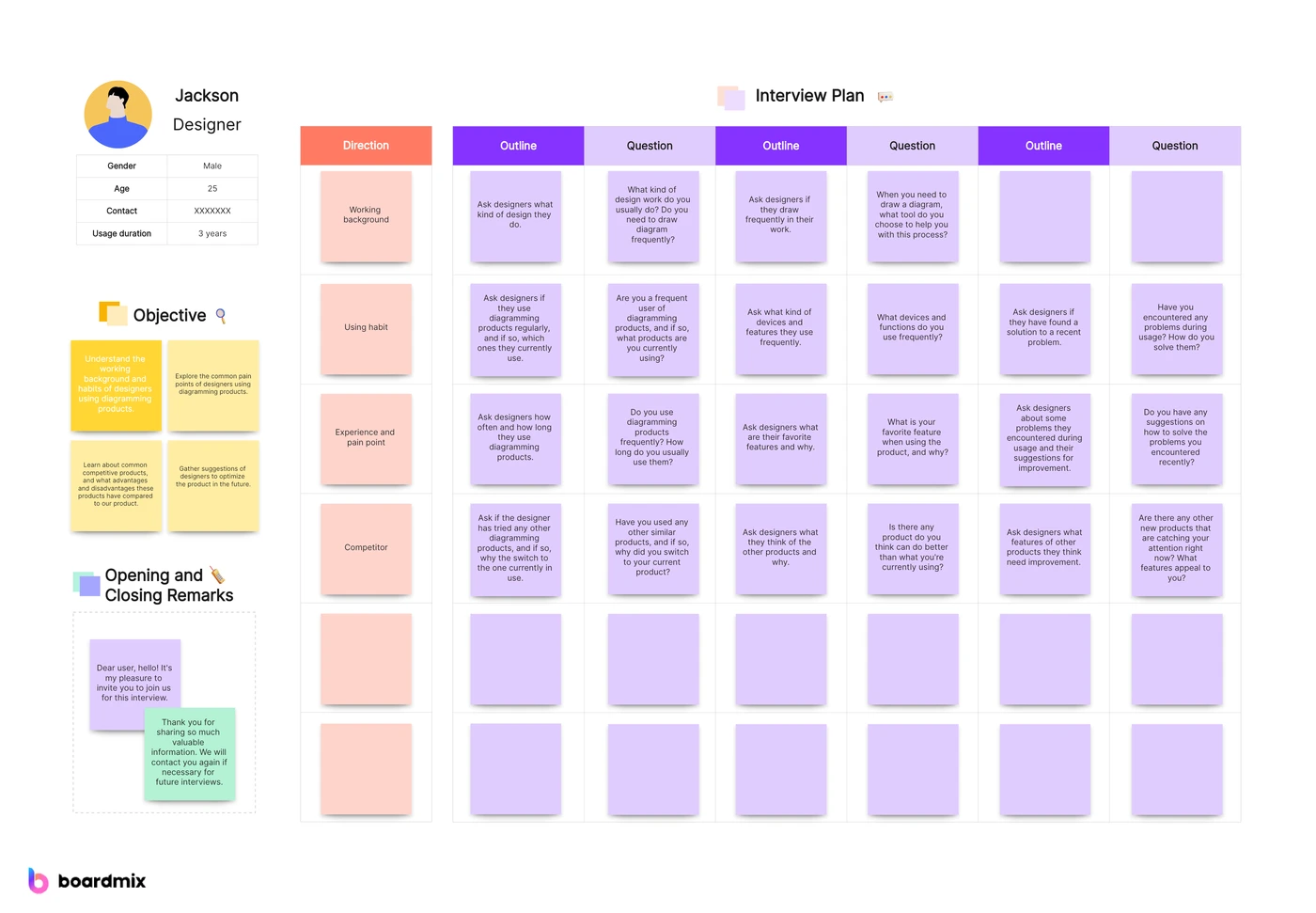
User interview
Prepare objectives, discussion prompts, and a place to record observations from each session.
View interview template →


Online Collaborative Whiteboard

Boardmix Developer Platform

AI tools for diagrams, writing, and ideas

UI/UX Tool, Figma Alternative

AI PPT Maker, Gamma Alternative
Run workshops, plan projects, and work with colleagues on a shared whiteboard.
Explore collaborative workBOARDMIX · USER RESEARCH
Turn interview excerpts, observations, and source links into findings your team can trace. Group evidence, compare conflicting accounts, and agree what to investigate next on one shared research board.
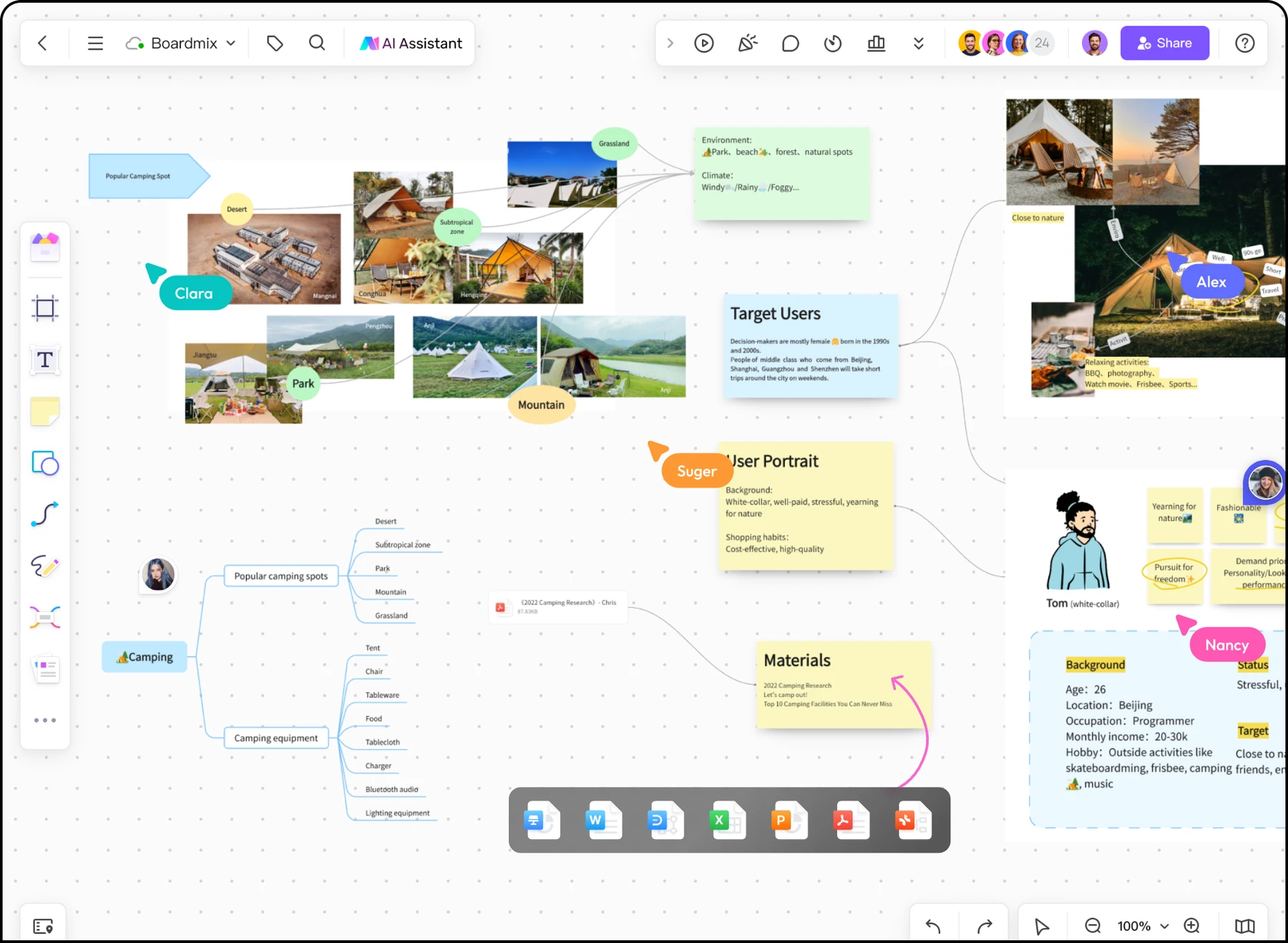
MAKE SENSE OF WHAT YOU HAVE LEARNED
Interview notes in a document, screenshots in a folder, findings in a slide deck: useful context is easy to lose between tools. Bring the material your team needs onto a shared research board.
Use participant IDs and include only material appropriate for the people who can access the board.
SEE HOW RESEARCH SYNTHESIS WORKS
In this illustrative campsite-booking study, the team asks: what makes it hard to choose a suitable campsite? The board preserves both the emerging pattern and the observation that points somewhere else.
Research question: what information do campers need before selecting a site?
P01 · INTERVIEW NOTE“I opened several campsites to work out the total cost for the weekend.”
P02 · INTERVIEW NOTE“The nightly price looked fine, but I could not see whether fees were included.”
P03 · A DIFFERENT NEED“The price was clear. I needed to know whether my tent would fit.”
P01 and P02 describe extra effort to understand or compare the total stay cost.
Test a campsite comparison view that shows the total for the selected dates. Keep tent-size information as a separate need to investigate.
In Boardmix, use sticky notes for excerpts, frames for themes, and connectors or source labels to show how a finding relates to the material. Keep conflicting observations visible instead of forcing every note into the same conclusion.
A FORMAT FOR EACH RESEARCH TASK
Choose the structure that fits the work. Group observations, describe a user context, or map an experience without starting with an empty canvas.
Prepare objectives, discussion prompts, and a place to record observations from each session.
View interview template →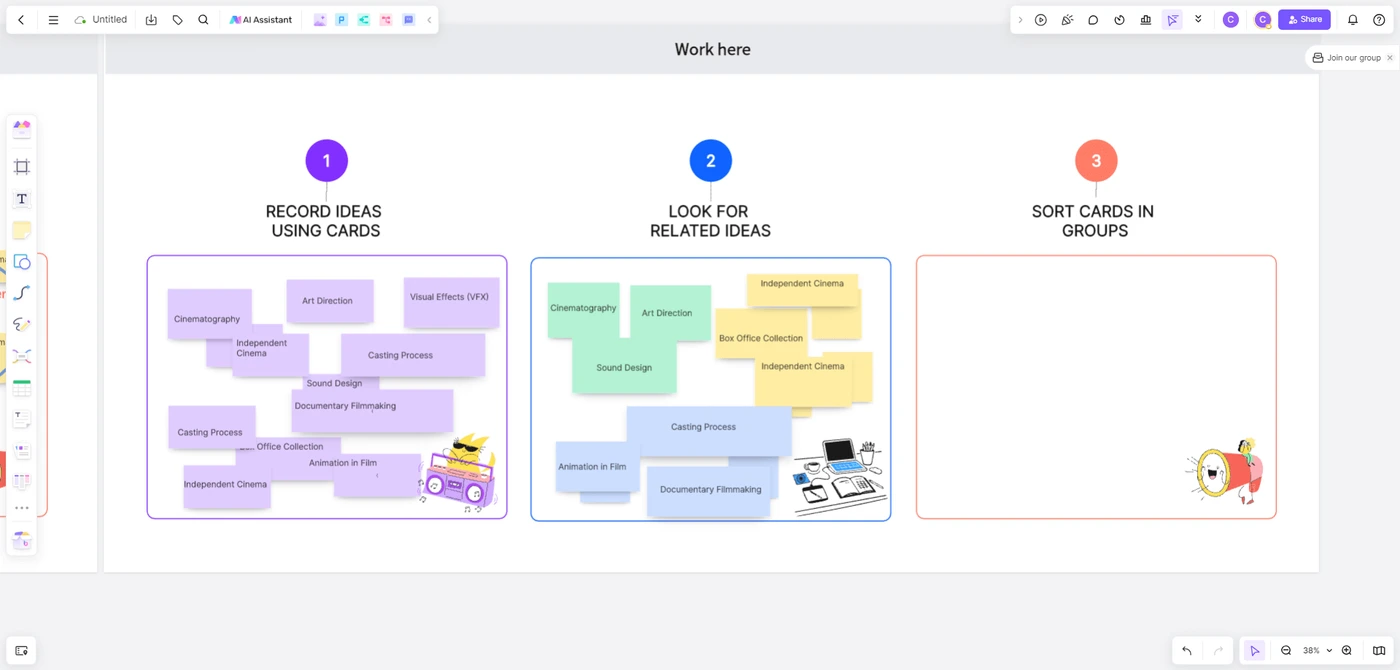
Group related observations by meaning, then give each emerging theme a name the team can discuss.
View affinity template →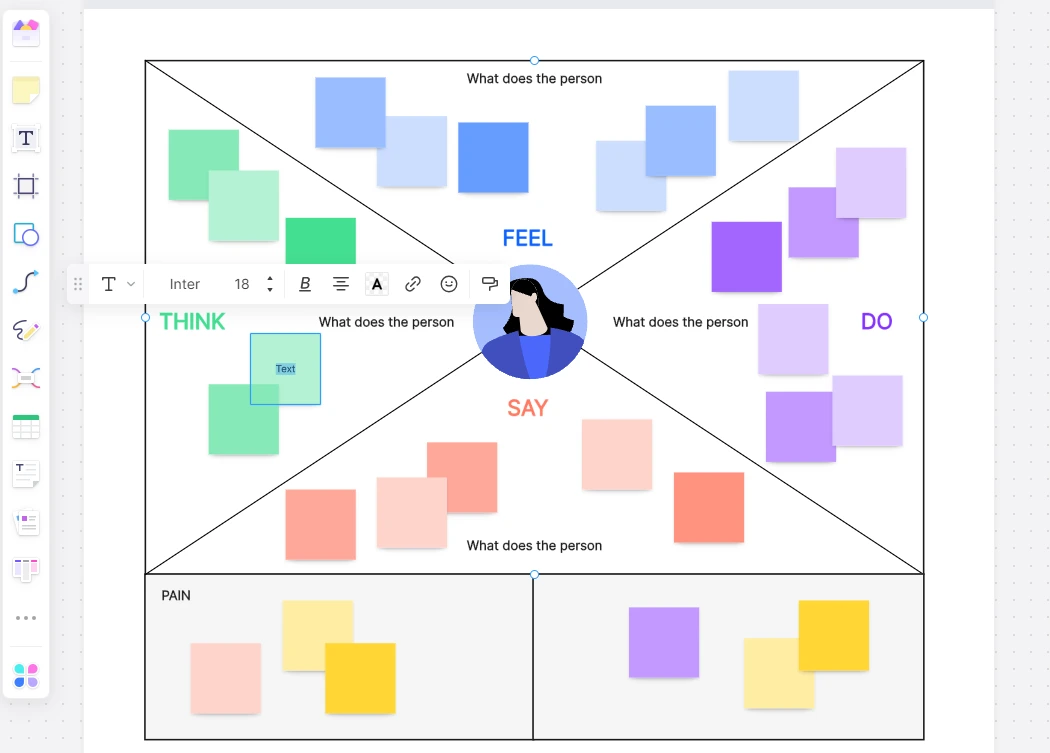
Compare what someone says and does with interpretations of their thoughts, feelings, pains, and needs.
View empathy map template →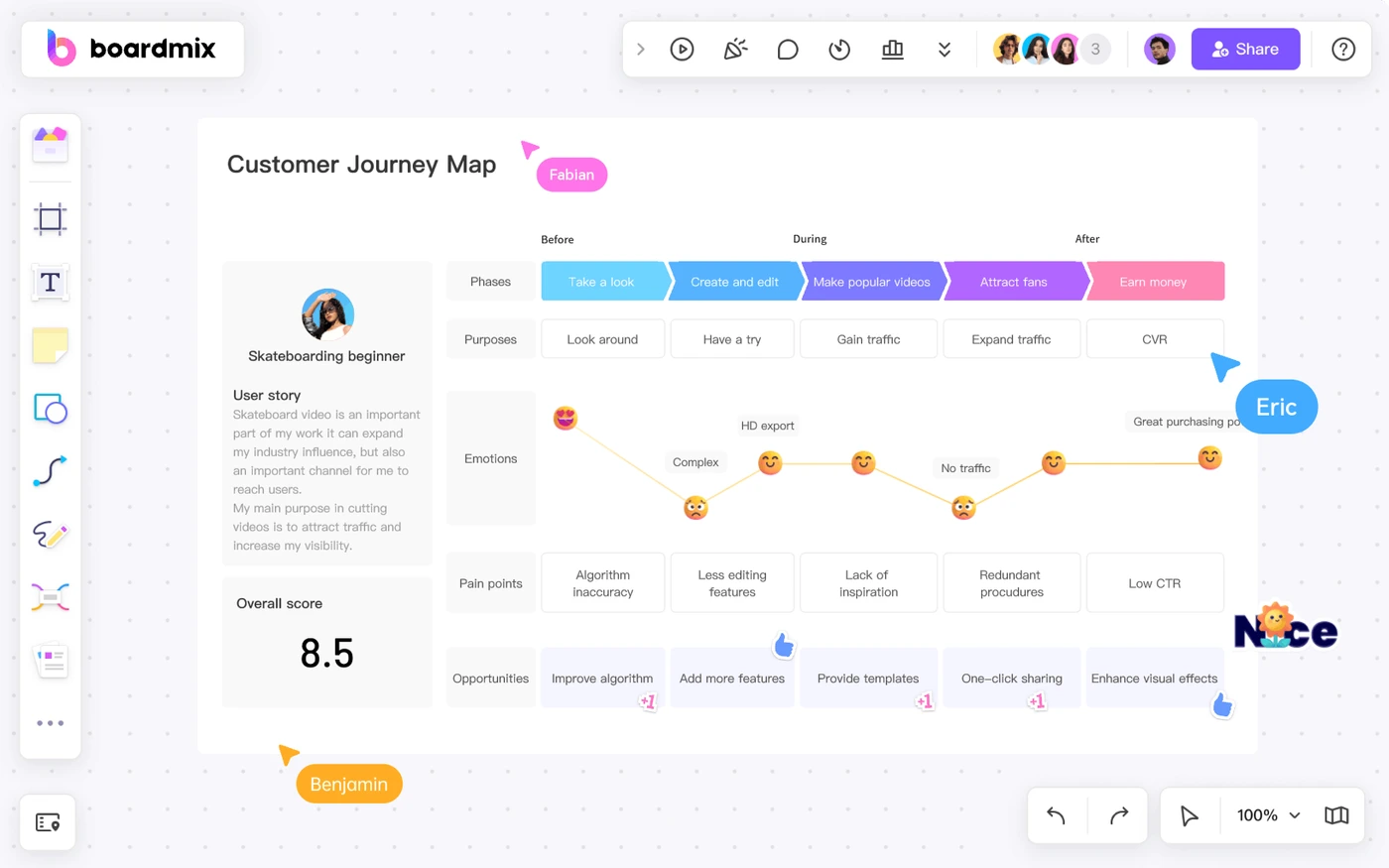
Place observations along the experience to see where questions, friction, and opportunities appear.
View journey map template →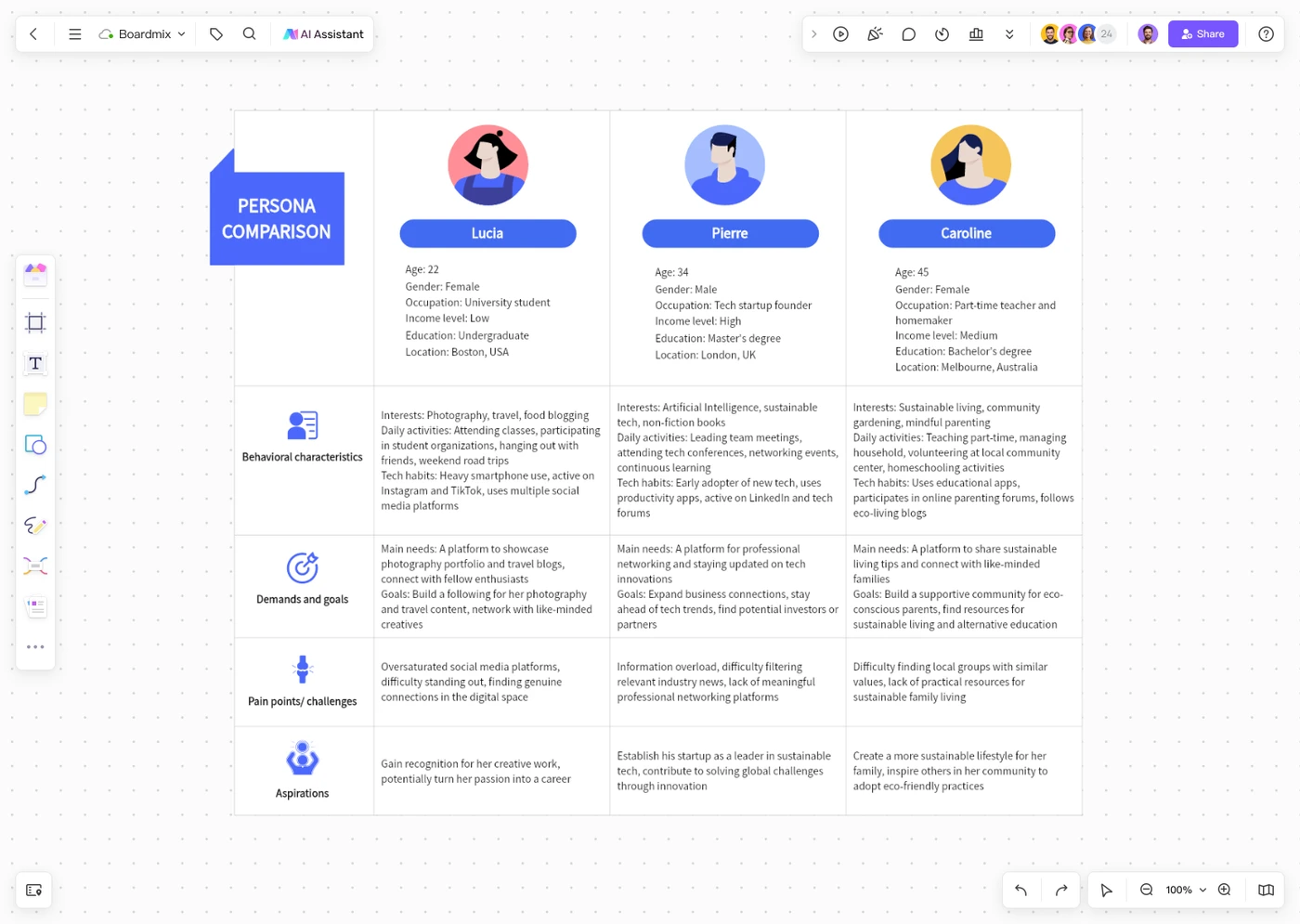
Bring goals, context, behaviors, and needs into a shared profile grounded in your research.
Explore persona workspace →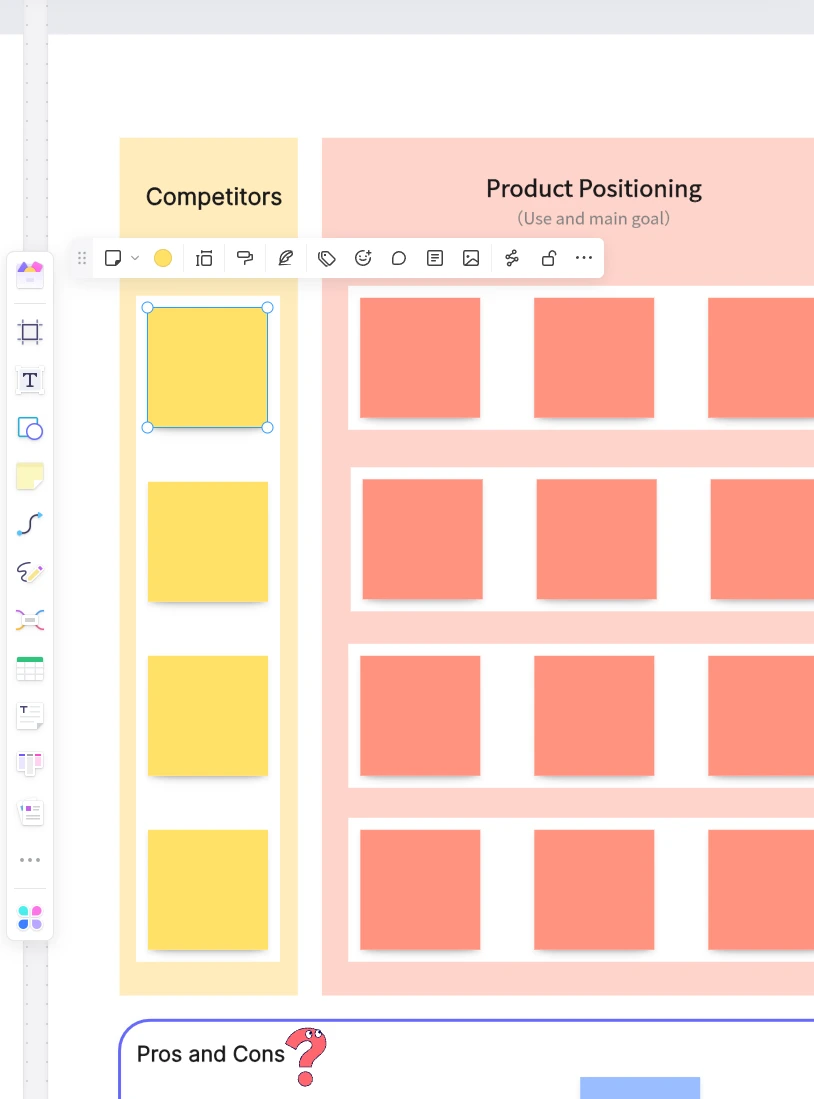
Compare alternatives using the same questions, and keep observed facts separate from your interpretations.
View comparison template →Explore more research and analysis templates for your next study.
ANALYZE TOGETHER, KEEP THE CONTEXT
Boardmix gives researchers, designers, and product teams a shared surface for discussing what they have learned and deciding what to investigate next.
Move related observations into groups, name tentative themes, and use comments to question an interpretation while the evidence is in view.
Invite collaborators, set a timer for focused activities, and use voting to identify questions the team wants to explore. Votes show team preference, not the strength of research evidence.
Organize frames for a research readout, present the board, and keep recommendations and follow-up work beside the findings that informed them.
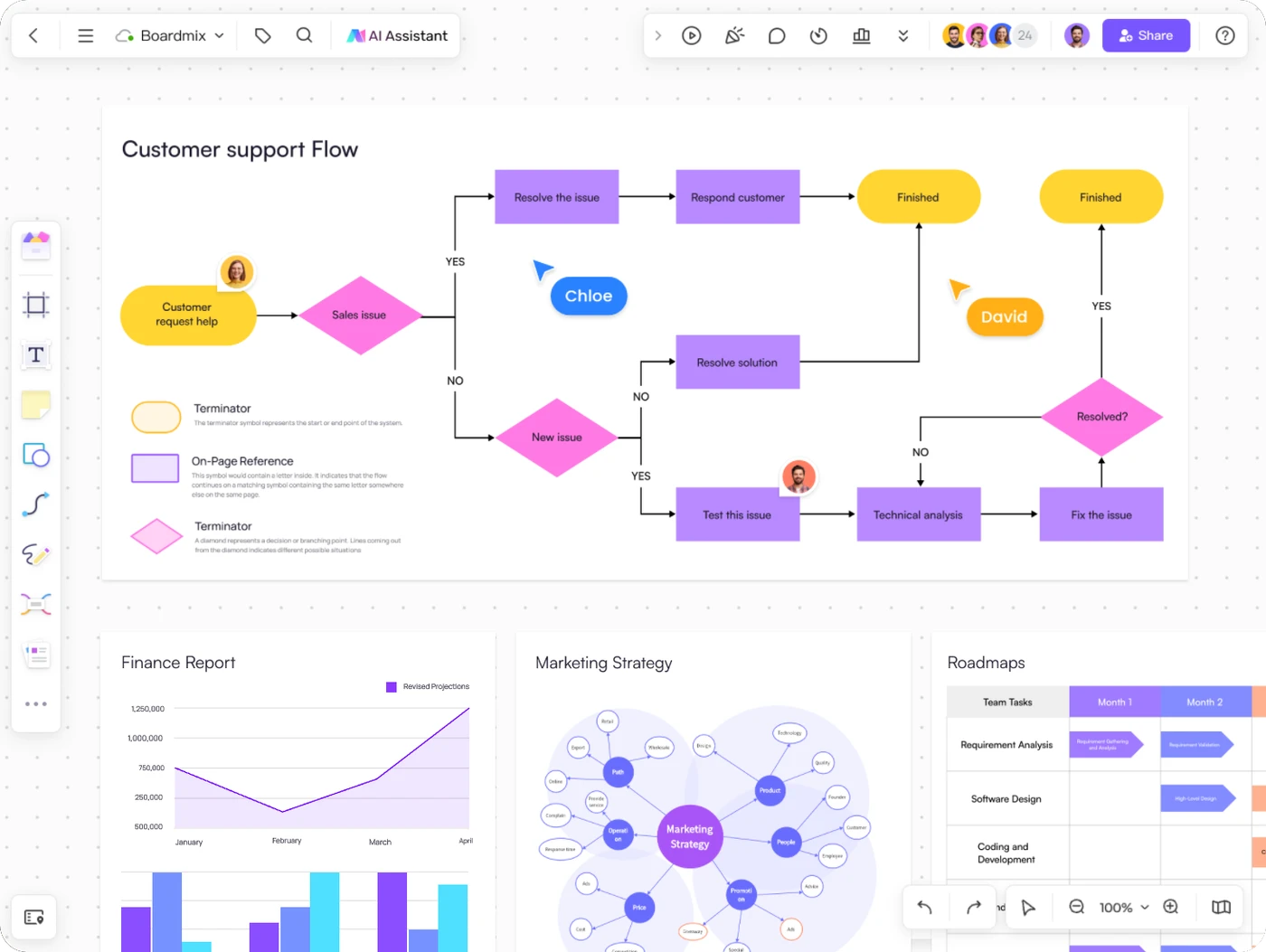
Add a journey map or process diagram to show where a problem occurs. When you bring in quantitative results, label the metric, source, and time period so the team knows what it is comparing.
Use a task list or Kanban board for follow-up work, and keep the research finding linked to the question or change it inspired.
START WITH A USEFUL STRUCTURE
Boardmix's AI tools can help you start a mind map or brainstorm a structure for a research topic. Expand the useful branches into questions, activities, and areas to explore.
Keep generated ideas separate from interview notes and observed behavior. The research findings should come from your study material and your team's analysis.
Explore AI mind mapping →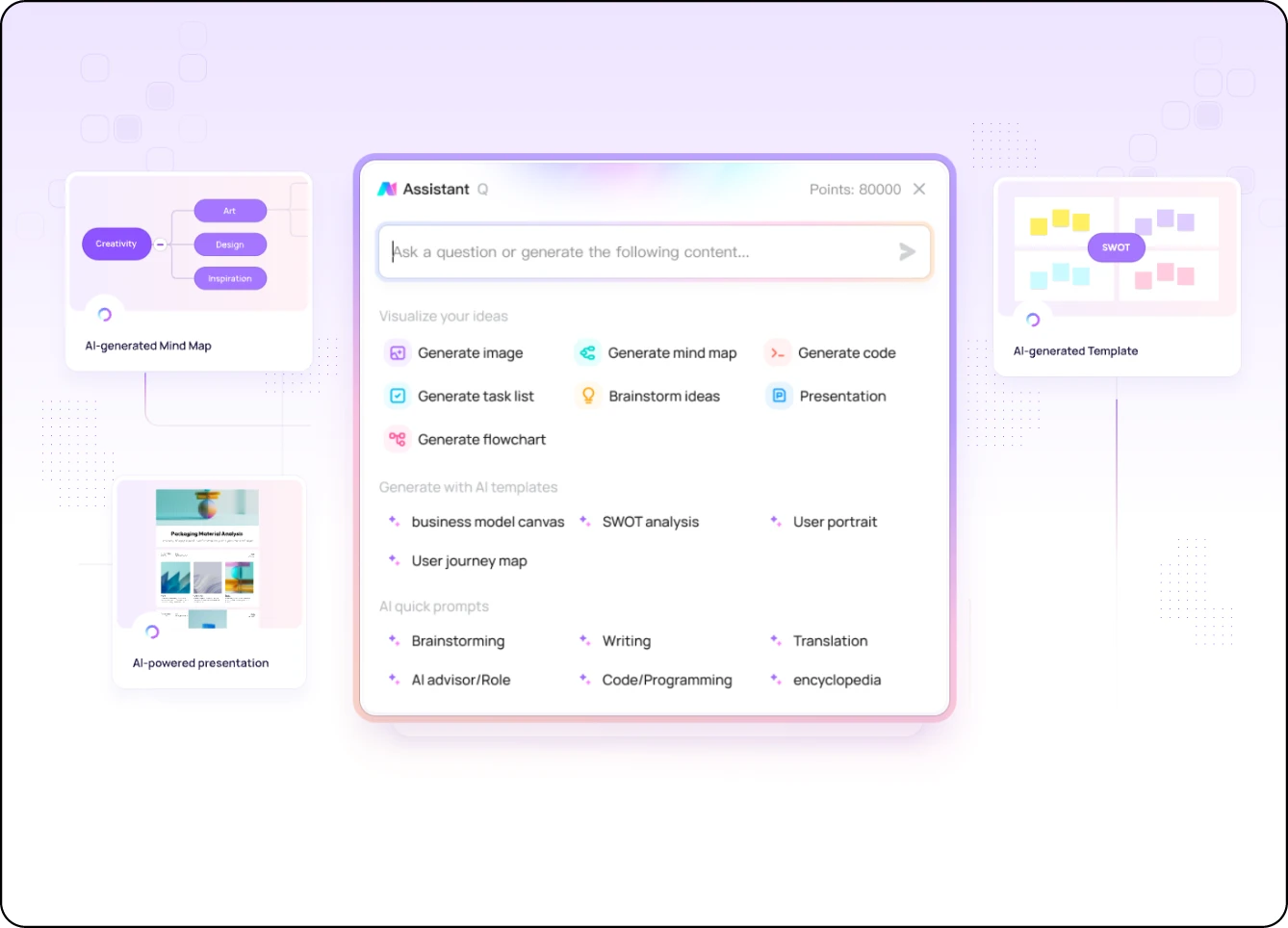
YOUR FIRST RESEARCH BOARD
Write the research question and the decision it should inform. Use a user research plan to organize the scope, participants, and method before setting up the board.
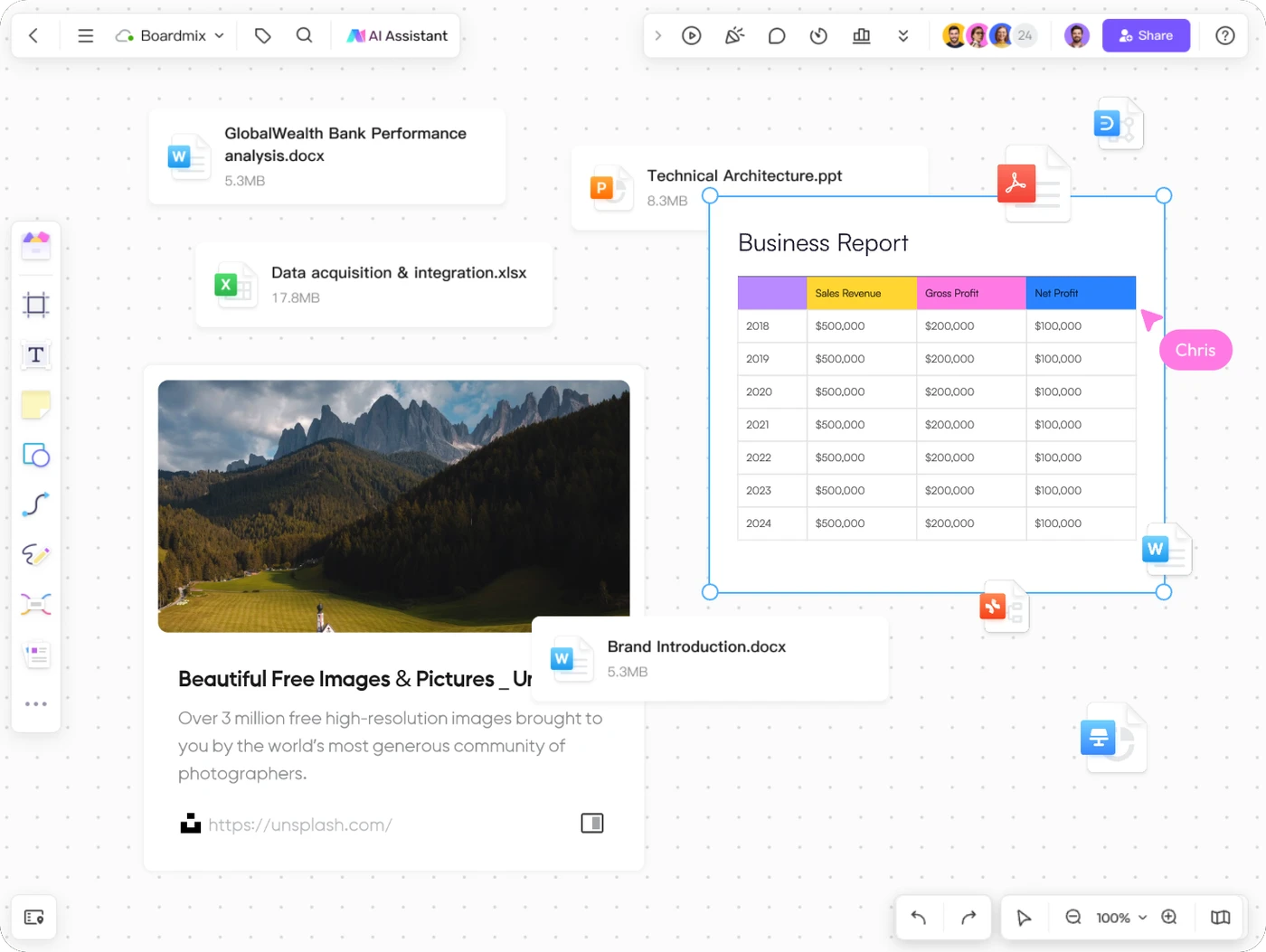
Bring in notes, screenshots, documents, and source links. Label observations so the team can distinguish participants, sessions, and assumptions.
Group related observations, compare interpretations, and agree what to investigate or change. Present the findings and keep the next actions visible.
USER RESEARCH TOOL FAQ
A user research analysis tool helps a team organize study material, compare observations, and explain findings. Boardmix provides a shared visual canvas for this synthesis: keep source notes, emerging themes, conflicting evidence, and next questions together.
Bring relevant interview excerpts and notes onto the board, label their sources, and group related observations. Name tentative themes, look for differences as well as similarities, and link each finding to the material that supports it. Keep the original interview context available through source links.
Yes. Use sticky notes, frames, connectors, and templates to compare observations, make affinity groups, and connect findings to journeys or user contexts. Teammates can collaborate on the board and discuss alternative interpretations before agreeing on recommendations.
Boardmix is the visual collaboration and analysis workspace in this workflow. Use your chosen tools to recruit participants, conduct or record sessions, and prepare transcripts. Bring the relevant study material and links into Boardmix for analysis and discussion.
Arrange a readout in frames: research question, relevant evidence, findings, and proposed next steps. Invite stakeholders with appropriate access, present the board, or export the material for a report. Keep links to source context near the findings so readers can explore the reasoning.
Yes. The same canvas can organize market observations, competitor comparisons, charts, and strategic questions. Choose a format that fits the task, such as a competitor analysis or SWOT template, and keep the source and date alongside each observation.
FROM SCATTERED NOTES TO SHARED UNDERSTANDING
Organize the material, explore the patterns, and bring your team into the next decision.
Start a research board