Anyone who has access to online streaming platforms knows the existence of Netflix. Who would not when it’s one of the leading sites in the world today? If one takes a deeper look at Netflix, one would know its unique features and elements make it stand out.
For you to know how Netflix operations work, seeing the Netflix business model canvas might be beneficial. It’s a comprehensive visual illustration so you can understand Netflix better. You can bookmark this article or take some notes as you go along. It might inspire you as you plot your company’s business model. Continue reading to learn more.
A Brief History of Netflix
Netflix was founded in 1997 by Reed Hastings and Marc Randolph. It began as a DVD-by-mail service and later expanded into streaming. This history explains how the company moved from physical rentals to on-demand content delivered through connected devices.
Netflix’s video streaming service was introduced in 2007, with 1000 titles in its library. Initially, the streaming only worked on computers and Internet Explorer, with an 18-hour free monthly stream. At the end of 2007, the company gained 7.5 million subscribers.
Fast forward to 2016, when Netflix expanded globally to about 190 countries in 21 languages. Along the way, Netflix won Academy Awards for some of the company’s original productions. It took Netflix years to be a solid streaming service provider.
Netflix offers movies, documentaries, television shows and original productions through a subscription service. Its market position and traffic share vary by period and region, so this article does not treat an undated traffic estimate as a current fact.
Netflix Business Model Canvas
With this data, what does the business model canvas of Netflix look like? There are nine sections of the streaming platform’s business model. Each aspect is vital to understanding how Netflix works and in what areas it spends its budget.

Value Propositions of Netflix
Netflix’s value proposition is convenient access to on-demand content across supported devices. The service offers both ad-supported and ad-free plans in some markets; availability and features depend on the current plan and region.
Customer Segments of Netflix
The business model canvas of Netflix under the customer segments category has one entry: the ‘moviegoer.’ While this could also be true in specific aspects, the streaming service caters to many subscribers. Surely, those who subscribe to Netflix are into movies and other content.
Here is how Netflix categorizes its customers:
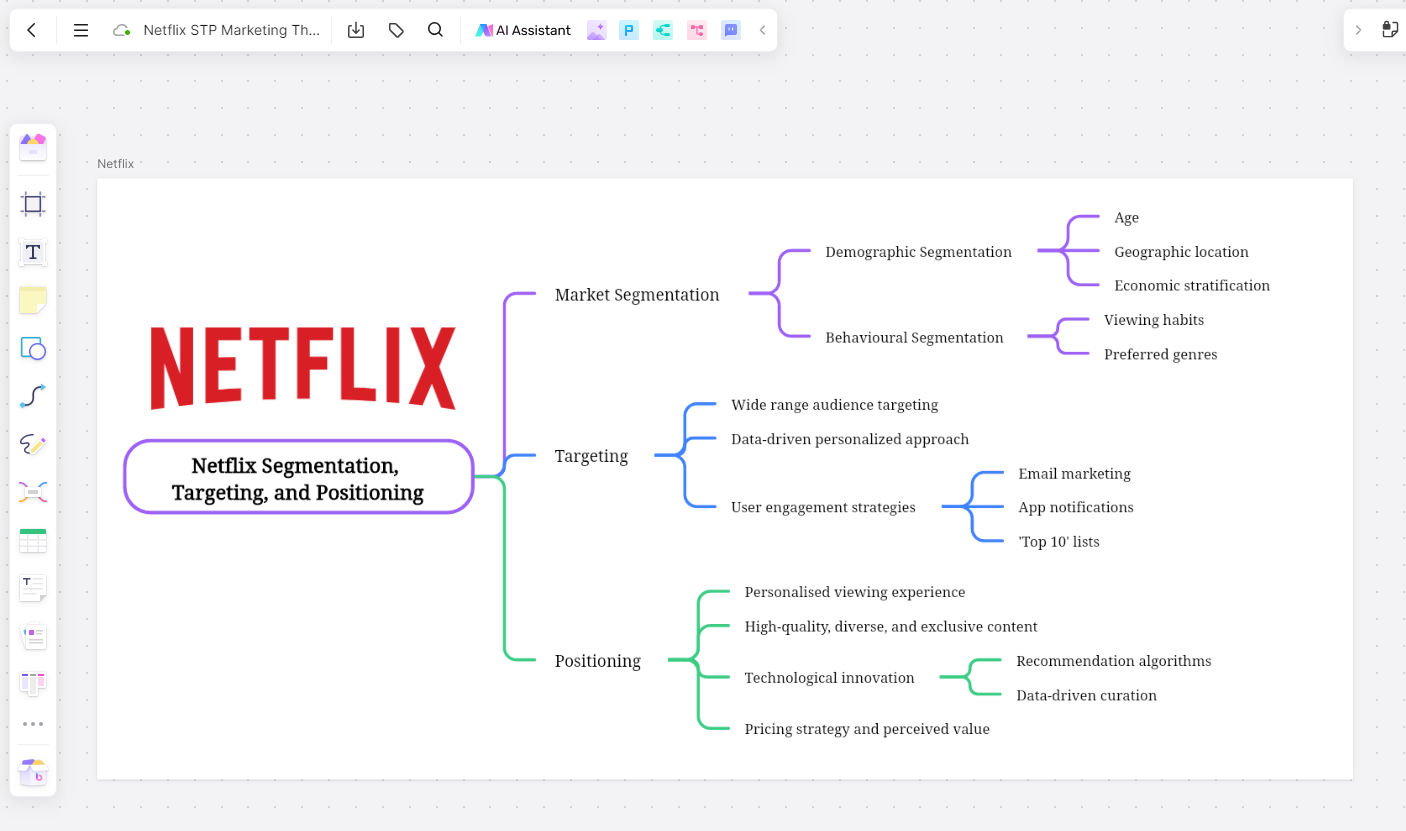
Micro segmentation: 2000 taste clusters which are identified through viewing histories.
Macro segmentation:
- Demographics - individual, family, etc.
- Gender and age brackets
- Geo-demographics - city vs. rural, country, region
- Languages spoken and its proficiency
Usage parameters:
- Technology - screen size, device used, connection type, and speed
- Viewing behaviors - binge-watcher, weekday, weekend patterns, on-the-go, home
- First series or movie watched after subscribing
- Browsing behaviors - explorative vs. repeat watcher
Key Partners of Netflix
Producers, consumer electronics, broadcasters, and cable companies are the essential partners of Netflix. They support the delivery of the company’s services and day-to-day processes. There are specific components that Netflix considers its primary partners. They are the IP/content owners, which refers to movies and shows the company acquires from third parties.
Secondary partners are promoters and influencers who help get the word out to Netflix’s target market. They can be cinemas, theaters, award-giving bodies, magazines, and television shows.
Key Activities of Netflix
The key activities in the Netflix business model canvas focus on licensing, producing, and platform development. Ultimately, the goal of Netflix is to provide the best streaming content to its subscribers. Besides the content, Netflix provides one of the best user interface designs among other streaming service providers today. This is why even beginners in streaming know how to navigate the Netflix app and website since it’s user-friendly and high-performance.
The competition is also strong in the online streaming industry, so Netflix must continue to produce, choose, acquire, and license relevant content, building relationships and negotiating with content producers, movie production houses, and studios. Most importantly, Netflix must keep updating its subscription model, including the pricing strategy, to sustain its growth and increase its customer base.
Customer Relationships of Netflix
The customer relationship of Netflix is generally built around the platform itself. As previously mentioned, the website and the app are user-friendly, allowing subscribers to configure based on their preferences. Furthermore, the Netflix algorithm suggests various series and films based on the user’s content consumption. Netflix provides a comprehensive FAQ section for subscribers’ concerns and questions. Besides that, users can also reach the support team through email, phone, or chat.
Most importantly, Netflix takes pride in efficiently using its networks online to engage with its subscribers. It consistently provides updates on promotions and new releases on Instagram, X (formerly Twitter), Linkedin, and Facebook. The additional clips and highlights on its YouTube handles allow Netflix fans to be more excited about their favorite shows on the streaming platform.
Key Resources of Netflix
The Netflix brand is one of the key resources of the company. Along with that are its movie portfolio and the Netflix platform. Netflix’s brand and platform are so broad that one must categorize them. The specifications are as follows:
- Content library. This could include Netflix originals and those that the streaming service must secure a license to be streamed on Netflix. Due to some streaming content providers announcing their plans to build their streaming libraries, Netflix has to pour a considerable budget into creating original content.
- Filmmakers, writers, and actors. In some cases, Netflix also provides a space for indie and newcomers and gives creative freedom in creating content. It will be interesting to know how the supply and demand will shift with various streaming platforms boosting their content creations.
- Studios. To support Netflix’s initiatives for content creation, the company is starting to acquire its studios and hire additional staff.
- Tech staff. This is another key resource in the Netflix business model canvas. The technology people are those who made Netflix a streaming service provider.
Channels of Netflix
Netflix embraces a diverse array of devices as channels through which customers can access its content. Whether it’s a laptop, computer, smartphone, tablet, or Smart TV, Netflix ensures compatibility with virtually any screen-equipped device that can connect to the internet. Additionally, set-top boxes and gaming consoles also support Netflix, making it accessible to an even wider audience. Essentially, if a device has the capabilities for connectivity and screen display, it can serve as a channel for enjoying Netflix’s vast content library, ensuring that customers have the flexibility to choose their preferred platform.
Beyond the hardware channels, Netflix employs online channels for extended reach and publicity. These encompass a robust presence on social media platforms, engagement with various media outlets, and participation in renowned film festivals. These online channels serve as vital tools for promoting Netflix’s content and connecting with a global audience.
Cost Structure of Netflix
Netflix’s cost structure is enormous. This is why the company experienced a poor cash flow during its first years. The business model canvas of Netflix needs considerable investment to reach the current state of the streaming service.
Generally, Netflix allows a massive budget for production and licensing. Besides producing Netflix series and film originals, the company must purchase content and licenses from other production houses. This is to keep its library intact with relevant and new content. This is a relatively huge task, as other streaming services are doing the same.
Digital infrastructure is another aspect that gets the higher budget from the Netflix cost structure, from when Netflix was developed to maintenance, patents, research, and software development. As you know, the bread and butter of Netflix is the app and website where subscribers access various content.
Revenue Streams of Netflix
Subscriptions and advertising are part of Netflix’s current revenue model. Plan names, prices, video quality and advertising options vary by market and change over time, so readers should check Netflix’s current plan page for the country they are researching.
Netflix’s DVD-by-mail service is historical context for the business model. Netflix announced its closure in 2023 and ended the service later that year, so it should not be presented as a current revenue stream.
How Does Netflix Make Money?
Based on the Netflix business model canvas, the company generally makes money from the content it provides to its subscribers. The more content variety the platform has, the better the reception would be from movie and series fans.
Netflix’s revenue mix changes by reporting period and market. This article does not claim a universal 90/10 split without a dated, first-party financial source; use the company’s latest filings when comparing revenue streams.
Netflix capitalized on the latest entertainment trend and infused it with its brand. Its selling point ultimately reached every subscriber on the platform who wished to see every episode of their favorite series. In most cases, the company even gets the upper hand in securing rights to the newly released movies. This is an excellent strategy, especially in geolocations where a specific film is not shown in cinemas.
Despite its billions of budget on original content, Netflix is still highly profitable. In 2022, it generated $4.5 billion in profits. This is primarily due to the high viewership demand during the pandemic when almost everyone was in lockdown.
Netflix still draws more subscribers year after year, but with Disney, Apple, and other streaming services being Netflix’s competition, the streaming platform is finding innovative means to grow its customer base even further.
Key Takeaways
Netflix’s business model changes as its content, distribution and plan mix evolve. Ad-supported plans are available in some markets, with current terms documented on Netflix’s official plan and help pages.
Also, the business model presented by Netflix is generally straightforward, which must be the case if you plan to develop one for your company. Longer phrases and sentences can be too much for your audience to read, so keywords are fitting.
Most importantly, the best way to plot your business model is through an online diagramming tool. With Boadmix, you can access hundreds of templates, including the business model canvas template. It’s editable, so you can use the diagram and tweak some parts to make it your own. The diagramming software promotes collaboration by inviting team members and stakeholders to view the business model template through a dedicated link.
Test the Netflix business model with a source-linked canvas
Start a Netflix worksheet in the business model canvas template and label the country and reporting period you are studying. Use the analysis above to form questions, then check the answers against Netflix annual reports. This worksheet is an educational interpretation, not a Netflix business plan.
- Describe a specific customer choice. Choose an available subscription offering in the market you are researching. Record its price, date and conditions from the local product page rather than treating a price from another country as universal.
- Connect viewing value to delivery. Link a proposed customer need to the content, access channel and relationship you have placed on the canvas. Mark assumptions about viewer preferences as questions to research.
- Separate revenue from cost. Locate the relevant revenue disclosure and distinguish it from spending or commitments for content and operations. Do not infer a profit margin from subscription prices alone.
- Compare dated versions. Ask a reviewer to check the sources behind one customer segment and one revenue stream. Record what changed between reporting periods and what the available disclosures do not establish.
References:
https://www.investopedia.com/insights/how-netflix-makes-money/
https://businessmodelanalyst.com/netflix-business-model/#A_brief_history_of_Netflix
https://www.feedough.com/how-does-netflix-make-money/
https://www.zippia.com/advice/how-does-netflix-make-money/#how-does-netflix-make-money