



AI-powered user persona generation makes it possible for businesses to understand their audience quickly and deeply. Even beginners can master it in three simple steps. Leveraging efficient data integration and precise modeling, this technology is now widely used in product development, marketing campaigns, and user operations. This guide will walk you through its core advantages, practical applications, a step-by-step tutorial, and tool recommendations. Unlock the power of AI to make data-driven user insight accessible and actionable.
Core Advantages of AI-Generated User Personas
AI user persona generation addresses the inefficiency and lag of traditional methods, becoming essential for businesses to accurately grasp user needs and achieve sustainable growth. Traditional user persona creation relies on manual surveys, focus groups, and spreadsheet-based data analysis—processes that take weeks to complete and are prone to human bias or incomplete data sets. In contrast, AI-powered tools transform this workflow by combining machine learning, natural language processing (NLP), and big data analytics. Compared to manual research, here are three key advantages in detail:
Automated Modeling
AI automatically gathers structured and unstructured user data from social media platforms (e.g., Instagram, LinkedIn, TikTok), website analytics tools (e.g., Google Analytics), CRM systems, and customer support tickets. It cleanses cross-platform data to remove duplicates, irrelevant entries, and outliers, then applies a standardized tagging mechanism (e.g., "price-sensitive," "tech-savvy," "brand loyal") to categorize user attributes. This not only cuts data consolidation time by up to 80% but also ensures consistency across datasets—eliminating the inconsistency that plagues manual tagging by different team members.
Predictive Accuracy
Beyond static data analysis, AI uses dynamic weighting algorithms to calculate the importance of different user features (e.g., age, purchase frequency, engagement level) based on business goals. For example, a subscription-based SaaS company might prioritize "renewal intent" over "demographic location," while an e-commerce brand focuses on "average order value" and "browsing behavior." AI also deploys real-time behavioral prediction models to forecast future user actions—such as identifying which free trial users are likely to convert to paid plans or which existing customers are at risk of churn. This predictive capability upgrades persona modeling from descriptive (what users have done) to prescriptive (what users will do), enabling proactive decision-making.
Enhanced Cost-Efficiency
Traditional persona research often requires hiring external market research firms, conducting paid surveys, or allocating full-time analysts to data processing—costs that can exceed $10,000 for a single comprehensive persona project. AI tools reduce these expenses by automating 70% of the workflow, slashing both time and labor costs. The automated data cleansing and analysis also minimize human analytical errors (e.g., miscounting survey responses, misinterpreting open-ended feedback), delivering a higher return on investment (ROI) and ensuring that personas are based on accurate, unbiased data.
Application Scenarios for AI User Personas
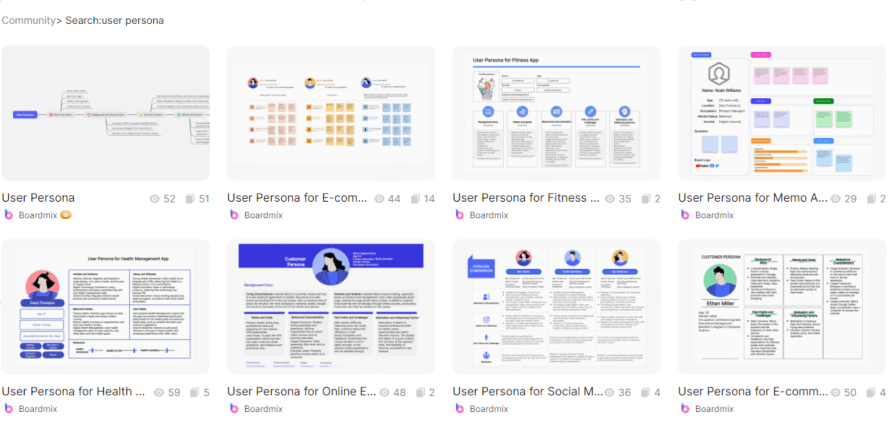
With strengths in real-time data integration and intelligent predictive analysis, AI-generated user personas are no longer just a "nice-to-have"—they are a critical tool for targeted operations across every stage of the business lifecycle. Below are the most impactful application scenarios, with real-world examples to illustrate their value:
Product Development
AI personas help product teams move beyond "guesswork" to build features that directly address target audience pain points and unmet needs. For example, a mobile gaming company used AI to analyze user behavior data and discovered that its core audience (18-24-year-old casual gamers) abandoned games due to "long tutorial sequences" and "limited customization options." The team then redesigned the onboarding flow and added avatar customization features, increasing user retention by 35% in the first month post-launch. AI also enables competitive analysis: by comparing your user personas with competitors’ (e.g., identifying that your users value "affordability" while competitors’ users prioritize "premium features"), you can optimize product positioning to build a unique market advantage.
Marketing & Sales
AI personas power hyper-personalized recommendation systems that adjust content, offers, and messaging based on individual user preferences. A beauty e-commerce brand used AI to segment its audience into "skincare enthusiasts," "makeup novices," and "eco-conscious shoppers," then tailored email campaigns with product recommendations and educational content for each group—boosting click-through rates (CTR) by 40% and conversion rates by 25%. For ad targeting, AI refines campaigns by region (e.g., urban vs. rural), time (e.g., peak shopping hours for stay-at-home parents), and channel (e.g., TikTok for Gen Z, Facebook for millennials), reducing customer acquisition cost (CAC) by 30% while increasing return on ad spend (ROAS) by 50%.
User Operations
AI personas enable granular segmentation of users into core (high-value, loyal), potential (growing engagement), and dormant (low activity) groups—allowing teams to design tailored activation strategies for each segment. A fitness app used AI to create personas for dormant users and found that 60% of them stopped using the app due to "lack of personalized workout plans." The team then sent customized workout reminders and free 7-day plan trials to this group, reactivating 28% of dormant users within two weeks. AI also employs churn prediction models to monitor real-time behavioral data (e.g., decreased login frequency, skipped subscription reminders) and flag at-risk users early. Customer success teams can then intervene with targeted offers (e.g., discount codes, free premium features) to improve retention rates by up to 20%.
Recommended AI User Persona Generation Tool
Among hundreds of online tools and platforms, Boardmix Online Whiteboard stands out for its domain-specific expertise in user research and intuitive, no-code operation—making it the top choice for both beginners and experienced professionals building professional personas. Unlike generic AI tools that produce static, text-only personas, Boardmix integrates visual collaboration with AI analytics to create actionable, shareable personas. Let's explore its core AI persona generation logic and features:
Smart Diagnosis Module
Input a single product or industry keyword (e.g., "EdTech," "plant-based food," "home fitness equipment"), and Boardmix’s AI instantly identifies the core characteristics of your target user groups. For example, entering "EdTech for K-12 teachers" outputs detailed attributes like "behavioral traits (time-poor, tech-adaptive)," "pain points (limited lesson planning time)," "user journey (research → trial → adoption)," and "motivators (student engagement, administrative efficiency)."
This module cuts through the noise to highlight the most relevant audience attributes, saving hours of manual data sifting.
Cross-Platform Data Aggregation
Boardmix’s AI connects to over 20 data sources, automatically collecting raw data from social media comments, website chat logs, product review platforms, and email marketing campaigns. Its advanced algorithms cleanse fragmented information (e.g., correcting spelling errors in open-ended feedback, standardizing date formats) and integrate it into a unified dataset that covers user demographics, online behavior, purchase history, and psychographic preferences (e.g., values, attitudes, lifestyle).
This comprehensive data set ensures personas are based on a 360-degree view of users, not just a single data source.
Visual Dashboard
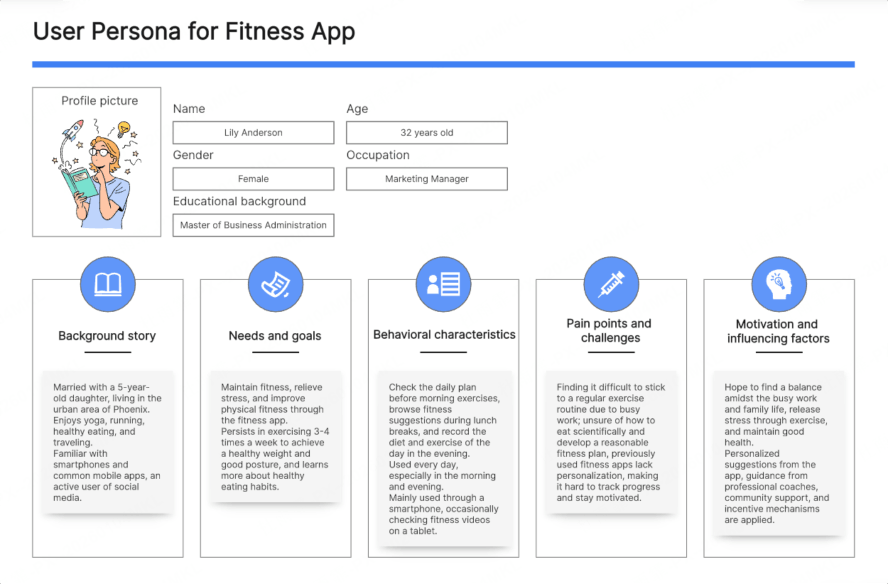
Instead of overwhelming users with spreadsheets or long text documents, Boardmix automatically generates an interactive persona dashboard. This visual interface layers key information: basic demographics (age, gender, location) at the top, followed by behavioral paths (e.g., "discovers product via Instagram → browses reviews → makes first purchase"), psychographics (e.g., "values sustainability over price"), and pain points/needs (e.g., "seeks eco-friendly packaging, fast shipping").
The dashboard supports one-click export to PDF or PNG, and you can generate a shareable link with view-only or edit permissions for team collaboration.
Industry-Specific Template Library
Boardmix offers pre-built, customizable persona templates for over 30 industries, including E-commerce, SaaS, healthcare, travel, and nonprofits. For example, the E-commerce template includes sections for "cart abandonment triggers" and "payment method preferences," while the SaaS template focuses on "onboarding pain points" and "renewal drivers."
These templates jumpstart your project—simply input your product details, and the AI populates the template with relevant data, eliminating the need to start from a blank canvas.
Step-by-Step Guide: How to Create AI User Personas (For Beginners)
Follow Boardmix’s simplified 3-step method to build accurate, actionable user personas that support data-driven decision-making. This workflow breaks down complex data analysis into three straightforward steps—no prior AI or user research experience required, perfect for beginners:
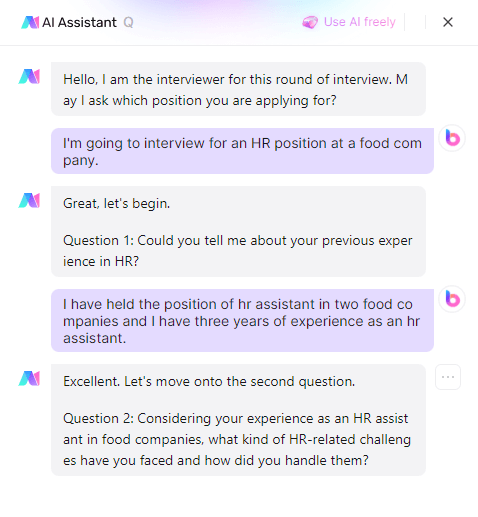
Prerequisite: Create a new whiteboard in Boardmix (free for up to 3 projects). Click the "AI Assistant" icon at the bottom right of the interface, then navigate to "Analysis Report" and select "User Persona." If you haven’t already, sign up for a free Boardmix account (no credit card needed) or log in with your Google/LinkedIn credentials to begin.
Step 1: Define Your Persona Topic
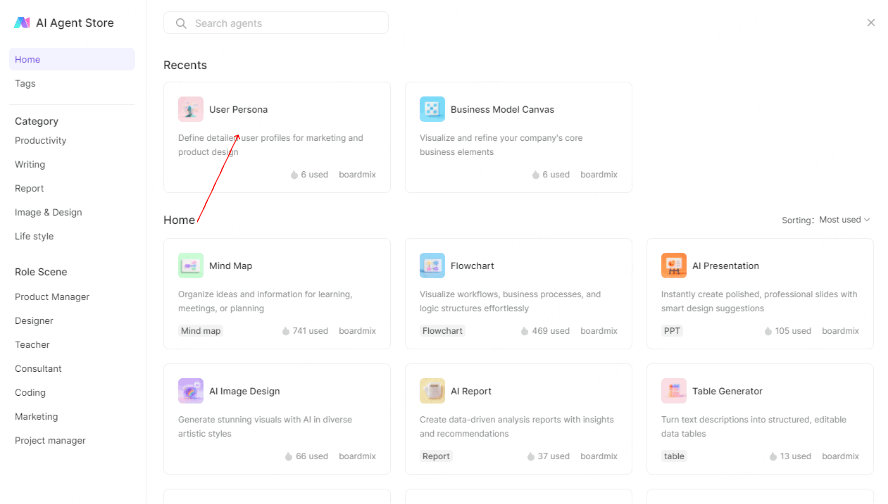
In the AI dialog box, input a clear, specific prompt that combines your product/industry, target user group, and any geographic or demographic constraints. Vague prompts (e.g., "fitness app users") yield generic personas, while specific prompts (e.g., "Fitness App + Female Users aged 30-40 + North America + Working Mothers") produce targeted, relevant results.
For example, a prompt like "Sustainable Skincare Brand + Gen Z Users + EU Countries + Budget-Conscious" will generate personas focused on eco-friendly values, price sensitivity, and regional regulatory preferences (e.g., EU cosmetic regulations). Click "Generate," and the AI will deliver a draft persona with details including behavior patterns (e.g., "shops online 2-3x/month"), pain points (e.g., "dislikes plastic packaging"), needs (e.g., "affordable vegan products"), and motivators (e.g., "brand transparency").
Step 2: Refine and Edit Your Persona
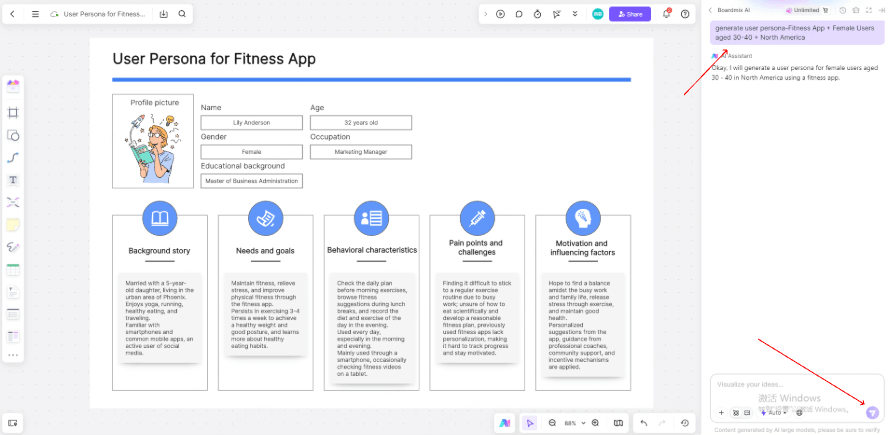
The AI-generated draft is a starting point—customize it to align with your unique business context. Manually add business-specific data (e.g., customer support feedback about common complaints, sales data about top-selling products for this group) or adjust tag hierarchies (e.g., elevate "price sensitivity" from a secondary to primary attribute if your brand competes on cost).
Use Boardmix’s contextual AI Assistant: select any element in the persona (e.g., "pain points") and ask follow-up questions like "What are the top 3 unmet needs for this user group?" or "How do these users compare to male fitness app users in the same age group?" to dive deeper into latent user needs. This step ensures the persona is not just data-driven but also tailored to your business goals.
Step 3: Share and Collaborate
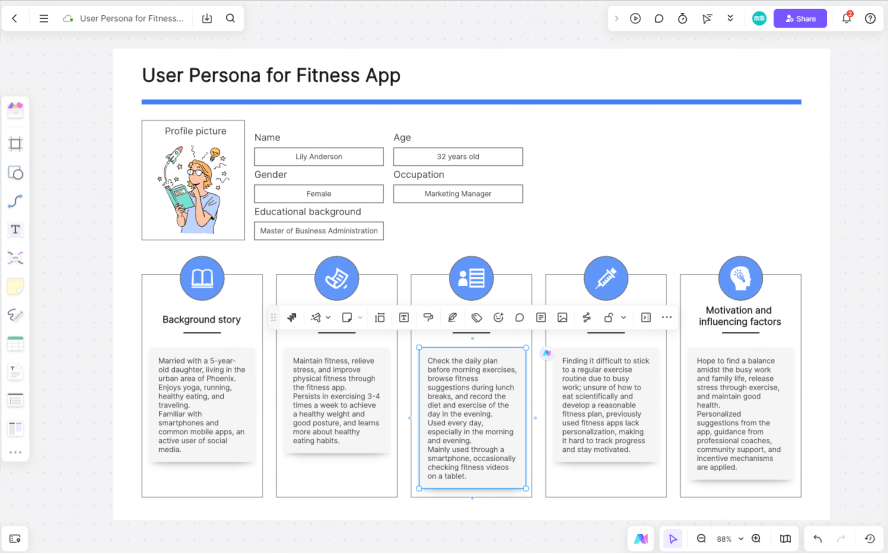
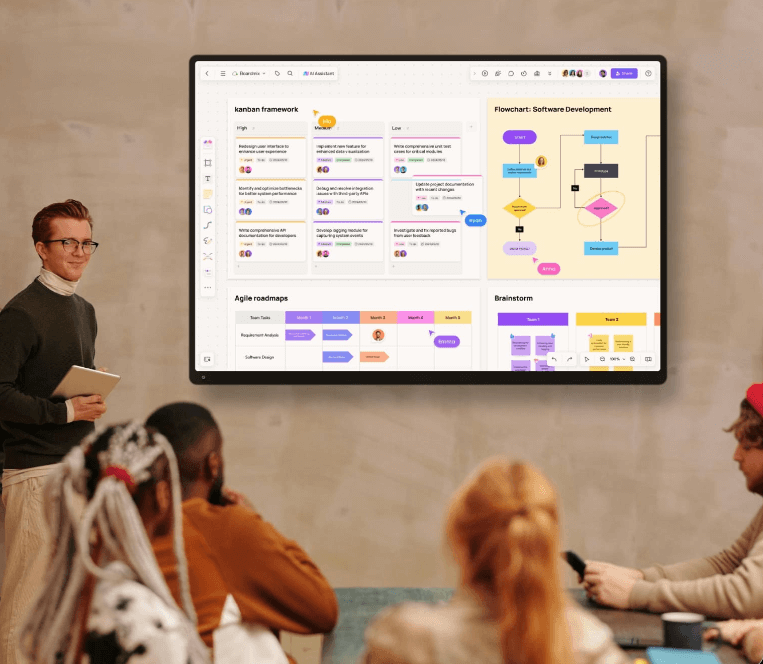
Once the persona is refined, share the Boardmix whiteboard link with your product, marketing, and sales teams to review details and gather feedback. Boardmix supports real-time multi-user annotation—team members can leave comments directly on specific persona attributes (e.g., "Our sales data shows this group is less price-sensitive than AI suggests") and edit the persona collaboratively, with synchronized editing history to track changes.
Use the whiteboard for cross-departmental brainstorming sessions (e.g., "How can we address this user’s pain point of slow shipping?") or leverage the AI Assistant to convert the persona into a formatted report or PowerPoint presentation for executive reviews or client pitches.
Conclusion
Creating AI user personas is simpler than ever with Boardmix. Just input targeted keywords, refine the AI-generated details to match your business context, and collaborate with your team in real time—all within a single, intuitive platform. Stop spending late nights crunching spreadsheets or manually coding survey data. Let AI automatically generate actionable insights into your users' age, preferences, spending habits, and future behavior. Before your next product planning session, marketing campaign launch, or user retention initiative, spend 10 minutes generating a persona with Boardmix. Understand your users effortlessly and double your team’s productivity by focusing on high-impact decisions, not data drudgery!
Ready to visualize your users with precision and speed? Try Boardmix AI Persona Generator for free today. Access all core features (including AI generation, visual dashboards, and team collaboration) with no time limits, and see how AI can transform your user research process from slow and static to fast and dynamic.