



AI competency modeling is a method that uses artificial intelligence to transform job requirements, performance data, and behavioral traits into a structured competency framework. An accurate AI-generated model serves as the core foundation for corporate recruitment screening, training development, and performance evaluation, outlining a high-fidelity talent profile for the organization.
This guide will explain how to build a talent profile through four key steps, covering the core concepts, tool recommendations, practical steps, and resource sharing related to AI competency model generation.
Definition & Core Value of AI-Generated Competency Models
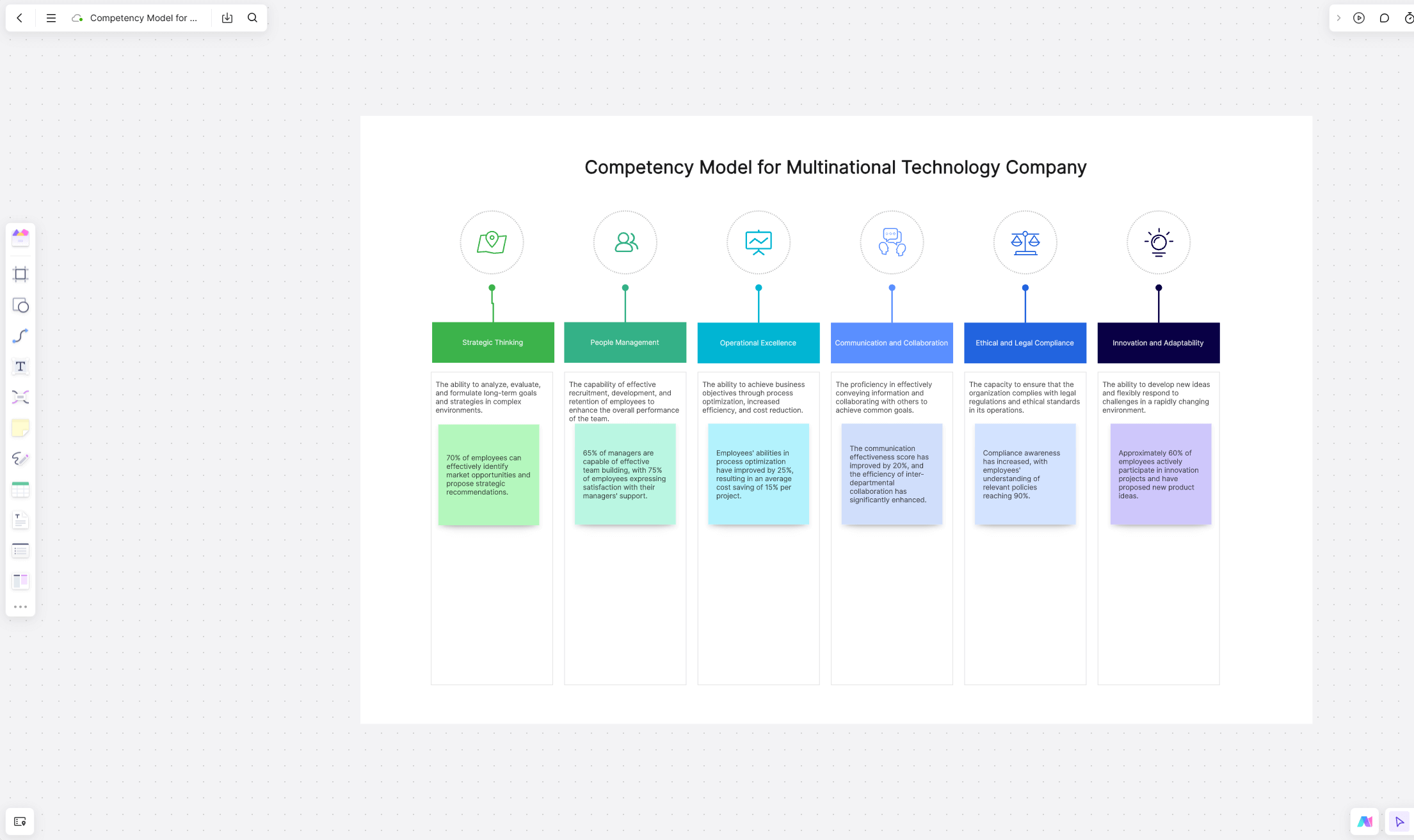
An AI-generated competency model uses technologies like machine learning and natural language processing to extract key competencies from vast amounts of job data, creating a visual model that includes competency dimensions, behavioral indicators, and evaluation criteria. Its core value lies in:
- Data-Driven Precision: Analyzes top performers and industry cases to identify core job competencies, minimizing human bias.
- Efficiency & Flexibility: Traditional modeling takes weeks of manual research; AI generates a first draft in hours and allows for quick adjustments.
- Full-Scenario Adaptability: Models can be applied across recruitment, training, and performance evaluation, creating a complete talent management cycle.
Recommended AI Competency Model Generators
Choosing the right professional tool significantly boosts modeling efficiency. Based on practical evaluation, here are some effective AI-powered competency model generators, followed by selection tips to help you decide quickly.
Boardmix
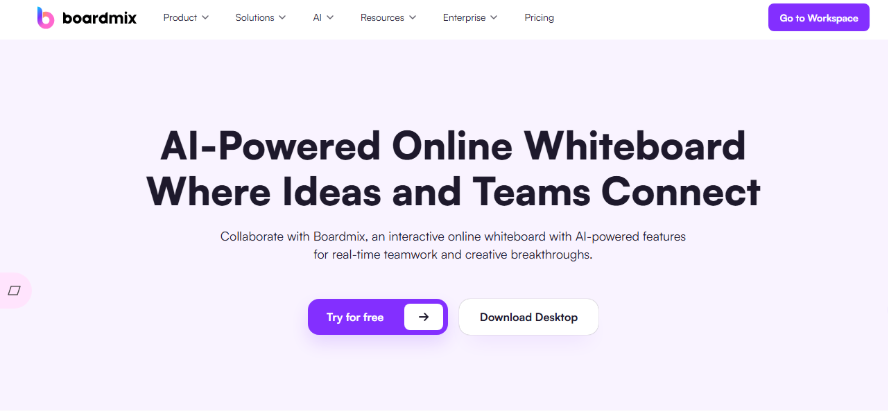
Boardmix is an online whiteboard with built-in AI for generating competency models. It integrates mind mapping, flowcharting, and presentation creation, supporting real-time collaboration for hundreds of users. It excels at generating professional management diagrams like competency models and Balanced Scorecards with AI, offering an end-to-end solution from needs analysis to visual presentation. It's widely used in HR management and strategic planning.
Key Advantages:
- Efficient & Accurate AI Modeling: Input a job description or performance data, and the AI automatically extracts key competencies to generate a visual model.
- Vast Template Library: Features numerous pre-built competency model templates for various industries and roles, saving time and aligning with business needs.
- Multi-Scenario Integration: Beyond competency models, it can generate business model canvases, McKinsey 7S diagrams, and more. It offers an infinite canvas, free-form layout, and seamless integration with tools like Slack and Microsoft Teams.
- End-to-End Collaborative Workflow: Enables online model review by cross-departmental experts with real-time commenting and feedback features.
- Flexible Pricing: A free basic plan, a comprehensive yet affordable Pro plan, and customizable Enterprise solutions for private deployment.
TalentLens
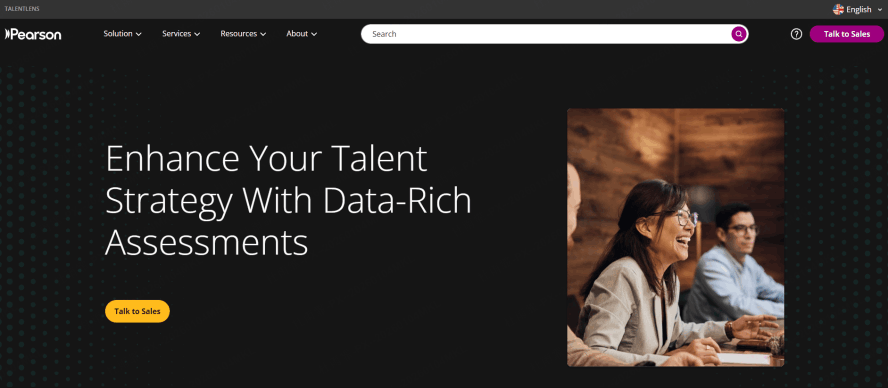
TalentLens is an AI-driven competency modeling and talent assessment tool. It integrates authoritative competency libraries like SHL to build models based on globally recognized standards. It's ideal for teams needing unified evaluation criteria or cross-regional talent reviews. For example, when setting competency requirements for overseas branches, it allows quick adoption of mature frameworks adjusted for local operations, reducing redundant modeling costs.
HireVue
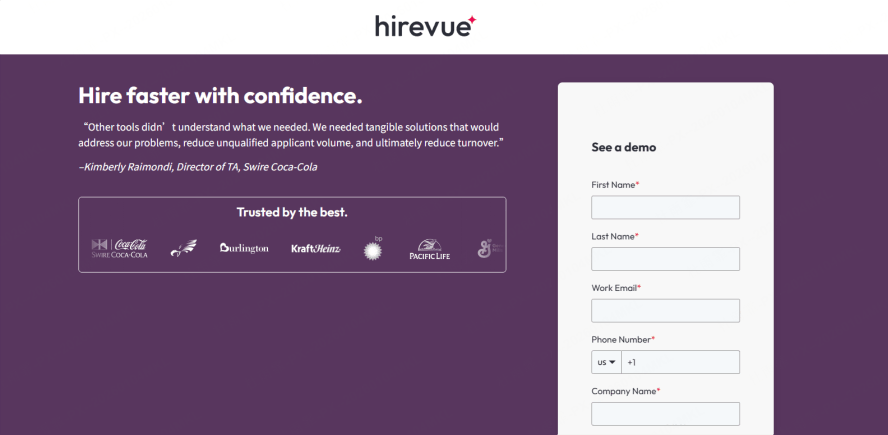
HireVue focuses on the recruitment process, deeply integrating video interviewing with AI analysis. It not only records candidates' verbal responses but also analyzes facial expressions, tone, and other nuances to generate models encompassing behavioral competencies like communication style and stress management. In practice, it helps recruiters by automatically flagging candidates who match preset behavioral indicators, reducing subjective bias and improving early screening efficiency and accuracy.
Gloat
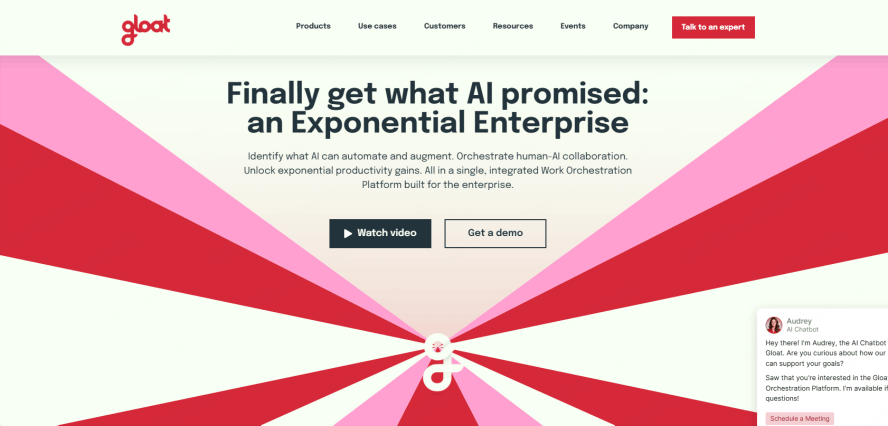
Gloat primarily serves internal talent management. By analyzing employee skill data, project experience, and role requirements via AI, it generates dynamic skill-matching models. It's particularly suitable for companies focused on talent mobility. For instance, in internal promotion or job rotation scenarios, it can identify skill gaps and role requirements in real-time, providing personalized development recommendations for employees.
Step-by-Step Guide to Creating an AI Competency Model
After researching various tools, Boardmix proved exceptionally user-friendly. Following its workflow, you can create an AI-generated competency model in just a few simple steps.
Step 1: Define Objectives & Prepare Data
First, determine the model's purpose (e.g., campus recruitment, executive selection).
Gather data like job descriptions, interview notes with top performers, and historical performance reviews.
Anonymize and clean the data, removing irrelevant details (e.g., names, non-core duties), to create a structured input document for optimal AI processing.
Step 2: Input Instructions for AI Draft Generation
Go to the Boardmix website and sign up/log in to your account.
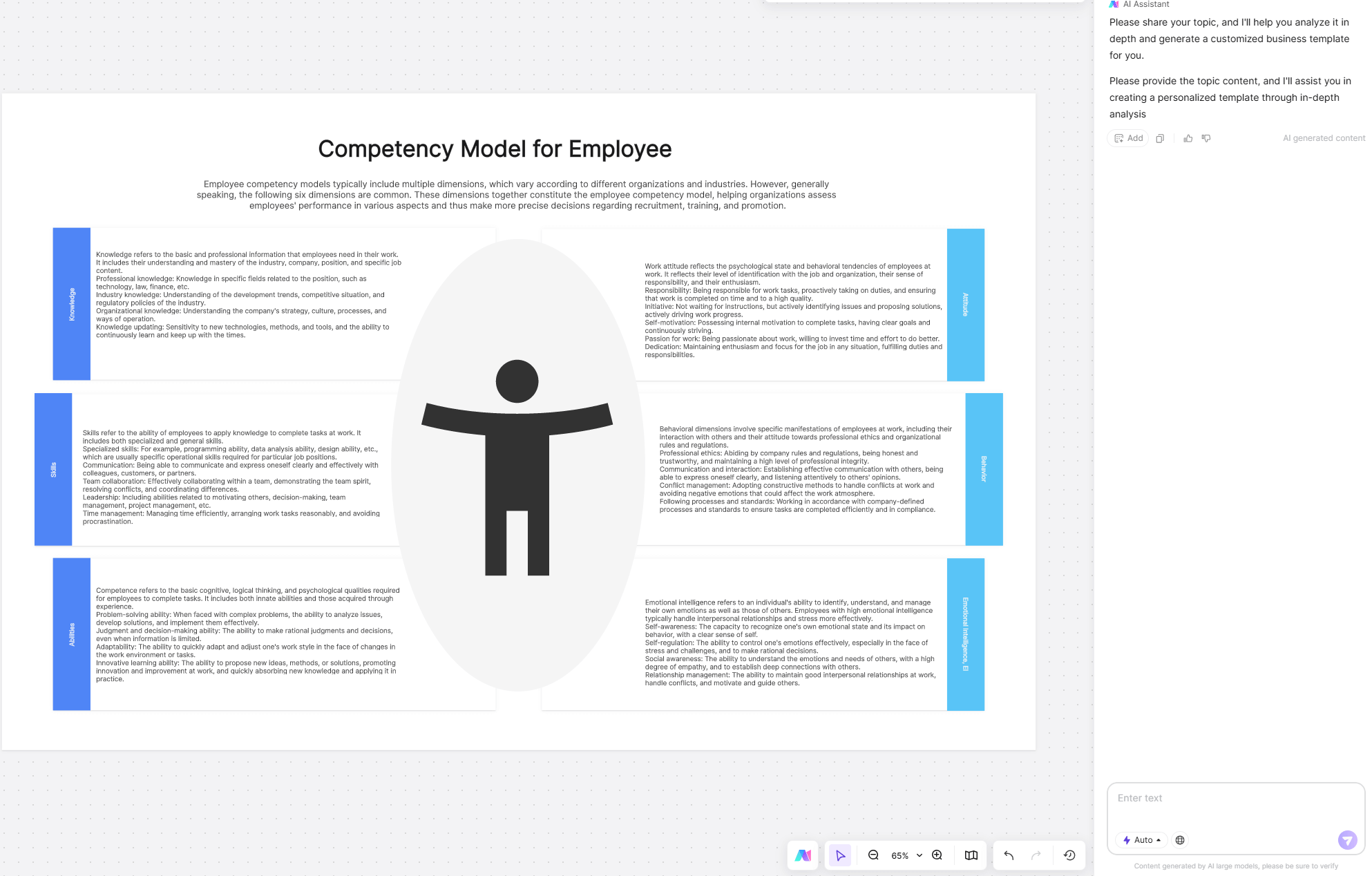
Create a new blank board. Click the "AI Assistant" on the bottom right, select "Analysis Report," and then choose "Competency Model."
In the AI dialog box, input an instruction like "Generate a competency model for a Social Media Manager." The system will produce a first draft with 5-7 core competencies within 2 minutes.
Step 3: Optimize the Model Collaboratively
Click the "Share" button (top right) to invite stakeholders like department heads and senior employees to review.
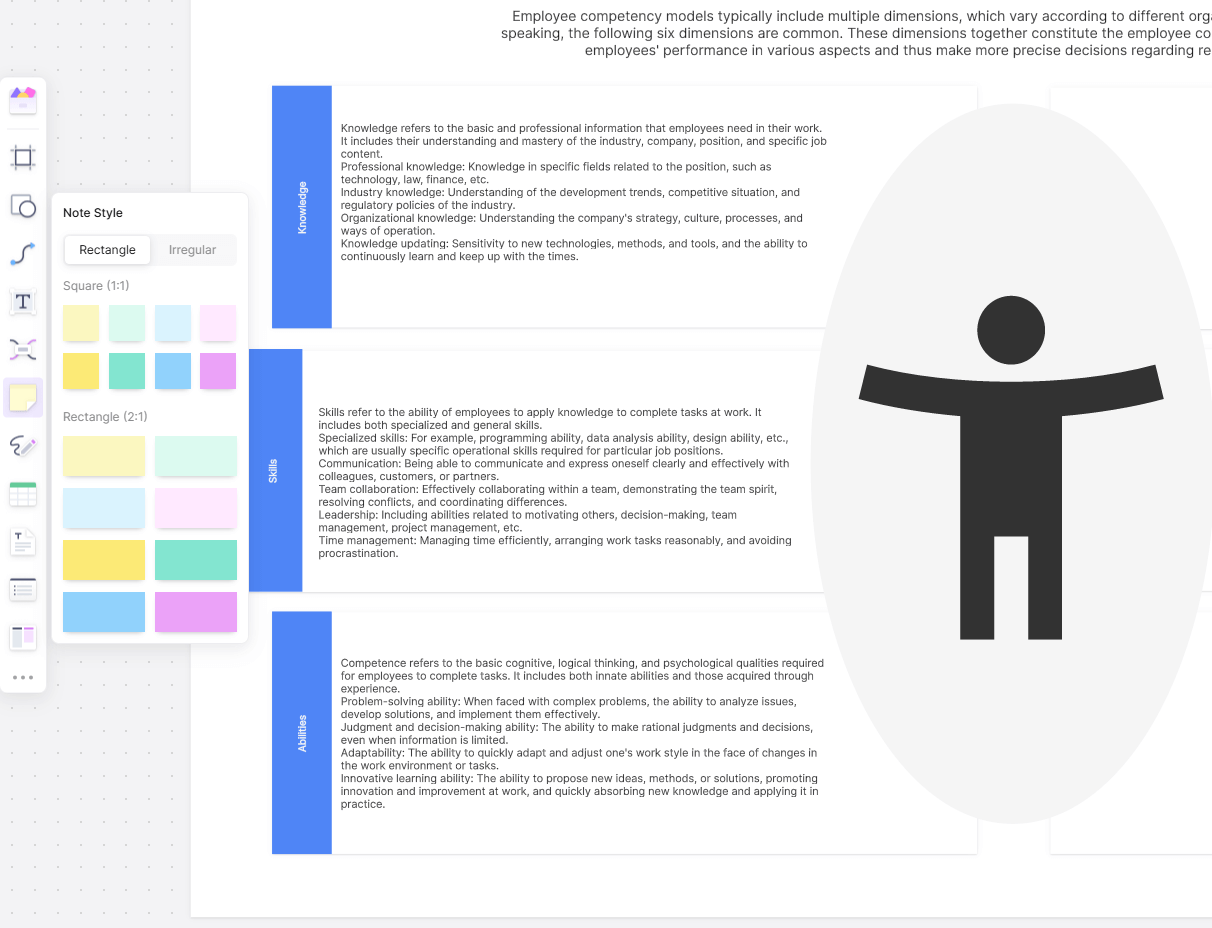
Use Boardmix's real-time collaboration features—comments, sticky notes—for online feedback and to add company-specific competencies.
Utilize the AI assistant to explore and add more relevant competency information, ensuring the model aligns perfectly with the role.
Step 4: Implement, Validate & Update
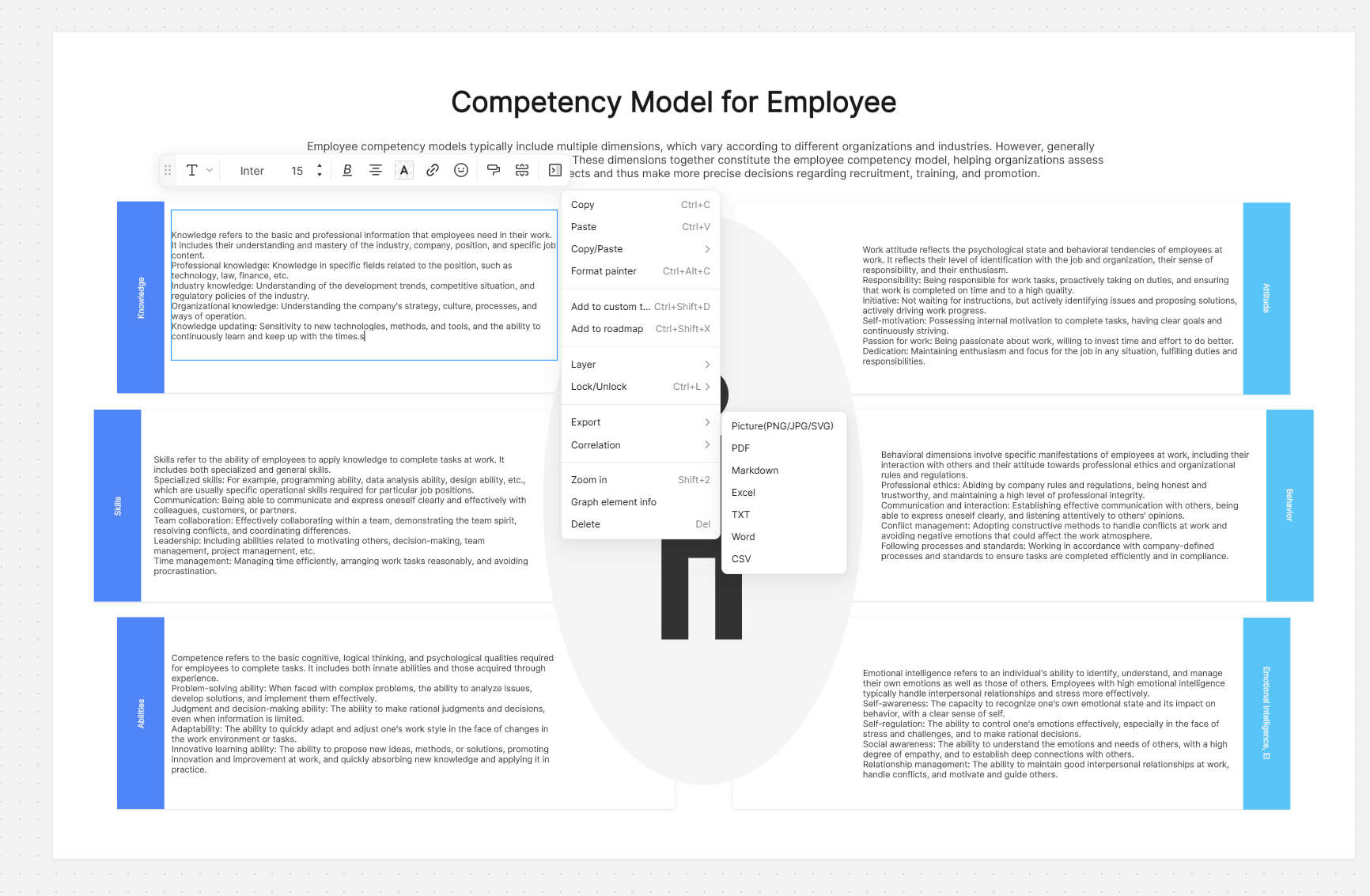
Test the optimized model in a pilot scenario (e.g., using it to screen new resumes). Compare metrics like hire-to-offer ratio or probationary performance to ensure accuracy improvements.
Save the final model as a custom template for reuse in interview scorecards, training program design, etc.
Schedule quarterly reviews to update the model with new data, ensuring its continuous evolution and relevance.
Competency Model Templates sharing
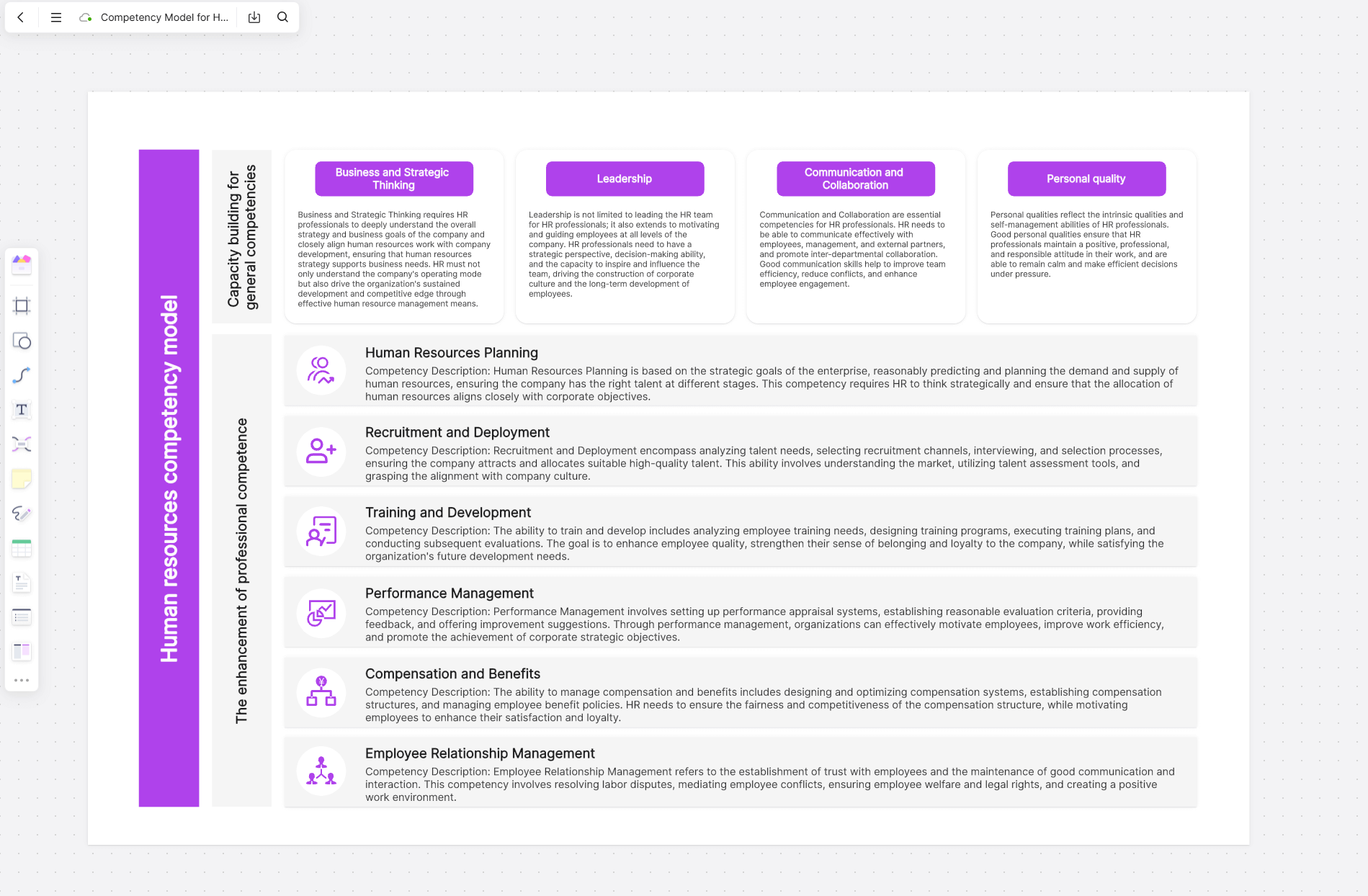
In corporate training and talent management, accurately assessing employee competency is key to improving team performance. The three models illustrated in the shared templates help businesses deeply understand employee capability structures and development paths.
- The Iceberg Model: Compares employee capability to an iceberg. 30% is visible (knowledge, hard skills). 70% is hidden beneath the surface (general cognitive abilities, self-concept, traits, motives). These deeper qualities, though less obvious, critically impact performance.
- The Skill-Challenge Model (Flow Channel): Work experience is determined by the interplay of task challenge and skill level. High challenge + high skill leads to engagement and "flow." High challenge + low skill causes anxiety. Low challenge + high skill leads to boredom. Low challenge + low skill results in apathy. Training should match task difficulty with skill levels to foster positive states.
- The Competency Architecture Model: Centers on "competence" and builds a 12-ability system from dimensions like Drive (why), Cognition & Values (what), Planning, and Review (how). Companies can use this for comprehensive employee assessment and development.
Using these models, businesses can systematically understand employee competencies—from surface skills to deep-seated traits, and from task design to capability cultivation—to holistically optimize training and talent management strategies.
Conclusion
AI-generated competency models use technology to make talent profiling accurate and straightforward, solving core pain points like vague role requirements and inefficient modeling. Whether building a model for a new role or refining an existing system, mastering this tool aligns talent management with strategic needs.
Ready to create your own competency models?
Boardmix, with its efficient AI modeling, vast template library, and end-to-end collaborative online whiteboard features, makes the process simpler and more precise. It's an optimal tool to unlock the value of competency modeling and gain an edge in talent management.
Sign up for a free Boardmix account today and start building your data-driven talent profiles.