The best AI mind map tool depends on what you need it to turn into a map: a short prompt, a PDF or video, or a live team workshop. Boardmix is a practical fit for teams that want an AI draft on an editable visual canvas; Xmind and MindMeister support a broad range of source inputs; Miro and Lucid suit diagram-intensive team workflows; and MindNode is the Apple-first option. This comparison explains the trade-offs so you can choose by workflow instead of by the longest feature list.
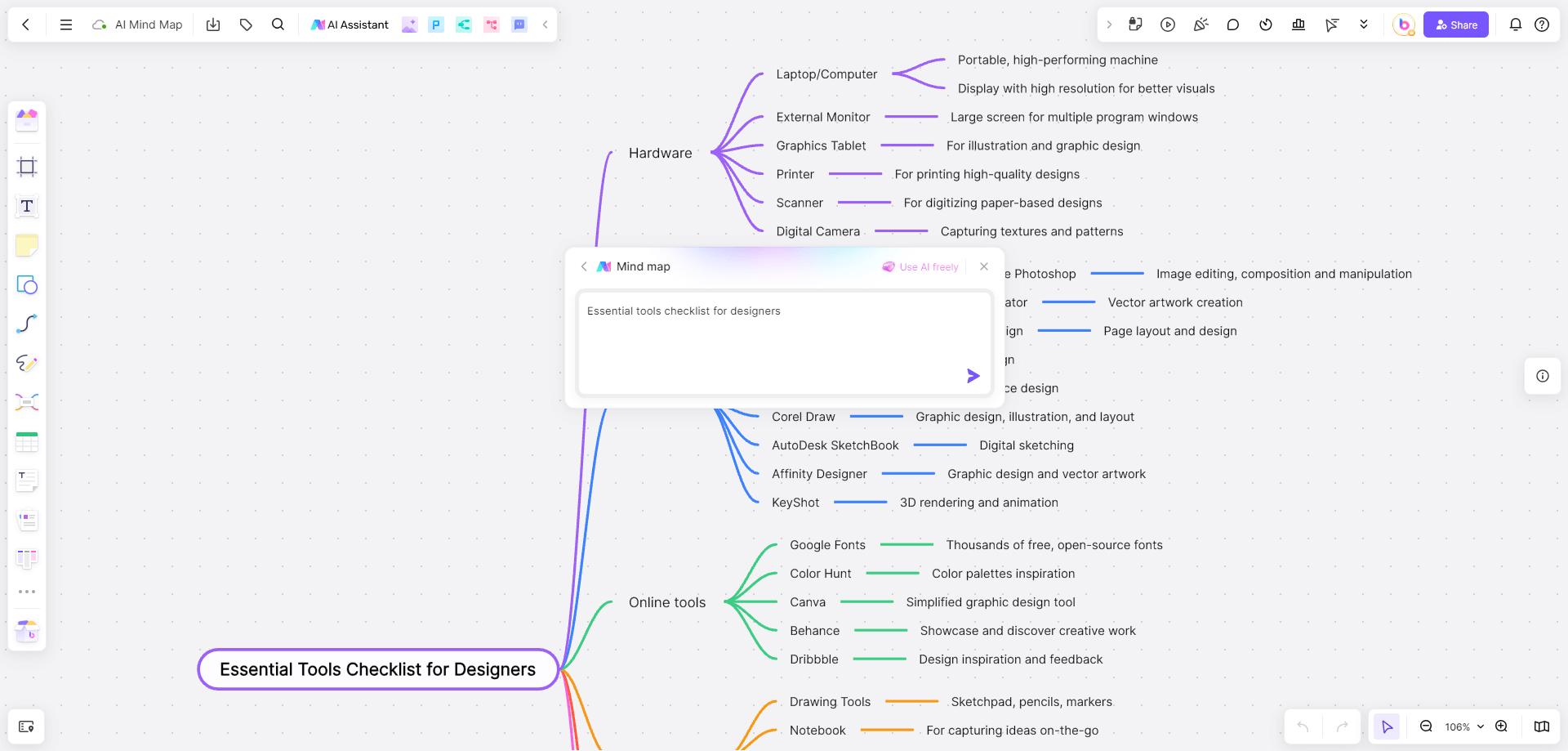

Quick Picks and How We Compared the Tools
If you already know the job, start with these shortlists:
- Editable team workspace: Boardmix, Miro, or Lucid.
- Prompt plus document inputs: MindMeister or Xmind.
- PDF, webpage, video, or audio summarization: Mapify or MindMap AI.
- Apple-first, on-device brainstorming: MindNode on supported Apple Intelligence devices.
- Fast branch expansion in a lightweight canvas: Whimsical AI.
- Mind maps connected to task management: Ayoa.
We compared each product on six decision points: what the AI can accept, what it actually generates, how much control you retain after generation, collaboration and sharing, export portability, and the reality of free access. A tool was included in the ranked ten only when its current official documentation describes native AI mind map generation or expansion. That rule is why Coggle, Scapple, and SimpleMind are discussed as traditional alternatives rather than labeled as native AI generators. Boardmix publishes this comparison; product and plan details were verified against the linked official sources on September 28, 2026, and no controlled performance benchmark was conducted.
AI Mind Map Tools Comparison
The table uses plan information available on the check date. "Free access" does not mean unlimited AI use; credits, board limits, watermarks, platform restrictions, and beta policies still matter.
| Tool | Best for | AI inputs | Editing, collaboration, and export | Free plan and limits | Watch out for |
|---|---|---|---|---|---|
| 1. Boardmix | Editable team whiteboards | Prompt and text-led generation | Editable canvas, real-time collaboration, presentation, and import/export workflow | Free entry; current AI allowances depend on plan | Broader whiteboard workspace may be more than a solo mapper needs |
| 2. MindMeister | Web mind maps from office files | Prompt, PDF, DOCX, XLSX, PPTX, image | Editable web map with collaborators; export access depends on plan | AI beta on all plans; official help currently states five AI maps per day | AI generation is web-only during the current beta |
| 3. Ayoa | Mind maps linked to tasks | Prompt, documents, slides, YouTube, audio, image | Editable maps, task views, team sharing; export options vary by plan | Seven-day Ultimate trial; continuing AI requires Ultimate | AI is not included in the continuing Free plan |
| 4. Xmind | Many input types and polished maps | Prompt, file, image, webpage, YouTube | Editable map, AI chat/expansion, collaboration, and broad exports | Free workspace and trial AI credits; some AI features require Premium | Ongoing AI access is subject to the plan |
| 5. Miro | Workshops on a visual team canvas | Prompt and selected text | Editable team canvas with real-time work and image/PDF export | Free plan has three editable boards and limited AI use | Board and AI allowances vary by plan |
| 6. MindNode | Apple-first, on-device brainstorming | Topic and branch expansion on supported devices | Editable Apple-native map with sharing and standard export options | Basic editing is free; AI features are part of Plus | Apple ecosystem and hardware requirements |
| 7. Lucid AI | Mind maps inside a diagram workspace | Text prompt | Editable Lucidchart/Lucidspark canvas, real-time collaboration, and PDF/PNG/JPEG/SVG exports | Lucid AI is currently available across plan levels | AI usage policy may change; best fit is the Lucid workspace |
| 8. Whimsical AI | Expanding an existing mind-map branch | Selected node and surrounding branch context | Editable collaborative canvas; Free exports can carry a watermark | Limited AI credits and board objects on Free | The cited AI workflow expands nodes rather than ingesting long source files |
| 9. Mapify | Turning long sources into maps | Prompt, PDF, document, webpage, YouTube; more media on paid plans | Editable maps; PDF, Markdown, and SVG exports depend on plan | Official pricing currently lists 30 one-time free credits | Advanced inputs and exports are subject to the plan |
| 10. MindMap AI | Multi-format input plus same-map AI copilot | Prompt, document, image, audio, video, webpage | Editable, shareable maps with PDF, PNG, Markdown, and project exports | Official pricing currently lists 50 monthly free credits | Credit use grows with repeated AI actions |
Detailed Reviews and Commonly Misclassified Alternatives
The table carries the ranked order. The detailed notes below cover those ten tools plus three commonly misclassified manual alternatives, each clearly marked Not Ranked.
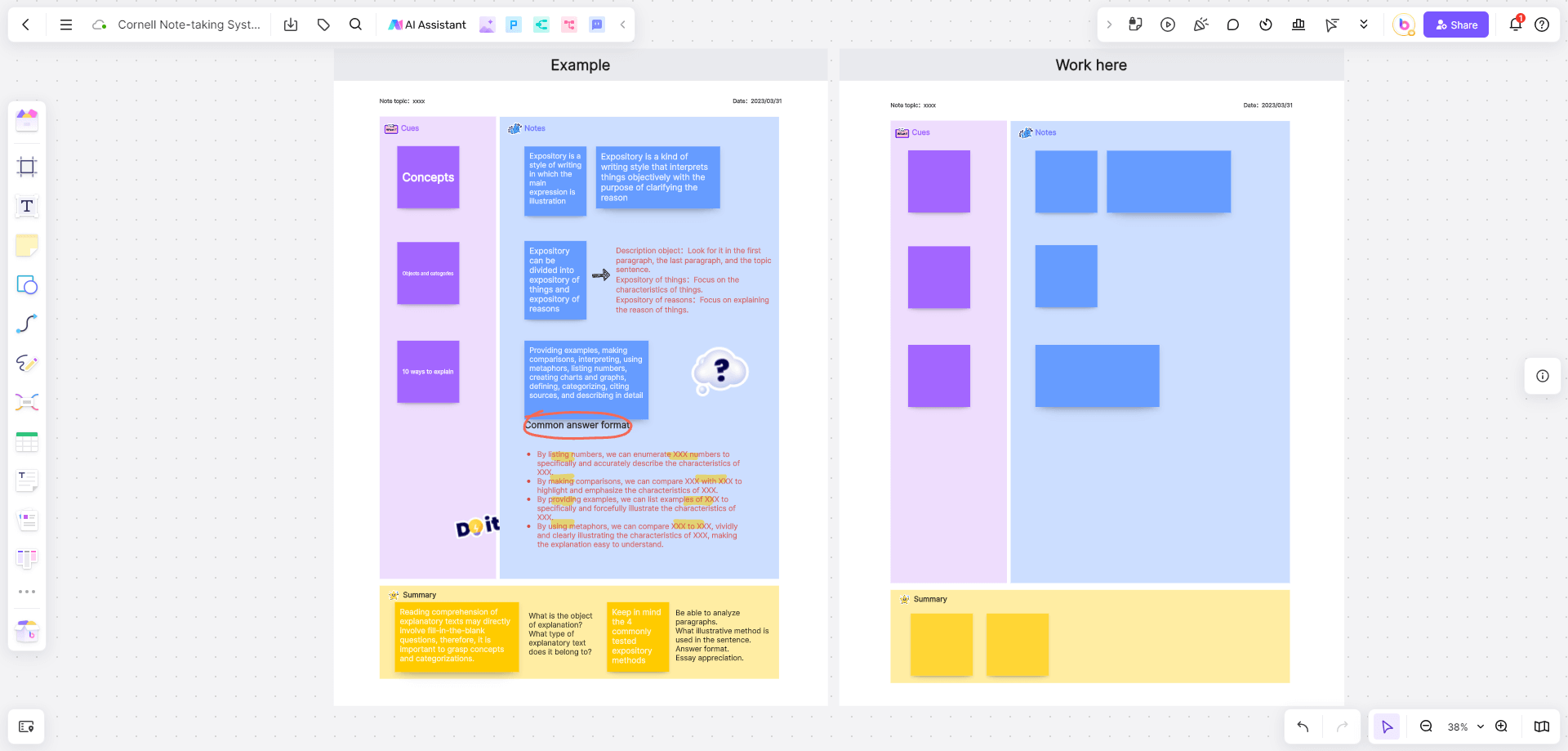
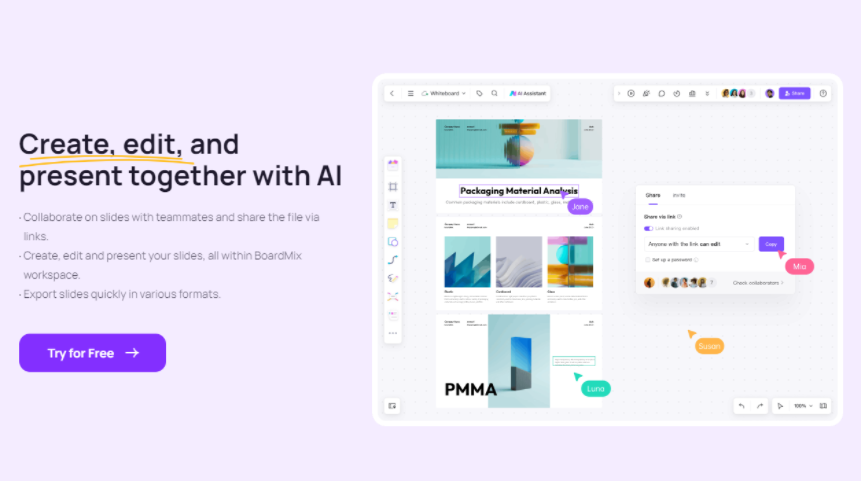
Boardmix: Best for an Editable Team Whiteboard
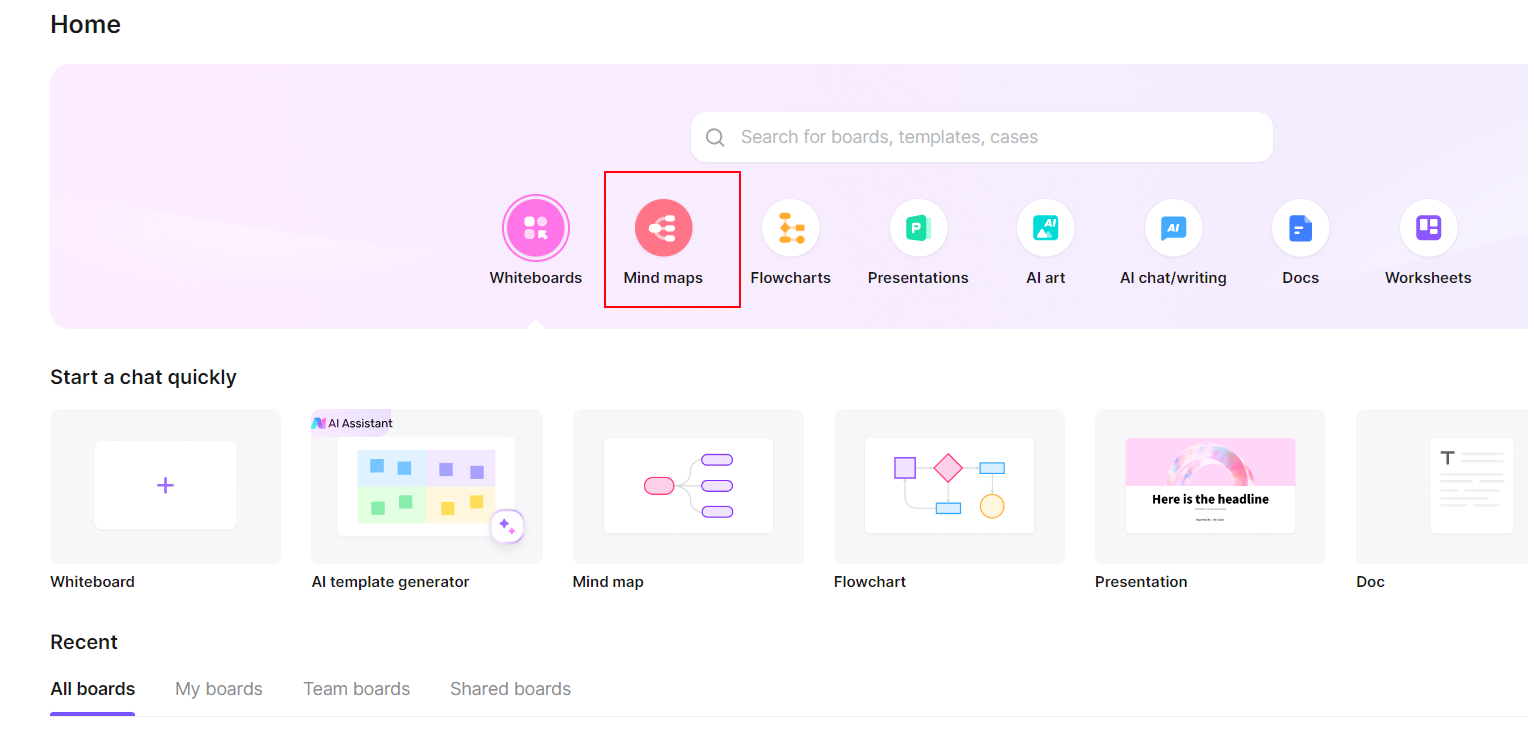
What the AI does: The Boardmix AI mind map workflow can turn a prompt into a structured starting map. The output remains on an editable canvas rather than becoming a static image.
After generation: Teams can reorganize branches, add files and visual elements, collaborate in real time, use version history, and present from the same workspace. This makes Boardmix especially useful when the map is the beginning of a workshop, plan, or presentation rather than the final artifact.
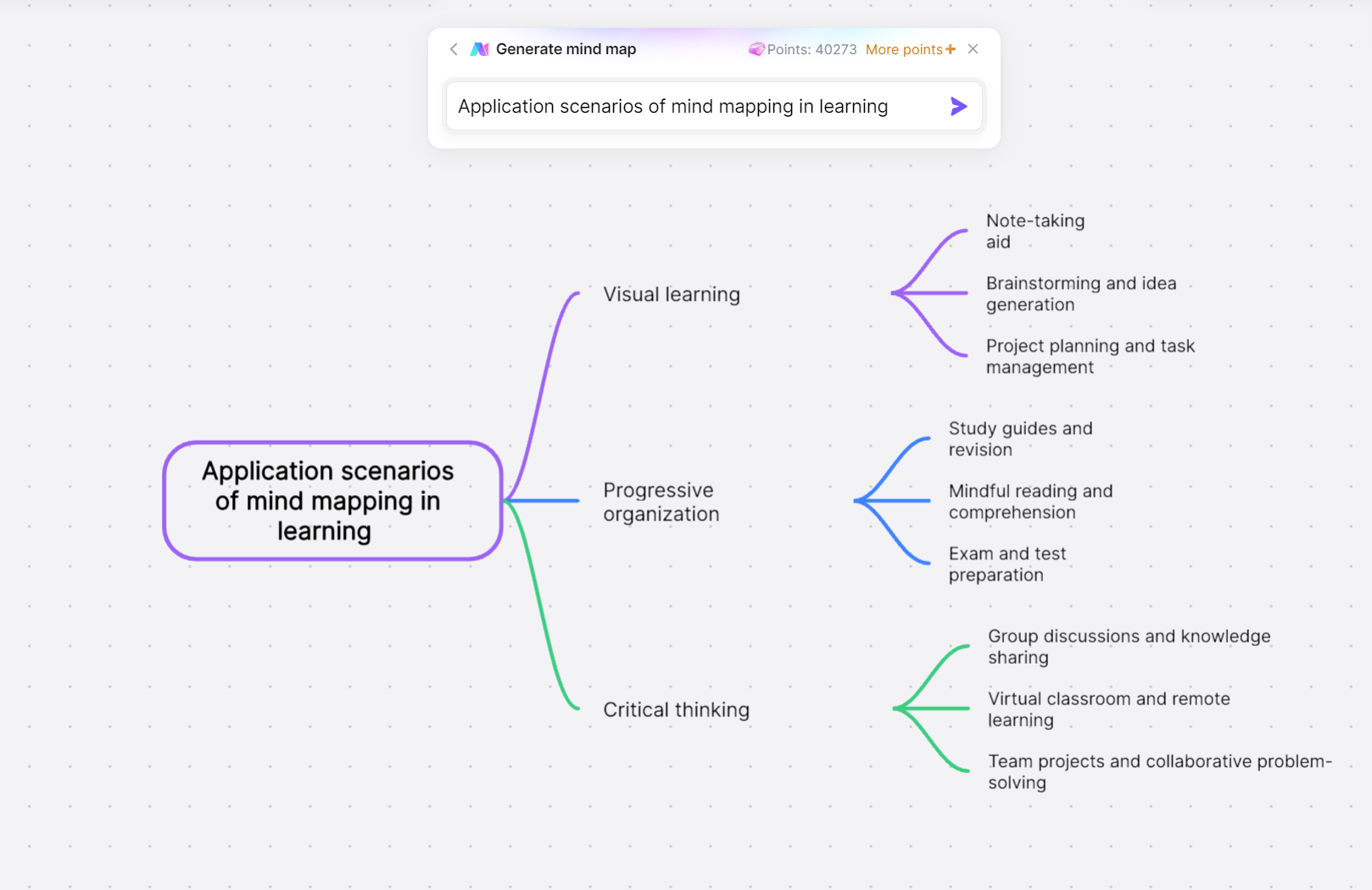
Free plan and limits: You can start free, but current AI usage and workspace limits depend on the selected plan. Check the live product and pricing pages before standardizing a team workflow.
Watch out for: The full whiteboard workspace has more controls than a user who only wants a small personal mind map may need.
MindMeister: Best for Web Maps from Office Files
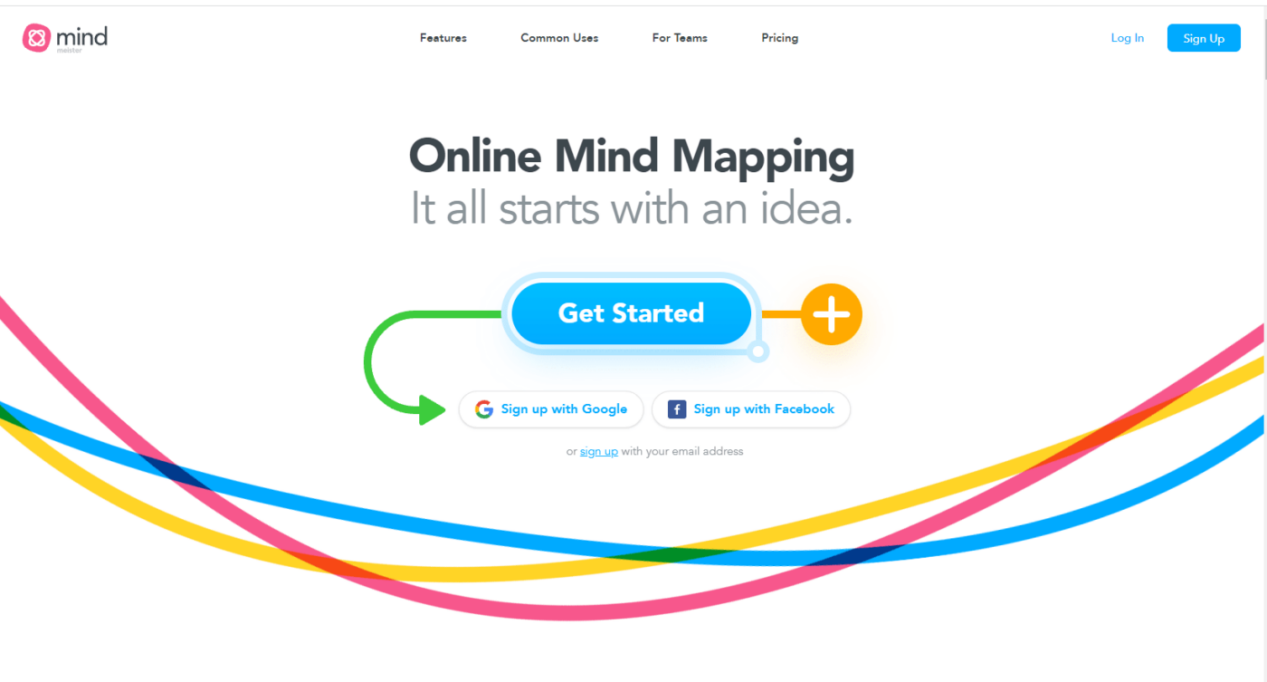
What the AI does: MindMeister's official AI beta guide supports prompts plus PDF, DOCX, XLSX, PPTX, and image inputs. It generates an editable mind map in the web app.
After generation: The result remains an editable web mind map that can be reorganized and shared with collaborators; export access depends on the selected plan.
Free plan and limits: The help page currently says the beta is available on all plans with up to five AI-generated maps per day.
Watch out for: AI generation is web-only during the current beta, and the daily allowance should be treated as current product policy rather than a permanent entitlement.
Ayoa: Best for Connecting Mind Maps and Tasks
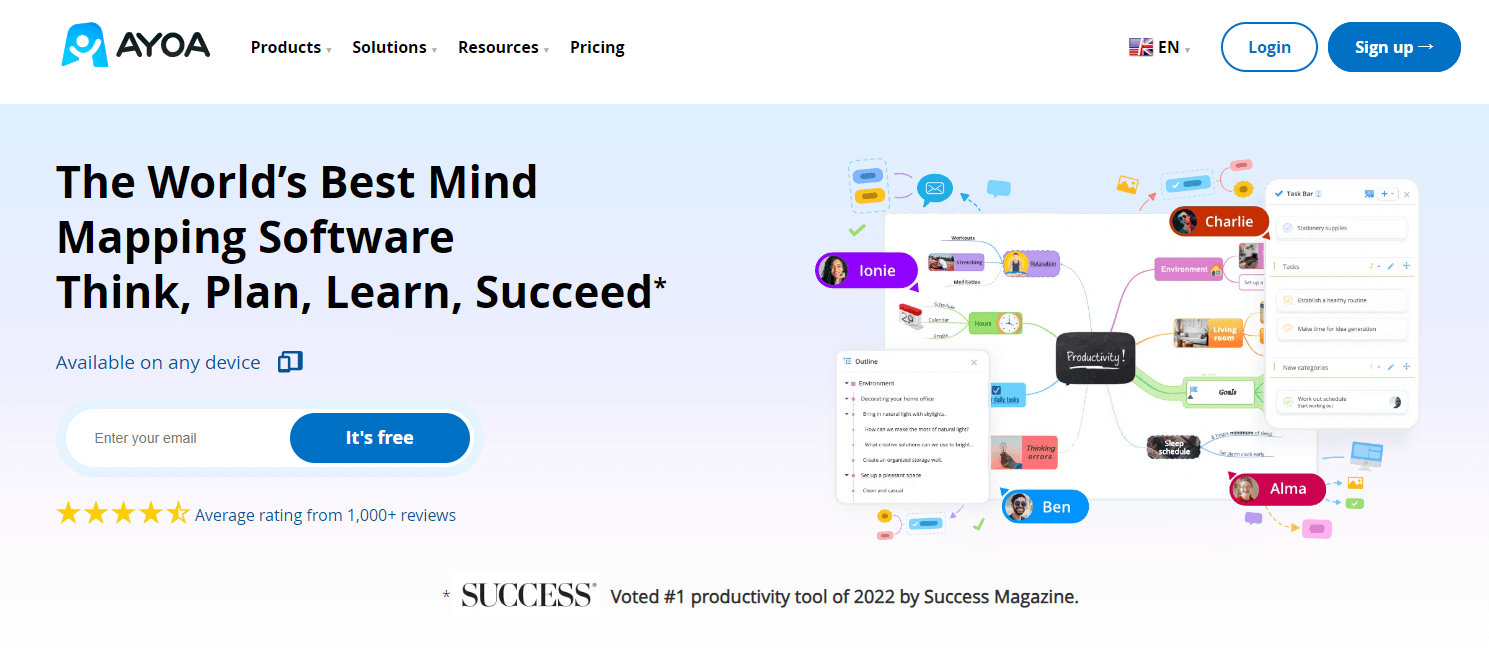
What the AI does: Ayoa can create and expand maps from prompts and several source types, including documents, presentations, YouTube content, audio, and images. Its official AI feature page also emphasizes keeping the user in control of branch development.
After generation: The differentiator is the connection between visual thinking and task management, which can reduce the handoff from brainstorming to assigned work.
Free plan and limits: Ayoa's free plan supports manual maps, but current AI features require the Ultimate tier after the trial.
Watch out for: Confirm that the combined mind map and task workflow is useful to your team before paying for Ultimate solely to obtain AI.
Xmind: Best for Broad Source Inputs and Polished Output
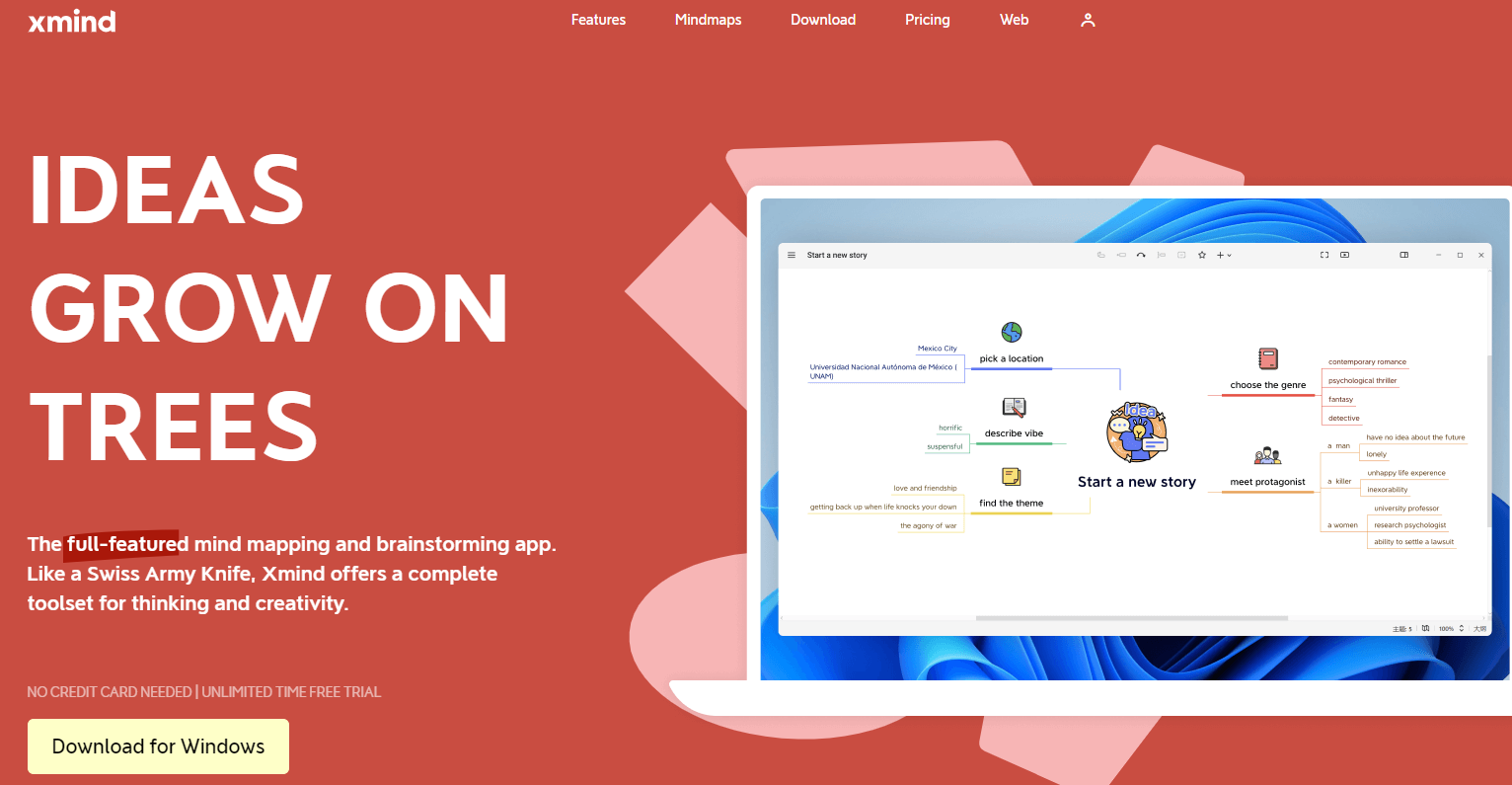
What the AI does: Xmind's AI guide documents generation from a prompt, file, image, webpage, or YouTube link, followed by AI chat, expansion, and reorganization on an editable map.
After generation: Xmind combines structured mind mapping with layout and presentation controls across web, desktop, and mobile workflows.
Free plan and limits: A free workspace and trial AI credits are available, while ongoing text-to-map and source-summary capabilities can require Premium. Verify the current pricing table for the exact allowance.
Watch out for: Do not assume that trial AI credits represent continuing free access to every source-to-map feature.
Miro: Best for AI Mind Maps in Team Workshops
What the AI does: Miro's AI documentation describes creating a mind map from a prompt and continuing to edit it on the canvas.
After generation: Miro is strongest when the map sits beside sticky notes, diagrams, research, and facilitation activities in a shared workshop board.
Free plan and limits: The Free plan currently includes three editable team boards and limited AI exploration.
Watch out for: Larger teams should compare board governance and AI allowances rather than assuming the free experience scales.
MindNode: Best for Apple-First, On-Device Brainstorming
What the AI does: MindNode's Apple Intelligence workflow can brainstorm, expand, and summarize content on supported Apple devices. The product separately documents a Mac-only MCP connection for approved external AI assistants.
After generation: The result stays in a focused Apple-native mapping environment with familiar editing, tags, and visual organization.
Free plan and limits: Basic editing remains available without Plus, while the documented AI features are part of the paid experience and depend on supported Apple hardware.
Watch out for: The Apple Intelligence path is on-device, but the separate MCP path can let the connected assistant send accessed data to its own provider. This is not a generic cross-platform AI service.
Coggle: Traditional Collaborative Mapper (Not Ranked)
Coggle remains a simple web-based option for manual mind mapping, automatic branch layout, version history, and real-time collaboration. However, its current official feature page does not document native prompt-to-map or AI branch generation. You can manually import or arrange an outline created elsewhere, but that is different from built-in AI.
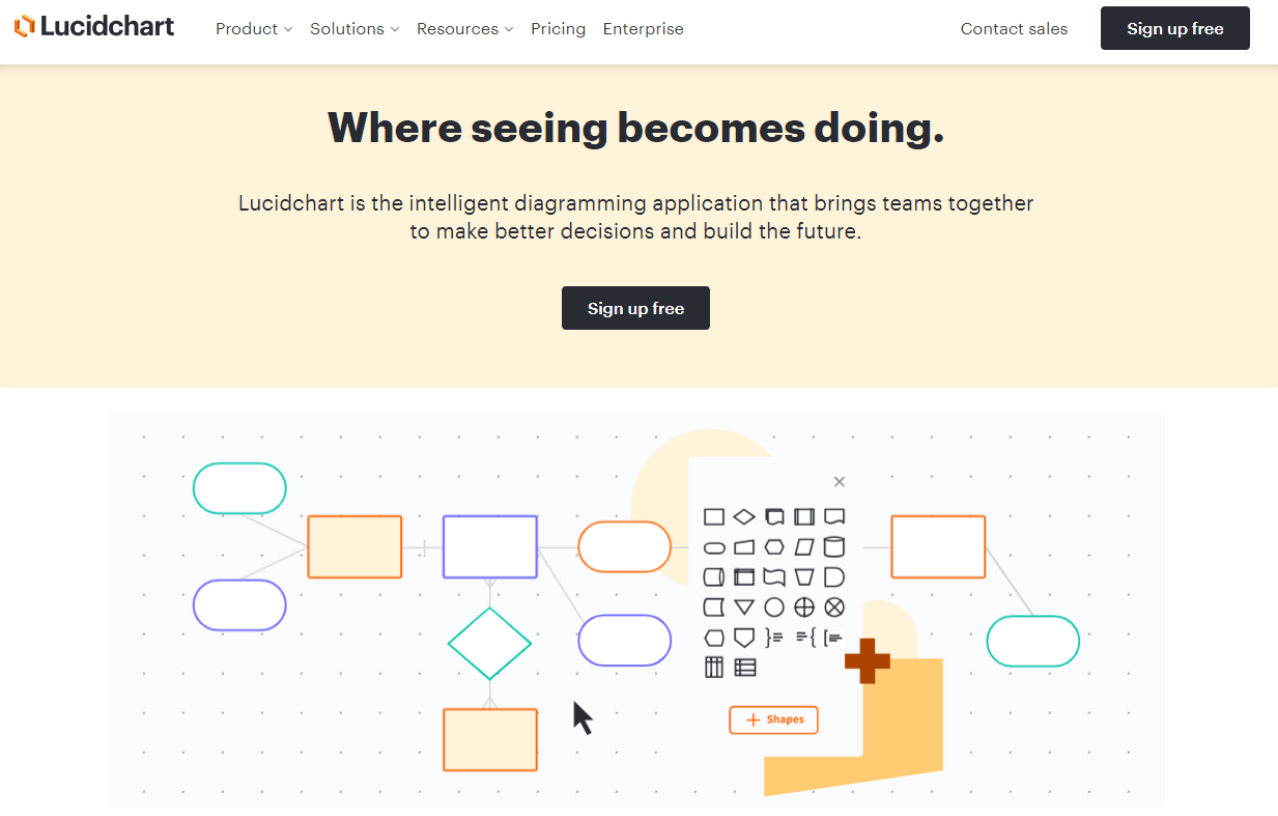
Lucid AI (Lucidchart and Lucidspark): Best for Diagram-Centered Teams
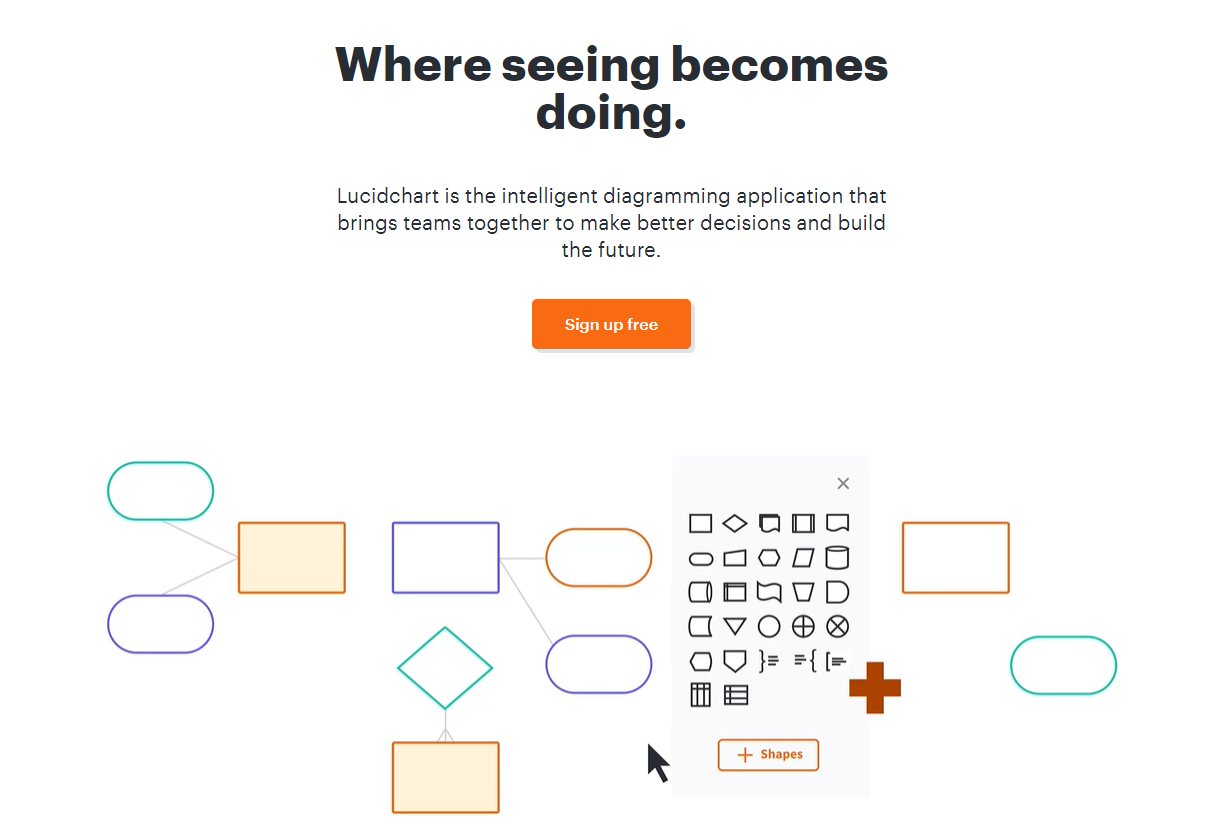
What the AI does: Lucid AI can generate a mind map from a text prompt in Lucidchart or Lucidspark and place it in an editable Lucid workspace.
After generation: Teams can expand the result into related diagrams, workshop artifacts, and collaborative planning. The official generation guide also covers supported AI diagram creation.
Free plan and limits: Lucid currently makes AI available across plan levels, but feature availability and usage policy may change.
Watch out for: The workflow is most compelling for teams already using the Lucid visual workspace; compare current usage limits before rollout.
Scapple: Freeform Desktop Notes (Not Ranked)
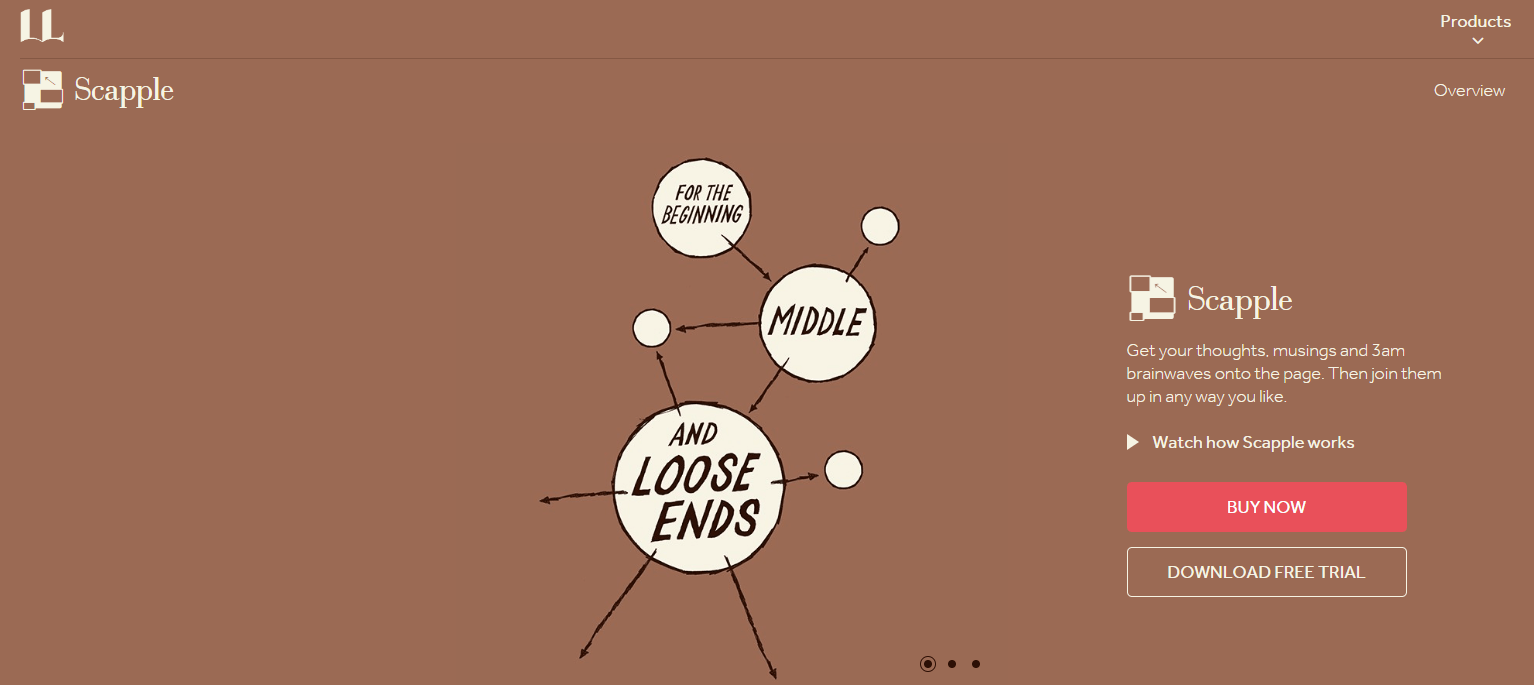
Scapple is a flexible desktop canvas for connecting freeform notes, particularly for writers and researchers. Its official manual explicitly states that Scapple itself contains no AI. It can still be a useful place to arrange ideas produced by you or an external assistant, but calling it an AI mind map generator would be inaccurate.
SimpleMind: Manual Mapping with an External AI Handoff (Not Ranked)
SimpleMind is a cross-platform manual mind mapping application with layouts, formatting, and export options. Its documented ChatGPT workflow uses an external assistant and an OPML copy/paste process rather than native in-app generation. See SimpleMind's official ChatGPT workflow if that handoff suits you, but evaluate it separately from tools with built-in AI.
Whimsical AI: Best for Fast Branch Expansion
What the AI does: Whimsical's official AI mind map guide documents expanding a selected mind-map node with up to five AI-suggested child nodes. It also says the prompt text is sent to Anthropic.
After generation: The suggested child nodes stay on an editable collaborative canvas, where the team can rewrite, move, or remove them.
Free plan and limits: The Free plan has limited AI credits and board objects, and exported files can include a watermark.
Watch out for: The cited workflow expands an existing branch; do not treat it as evidence of long-document ingestion or an automatic full-map benchmark.
Mapify: Best for Long Documents, Webpages, and Video
What the AI does: Mapify focuses on turning PDFs, documents, webpages, YouTube videos, and other long sources into structured maps. Paid options extend the supported media and research workflows.
After generation: The map can be edited and, depending on plan, exported to PDF, Markdown, or SVG for the next stage of work.
Free plan and limits: The current official pricing page lists a one-time free credit allocation, while advanced inputs and export formats are subject to the plan.
Watch out for: Use it for source compression, then verify important claims against the original material instead of treating the summary as a citation.
MindMap AI: Best for Multi-Format Input and an Ongoing Copilot
What the AI does: MindMap AI's feature page covers prompts, documents, images, audio, video, and webpages, plus follow-up AI actions inside the same map.
After generation: Maps remain editable and can be shared or exported in several formats. This is useful when the work involves repeated refinement rather than one prompt and one result.
Free plan and limits: The current pricing page lists monthly free credits and manual projects within the plan limits.
Watch out for: Repeated AI actions consume credits, so compare the workflow cost and input sensitivity rather than only the initial generation.
How to Choose an AI Mind Map Tool
Start with the source, not the brand. For a short prompt, nearly every ranked tool can create a useful first structure. For PDFs, slides, webpages, or video, prioritize products that explicitly support that input. For a live workshop, editing and collaboration after generation are more important than the number of input formats.
- Prompt to editable team map: shortlist Boardmix, Miro, Lucid, or Whimsical.
- Office files to web mind map: compare MindMeister and Xmind.
- Long-form source summarization: compare Mapify and MindMap AI, then check the map against the source.
- Tasks after brainstorming: consider Ayoa.
- Apple-first privacy and device workflow: consider MindNode on supported hardware.
Then inspect what happens after generation. A good-looking first map is not enough. Confirm that you can move branches, add missing evidence, retain links to sources, collaborate with the right permissions, and export to a format your next tool accepts. A free plan that creates one map but blocks useful export may be less valuable than a trial of the complete workflow.
From AI Draft to Reviewed Team Mind Map in Boardmix
The following workflow keeps the useful seven-step process from the original article, but treats AI output as a draft to review rather than a finished answer. For a dedicated generation tutorial, see how to automatically generate an AI mind map.
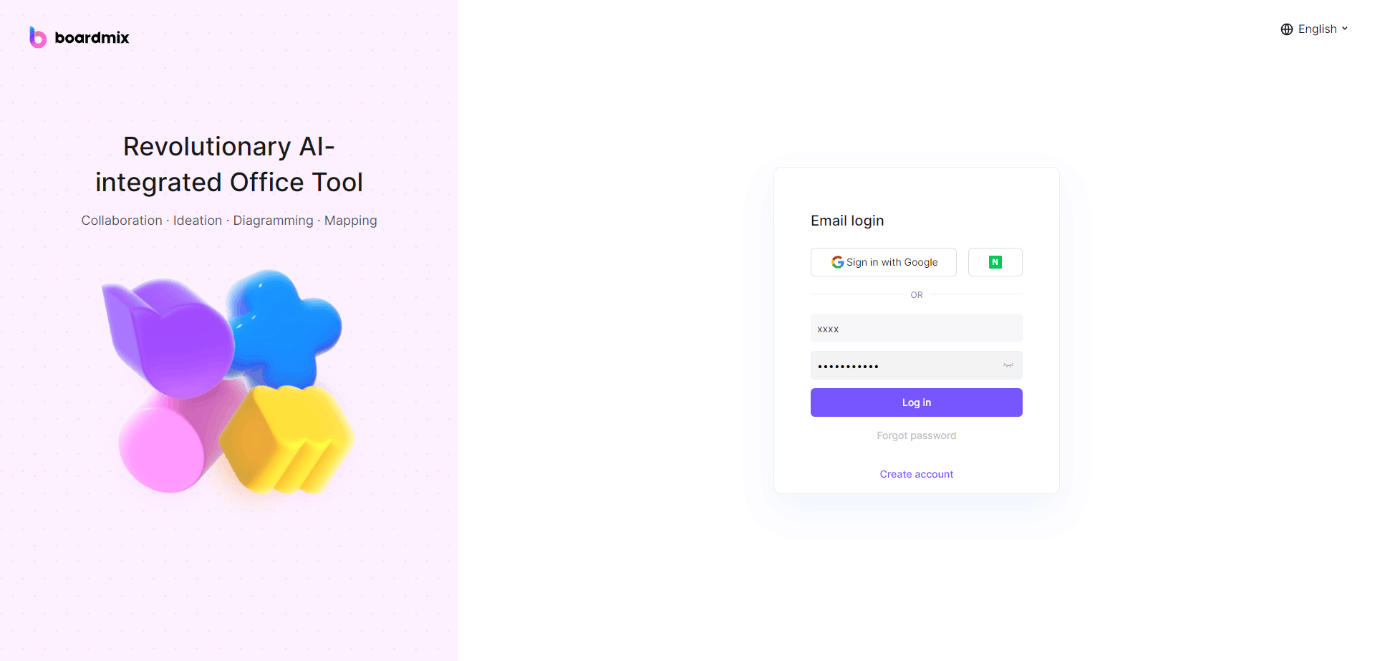
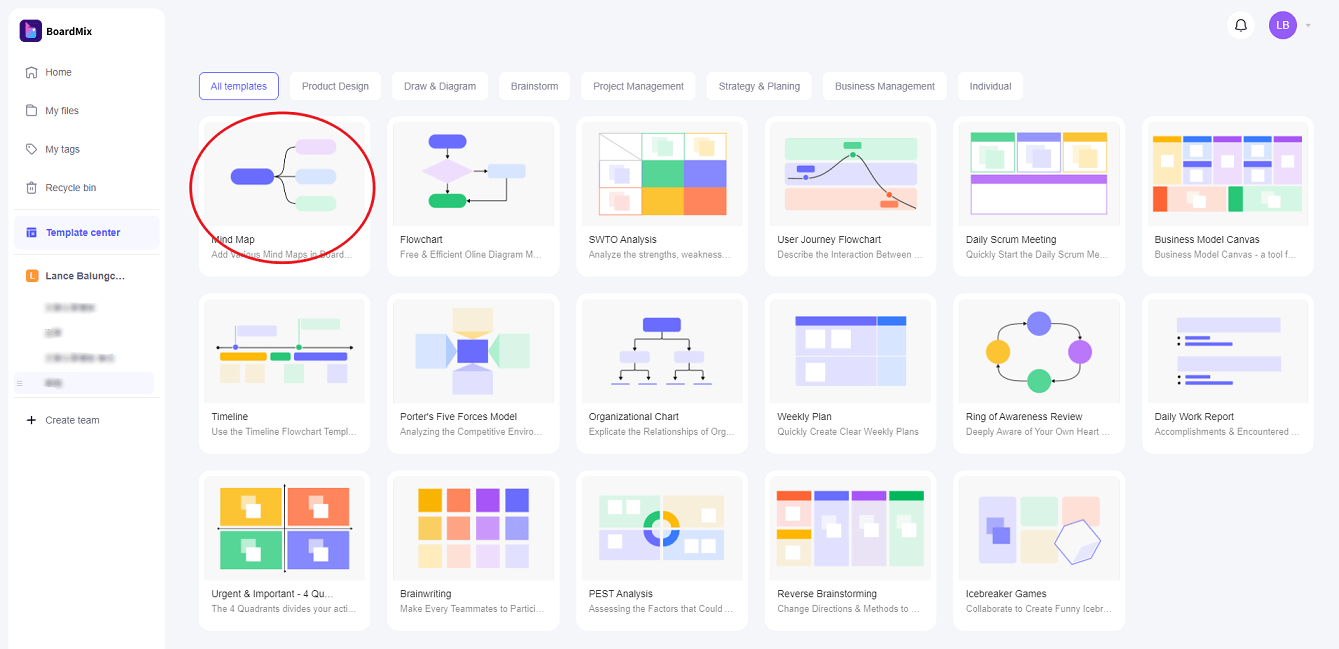
Step 1: Open the workspace and define the decision. Sign in, create or open the appropriate workspace, and write down the audience, purpose, and expected output before prompting.
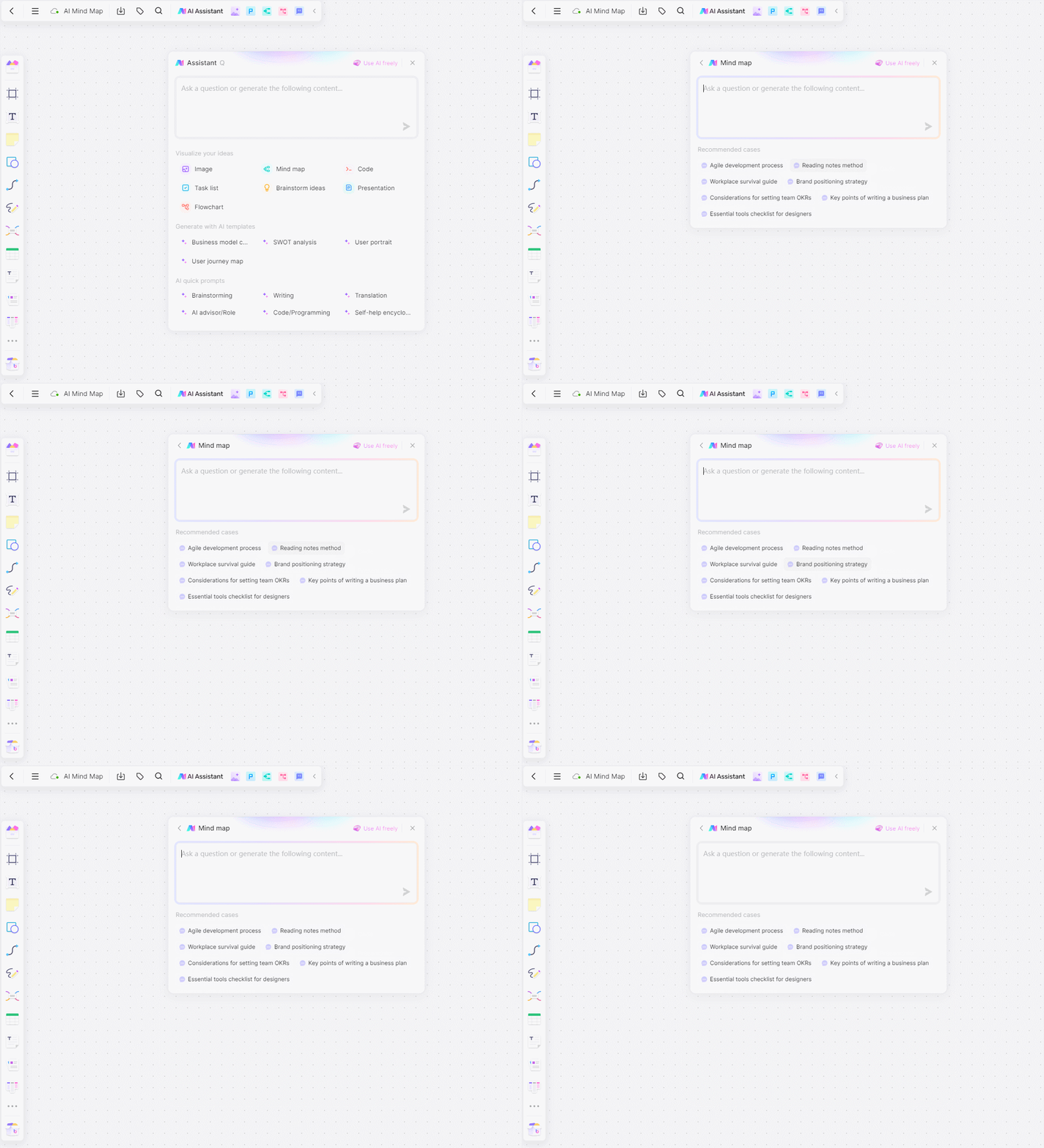
Step 2: Create a new map from a focused prompt. Open the AI assistant, select the mind map workflow, and include the central topic, desired depth, audience, and any must-keep points. A specific prompt produces a more reviewable hierarchy than a one-line topic.
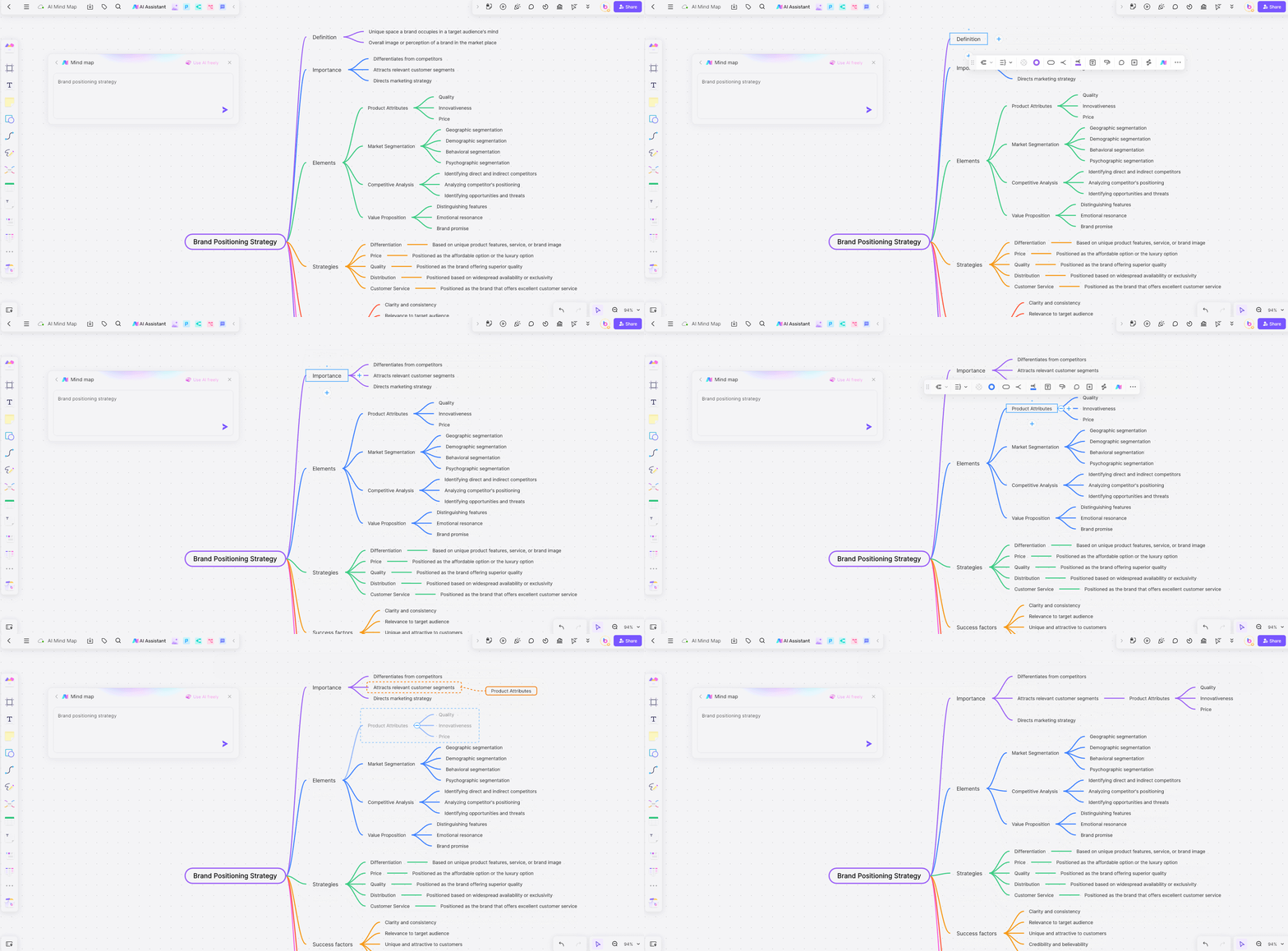
Step 3: Review and reorganize the hierarchy. Delete irrelevant branches, split mixed ideas, merge duplicates, and move unsupported claims out of the main structure. Check that parent-child relationships express meaning rather than visual convenience.
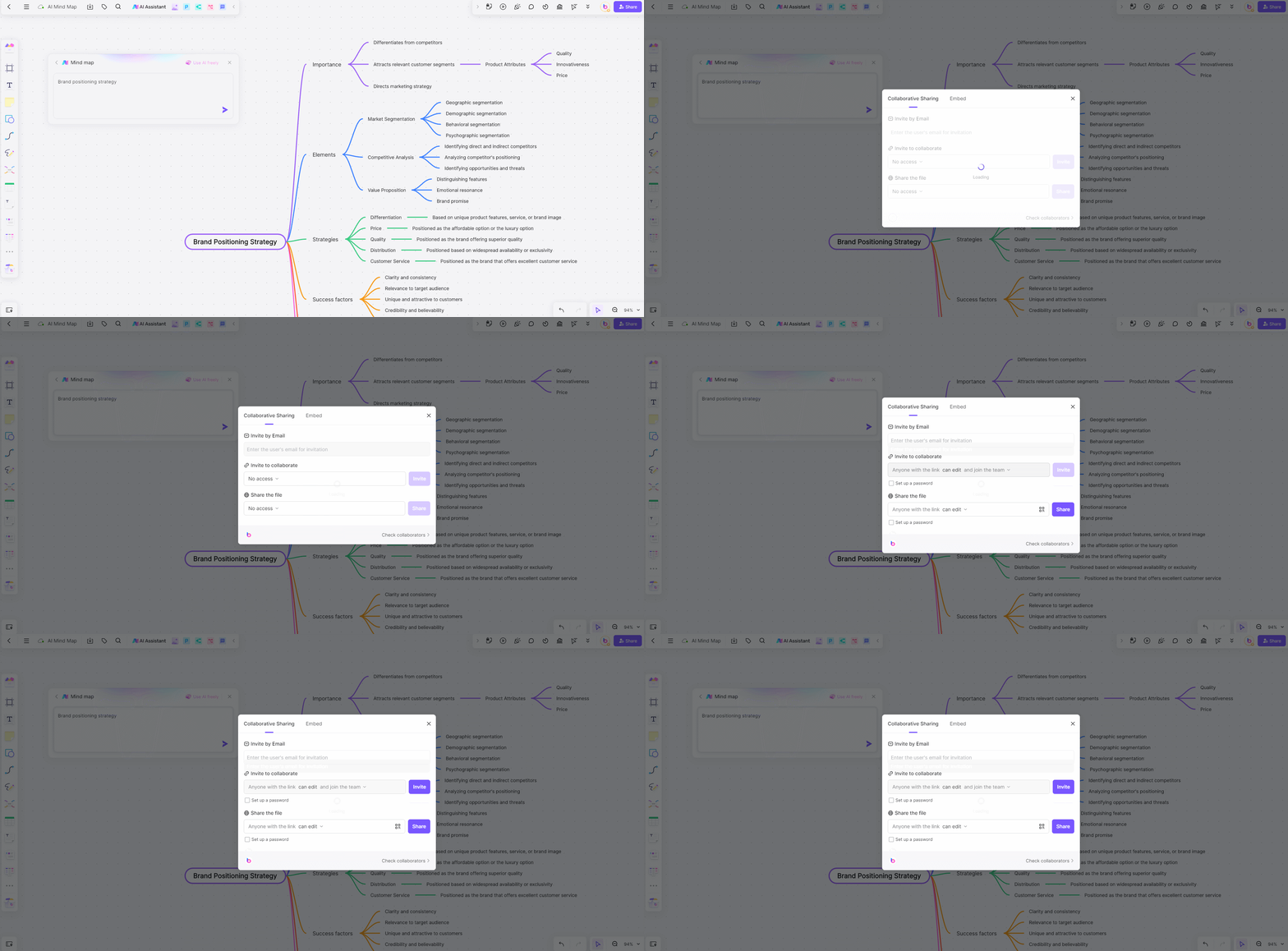
Step 4: Invite collaborators for subject review. Share the editable board with people who can validate different branches. Use comments or live discussion to separate factual corrections from presentation preferences.
Step 5: Add the source material beside the map. Attach or link the documents, spreadsheets, webpages, and other evidence supported by your current workspace. Do not rely on the generated branch text as the only record of where a claim came from.
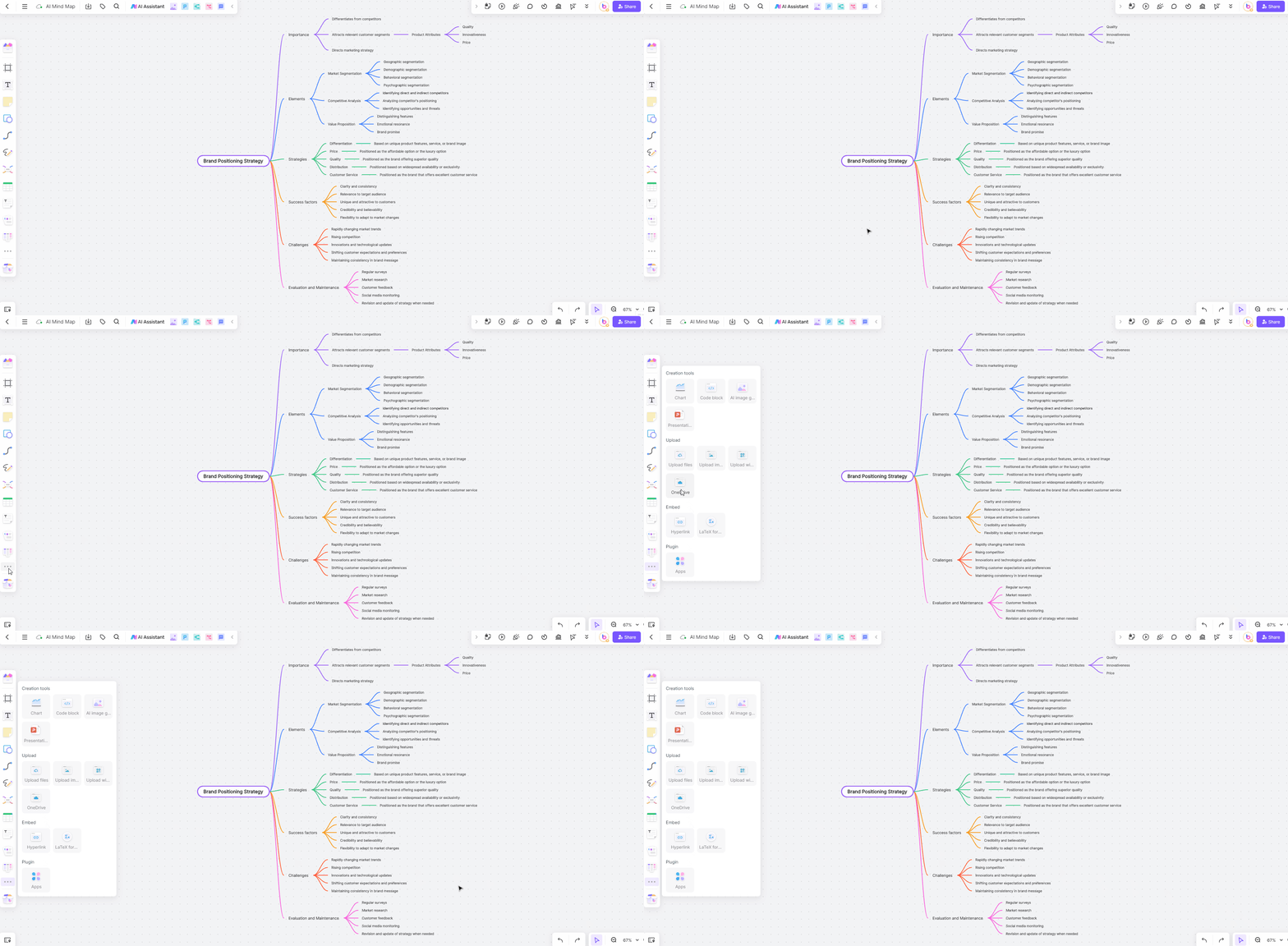
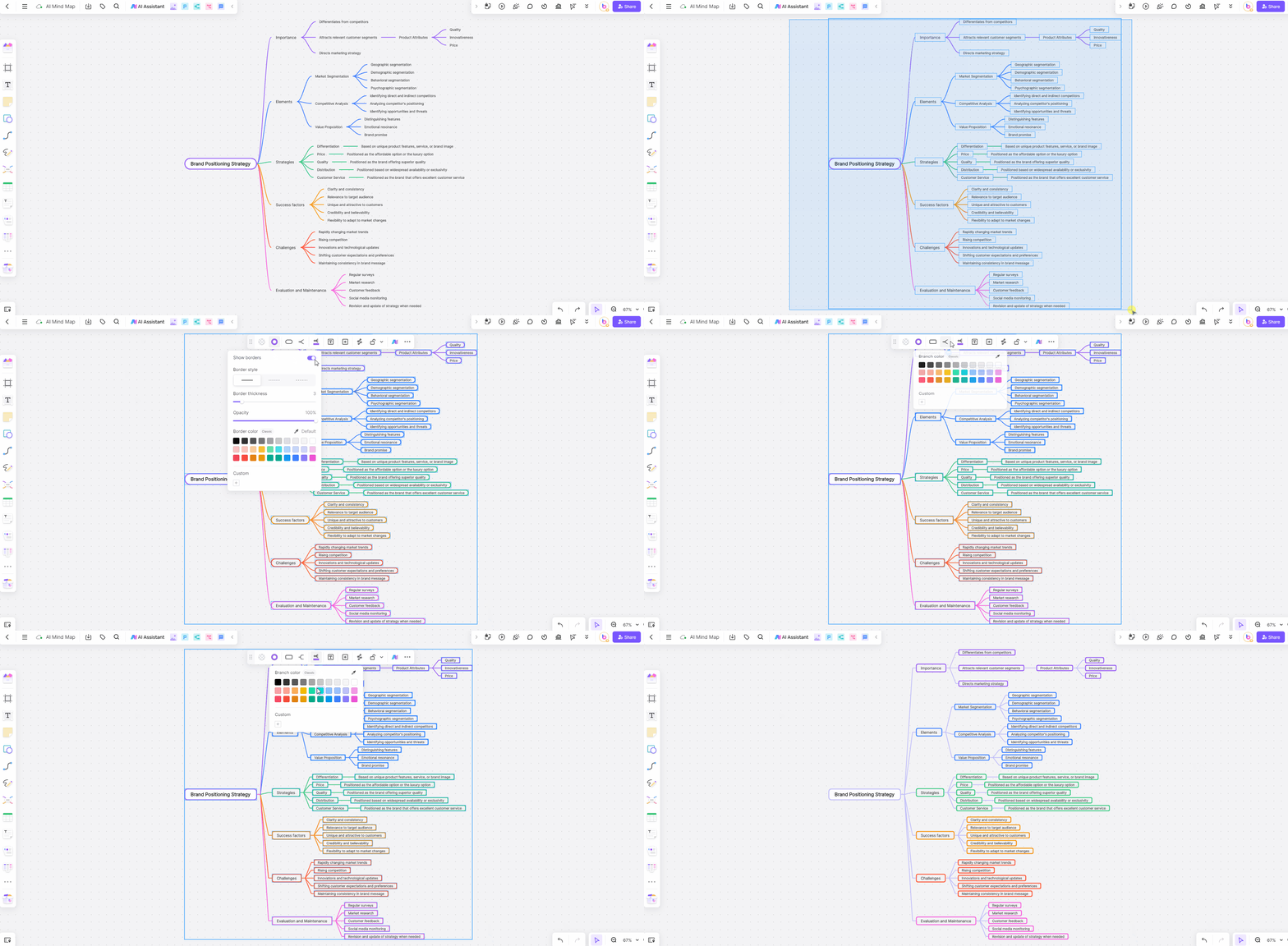
Step 6: Improve visual hierarchy after the content is correct. Apply consistent colors, fonts, icons, and branch depth. Use visual emphasis to show decisions, risks, owners, or priorities; do not use decoration to imply evidence that is not there.
Step 7: Run a final accuracy and action check. Ask reviewers to confirm names, dates, numbers, quotations, and causal claims. Then decide whether the map should stay as a working board, become a presentation, or feed another deliverable.
Accuracy, Privacy, and Free-Plan Checks
AI-generated branches can be plausible and still be wrong. Use this checklist before sharing or presenting a map:
- Trace factual branches back to the original source, especially numbers, dates, legal claims, and quotations.
- Remove confidential client, employee, health, financial, or unreleased product information unless your organization's approved data policy allows the service.
- Check whether prompts or uploaded files are sent to an external model provider and whether administrators can control that behavior.
- Confirm who can view, edit, invite, and export the finished map.
- Test the required export format before building a large workspace around one tool.
- Recheck current AI credits, board limits, watermarks, and trial expiration on the official pricing page.
If the source is a document and traceability is the main requirement, compare the dedicated document-to-mind-map workflow before choosing a general brainstorming tool.
AI Mind Map Tool FAQ
What is the best free AI mind map tool?
There is no universally best free option because free access differs: one tool may limit AI credits, another may limit boards or exports, and another may put AI behind a trial. Start with the comparison table, choose the required input and export, and confirm the live allowance before investing time in a large map.
Which AI mind map tools can turn a PDF or video into a map?
MindMeister and Xmind document several file inputs; Xmind also supports YouTube. Mapify and MindMap AI focus more heavily on long-form and media inputs. Support can depend on plan and file type, so check the official page before uploading a large or sensitive source.
Can I edit an AI-generated mind map?
Yes, every ranked tool in this guide is designed to leave an editable result. The important question is how much you can change: branch structure, visual layout, source links, permissions, and export format all affect whether the generated map can become real work.
Which tool is best for team collaboration?
Boardmix, Miro, Lucid, and Whimsical are strong candidates when the map must live inside a shared visual canvas. Ayoa is useful when the map should lead directly to tasks. Compare guest permissions, version history, administrator controls, and export requirements for your team.
Are AI-generated mind maps accurate?
They can organize supplied material quickly, but they can omit context, invent details, or create weak relationships between ideas. Treat the result as a draft, retain access to the source, and have a knowledgeable person verify consequential claims.
Is Coggle, Scapple, or SimpleMind an AI mind map generator?
Not as a native generator based on the official documentation reviewed for this update. They remain useful manual mapping tools, and SimpleMind documents a handoff from external ChatGPT output, but they should not be compared as if they offered the same built-in AI workflow as the ranked ten.
Key points: Choose the Workflow, Then the Tool
Choose Boardmix, Miro, or Lucid when collaborative visual work after generation matters most; MindMeister or Xmind when varied source inputs lead to a conventional mind map; Mapify or MindMap AI when long-form content is the starting point; Ayoa when tasks follow brainstorming; Whimsical for quick branch expansion; and MindNode for an Apple-first workflow. The right choice is the one that preserves control after AI creates the first draft.
To try the editable team workflow described above, open Boardmix. Whichever tool you select, verify its current plan limits and review the generated map before using it for a decision, presentation, or published claim.