Choose by the work you need to do: a shared browser workspace for team reviews, a desktop editor for local files, or a tool that combines diagrams with presentations. The ten options below differ in platform support, editing, and plan limits.
Flowchart software helps teams explain workflows and review decisions together. If you want to build a shared process diagram, Boardmix’s online flowchart maker combines shapes, connectors, and collaboration on one canvas. This guide compares ten options across diagramming, teamwork, and platform requirements.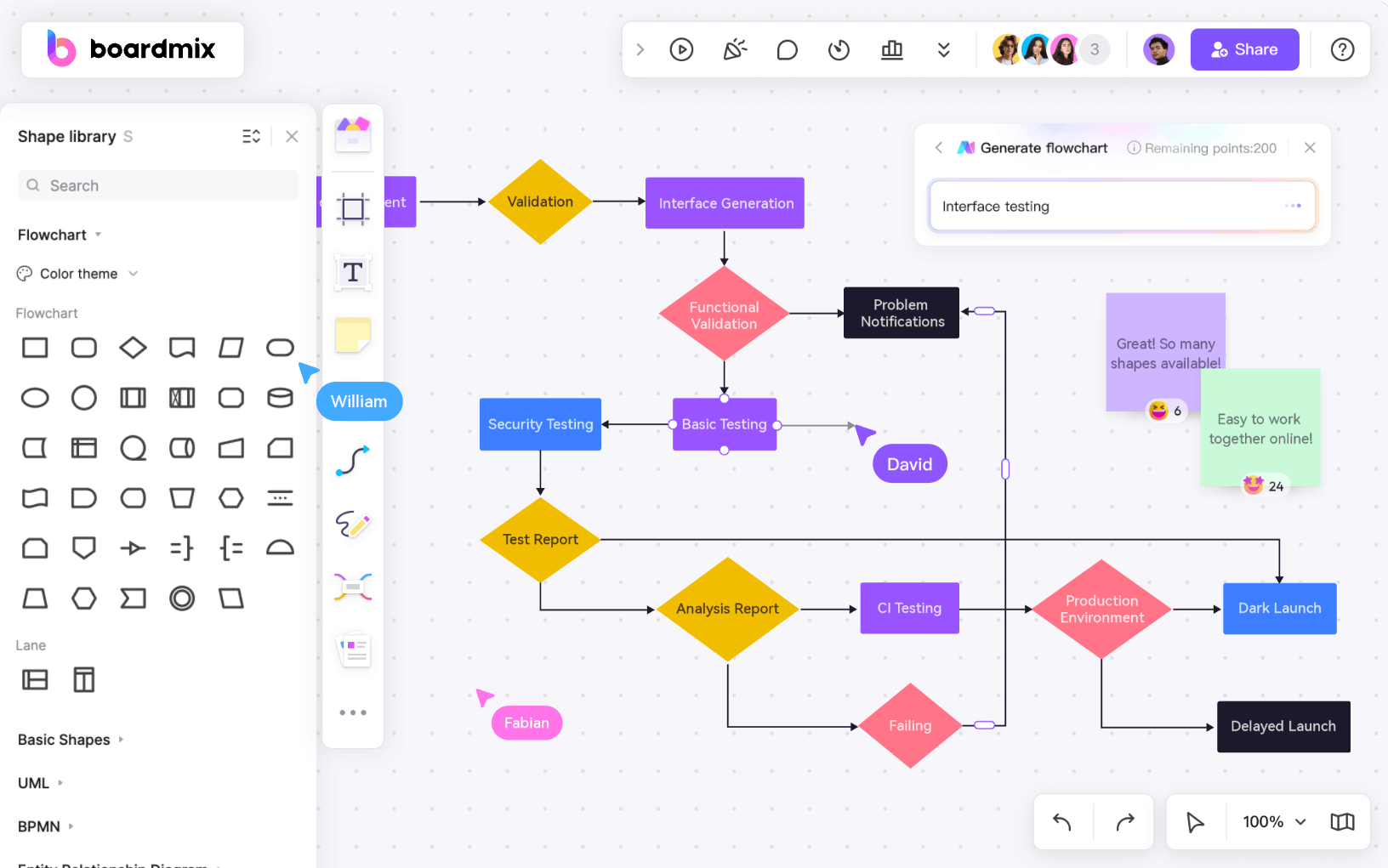

What to Look for When Selecting Flowchart Software for Collaboration?
Start with the process you need to explain and the people who will edit or review it. A lightweight diagram for a workshop has different requirements from a technical diagram library that must keep editable files, specialist notation, and access controls.
- Real-Time Collaboration and Editing
Real-time editing helps people working in the same session. For colleagues in different time zones, comments and saved versions may matter more. Test what a reviewer can see and change without buying an editor seat.
- Intuitive and User-Friendly Design
A user-friendly interface is a must for any tool, especially for teams with varying levels of technical expertise. Flowchart creators should offer easy-to-learn platforms with pre-made templates, so team members can quickly create their flowcharts without needing extensive training.
- Integration with Team Tools
If your team works in Jira, Slack, or a document system, identify the exact connection you need. A shareable link, an embedded diagram, and two-way data synchronization are different capabilities. Verify the required connection and plan rather than treating every integration logo as equivalent.
- Customizable Flowchart Options
The top flowchart makers come with extensive libraries of shapes, icons, and templates to cater to different needs. Whether you're designing a simple workflow or a complex mind map, customizable drag-and-drop options allow teams to tailor their charts precisely to their requirements.
Browser, desktop, and offline access
A desktop app is not necessarily an offline editor. Separate how you launch the tool from where files are saved and what still works without a connection.
| Tool | Access options | What matters for the choice |
|---|---|---|
| Boardmix | Browser and Windows/macOS apps | Shared process diagrams with notes and discussion; compare editor, object, export, and AI allowances. |
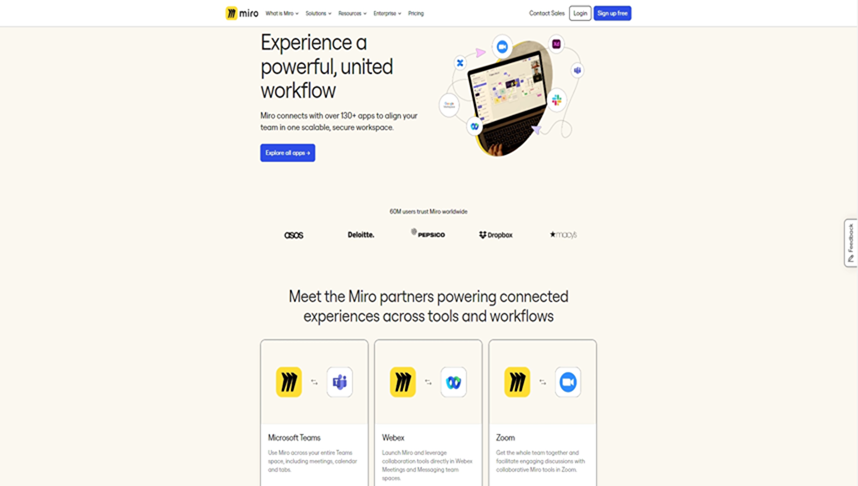
| Miro | Browser and desktop/mobile apps | Compare diagramming needs with workshop needs, guest access, and the team's existing workspace. |
| Lucidchart | Browser; offline edits to already-open documents | Keep the document and browser open until reconnection and sync; offline editing does not include opening other documents or live collaboration. |
| Creately | Online workspace | Choose the product that matches the task—shared diagrams and plans are different from specialized process or organization tools. |
| Visio | Plan 1: web; Plan 2: web and Windows desktop | Choose Plan 2 when the desktop editor, local files, or offline work is required; details below. |
| Whimsical | Browser and desktop apps | No offline editing; useful when a shared flowchart sits alongside wireframes and product ideas. |
| SmartDraw | Browser and desktop launcher | The current service requires an internet connection; a launcher is not an offline editor. |
| Cacoo | Online diagramming workspace | Compare shared editing and review needs with the number of diagrams and people in the workspace. |
| draw.io | Browser and offline desktop apps for Windows, macOS, and Linux | Desktop editing suits local files; cloud collaboration and saving depend on the chosen storage or integration. |
| Canva | Browser and Windows/macOS apps | Compare presentation and visual-design needs with the requirements of a technical process diagram. |
For a useful trial, draw the same approval process in each finalist: request submitted → approve or return for changes → fulfill the request. Ask a colleague to comment, change a branch, and export the result. If the next team must edit the diagram, check the editable file format as well as PDF or image output. For an integration, distinguish a link or embed from changes that actually synchronize.
10 Flowchart Tools for Different Team Workflows
Flowcharts are essential for teams to visually map out processes, workflows, and ideas. They simplify complex concepts, making communication clearer and helping everyone stay aligned. For teams working on projects, using the right flowchart software can boost productivity, foster collaboration, and ensure that all members are on the same page.
1. Boardmix
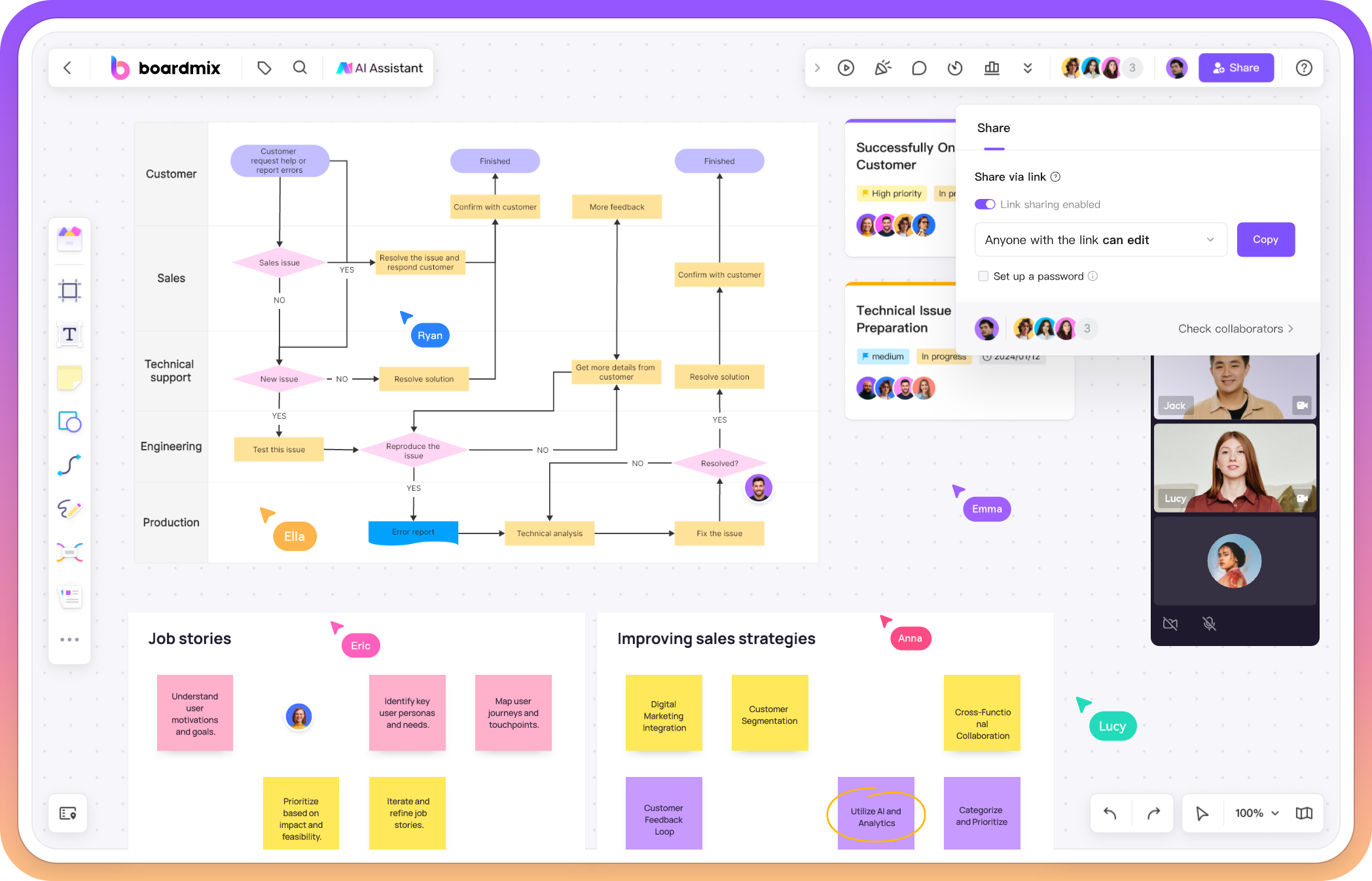
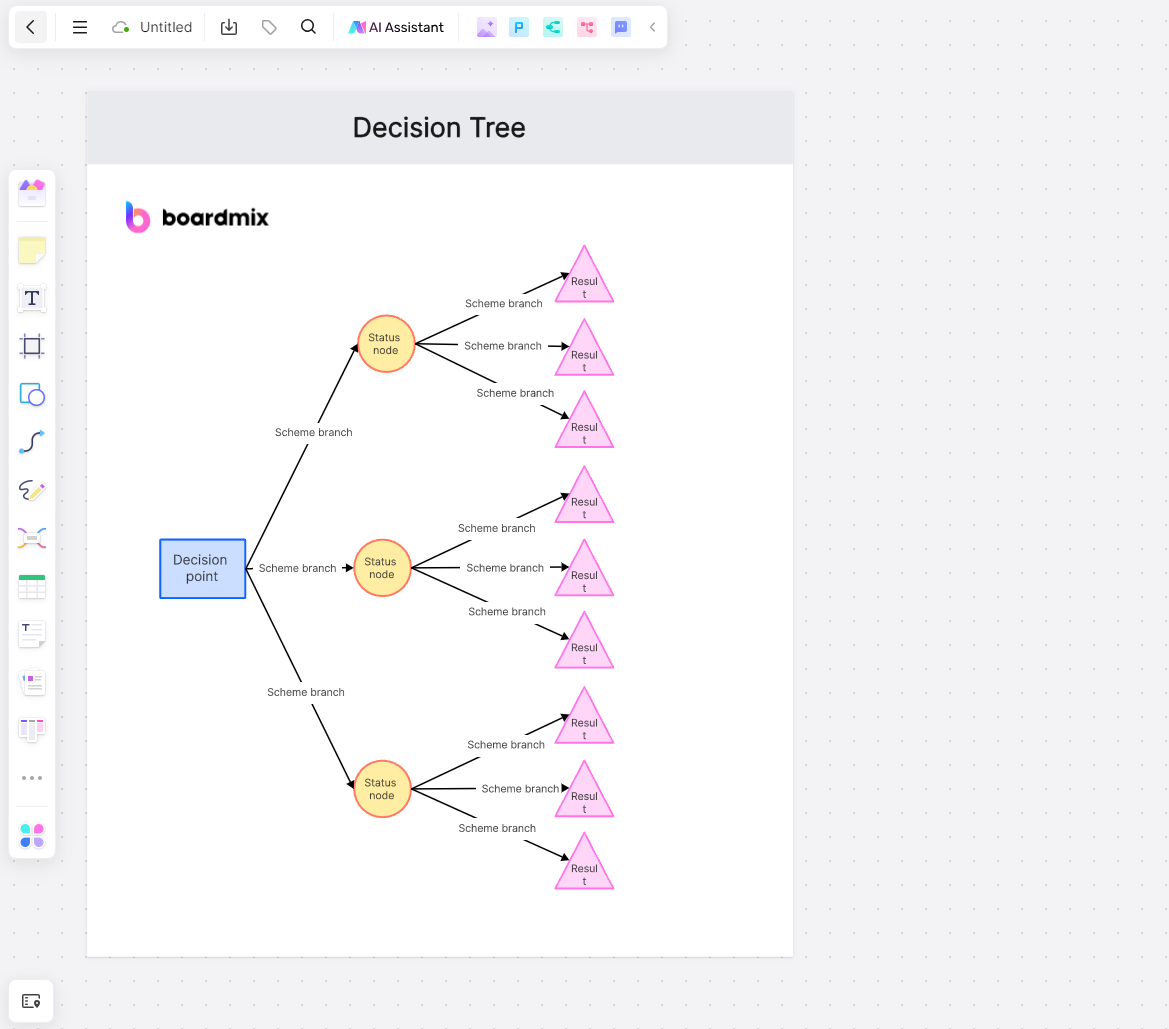
Boardmix combines flowchart shapes and connectors with a shared whiteboard. A team can draft a process with AI, edit the steps on the canvas, and keep notes and discussion beside the diagram.
Pros:
AI-powered tools for quick flowchart generation.
Excellent real-time collaboration features.
Wide range of templates and sticky notes for brainstorming.
Cons:
May require a learning curve for advanced features.
Price:
A Free plan with board and object limits, plus paid plans for additional capacity.
Subscription and lifetime options are listed on Boardmix pricing; compare storage, export quality, and AI allowances as well as seats.
Good fit for:
Teams looking for efficient flowchart creation with strong collaborative capabilities.
2. Miro
Miro is a versatile whiteboard platform that offers extensive diagramming capabilities. It supports real-time collaboration, making it a top choice for teams working remotely. Miro’s templates and sticky notes allow teams to ideate quickly and organize their thoughts visually.
Pros:
Versatile platform with extensive diagramming capabilities.
Supports real-time collaboration with interactive features.
Cons:
Can be overwhelming for new users due to its complexity.
Price:
Free and paid plans; Miro pricing separates editable-board, sharing, and diagramming allowances by plan.
Good fit for:
Remote teams seeking a comprehensive brainstorming and collaboration tool.
3. Lucidchart
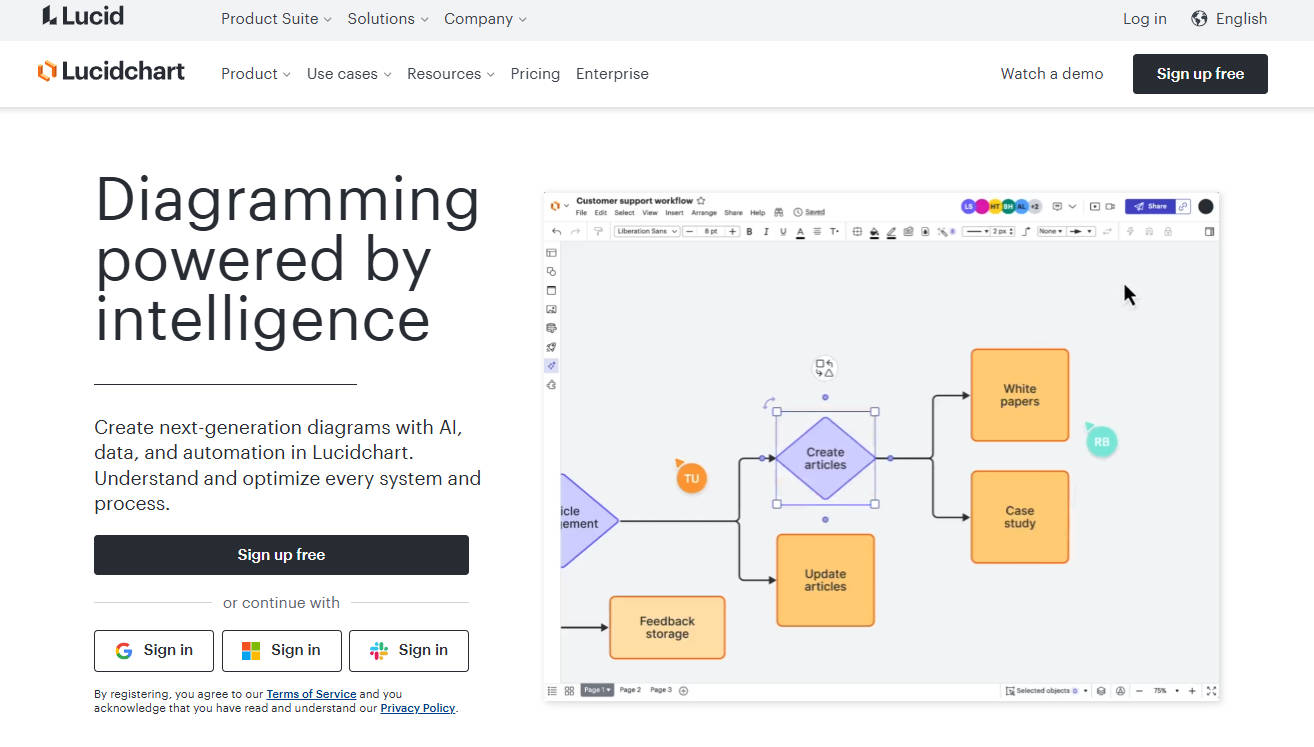
Lucidchart is a popular flowchart app that integrates with Google Workspace and Microsoft Office. It provides excellent collaboration tools for remote teams, allowing them to work together on complex diagrams and flowcharts in real time.
Pros:
Connected integration with Google Workspace and Microsoft Office.
Excellent real-time collaboration tools for complex diagrams.
User-friendly interface.
Cons:
May require a learning curve for advanced features.
Price:
Free and paid tiers are listed on Lucidchart pricing. Compare document capacity, diagramming features, and collaboration requirements.
Good fit for:
Teams that use Google or Microsoft products and need powerful diagramming tools.
4. Creately
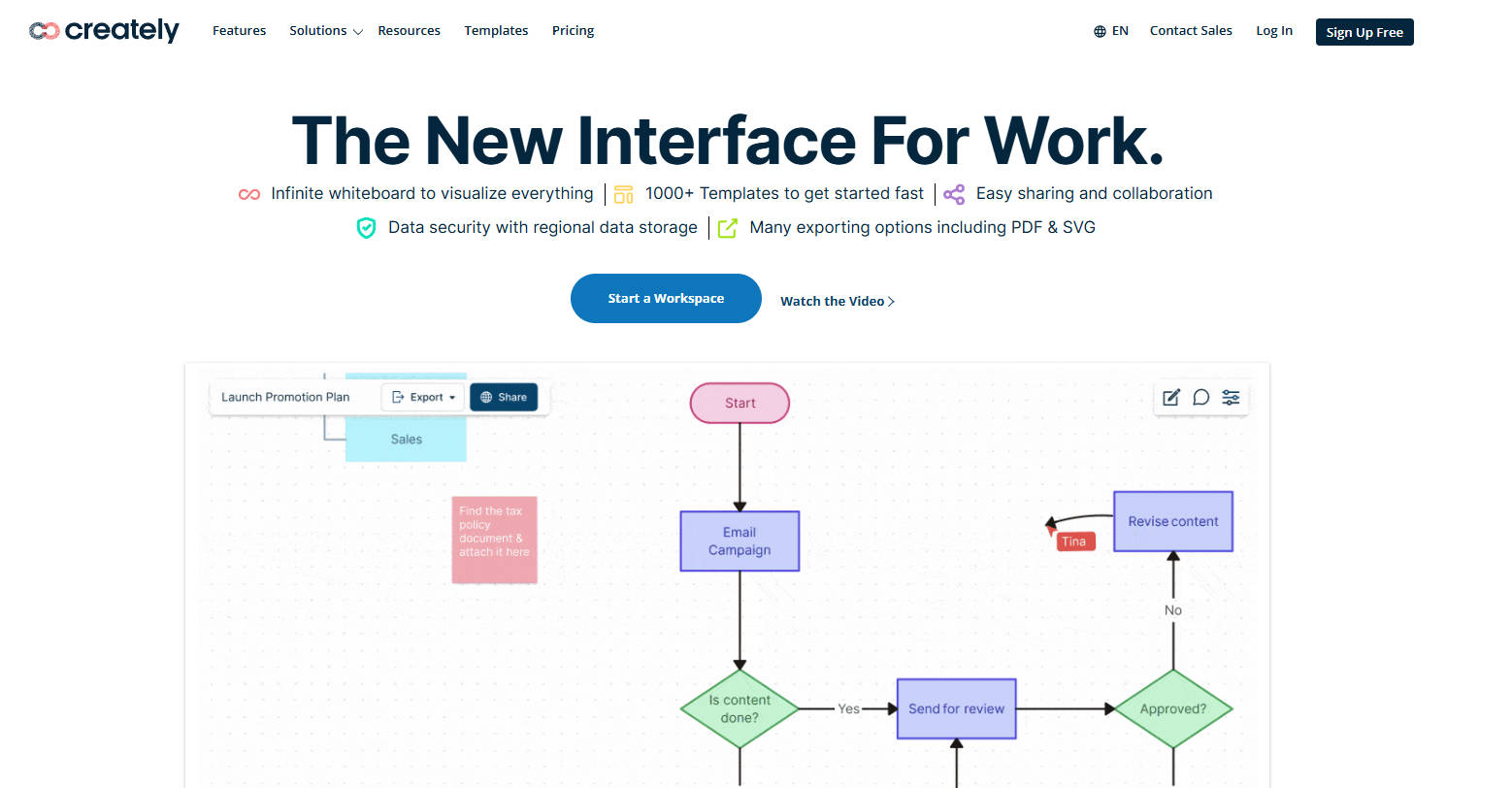
Creately combines powerful diagramming with project planning tools. This flowchart software offers advanced customization options and easy sharing features, making it perfect for teams that need to create detailed, collaborative diagrams.
Pros:
Combines diagramming with project planning features.
Advanced customization options for detailed diagrams.
Easy sharing capabilities.
Cons:
Some users may find the interface less intuitive at first.
Price:
Compare the current Creately plans for the product and workspace capacity your team needs.
Good fit for:
Teams needing detailed and customizable diagrams with project management tools.
5. Visio (Microsoft)
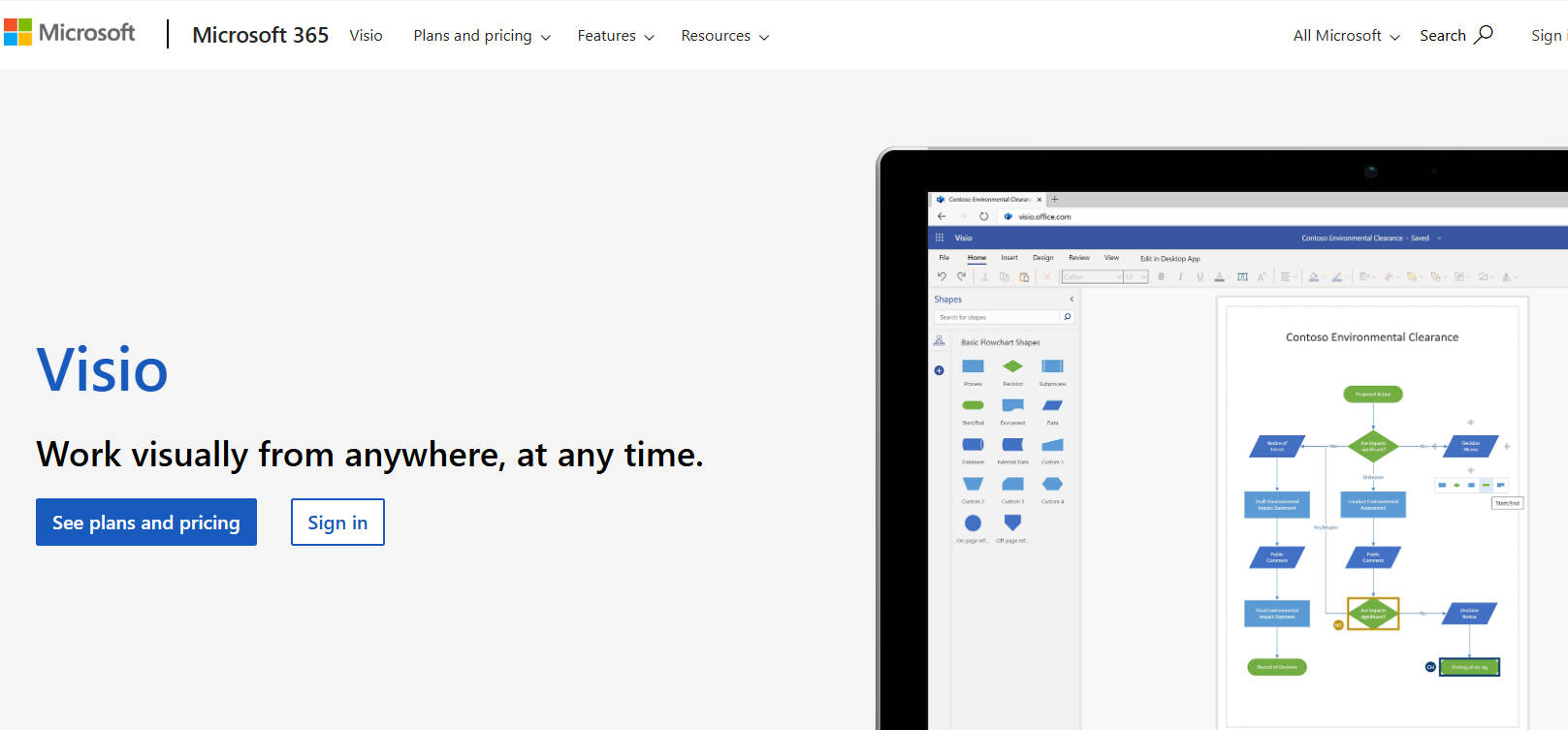
Microsoft offers different Visio editions. Plan 1 runs on the web, while Plan 2 adds the Windows desktop editor with offline and local-file support. See the official Visio plan comparison.
Pros: Web collaboration within Microsoft 365; Plan 2 adds advanced process diagramming and desktop capabilities.
Limits: Plan 1 does not include the desktop editor. Basic Visio access included with some Microsoft 365 subscriptions is not the same as Plan 1 or Plan 2.
Price: Paid per-user subscriptions, with separate one-time-purchase editions. Compare the edition and billing term, not just the product name.
Good fit for: Teams that need Visio files and Microsoft 365 workflows, especially when Windows desktop editing is a requirement.
6. Whimsical
Whimsical is perfect for small teams looking for a simple and visually pleasing flowchart tool. It’s minimalistic and focuses on ease of use, making it a good choice for teams that need to quickly create basic diagrams.
Pros:
Real-time editing and comments for shared flowcharts.
AI-assisted flowchart creation and predictive shapes.
Templates for diagrams, wireframes, and mind maps.
Cons:
Free-plan allowances are limited; compare editor seats and AI usage before choosing a plan.
Price:
Free and paid workspace plans; see Whimsical pricing.
Good fit for:
Teams combining flowcharts with wireframes and early product ideas.
7. SmartDraw
SmartDraw provides templates for flowcharts and a range of business and technical diagrams. Its diagramming, collaboration, and integration options make it worth comparing when a team creates several types of visual documentation.
Pros:
Templates and symbols for a wide range of business and technical diagrams.
Flowchart layouts that help organize connected process steps.
Options for sharing diagrams and working with common business platforms.
Cons:
Team pricing has a minimum seat requirement and annual billing; check this against your team size.
Price:
Paid Individual and Team subscriptions; a trial is available. See SmartDraw pricing.
Good fit for:
Teams that need flowcharts alongside other business and technical diagram types.
8. Cacoo
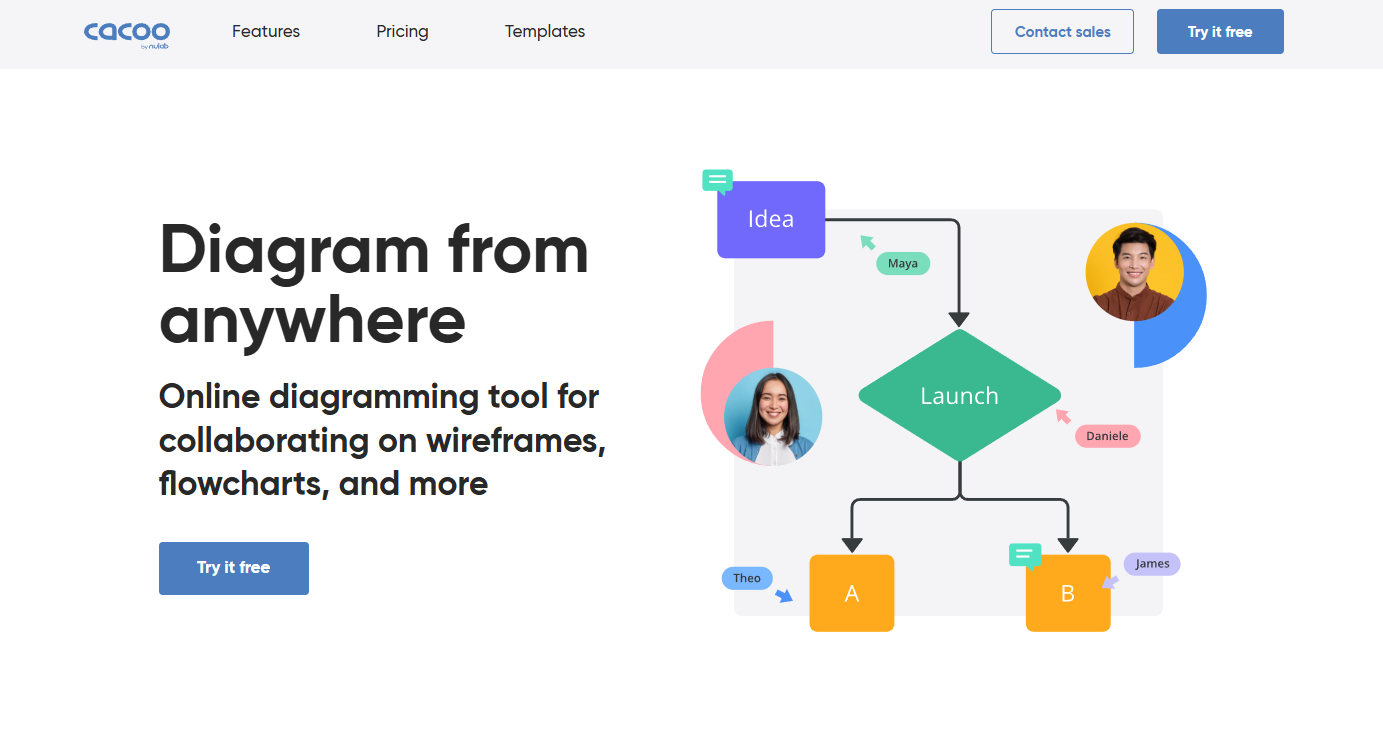
Cacoo is a collaboration-focused flowchart tool that excels in live editing and diagram sharing. It’s a budget-friendly option for small teams that need an intuitive, easy-to-use platform for creating flowcharts and diagrams.
Pros:
Multi-user editing, comments, and version history.
Built-in chat and video calls for diagram reviews.
Templates for flowcharts, wireframes, and technical diagrams.
Cons:
Compare plan limits and sharing controls before choosing it for a larger team.
Price:
Free and paid options are listed in Cacoo pricing.
Good fit for:
Distributed teams that want discussion and diagram editing in the same workspace.
9. Diagrams.net (Draw.io)
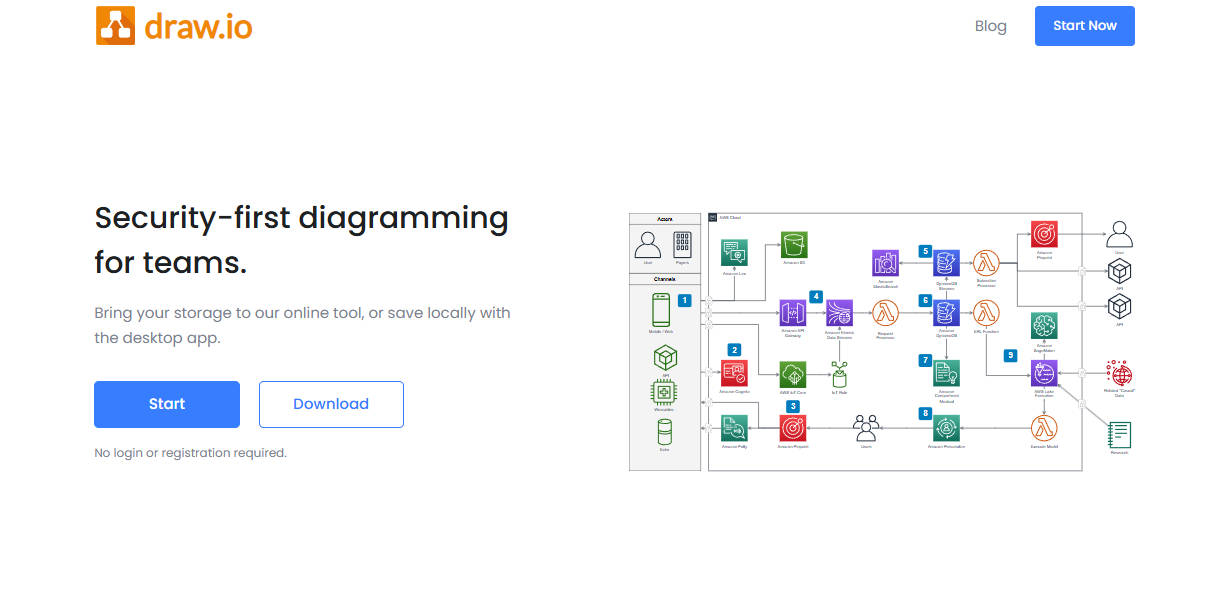
Diagrams.net (formerly Draw.io) is a free, open-source flowchart software. It’s great for teams with a tight budget, offering solid functionality without compromising on quality.
Pros:
Free and open-source.
Easy to use for basic flowcharting needs.
Cons:
Lacks some advanced features found in paid tools.
Price:
The browser editor and desktop app are free; separately licensed integrations are different products.
Good fit for:
Teams with tight budgets needing reliable flowchart software.
10. Canva
Canva, typically known for its design tools, also includes easy-to-use flowchart features. It’s perfect for teams looking to create visually appealing presentations that include flowcharts, diagrams, and other design elements.
Pros:
User-friendly design tools with flowchart capabilities.
Great for creating visually appealing presentations.
Extensive library of design elements and templates.
Cons:
Primarily a design tool; flowchart features may be limited compared to dedicated software.
Price:
A Free tier and paid plans are available; compare asset and team requirements on Canva pricing.
Good fit for:
Teams looking to integrate flowcharts into visually attractive presentations.
How Boardmix Supports Collaborative Flowcharting
Boardmix is a candidate when the flowchart needs to stay beside workshop notes, supporting files, and team feedback on one shared canvas.
Comprehensive Online Whiteboard Features
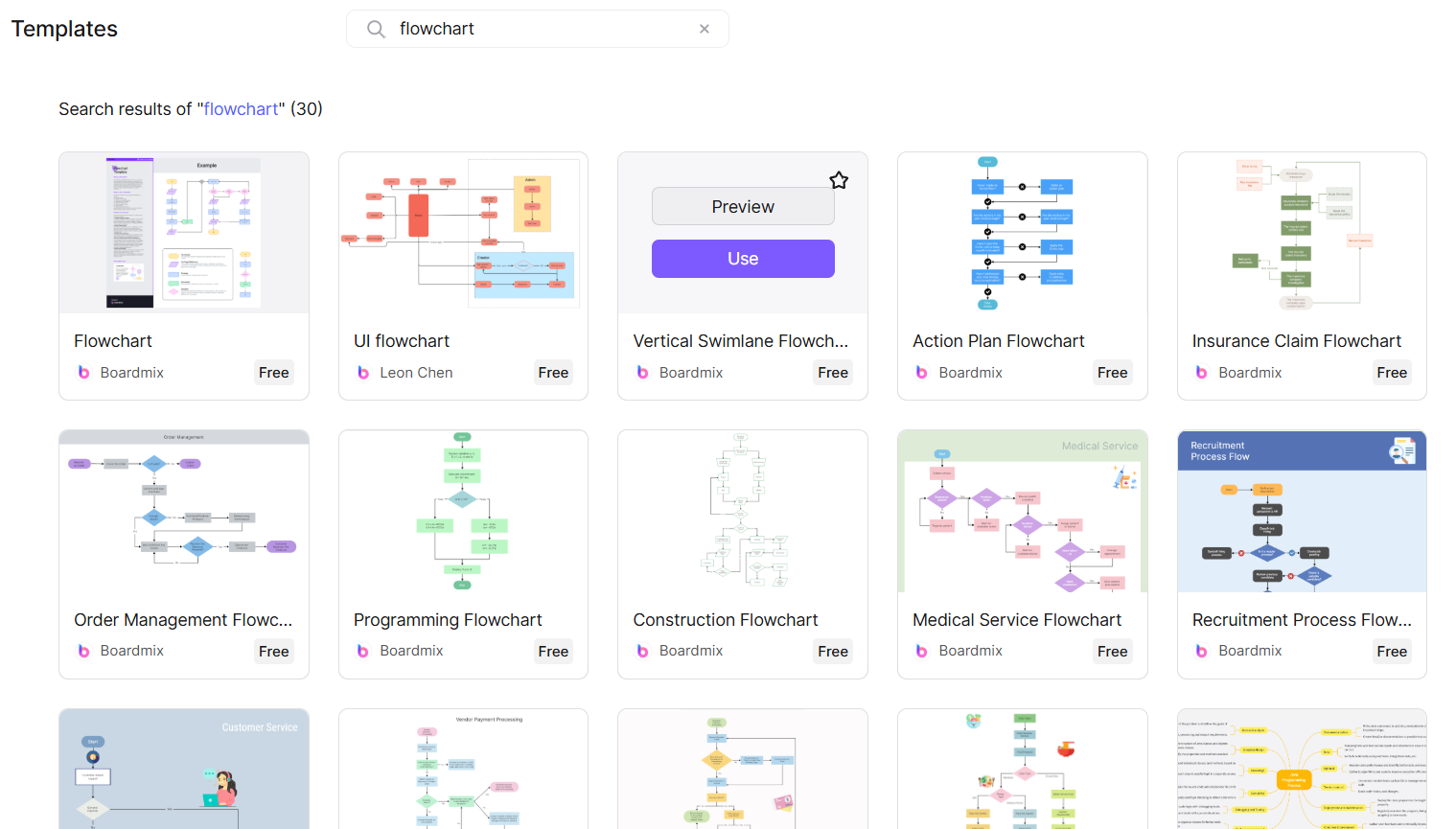
Boardmix offers a robust set of features that allow users to create various types of diagrams, including flowcharts, mind maps, and organizational charts. Its intuitive interface makes it easy for team members to visualize complex processes and ideas in real time.
Flexible Subscription Plans
Compare the recurring and lifetime options against the expected number of editors, storage needs, and AI usage. A one-time purchase does not mean every allowance is unlimited.
Ideal for Small Teams on a Budget
For a small team, start with one real process on the Free plan. Check whether its board and object limits are sufficient before moving a larger process library or choosing a paid plan.
Customization for Enterprise Teams
Larger teams can discuss enterprise member management, permission controls, and deployment requirements with Boardmix. Identify which controls are needed before selecting the plan.
Dedicated Customer Support
Ask support about the account, sharing, or deployment requirements that affect your project. Confirm the support arrangements included with the plan you are considering.
AI-Powered Tools for Faster Results
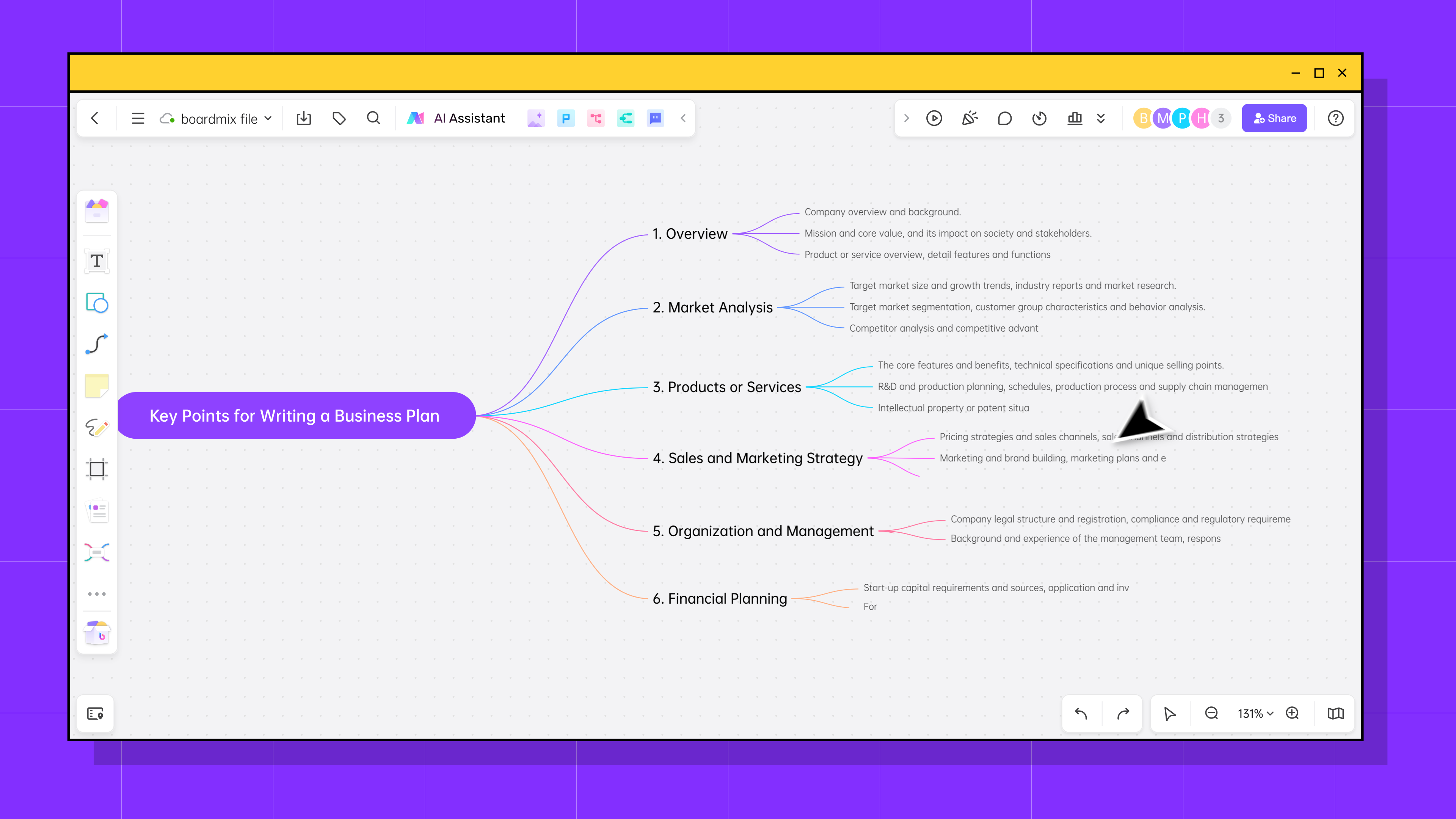
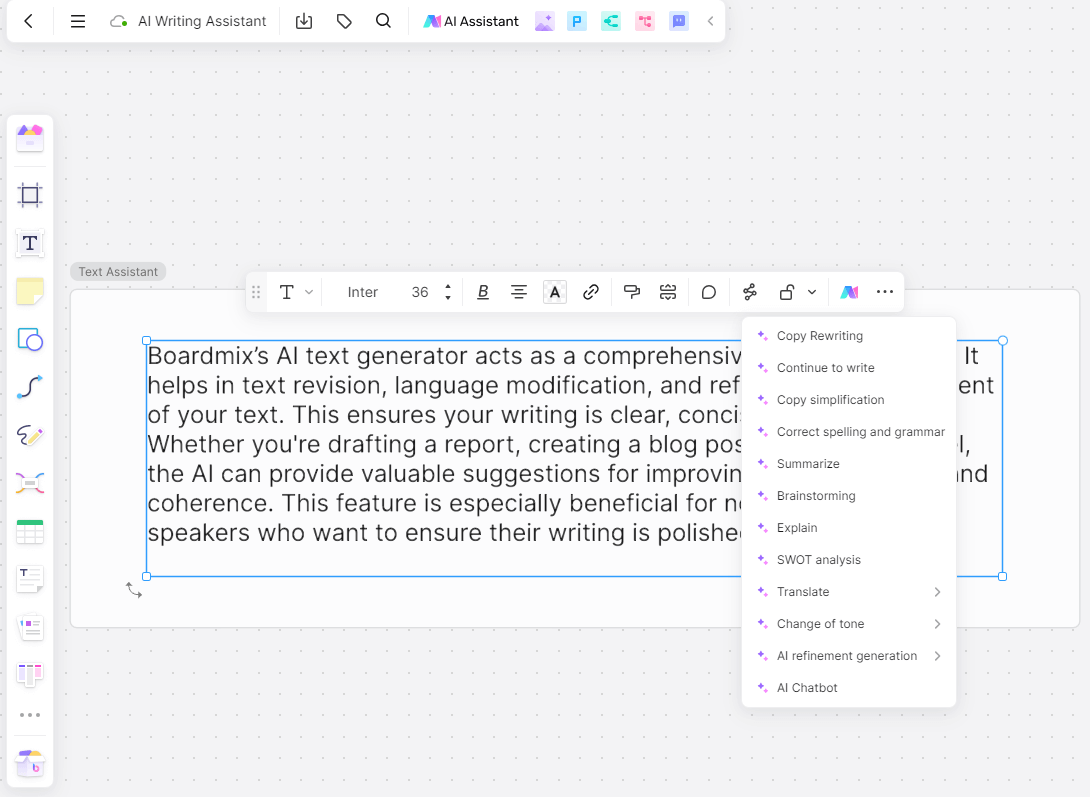
Describe the process to Boardmix AI to get a draft, then edit the steps, labels, and connectors. Add missing exceptions and confirm decision branches with the people who carry out the work.
Real-Time Team Collaboration
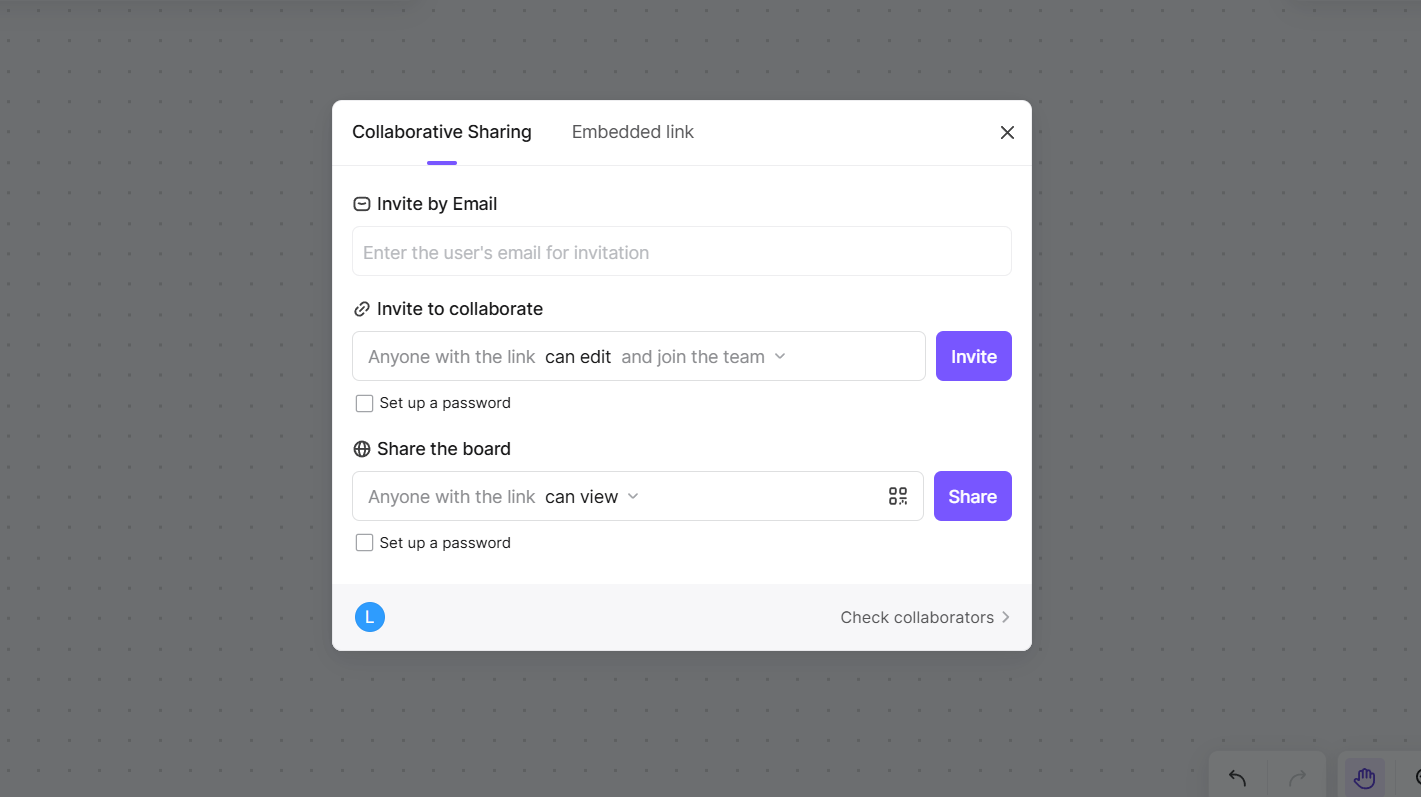
Boardmix allows multiple users to collaborate simultaneously, whether they’re working in the office or remotely. This makes it easier for teams to contribute ideas and make adjustments in real time.
Practical Use Cases
For a customer-support handoff, map the request, triage decision, specialist review, and response. Put the responsible role beside each step and attach the source procedure so reviewers can resolve ambiguous handoffs.
Keep the process and its discussion together: use comments for open questions and update the diagram after the team agrees on a change. This is particularly useful when the flowchart is a working document rather than a one-off illustration.
How to Choose the Right Flowchart Software for Your Team
- Identify Your Team’s Needs
Consider the size of your team and the complexity of the projects you’re working on. Larger teams may need more robust features like advanced customization, while smaller teams may prioritize ease of use.
- Evaluate Features and Pricing
Look at both the features and pricing of the software. Some flowchart tools offer free versions with limited features, while others have premium options that unlock advanced collaboration tools and integrations.
- Test Usability
Before committing to a tool, take advantage of free trials and demos. This gives you the opportunity to test out the interface, collaboration features, and overall usability of the flowchart software before making a purchase.
Key points
Choose the tool that handles your team’s notation, review process, and export needs. Use a small process from your own work to compare the options before moving a larger diagram library.
Before moving a diagram library, export a representative file and ask its next owner to open and edit it. This reveals whether the chosen format preserves the shapes, labels, and connections that the handoff needs.
Boardmix is an option for teams that want AI-assisted flowcharts and collaborative editing in the same workspace. Try a small diagram with your team to see whether it fits your workflow.