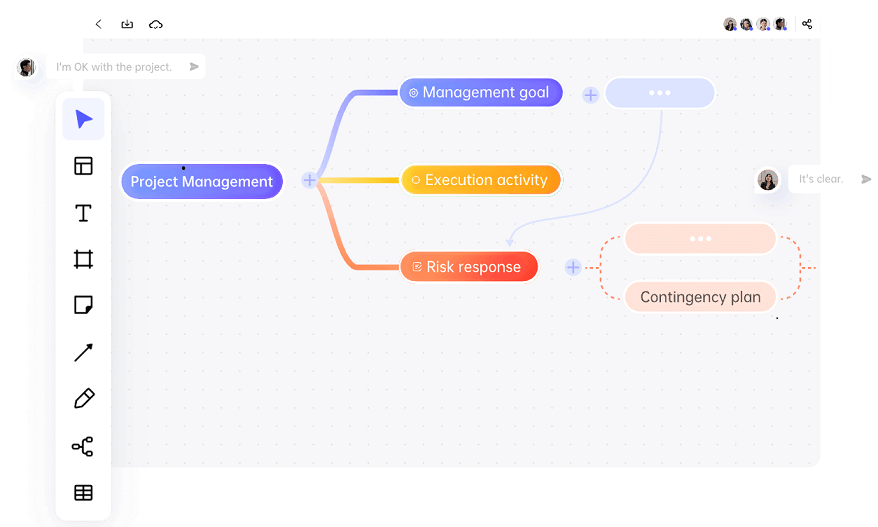
A useful real-time whiteboard lets everyone contribute to the same discussion while the meeting is happening. For a quick sketch, joining from a link may matter most. For a product workshop, participants also need room to add ideas, a way to resolve competing suggestions, and a record they can reopen afterward.
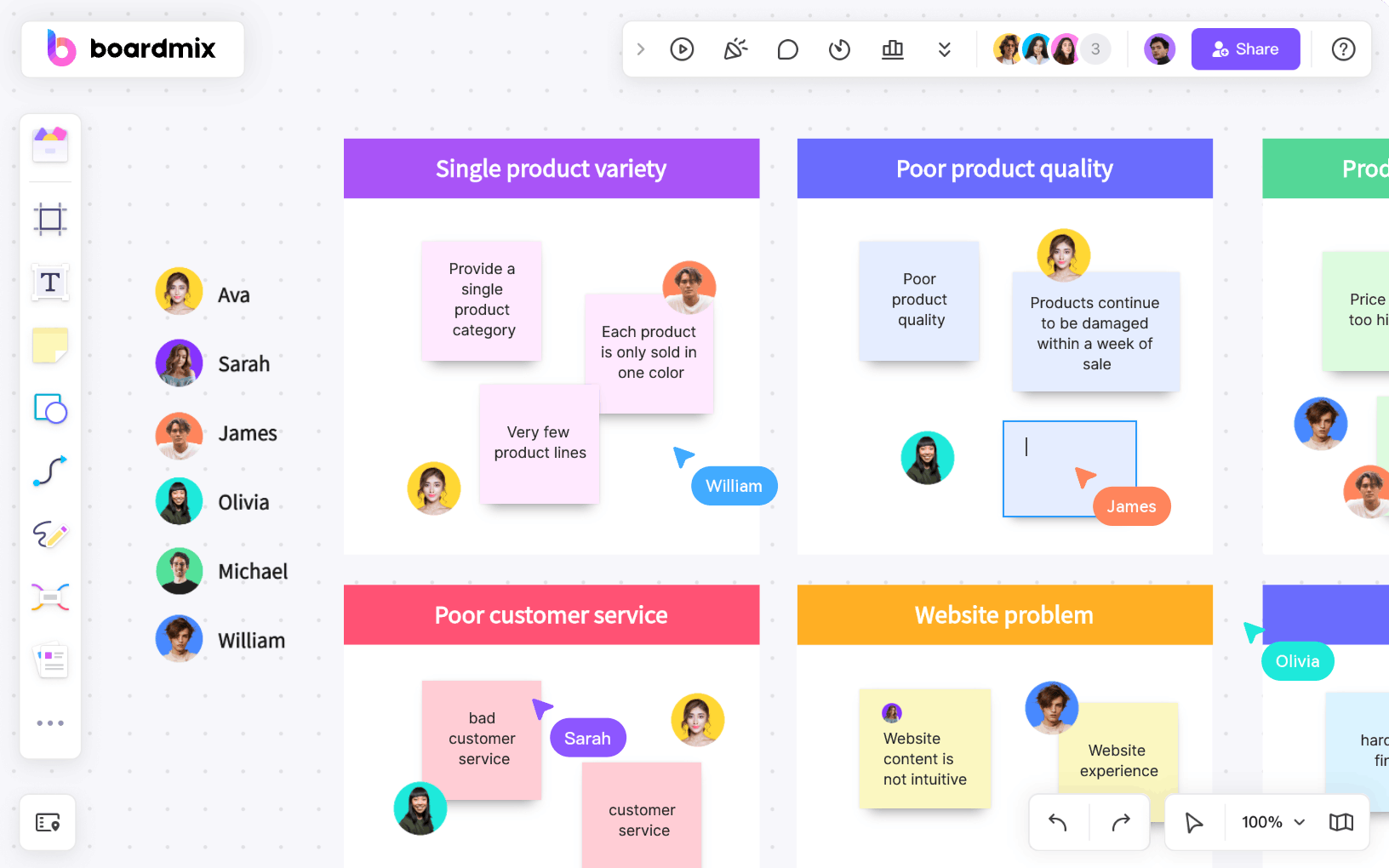
A real-time whiteboard lets participants contribute to a shared canvas during a meeting. The ten tools below cover different session types, from an app-planning meeting to a quick client sketch. Boardmix publishes this guide and appears in the list. For a broader plan-by-plan comparison, see free whiteboard limits and sharing rules.
10 Real-Time Whiteboards and Their Free-Access Limits
Start by choosing the session: Excalidraw or Whiteboard Fox for an immediate shared sketch; Boardmix or Miro for a structured team plan; Microsoft Whiteboard for a Teams discussion; Ziteboard or Limnu for handwriting. Use the table to catch a joining or saving limit before preparing the board.
| Whiteboard and official details | Free access | Resolve before the call |
|---|---|---|
| Boardmix | 3 editable boards, 100 objects per board, 1 GB storage; up to 5 editors per file. | Count the host as an editor and leave object capacity for live contributions. AI usage follows separate credit limits. |
| Miro | 3 editable boards, shared with the Free team. | No private team boards or anonymous visitor editing on Free; timer and voting require an upgrade. |
| Microsoft Whiteboard | Access follows the Microsoft account and organization environment. | Use the supported Teams or web entry point for work/school accounts; standalone apps retired on October 16, 2026. |
| Excalidraw | Free editor with real-time collaboration and browser-local saving. | Save an editable .excalidraw copy as well as the final PNG/SVG. |
| Lucidspark | Limited editable documents; Free users can use dot voting. | Account-free Guest Collaborators, full voting, and host timer controls have Team/Enterprise conditions. |
| Ziteboard | 3 owned public boards; traffic and import limits. | Registration-free collaboration is an add-on to an active Pro account. |
| Whiteboard Fox | Free Personal boards expire after 14 days. | Set drawing/erasing permissions and save a record before expiry. |
| Limnu | Free boards archive after 14 days. | A trial ending and a board's retention window are different; plan how to keep reusable lessons. |
| Conceptboard | 3 active boards; 100 objects per board; 10 MB per upload. | Prepare review files within the upload allowance and arrange reviewer accounts. |
| Sketchboard | 3 editable boards; up to 5 users; watermarked image export. | Free boards are public; PDF/SVG export and private collaboration require paid options. |
The table is a starting point for a short session, not a guarantee that every feature is free. Test an invitation with the participant account you will use, save a sample and reopen it before scheduling a workshop.
Boardmix: Shared Planning with Diagrams and AI
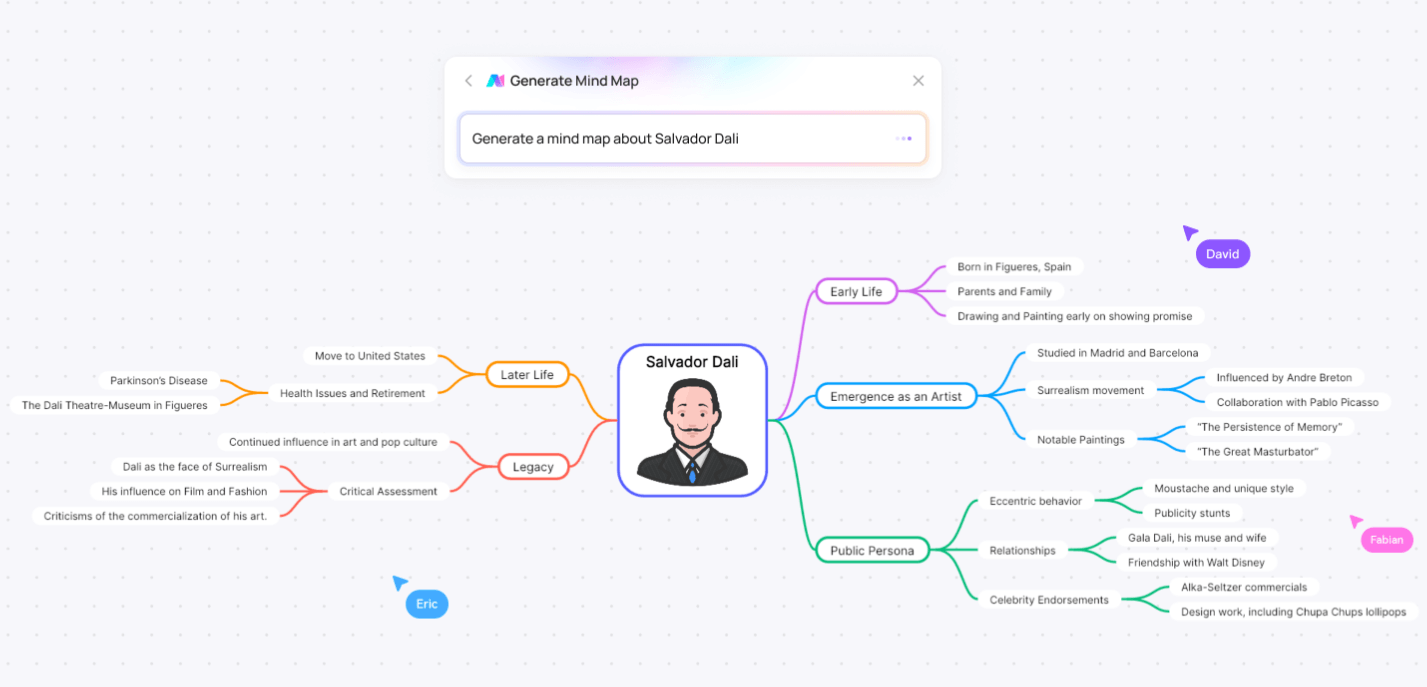
Why it is useful: Boardmix combines shared drawing, diagrams and AI-assisted ideation. Free supports up to 5 editors per file, 3 editable boards and 100 objects per board; AI use depends on available credits. Check the plan before inviting a larger group.
Best for: Remote teams, agile teams, creative teams, educators, project planners.
For a four-person campaign meeting, prepare three areas: audience problem, possible message, and next experiment. Ask each person to add two notes before discussing them; group duplicates and connect one selected message to a test and its owner. If AI credits are available, generate a starting mind map for the campaign, then revise its branches together. Keep the final decision beside the ideas that led to it.
Miro: Structured Team Planning
source: Miro
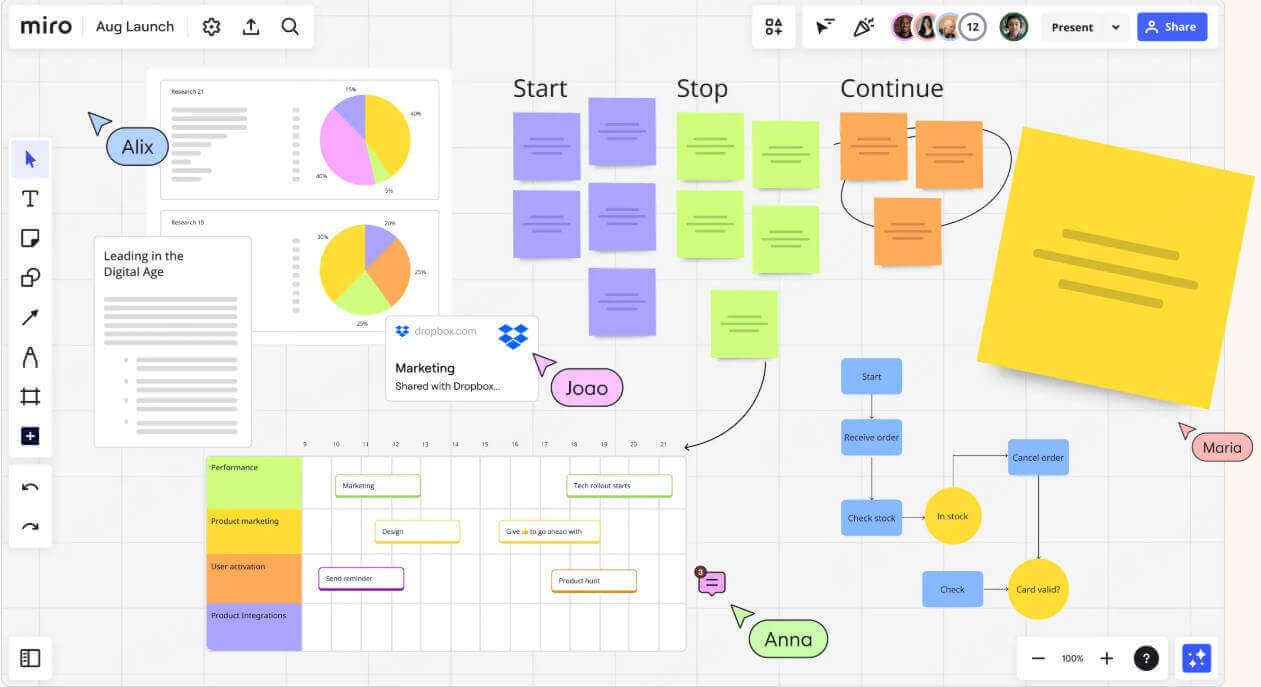
Useful capability: Ideal for teams that thrive on sticky notes, wireframes, and templates to visually organize projects.
Best for: Agile teams, product managers.
For an app-feature session, draw the current user flow and a proposed branch side by side. Let teammates add friction points, then move agreed changes to a separate decision area. Free can support this shared-team discussion; if the agenda needs the native timer, voting, or anonymous visitor editing, Miro's Starter plan is the relevant comparison. Do not discover that difference at the voting step.
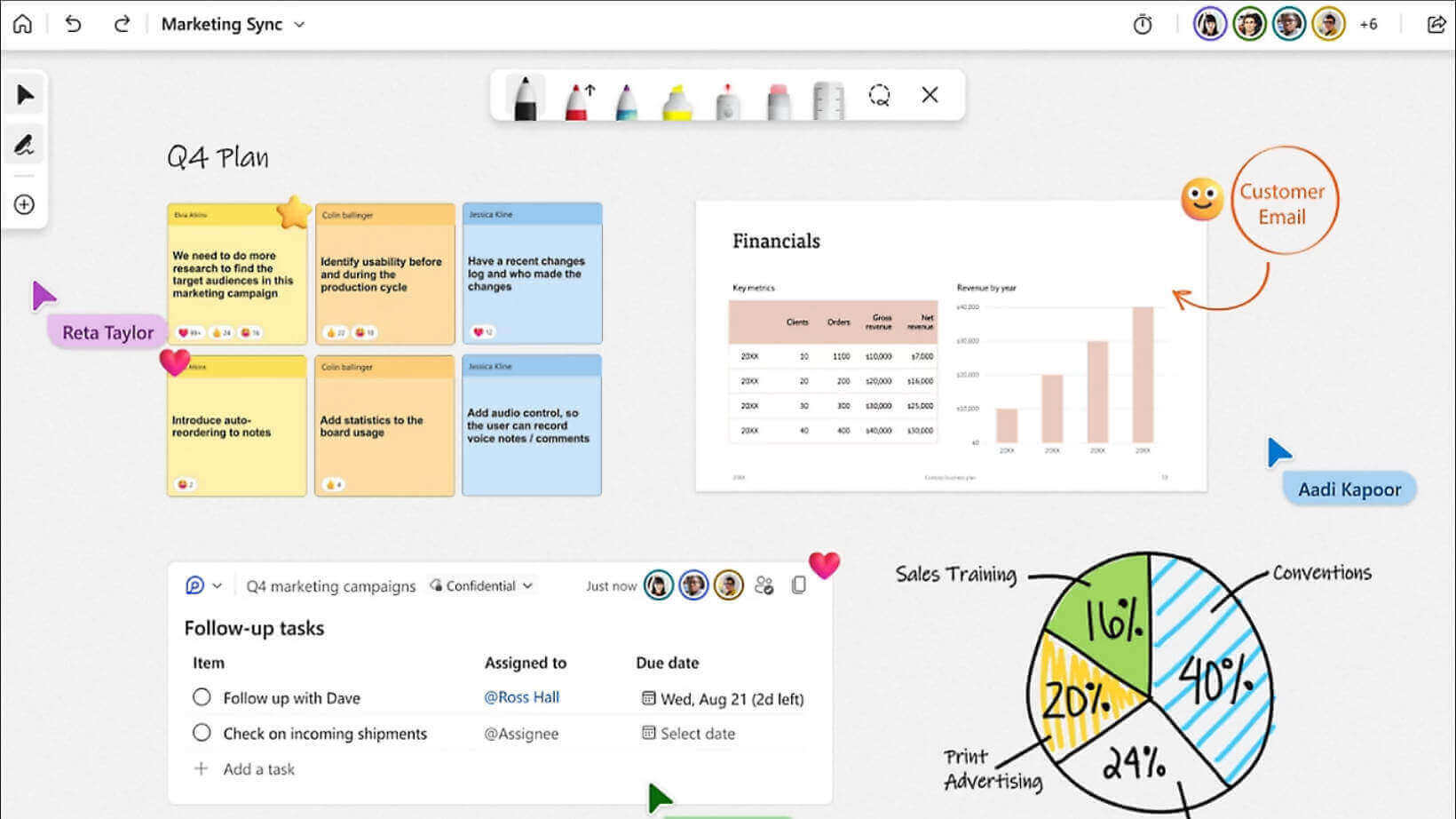
Microsoft Whiteboard: Visual Discussion in Teams
source: Microsoft
Why it is useful: Microsoft Whiteboard can support visual discussion in Teams. Confirm the meeting participants have the required account and tenant access.
Best for: Business meetings, Office 365 users.
In a weekly Teams check-in, sketch the blocked process and ask the person responsible for each step to correct it live. Write the agreed next action beside the blockage, then assign and track that work in the team's task system. Use work/school access through Teams or the web; Microsoft's standalone Windows, iOS, and Android apps retired on October 16, 2026.
Excalidraw: Sketches and Hand-Drawn Diagrams
source: Excalidraw
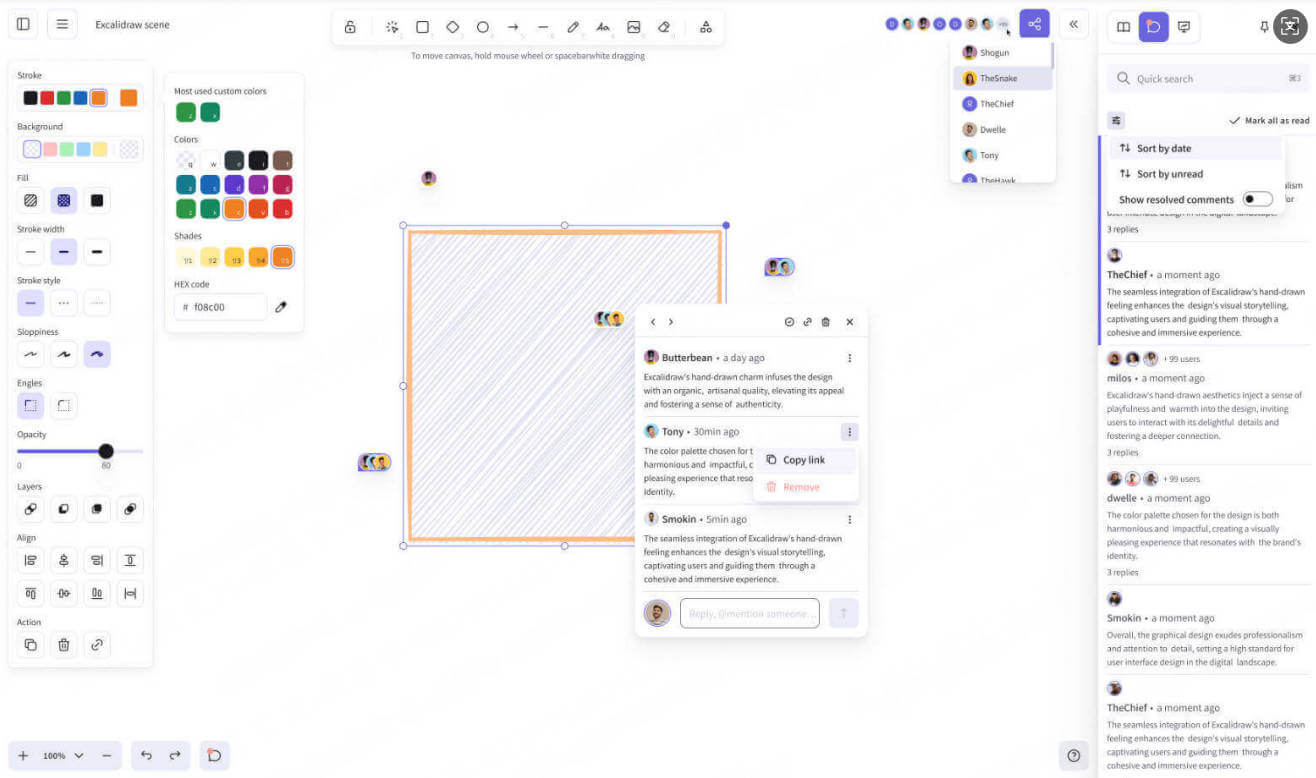
Useful capability: A free, open-source tool for quick, sketch-style diagrams with no login required.
Best for: Developers, designers, quick visual notes.
For a website redesign discussion, sketch two rough page layouts and ask a colleague to move the call-to-action or annotate the confusing step while you watch. Use the sketch to agree on structure before detailed design work. Save an editable .excalidraw file for the next session and a PNG/SVG for the brief; an exported image alone does not preserve editable shapes.
Lucidspark: Group Brainstorming
source: Lucidspark
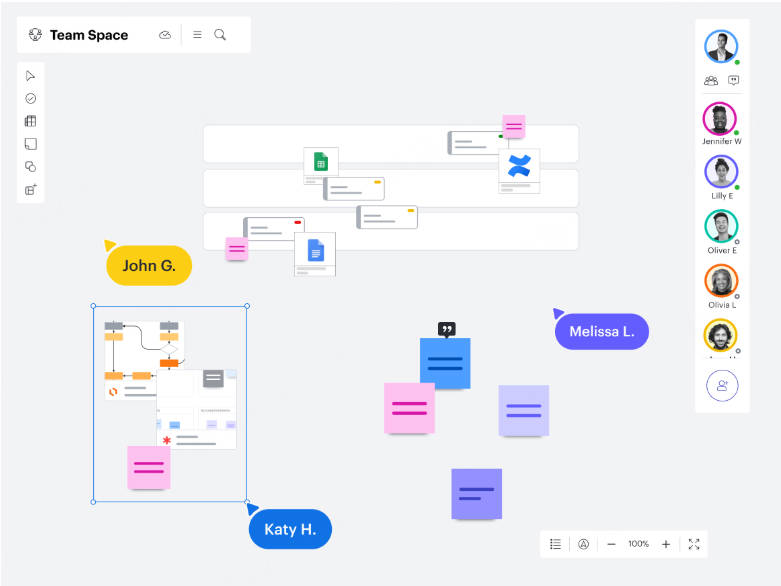
Why it is useful: Lucidspark supports visual brainstorming. Check the Lucid plan comparison for editable-document and facilitation limits.
Best for: Business teams, planners, meeting facilitators.
For a strategy session, have each participant add one opportunity and one risk, then cluster the related notes together. Free users can prioritize with dot voting. If the facilitator needs full voting controls, a timer, or contributors without Lucid accounts, select a Team or Enterprise workflow before the meeting. End with one chosen priority and an owner, rather than treating the largest cluster as an automatic decision.
Ziteboard: Short Drawing Sessions
source: https://webflow.com/blog/whiteboarding-tools
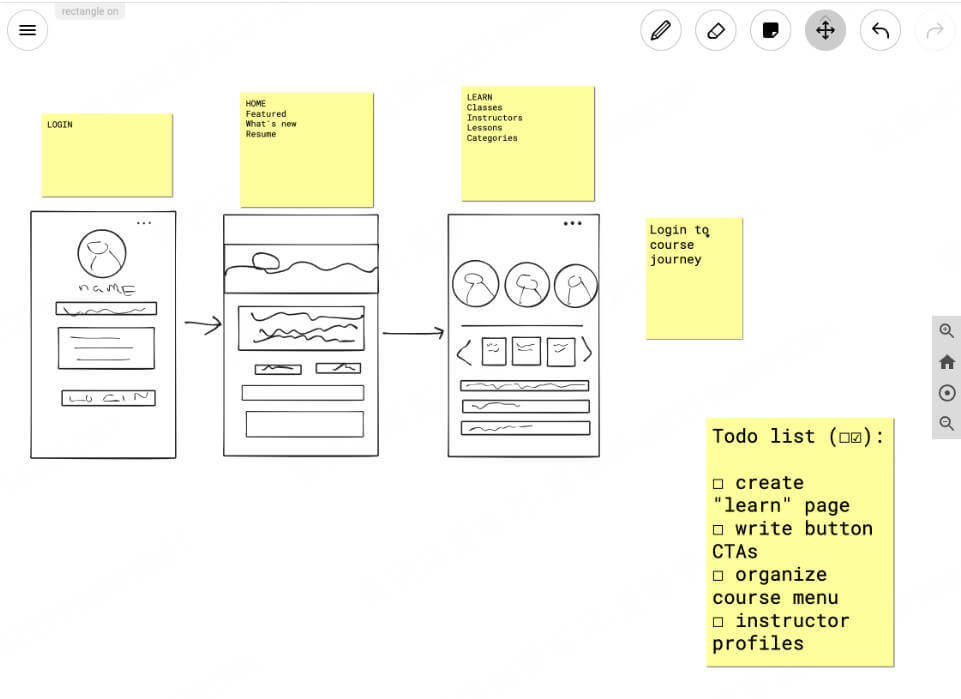
Useful capability: A no-frills whiteboard that runs directly in your browser.
Best for: Quick sketches, basic collaboration.
For a non-confidential client explanation, draw the proposed process while the client marks the unclear transition. Use separate areas for the current and proposed process so both remain visible. Confirm the client can join with the intended account. Its free plan uses public boards; anonymous access requires a paid add-on, so keep sensitive material off a public canvas.
Whiteboard Fox: Temporary Shared Sketches
Useful capability: No sign-up needed—just share a link and start drawing.
Best for: Casual brainstorming, quick team sketches.
For a last-minute huddle, share a Whiteboard Fox link and ask each person to sketch one possible arrangement. Its start screen lets you restrict participants to erasing their own drawing, allow changes to everything, or make the board view-only. Choose the permission that matches the exercise. Its free Personal boards expire after 14 days, so save the result if it must outlast the session.
Limnu: Handwriting and Drawing
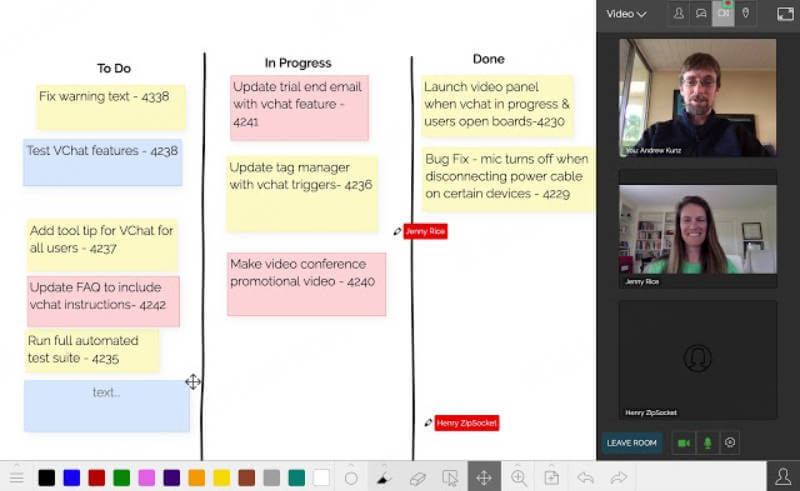
source: Limnu
Useful capability: Mimics traditional whiteboards with smooth handwriting and drawing.
Best for: Artists, sketchers, teachers.
For a handwriting lesson, work through one equation and ask the learner to complete the next line on the shared board. Use the same tablet and browser planned for the lesson to check pen control and readable notation. Limnu's Free plan has a 14-day board-access window; boards archive afterward even though the free account continues. A reusable lesson library needs a paid retention option or an external record.
Conceptboard: Visual Feedback
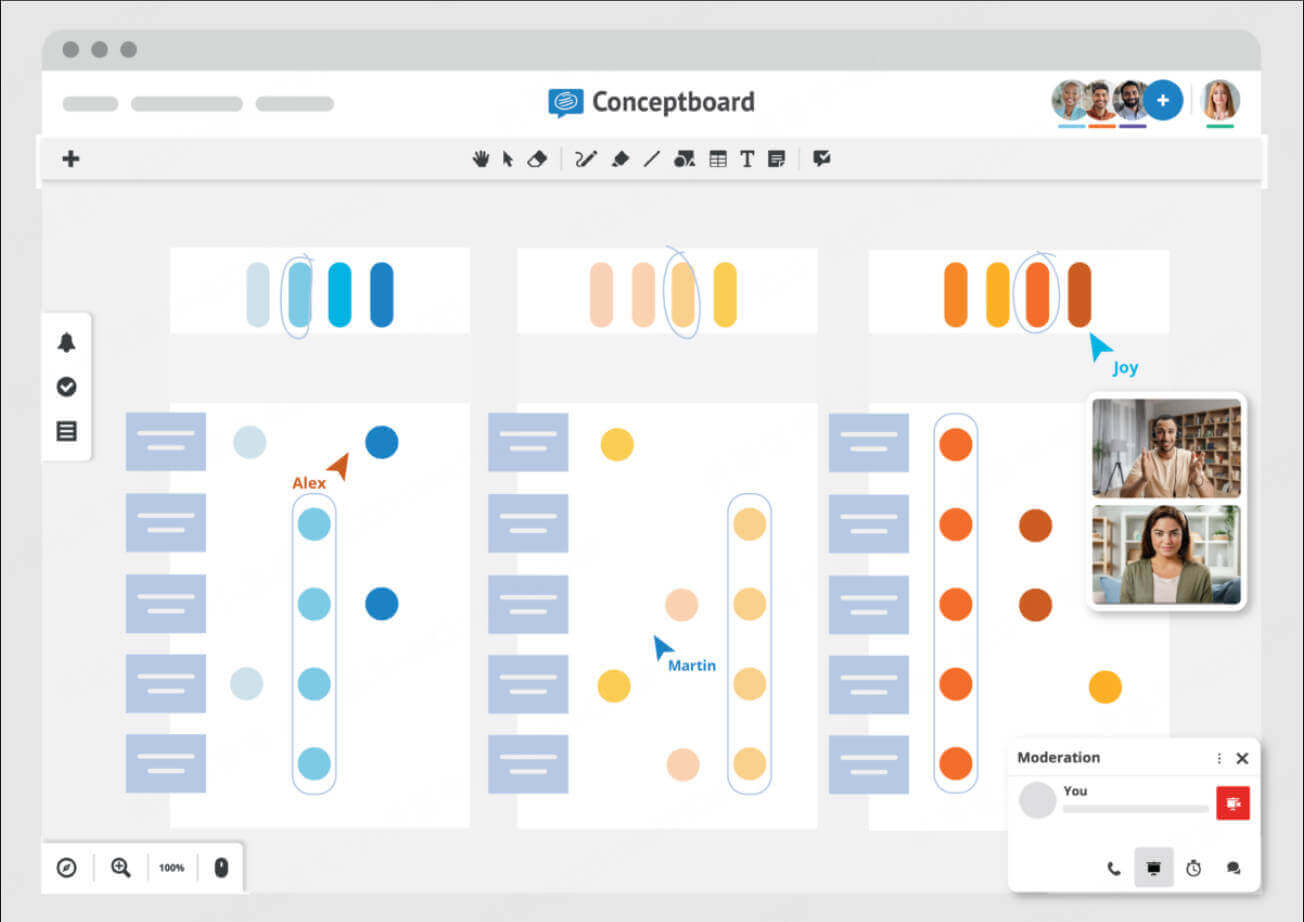
source: Conceptboard
Useful capability: Features sticky notes, commenting, and a collaborative workspace.
Best for: Remote teams, strategic planning.
For a live design review, upload one review image, ask each participant to comment beside the affected area, and resolve conflicting suggestions while everyone is present. Keep the comments attached so a colleague in another time zone can continue the review later. Free's 10 MB upload and 100-object caps make the size of the prepared material part of the plan; account-free guest contributors are a paid feature.
Sketchboard: Software Diagrams
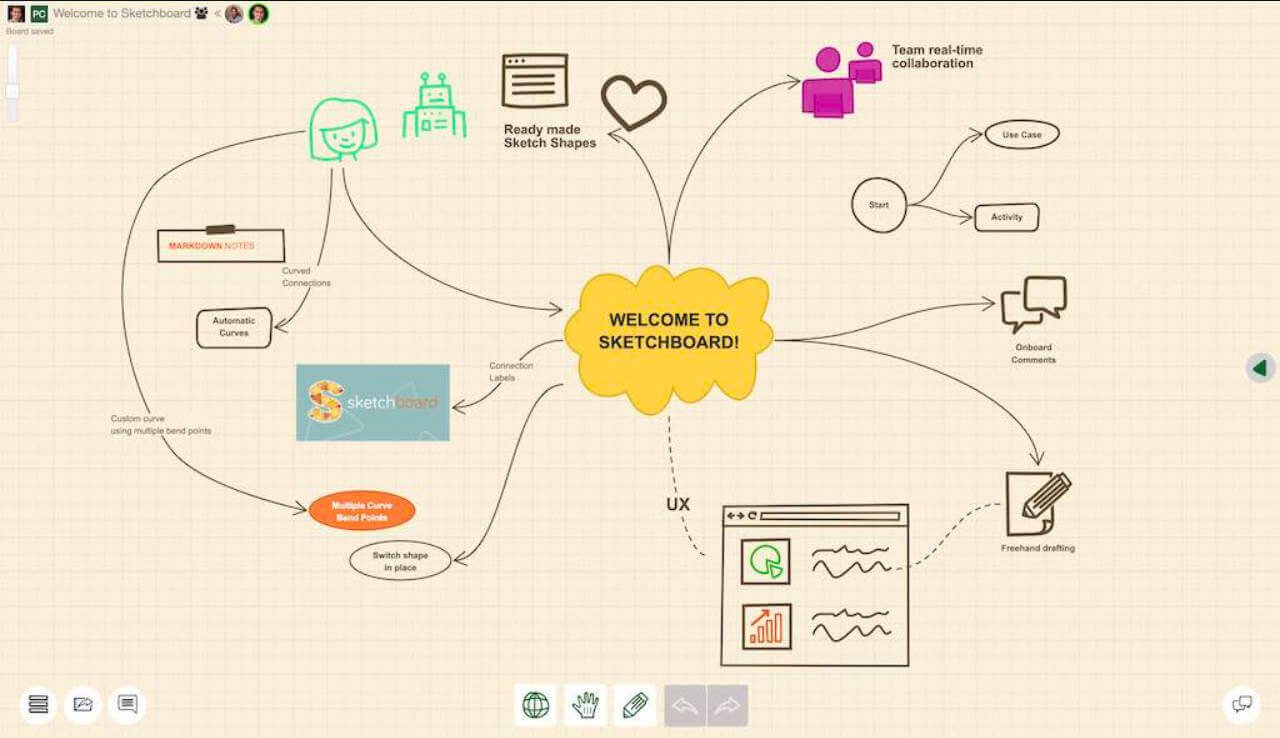
source: Sketchboard
Useful capability: Supports flowcharts, UML diagrams, and technical brainstorming.
Best for: Developers, IT professionals, software design teams.
For a software discussion, map three components and label what each connection carries. Ask a teammate to trace one request through the drawing and mark the uncertain dependency. The Free plan includes 3 editable boards and up to 5 users, but its free boards are public. Use a fictional system for a free trial; choose private collaboration before adding a confidential architecture.
What to Look for in a Free Whiteboard?
Choose a tool around the participants, inputs and output of your next session. These questions help identify a limit before it interrupts the meeting.
1. Can Multiple People Work on the Board at Once?
Have two people add and move separate objects at the same time. Both should see the changes and be able to find the area under discussion. Then test a participant who joins from outside the host's workspace; a working host account does not establish guest access.
Boardmix Free allows up to 5 editors per file. For a larger session, choose a suitable plan and try a representative board with the expected devices, browsers and connection quality. Editor capacity does not establish a universal latency guarantee.
For the meeting, count active editors rather than attendees. A person watching a screen share is not contributing to the canvas.
2. Does It Come with Pre-Made Templates or AI Features?
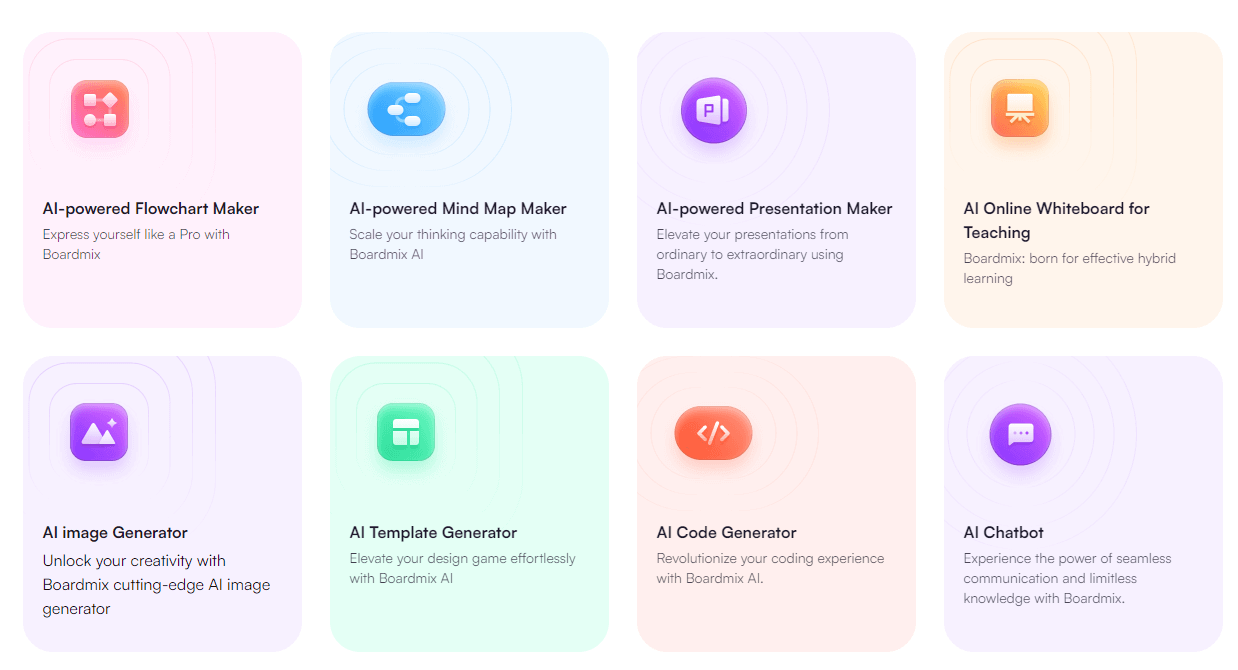
Prepare a small structure before the call: one area for individual ideas, one for grouping, and one for decisions. A template saves layout work only if participants understand where to contribute.
Boardmix provides templates and AI-assisted diagram creation; availability and usage depend on the plan and credits. Miro also provides templates for visual planning. Start with the structure you need, then review any generated content before sharing it.
A useful starting board contains one filled example. For a campaign session, show “Audience: first-time buyers” and “Question: what stops the first purchase?” so the team knows how specific to be.
3. How Many Boards Can You Create for Free?
Decide whether you will reuse one board or keep a separate board for every session. A three-board allowance can cover one active project but becomes restrictive when each client needs a separate editable workspace.
Excalidraw’s free editor is useful for a quick sketch, but browser-local storage is different from a managed archive. Save an editable copy of important work. Lucidspark limits which documents remain editable on its Free plan.
Reopen the result as the owner and as a participant. Retaining an image, retaining the shared board, and retaining edit access are three different outcomes.
4. Does It Work with Zoom, Slack, Google Drive, or Microsoft Teams?
Decide whether the session needs a native meeting integration or simply a board link beside the call. Keep the audio meeting and the board visible together, and tell participants which window they should edit.
Microsoft Whiteboard is available within Teams. To use Boardmix alongside another application, share the board link in your meeting or project conversation and manage editing access in Boardmix.
Posting a board URL in a chat does not grant editing access. Share the board with the required permission, then place that link in the meeting invitation or project conversation.
5. Is the Interface Beginner-Friendly?
Use the first two minutes for a practice action: add a note, move it, and return to the starting area. This reveals whether participants need help with zooming, panning, or selecting objects before the real discussion starts.
Whiteboard Fox can fit a drawing-first exercise. A structured Miro or Boardmix session benefits from a prepared layout with visible instructions and a clearly marked decision area. More features do not remove the need to orient the group.
Judge ease of use by the participants' first contribution on their actual devices, not by how quickly the host opens the canvas.
6. Can You Save or Download Your Work Easily?
Choose the final deliverable before the meeting: a read-only image for an email, a PDF for review, or editable objects for the next workshop. One format rarely serves all three purposes.
Export a sample before the meeting and check its resolution, watermark and editability. Ziteboard’s free Starter plan lists PNG, SVG and PDF export; its separate limits cover public access, traffic and imports. A picture or PDF does not preserve every tool’s editable objects.
Before closing, record the decision, its owner, and the next action on the canvas, then save the agreed output somewhere the team will actually revisit.
Putting It All Together
For a 30-minute session, prepare the question and example in advance, spend the opening minutes checking access, collect individual contributions, discuss the differences, and reserve the final minutes for a decision and saved output. The board should show how the group moved from suggestions to an agreed next step.
Choosing the Right Whiteboard for Your Needs
For a two-person technical sketch starting now, begin with Excalidraw and save the editable file. For a four-person planning meeting next week, prepare a Boardmix or Miro board and confirm the team-sharing model. For a live handwriting lesson, compare Ziteboard and Limnu using the intended pen device and the required retention period.
If the participant count, privacy, or saving requirement does not fit Free, change the plan or the tool before preparing the whole session. That decision is more useful than choosing a whiteboard because its feature list is longer.