When deadlines, requests, and long-term work compete for attention, a to-do list alone can make everything look equally pressing. Eisenhower Matrix analysis separates importance from urgency so you can decide what to do now, schedule, delegate, or stop doing.
The aim is to protect time for important work before it becomes an emergency. The matrix cannot create extra capacity, but it can make the tradeoffs in your work visible.
What is the Eisenhower Matrix?
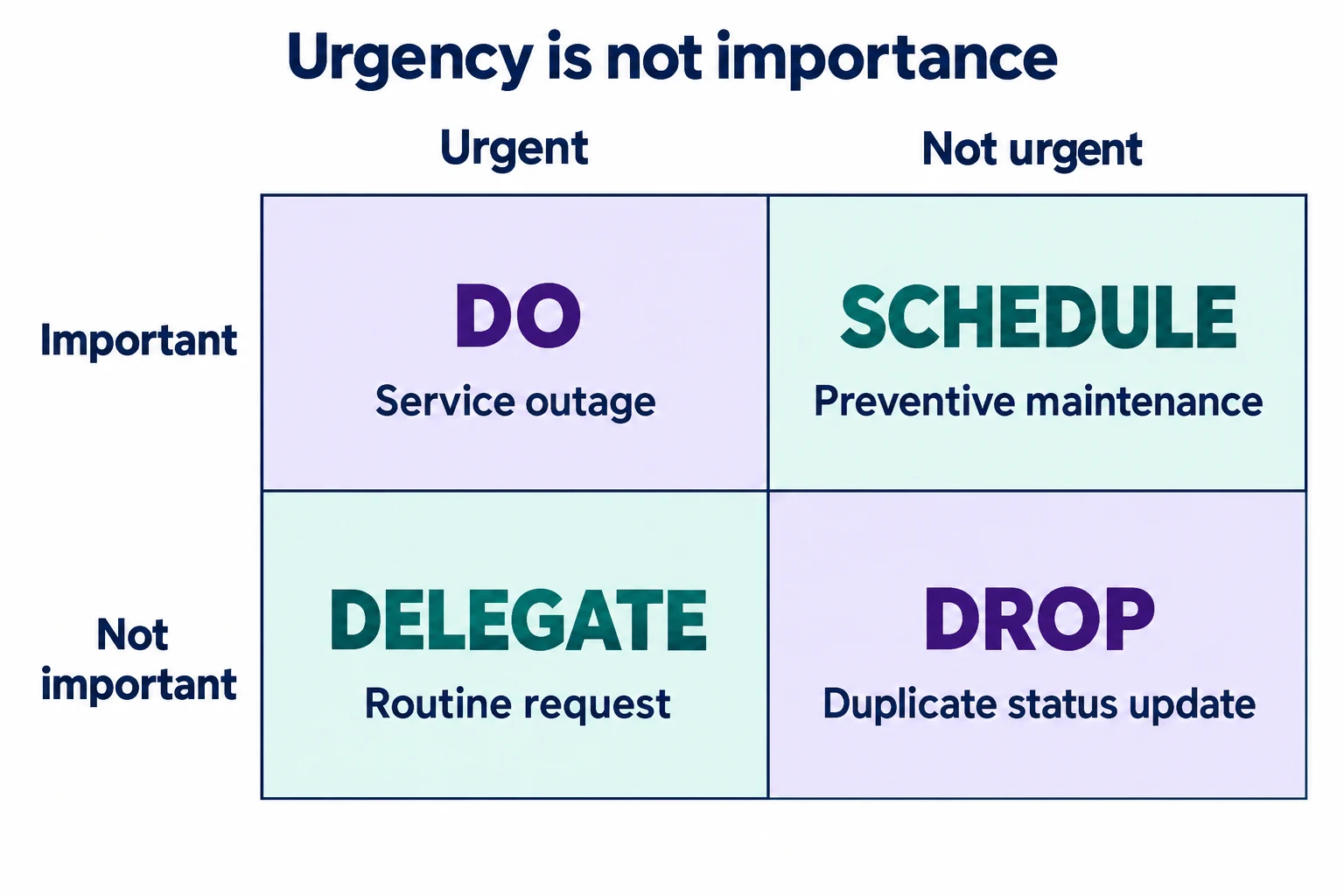
The Eisenhower Matrix, also called the urgent-important matrix, divides tasks into four quadrants: important and urgent, important but not urgent, urgent but less important, and neither urgent nor important. The EISENHOWER guide pairs those categories with four responses: do first, schedule, delegate, and do not do.
Importance concerns the effect on your goals, responsibilities, or well-being. Urgency concerns how soon attention is needed and what happens if you wait. A task can be urgent without being the best use of your time; important work may have no immediate deadline.
How to build an Eisenhower Matrix
List the commitments already competing for your time. Write specific actions rather than whole projects, then judge each action against the same responsibilities and deadlines. This helps you make a realistic allocation of time and resources.
Quadrant 1: important and urgent—do first
These tasks have both a meaningful consequence and a near-term need for action. A service outage, a decision blocking today's delivery, or a deadline with a real penalty may belong here. A major meeting or negotiation is not automatically urgent and important; ask what depends on it and when.
Handle the task or agree who will. When an emergency displaces scheduled work, make that change explicit so the team is not left expecting both commitments to be completed.
Quadrant 2: important but not urgent—schedule
These tasks support longer-term goals without demanding an immediate response. Preparation, maintenance, learning, and relationship-building often fit here. Reserve time and define a next action; a note labeled “later” is not a plan.
For example, preparing support answers early in a launch week can prevent a rushed handover on the release day. Protecting this work is central to using the matrix well.
Quadrant 3: urgent but less important to your role—delegate or redirect
An urgent request can feel important simply because someone is waiting. Check whether you are the right person to handle it. A routine asset request may be better directed to the person responsible for the library.
Delegation requires an agreed handoff, authority, and capacity. This quadrant is not a label for “other people's problems”: helping a colleague with a critical dependency may be part of your responsibility. If redirecting a simple request takes longer than resolving it, use judgment.
Quadrant 4: neither urgent nor important—drop or limit
These activities do not justify attention in the current context, such as reformatting a slide nobody will use or producing a duplicate update. Remove or limit them so they do not crowd out necessary work.
Do not confuse this category with rest or personal relationships. Recovery can be important even when it carries no external deadline.
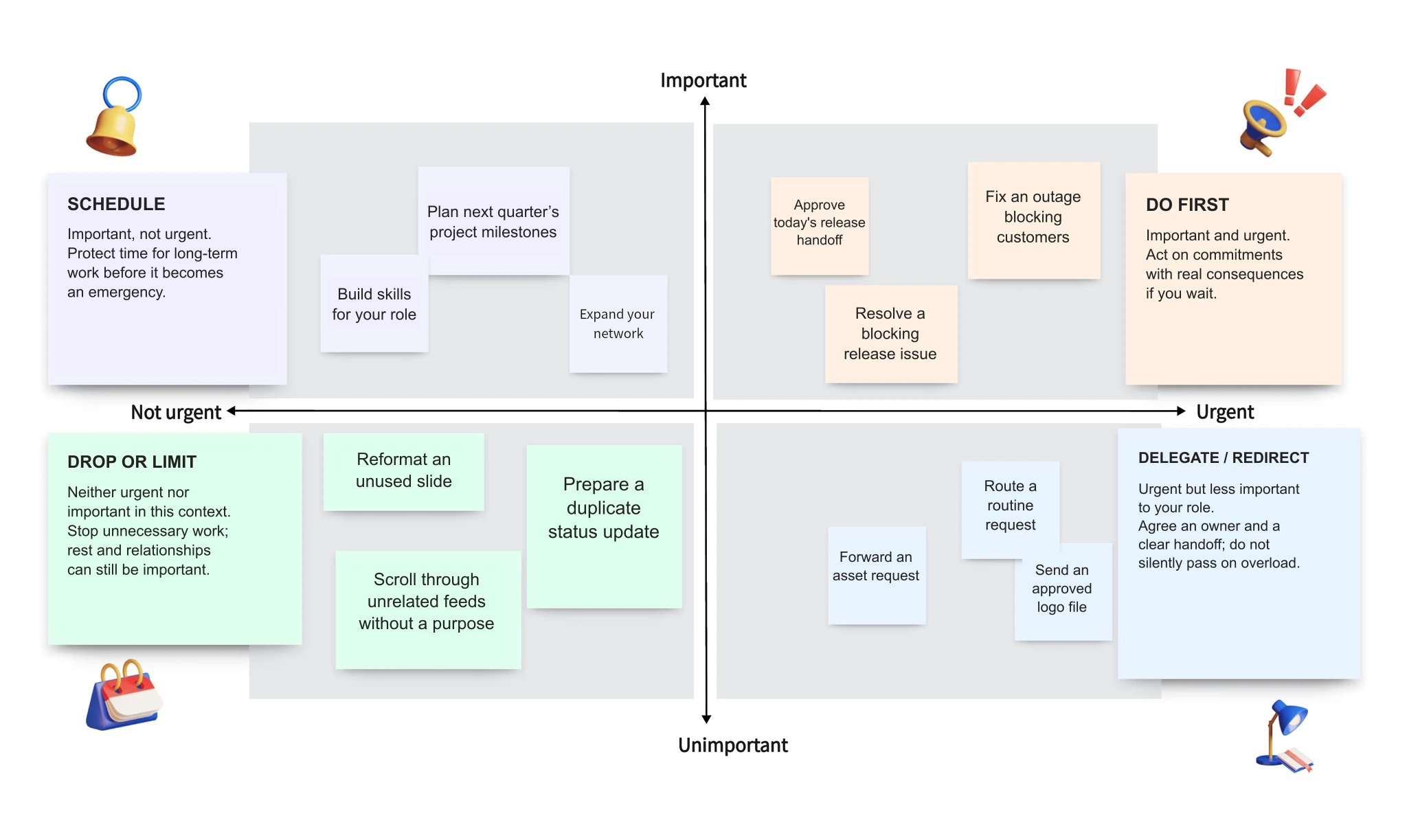
Example: prioritize work during launch week
Imagine a team releasing a reporting feature on Friday. These possible assignments depend on its responsibilities and deadlines:
| Task | Placement | Reason and response |
|---|---|---|
| Restore a broken signup path | Important and urgent | Customers are blocked now. Coordinate with the responsible team and adjust other commitments. |
| Prepare support answers on Monday | Important, not yet urgent | The answers are needed for launch. Reserve a session before Friday. |
| Supply an approved logo file | Urgent, potentially delegable | A partner needs it today. Ask the asset owner to respond or send a known file if that is simpler. |
| Redesign an unused internal slide | Neither | No current customer, decision, or commitment depends on it. Remove it from this week's work. |
A different team could classify the same action differently. “Reply to the designer” becomes important and urgent when the designer cannot finish today's release page without your approval. “Prepare a strategy deck” may be low priority if it informs no decision.
How to apply the Eisenhower Matrix in Boardmix
Step 1: create a board and label four areas
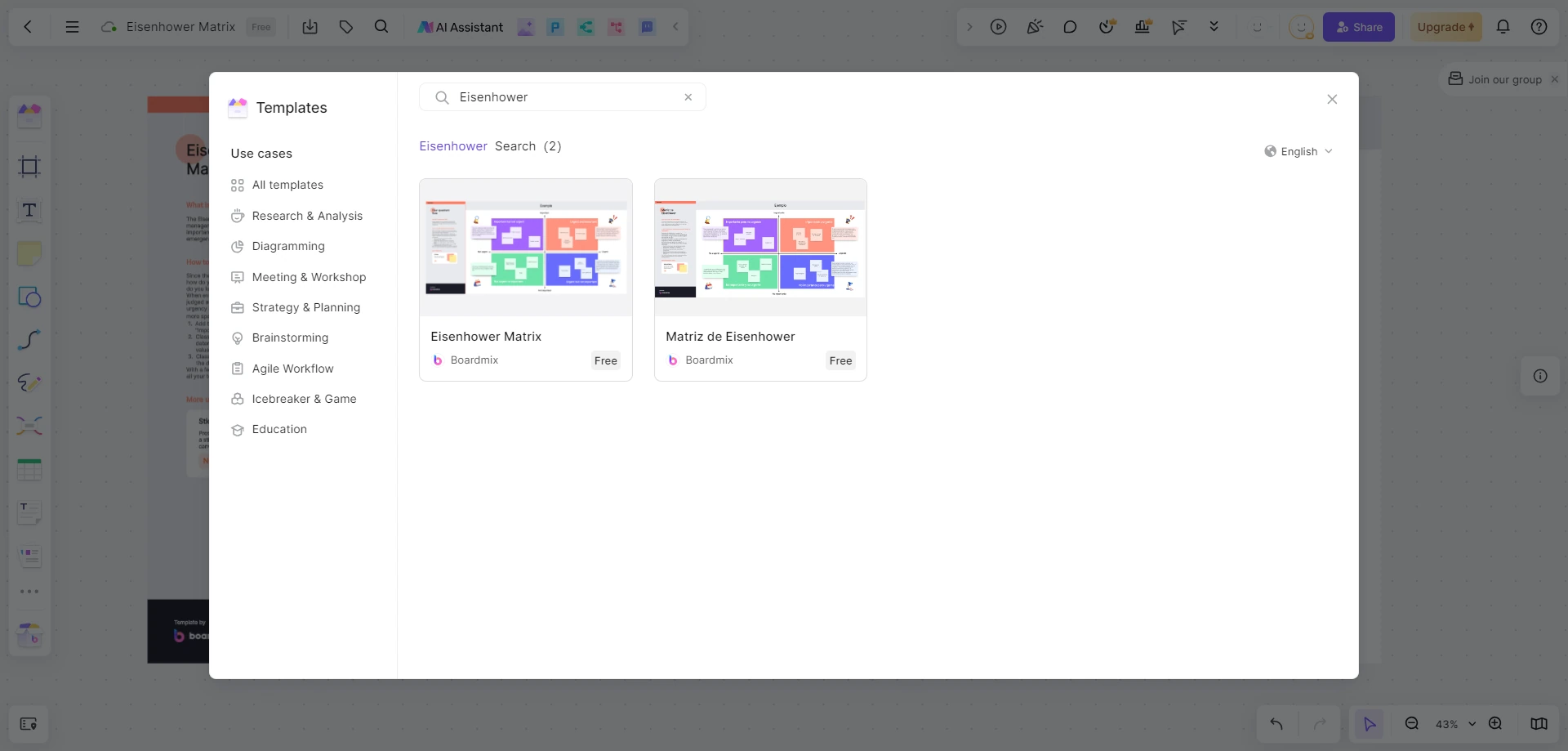
Open Boardmix and create a board, or explore the Eisenhower Matrix template. Label each area with its importance, urgency, and response. You can use shapes and notes to build the same structure on a blank canvas.
Step 2: add and classify specific actions
Put one action on each note, with its deadline, owner, and a short reason it matters. Split “launch the product” into actions such as “test signup,” “approve release notes,” and “brief support.” Those actions may belong in different quadrants.
For shared work, sort the notes together. If two people disagree, ask which consequence or commitment each person has in mind. Capture that information beside the note rather than treating the classification as a popularity vote.
Step 3: turn the categories into commitments
Move scheduled work into the calendar or work plan you actually use. For delegated work, agree who will act and what completion means. If urgent work consumes the whole week, reduce scope, renegotiate dates, or discuss capacity; moving notes alone cannot remove the constraint.
Keep the matrix useful as priorities change
Review the board when a meaningful deadline or dependency changes. A scheduled action may become urgent, while a previous priority may become unnecessary. Keep the matrix focused on decisions about attention and timing.
For product ideas that need comparison across impact and effort, a requirements prioritization matrix may be more suitable. For this week's commitments, build your priority matrix in Boardmix and reserve time for one important task that interruptions have repeatedly displaced.