A business model canvas describes how an organization creates, delivers, and captures value. Its nine building blocks connect customers, the offer, operating activities, and finances on one page. See the Business Model Canvas from Strategyzer for the original framework.
The examples below show how to examine a coffee shop, a platform, a retailer, and other business models. Focus on how the blocks connect: who receives value, what makes it possible, and how money moves through the business.

Business Model Canvas Components
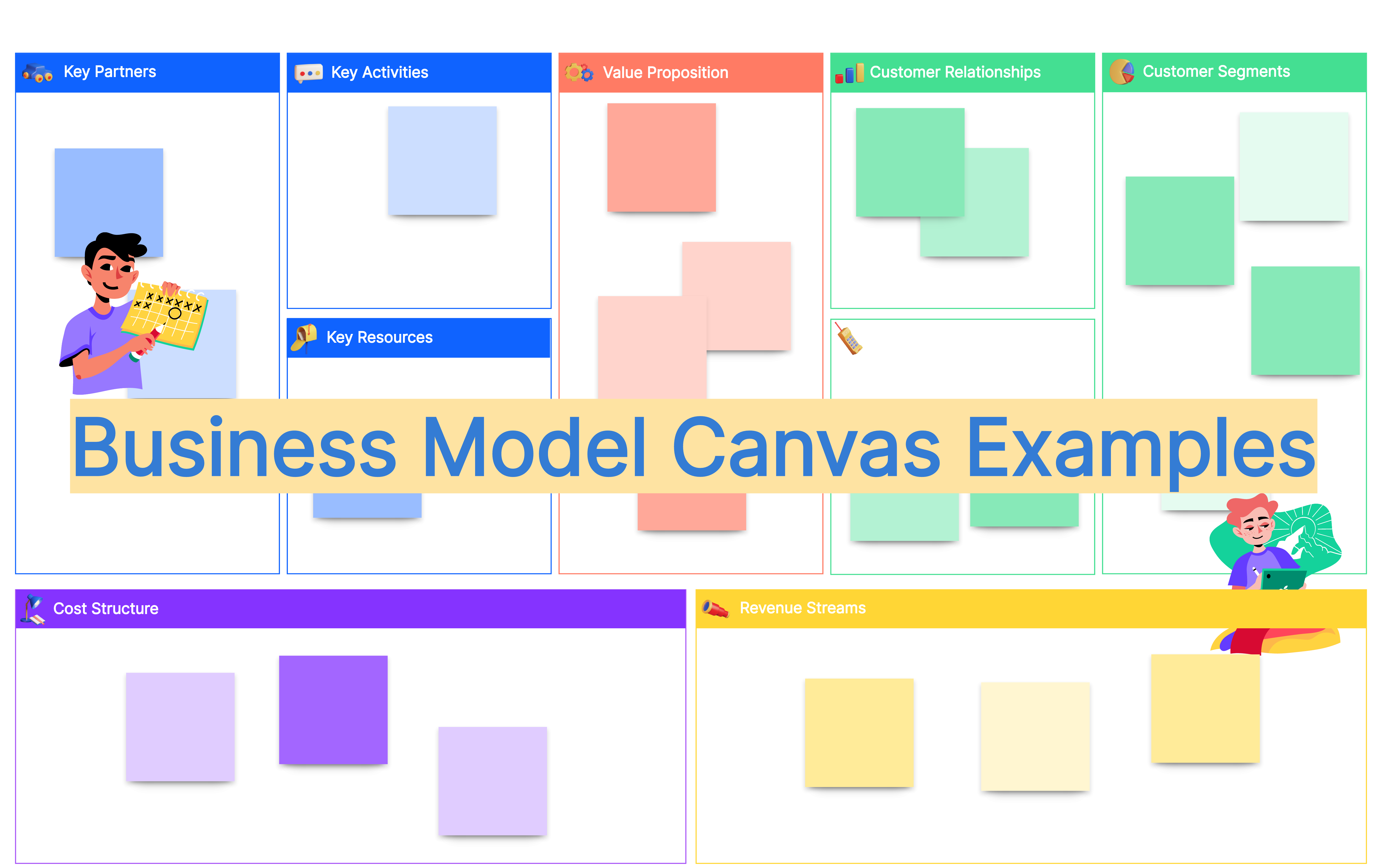
Read the nine building blocks together. A change in one area—such as serving a new customer group—may require different channels, resources, or costs.
Use the following questions to build or review a canvas.
- Key Activities: What must the business do to deliver its offer? A coffee shop might prepare drinks, manage stock, and serve customers; roasting is an activity only if it is part of that shop’s model.
- Key Resources: Which people, equipment, knowledge, and other assets make those activities possible? For a coffee shop, examples include trained staff, premises, and brewing equipment.
- Key Partners – this network includes all the other businesses that the company has cultivated relationships with. This could be suppliers, manufacturers, and other service providers.
- Value Propositions: What problem does the offer solve, or what need does it meet for a particular customer segment? Describe the benefit, not just the product name.
- Customer Segments: Which groups does the business serve, and how do their needs differ?
- Channels: How do customers discover, evaluate, buy, and receive the offer? A café may use its location, online ordering, and delivery partners.
- Customer Relationships: How does the business attract, support, and retain each customer group?
- Cost Structure – the component breaks down the business costs. Of course, you shouldn’t neglect the variable costs that might be different from month to month.
- Revenue Streams: How does the business earn revenue from each customer segment? Revenue is not the same as profit; compare it with the cost structure.
10 Business Model Canvas Examples
Use each example to explore a different pattern, then replace the labels with information about your own business. For a named company, add its current reports and product information before relying on the canvas for a business decision.
1. Business Model Canvas of Coffee Shop
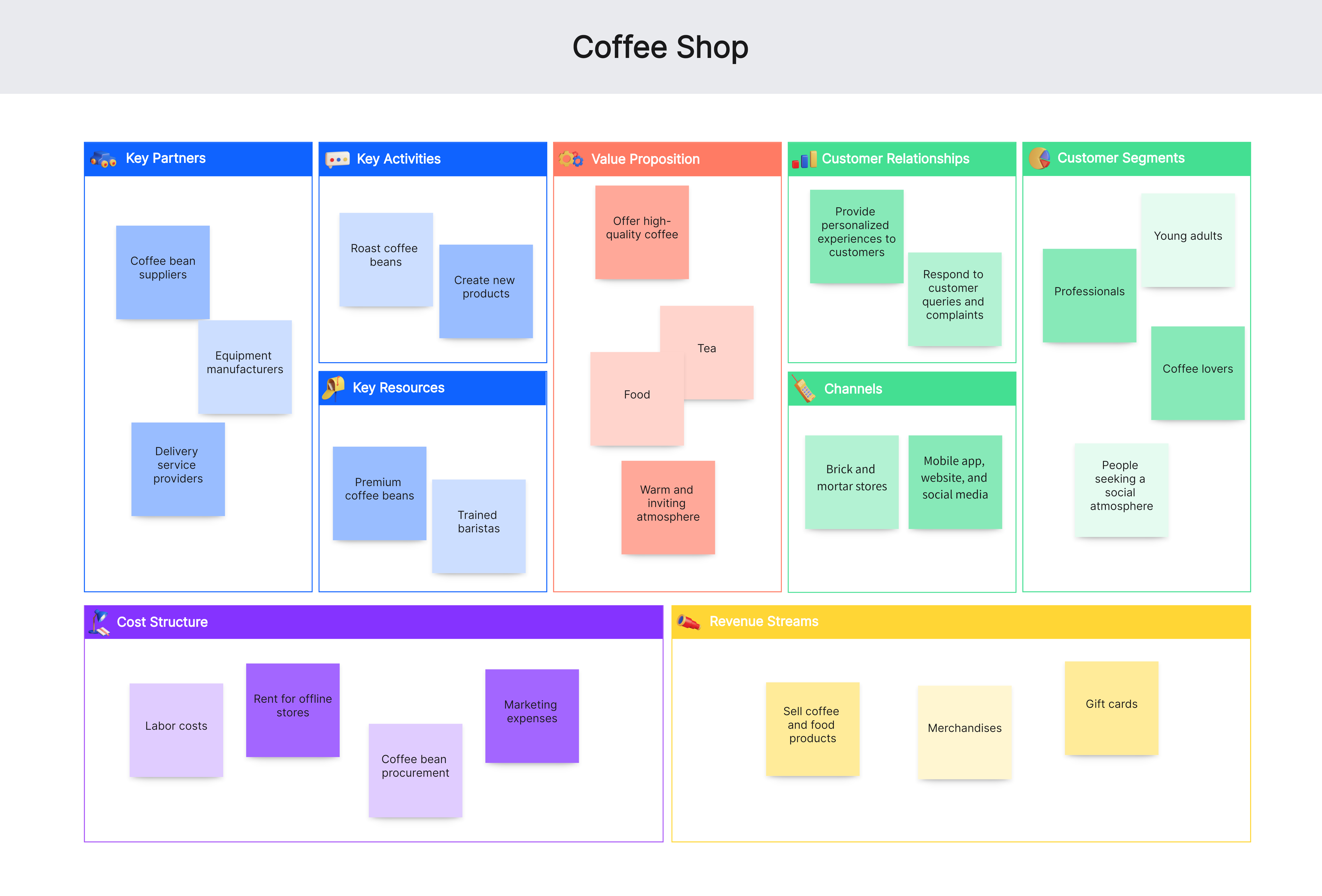
A coffee shop is a useful starting example because the exchanges are easy to observe. Identify its customer groups, the reason they visit, and the work required to serve them.
As you can see in this example, the main value propositions of a café are the drinks and food on the menu, as well as the inviting ambiance. The rest of the canvas focuses on how the company’s processes boost these value propositions to contribute to the revenue streams.
2. Business Model Canvas for Food (McDonald’s)
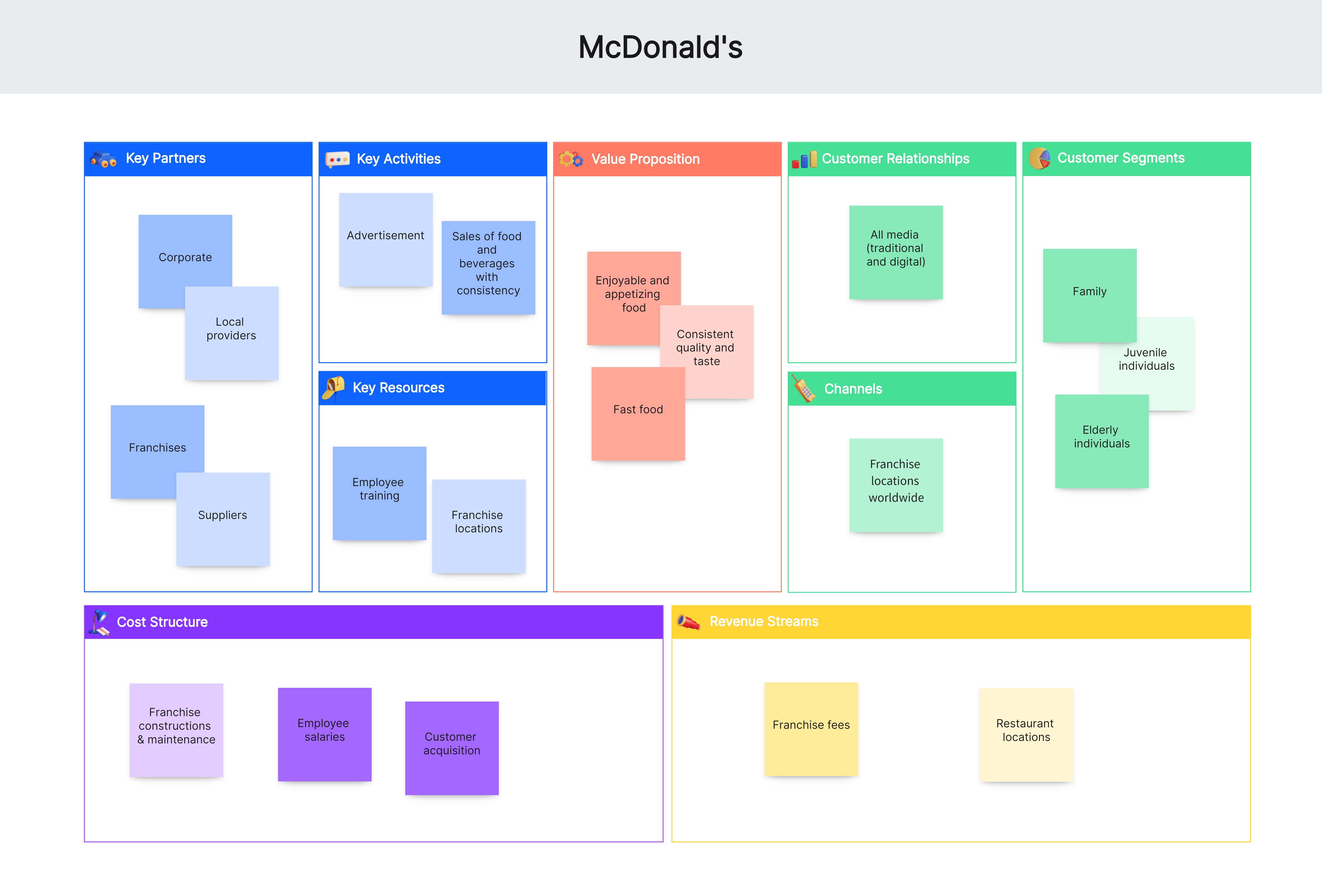
A restaurant chain introduces relationships that a single café may not have, including franchisees and a wider supply network. The McDonald’s example is a starting point for examining those relationships.
Separate revenue from company-operated restaurants from payments associated with franchised restaurants. Use McDonald’s financial reports for the current business mix rather than assuming every restaurant produces revenue in the same way.
3. Business Model Canvas of Apple

The Apple example shows how a product can sit within a wider system of devices, software, and services.
Examine what each customer group gains from that system, and which channels connect customers to the products and services. Keep the value proposition distinct from the list of devices being sold.
The resource and partner blocks can help you explore product development, distribution, and manufacturing relationships. Claims about costs or margins should come from Apple’s financial disclosures, not from the layout of the canvas.
4. Business Model Canvas of Uber
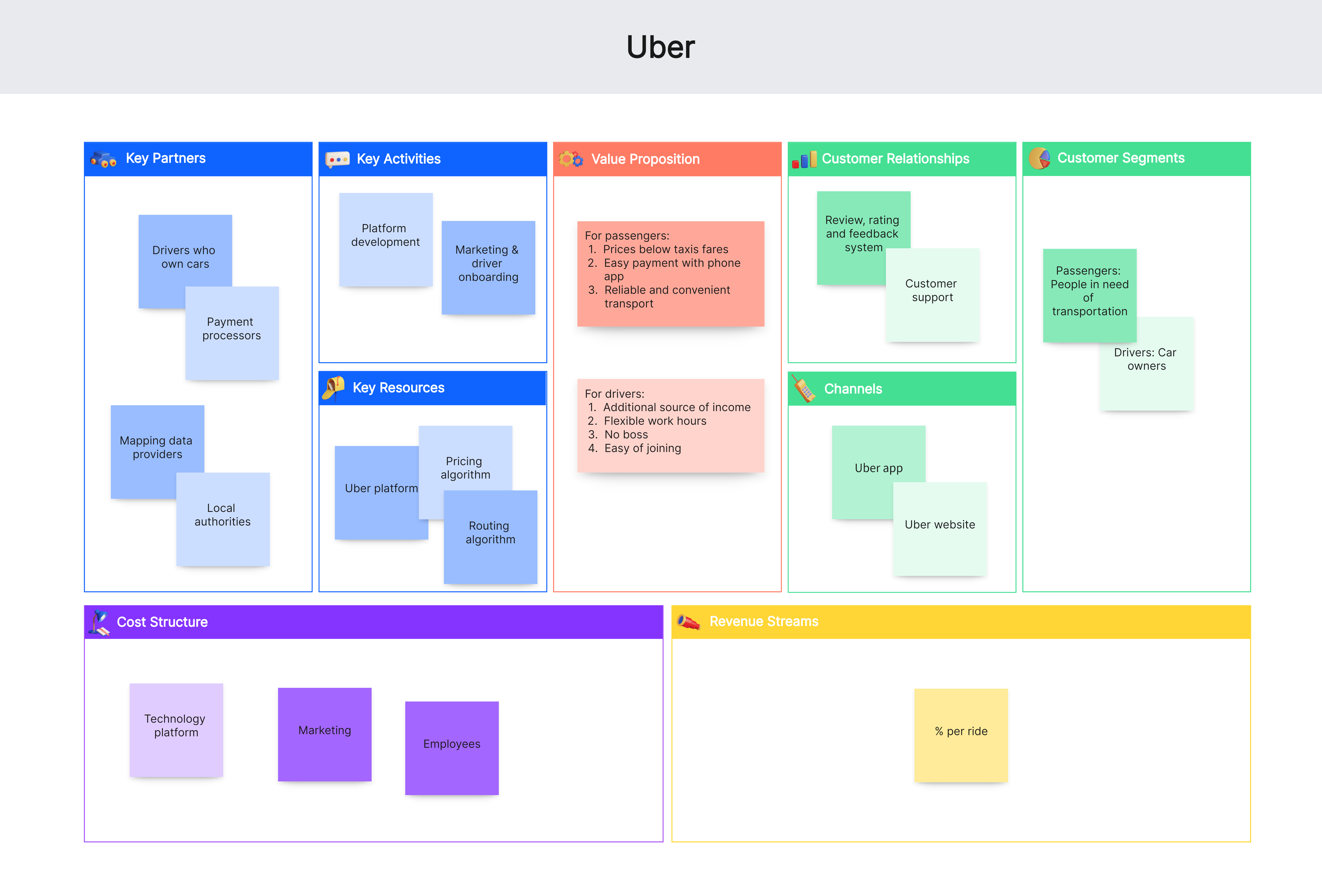
The Uber example illustrates a platform connecting different participant groups. It is useful for examining how the offer to one group depends on participation by another.
For a ride-hailing example, separate riders and drivers, then describe the service each receives and the activities needed to connect them. This makes a multi-sided model easier to understand.
5. Business Model Canvas of Netflix

For a streaming-service example such as Netflix, connect the audience proposition with content, technology, distribution, and the plan offered to the viewer.
The revenue block should reflect the plans and revenue sources being analyzed. Consult Netflix’s current reports when describing its business rather than assuming a static subscription-only model.
6. Business Model Canvas of Google

The Google example shows why customer and user groups may need separate treatment. A person using a service and a business paying to reach an audience have different needs and exchanges.
Complete the channels and customer-relationship blocks as well as the revenue blocks. An empty section is a question to investigate, not evidence that a partner makes that part of the business unnecessary.
7. Business Model Canvas of Zara
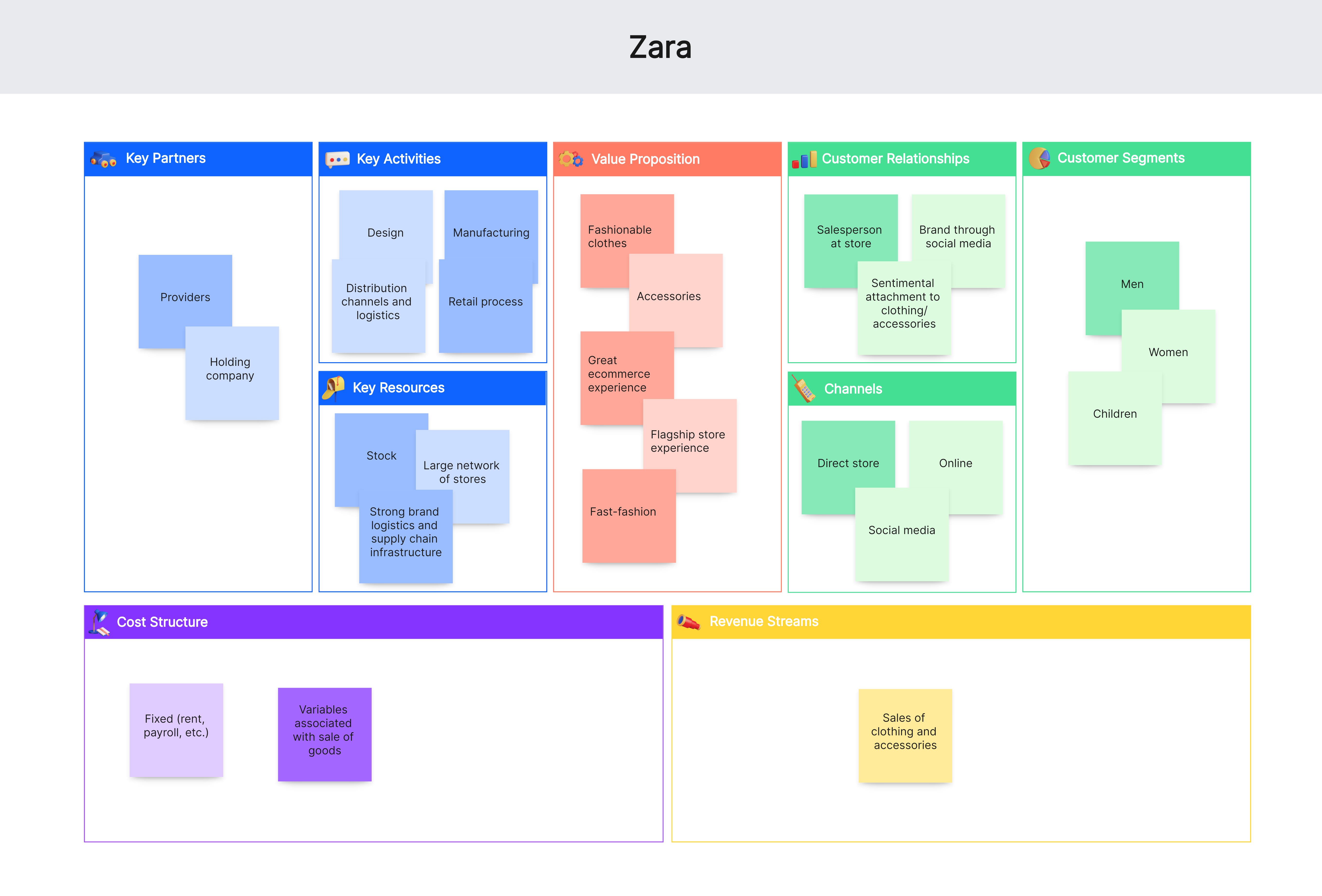
The Zara example focuses attention on retail customer groups, product selection, and distribution. Use it to consider how an offer reaches shoppers through physical and digital channels.
Inventory, premises, distribution, and the people running those activities can all be examined in the resources and activities blocks. Connect each item to the value it supports rather than adding every department to the canvas.
8. Business Model Canvas of Tesla

A Tesla example can examine customers, products, distribution, and supporting infrastructure. Avoid treating all buyers as one environmental persona: different buyers may value price, performance, charging access, or other attributes. Use current customer research or company disclosures to support the segment you select.
9. Business Model Canvas of Amazon
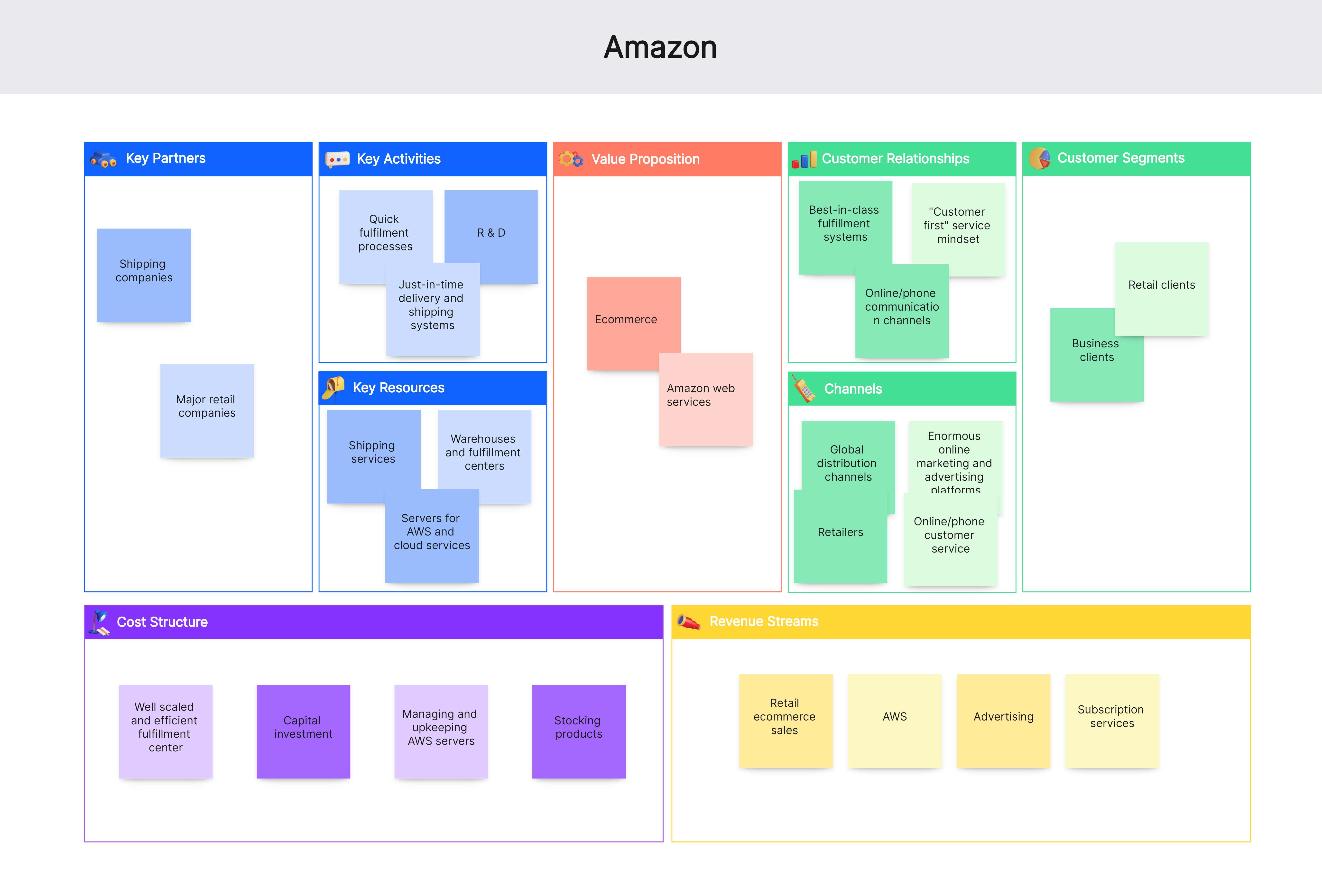
The Amazon example helps distinguish a retail transaction from a marketplace connecting sellers and buyers. Select the business unit you are analyzing before filling in the blocks.
A canvas for an online store differs from one for a marketplace or a cloud service. Separate their customer groups, resources, and revenue streams instead of treating the entire company as a single shop.
10. Business Model Canvas of Airbnb

The Airbnb example separates hosts and guests. Consider the value offered to each group, how they find and use the platform, and the fees associated with a booking. Current fee arrangements should be taken from Airbnb’s service-fee guidance.
How to Draw a Business Model Canvas
Use Boardmix to arrange the nine blocks, add notes, and review connections with your team. A starting template supplies the layout; your customer research and operating information supply the content.
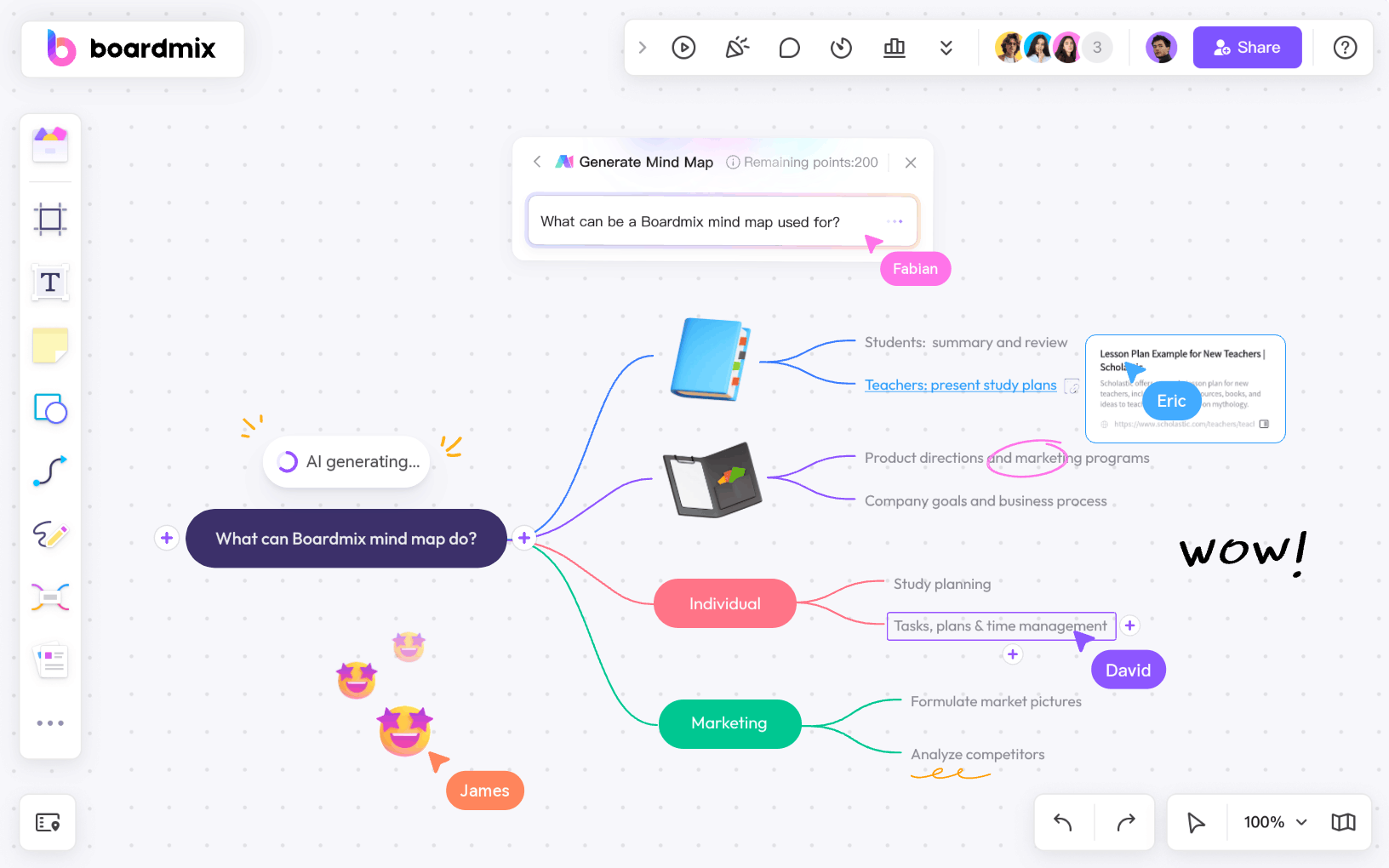
The steps for designing a business model canvas sample with Boardmix are the following:
Step 1. Choose the business model canvas template from the template center.

Step 2. Identify the nine key components and divide them into the appropriate sections. The templates you will find at Boardmix already divide the board into the necessary building blocks.
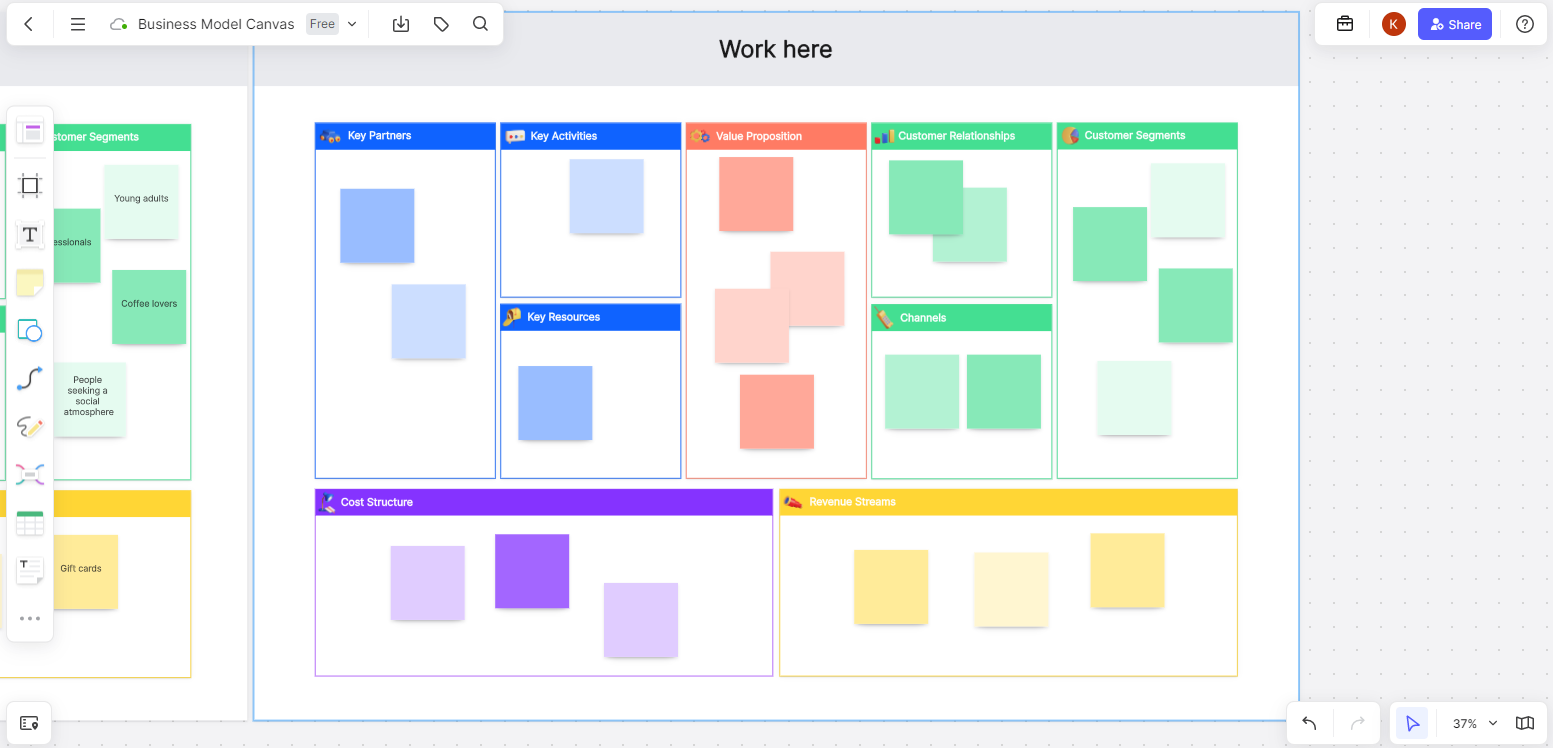
Step 3. Create virtual post-it notes and place them on the most suitable component. In Boardmix, you can simply drag them around.
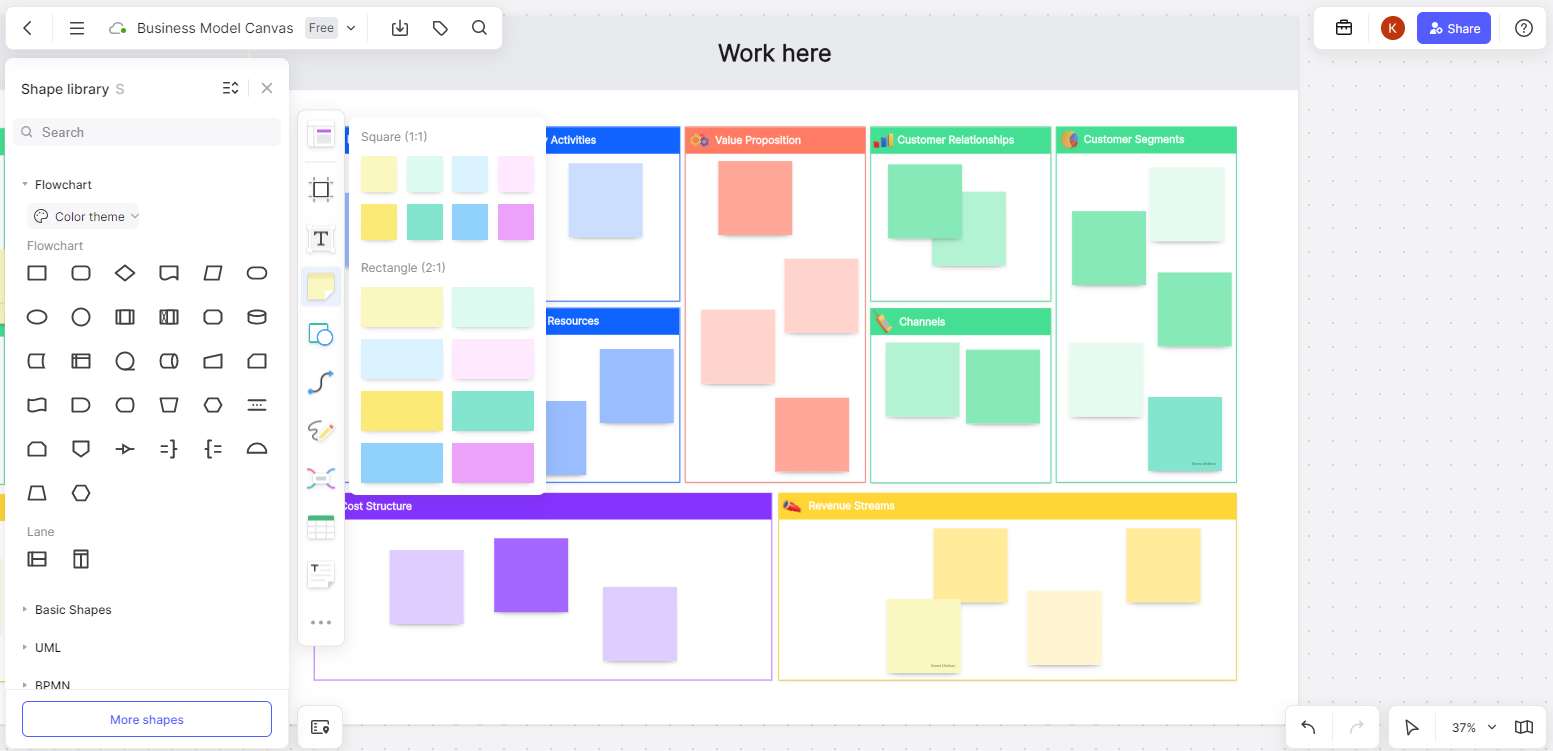
Step 4. Review the connections between blocks, then share the board with the appropriate viewing or editing permissions. Keep unresolved assumptions beside the block they affect.

Build a Canvas for Your Own Business
Choose the example closest to the pattern you want to understand, then replace its labels with your own customers, offer, activities, and finances. The useful result is a connected model that explains how the business works and makes its remaining questions visible.