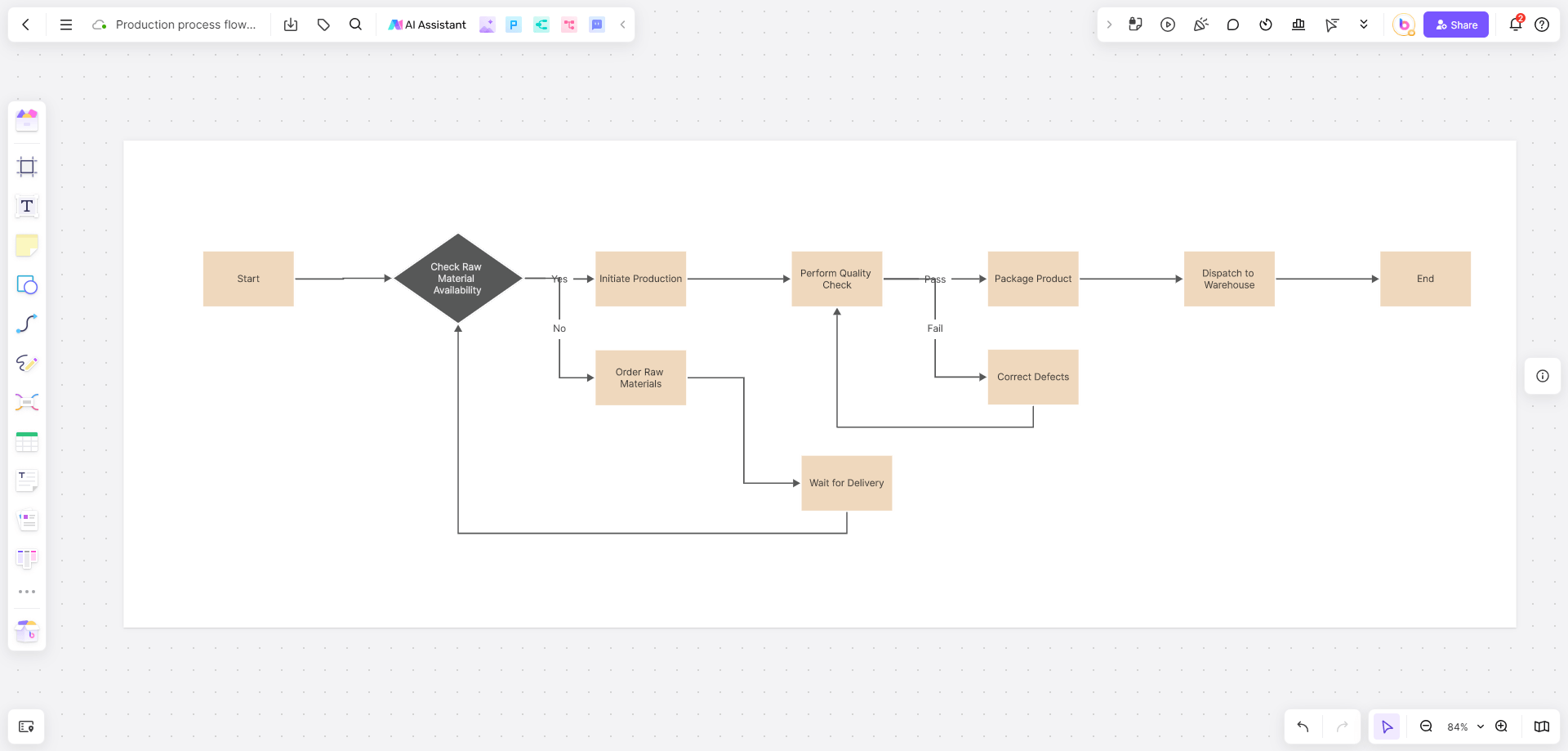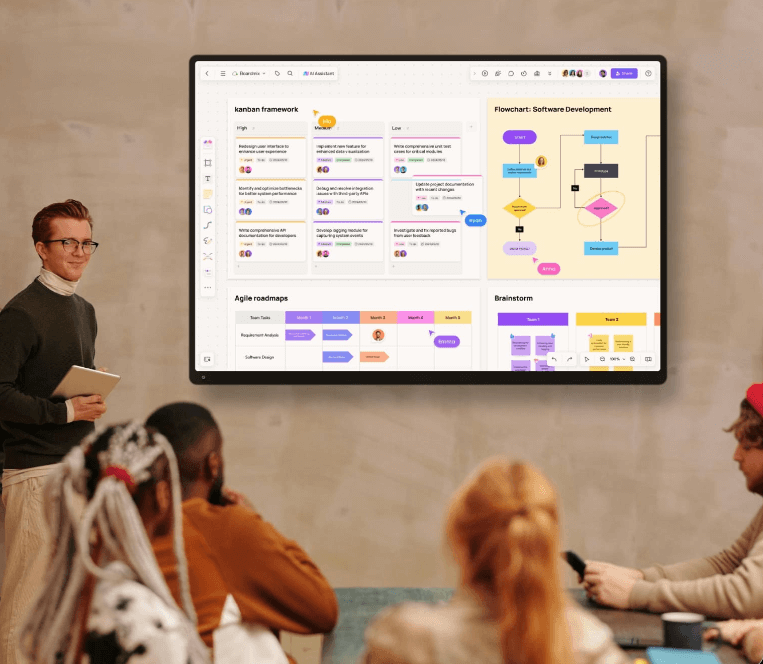




Miro and Boardmix can both be considered for collaborative mind mapping, but the better fit depends on the workflow around the map. A team that already organizes broader visual work in Miro may place a high value on continuity. A team evaluating a mind-map-first workflow on an online whiteboard should test Boardmix alongside it. The defensible choice comes from building the same map in both products and comparing editing effort, collaboration, reuse, handoff, governance, and total cost under the same conditions.
This article is a decision guide, not a universal winner declaration. Product features, plan limits, and prices can change, so verify current terms on the date of evaluation and record what was actually tested.

Miro vs Boardmix for Mind Mapping: The Short Answer
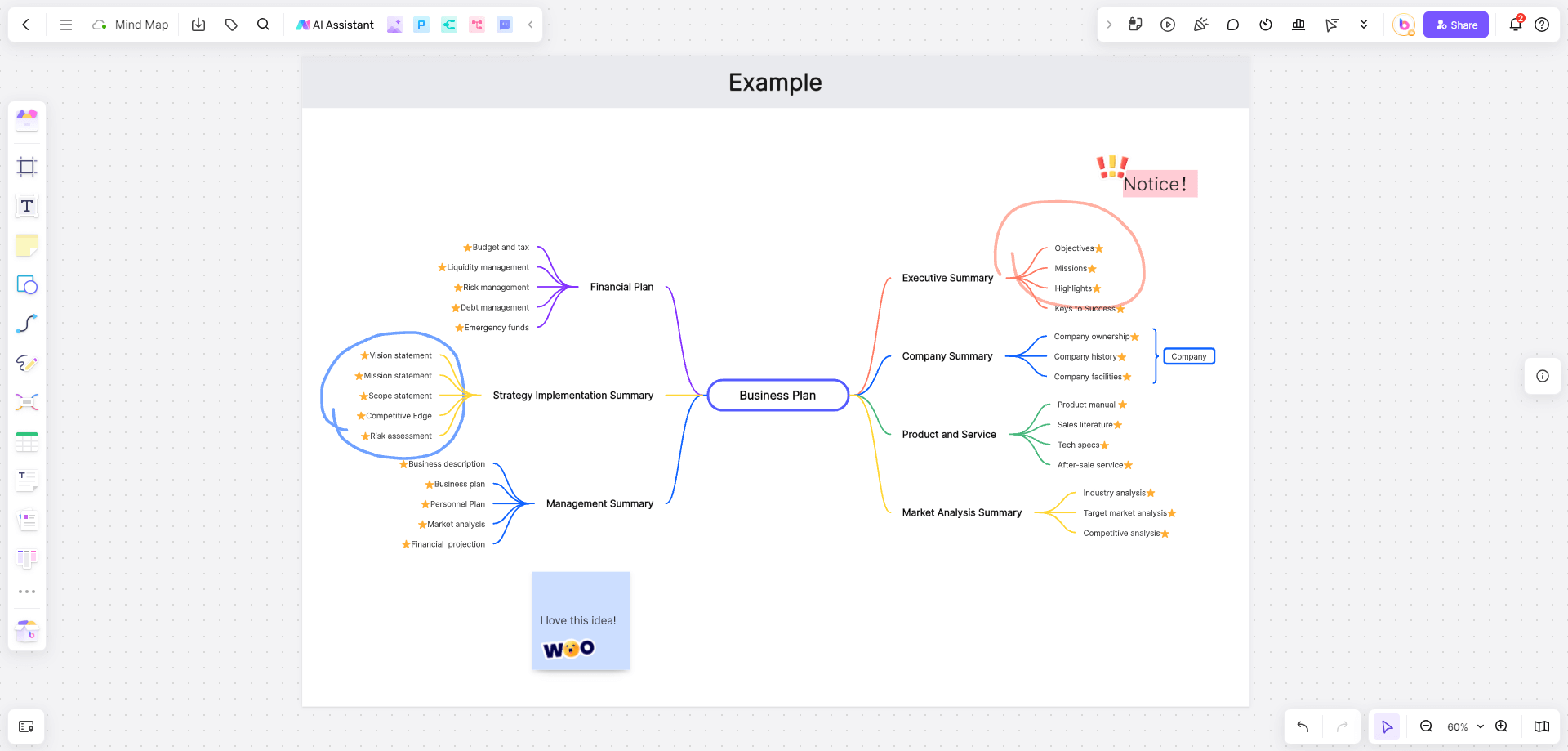
Start with the surrounding work rather than a long feature list. If the map must remain inside an established Miro process, test whether keeping that context saves meaningful setup and handoff time. If the team wants to evaluate a dedicated map-building path within a visual collaboration workspace, use the current Boardmix mind mapping workspace as the product reference and test it with the same source material.
| Decision factor | What to test in Miro | What to test in Boardmix |
|---|---|---|
| Map construction | Time and actions needed to create, move, collapse, and reorganize branches | The same branch-building and reorganization task with identical content |
| Collaboration | How reviewers enter, comment, edit, and recover context | The same reviewer journey, roles, and concurrent edits |
| Reuse | How a useful map becomes a repeatable team starting point | How the same structure is saved, found, and reused |
| AI assistance | Current availability, output quality, controls, and plan constraints | Current availability, output quality, controls, and plan constraints |
| Handoff | Export quality and what remains editable after delivery | The same export and downstream editing test |
| Governance | Required access, ownership, retention, and administration controls | The same control checklist in the proposed plan |
| Commercial fit | A current quote for the same seats, term, usage, and required capabilities | A current quote using the same assumptions and date |
The table deliberately describes tests rather than assumed winners. A named feature is useful only when it works in the team's actual board, plan, browser, permission model, and delivery process.
1. Compare the Core Mind Mapping Workflow
The first comparison should be a small, representative map rather than a polished demonstration. Give both tools the same central topic, source outline, branch count, reviewers, and time limit. Record the number of corrections and manual layout changes, not just the time to create the first draft.
Branch creation and restructuring
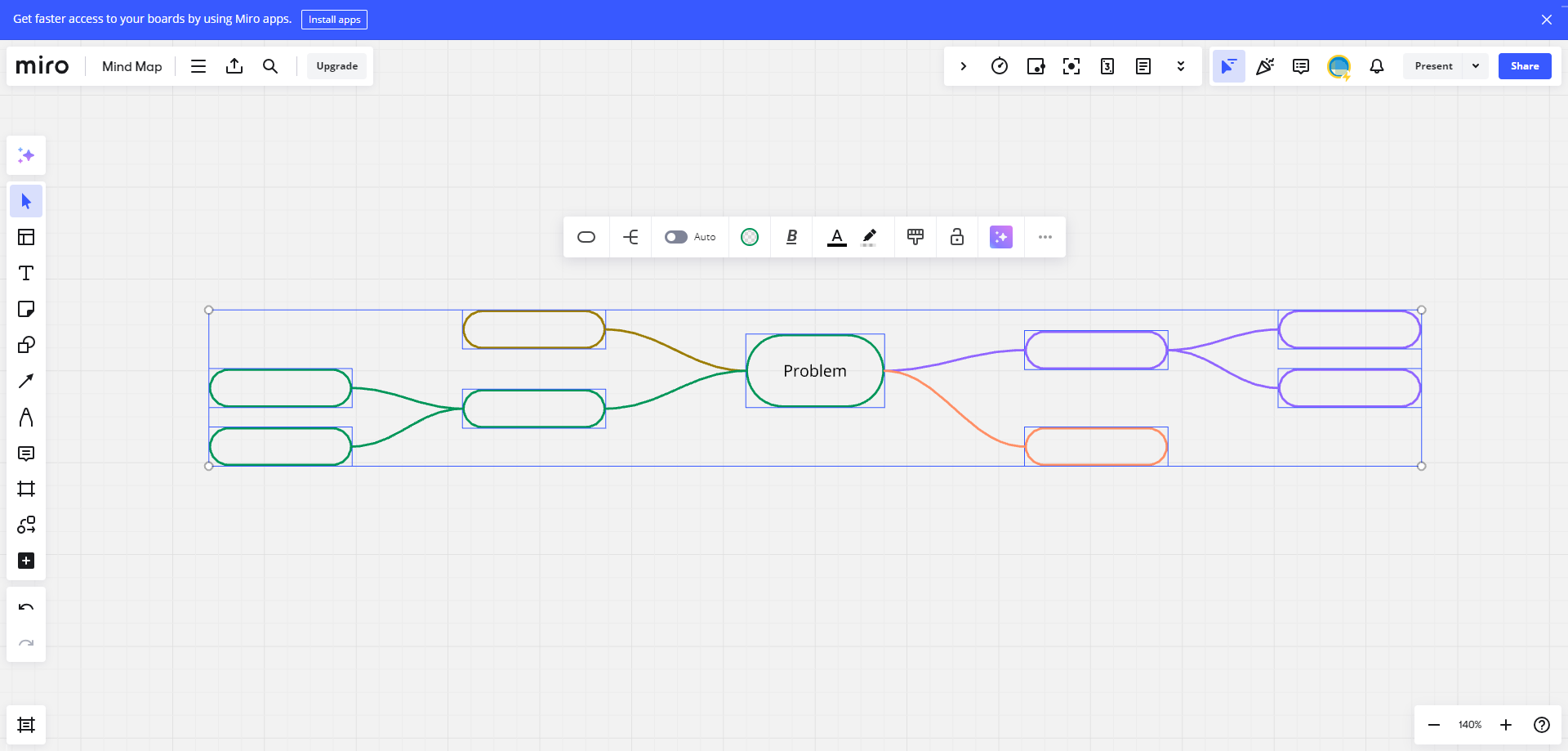
Test the actions that make mind mapping different from placing unrelated shapes on a canvas. Create sibling branches, add nested topics, move a branch with its children, collapse detail, rename the central topic, and undo a structural change. The useful result is not simply that each action exists; it is whether the map remains understandable while ideas change.
Keyboard and pointer efficiency
Ask one keyboard-oriented user and one pointer-oriented user to complete the same edits. Record where either person leaves the map structure to use a toolbar or repair formatting. Familiarity can distort a single-user test, so repeat the task after both participants receive the same short orientation.
Readability as the map grows
Expand the test beyond a few branches. Check spacing, line crossings, text wrapping, collapse behavior, zoom, and navigation. A visually attractive starter template does not prove that a larger working map will remain legible.
2. Compare Collaboration in Context
Mind maps are often created by one person and reviewed by many. Run separate author, editor, commenter, and viewer journeys. Verify how people know where to contribute, how simultaneous changes appear, what happens when an invitation is revoked, and whether decisions remain understandable after the session.
For an existing Miro team, the important question is whether a mind map can use the team's established workspace conventions without extra duplication. For a Boardmix trial, evaluate the same map and reviewer path rather than a different showcase board. The comparison is invalid if one tool receives a simpler task.
Evidence to capture
- The role assigned to each participant and the actions that role could actually perform.
- The time required for a new reviewer to find the relevant branch and leave useful feedback.
- How concurrent edits, comments, and accidental changes were surfaced and resolved.
- What a returning user sees after the map has changed.
- Whether the final owner can identify unresolved questions without replaying the whole session.
3. Compare Templates and Reuse
Templates matter when they reduce repeated setup without forcing every problem into the same structure. Select one real recurring use case, such as project discovery, campaign planning, research synthesis, or a meeting decision tree. Then compare how quickly a suitable starting structure can be found, adapted, saved, and discovered by the next team.
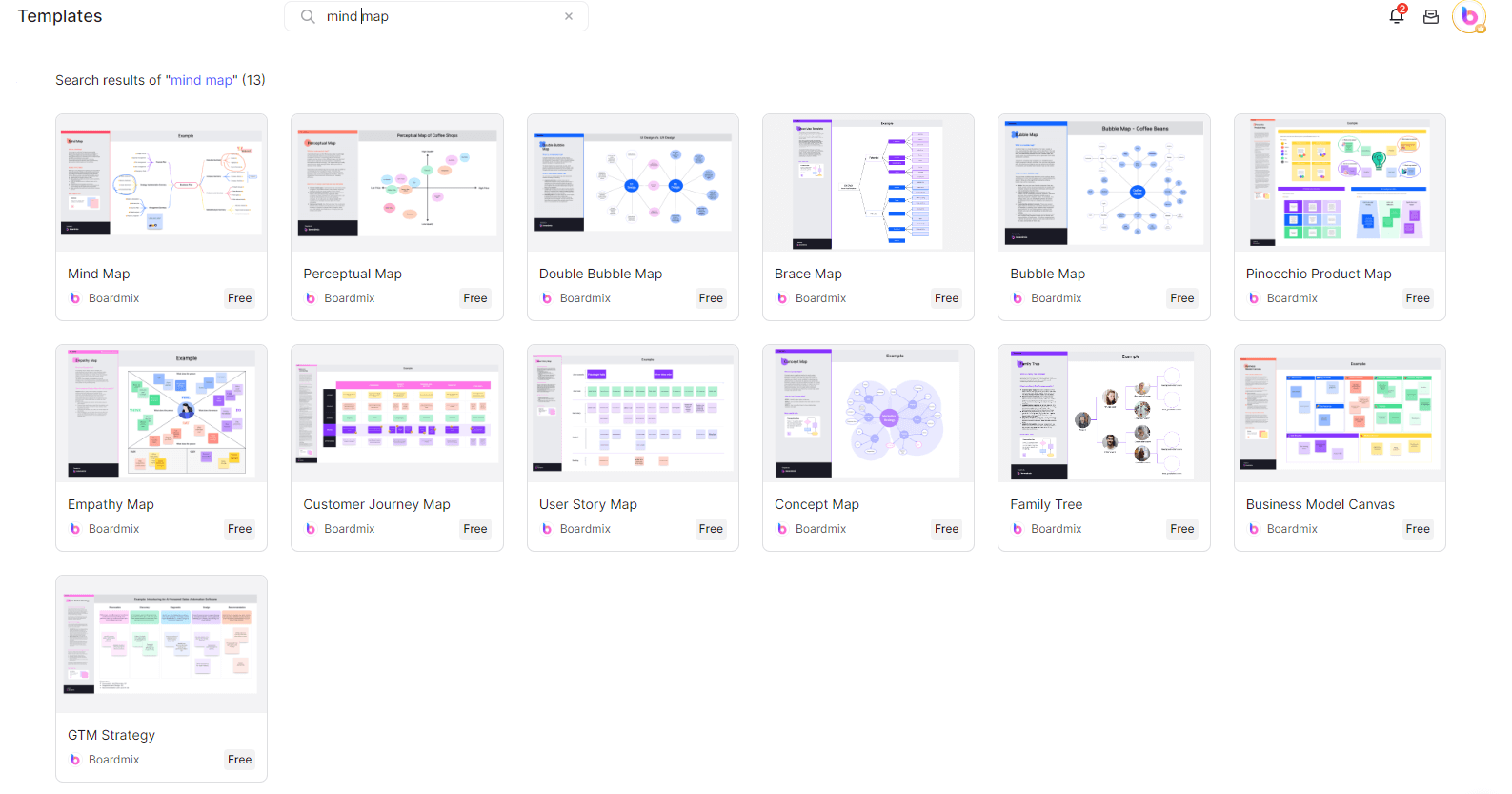
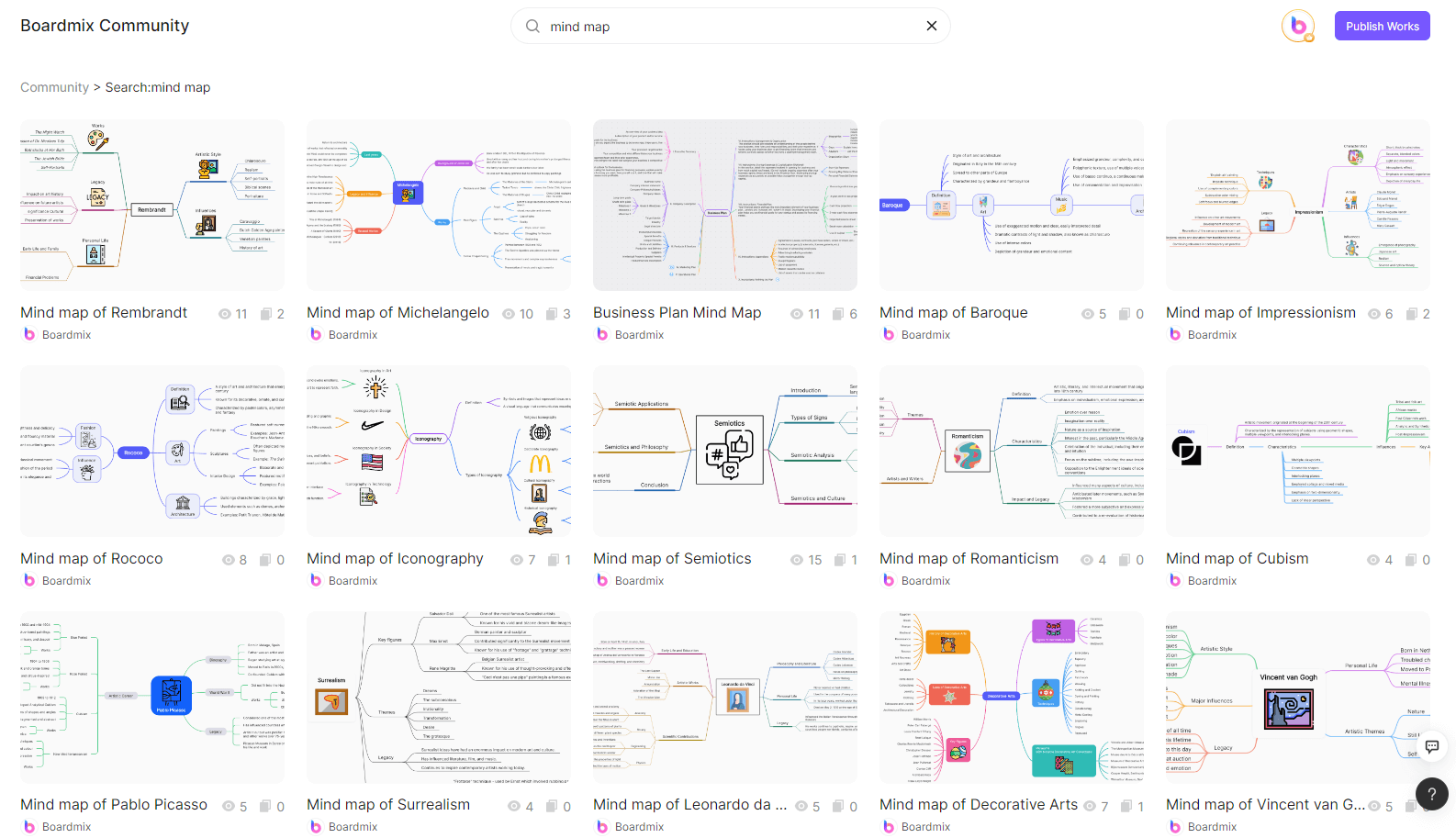
Do not score a tool by counting templates. Instead, inspect whether a template has a clear purpose, editable branch logic, useful prompts, and an owner who can maintain it. Community resources may broaden the choice, but they should be reviewed for accuracy, consistency, and suitability before a team standardizes on them.
4. Compare AI Assistance Without Confusing Output With Value
AI can shorten the blank-page stage, but a larger first draft is not automatically a better map. Use the same prompt and source constraints in each available AI workflow. Then measure relevance, duplication, unsupported claims, hierarchy quality, editing effort, and how easily a user can trace the result back to the original brief.
Teams specifically considering AI-assisted starts can review the current Boardmix AI mind map workflow before running the test. Availability, limits, data handling, and output behavior should still be verified in the plan and environment the team expects to use.
| AI check | Question to answer | Evidence |
|---|---|---|
| Relevance | Do the main branches answer the prompt rather than repeat generic categories? | Accepted, edited, and deleted branches |
| Structure | Are parent-child relationships logical and easy to revise? | Number of moved or rewritten branches |
| Accuracy | Can factual statements be supported by the provided source or a reliable reference? | Claim-level review notes |
| Control | Can the user refine part of the map without replacing useful work? | Observed revision path |
| Privacy | Is the intended source material permitted under the organization's policy and current product terms? | Approved test data and policy review |
5. Compare Export, Handoff, and Ongoing Ownership
A mind map creates value only if the next person can use it. Export the same completed map in every format required by the workflow, then open the result in its destination. Check text legibility, branch completeness, links, page boundaries, image quality, and whether the receiving team needs an editable or static artifact.
Also test ownership transfer. Identify who can locate the map later, update it, archive it, and explain the latest decision. If the map becomes an isolated file or remains tied to one person's account, a smooth creation experience has not solved the knowledge handoff problem.
6. Compare Governance and Operational Fit
For team adoption, evaluate the proposed configuration rather than the product name. Document sign-in, guest access, sharing defaults, owner changes, content retention, deletion, activity records, support responsibilities, and any required administrative controls. Where a control is mandatory, request evidence and test the allowed and denied paths.
A small individual trial may not expose enterprise constraints. Include the people responsible for security, privacy, IT operations, accessibility, and procurement when those concerns are material. Record any item that was not tested instead of treating it as supported.
7. Compare Current Cost on Equal Assumptions
The original version of this article quoted plan prices and a promotional offer. Those figures have been removed because they may no longer represent current pricing. The screenshots below are historical context from the original article, not current quotes.
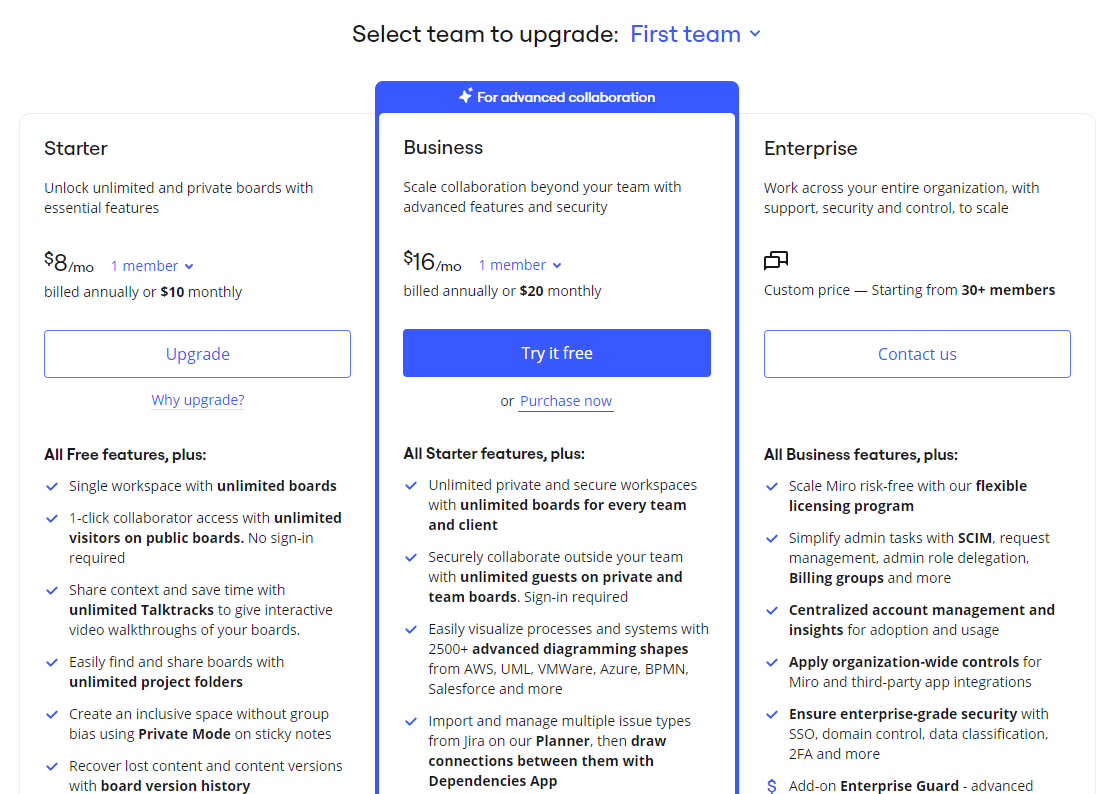
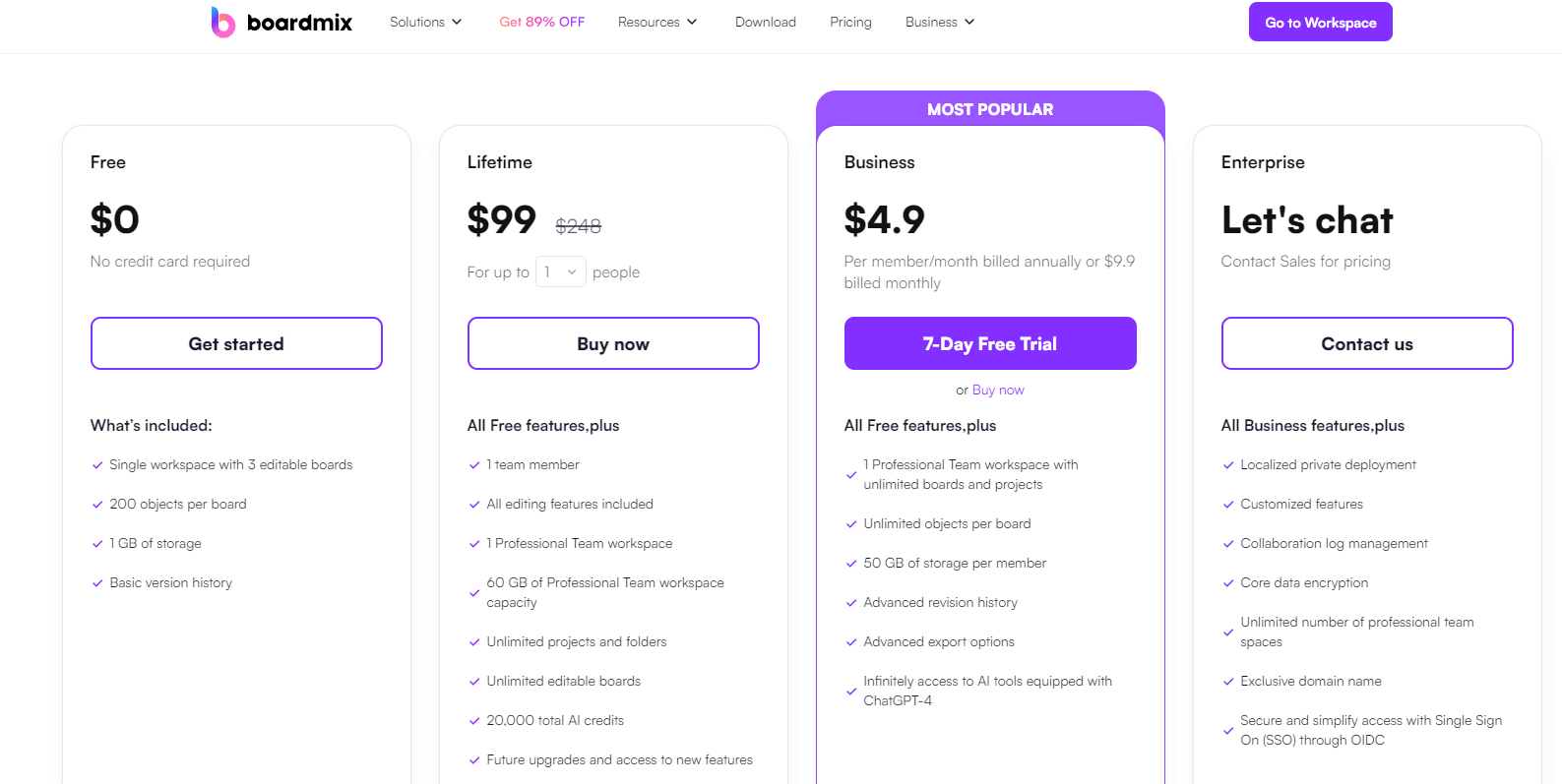
Request or capture current terms for both tools on the same date. Use the same currency, billing period, seat count, user roles, taxes, required capabilities, AI usage, guest rules, storage, support, and contract length. Separate one-time migration or training effort from recurring subscription cost. If a required capability belongs to another plan or add-on, include that dependency rather than comparing headline prices.
Decision Matrix: Which Tool Should You Test First?
| Situation | Reasonable starting point | What could change the decision |
|---|---|---|
| The team already manages related visual work in Miro | Test Miro first to measure the value of workflow continuity | A competing trial produces materially better map editing, reuse, or cost with acceptable migration effort |
| The team is selecting a new mind mapping workspace | Run the same structured trial in Miro and Boardmix | Observed editing effort, collaboration, governance, or handoff evidence |
| AI-generated starting maps are important | Test both available workflows with the same prompt and sources | Output relevance, correction time, controls, policy fit, and current plan limits |
| Templates will be standardized across departments | Compare a real template lifecycle, not gallery size | Quality review, ownership, findability, permissions, and maintenance effort |
| Export or downstream editing is mandatory | Do not select a winner before opening sample exports in the destination workflow | Loss of structure, readability, links, editability, or ownership context |
| Budget is the main constraint | Compare current like-for-like quotes | Plan dependencies, usage limits, support, migration, and administration costs |
This matrix identifies a first test, not a final verdict. Teams with several high-risk requirements should weight those requirements before the trial and keep the evidence behind each score.
A Repeatable Side-by-Side Trial
- Define one task. Choose a real but non-sensitive brief with a central topic, source notes, expected branch depth, and delivery requirement.
- Hold conditions constant. Use the same participants, roles, time box, source material, browser conditions, and output requirement.
- Build and revise. Create the map, reorganize a section, add reviewer input, resolve a conflict, and prepare the agreed handoff.
- Record evidence. Capture completion time, corrections, failed actions, unresolved questions, and the final artifact.
- Review current terms. Confirm the plan, limits, data conditions, and quote that apply on the evaluation date.
- Decide by requirement. Select the tool that meets the must-haves with acceptable trade-offs; do not average away a failed critical requirement.
Limitations of This Comparison
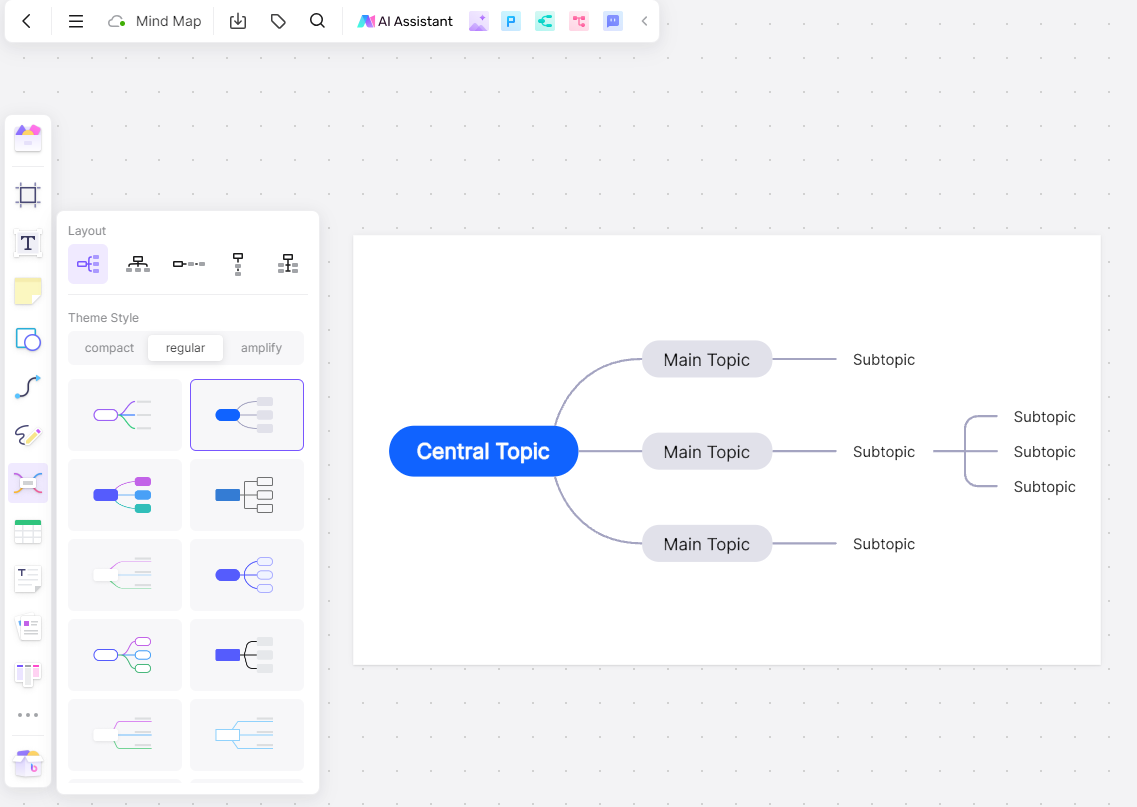
This article does not claim that either product is best for every team. It does not provide a current plan-by-plan feature inventory, a price quote, a performance benchmark, or a security certification assessment. The included interface and pricing images came from the earlier article and may not represent the current products. Capabilities can vary by plan, region, account configuration, and release date.
Use the comparison criteria as an evaluation framework, then document the product version or plan, test date, conditions, result, and any unknowns. A capability that was not observed or supported by current documentation should remain unverified.
Miro vs Boardmix Mind Mapping FAQ
Is Boardmix a Miro alternative for mind mapping?
Boardmix is a candidate worth evaluating when a team is comparing online mind mapping workflows. Whether it is a suitable alternative depends on the team's required editing, collaboration, reuse, handoff, governance, and commercial conditions. Test those requirements directly rather than relying on the label "alternative."
Which tool is easier for mind mapping?
Ease depends on experience and task design. Ask representative users to build and revise the same map after equal orientation, then compare completion time, corrections, navigation problems, and confidence. A familiar interface may feel easier even when another workflow becomes more efficient after practice.
Should AI decide between Miro and Boardmix?
No. AI is one evaluation area. A useful test examines whether generated branches are relevant, supported, editable, and permitted for the intended data. Collaboration, export, ownership, governance, and cost may matter more for the final decision.
Can the pricing screenshots be used for a purchase decision?
No. They are historical images retained from the original article. Obtain current terms for both products on the same date and compare equivalent seats, billing periods, capabilities, limits, taxes, support, and contract assumptions.
What evidence should a team keep after the trial?
Keep the brief, evaluation date, account or plan used, participant roles, scorecard, observed failures, sample exports, unresolved questions, current quote, and decision rationale. This makes the comparison reviewable when requirements or product terms change.
Conclusion
The most useful Miro vs Boardmix mind mapping comparison is a controlled workflow test. Start with the same source material, build and revise the same map, involve the same reviewers, inspect the same handoff, and compare current commercial terms under equal assumptions. Existing Miro users should measure the value of continuity; teams exploring a new workflow should test Boardmix and Miro against their must-have requirements. Choose from recorded evidence, and leave untested claims marked as unknown.