Choosing the best UML software starts with the way your team works. Boardmix is the best fit for collaborative visual planning, Visual Paradigm for formal UML modeling, PlantUML for version-controlled diagrams-as-code, and diagrams.net or UMLet for free, lightweight diagramming.
This guide compares eight practical UML tools by editing model, notation depth, collaboration, free-use boundary, export path, and code workflow. It also explains when a visual canvas is enough and when a formal modeler or text-based tool is the better choice.
Quick Answer: Best UML Software by Use Case
- Best for collaborative visual UML: Boardmix combines UML shapes and templates with real-time comments, permissions, and a shared canvas.
- Best for formal UML modeling: Visual Paradigm is built around a model rather than disconnected drawing objects.
- Best for Microsoft 365 teams: Visio fits organizations already using Microsoft files, OneDrive, and SharePoint.
- Best for browser-based diagram collaboration: Lucidchart is easy for distributed teams to adopt.
- Best open-source diagram-as-code option: PlantUML stores the diagram as text that can live in Git and documentation.
- Best unrestricted visual option: diagrams.net is free, needs no account, and also has an offline desktop app.
- Best lightweight UML sketcher: UMLet is a compact choice for desktop, Eclipse, web, or VS Code workflows.
"Free" does not mean the same thing across this list. It may describe a restricted SaaS plan, a watermarked trial, a non-commercial license, or open-source software. Check the exact boundary before using a tool for client or production work.
How to Choose UML Software
Start with the artifact you need to maintain, not the longest feature list. A stakeholder workshop, a formal software model, and a diagram committed beside source code have different requirements.
- Editing model: visual canvases are easiest for workshops; formal modelers preserve relationships across diagrams; diagram-as-code works well with Git and review workflows.
- UML depth: confirm the exact structural or behavioral diagrams you need. A library of UML shapes is not the same as semantic validation, XMI interchange, or round-trip engineering.
- Collaboration: check guest access, edit permissions, comments, version history, and whether reviewers need paid accounts.
- Free-use boundary: distinguish board or object caps, export watermarks, non-commercial licenses, trials, and genuinely open-source use.
- Portability: export one representative diagram and reopen it in the next tool. An image is easy to share but cannot replace an editable source file.
For definitions, notation, and examples rather than product selection, use the UML diagram guide. To begin on a shared canvas, open the Boardmix UML diagram maker.
8 Best UML Software Tools in 2026
| Tool | Best for | Editing model | Free-use reality | Main tradeoff |
|---|---|---|---|---|
| Boardmix | Collaborative planning and stakeholder review | Visual canvas | 3 editable boards; 100 objects per board; 1 GB storage | Not a formal model/code-engineering environment |
| Microsoft Visio | Microsoft 365 organizations | Visual diagramming | UML creation and editing require a Visio plan | Best experience depends on the Microsoft ecosystem |
| Lucidchart | Browser-based team diagrams | Visual canvas | 3 editable documents and 60 objects per document | Advanced imports, exports, and UML functions are paid |
| EdrawMax | Broad desktop diagramming | Visual desktop/cloud | Free exports are watermarked and storage is limited | More features than a UML-only user may need |
| Visual Paradigm | Formal UML and model engineering | Model-based | Community Edition is non-commercial and watermarked | Commercial and engineering workflows require paid tiers |
| diagrams.net | Free, no-account, offline visual diagrams | Visual canvas | Free and open source | No semantic model validation or round-trip engineering |
| PlantUML | Version-controlled documentation | Text / diagram-as-code | Free and open source | Automatic layout offers less manual placement control |
| UMLet | Fast, lightweight UML sketches | Canvas plus text properties | Free and open source | No code generation, reverse engineering, or native real-time review |
1. Boardmix - best for collaborative visual UML
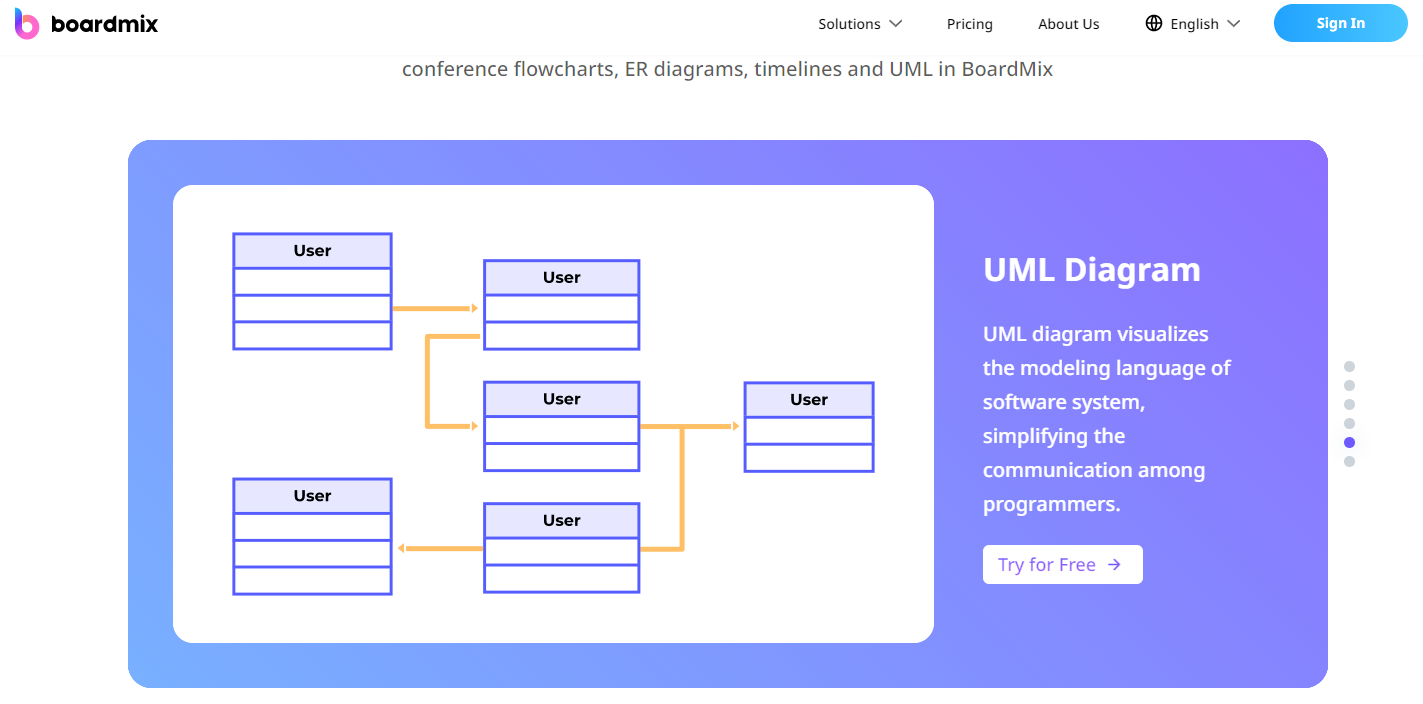
Verdict: Boardmix is the strongest choice in this list when UML is part of a broader collaborative planning process. Teams can place class, use case, component, package, sequence, communication, state, and activity diagrams beside requirements, notes, flows, and workshop material on the same canvas.
Its UML diagram workspace supports drag-and-drop shapes, templates, link sharing, permissions, comments, and PDF, PNG, or JPG export. The current Free plan includes one workspace, three editable boards, 100 objects per board, 1 GB of storage, standard-quality export, and 10 history records.
Choose Boardmix for architecture discussions, requirements workshops, and readable diagrams that nontechnical reviewers must comment on. Choose a formal modeler when the deliverable requires semantic validation, XMI, source-code generation, reverse engineering, or round-trip engineering.
2. Microsoft Visio - best for Microsoft 365 organizations
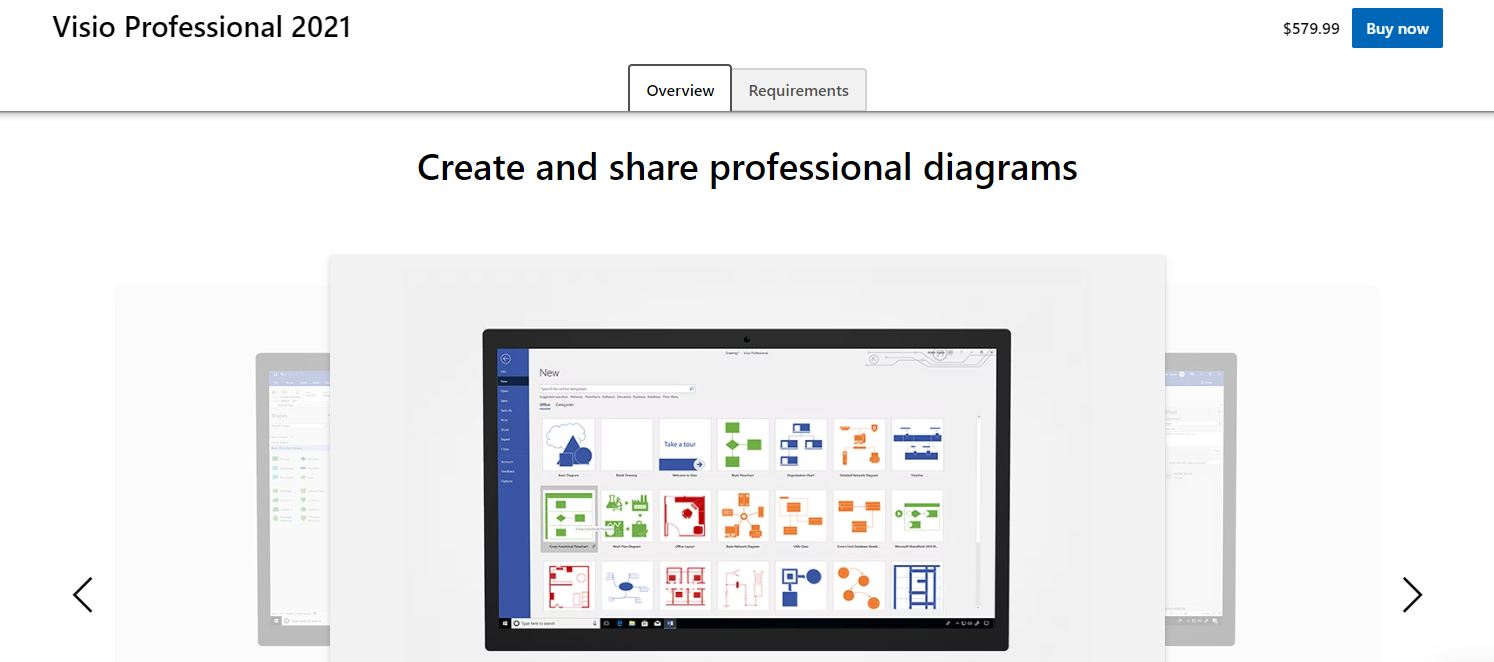
Verdict: Visio is a practical choice when VSDX files, OneDrive, SharePoint, and Microsoft 365 governance already define the workflow. Microsoft documents UML 2.5-conforming shapes and supports common class, sequence, use case, component, deployment, activity, and state-machine diagrams.
Co-authoring and comments are available through the Microsoft ecosystem, but collaborators must use the same application type; desktop and web users cannot edit the same file simultaneously. Microsoft also states that creating and editing UML diagrams requires Visio Plan 1 or Plan 2, while the lightweight Visio experience included in some Microsoft 365 plans can view and comment.
Confirm the current capabilities on the official Visio UML page and the Visio for the web plan comparison.
3. Lucidchart - best for browser-based team diagrams
Verdict: Lucidchart is easy to adopt when distributed teams want browser-based visual diagrams, comments, and sharing without installing desktop software. It covers structural and behavioral UML shapes, and its text markup feature can generate sequence diagrams on paid plans.
The current Free plan lists three editable documents, 60 objects per document, and 100 basic templates. Lucidchart can import Visio, draw.io, Gliffy, and OmniGraffle files, although editing imported documents and advanced export paths are paid capabilities. Review the official Lucidchart plan comparison and import documentation before choosing a migration workflow.
4. EdrawMax - best for broad desktop diagramming
Verdict: EdrawMax suits users who want one cross-platform desktop application for UML, flowcharts, mind maps, network diagrams, and many other visual formats. Its official UML page lists 14 UML diagram types and more than 200 UML templates.
The current free version has no time limit, but the practical limits matter: exported work uses the default watermark and standard quality, cloud storage is limited to 100 MB, and only three cloud files are editable. EdrawMax also documents Visio import/export and PDF, JPG, PNG, and SVG export. Check the official UML feature page and current free-version limits.
5. Visual Paradigm - best for formal UML modeling
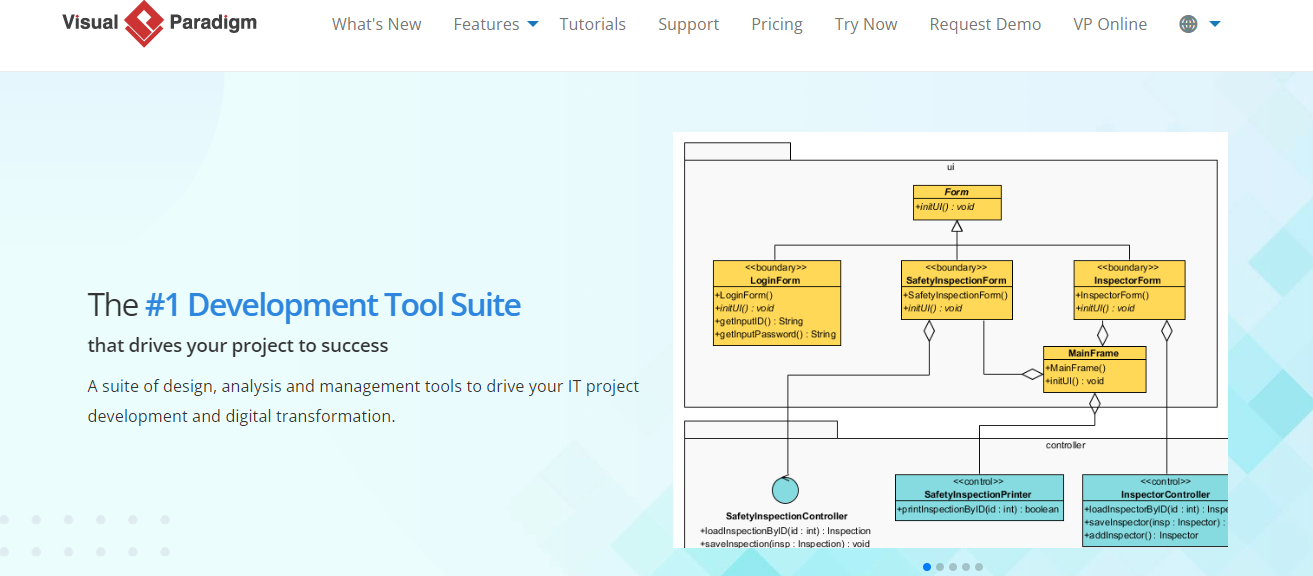
Verdict: Visual Paradigm is the best fit here when diagrams must remain part of a formal software model rather than a set of independent drawing objects. The Community Edition supports 13 UML 2.x diagram types, while paid editions add deeper interchange, repository, and code-engineering capabilities.
The free-license boundary is important: Visual Paradigm states that Community Edition is for personal, educational, and other non-commercial use, and exported or printed images carry a watermark. Commercial teams need a paid edition. Collaboration features also vary by plan, so confirm them in the edition comparison. See the Community Edition page for supported modeling scope.
6. diagrams.net - best free no-account and offline option
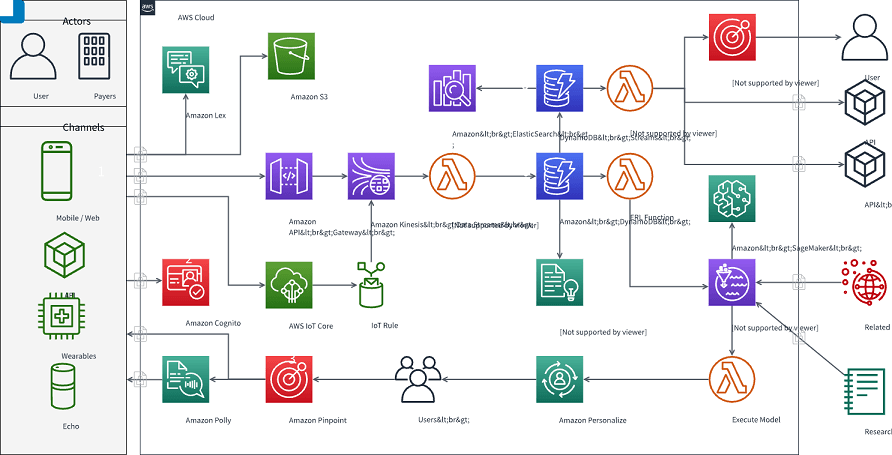
Verdict: diagrams.net, also known as draw.io, is the most flexible choice for users who want a free visual editor without creating an account. It is open source, runs in the browser, and offers desktop applications for offline work on Windows, macOS, and Linux.
The UML and UML 2.5 shape libraries cover standard visual notation. Users can keep files locally or in supported cloud services, and the editor imports formats including VSDX, Gliffy, Lucidchart, draw.io/XML, SVG, images, Mermaid, CSV, and SQL. Export options include editable draw.io/XML plus PNG, JPEG, SVG, PDF, HTML, WebP, and JSON. See the official UML documentation and offline-app documentation.
7. PlantUML - best for version-controlled diagrams-as-code
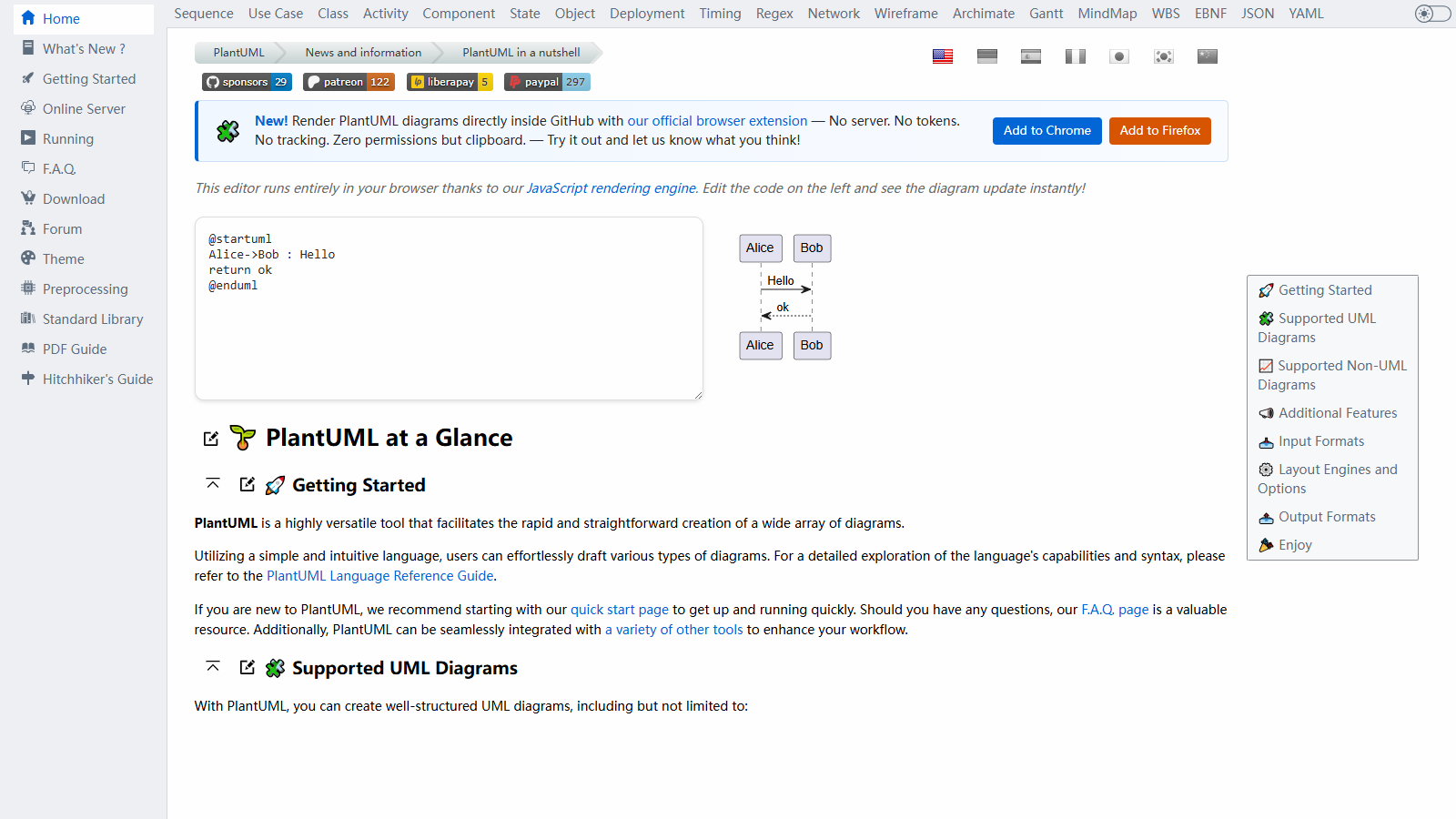
Verdict: PlantUML is the best option when the diagram source should live beside code or documentation. Users describe class, sequence, use case, activity, component, deployment, state, timing, and other diagrams as text, then render outputs such as PNG, SVG, PDF, EPS, or text.
Because the source is text, teams can review changes in Git, embed diagrams in Markdown and other documentation, and automate rendering in developer workflows. PlantUML's own FAQ also makes the boundary clear: it is a drawing generator, not a semantic modeling tool, and it permits inconsistent models. Automatic layout reduces manual placement work but gives less pixel-level control than a visual canvas. See the official PlantUML documentation and PlantUML FAQ.
8. UMLet - best lightweight UML sketcher
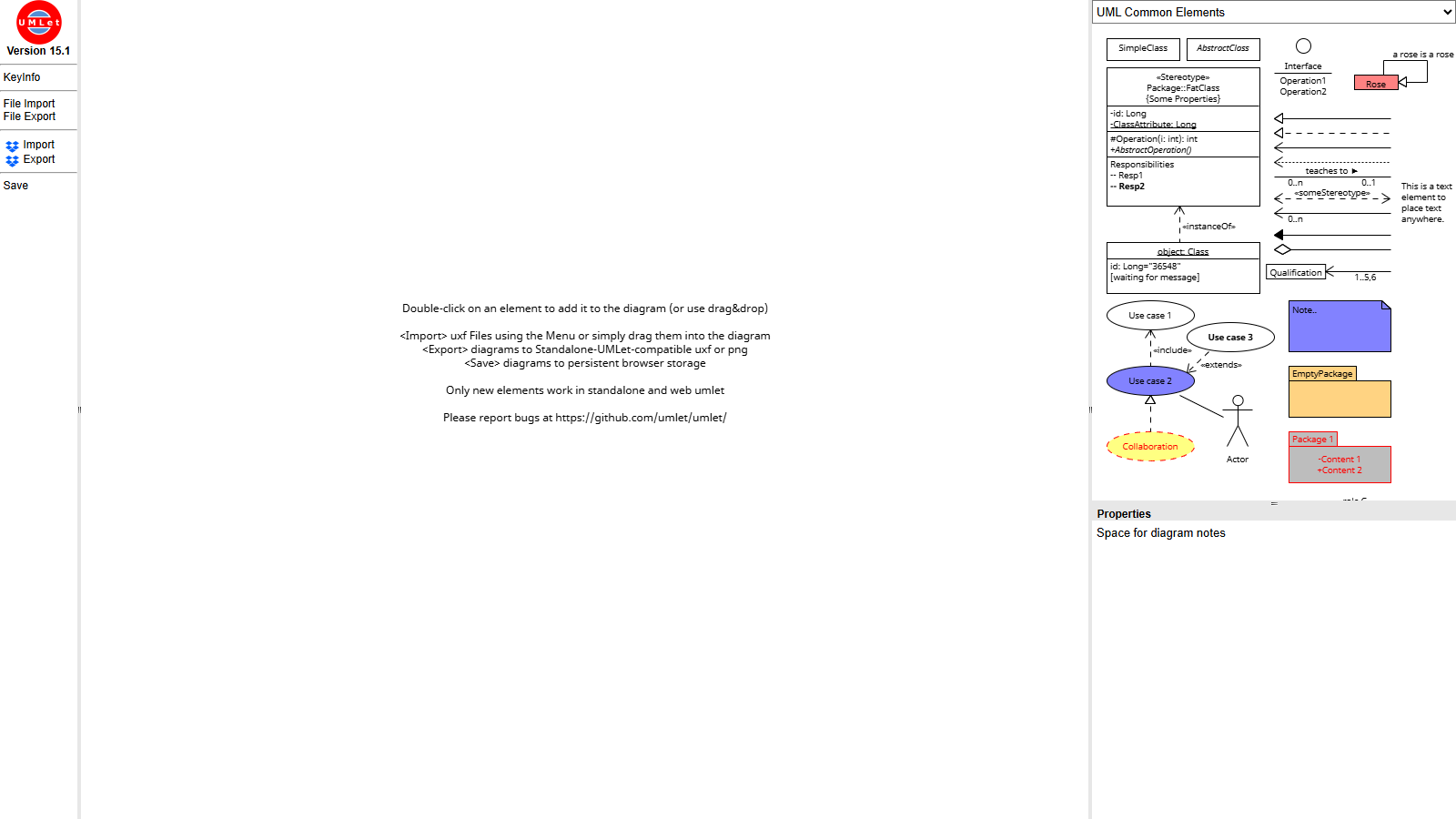
Verdict: UMLet is a compact free and open-source UML editor for users who value speed over model-engineering depth. It is available as a desktop app, an Eclipse plugin, the UMLetino web app, and a VS Code extension.
The editor combines a canvas with text-based element properties and supports common class, use case, sequence, state, deployment, and activity sketches. Its official pages list EPS, PDF, JPG, SVG, PNG, and clipboard exports. The FAQ explicitly states that UMLet does not support code generation or reverse engineering, and the product does not document native real-time collaboration. See the official UMLet homepage and UMLet FAQ.
Visual UML vs Formal Modeling vs Diagram-as-Code
Choose a visual canvas for conversation
Boardmix, Lucidchart, Visio, EdrawMax, and diagrams.net make it easy to move shapes, annotate a diagram, and invite nontechnical reviewers. They are strong for architecture discussions, requirements workshops, documentation, and presentations. The tradeoff is that a diagram may remain only a drawing unless the tool also maintains a formal model.
Choose a formal modeler for engineering consistency
Visual Paradigm is designed for relationships that must remain consistent across a larger software model. This matters when teams need model repositories, interchange formats, traceability, code engineering, or governance beyond what a visual canvas provides. Those capabilities usually sit in paid editions.
Choose diagram-as-code for versioned documentation
PlantUML turns text into diagrams, which makes diffs, reviews, reuse, and automation natural in a Git workflow. It is less suitable when stakeholders expect direct drag-and-drop editing or exact manual layout. UMLet sits between the categories: it is still a visual canvas, but text properties make element editing fast.
How to Test a UML Tool Before Committing
- Draw two representative diagrams. Use one structural diagram, such as a class diagram, and one behavioral diagram, such as a sequence diagram.
- Check notation fidelity. Confirm the relationships, stereotypes, multiplicities, messages, and diagram types your team actually uses.
- Invite a reviewer. Test permissions, comments, guest access, and whether the reviewer needs an account or paid seat.
- Move the source. Export the required editable format and reopen it in the next tool. Also test the PDF, SVG, or image that will reach stakeholders.
- Verify the license boundary. Confirm whether free use is commercial, non-commercial, watermarked, object-limited, or a time-limited trial.
- Test the maintenance path. Decide whether updates belong in a shared canvas, a formal model repository, or text reviewed in version control.
UML Software FAQs
What is the best free UML diagram tool?
diagrams.net is the strongest unrestricted visual option because it is open source, needs no account, and has an offline desktop app. PlantUML is better when the source should live in Git. UMLet is useful for lightweight UML sketches. Boardmix is a better fit when real-time collaboration matters, but its Free plan has board and object limits.
What is the difference between UML software and a UML drawing tool?
A drawing tool provides UML shapes and connectors. Formal UML software can maintain a model across diagrams and may add validation, interchange, traceability, code generation, or reverse engineering. A polished UML-looking diagram does not automatically mean the underlying relationships are semantically validated.
Which UML tools support code generation or reverse engineering?
Formal products such as Visual Paradigm offer code-engineering capabilities in selected paid editions. UMLet explicitly does not support code generation or reverse engineering. PlantUML converts text descriptions into diagrams, but it is not a semantic modeler and should not be described as automatic round-trip engineering.
Can I create UML diagrams online without installing software?
Yes. Boardmix, Lucidchart, diagrams.net, and UMLetino run in a browser. PlantUML also has web-based renderers and integrations. Check storage, privacy, and account requirements before uploading sensitive architecture material.
Is PlantUML better than a visual UML editor?
PlantUML is better for version control, documentation pipelines, repeatable rendering, and text-first developer workflows. A visual editor is better for workshops, stakeholder participation, and direct manual layout. The right answer depends on who must edit the diagram after it is created.
Final Recommendation
Start with Boardmix when the UML diagram must remain part of a collaborative planning workspace. Choose Visio for a Microsoft-centered organization, Lucidchart for browser-based business collaboration, EdrawMax for a broad desktop toolkit, Visual Paradigm for formal modeling, diagrams.net for unrestricted free visual work, PlantUML for version-controlled diagrams-as-code, and UMLet for lightweight UML sketching.
The decisive test is whether the tool preserves the artifact your team needs to maintain: a shared visual conversation, a consistent engineering model, or source text that belongs in the repository.