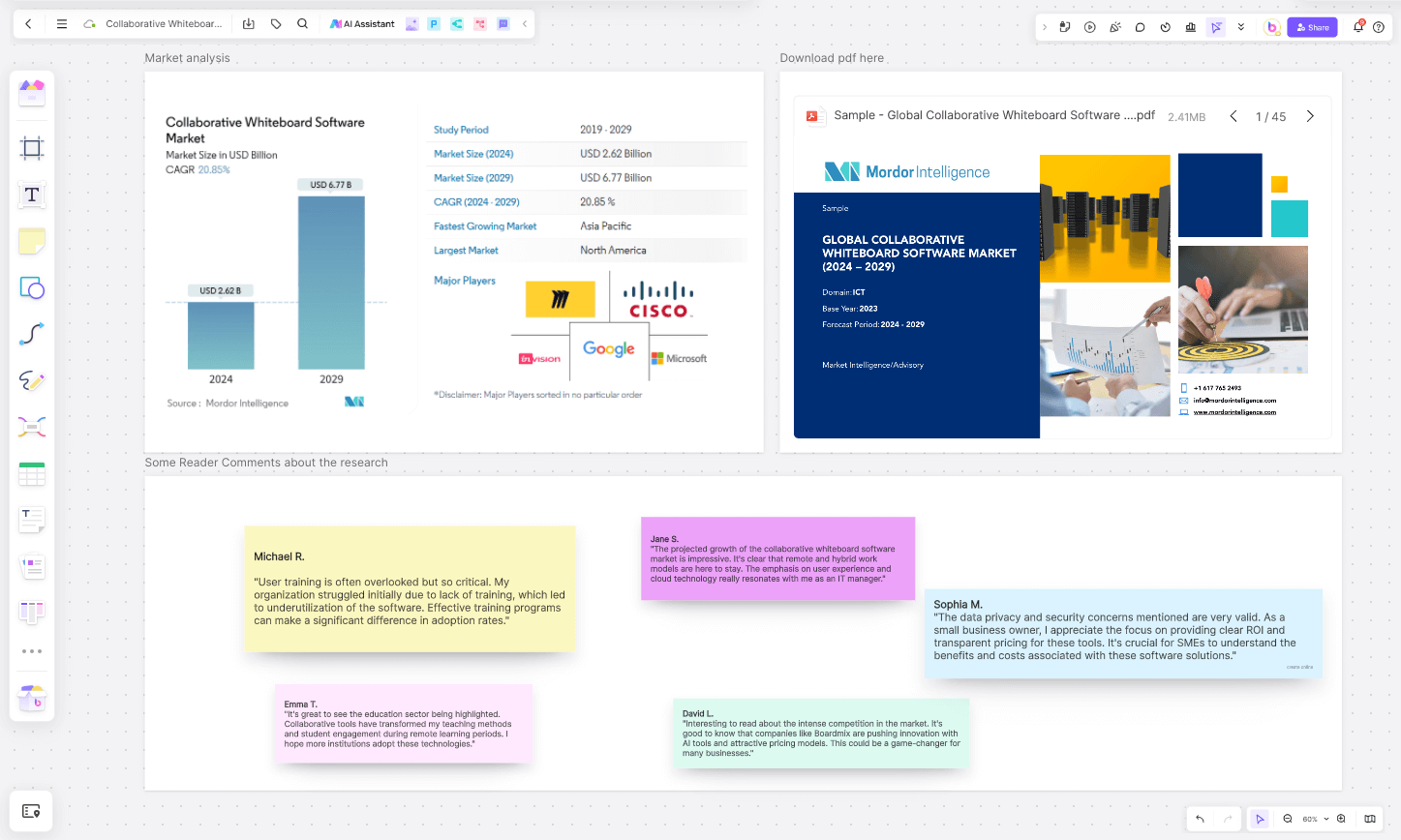
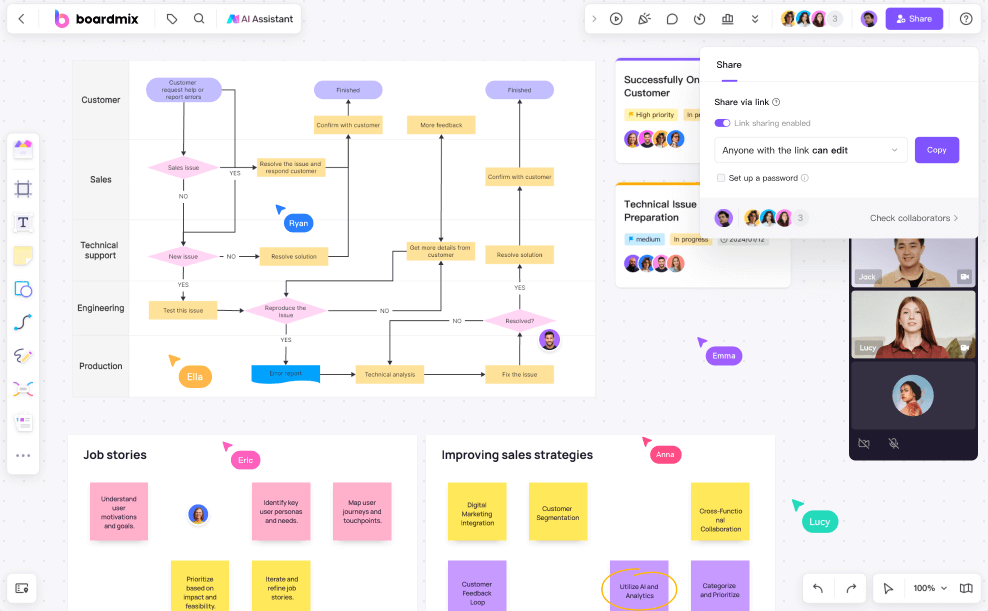
In the fast-paced, technologically-driven world of business, the ability to streamline and optimize processes is paramount. One key tool that companies use to accomplish this is Business Process Mapping (BPM). Lately, there's a novel approach in this area that is making waves and creating innovative opportunities - the utilization of online whiteboards.
A useful process map makes it possible to follow one piece of work from request to completion, including the waiting and rework in between. With Boardmix’s online whiteboard, the people doing the work can build that map together and keep observations beside the steps they describe.
In this article, we’ll lead you to discover the power of online whiteboards in business process mapping. Let’s get started.
Delving Deeper into Business Process Mapping
At its core, Business Process Mapping provides a lucid illustration of an organization's work procedures. It presents a bird's eye view of every process, laying bare their interconnectedness, dependencies and bottlenecks. Leveraging BPM aids businesses in attaining peak operational effectiveness and enhanced decision-making ability.
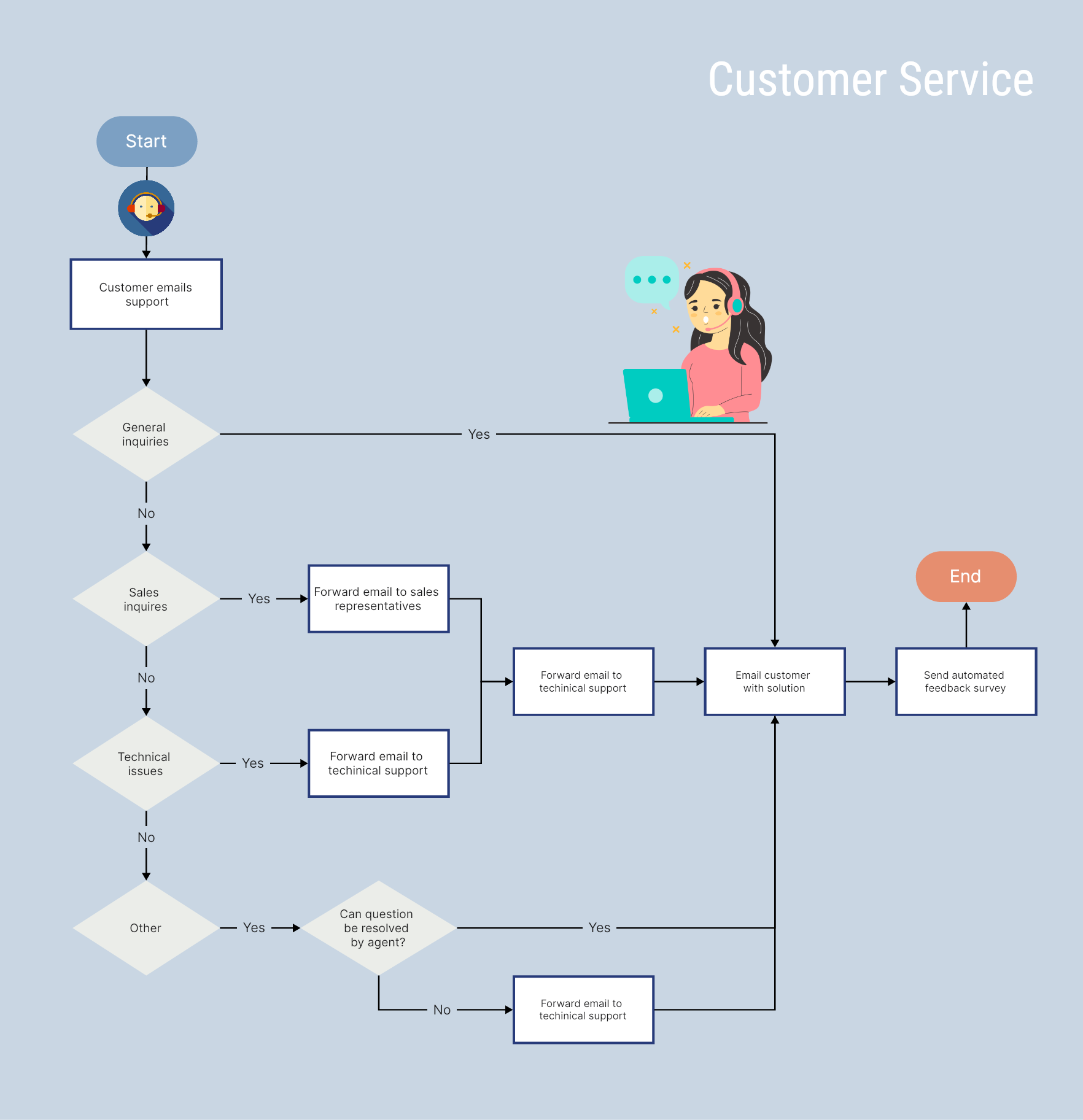
A process map helps a team see where to investigate delays, repeated work, and unclear ownership. The drawing alone does not establish a bottleneck: compare it with actual case histories, timings, and the experience of the people performing each step. That evidence helps distinguish a slow task from a request that spends most of its time waiting for someone to pick it up.
Furthermore, BPM facilitates better communication and collaboration among teams. By providing a clear picture of how individual tasks contribute to the overall process, it fosters a sense of unity and shared responsibility among employees. This collaborative environment fuels innovation and drives growth.
In essence, Business Process Mapping serves as a compass guiding businesses towards operational excellence. It's an invaluable tool in today's fast-paced business landscape, offering insights that drive informed decision-making and strategic planning.
Digital Transformation - The Emergence of Online Whiteboards
The digital revolution has been the catalyst for the replacement of traditional business methodologies with progressive, technology-driven practices. In the BPM arena, this transition has manifested itself through the introduction of online whiteboards. These digital platforms offer a limitless, expansive space, discarding the limitations that previously bound businesses to paper, ink, and physical meeting rooms.
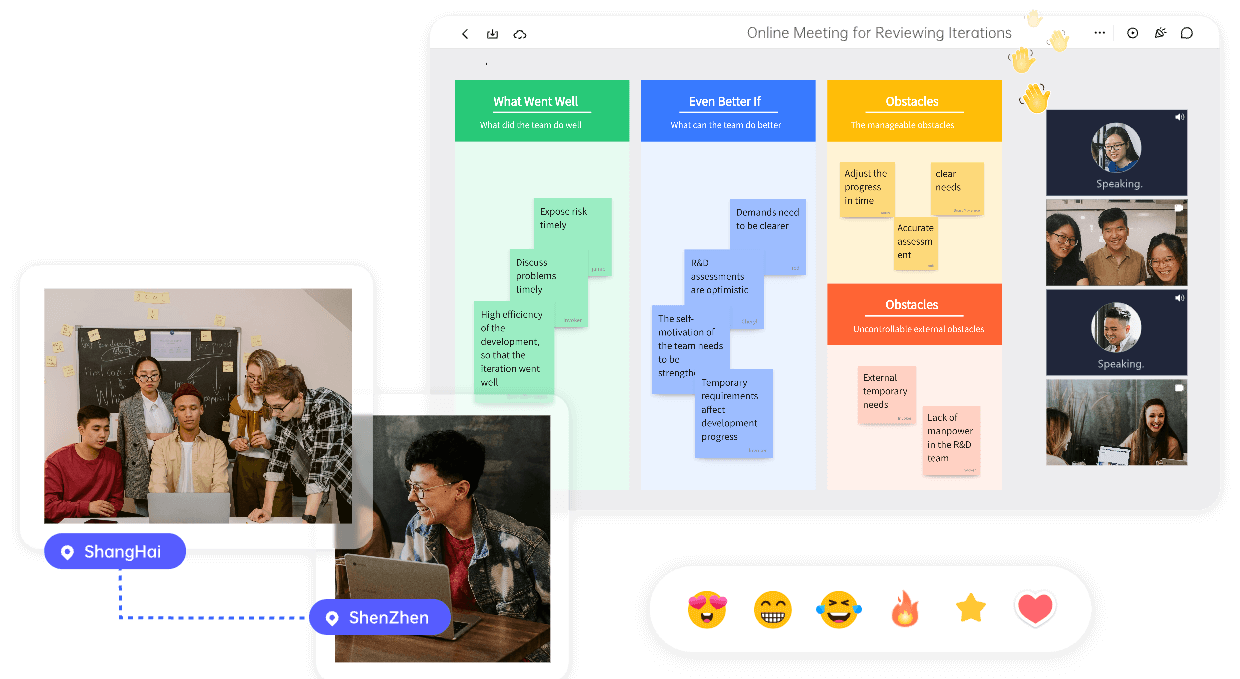
One significant advantage of these digital platforms is their ability to foster real-time collaboration. Team members can simultaneously contribute to the mapping process regardless of their geographical location. This feature not only enhances productivity but also encourages a more inclusive work culture.
Online whiteboards can also keep the map, review comments, and supporting notes together for later reference. Decide who maintains the board and who needs access; an unowned or inaccessible map can become outdated just as a paper version can.
Bridging the Gap between Business Process Mapping and Online Whiteboards
Start with a bounded piece of work rather than a map of the whole business. Consider a website-update request: a requester submits a change, a writer prepares the text, a product reviewer checks it, and a publisher updates the page. The start is receipt of the request; the end is a published change or a decision not to proceed. Include the return from the reviewer to the writer when information is missing.
Ask the participants to trace recent requests through those steps. Does the reviewer receive the request directly, or does the writer have to find a reviewer? What information is missing when a draft is returned? Put a short observation beside the relevant arrow and retain a reference to the request in your approved record system. If people disagree, mark the step as unconfirmed instead of choosing the tidiest version.
Separate the current-state map from the proposed map. The current map may show a draft waiting while the writer finds a reviewer. A proposed change could assign a reviewer when the request is accepted. Keep both versions visible so the team can explain exactly what would change, who would take on that work, and what still needs approval.
Harnessing the Potential - The Perks of Incorporating Online Whiteboards in BPM
The integration of online whiteboards within BPM delivers substantial benefits:
Teamwork: People from different parts of the process can review the same map. In the website-update example, the writer explains what is sent for review, while the reviewer explains what they need to make a decision. These two perspectives often reveal a missing handoff more clearly than one person drawing the process alone.
Connections to working records: Use references or links to connect the map with the documents and work items people already use. If you need a native integration, verify the specific systems, permissions, and update behavior before relying on it. A link to a task does not mean that changing a shape will update the task automatically.
Adaptability: The dynamic nature of business demands flexibility and adaptability. Online whiteboards rise to this challenge by offering infinite space for mapping processes and configurable templates that can be tailored to suit specific needs. This adaptability ensures that businesses can adjust their BPM strategies as needed, fostering an environment of continuous improvement.
Selecting the Right Tools – Essential Characteristics of an Online Whiteboard
Absolutely, choosing the right online whiteboard for Business Process Mapping (BPM) is crucial in harnessing its full potential. Here are some essential characteristics businesses should consider:

Real-Time Collaboration: An effective online whiteboard should enable real-time collaboration, allowing multiple stakeholders to contribute simultaneously, regardless of their geographical location. This fosters effective communication and teamwork.
Extensive Customization Options: Every business is unique, and so are its processes. The best online whiteboards offer extensive customization options, allowing businesses to tailor their digital workspace to fit their specific needs. Whether it's configurable templates or adjustable mapping spaces, these features enable businesses to adapt their BPM strategies as needed.
Appropriate Access Controls: Check the sharing settings and your organization’s requirements before adding sensitive material. Use anonymized examples or references when full records are unnecessary. Confirm what an invited reviewer can see and whether they need to comment, edit, or only read the map.
Intuitive Interfaces: User-friendliness is key to ensuring widespread adoption of any new tool within an organization. Online whiteboards with intuitive interfaces encourage usage and make the transition from traditional methods smoother.
Fit with Existing Tools: Decide whether a shared link or exported map is sufficient, or whether the process genuinely needs a verified integration. Keep the authoritative request status in one agreed system so the whiteboard and task tracker do not become competing records.
Utilizing Boardmix - A One-stop Whiteboard Tool for Business Process Mapping
In Boardmix, use frames to keep “Current process” and “Proposed change” separate. Add shapes for actions and decisions, connect them with arrows, and use sticky notes for observations or unresolved questions. The Boardmix user guide covers these canvas tools, comments, and sharing.

For the website-update example, place “Submit request,” “Draft update,” “Check product facts,” and “Publish approved change” in sequence. Put the owner’s role in each action label or use one lane per role. Add “Changes needed?” after review and connect Yes back to the writer. A No answer can proceed to publication once the required approval is complete.
Invite the participants to review the current-process frame first. Record comments where their accounts differ—for example, whether review starts when the draft is ready or only after a separate message. Once that route is agreed, draw the proposed early reviewer assignment in the second frame. Do not silently replace the current map with the process you hope to have.
Use sharing permissions suited to the review and keep confidential request details in the approved system. The board can show a request reference and the process issue without copying the full record. Check access before sending the link outside the team.
Beside the proposed change, add a trial note: “Assign a reviewer when accepting the next few website-update requests; the content lead will compare the time waiting for review and the number of returned drafts at next Friday’s review.” The team fills in those observations manually from its working records. This makes the map useful for deciding whether the change helped or simply moved the queue elsewhere.
When the team adopts a change, mark which map is now current, add its review date and owner, and keep the previous version clearly labeled. Share the maintained board or an appropriately dated export with the people using the process; updating a diagram does not itself change assignments in another system.
Key points
The fusion of BPM and online whiteboards marks a critical shift in corporate strategies. This evolution opens up a world where workflows can be mapped, comprehended, and optimized with ease on digital platforms. Just utilize Boardmix, one of the best online whiteboard tools for business process mapping to streamline your workflow right now!