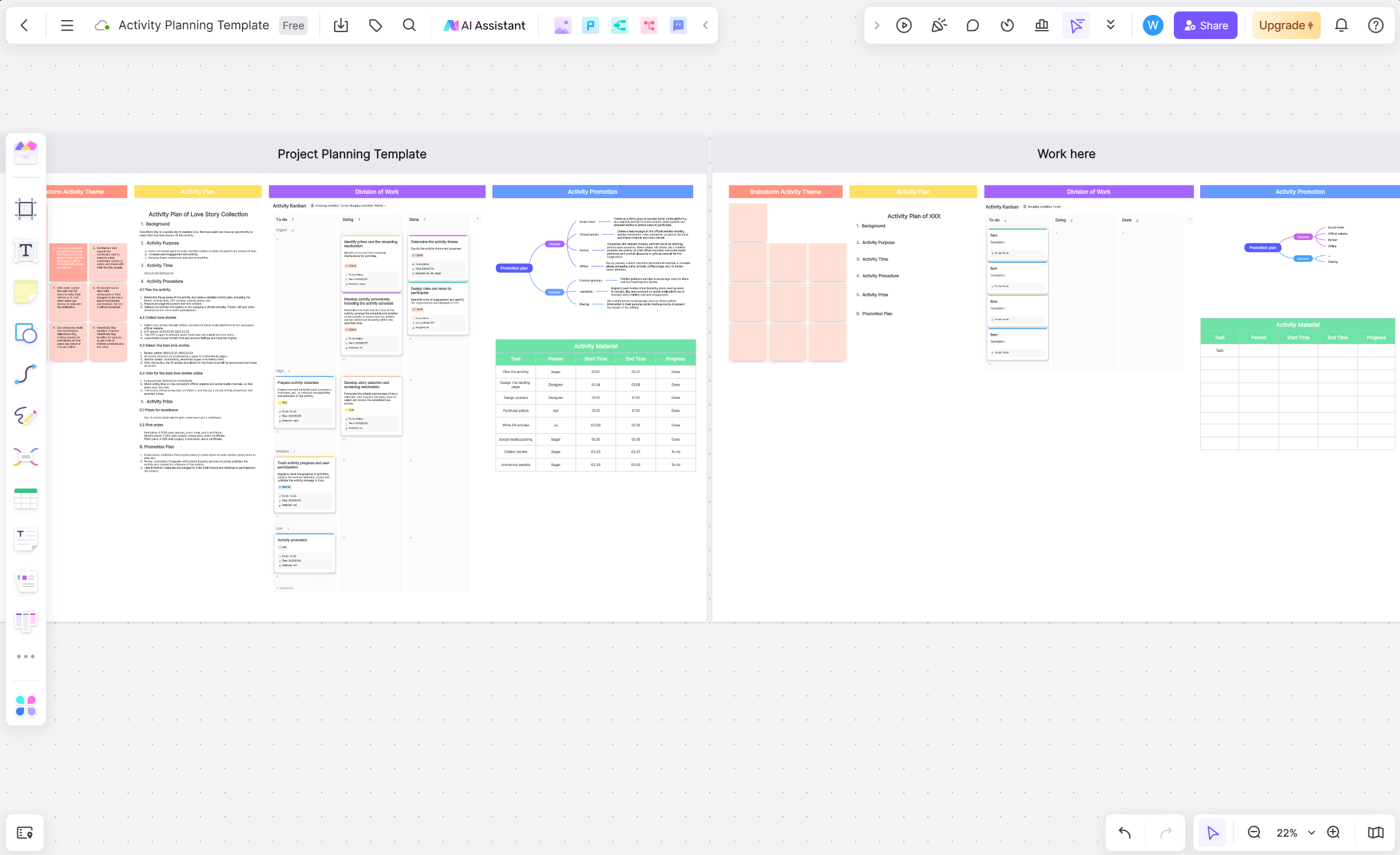
There is no single best online whiteboard for every team: the right choice depends on your workflow, team size, guest-access needs, and export requirements. The Boardmix online whiteboard is an all-in-one option for teams combining brainstorming, diagrams, AI, and project material on one canvas; Miro and Mural suit facilitated workshops, FigJam fits Figma-centered design teams, Canva is strong for presentation-ready visuals, Microsoft Whiteboard fits Microsoft 365 users, and Excalidraw offers a no-account option for a quick sketch.
This guide compares 20 online whiteboard tools by the work they suit, how people join, what Free includes, and the first reason to upgrade. Boardmix publishes this guide and appears in the list.
Shortlist by the work you need to finish:
- Turn ideas into a process diagram: Boardmix for mixed visual work, or Whimsical when structured flows and wireframes dominate.
- Run a facilitated workshop: Miro for its broader work ecosystem, Mural for facilitation included on Free, or Zoom Whiteboard for meeting-centered collaboration. Their guest rules differ.
- Discuss designs already in Figma: FigJam; moving the discussion to another workspace may add an unnecessary handoff.
- Develop a visual campaign direction: Canva Whiteboards, particularly when the output uses design assets.
- Sketch during an internal Teams meeting: Microsoft Whiteboard, using the organization’s supported Microsoft 365 access.
- Sketch without onboarding a team: Excalidraw for a local editable file, tldraw for optional cloud organization, or Web Whiteboard for a temporary canvas.
- See each student’s answer separately: Whiteboard.fi; choose Explain Everything when the deliverable is a recorded explanation.
If your first requirement is to finish the task without paying, compare free whiteboard plans, guest roles, and export limits. Here, start with the workflow and shortlist tools across free and paid options.
What Is an Online Whiteboard?
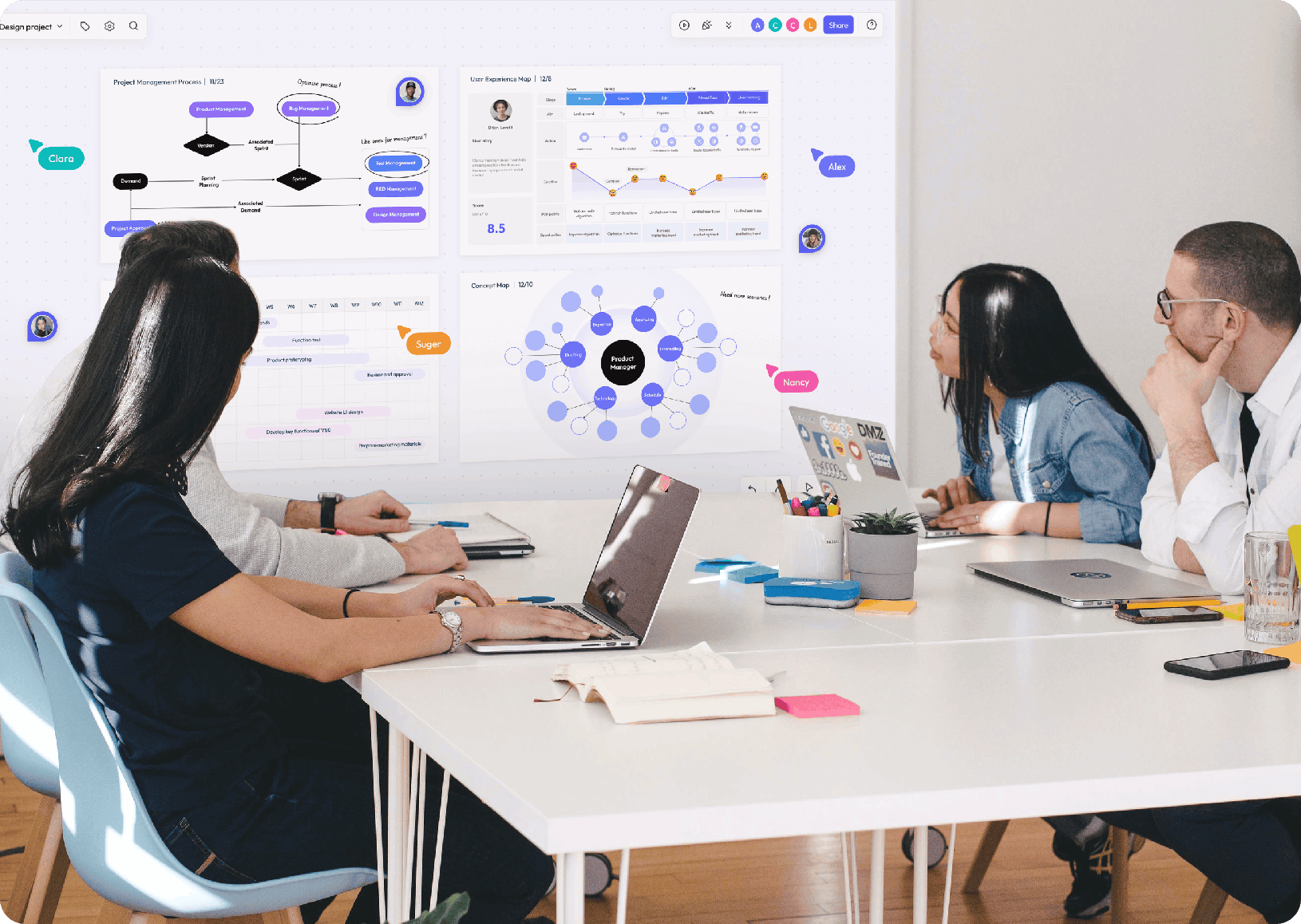
An online whiteboard is a shared digital canvas where people can draw, add sticky notes, map processes, arrange media, and review ideas together in a browser or app. Unlike a physical board, it can support remote editing, comments, links, reusable templates, exports, and a persistent record of the session.
The right product depends less on the longest feature list and more on the workflow. A one-off tutoring session may need no sign-up and pen support, while a recurring team workshop needs permissions, facilitation controls, history, exports, and a plan that supports external collaborators.
How to Evaluate an Online Whiteboard
Write down three requirements before comparing tools: who must contribute, what you will make, and what must survive the session. A board can support simultaneous editing yet fail because an external reviewer cannot join or the required export belongs to a paid plan.
- Joining friction: Can a guest edit from a link, or must every participant create an account?
- Free-plan reality: Check editable-board, object, participant, storage, export, and history limits rather than the word "free" alone.
- Live collaboration: Look for simultaneous editing, cursors, comments, voting, timers, presentation controls, and moderation where the session needs them.
- Creation tools: Compare drawing, sticky notes, connectors, diagrams, templates, media, document import, and AI whiteboard features only against the work you actually do.
- Output and recovery: Test image or PDF export, editable formats, version history, backup, and recovery before treating a board as a record.
- Administration: For business or education use, verify ownership, sharing policies, SSO, audit controls, data location, retention, accessibility, and support.
Prices and plan boundaries change faster than core use cases, so this comparison emphasizes current free-access limits and the main upgrade trigger. Recheck the linked provider page before purchasing or rolling a tool out across a team.
Free versus paid: Before comparing sticker prices, record the first limit that could block your workflow: editable boards or objects, guest/editor roles, export quality and formats, history/recovery, or admin controls. Note the entry paid tier and billing unit (user, team, board, or add-on), because guest seats and required add-ons can change the real cost.
Enterprise check: For regulated or client work, verify SSO, audit logs, retention, data residency, DPA/SLA terms, guest billing, accessibility, and whether self-hosting is available. These details are vendor- and plan-specific, so use the linked first-party page as the source of truth.
20 Online Whiteboards Compared (2026)
The table is a decision aid, not a universal ranking. Start with the use case, remove any option whose free or guest model fails the session, and then test the same small board in two or three finalists.
| Tool | Best for | Free access | Guest or account-free access | Main catch |
|---|---|---|---|---|
| Boardmix | All-in-one visual work | 3 editable boards; 100 objects per board | 5 editors per file on Free | Free caps are tight for ongoing teams |
| Web Whiteboard | Instant no-sign-up sessions | Free temporary board | Anyone with the link can edit | Unsaved boards last 24 hours |
| Microsoft Whiteboard | Microsoft 365 and Teams | Free Microsoft account or eligible Microsoft 365 access | Account-based sharing | Standalone apps retire Oct. 16, 2026 |
| Ziteboard | Tutoring and pen input | 3 owned boards | Registration-free access is a paid add-on | Free boards are public and traffic-limited |
| Limnu | Natural-feeling handwriting | 14-day whiteboard access | Unlimited collaborators; board access is time-limited | Free boards archive after 14 days |
| Stormboard | Structured sticky-note workshops | 5 open Storms; 5 users per Storm | Participants use Stormboard accounts | Advanced reports and guests are paid |
| Explain Everything | Teaching and recorded explanations | 3 projects; 1 slide each | 1 collaborator for 15 minutes | Strict project, recording, and storage caps |
| Miro | Mature workshops and integrations | 3 editable boards | No guest or visitor editing on Free | Free-team boards are visible to all members |
| ClickUp | Turning ideas into tasks | 3 public Whiteboards | Role-based; no private boards on Free | Best when ClickUp is already the work hub |
| Lucidspark | Brainstorming in the Lucid suite | Limited editable documents; unlimited objects per document | Account-free guests are paid-plan features | Detailed controls sit in paid tiers |
| Conceptboard | Client review and annotation | 3 active boards; 100 objects each | Account-free guest contributors are paid | 10 MB upload and object caps |
| Canva Whiteboards | Presentation-ready visual boards | Free whiteboards and infinite canvas | Link collaboration can work without an account | Some assets and brand controls are paid |
| Excalidraw | Fast no-account sketches | Forever-free editor | Real-time share link | Free work is primarily browser-local |
| tldraw | Flexible sketching and canvas prototypes | Hosted editor is free to use | No-account edit or view links | SDK production licensing is separate |
| Whiteboard.fi | Classroom formative assessment | 10 students without an account; 20 with a free account | Students do not need accounts | Unregistered rooms close after 2 hours of inactivity |
| Ayoa | Mind maps plus tasks | 7-day Ultimate trial | Collaboration is subject to the plan | Whiteboards become view-only; Free is personal-use |
| Mural | Facilitated workshops | 3 editable murals at a time | Free visitors are view-only | Visitor editing starts on Team+ |
| FigJam | Figma-centered design teams | 3 FigJam files in the team folder | Signed-in sharing; check role and seat | Broader team controls require paid seats |
| Whimsical | Quick diagrams and wireframes | Unlimited boards; 50 new objects per month | Invited guests use accounts; anonymous links optional | Watermarked exports and 7-day history on Free |
| Zoom Whiteboard | Meeting-centered whiteboarding | 3 concurrently editable boards | Public editing without sign-in | More than 3 editable boards and history are paid |
1. Boardmix: Best for a Broad, All-in-One Visual Workspace
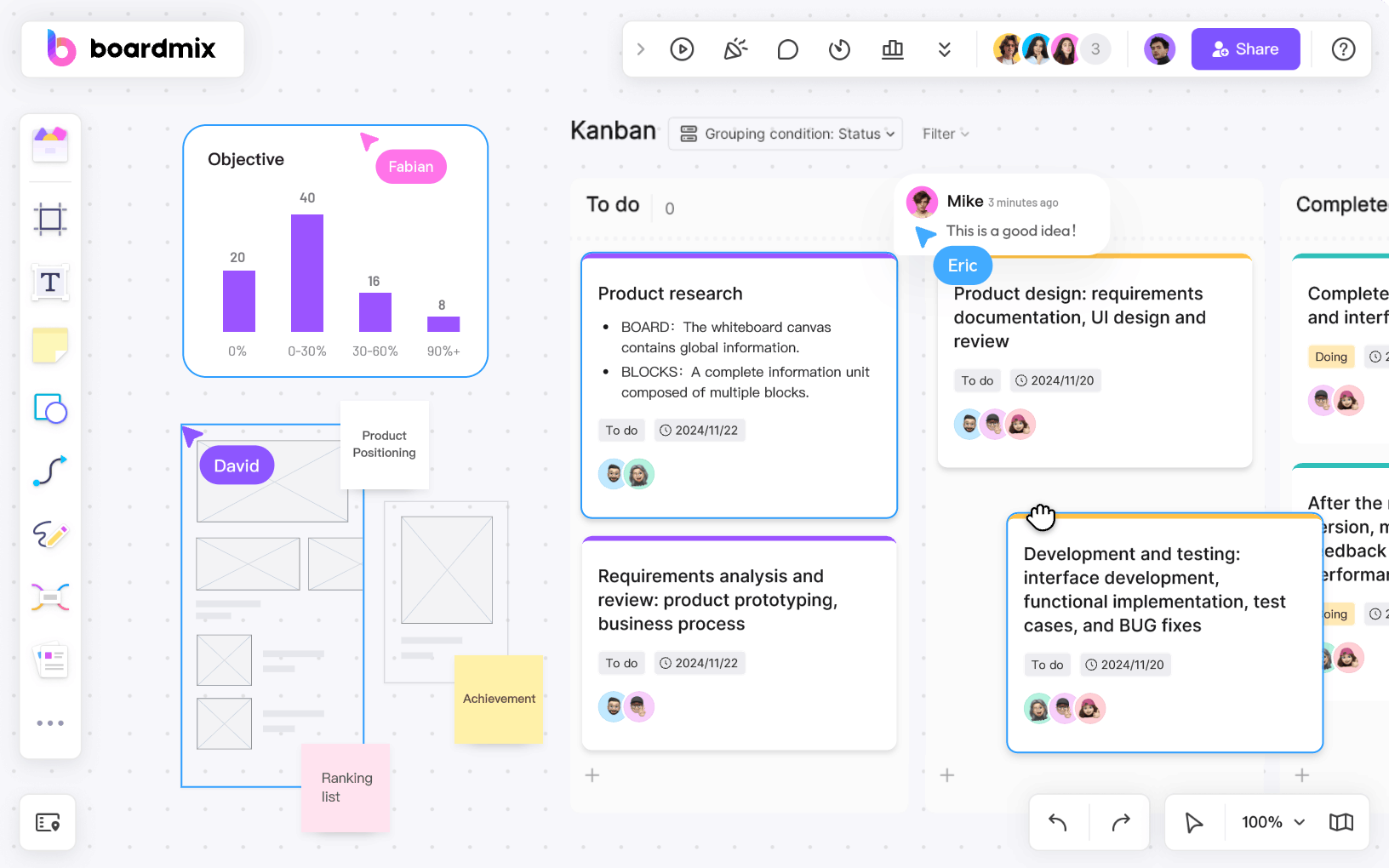
Boardmix combines a whiteboard, diagrams, mind maps, project material, templates, comments, voting, and AI-assisted creation in one visual workspace. Consider it when a team wants to move between brainstorming and structured visual work without changing tools.
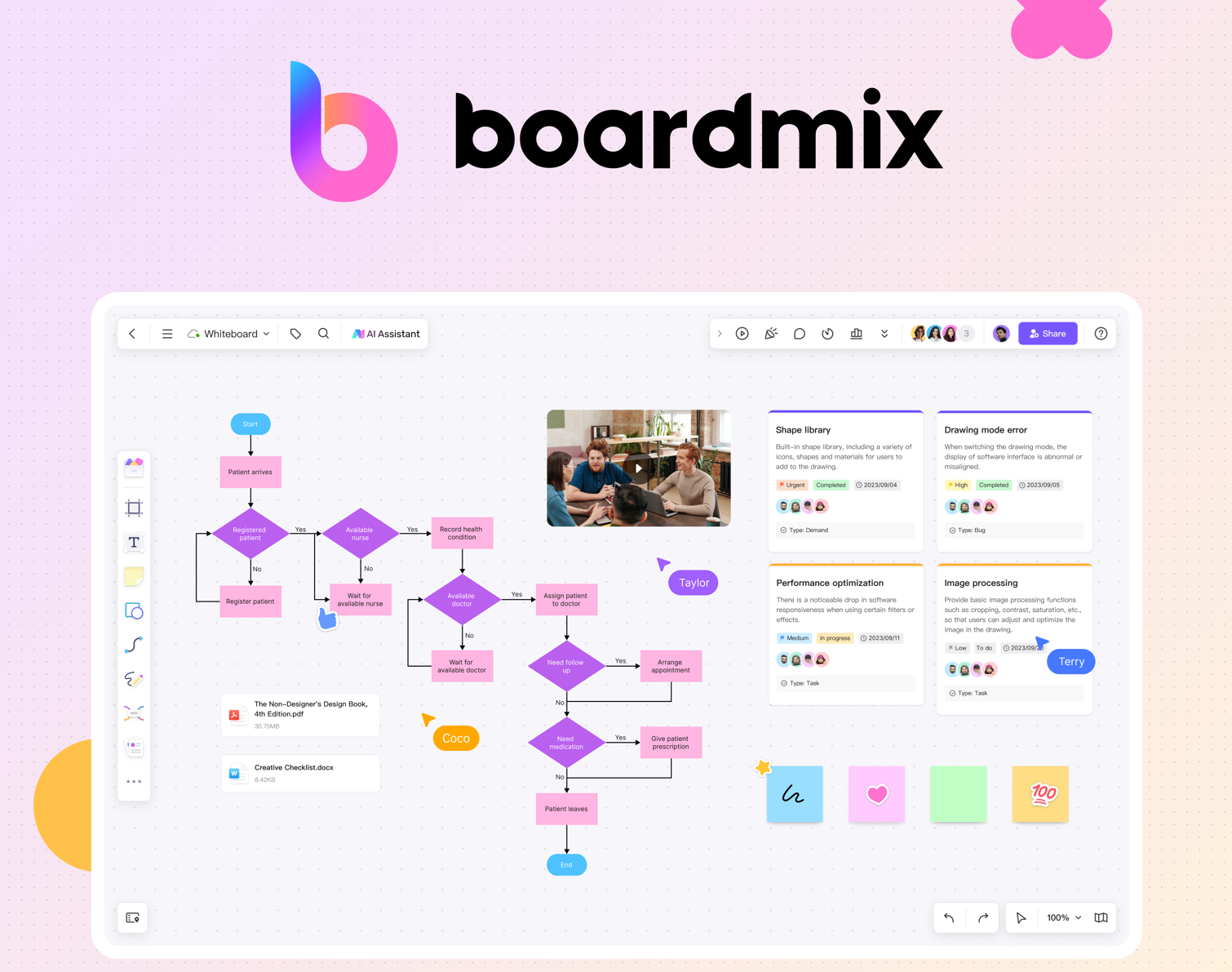
Free access: The Free plan includes 3 editable boards, 100 objects per board, 1 GB of storage, standard-definition export, 10 version-history records, and up to 5 editors per file.
Guest access: Free collaboration is capped by the editor limit. Starter includes unlimited visitors with editing rights.
For a product kickoff, place customer observations, a proposed user flow, and unresolved decisions in separate areas. Keep the evidence beside the diagram, and add an owner and next step to each decision. Use Share for an external board link; Invite adds people to a team or project. The recipient's access and the plan's editor limit still apply.
Main trade-off: A four-person planning board can fit Free; a workshop with more than five editors cannot. Starter removes the board and object caps, while AI use follows separate credit allowances. Boardmix pricing and plan limits.
2. Web Whiteboard: Best for a Disposable, No-Sign-Up Session
Miro's Web Whiteboard is a lightweight canvas for a quick brainstorm or tutoring session. The creator shares a link and participants can edit in real time without registering, then export the result as an image or PDF.
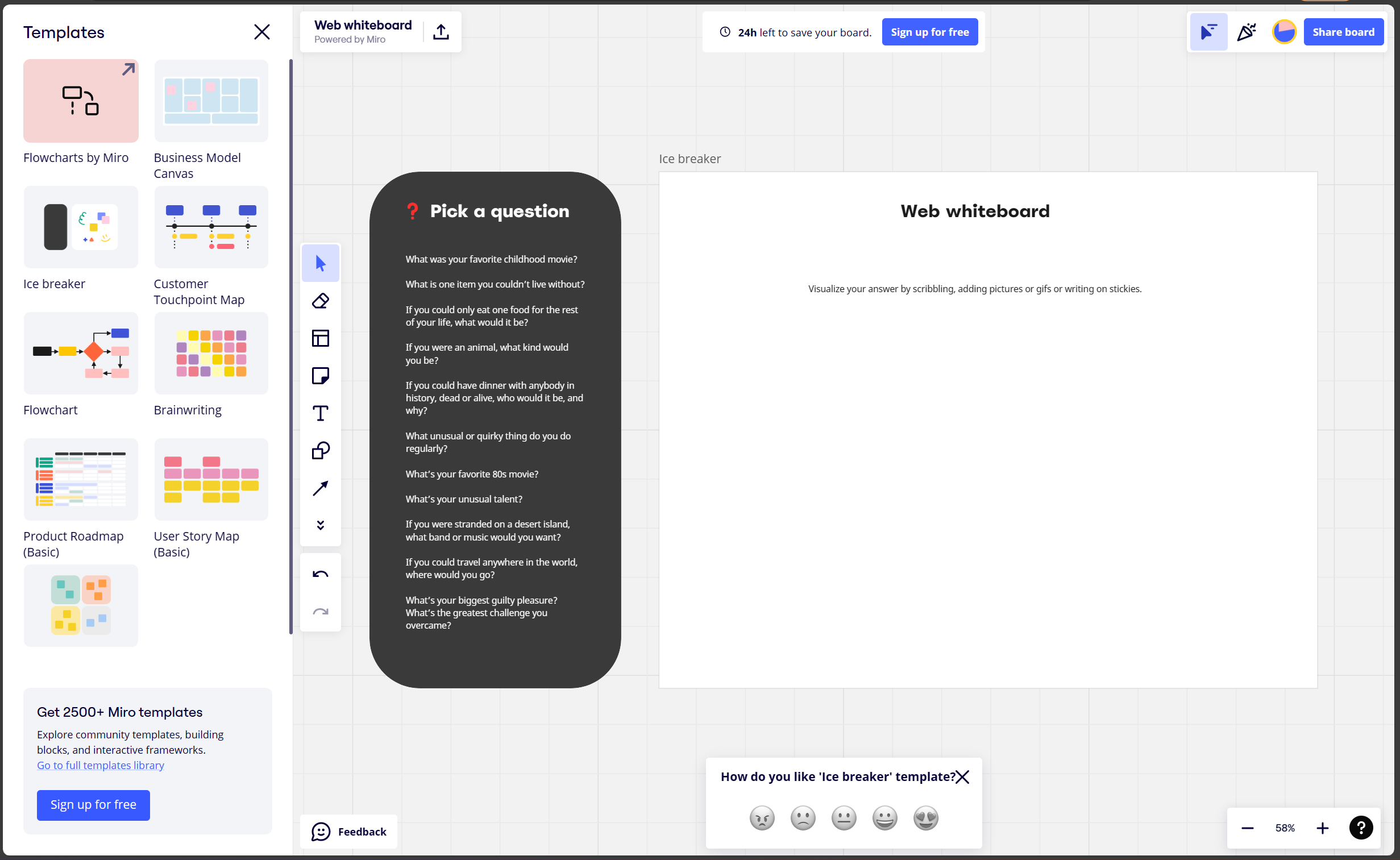
Free access: The temporary whiteboard is free and does not require an account.
Guest access: Anyone with the shared link receives editing access without signing in.
Main trade-off: A board is available for 24 hours, then locks; it is deleted after 7 days unless someone signs in and saves it to Miro. It is unsuitable as a long-term record unless exported or saved. Miro's Web Whiteboard help page.
3. Microsoft Whiteboard: Best for Microsoft 365 and Teams
Microsoft Whiteboard is a natural choice for organizations already working in Teams and Microsoft 365. It supports an infinite canvas, ink, notes, templates, and real-time collaboration through supported Microsoft entry points.
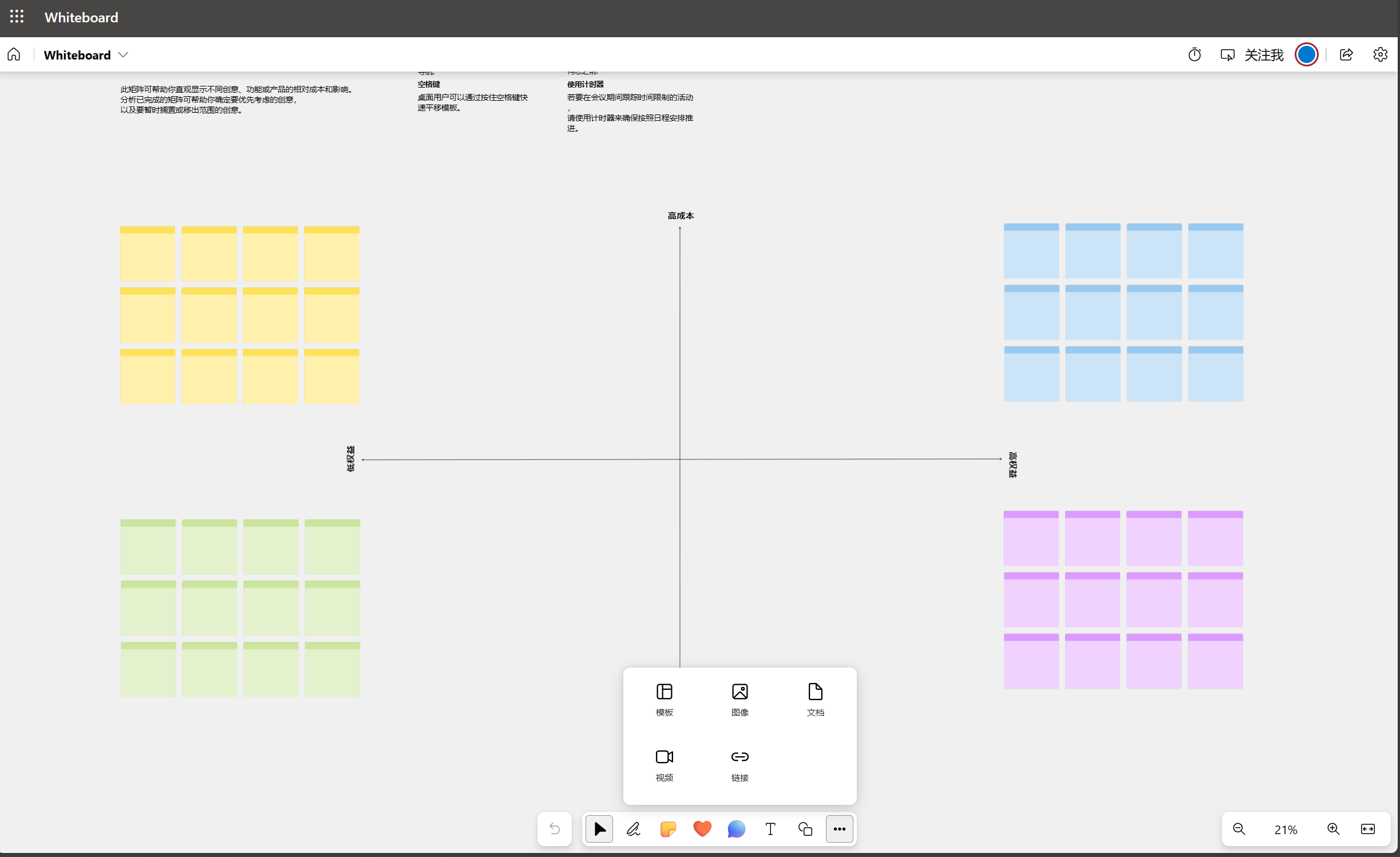
Free access: People can sign in with a free personal Microsoft account; organizational capabilities depend on the Microsoft 365 tenant and license.
Guest access: Collaboration is account- and tenant-based rather than a universal anonymous-link workflow.
Main trade-off: Microsoft has scheduled the standalone Windows, iOS, and Android apps to retire on October 16, 2026. Microsoft documents continued web and Teams access for work or school accounts. Plan an organizational rollout around those entry points; do not promise the same continuation path for personal accounts. Microsoft's standalone-app retirement notice.
4. Ziteboard: Best for Lightweight Tutoring and Pen Input
Ziteboard is a browser-based, zoomable canvas aimed at drawing, tutoring, and real-time collaboration across laptops, tablets, and phones. Its simple pen workflow, shape recognition, image and PDF support, and export formats make it practical for live explanation.
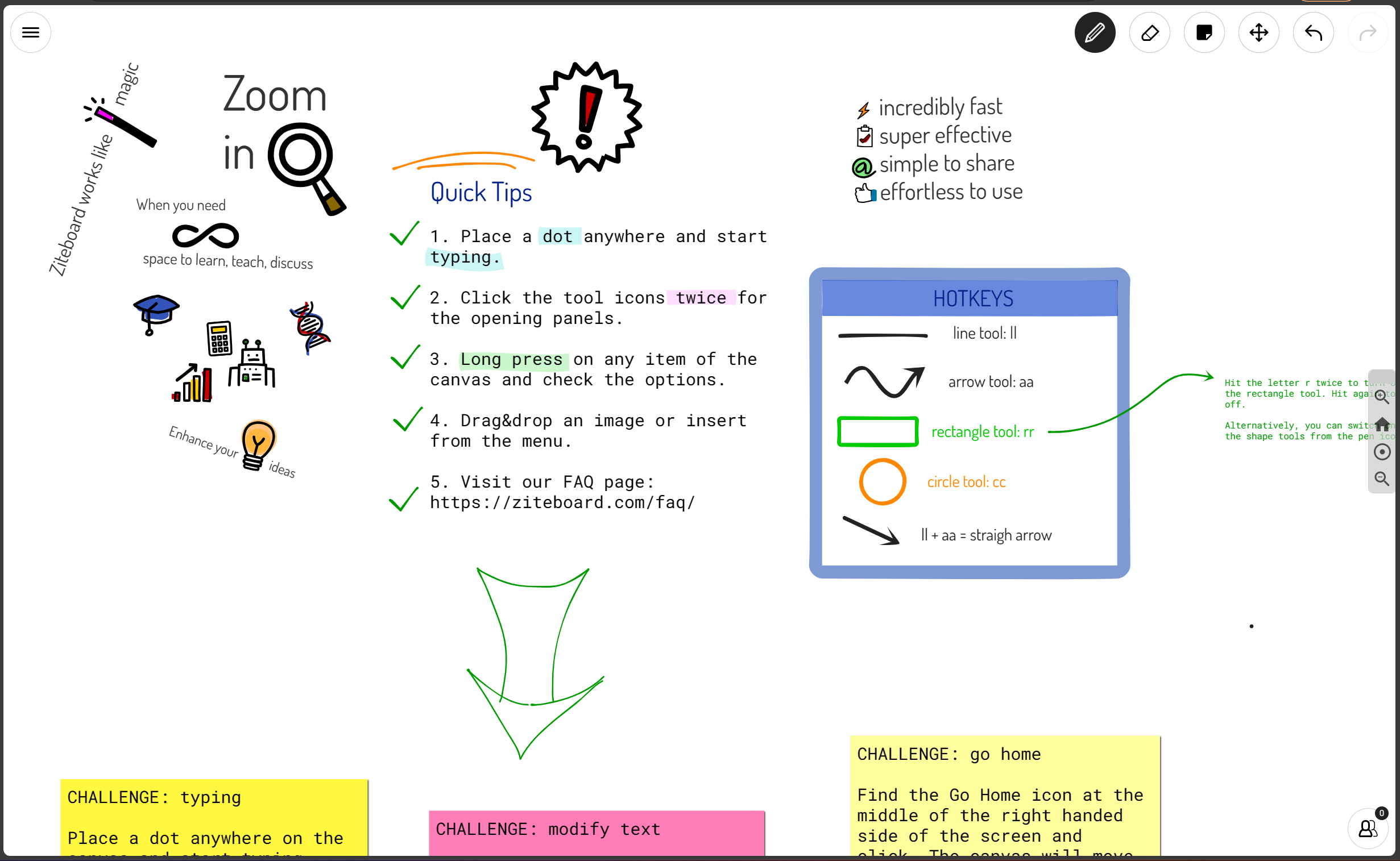
Free access: The Starter plan lists 3 owned boards, unlimited shared boards and real-time collaborators, basic colors, low-resolution image import, first-page PDF import, and PNG, SVG, and PDF export.
Guest access: Standard free collaboration uses public boards. No-registration access is sold as an add-on for Pro accounts.
Main trade-off: Private boards, richer imports, custom colors, and anonymous access require paid options, and the Free plan has data-traffic limits. Ziteboard pricing.
5. Limnu: Best for Natural-Looking Handwriting
Limnu focuses on a familiar marker-on-whiteboard feel and supports collaborative drawing, solo boards, and built-in video calling. It is worth considering when handwriting and low-friction visual explanation matter more than a large template or project-management layer.
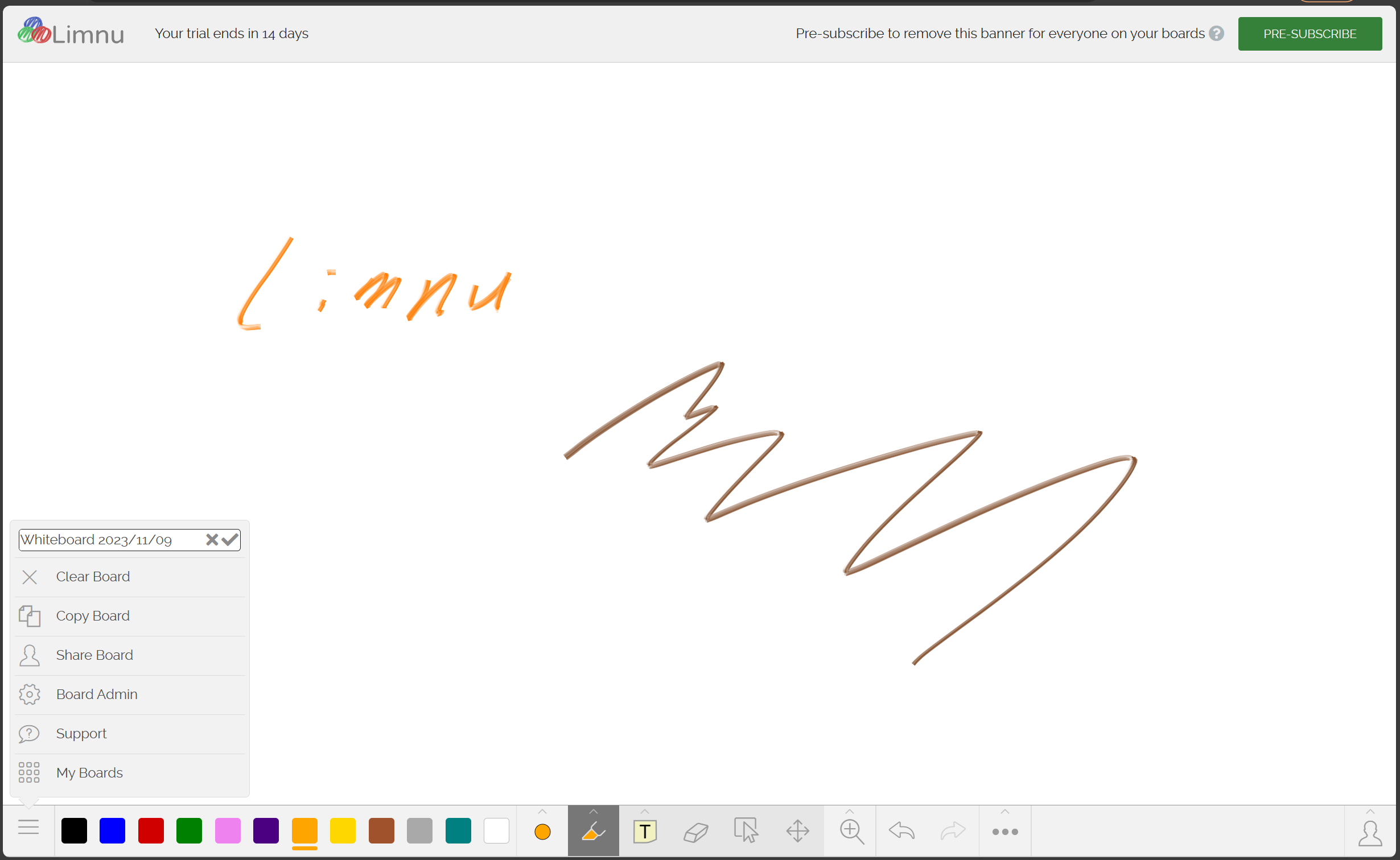
Free access: The Free option provides 14-day access to whiteboards, unlimited collaborators, and 30 minutes of video-conference time.
Guest access: Participants can use free accounts to join a shared board. Pro supports private and collaborative boards; Team adds team sharing controls.
Main trade-off: The free plan continues after the initial trial, but free boards archive after 14 days. An ongoing lesson library therefore needs a different retention arrangement or a paid plan. Limnu pricing and board-retention details.
6. Stormboard: Best for Structured Sticky-Note Workshops and Reports
Stormboard organizes ideas as different sticky-note types inside a structured workspace. Voting, tasks, timers, connectors, templates, and reporting make it more meeting-oriented than a plain drawing canvas.
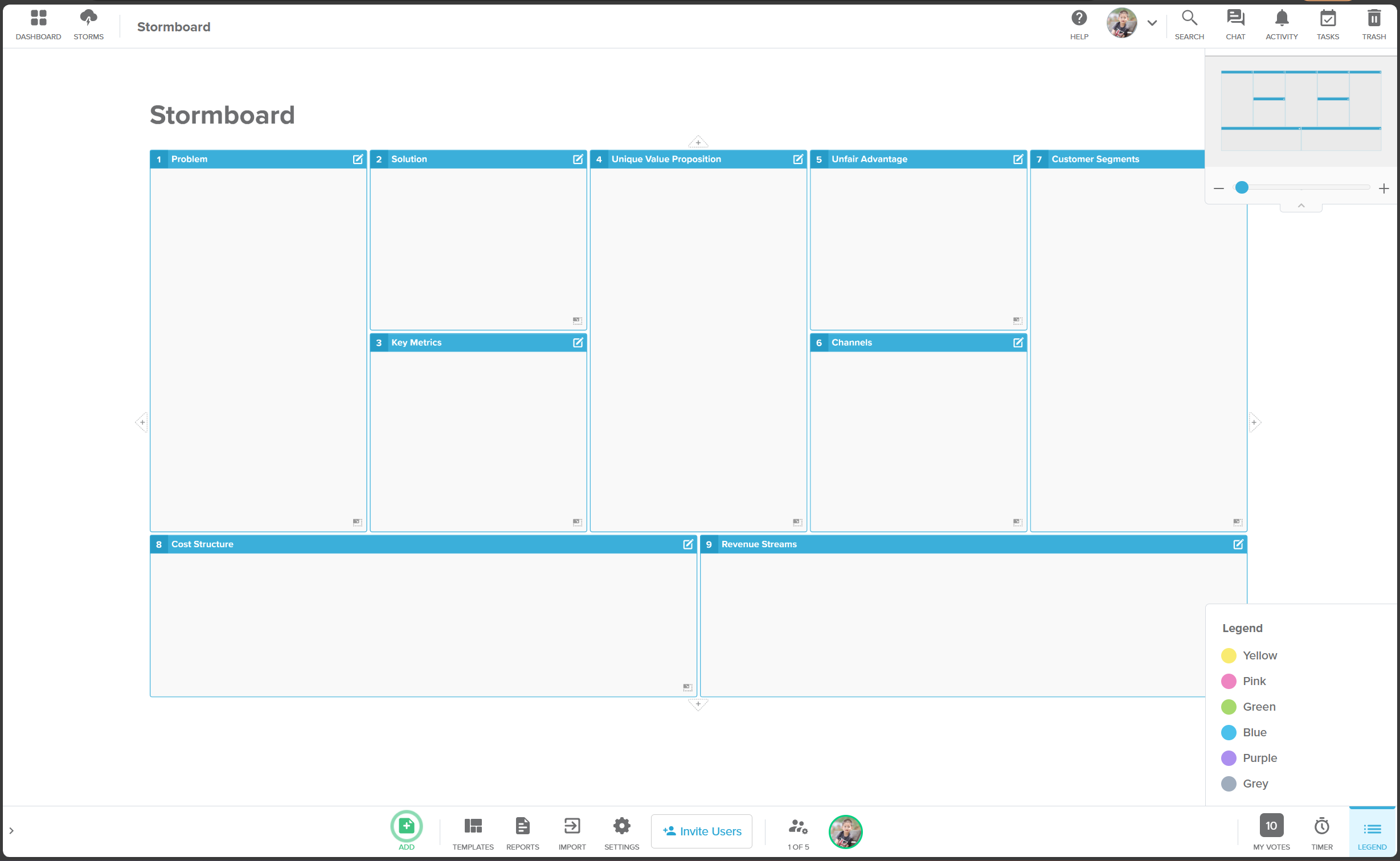
Free access: The Personal plan is free and does not require a credit card. It supports up to 5 open Storms and up to 5 users in each Storm.
Guest access: Free participants use Stormboard accounts. The Personal plan does not include the guest allowance shown for paid Business and Enterprise options.
Main trade-off: Advanced reports, document co-editing, larger storage, team administration, and guest capacity sit in paid plans; contributors added to a paid team can affect billing. Stormboard plans and pricing.
7. Explain Everything: Best for Teaching and Recorded Explanations
Explain Everything combines whiteboarding with rich-media lessons and recording. Teachers and tutors can draw over documents, images, presentations, audio, or video and export the result for asynchronous learning.
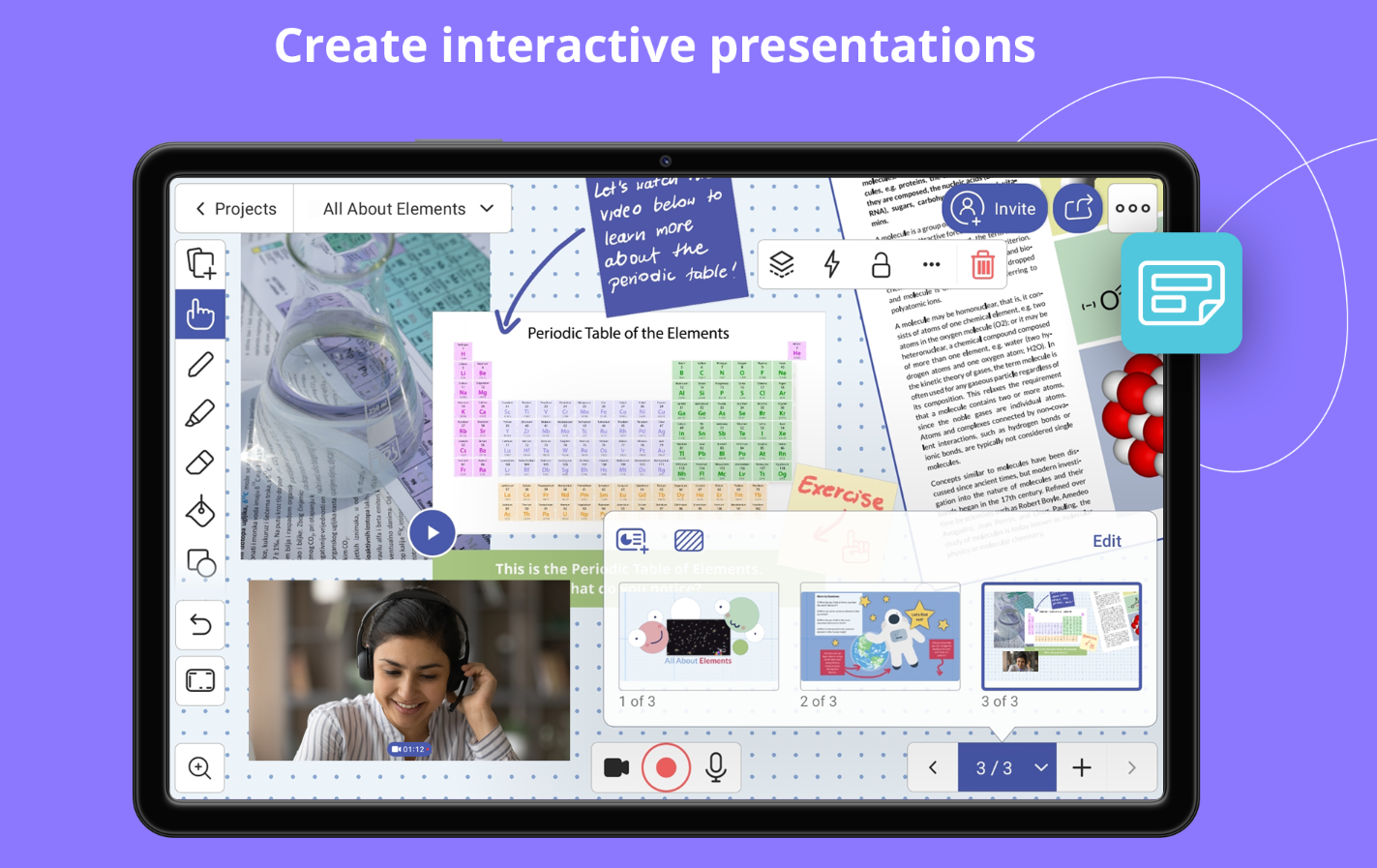
Free access: The Free plan includes all whiteboarding tools, up to 3 projects with 1 slide each, 500 MB of cloud storage, and video, PDF, or image export with a 3-minute video limit.
Guest access: One collaborator can join for up to 15 minutes on Free; viewers do not need an account.
Main trade-off: The collaboration, project, slide, storage, and recording caps make Free a trial-sized plan rather than a recurring classroom system. Explain Everything plan guide.
8. Miro: Best for Mature Workshop Workflows and Integrations
Miro offers a deep workshop ecosystem with templates, structured canvas formats, facilitation controls, integrations, diagramming, and enterprise administration. It is a strong fit for teams that run recurring cross-functional sessions and can standardize on a paid workspace.
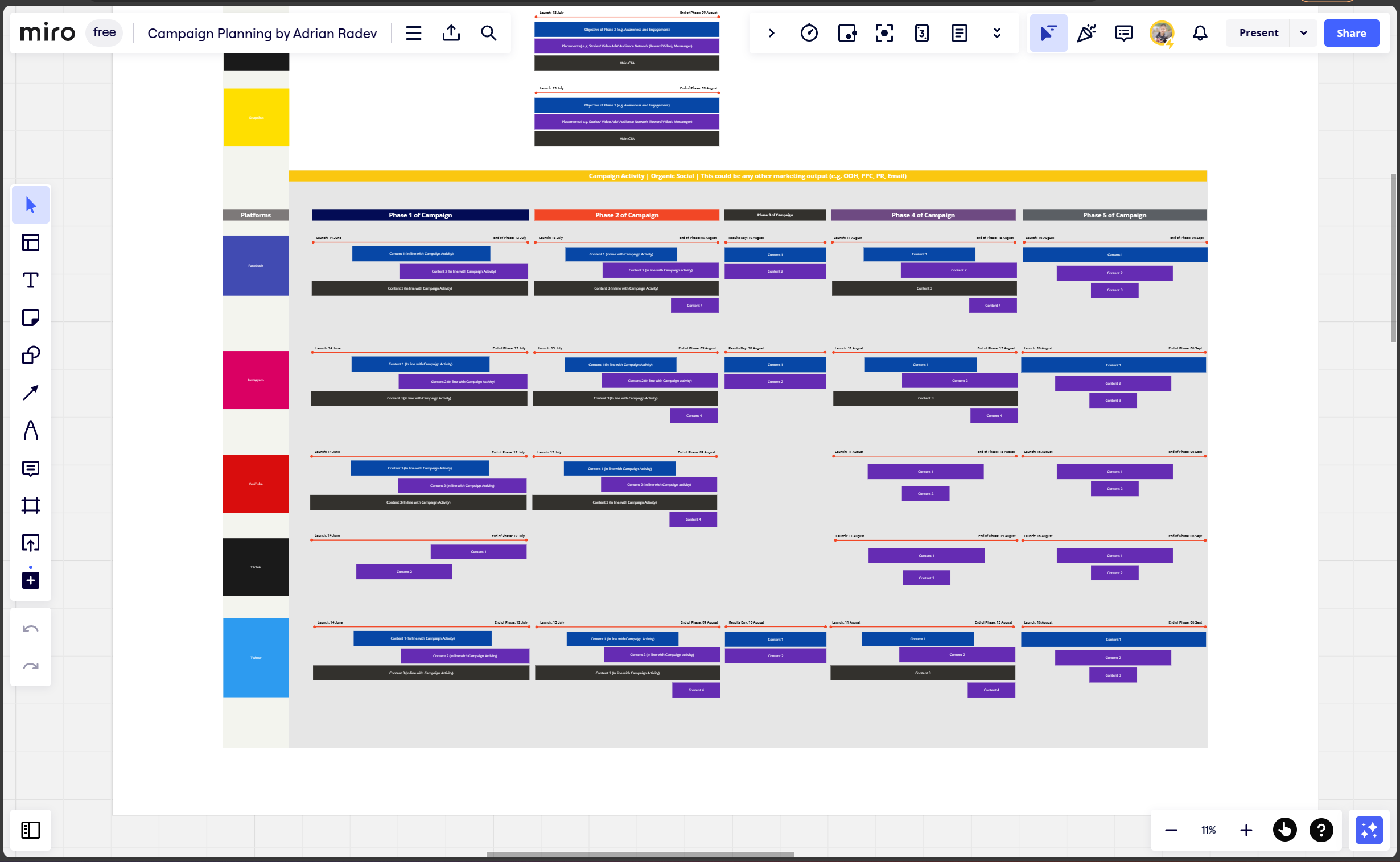
Free access: The Free plan has 3 editable boards, unlimited team members, templates, low-resolution export, and limited AI use.
Guest access: Free has no guest or visitor editing. Invited collaborators become team members and can see the team's active boards; public visitor editing starts on a paid plan.
Main trade-off: Starter adds private and unlimited editable boards, high-resolution export, voting, timers, and visitor editing. Business adds signed-in guests for ongoing external collaboration; choose between a one-time public editing link and an identifiable client relationship. Miro pricing.
9. ClickUp: Best for Turning Whiteboard Ideas into Tasks
ClickUp Whiteboards connect visual ideas with tasks, documents, and the rest of a ClickUp workspace. Its documented ability to turn a sticky note, shape, or text into a task matters when the meeting must produce assigned work in ClickUp. A drawn task box in another whiteboard is not equivalent to that native task record.
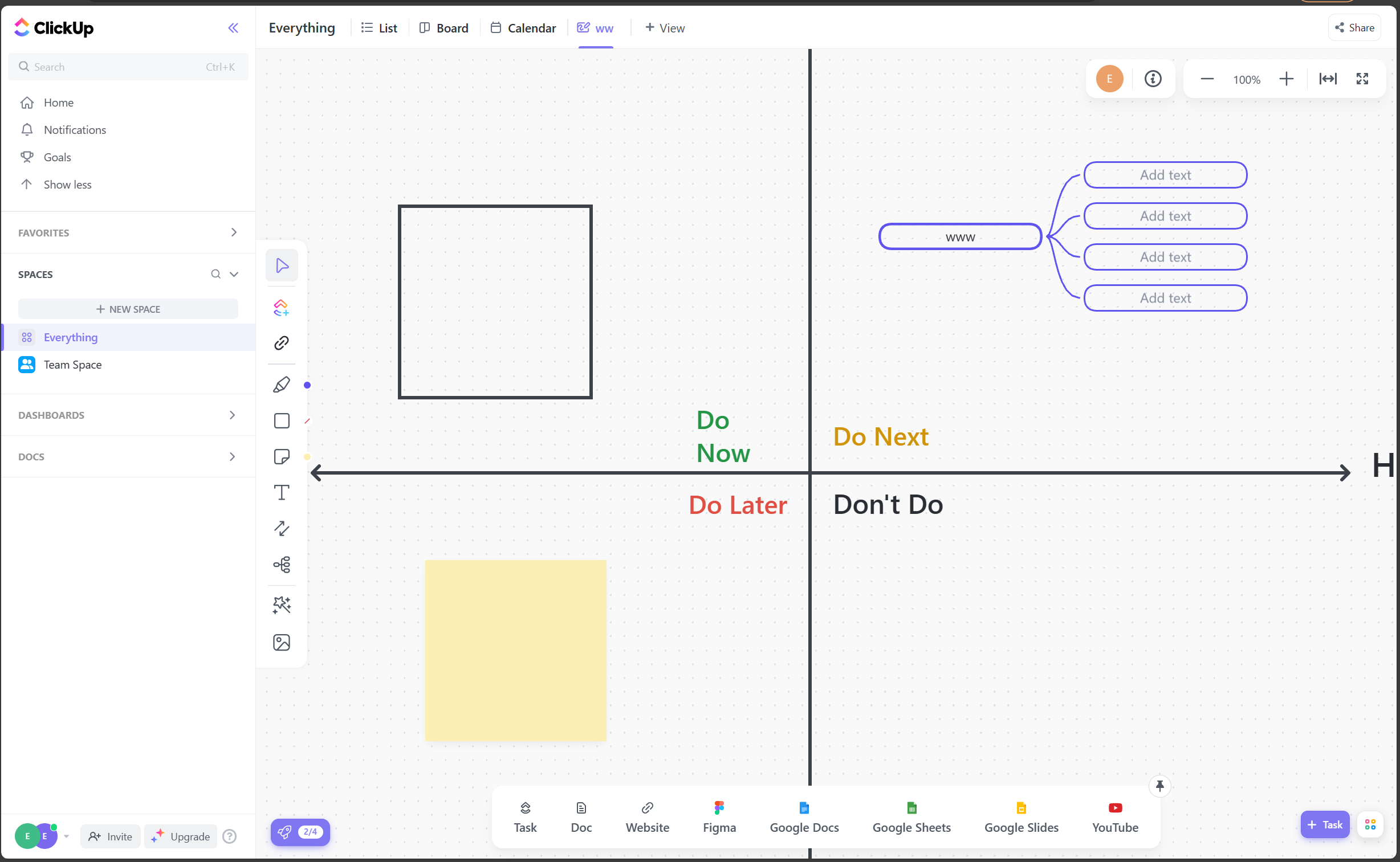
Free access: Free Forever users can create 3 public Whiteboards. The higher-tier plan raises the public-board cap, while Business removes the cap and enables private Whiteboards.
Guest access: View-only guests and limited members can view shared boards; editing and creation depend on role and permission. ClickUp also documents public sharing outside the workspace. Do not confuse workspace-public boards with unrestricted edit access for every link recipient.
Main trade-off: It is most compelling for teams already using ClickUp. A team seeking only a quick canvas inherits a much broader work-management system. ClickUp Whiteboards limits.
10. Lucidspark: Best for Brainstorming in the Lucid Suite
Lucidspark is a freeform ideation and hybrid-collaboration canvas from Lucid. It fits teams that want to move brainstorms into Lucidchart diagrams or use Lucid's broader visual collaboration and administration model.
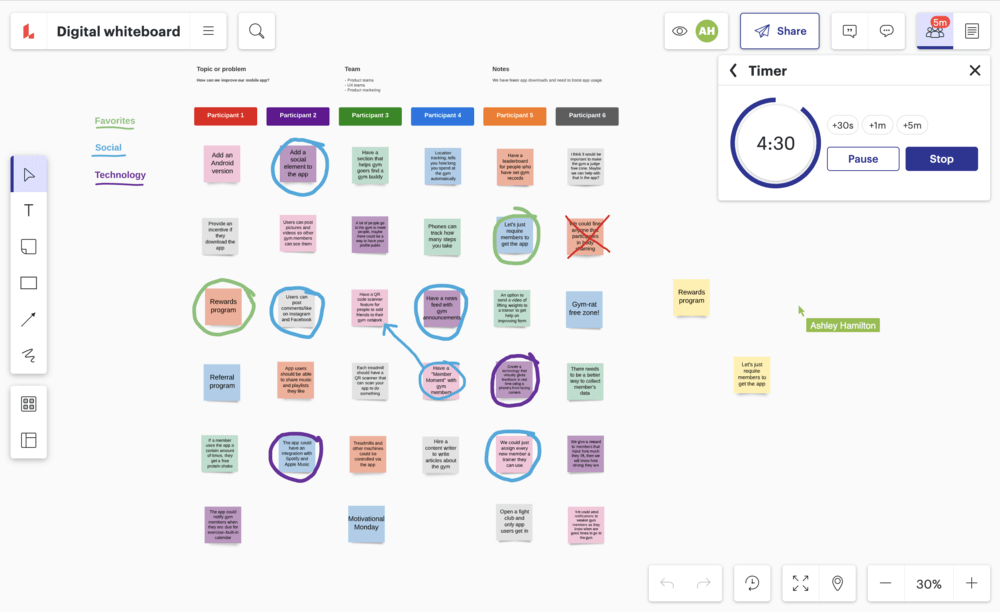
Free access: A Free plan is available with standard templates, unlimited objects per document, and a limited collection of editable documents.
Guest access: Sharing is available on Free, but account-free Guest Collaborators require Team or Enterprise.
Main trade-off: Free supports dot voting, while full voting, running a timer, and commenting have Team/Enterprise conditions. For a workshop, check the host's facilitation tools as well as whether participants can place notes. Lucid plan comparison.
11. Conceptboard: Best for Client Review and Visual Annotation
Conceptboard is suited to feedback-heavy work such as design review, PDF annotation, workshops, and client collaboration. Boards support comments, uploaded material, real-time work, and role-based sharing.
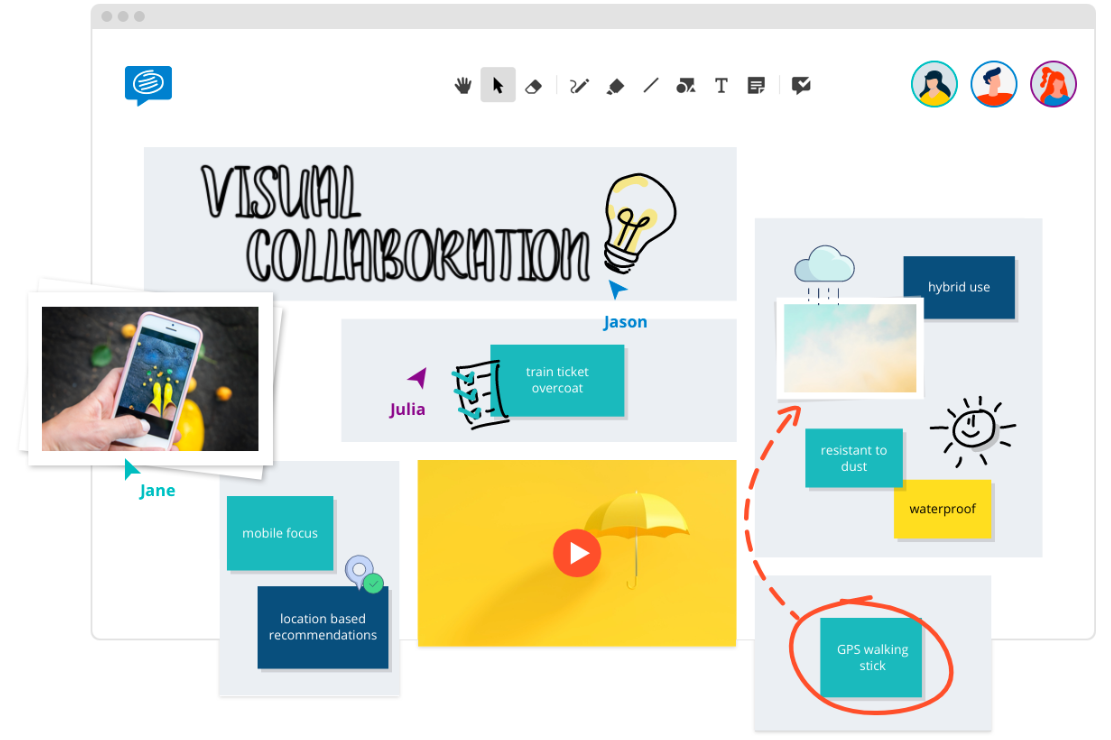
Free access: The current pricing page lists 3 active boards, with 100 counted objects per board, 250 MB of storage, and a 10 MB upload limit.
Guest access: The pricing table places account-free guest contributors in paid plans. For a Free board, arrange account-based access with the reviewers before the session.
Main trade-off: A 15 MB review PDF already exceeds Free's per-upload cap before anyone adds feedback. Paid Starter raises the upload limit to 25 MB and removes the board/object caps; Advanced adds board history and approval workflows. Conceptboard pricing.
12. Canva Whiteboards: Best for Presentation-Ready Visual Boards
Canva Whiteboards combines an infinite canvas with Canva's templates, diagrams, media library, presentation tools, and Visual Suite. It is a strong choice when the board must quickly become a polished presentation, document, or social asset.
Free access: Canva describes Whiteboards as free, with an open canvas space, core drawing and diagram tools, timers, reactions, and real-time collaboration.
Guest access: Collaborators can participate even without a Canva account when the sharing settings allow it.
Main trade-off: The creative library is a strength, but teams should distinguish free elements and controls from Pro content, brand, storage, and administration features. Canva Whiteboards.
13. Excalidraw: Best for Fast, No-Account Sketching
Excalidraw is a free, open-source editor with an intentionally hand-drawn visual style. It starts immediately without an account and works well for architecture sketches, wireframes, diagrams, and lightweight real-time sessions.
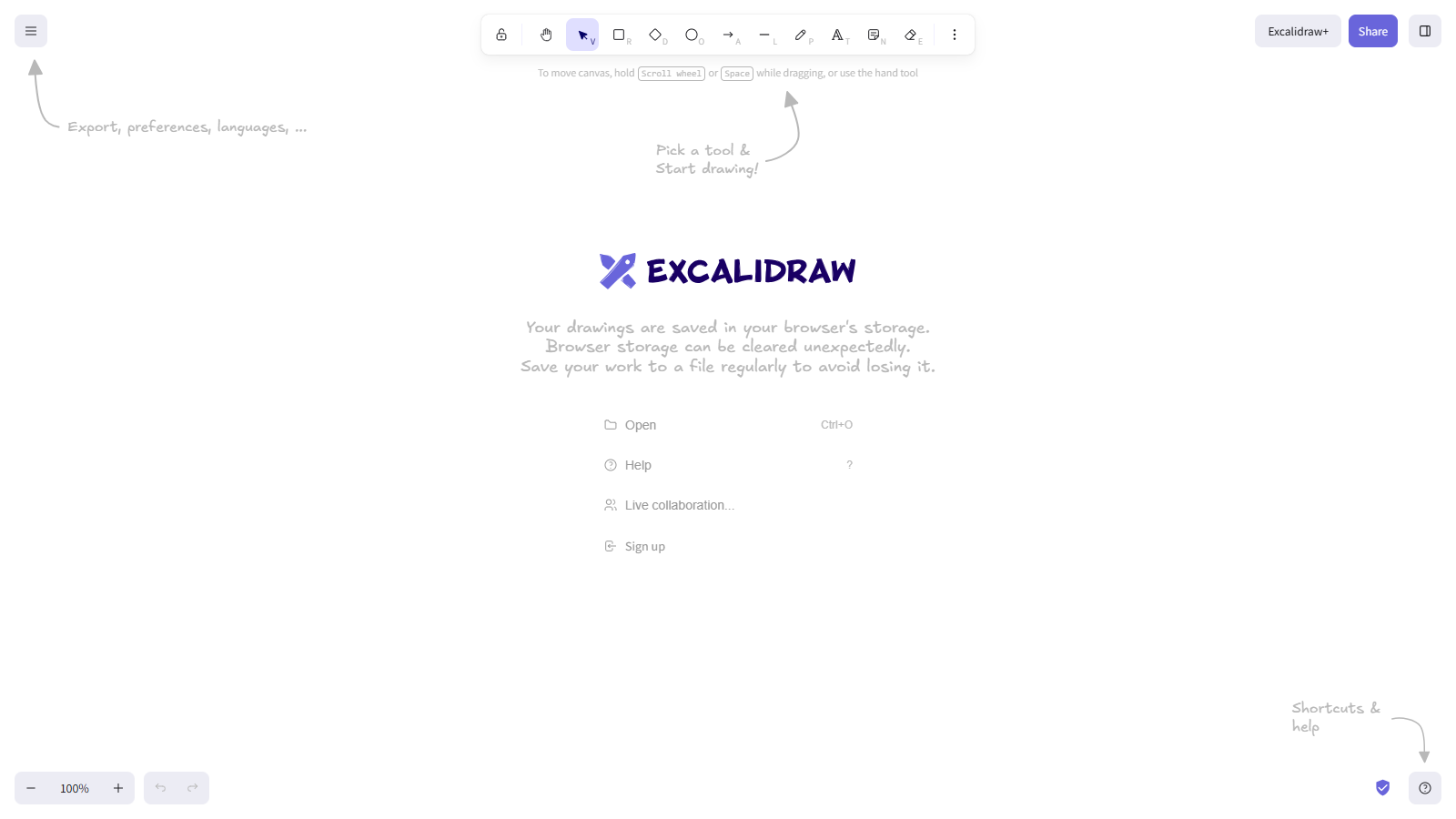
Free access: The public editor is described as forever free and includes the core canvas plus shareable real-time collaboration.
Guest access: No account is needed to start drawing; shareable and read-only links support lightweight review.
Main trade-off: Free-editor work is primarily stored in the browser and can disappear if local browser data is cleared. Its official project documentation lists PNG/SVG export and the editable .excalidraw format: save the editable file for future changes and an image for people who only need the result. Excalidraw Plus adds a cloud workspace, extended team collaboration, and advanced sharing. Excalidraw product and plan overview.
14. tldraw: Best for Flexible Sketching and Canvas Prototypes
tldraw provides a fast hosted infinite canvas and a separate developer SDK for building canvas-based products. The editor is useful for quick drawings and multiplayer sessions; signed-in users can organize cloud files and give guests editing or viewing links. The SDK is relevant when a product team wants to embed or extend a canvas.
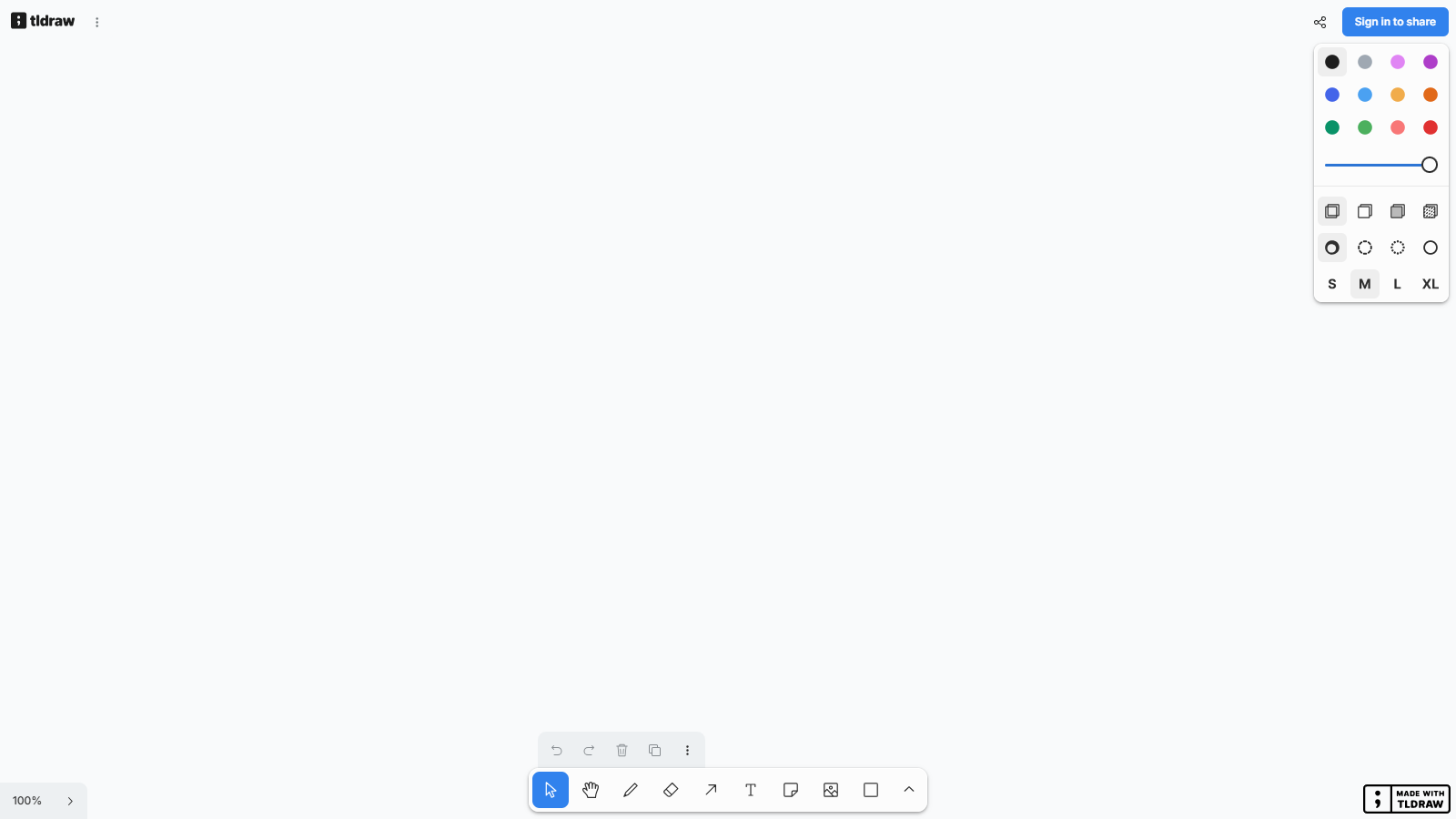
Free access: The hosted editor is free to use. Its file-sharing overview describes optional sign-in, cloud saving, and guest access; SDK production use follows separate license terms.
Guest access: Hosted projects support no-account links for editing or viewing. A custom SDK deployment must provide its own production collaboration and persistence setup.
Main trade-off: Do not confuse the free hosted editor with the SDK license. Commercial production use of the SDK requires the appropriate license, and the demo sync server is not a production datastore. tldraw SDK pricing and licensing.
15. Whiteboard.fi: Best for Fast Classroom Response Checks
Whiteboard.fi gives every student a private response board while the teacher sees the class. It is designed for formative assessment rather than a shared corporate canvas, which makes it especially useful for checking understanding during a lesson.
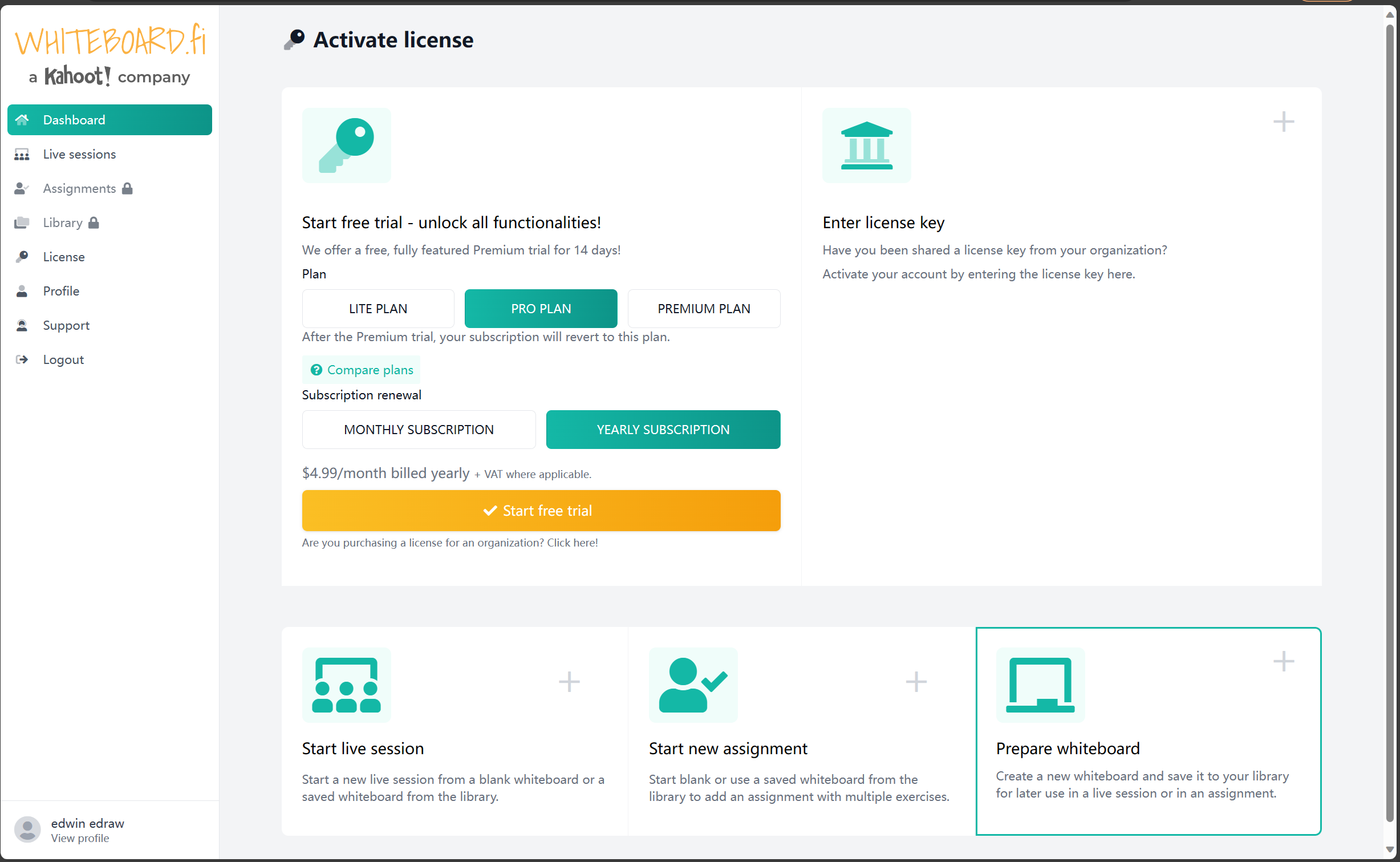
Free access: A session can host up to 10 students without a teacher account or 20 students with a registered free account.
Guest access: Students join a session without creating accounts and cannot see other students' work.
Main trade-off: For an unregistered teacher, a temporary room closes after two hours of inactivity and its boards are deleted. A registered Free account increases the class limit to 20; a class of 30 needs a paid tier. Whiteboard.fi participant limits.
16. Ayoa: Best for Mind Maps, Tasks, and Whiteboards Together
Ayoa combines mind maps, whiteboards, task boards, documents, presentation views, and neuroinclusive settings. It is most relevant when a team wants those modes in one workspace rather than a whiteboard alone.
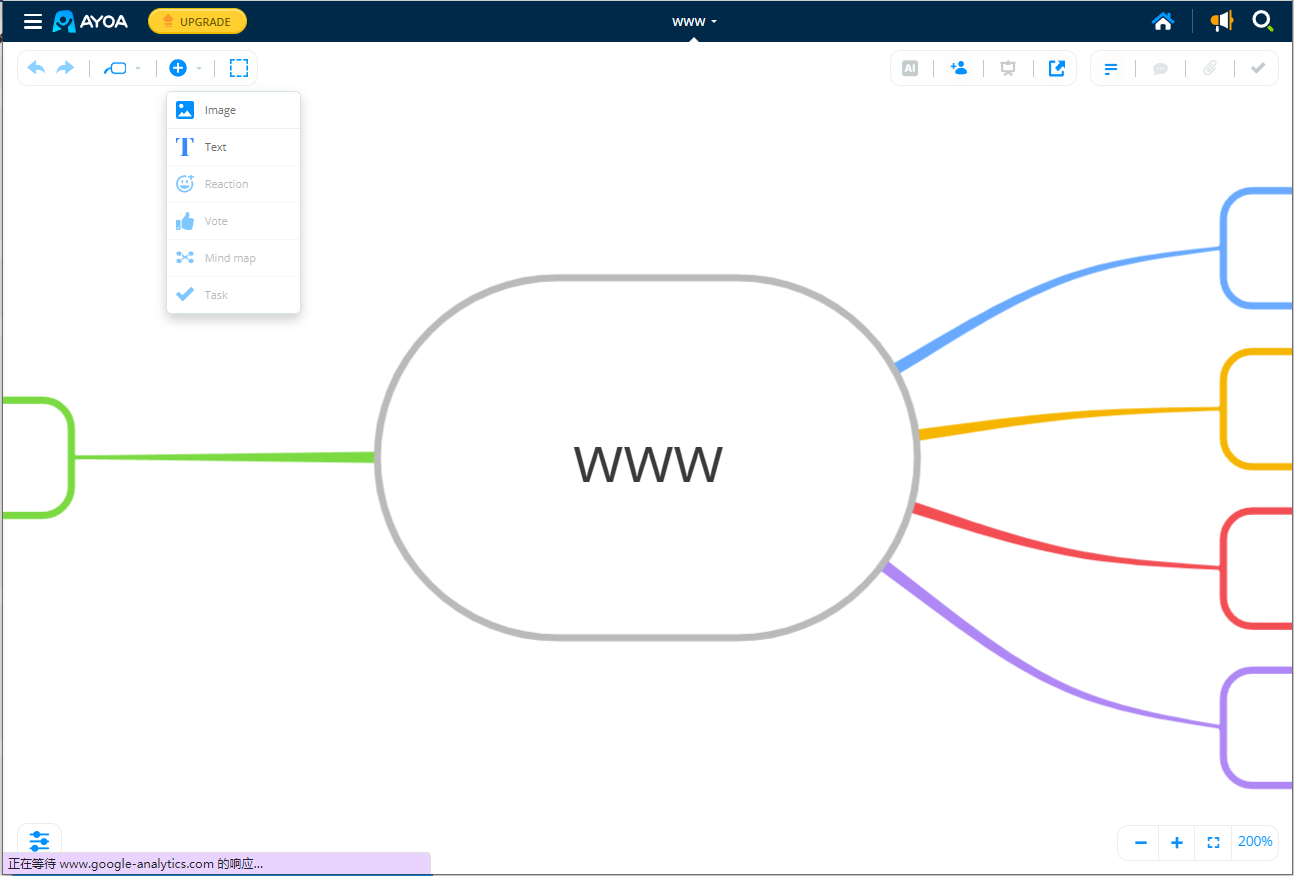
Free access: Ayoa offers a 7-day Ultimate trial. After the trial, the free version keeps limited mind-map access, but whiteboards and task boards become view-only.
Guest access: Sharing and collaborative editing depend on the paid plan and the invited user's status.
Main trade-off: Ayoa should not be presented as a free editable whiteboard for ongoing use. Its Free plan is for personal, non-commercial use, and its value depends on whether the team will also use mind mapping and task management. Ayoa pricing and Free-plan FAQ.
17. Mural: Best for Facilitated Workshops
Mural is built around guided visual collaboration. Timers, voting, private mode, summon, outlines, templates, and facilitator controls make it a strong choice for design-thinking sessions, retrospectives, planning, and stakeholder workshops.
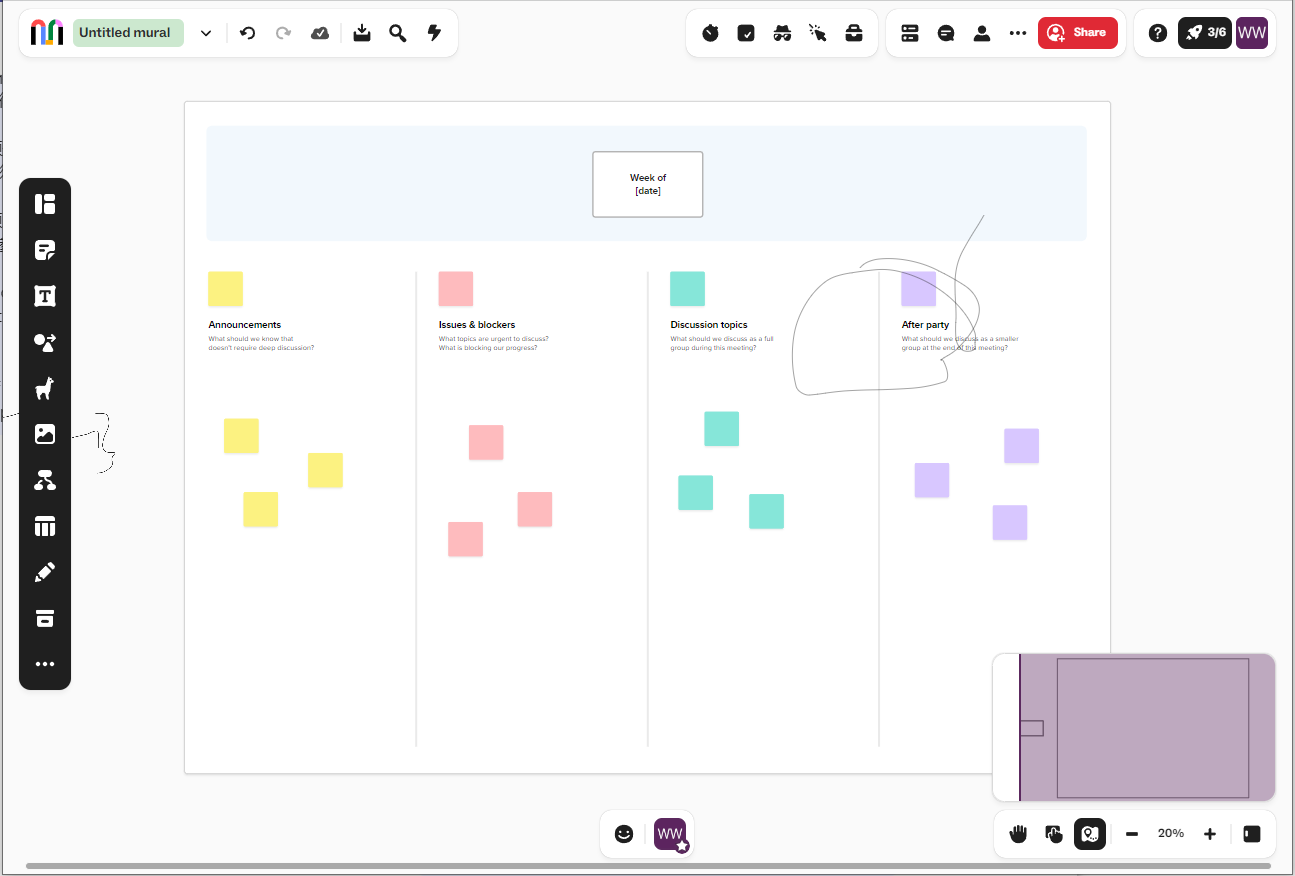
Free access: Free includes unlimited murals with 3 editable at a time, unlimited members, core visual tools, templates, and facilitation features.
Guest access: Free includes unlimited view-only visitors. Visitor editing starts on Team+; ongoing guest access is listed for Business and Enterprise.
Main trade-off: A free workspace can demonstrate the facilitation model, but external editing and more than three editable murals require a paid tier. Mural pricing.
18. FigJam: Best for Figma-Centered Design Teams
FigJam keeps ideation, critique, diagrams, and workshop activities close to Figma design files. It is the clearest choice when designers, product managers, and engineers already collaborate in Figma and want low-friction visual discussion.
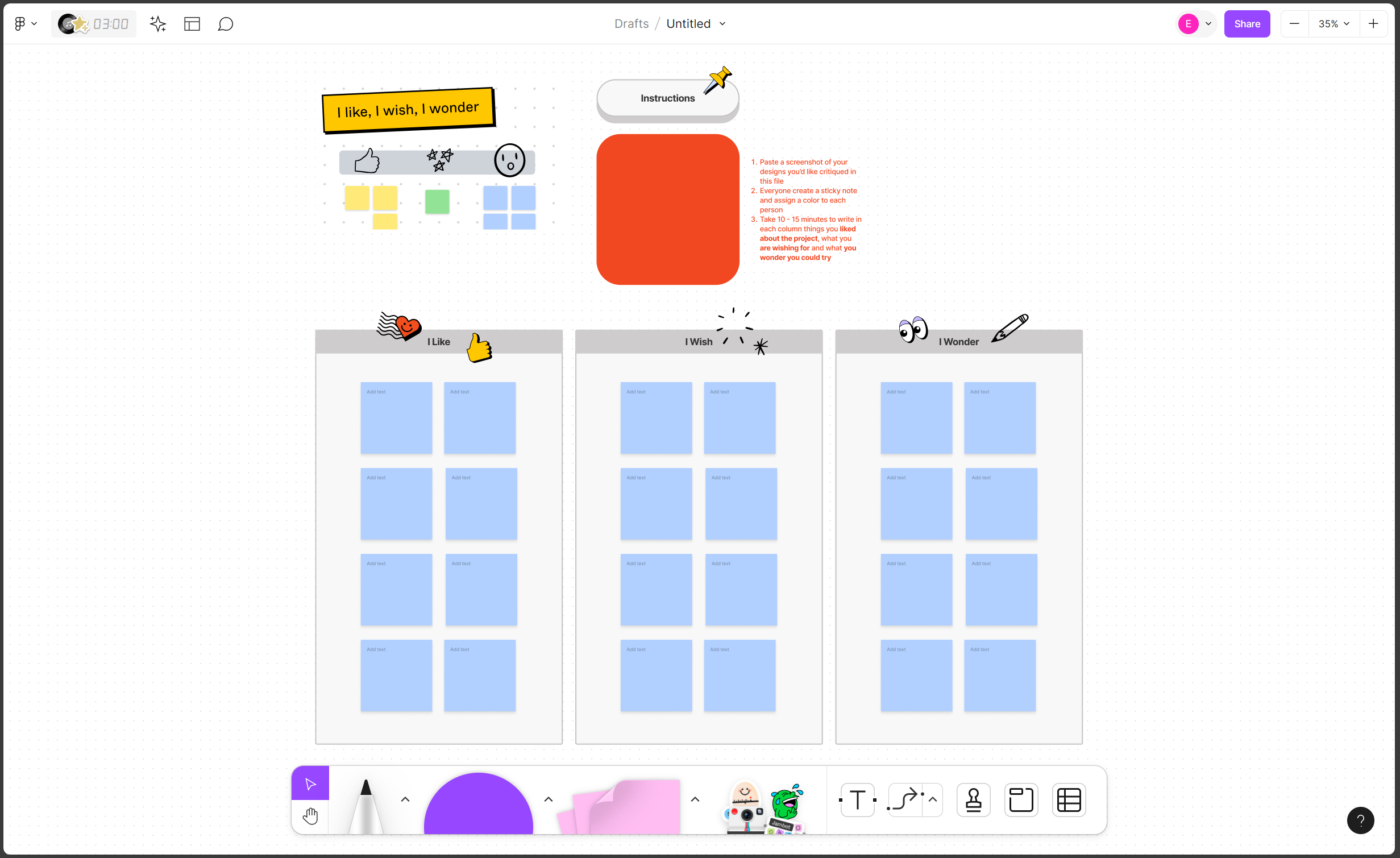
Free access: The Starter plan allows 3 FigJam files in the team's folder and unlimited drafts. Drafts are outside the folder; they do not remove the organized team-file limit.
Guest access: Collaborators generally use a Figma identity. View seats are free for viewing and commenting; editing access and seat behavior should be checked against the current plan and role.
Main trade-off: The free team file limit is small, and organizations outside the Figma ecosystem may not gain enough from the product connection to justify another workspace. Figma Starter plan overview.
19. Whimsical: Best for Fast Diagrams and Wireframes
Whimsical combines flowcharts, wireframes, mind maps, sticky notes, and documents in a focused visual workspace. It is especially effective when a product team wants clean structured diagrams without a dense workshop interface.
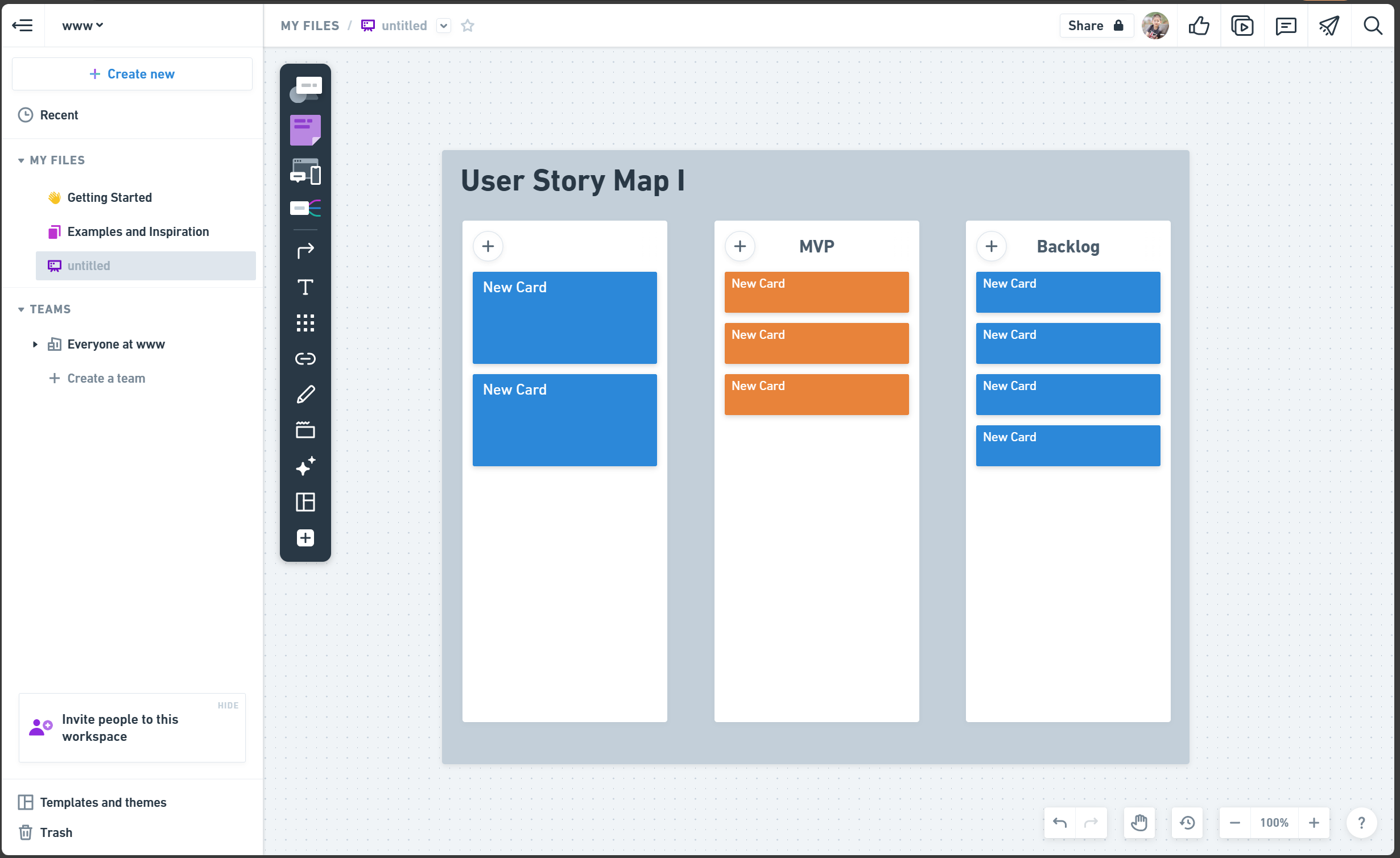
Free access: Free includes unlimited boards, docs, teams, and guests, with a monthly allowance of 50 board objects and 50 document blocks.
Guest access: Invited guests register or sign in with a free account. Whimsical also documents an optional anonymous comment/edit setting for anyone-with-the-link sharing.
Main trade-off: Free exports carry a watermark, version history is limited to 7 days, and the monthly object allowance is too small for frequent team use. Whimsical pricing guide.
20. Zoom Whiteboard: Best for Meeting-Centered Whiteboarding
Zoom Whiteboard connects a persistent canvas with Zoom meetings and team communication. Templates, annotations, diagrams, frames, presentation controls, voting, imports, and exports make it useful when the whiteboard begins or continues inside a Zoom workflow.
Free access: Zoom Workplace Basic includes 3 concurrently editable whiteboards, core creation and facilitation tools, and high-resolution image and PDF export.
Guest access: Basic supports public collaboration with invited users, including no-sign-in access when the sharing settings permit it.
Main trade-off: Unlimited editable boards, version history, co-owners, AI features, layers, private mode, and advanced integrations require higher tiers or add-ons. Zoom Whiteboard plans and features.
How to Choose the Best Online Whiteboard
These three examples show why the same tool can be a good choice for one team and an expensive detour for another.
A monthly workshop with twelve external contributors
The host needs simultaneous editing, a timer, voting, and a board people can revisit next month. Contributors should not need new accounts. This removes Miro Free and Mural Free from the shortlist: their free visitor roles do not allow editing. Boardmix Free's five-editor cap also fails the group size. Web Whiteboard is too temporary unless the host saves it to a Miro workspace.
Compare Zoom Whiteboard Basic, Miro Starter, and Mural Team+. Zoom documents public collaboration, timer, voting, and three concurrently editable boards on Basic; it is a useful first check when the group already meets in Zoom. Miro Starter fits a team that also wants private boards and its connected work formats. Mural Team+ fits a facilitator who wants editable visitors plus Mural's guided workshop tools. If the output is a mixture of diagrams, notes, and project material, include Boardmix Starter in the trial: it removes the free editor-cap constraint and includes editing visitors.
Run one round of idea generation and one vote with two representative external participants. The deciding evidence is whether they can enter with the intended role, contribute, and return to the result—not the number of templates in a library.
A four-person product team turning discussion into delivery
The team needs to map an onboarding flow, discuss two alternatives, and assign the agreed work. If development already runs in ClickUp, start there and convert the chosen notes into native tasks. If the team designs in Figma, FigJam keeps the discussion near the design files. If it needs diagrams, mind maps, and project references on one canvas, Boardmix is a relevant candidate. Whimsical suits a team whose main artifact is a clean flow or wireframe, but 50 new objects per month leaves little room for repeated free iterations.
Use the same example in the finalists: “Sign up → verify email → first project,” with a branch for a failed verification. Ask a teammate to change the branch and record the owner of the fix. Keep the diagram as the discussion record; put the assigned work in the actual task system unless the whiteboard provides the native task connection you need.
A teacher choosing between response boards and a reusable lesson
For a class of 30, Whiteboard.fi Free does not meet the student limit: a registered free teacher can host 20, while Lite supports 30. The separate student boards are useful when the teacher needs to see individual answers, not a single canvas everyone can overwrite.
For a short recorded explanation, Explain Everything's free three-minute video can fit. For a 45-minute collaborative lesson, its one-to-one, 15-minute free session does not. Ziteboard or Limnu is more relevant for live handwriting, but the teacher still has to resolve Ziteboard's public-board/anonymous-access conditions or Limnu's 14-day board retention. Choose around the teaching format first, then the budget.
Check the cost of the actual workflow
Count paid creators or editors, occasional guests, any required add-on, and the billing commitment. For example, Ziteboard's registration-free collaboration is an add-on to an active Pro account; buying Pro alone does not resolve that requirement. Miro distinguishes public visitors from signed-in Business guests. Boardmix's ordinary Starter removes canvas limits, while AI Starter adds a monthly AI-credit allowance. These are different purchase decisions.
For a final check, prepare one representative board, invite a participant using the intended account, change their role, reopen the board, and export the actual deliverable. Inspect a large diagram at its final size and retain an editable version when future revisions matter. For enterprise use, verify ownership, SSO, audit, retention, data location, accessibility, and contract terms with the vendor before rollout.
Retired products: AWW App is no longer a current recommendation; Miro states that support ended on July 31, 2021. Google Jamboard also reached end of life and should be treated as a migration case rather than an option for a new workflow.
Online Whiteboard FAQs
Which online whiteboard is best for remote teams?
Boardmix is the broad all-in-one option in this comparison. Miro and Mural are stronger starting points for teams centered on facilitated workshops, FigJam fits Figma-based product teams, and Zoom Whiteboard fits teams that run the session inside Zoom. Test guest editing, export, and board limits before choosing.
What is the best free online whiteboard?
Excalidraw is the simplest no-account option for quick sketches. Web Whiteboard is useful for a temporary collaborative session, while Boardmix, Miro, Mural, FigJam, Zoom, and others provide capped free workspaces. The best free choice depends on whether you need persistence, privacy, guest editing, or exports.
Which online whiteboards let guests edit without an account?
Web Whiteboard, Excalidraw, tldraw, Canva Whiteboards, and Zoom Whiteboard document account-free collaboration workflows. Whimsical offers an optional anonymous edit setting. Miro Starter and Mural Team+ add visitor editing; Lucidspark's account-free Guest Collaborator role requires Team or Enterprise. Guest behavior can vary by owner settings and plan, so test the exact link in a private browser before a live session.
Is Miro better than Microsoft Whiteboard?
Miro has a deeper standalone workshop and integration ecosystem. Microsoft Whiteboard is the more natural fit for organizations standardized on Teams and Microsoft 365. The decision usually turns on facilitation depth and external guest workflows versus Microsoft account, tenant, and meeting integration.
Does Google still have a replacement for Jamboard?
Google ended the Jamboard application and directed users toward partner whiteboarding tools rather than launching a like-for-like Google replacement. Treat old Jamboard files as a migration project and verify import support with the new provider.
Google's current Jamboard migration guidance explains the transition.
Can I export an online whiteboard to PDF or an image?
Many products support PDF or image export, but resolution, watermark, board-size, and paid-plan limits differ. Export a representative board before committing, and check whether comments, links, frames, and editable structure survive the chosen format.
What does a paid online whiteboard plan usually unlock?
Paid tiers usually remove limits on boards, objects, history, exports, guests, privacy, or administration, but the bundle differs by provider. Compare the first paid tier against the exact blocker in your workflow rather than choosing by the headline monthly price alone; check whether billing is per user, team, board, or add-on.
What should an enterprise check before choosing online whiteboard software?
Confirm identity and access controls, SSO or SCIM availability, audit and retention policies, data residency, export and deletion workflows, accessibility, support or SLA terms, and how guests are billed. Ask the vendor for current security and data-processing documentation before putting client or regulated material on a board.
Do I need a tablet or stylus?
No. Every tool in this comparison has a browser or desktop workflow, although pen-focused tutoring and freehand drawing are more comfortable on a tablet or interactive display. Check device support and palm rejection if handwriting is central to the session.