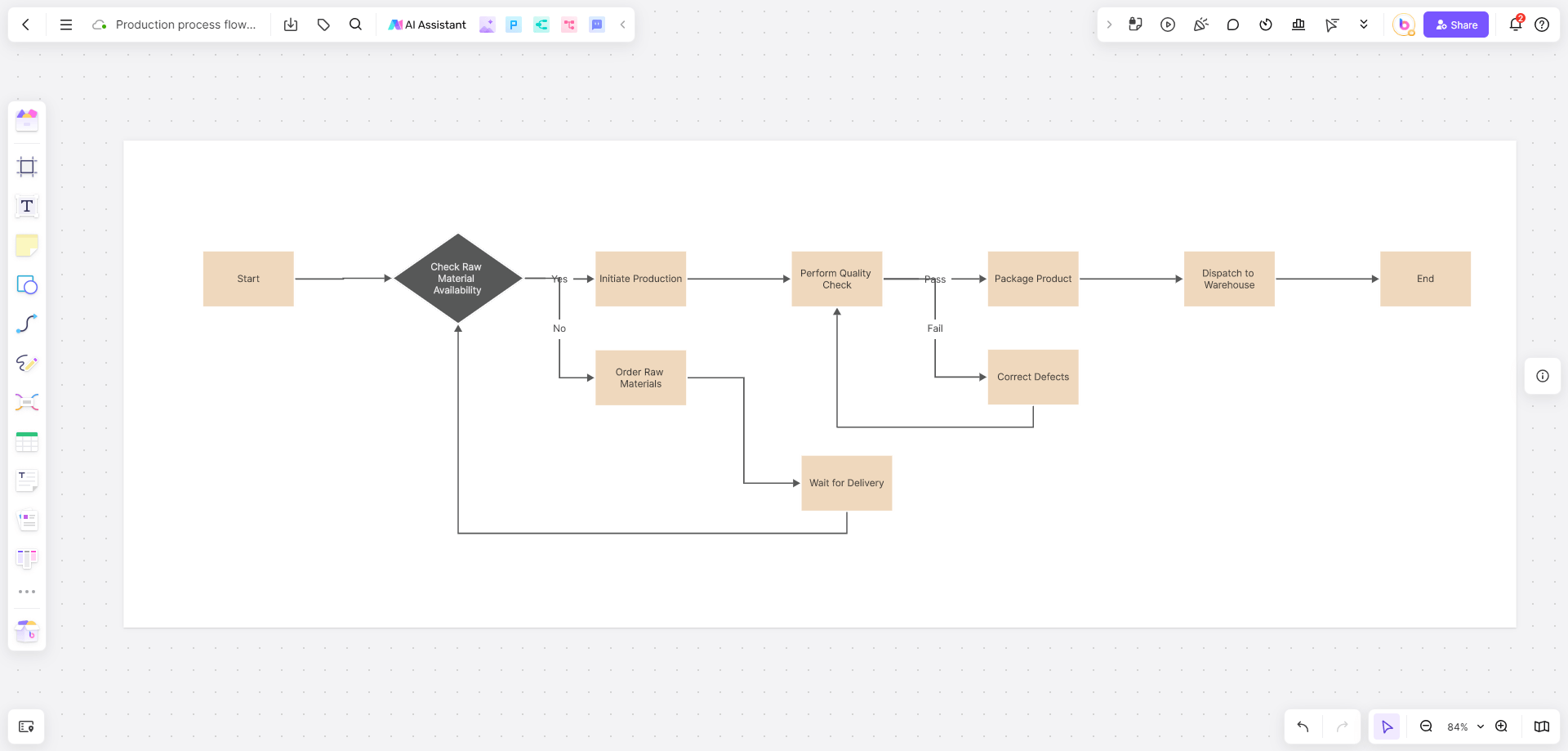




The landscape of academic and professional writing has undergone a seismic shift as we move into 2026. We have officially moved past the era of "AI-generated" content—where a single prompt spat out a mediocre draft—into the era of "AI-collaboration." Today, the most successful writers aren't those who let the machine do the work, but those who use AI as a cognitive architect. The efficiency gap is no longer about typing speed; it is about how well you can bridge the gap between raw data and human nuance. If you are looking for the best way to maintain academic integrity while leveraging technology, understanding how to write an ai essay is about mastering the synergy between your unique logic and the machine's processing power. This guide explores the top 7 AI essay writing tools defining this year, with a particular focus on how make your AI essay sound human.
Essential Guide: How to Write an AI Essay with Maximum Impact
The biggest mistake a writer can make in 2026 is starting with a blank Word document. Linear writing is inherently limiting. Instead, the process should begin with argument mapping. This is where you visualize the relationship between your thesis and your supporting evidence. When you master how to write an ai essay, you start by breaking the topic into its logical components. Phase two involves research and verification—essential for moving beyond the "hallucinations" that plagued early AI models. Finally, the drafting process should treat the AI as a co-pilot, not a ghostwriter. You provide the direction; the AI provides the momentum.
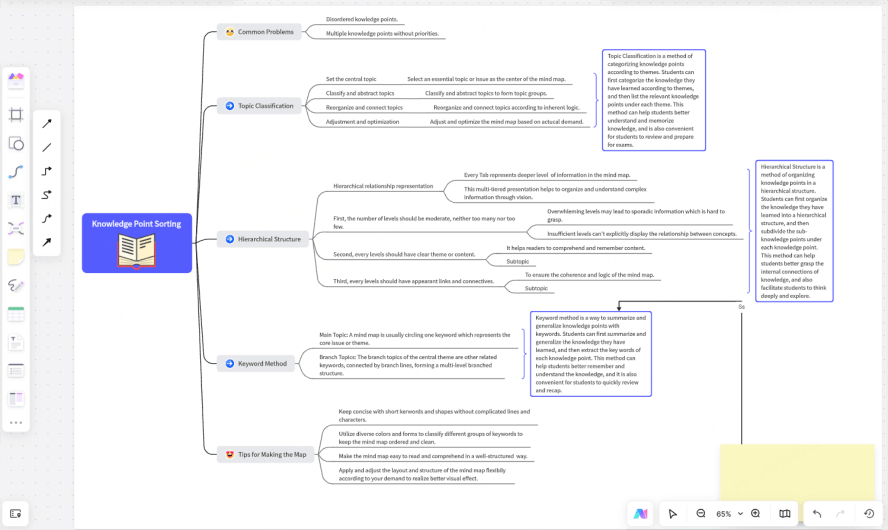
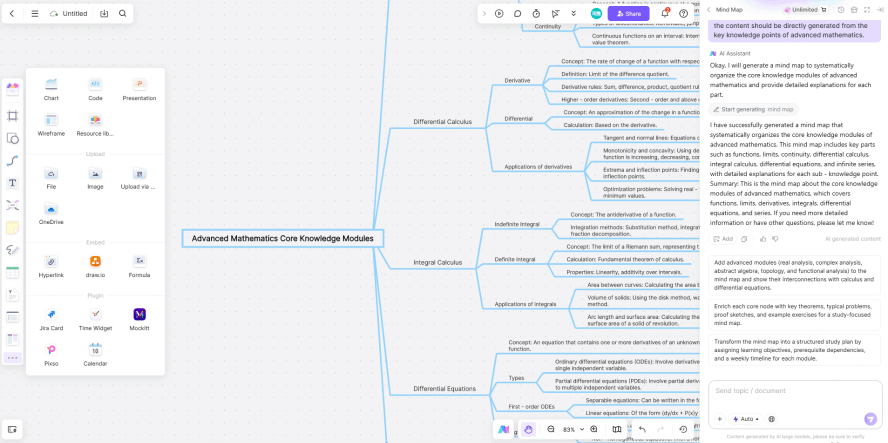
To implement this effectively, many top-tier writers have moved their workflow into Boardmix. The operational path is simple but transformative: Open Boardmix, go to the left-hand toolbar, and click on the "AI Assistant." Select "AI Mind Map" and enter your core thesis. Within seconds, the tool explodes a single topic into a multi-branch logical structure. This visual approach allows you to see the "flow" of your essay before you write a single sentence, ensuring that your arguments are not repetitive and that your logic is airtight.

Top 7 AI Essay Writing Tools for 2026
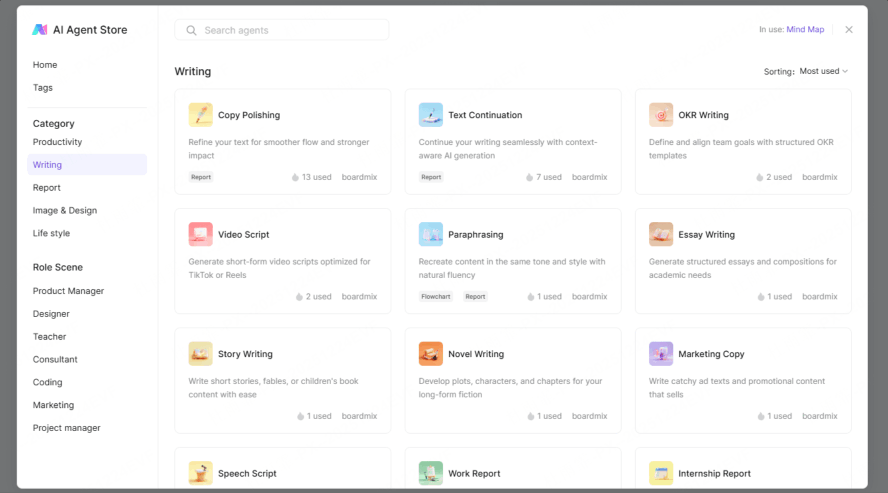
- Boardmix AI: More than just a writing tool, Boardmix serves as a collaborative whiteboard and "thinking engine." It is the only tool on this list that allows you to map, research, and draft on an infinite canvas, making it the central hub for modern writing workflows.
- Elicit/Perplexity: These remain the gold standard for real-time academic sourcing. In 2026, they have perfected the art of citation mapping, allowing you to find the exact paper that supports a specific counter-argument.
- Claude 4/5 (Anthropic): Claude has gained a massive following for its superior reasoning capabilities. When it comes to long-form prose that requires a nuanced, academic tone, its ability to follow complex instructions is unmatched.
- Quillbot: Still a staple in the writer's toolkit, Quillbot has evolved its "ai text humanizer free" features. It is excellent for sentence-level refinement, helping to break up the monotonous rhythm that AI sometimes produces.
- Grammarly Business (2026 Edition): Grammarly has shifted its focus toward "Personal Voice" consistency. It can now learn your specific writing style over time, ensuring that even the suggestions it makes feel like something you would actually say.
- Jasper: For those struggling with transitions or the dreaded "writer's block," Jasper’s specific essay templates provide the creative spark needed to jump between complex sections of a paper.
- Originality.ai: As detection systems become more sophisticated, this tool remains essential for a final "Human-Score" check, ensuring your work meets the high standards of 2026 compliance.
Deep Dive: Why Boardmix AI is the Hub of Your Writing Workflow
While many tools handle specific parts of the writing process, Boardmix AI is unique because it integrates the entire lifecycle of an essay. The "Infinite Canvas" is a game-changer; it allows you to have your research notes, your mind map, and your drafting document all visible at once. This spatial organization prevents the "cognitive load" of switching between browser tabs and word processors.
Step-by-Step Operations in Boardmix:
- Step 1: Idea Generation: Click the AI Assistant on the left toolbar -> Select "Generate Mind Map" -> Input your prompt (e.g., "The ethical implications of CRISPR in 2026").
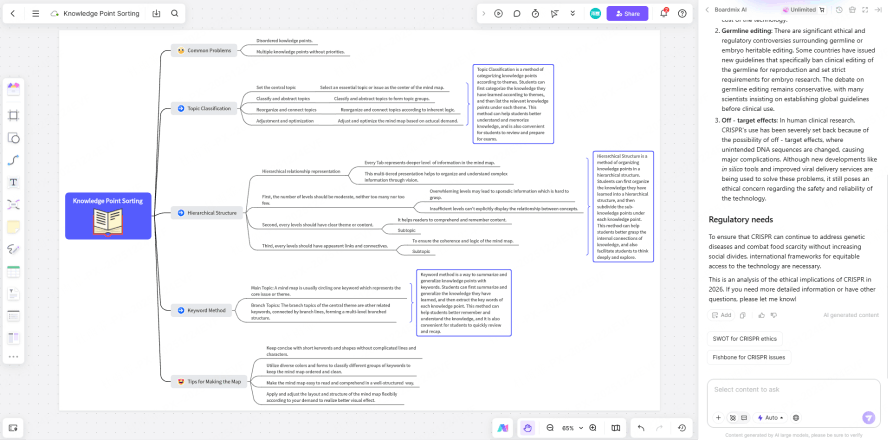
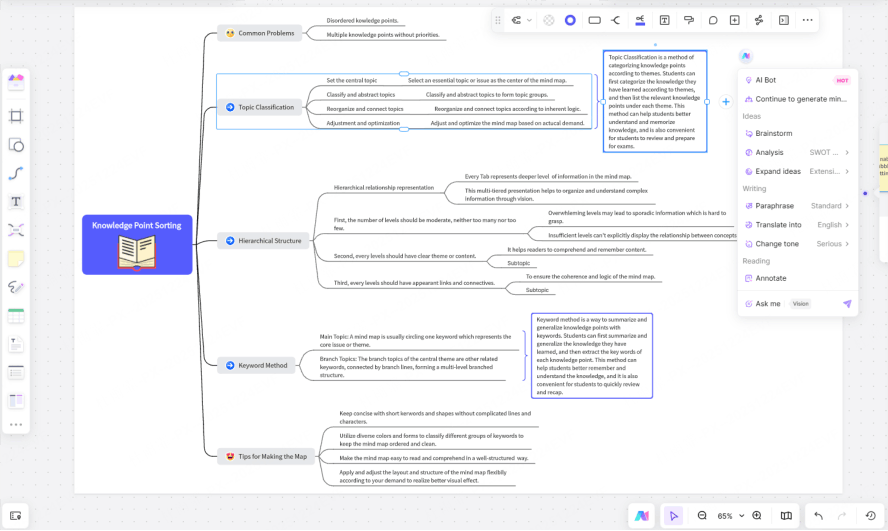
- Step 2: Structural Expansion: If a specific branch of your mind map feels thin, right-click the node and select "AI Continue Writing." The AI will generate sub-points or counter-arguments to flesh out that specific section.
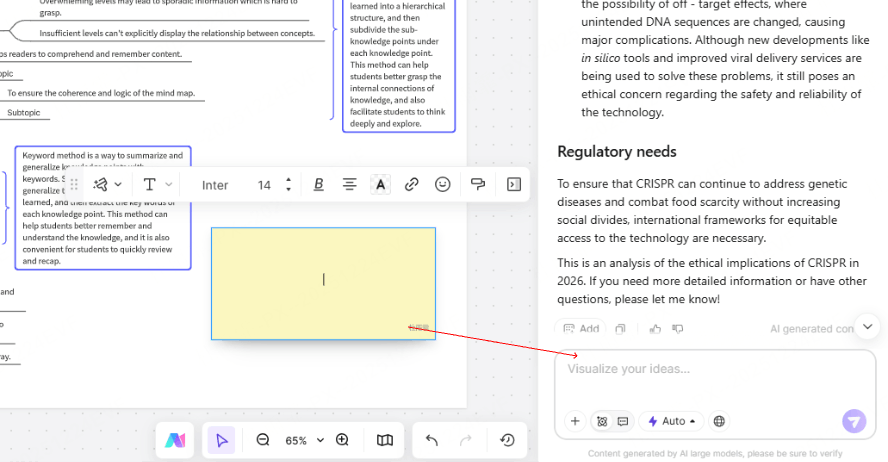
- Step 3: Content Synthesis: You likely have sticky notes and images scattered on your board from your research. You can drag these into the "AI Content Generation" tool to synthesize these raw notes into a cohesive draft paragraph.
- Step 4: Visual Logic Check: Use the "Connector Lines" to physically link evidence to claims. If a claim doesn't have a line connecting it to a source, you know you need more research.By following this path, you learn how to write an ai essay that isn't just a collection of words, but a structured masterpiece of logic.
Advanced Techniques: How to Make AI Writing Sound More Human
One of the most common complaints about AI-generated content is "predictability." AI tends to use standard sentence lengths and overly formal transitions. To truly master how to make ai writing sound more human, you must introduce "perplexity" and "burstiness"—the hallmarks of human prose.
- In Boardmix, you can disrupt the standard essay template by using the "Visual Logic" feature to create non-linear arguments. Instead of a standard five-paragraph essay, use Boardmix to plan a narrative arc that includes personal anecdotes. By feeding these personal stories into the AI, you anchor the text in a reality that a machine cannot fake. Furthermore, while many look for an ai text humanizer free tool to "fix" their text at the end, the real secret is in the "Voice Cloning" features.
- In Boardmix AI, you can set a specific tone—such as "Socratic," "Provocative," or "Professional yet Empathetic"—to ensure the output matches your unique fingerprint.
- If you are struggling with a specific paragraph, using an ai text humanizer free approach within Boardmix allows you to prompt the AI to "rewrite this with more rhythmic variation," which is the quickest way to pass as human. Learning how to make ai writing sound more human is ultimately about adding the "imperfections" and specificities that only a human mind can provide.
Solving the Ultimate Academic & Professional Pain Points
In 2026, the stakes for writing are higher than ever. Users have five core demands that most generic AI tools fail to meet, but Boardmix has built its entire infrastructure to solve these specific pain points.
- Extreme Compliance & Safety (Human Uniqueness): Standard AI detectors can easily flag "one-click" generated essays. The problem is the lack of a unique structural signature. Boardmix solves this by facilitating a "Co-creation" process. Because the output is built node-by-node from your unique mind map and specific constraints, the resulting text possesses a "Human DNA" that evades even the most advanced AI detection systems. It’s not just about an ai text humanizer free tool; it’s about the architectural uniqueness of the content.
- Rigorous Evidence Support (Anti-Hallucination): The fear of "fake citations" is real. Boardmix addresses this by allowing you to pin real PDFs, web links, and images directly onto your workspace. When you use the AI to draft, it doesn't just pull from its general training data; it references the specific files you have uploaded. This ensures that every citation is real, clickable, and academically authentic, providing a level of evidence support that standalone LLMs cannot match.
- Deep Logical Synergy (From "Ghostwriting" to "Co-creation"): Most AI tools are passive; they just do what they are told. Boardmix AI features a "Logic Breakdown" function. It acts as a critical friend, critiquing your arguments and suggesting rebuttals. This shift from "writing for you" to "thinking with you" is the core of how to write an ai essay that actually says something meaningful. It forces you to engage with the material on a deeper level.
- High-Degree Style Customization: One of the hardest parts of using AI is maintaining your "voice." In Boardmix, you can upload previous essays you’ve written. The AI analyzes your sentence structure, vocabulary, and even your common rhetorical devices. It then applies this "Voice Clone" to your new draft. This is the most effective way to learn how to make ai writing sound more human—by literally using your own writing as the template.
- Full-Process Efficiency Loop: The biggest "time-killer" in writing is the constant switching between apps. You find a source in a browser, take notes in an app, outline in another, and draft in a fourth. Boardmix acts as the "Operating System" for your essay. From the first spark of an idea on a sticky note to the final formatting and logic check, the entire workflow stays in one visual loop. This reduces cognitive friction and allows you to finish a high-quality essay in a fraction of the time it would take using traditional methods.
Conclusion
As we navigate the complexities of 2026, it is clear that AI is no longer a shortcut for the lazy; it is a superpower for the diligent. The key to success lies in choosing a platform that prioritizes logic, safety, and deep human-centric customization. By understanding how to write an ai essay that leverages the visual and analytical power of tools like Boardmix, you are not just keeping up with the times—you are staying ahead of them. The future belongs to those who can harmonize the speed of AI with the irreplaceable depth of human creativity. Start your next project on Boardmix today and experience the difference that a true "thinking hub" can make for your writing efficiency.