

A stakeholder alignment workshop is useful when a project has a real decision to make, but the people affected by it are working from different assumptions. The goal is not to make everyone prefer the same option. It is to agree on the problem, the constraints, who decides, and what happens next. Put those elements in view before the group leaves.
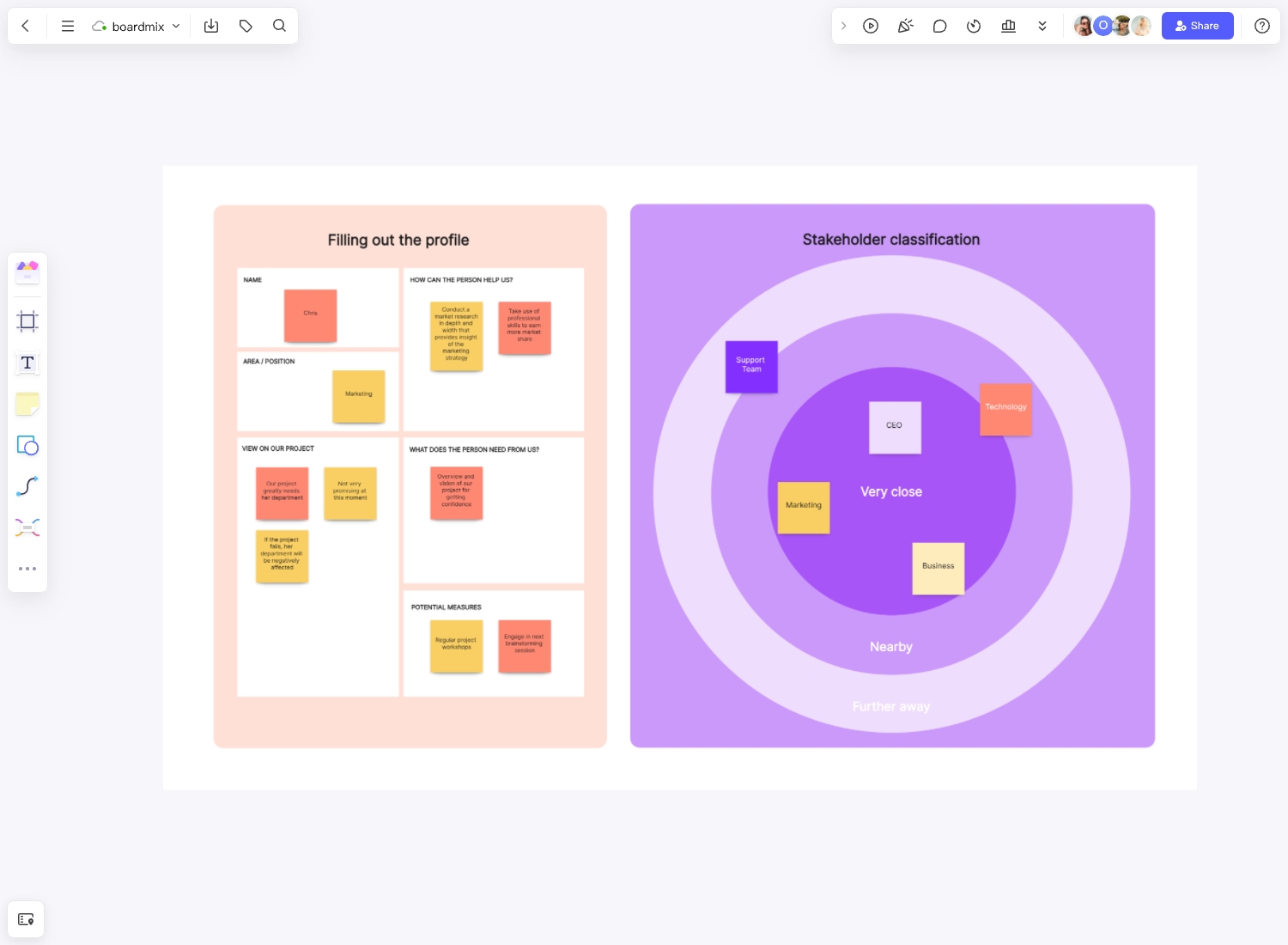
A shared stakeholder analysis canvas in Boardmix gives the group a place to map interests and record the decision. Start with the question that the project needs answered, then let each participant add evidence and concerns before the facilitator summarizes.
Define the decision the workshop must support
Write one decision question at the top of the board. For example: “Which onboarding change should the product team test first?” Avoid a broad purpose such as “align on onboarding.” A decision question gives people a boundary and makes it easier to notice when a comment belongs in a later conversation.
Under the question, list the decision date, the decision owner and what is out of scope. The owner is accountable for choosing; other participants can supply evidence or raise a risk. If the owner needs more information, record the missing evidence rather than pretending that the workshop can decide without it.
| Field | Example |
|---|---|
| Decision question | Which change should we test for new employees first? |
| Decision owner | Onboarding product manager |
| In scope | Information page, named buddy, and the evidence needed to compare them |
| Out of scope | Long-term staffing policy and a full redesign of the account setup |
Invite voices by responsibility, not hierarchy
List the people who own the decision, supply evidence, operate the process or will be affected by the change. You may need a product manager, an onboarding specialist, a support representative and a new starter who can describe the current experience. The list is not a status ladder; it is a way to make relevant knowledge available.
Send the decision question and the boundaries with the invitation. Ask participants to bring one observation, one constraint and one question. This makes the first activity concrete and reduces the chance that the loudest person defines the problem before others have added their evidence.
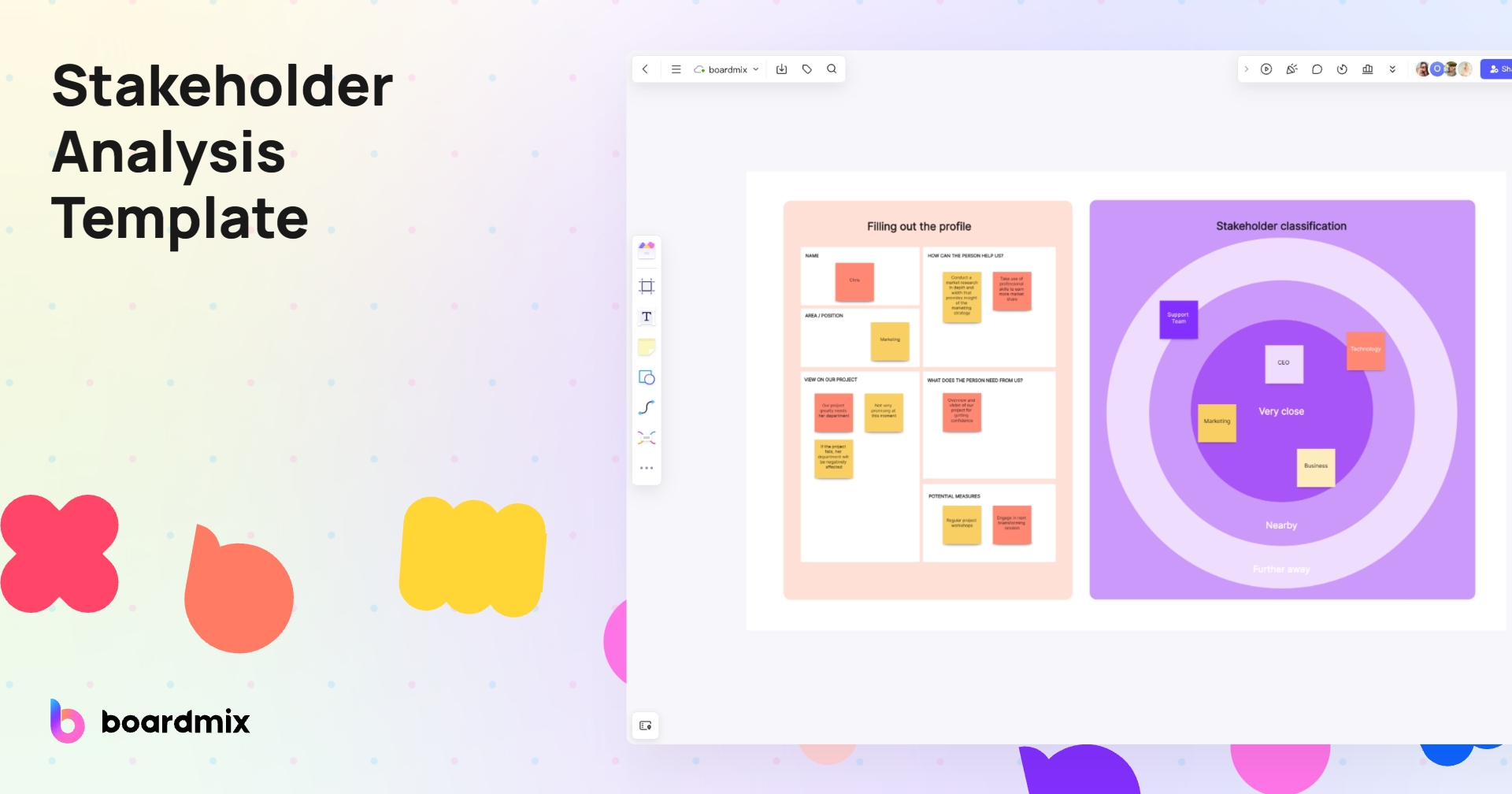
Use the board’s sections or frames to separate contributions from the facilitator’s summary. Participants can add notes in parallel, while the facilitator groups duplicates and asks for clarification. Keep private personnel matters out of a shared canvas; a visible sticky note is not a promise of confidentiality.
Map goals, constraints and evidence
Give each participant a short turn to add the outcome they need and the constraint they cannot ignore. A support lead may need fewer repeated questions; an engineer may need a solution that fits the current release; a new starter may need one reliable place to find help. Keep the original words visible while you group similar themes.
Next, label each statement as an observation, assumption, requirement or preference. That small distinction prevents a preference from being treated as a fact. Ask “What would we expect to see if this is true?” and add the source or owner beside the statement. If no evidence exists yet, mark it as an open assumption.
Make trade-offs visible before voting
Translate the grouped needs into comparison criteria. For the onboarding example, criteria might include how quickly a new starter can find help, who must maintain the content, and what the team can test without changing account systems. Do not invent a numeric score when the group has not agreed on a scale. A simple “supports,” “unclear” and “conflicts” label can expose the trade-off without false precision.
Place each option beside the criteria and invite participants to add a reason, not only a mark. If two criteria conflict, name the conflict: a richer guide may help new starters but require more maintenance. The decision owner can then say which constraint has priority and why.
Pause for a disagreement check before the decision. Ask each participant which statement they would correct and what evidence would change their view. This is often more useful than asking whether everyone agrees, because silence does not prove that assumptions are shared.
Record decision rights and actions
At the decision point, write the owner, the chosen option, the reason, and the conditions that would reopen the decision. If the group cannot decide, record the exact question that remains, the person who will answer it, and the next review point. “Need more research” is not an action until an owner and a deliverable are named.
| Element | Example entry |
|---|---|
| Choice | Test a single first-week information page before adding a buddy program. |
| Reason | It addresses the documented navigation problem with the smallest process change. |
| Owner | Onboarding product manager |
| Next actions | Draft page; recruit a small set of new starters; review feedback at the next check-in. |
| Reopen when | New evidence shows the page does not help people find a contact. |
Close the loop with a usable record
Finish by reading the decision and actions aloud. Ask the owner to confirm the wording and ask participants where they expect to see progress. Remove duplicate notes only after the group agrees that their meaning is preserved; archive them in a separate area if they explain how the decision was reached.
Share the board with the people who need the record and explain which area is authoritative. The Boardmix sharing guide describes the difference between sharing a file and inviting someone to a team or project. Do not describe a sticky-note role as a product permission.
When the follow-up starts, link the new evidence to the decision instead of opening an unrelated document. A clear question, visible constraints and an owned next action turn alignment from a one-time meeting into a practical project handoff. Open a Boardmix workspace to prepare the canvas for your next decision.