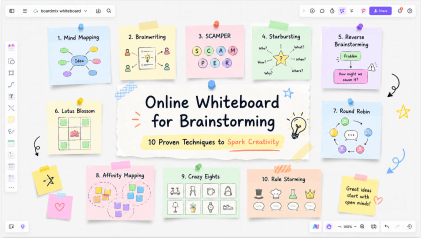
A marketing class group project needs a clear path from research to a campaign proposal. Use Boardmix’s collaborative online whiteboard to keep market evidence, audience ideas, SWOT analysis and the final plan together while classmates work on different parts.
The classroom exercise below is to propose a campaign for an online collaboration service aimed at student project groups. Start with one audience problem, connect the research to a SWOT analysis and explain why the chosen message and channel fit. The sample proposal is fictional; use your assignment brief and actual research to replace its practice inputs.
By the end, your board should let the instructor follow one argument: this audience has this problem; our proposed message addresses it; this channel can reach them; here is what we would test. Give each part an owner so research, writing and review can happen in parallel.
What the Group Should Keep on the Marketing Board
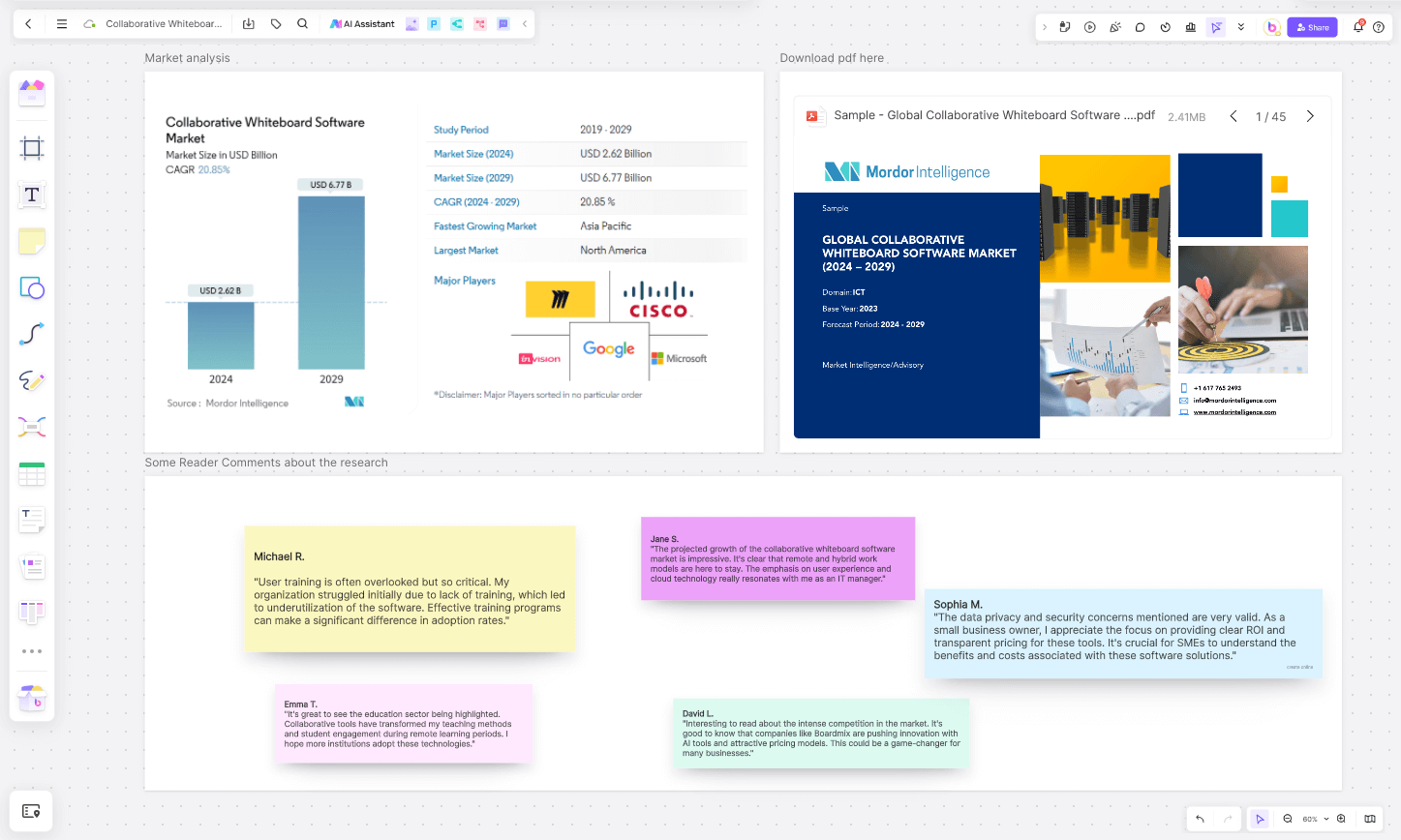
The research-board example keeps a market report, its source and discussion notes together. Replace the example material with sources relevant to your assignment, and check their dates before using any figures.

Use one board as the working area for the assignment: research findings, campaign ideas, open questions and agreed decisions should stay close to the material they describe. These tools serve distinct parts of the marketing project:
Shared contribution: Let classmates add research notes and respond to one another's ideas. Set aside a short discussion to resolve disagreements about the target audience or campaign message.
A format for each input: Use text for source summaries, sticky notes for candidate ideas, shapes for a simple customer journey and a table for comparing channels. Avoid turning the board into a collection of unexplained links.
Access before the session: Ask each classmate to open the board on the device they will use. Check that the chosen role permits the contribution they need to make, and keep text readable when the board is viewed on a smaller screen.
References and visual content: Keep links to research sources beside your notes, and add supporting diagrams as images or editable shapes on the canvas.
Appropriate sharing: Limit editing to the project group and grant the instructor the access needed for review. Use public or permitted research material and follow the assignment's rules for personal or confidential information.
Build the Marketing Class Project Step by Step
Create a “Marketing Strategy Session” board for one agreed product and audience. For this example, assume the proposed service gives a project group shared notes, a task list and a link to its working area. Those features are the product brief for the exercise. The marketing question is narrower: How could we persuade a student group to try it when they begin a course assignment?
Keep three main areas—Market Analysis, SWOT Analysis and Marketing Plan—and a small Open Questions area. The finished board should make the connection between them visible, not simply contain three completed templates.
Open Boardmix:
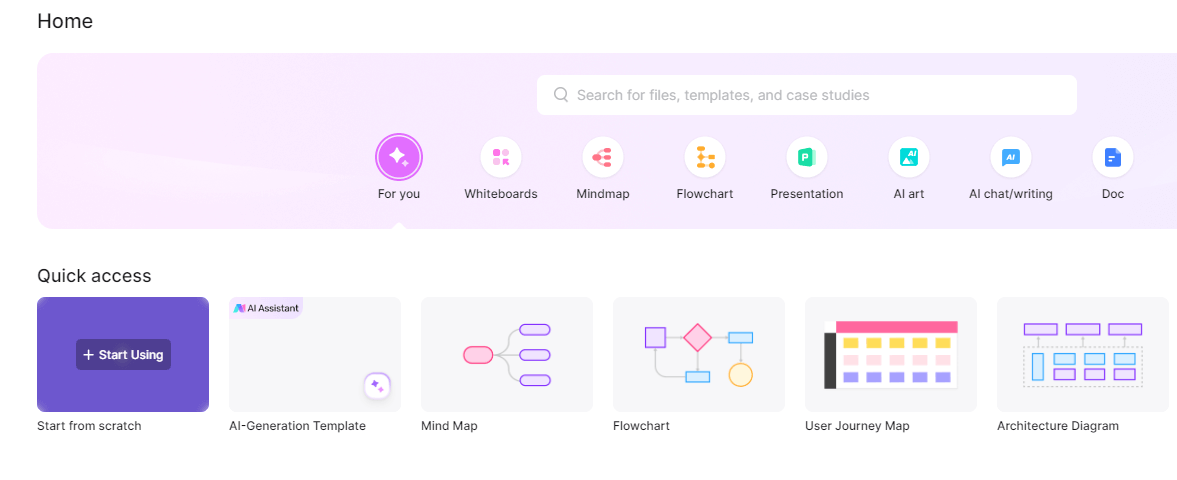
Launch the Boardmix application or navigate to the Boardmix website.
Sign in to the workspace and choose the option to create a board for the group project.
Name Your Whiteboard:
Give your whiteboard a specific title related to your marketing class project, such as "Marketing Strategy Session".
Selecting Template:

Open the template library from the workspace or board controls.
Choose a relevant planning or SWOT layout, or create the sections yourself. The SWOT analysis template guide explains the four fields if the group needs a starting structure.
Insert the template onto your canvas and customize it to suit your project.
Adding Team Members:
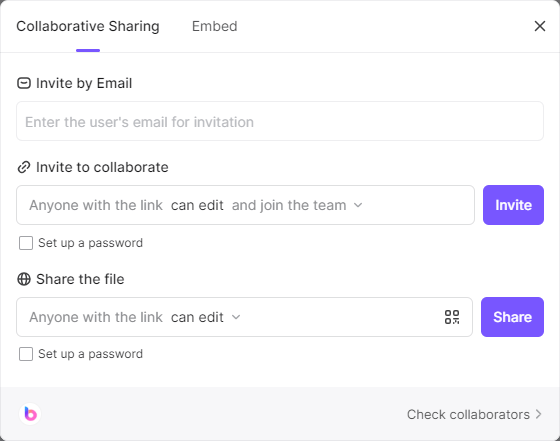
Click on the share link in the upper right corner.
Choose the access your classmates need and send the board link. Boardmix's sharing guide distinguishes a file share for guests from an invitation to join a team or project. Check that the option you use has the intended scope.
Ask one classmate to add a test note before the group starts. If they can view but cannot contribute, check the role and account they used. Give the instructor access to the final material without assuming the same role is appropriate for both collaborators and reviewers.
Setting Up the Workspace:
Use the Text Tool to label Market Analysis, SWOT Analysis and Marketing Plan. Under Market Analysis, put the assignment's audience definition and the material that helps explain its needs: interview notes, a relevant published study or observations permitted by the course.
For each finding, add a short evidence note with the claim, source, date and scope. For example, a practice interview note might read: “We spent the evening asking which version to submit.” Label that quotation fictional practice input until it is replaced with an actual, properly recorded source. Beneath it, write the interpretation separately: “Version handoffs may be a problem worth addressing.” One person's comment can suggest a question; it cannot establish what all students need.
This distinction changes the next step. If your sources mostly discuss difficulty finding a meeting time, investigate that need before choosing a message about shared notes. If you have no usable audience evidence yet, keep “Students want another collaboration tool” in Open Questions and assign someone to research it.
Organizing Information:

Group related findings in Market Analysis and keep each source beside its claim. Then fill the SWOT fields using the agreed product brief and the environment it would enter. For the fictional service, a first draft might look like this:
| SWOT field | Practice entry | What it changes in the proposal |
|---|---|---|
| Strength — internal | Notes and the task list sit in one shared working area. | Show one group handoff in the campaign example. |
| Weakness — internal | The group has to set up and learn another tool. | Explain the first action clearly; investigate setup friction. |
| Opportunity — external | The start of a course project is a moment when groups choose how to work. | Propose reaching groups near the assignment briefing. |
| Threat — external | Groups may already use familiar chat and document tools. | Explain the specific shared-work problem the service solves. |
These entries are assumptions for the exercise. Replace or qualify them as the group gathers evidence. Draw a connector from the relevant finding to a campaign decision and label the reason—for example, “Setup friction → show the first group action.” An arrow should explain a relationship, not imply that one idea proves another.
Creating Visual Aids:
Use shapes and connectors to draw the proposed audience journey: “Sees course announcement → opens the example → creates a group workspace → adds the first shared note.” Mark any step the group has not investigated, such as whether an account is required. This exposes questions that a slogan alone would miss.
Next, compare two plausible channels in a table. Add a budget estimate and source when your assignment requires them; do not invent costs to make the table look complete.
| Proposed channel | Why consider it? | What must be checked? |
|---|---|---|
| Course-group announcement | Can reach groups as they receive a shared assignment. | Instructor permission and whether the message reaches the intended students. |
| Campus society newsletter | Could reach students already organizing activities together. | Audience relevance, available placement and any cost. |
In the practice proposal, choose the course-group announcement only if permission is obtained. Use “Keep your group's notes and next tasks together” as a draft message, supported by a simple handoff example. A student discount is a different hypothesis: it addresses price, so it needs evidence that price is the barrier. Do not add a discount merely because the audience is students.
Define what you would observe after the campaign. “A group creates a workspace and adds its first shared note” is closer to the proposed behavior than “the post receives views.” Explain how your assignment would collect that information and label any forecast as an estimate; the board itself is not evidence of campaign performance.
Interactive Tools for Meetings:

Share the board link in your meeting invitation and agree on a time with the team.
Ask the group to challenge the current choice: “What evidence would make us choose the newsletter instead?” Record the answer beside the comparison. If the only reason is personal preference, return to the audience findings before polishing the proposal.
Use the board's presentation tools or follow the named sections while screen sharing to explain the marketing strategy to the class or instructor.
Adding Research Sources:
Add links to the research reports and competitor pages used by the team, with a short note explaining what each source supports.
Add an exported diagram image or a link to the original chart that supports your marketing strategy.
Finalizing and Exporting:
Make the proposal readable in the same order you will present it: audience problem, evidence, SWOT implications, campaign choice and remaining work. Keep working notes nearby, but make the current recommendation easy to identify.
If the assignment requires a file, use an available image or PDF export and check that the text and source links remain usable in the submitted format. Keep the board link for feedback. Export quality and collaboration allowances depend on the current Boardmix plan.
Run the Group Review and Prepare the Presentation
Tips for Effective Collaboration
Let classmates add research before the meeting, then use the discussion to settle a specific choice. Keep the three main areas close enough to follow on a laptop screen, and use labeled containers or templates if the notes spread out. Shapes, mind maps and connectors help when they explain the reasoning; they should not obscure the source material.
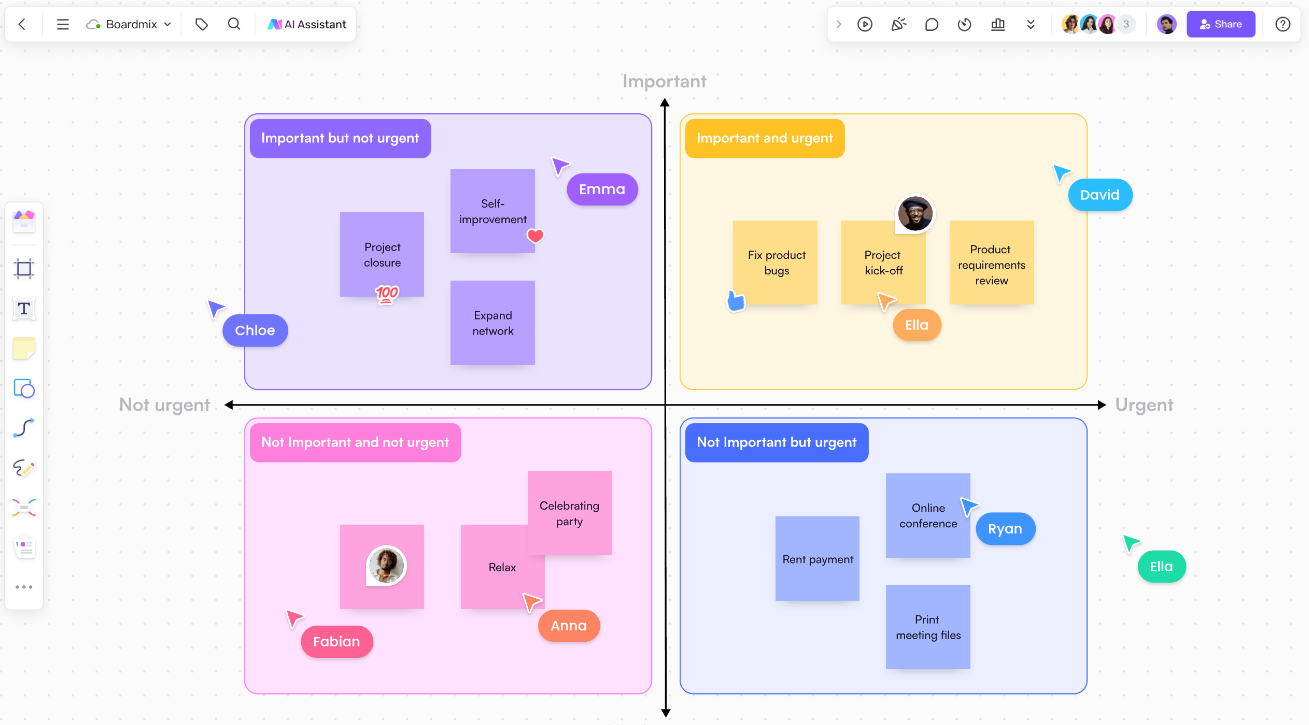
1. Compare Campaign Ideas Against the Audience Evidence
Give each classmate time to add campaign ideas as separate notes, then group similar proposals. For each group, ask which audience finding supports it. A mind map can connect the need, message and channel, but each connection still needs an explanation.
If classmates disagree, write both options and the evidence that would distinguish them. In this example, “lead with a discount” and “lead with fewer lost handoffs” address different barriers. Assign a short research task to find which barrier matters to the intended group; keep the alternative visible until the evidence is strong enough to choose.
2. Assign Research, Drafting and Review Work
Use the Research, Draft, Review and Ready columns to show progress. Give a card one deliverable and one owner: “Maya — verify the audience source — Tuesday” is more useful than “Everyone — do research.” Other cards might ask Leo to compare channel access and Noor to check citations.
Move a card into Review when its source or draft is on the board. Move it to Ready when another classmate can explain how it supports the recommendation and any unresolved issue is clearly marked. A full column of cards is less useful than knowing what still prevents submission.
3. Present the Reasoning and Record Questions
Walk the instructor through audience evidence, SWOT findings, campaign choice and next steps. Use presentation mode if it suits the session, or follow the named sections while screen sharing. A short practice explanation could be: “We propose reaching course-project groups when they first organize their work. The message focuses on keeping notes and tasks together. We would seek permission for a course announcement and check whether groups take the first shared action.” Then explain which audience findings support that proposal and which assumptions still need testing.
Ask a classmate to record questions beside the relevant claim. If the instructor challenges the audience choice, return to the evidence rather than adding more benefits to the message. After the review, update the recommendation and leave a brief note explaining any changed decision.
Tools for Research, Campaign Ideas and Review
Use this reference when you need help with a tool in the assignment. The screenshots illustrate the controls and example layouts; they do not show the completed fictional campaign above. Follow the corresponding controls in your workspace if their position differs. The Boardmix user guide covers creation, sharing and presentation.
Left Side: Toolbar
The toolbar on the left side of the Boardmix whiteboard is where users can access a variety of tools:
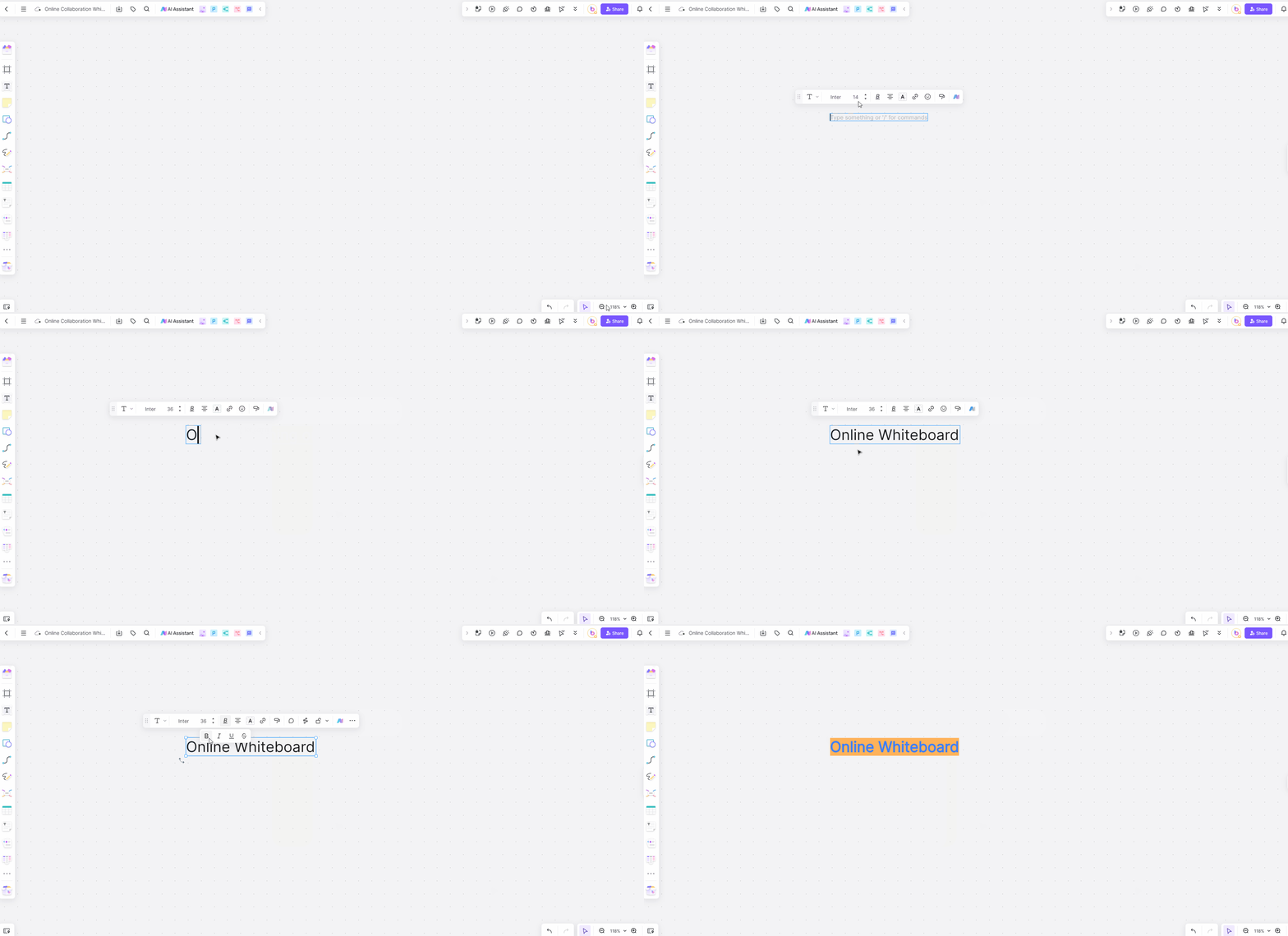
Text: Label the board's Market Analysis, SWOT Analysis and Marketing Plan sections. Under each research finding, add the source title, link and the date or context needed to interpret it.
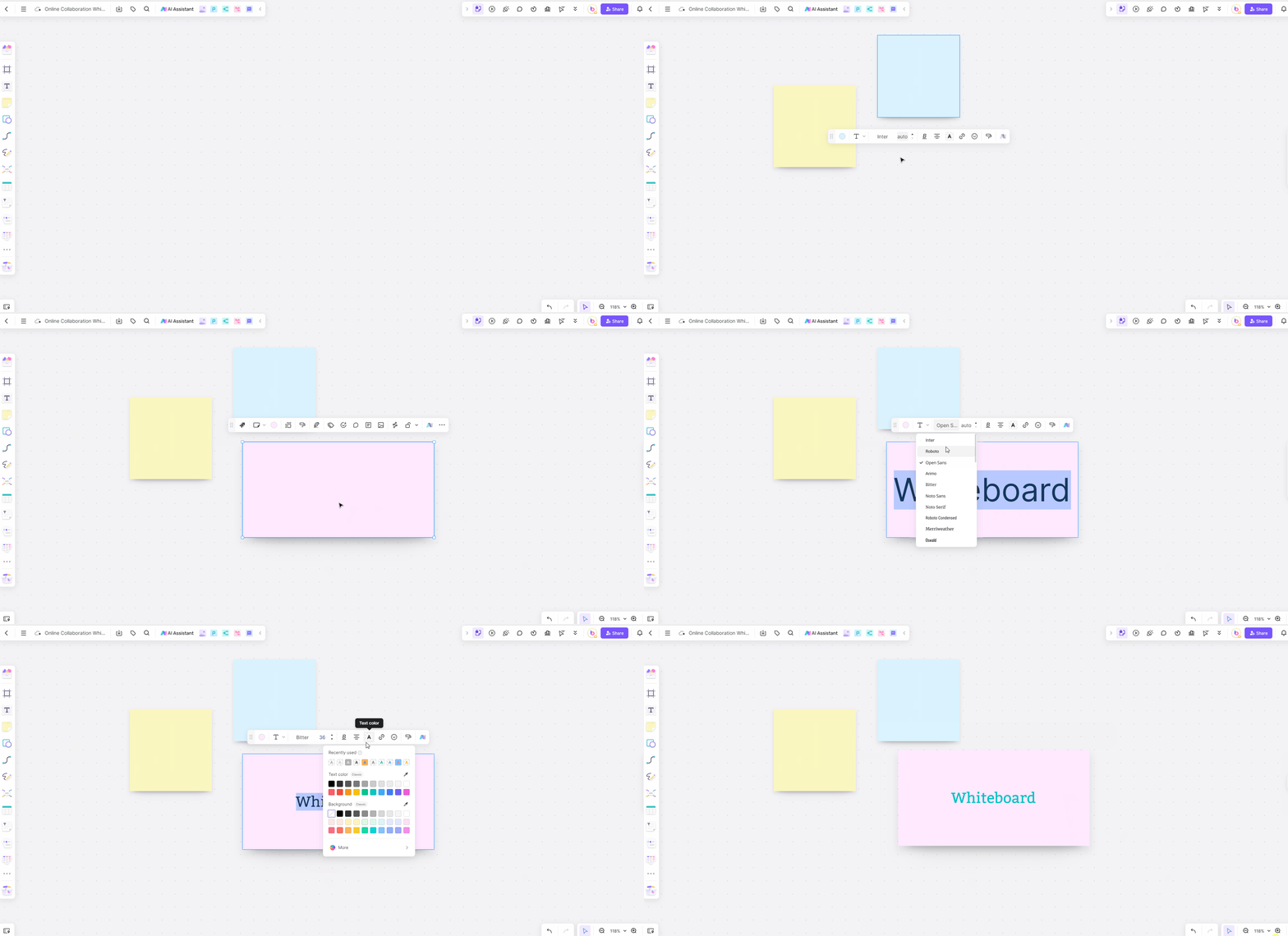
Sticky notes: Put one audience insight or campaign idea on each note. Add a name or initials to show who can answer questions about it; distinguish an observed fact from an assumption the team still needs to test.
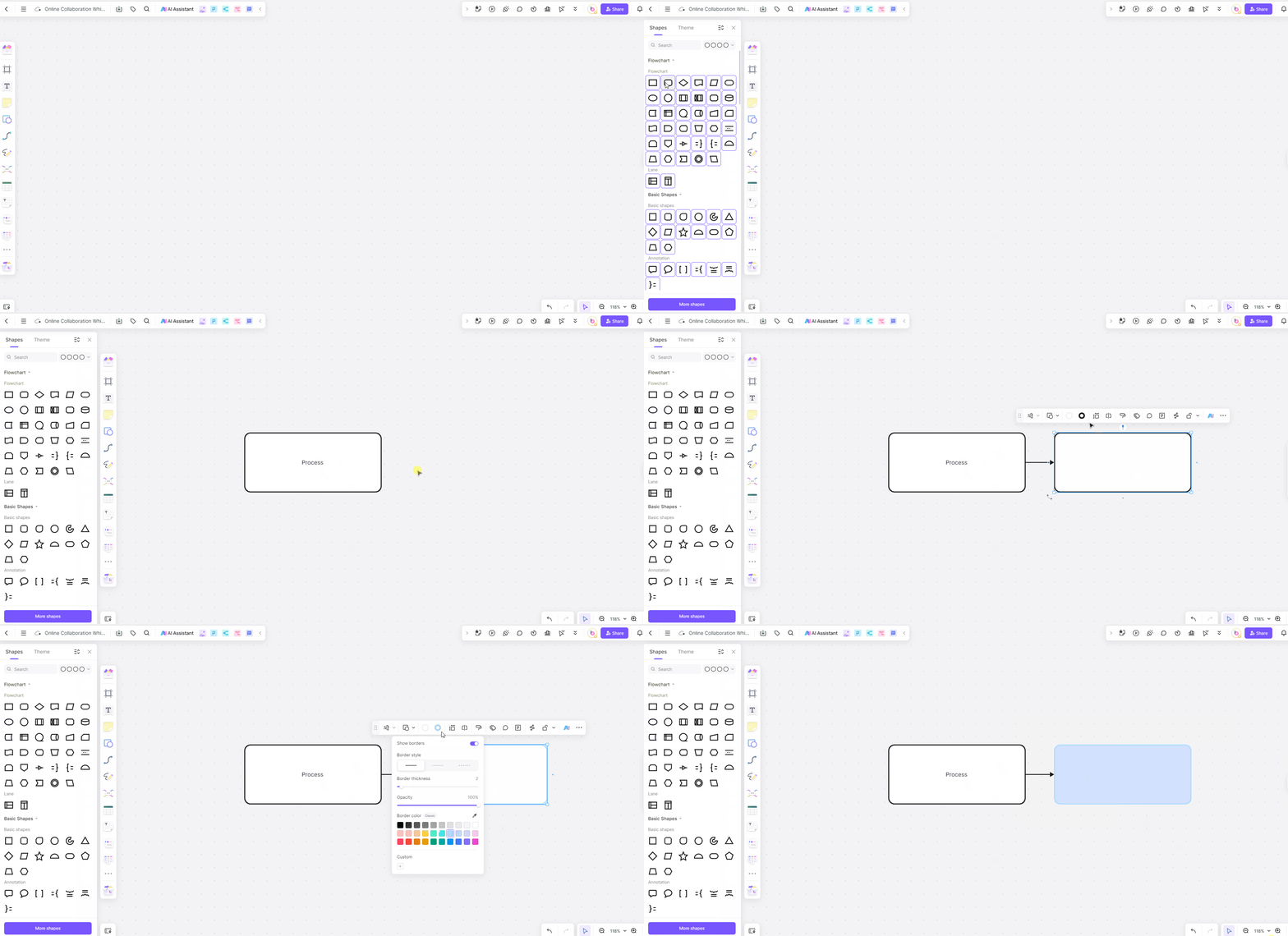
Shapes and Elements: Use rectangles for the steps in the audience journey. Give each one an action, such as “Opens the example,” so the diagram is easy to discuss.

Connecting Lines: These lines are used to link different elements on the board, showing relationships and dependencies. Users can add text to these lines to express corresponding relationships.
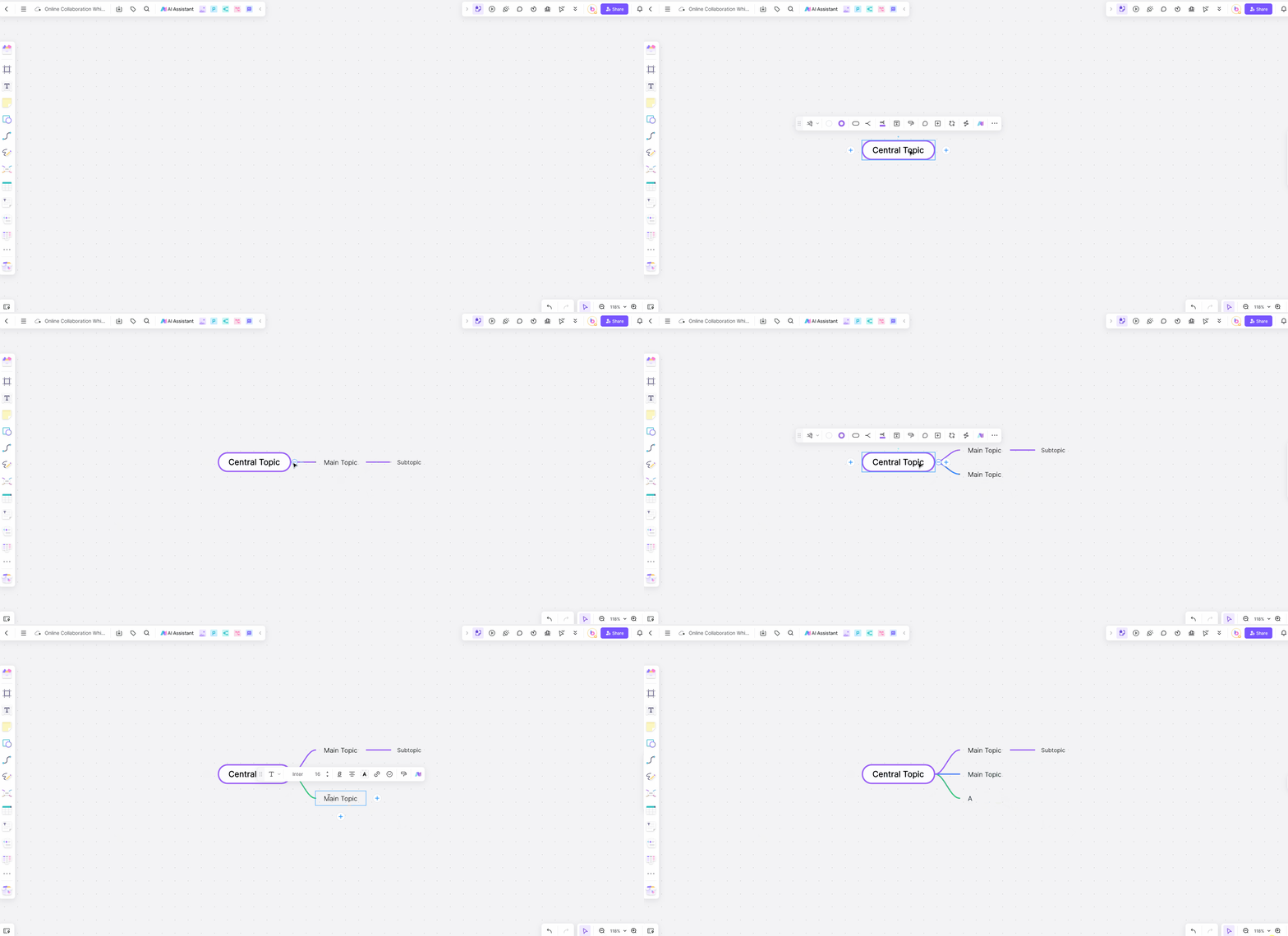
Mind Mapping: Put the audience problem at the center, then branch into possible messages, supporting evidence and channels. Leave uncertain ideas labeled as questions.
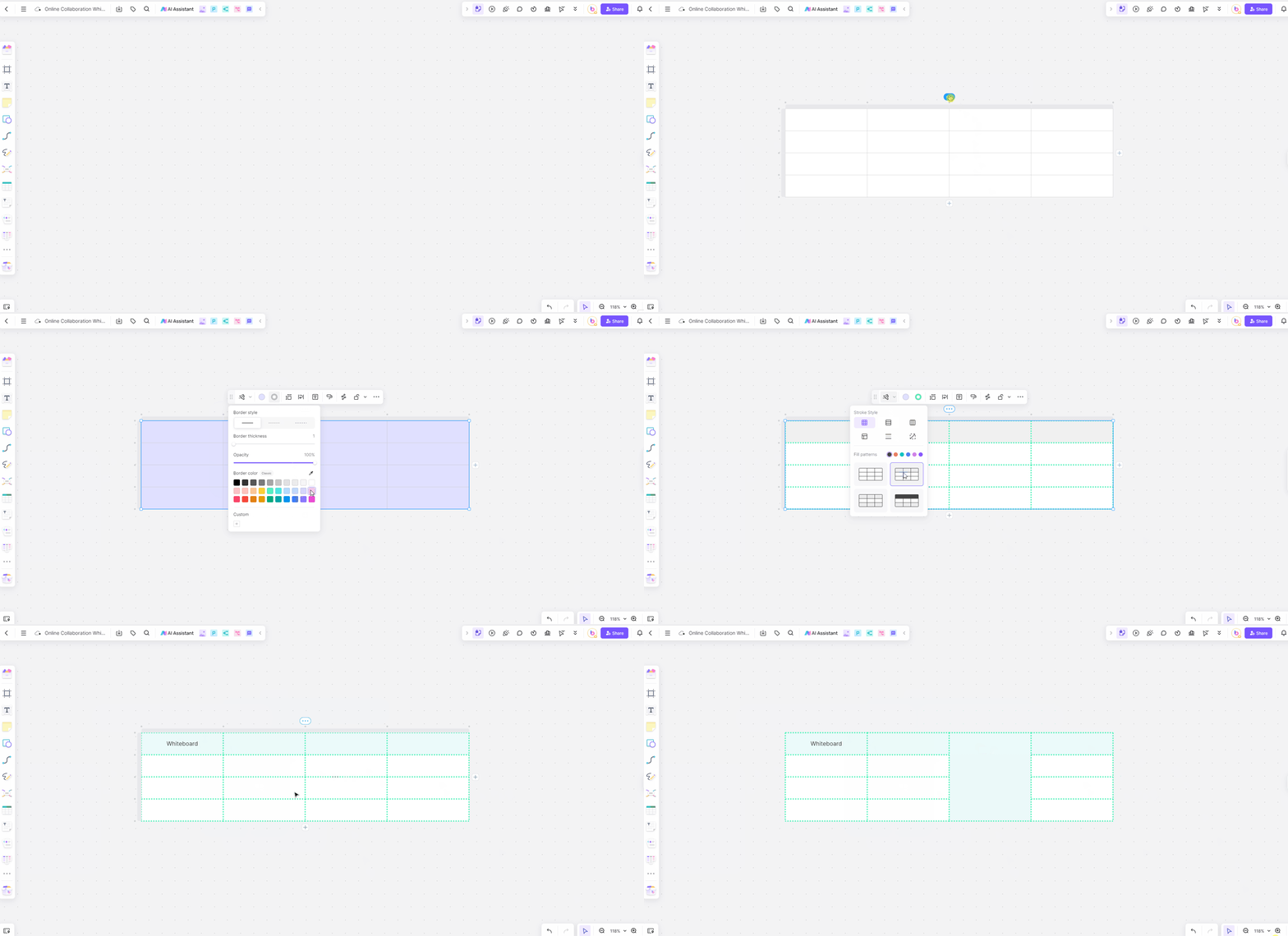
Tables: Put channel options in rows and the same questions in columns, as in the comparison above. Adjust cell widths so the reason for each choice can be read without opening a separate note.

Kanban: Track the assignment through Research, Draft, Review and Ready columns. Give each task a named classmate and deadline, and update its status as the work changes.
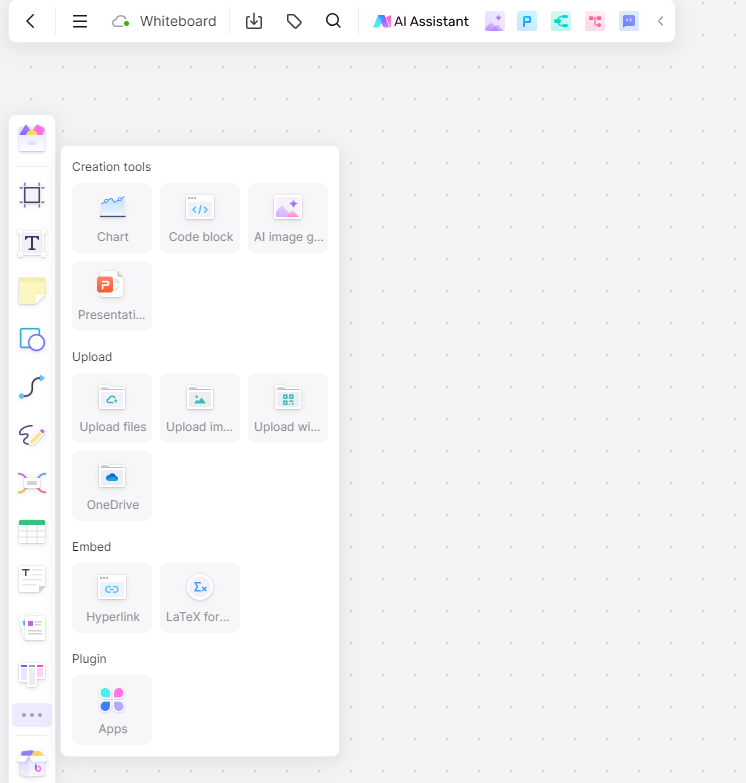
Additional resources: Add source links and supporting visual material to the board. For a diagram made elsewhere, use an image export or a link to the original instead of assuming it can be edited inside Boardmix.
Upper Left: Operation Area

The upper left section is the operation area, which includes:
File Naming and Management: Users can name their files, manage them, and perform file import and export operations.
AI assistant: If included in your plan, use AI for a draft outline or alternative campaign ideas. Verify any proposed fact against the research sources and follow the course's AI-use requirements.
Upper Right: Communication Tools

The upper right corner is dedicated to communication tools:
Sharing and communication: Invite the project group, leave comments beside the material under review and guide classmates through the board when presenting. Use the class meeting service when a voice or video conversation is needed.
Lower Right: Canvas Operations
The lower right corner focuses on canvas operations:
Canvas Navigation: Allows users to switch between different tools like the hand tool and mouse wheel for zooming, use full-map layout for quick canvas adjustments, and navigate the online shareable whiteboard easily.
Lower Left: Roadmap

The lower left corner features the roadmap:
Board navigation: Organize the sections in a clear route so reviewers can move from market evidence to SWOT findings and the campaign decision without searching the whole canvas.
What to Check Before Submitting the Marketing Plan
Check that each research claim has a source, each estimate is labeled, each task has an owner and the instructor can access the final result. The group should be able to explain why it chose the audience, message and channels. Keep the board available for questions as the plan develops.
If the team needs more help with basic creation and sharing, use the first-board tutorial before the next group session.