


Start Stop Continue feedback for a boss should name one behavior to begin, one behavior to reduce or end, and one behavior that already helps the team. The best examples describe an observable situation, explain its impact, and propose a realistic next step instead of judging the leader's personality.
What Is Start Stop Continue?
Start Stop Continue is a three-part reflection method. Start identifies a useful new behavior, Stop identifies a behavior or process that creates avoidable cost, and Continue reinforces something that is working. A balanced set makes feedback easier to discuss because it includes both change and recognition.
How to Give Start Stop Continue Feedback to Your Boss
- Choose a shared goal. Frame the feedback around delivery, quality, decision speed, team health, or another outcome you both recognize.
- Use observable evidence. Refer to a meeting, workflow, handoff, or decision rather than an assumed motive.
- Explain the impact. State what changed for the work, customer, timeline, or team.
- Suggest a small next action. Make the Start or Stop item testable for the next week, sprint, or meeting cycle.
- Agree on a review point. Record the owner and date so the exercise leads to a follow-up rather than a static list.
If the feedback concerns harassment, discrimination, retaliation, safety, or another formal workplace issue, use the appropriate company reporting process instead of relying only on this exercise.
6 Start Stop Continue Examples for Bosses and Leaders
Adapt the wording to your situation. The related guide to Start Stop Continue examples includes applications beyond manager feedback.
Example 1: One-on-One Meetings
- Start: Hold a 25-minute one-on-one every two weeks with a short shared agenda.
- Stop: Canceling the meeting without proposing a new time, which leaves blockers unresolved.
- Continue: Asking what support is needed and confirming the next action before the meeting ends.
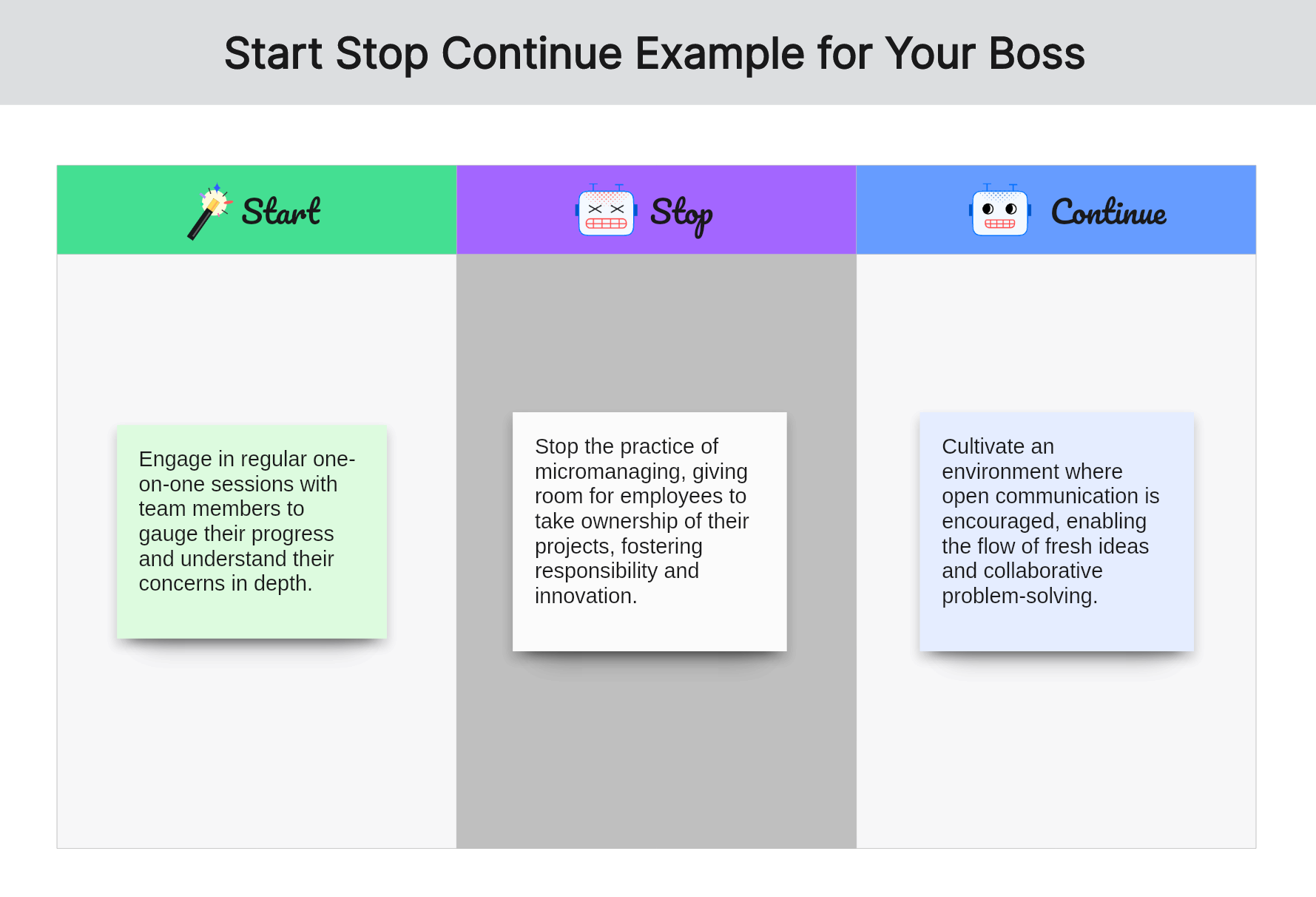
Example 2: Delegation and Ownership
- Start: Define the decision boundary, desired outcome, and check-in point when assigning work.
- Stop: Rewriting completed work without first explaining the gap or expected standard.
- Continue: Giving team members room to choose the method once the goal and constraints are clear.
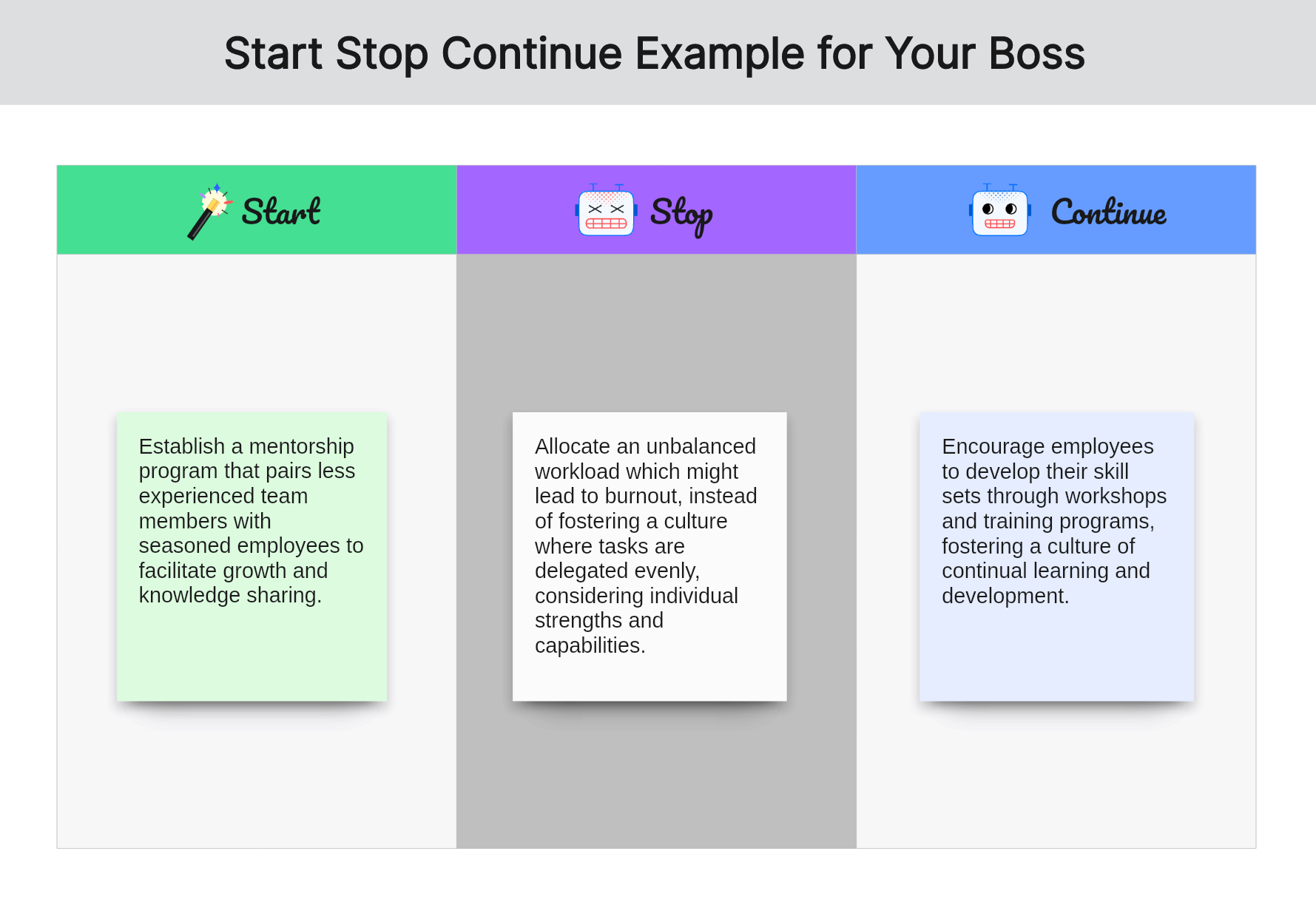
Example 3: Meetings
- Start: Put the decision, owner, and required preparation in each meeting invitation.
- Stop: Using status meetings for updates that could be read asynchronously.
- Continue: Ending meetings with a written decision log and named owners.
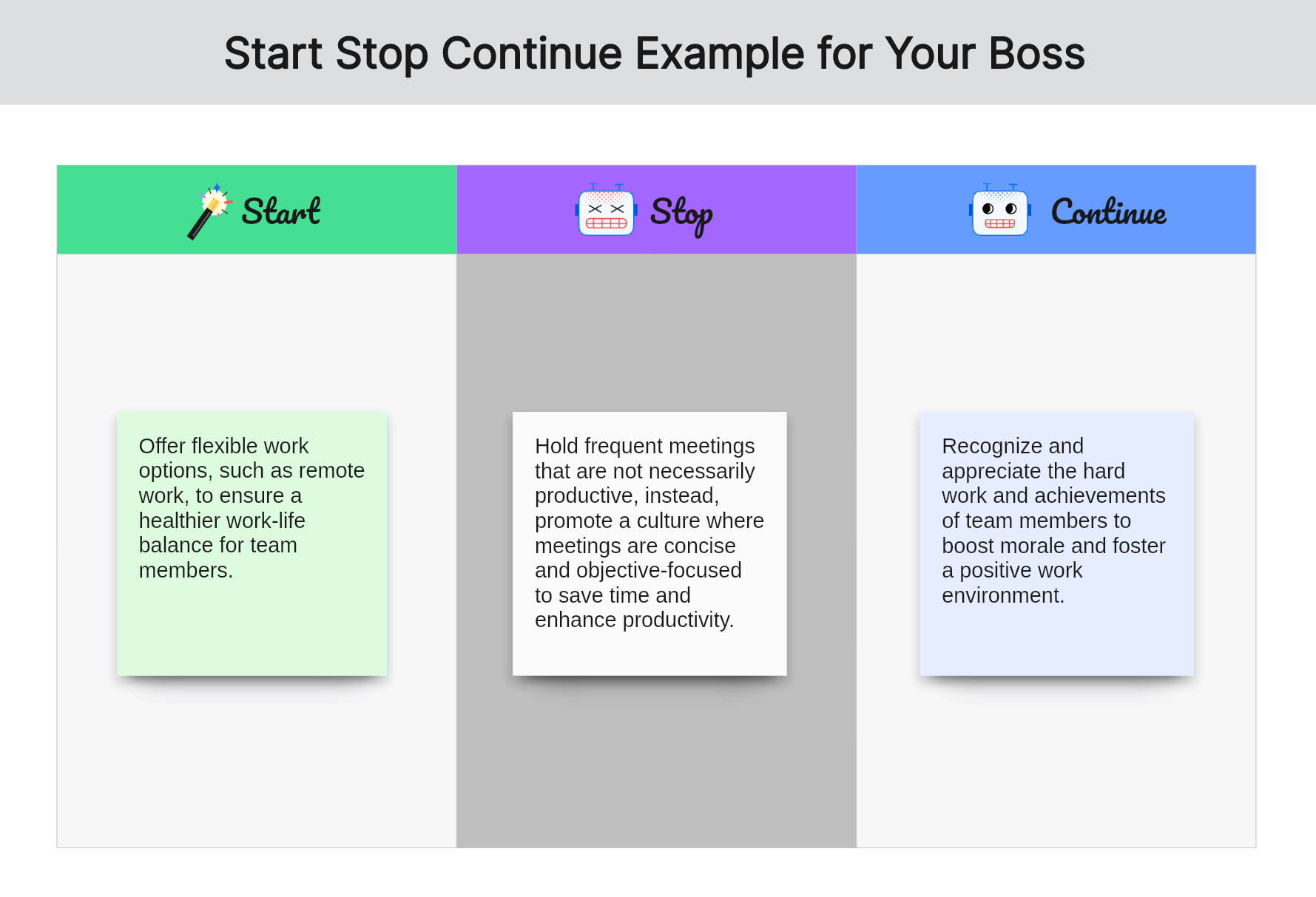
Example 4: Team Decisions
- Start: Ask for input from the people closest to the work before high-impact decisions.
- Stop: Reopening a decision without new evidence or an explicit reason.
- Continue: Explaining the decision criteria and trade-offs, even when not every suggestion is selected.
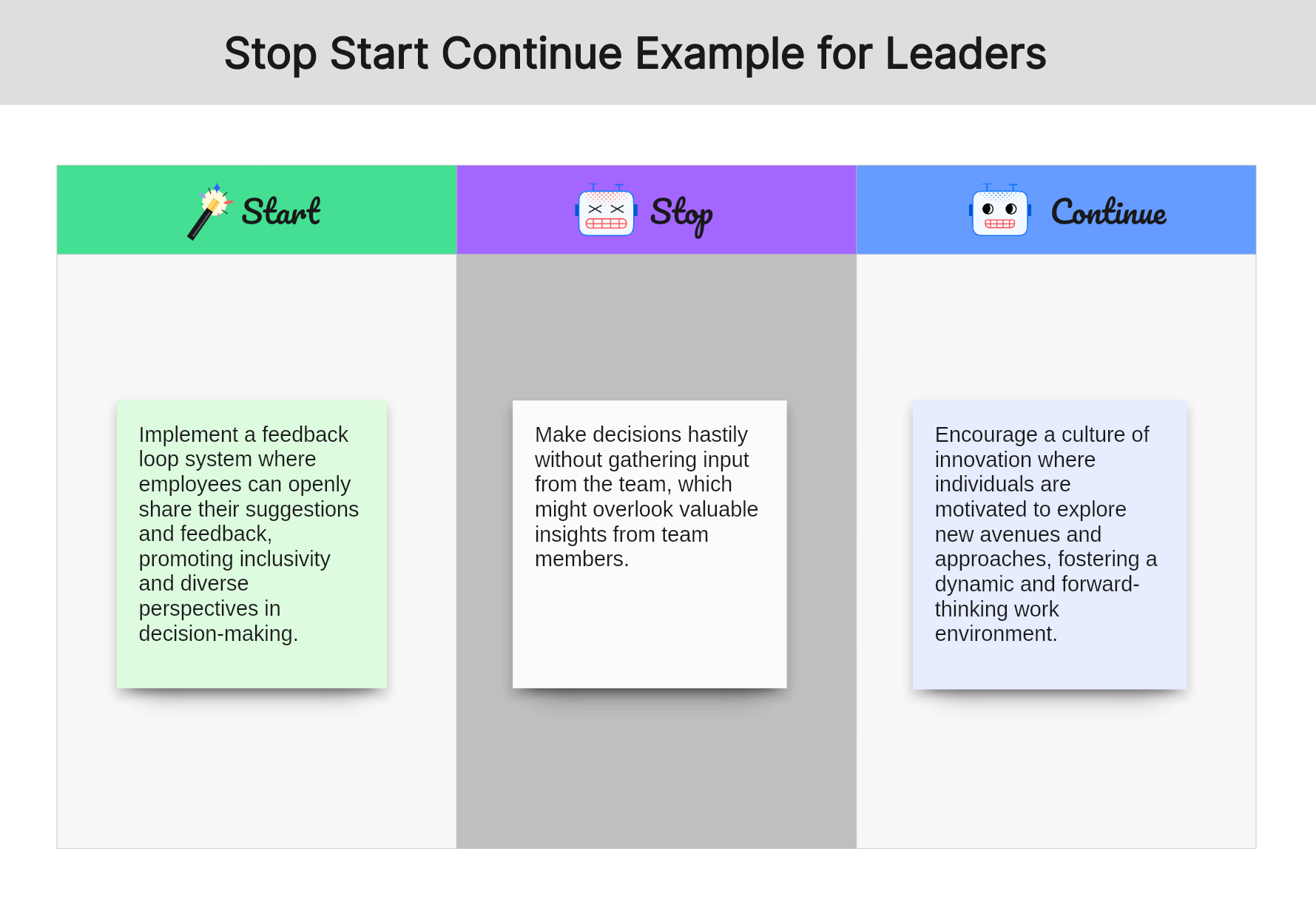
Example 5: Workload and Priorities
- Start: Identify which current task should move when a new urgent request is added.
- Stop: Treating every request as the highest priority, which hides real trade-offs.
- Continue: Reviewing capacity and delivery risk during weekly planning.
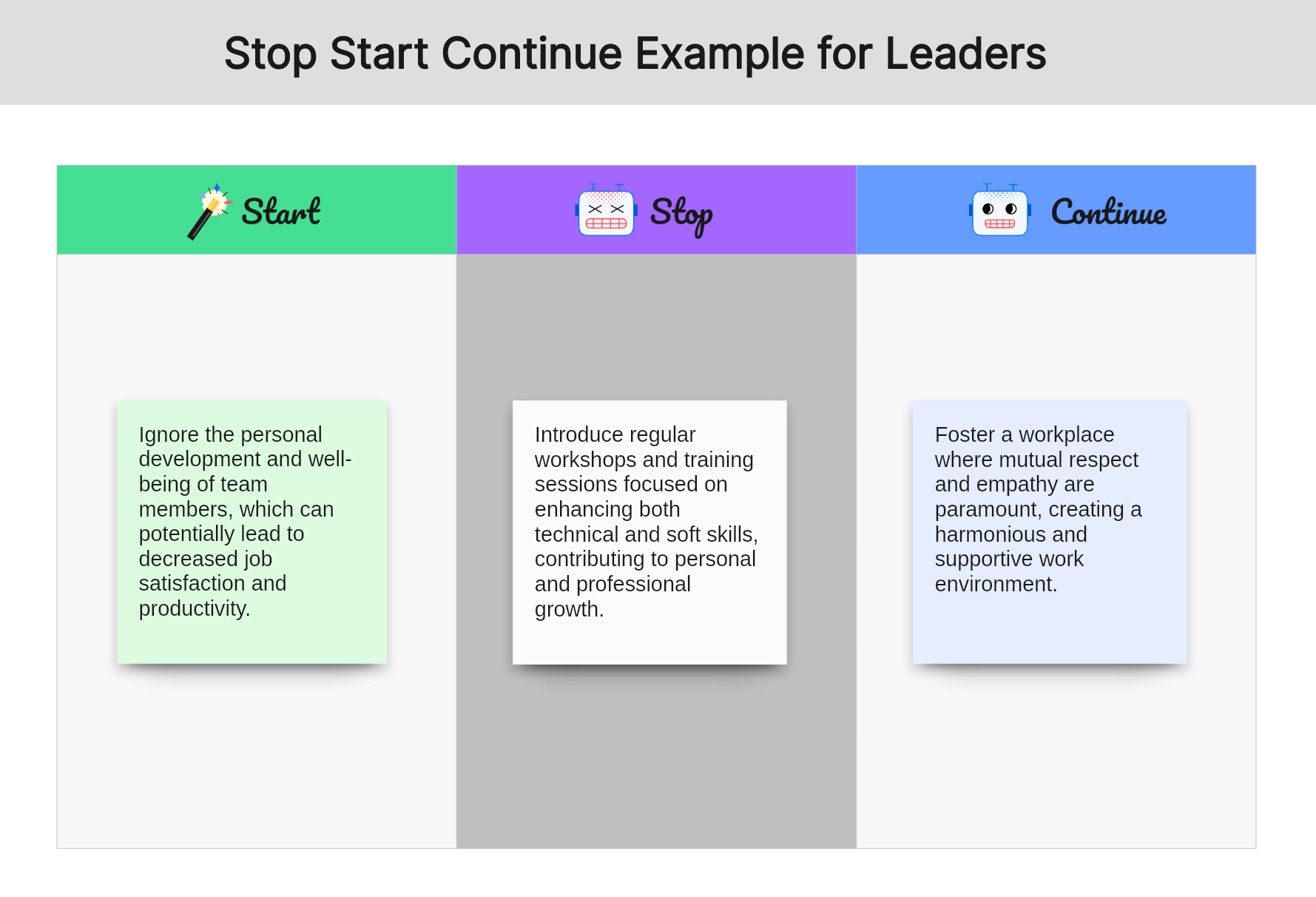
Example 6: Recognition and Development
- Start: Give specific recognition that names the behavior and its impact.
- Stop: Saving all development feedback for the annual review.
- Continue: Connecting learning opportunities to the employee's goals and upcoming work.
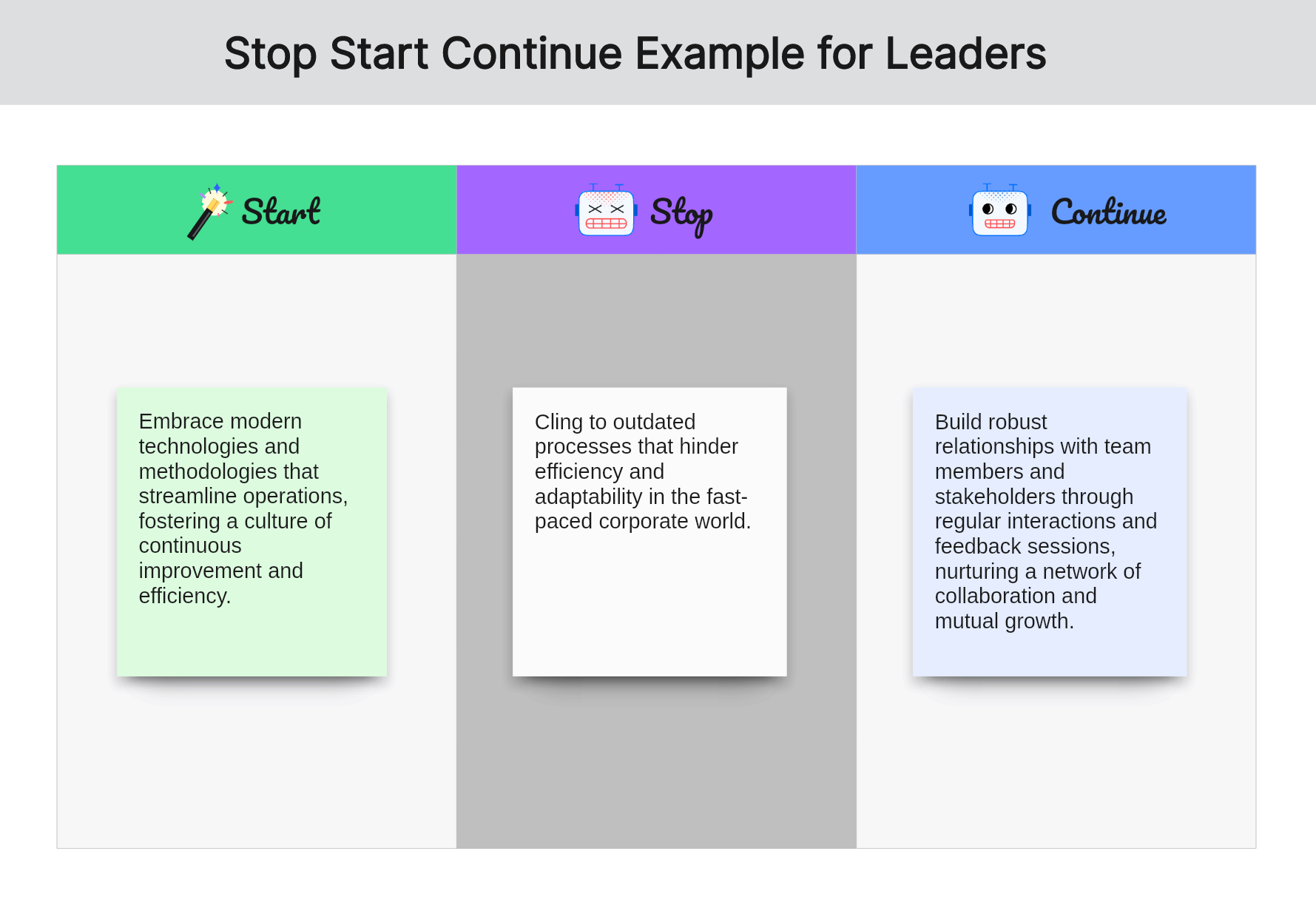
How to Phrase the Feedback Clearly
A useful sentence pattern is: When [observable situation] happens, [specific impact] follows. Could we [small action] for the next [time period] and review the result? This keeps the conversation focused on work and makes the request testable.
- Do: use specific examples, separate facts from interpretation, and invite the manager's context.
- Do: balance Start, Stop, and Continue items rather than disguising every criticism as a compliment.
- Do not: use labels such as "controlling" or "uncommunicative" when you can name the behavior.
- Do not: raise sensitive feedback in a public meeting if a private conversation is more appropriate.
Use a Template and Review the Outcome
A Boardmix online whiteboard helps participants add examples independently, group duplicates, discuss the highest-impact item, and keep owners and review dates visible in one shared workspace. Use a Start Stop Continue template to keep the three columns, evidence, owners, and follow-up decisions in one place.
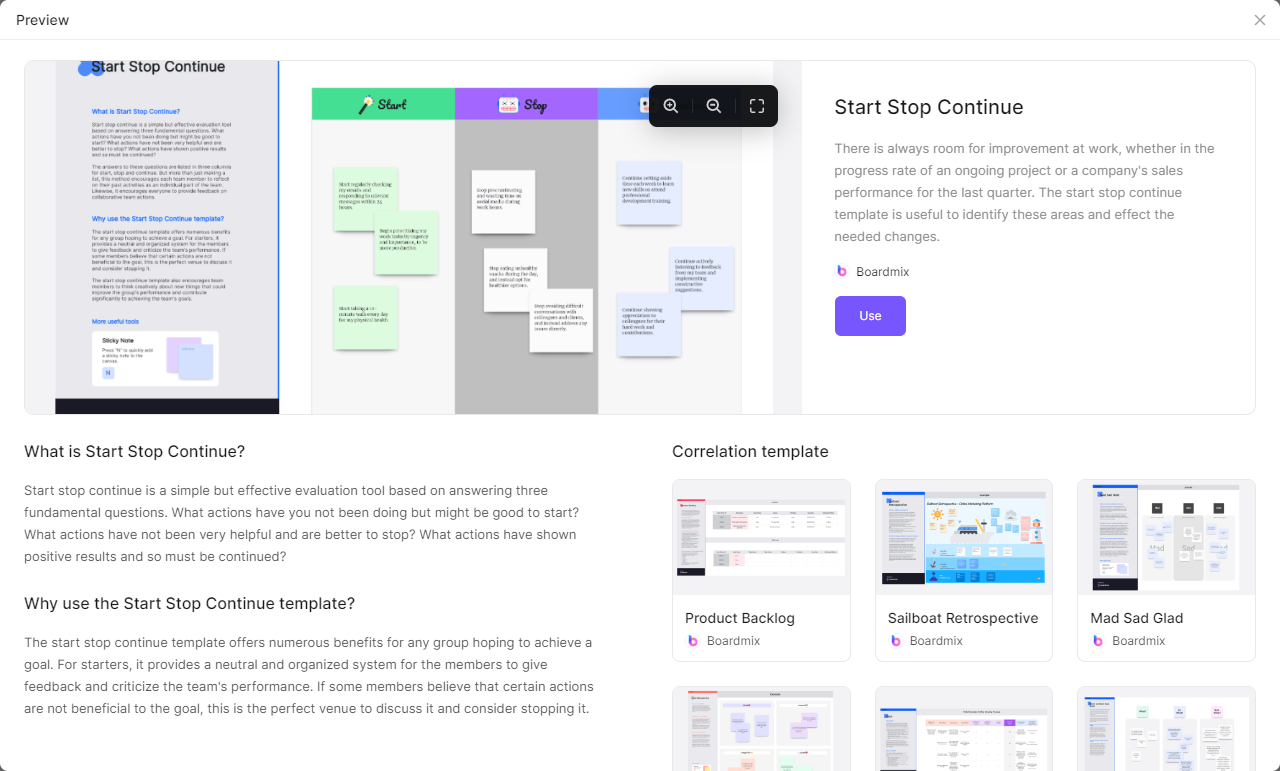
Limit the first cycle to one action in each column. At the review, ask what changed, what evidence supports the conclusion, and whether the item should be completed, revised, or carried forward. This turns the framework into a feedback loop rather than a one-time exercise.
Start Stop Continue FAQ
Should I share all three items at once?
Usually, yes, but keep the list short. One specific Start, one Stop, and one Continue item are easier to discuss and test than a long backlog of criticism. If an issue is urgent or sensitive, address it through the appropriate channel instead of waiting for a retrospective.
What if my boss disagrees with the feedback?
Ask which fact, impact, or proposed action they see differently. Clarify the evidence and agree on a small experiment when possible. The goal is not to win a label; it is to improve a shared work outcome and define what you will review next.
How often should a team use the framework?
Use it often enough to review the previous actions. A monthly, quarterly, or milestone-based cadence can work, depending on the team. Repeating the exercise without closing earlier actions will reduce trust in the process.