


Microsoft serves consumers, businesses, and developers with different product needs. This article uses segmentation, targeting, and positioning (STP) to examine those audiences and explain how a business can organize its own market analysis.
Microsoft Segmentation, Targeting, and Positioning Mind Map
Use the mind map below to organize customer segments, the needs of each audience, and the product proposition. Treat it as an analytical framework, then add sources and examples relevant to the market you are studying.
Market Segmentation of Microsoft
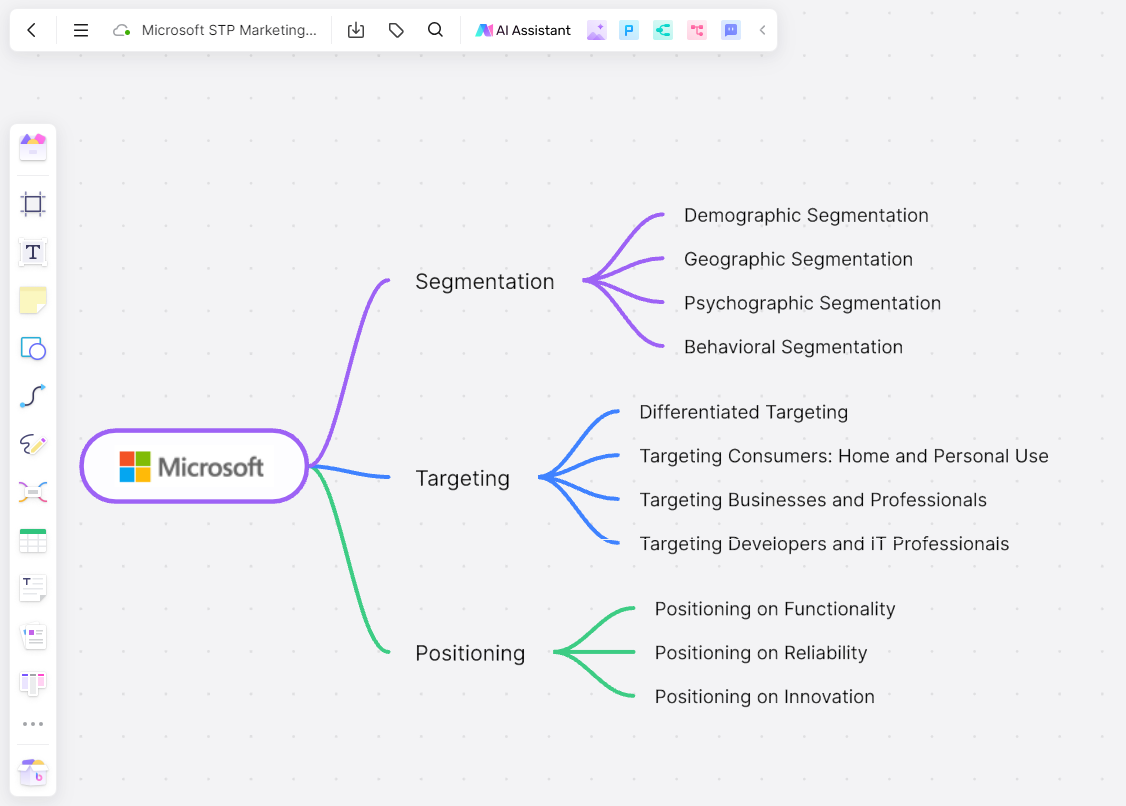
When exploring the basis of Microsoft's profound global reach, it's essential to understand how it segments its market. The company employs a combination of demographic, geographic, psychographic, and behavioral segmentation. By segmenting its market, Microsoft can identify and understand the varied needs of its customers better, subsequently tailoring its offerings to meet these specific requirements.
Demographic Segmentation
Demographic segmentation is one of the pillars of Microsoft's market segmentation strategy. It involves categorizing the market based on variables such as age, income, occupation, education level, and more. This segmentation enables Microsoft to identify and cater to the needs of various demographic groups.
From students using Microsoft Office Suite for their academic assignments to professionals using advanced software for business operations, Microsoft serves a broad demographic spectrum. They've even crafted products like Xbox gaming consoles to cater to the leisure and entertainment needs of different age groups.
Geographic Segmentation
Geographic segmentation considers how customer needs differ by market, language, industry, and purchasing context. A useful analysis distinguishes global product positioning from the availability, pricing, and requirements of each local market.
For example, language support, regional formats, and local commercial terms can affect how a software product is offered. Check the current documentation for the specific Microsoft product and market being analyzed.
Psychographic Segmentation
Understanding consumers' psychological aspects— their attitudes, values, and lifestyles— has been pivotal for Microsoft's market dominance. Through psychographic segmentation, they have managed to align their versatile product range with varied customer mindsets.
Psychographic analysis considers the priorities behind a purchase, such as ease of use, productivity, creativity, or reliability. Compare these priorities against actual customer research rather than assuming every user of a product shares the same motivation.
Behavioral Segmentation
Behavioral segmentation involves analyzing the behavior of customers towards products— their knowledge, their attitude, their use and responses. This is another area where Microsoft excels.
Whether it’s understanding the repeated purchase pattern of Xbox game titles or recognizing the shift towards cloud-based software preference among businesses or noting the increased demand for cybersecurity— Microsoft closely observes the users' behavior. By responding to these identified behaviors with the right products and services (like offering a subscription-based model for Office 365), they ensure customer satisfaction and loyalty.
Targeting of Microsoft
In the world of marketing, the success of a product or service doesn't merely rely on its quality or brand name. The critical element lies in effectively reaching the right set of customers. Microsoft's targeted marketing plays an instrumental role in its impressive growth story. By employing a differentiated targeting strategy, it has successfully reached out to a diversified user base and catered to their unique needs.
Differentiated Targeting
The essence of differentiated targeting lies in tailoring distinct offerings for different market segments. Understanding that a "one size fits all" approach does not guarantee success, Microsoft diligently assesses the needs and wants of each market segment to develop or customize its products and services.
From operating systems to productivity tools, gaming consoles to cloud services, each offering is expertly targeted at the identified segments, ensuring Microsoft's expansive reach.
Targeting Consumers: Home and Personal Use
Microsoft targets individual consumers with products such as Windows, Microsoft 365, Outlook.com, and Xbox. These products address personal computing, communication, productivity, and entertainment needs.
For instance, students are offered academic licenses for its software suite at discounted rates. This not only serves the customers’ immediate needs but also builds familiarity and loyalty with the brand from an early age.
Targeting Businesses and Professionals
Professionals and businesses represent a substantial segment of Microsoft's target audience. They require more sophisticated, secure, and robust tools for their operations. Keeping this in mind, Microsoft offers tailored products like Office 365 for Business, Azure Cloud Services, Dynamics 365, LinkedIn Premium, and Power BI.
For small businesses, compare the current Microsoft 365 business plans by the applications, storage, and administration features included. Larger organizations may need enterprise plans with different security and management requirements.
Targeting Developers and IT Professionals
The technology landscape would be incomplete without the community of developers and IT professionals. To target this crucial segment, Microsoft has created a unique suite of products and platforms such as Visual Studio, .NET Framework, Azure Developer Tools, SQL Server, and more. By providing a comprehensive set of tools for development, testing, and deployment of applications, Microsoft has established itself as a go-to brand for developers around the world.
Positioning of Microsoft
Positioning refers to the specific market niche a brand occupies in the minds of customers and how it differentiates from its competitors. Microsoft's positioning has been primarily around functionality, reliability, and innovation. Despite a fiercely competitive landscape, the tech giant has consistently managed to position itself as a dependable and progressive technology partner for customers across various segments.
Positioning on Functionality
Microsoft has a comprehensive suite of products and services designed to enhance the functionality of personal and professional life. Their most notable product, Windows, has positioned itself as the operating system that brings together functionality and simplicity. It's positioned as a platform that caters to both individual consumers seeking ease of use and businesses requiring extensive capabilities.
Microsoft Office Suite, another marquee product, positions itself as the quintessential tool for productivity. It doesn't matter whether you're a student working on an assignment, a small business owner managing finances, or a multinational corporation executing intricate operations— Microsoft Office has become synonymous with getting things done efficiently.
Positioning on Reliability
In today's interconnected world, security, and reliability are paramount. Understanding this, Microsoft has positioned itself as a reliable provider of secure products and services. Be it the robust Windows Defender built into their operating system or the advanced security features in Azure Cloud Services; Microsoft emphasizes strong security measures across its products, thus strengthening its positioning on reliability.
Moreover, the consistent updates and improvements delivered to its products further solidify Microsoft's reputation for dependability. Customers know they can count on Microsoft for regular software updates that address any potential issues and provide enhanced features.
Positioning on Innovation
Microsoft has developed products in areas such as cloud computing, AI, and mixed reality. Historical examples should be dated: Cortana was retired in 2023. For a current positioning analysis, use the official documentation for the products available in the market you are studying.
Furthermore, Microsoft Azure, their cloud service platform, is marketed as an innovation enabler for businesses. It supports a vast array of services and functionalities such as AI, analytics, machine learning, Internet of Things (IoT), thereby allowing businesses to innovate and transform their operations.
Microsoft Segmentation, Targeting, and Positioning Cheat Sheet
Having examined Microsoft's segmentation, targeting, and positioning strategies in depth, it is helpful to consolidate this information in a cheat sheet. A visual summary or cheat sheet provides an at-a-glance understanding of the company's strategic approach.
This cheat sheet unravels Microsoft's STP tactics, providing valuable insights into its overarching marketing strategy. This consolidation can guide you to better comprehend and utilize such strategies in your venture.
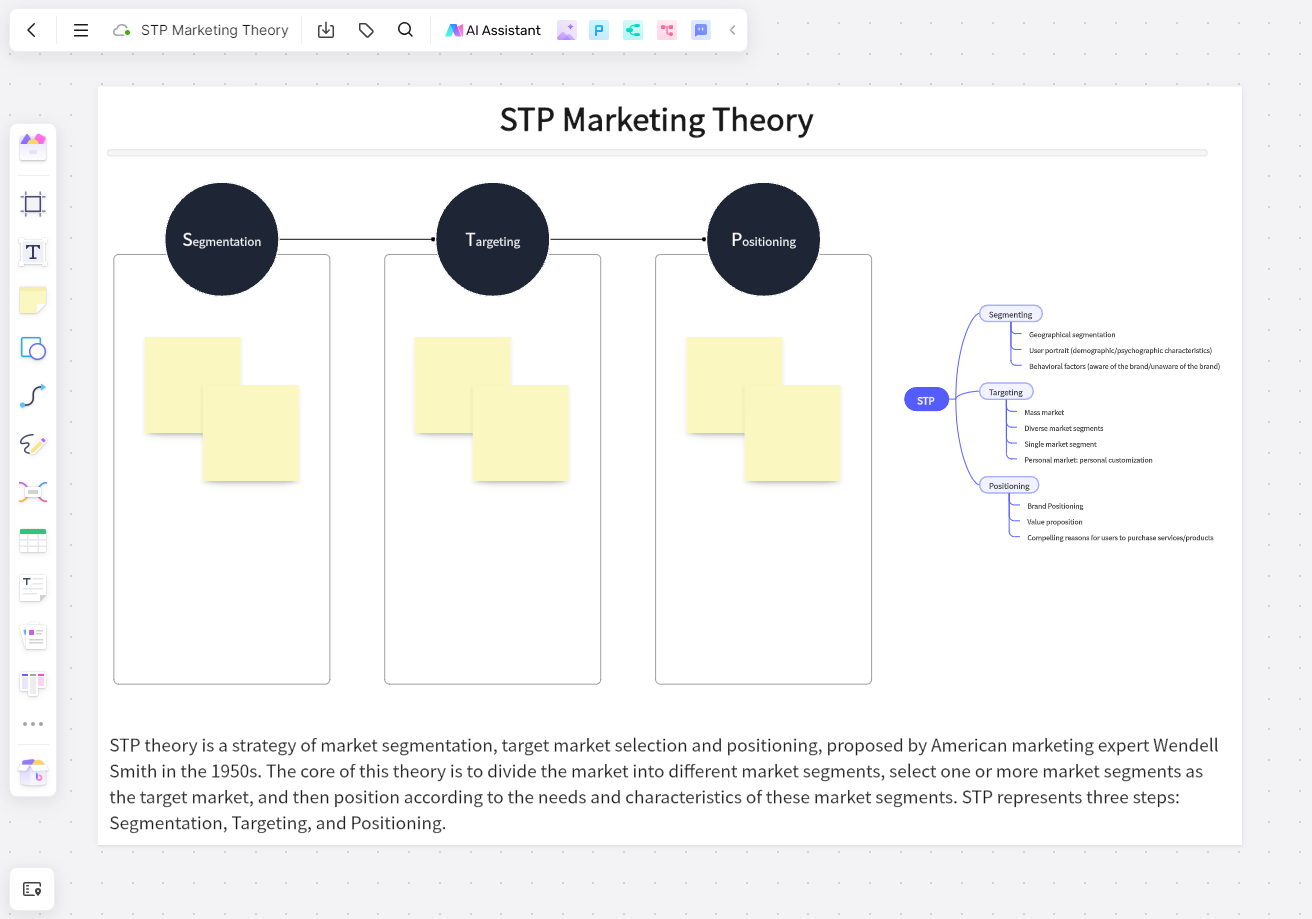
Key Takeaways: STP Template & Tool
Microsoft illustrates how one company can address several audiences with different products and propositions. An STP analysis is most useful when each segment is supported by customer needs, product evidence, and a clear explanation of the alternatives.
Compare how the proposition changes for consumers, businesses, and developers. Look at the problem solved, the reason to choose the product, and the evidence that supports that message.
Use Boardmix to organize your own market segmentation and STP notes on a shared board. Record the customer group, its needs, the proposed positioning, and the sources or assumptions behind each conclusion.
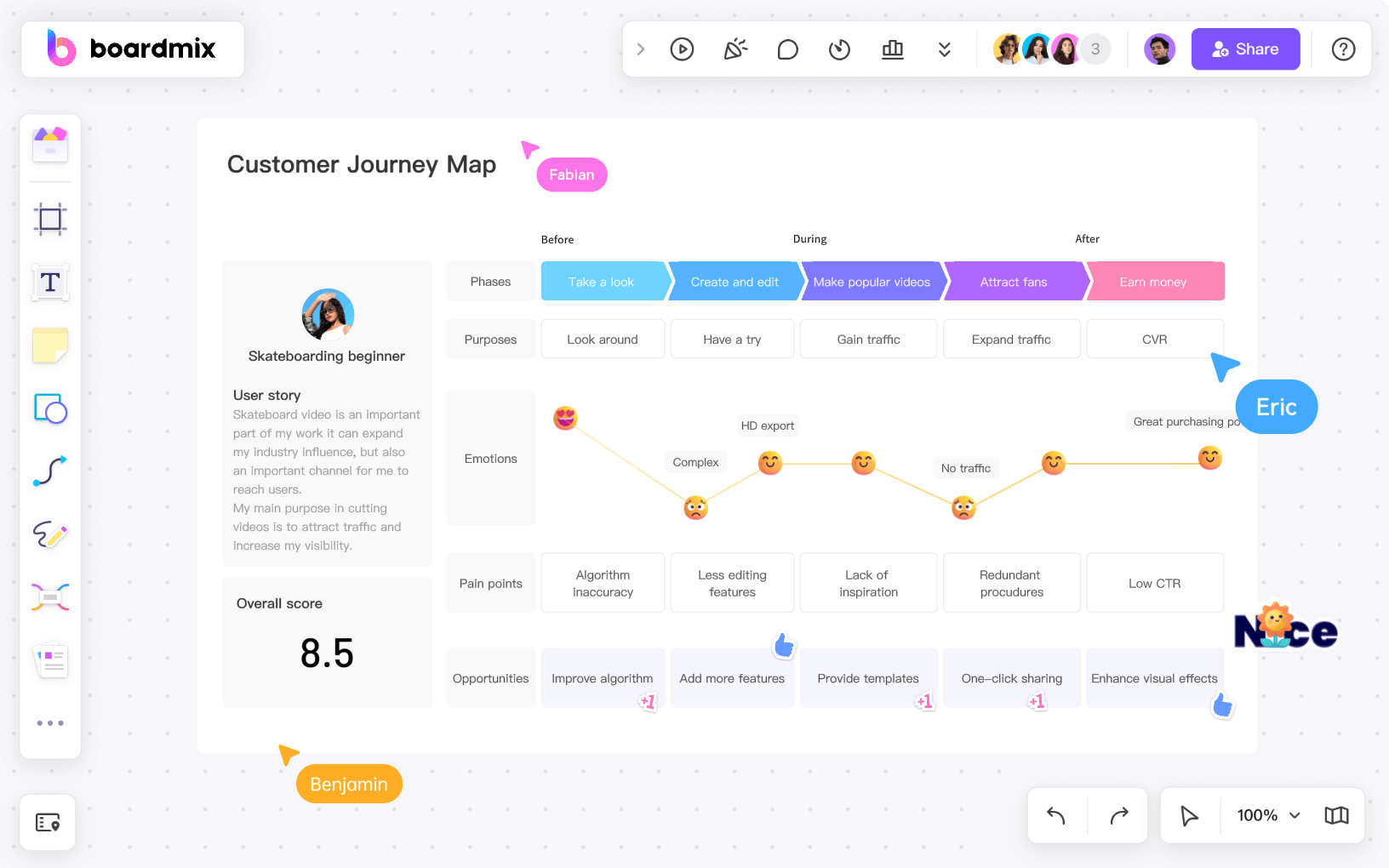
Start with one customer segment and compare a few positioning options. Review the evidence with your team before turning the analysis into a marketing plan.