A user research synthesis framework turns raw interview notes into a small set of defensible themes and next actions. Use the synthesis to show what was observed, how the pattern formed, and which decision the team can take next. If the study is not planned yet, start with the user research plan template before applying this synthesis workflow.

1. Define the decision before coding
Write the decision the synthesis must support in one sentence, such as “Which onboarding problem should we test next?” Name the audience, the product area, and the time horizon. This keeps the team from collecting interesting observations that cannot change a decision.
Use a decision brief
- Question: what choice is still open?
- Evidence: which interviews, tasks, or artefacts are in scope?
- Constraint: what cannot change in this cycle?
- Output: what will be handed to product, design, or support?
2. Prepare a consistent note format
Normalize each note into a short observation, the participant context, and the source reference. Keep the participant’s words separate from the researcher’s interpretation. For example, “I clicked twice because I did not see a change” is an observation; “the interface lacks feedback” is a hypothesis to test.
Use one card per meaningful observation. Add a lightweight source label such as interview number or task, while keeping personal details out of a shared board.
3. Code for behavior, not just topics
Start with action-oriented codes: searches for status, repeats a step, asks for reassurance, or abandons after an error. Topic labels like “dashboard” or “notifications” are useful for filing, but they do not explain what needs to change. Allow a note to have more than one code when the evidence supports it.
After the first pass, merge duplicate codes and write a one-line definition for each surviving code. A code is useful when another researcher can apply it consistently without a meeting.
4. Cluster observations and name themes
Group notes that describe a similar behavior or need. Then write a theme statement that includes the situation and consequence: “People cannot tell whether an invitation was sent, so they repeat the action or ask a teammate.” Avoid labels such as “confusing UX”; they hide the evidence and make the theme hard to act on.
For each theme, record supporting notes, disconfirming notes, and what remains unknown. Describe what the evidence supports and where it stops.
5. Connect themes to opportunities
Translate each theme into an opportunity question: “How might we make invitation status visible without adding another step?” Keep the opportunity separate from a solution so the team can compare options later. Add the decision owner and the next test, not a promise that the theme is already solved.
| Theme | Evidence | Opportunity question | Next check |
|---|---|---|---|
| Invite status is unclear | 3 notes across 2 tasks | How might we make status visible? | Prototype a status cue |
| Next action is missing | 2 notes after empty state | How might we guide the first step? | Test two empty-state labels |
6. Review uncertainty before deciding
Before prioritizing, ask what could change the interpretation. Compare themes across participant contexts, tasks, or segments when the study design supports it. If the sample is small or purposive, describe the finding as a signal to investigate rather than a population estimate. Keep a visible list of unresolved questions and the evidence needed to answer them.

7. Set up a Boardmix synthesis board
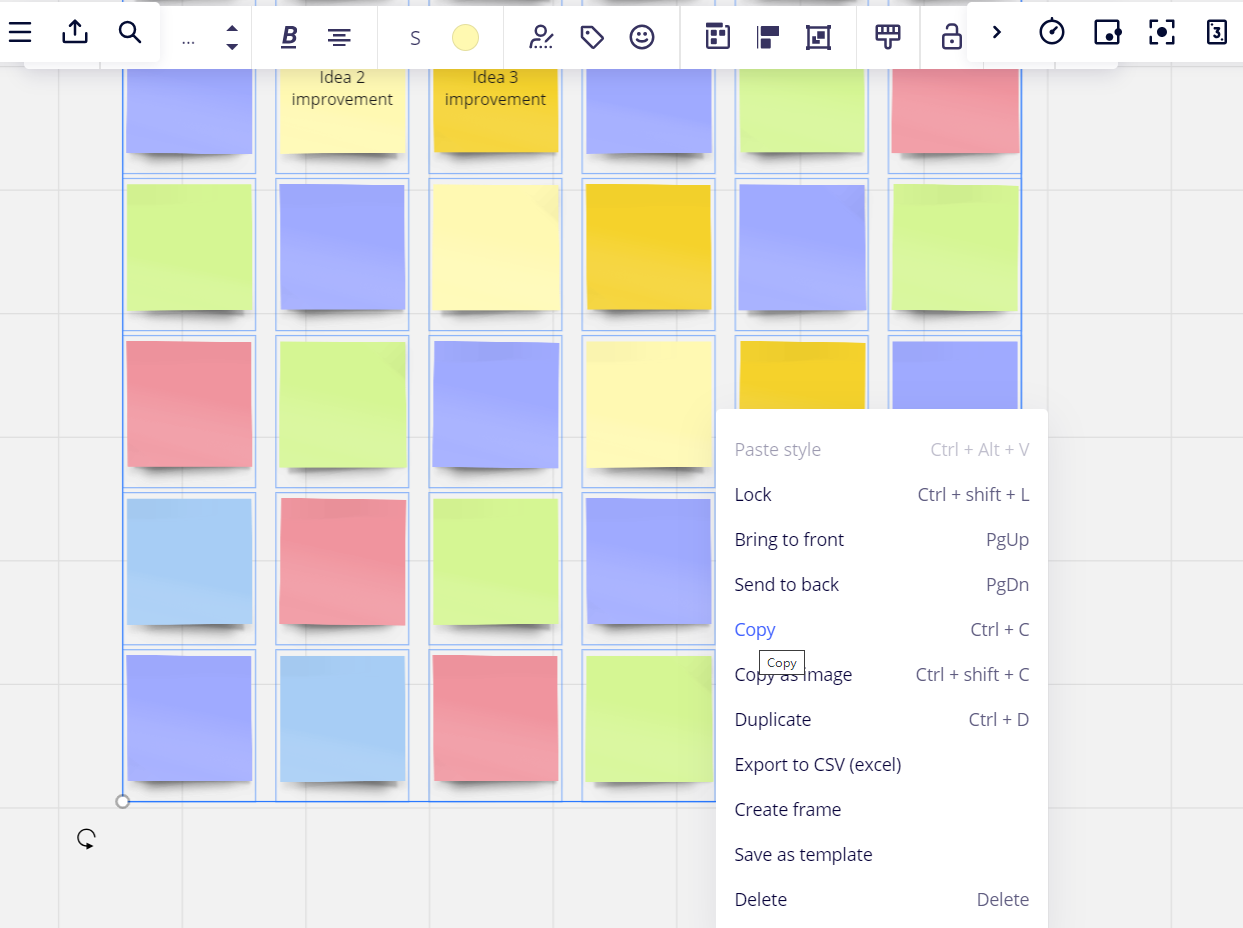
In Boardmix, place the decision brief at the top, then create columns for evidence, codes, themes, opportunities, and decisions. Use one color for source notes and another for team interpretation; add a short legend so a teammate can read the board without a live explanation. Keep links to the source notes on the relevant cards and use comments for questions that need resolution.
When the group agrees on a theme, record the evidence behind it and the owner of the next check. The board connects each quote to an action, while the original notes remain available for context.
A useful synthesis output
- One decision statement and its scope.
- A small, defined code set with source references.
- Themes phrased as observable situations and consequences.
- Opportunities connected to evidence, uncertainty, and an owner.
- A next test or research question for each prioritized opportunity.
The result is a compact decision record: evidence stays traceable, while the team can act on the themes.