


Apple's business model combines premium devices with operating systems, software, services, accessories, support, and distribution in one integrated ecosystem. The company earns most revenue from products, led by iPhone, while Services adds recurring and transaction-based revenue across the installed base of active devices.
The model works because hardware, software, services, retail, and third-party developers reinforce the customer experience. This canvas is an editorial analysis based on public disclosures, not an official Apple strategy document.
How Apple's Business Model Works
Apple designs products and core software, manages its platforms and brand, and coordinates a global supply chain while outsourcing much manufacturing. Devices bring customers into the ecosystem; operating systems connect those devices; and services such as the App Store, iCloud, Apple Music, Apple TV, payments, advertising, and support extend the relationship.
- Integrated experience: Apple controls key hardware, operating system, and service decisions.
- Installed base: Active devices create an audience for upgrades, accessories, subscriptions, and transactions.
- Developer ecosystem: Third-party apps increase device utility while platform transactions can generate services revenue.
- Channel control: Apple stores and online channels present the brand directly, while carriers and resellers expand reach.
- Supply coordination: Suppliers and manufacturing partners provide components and assembly at global scale.
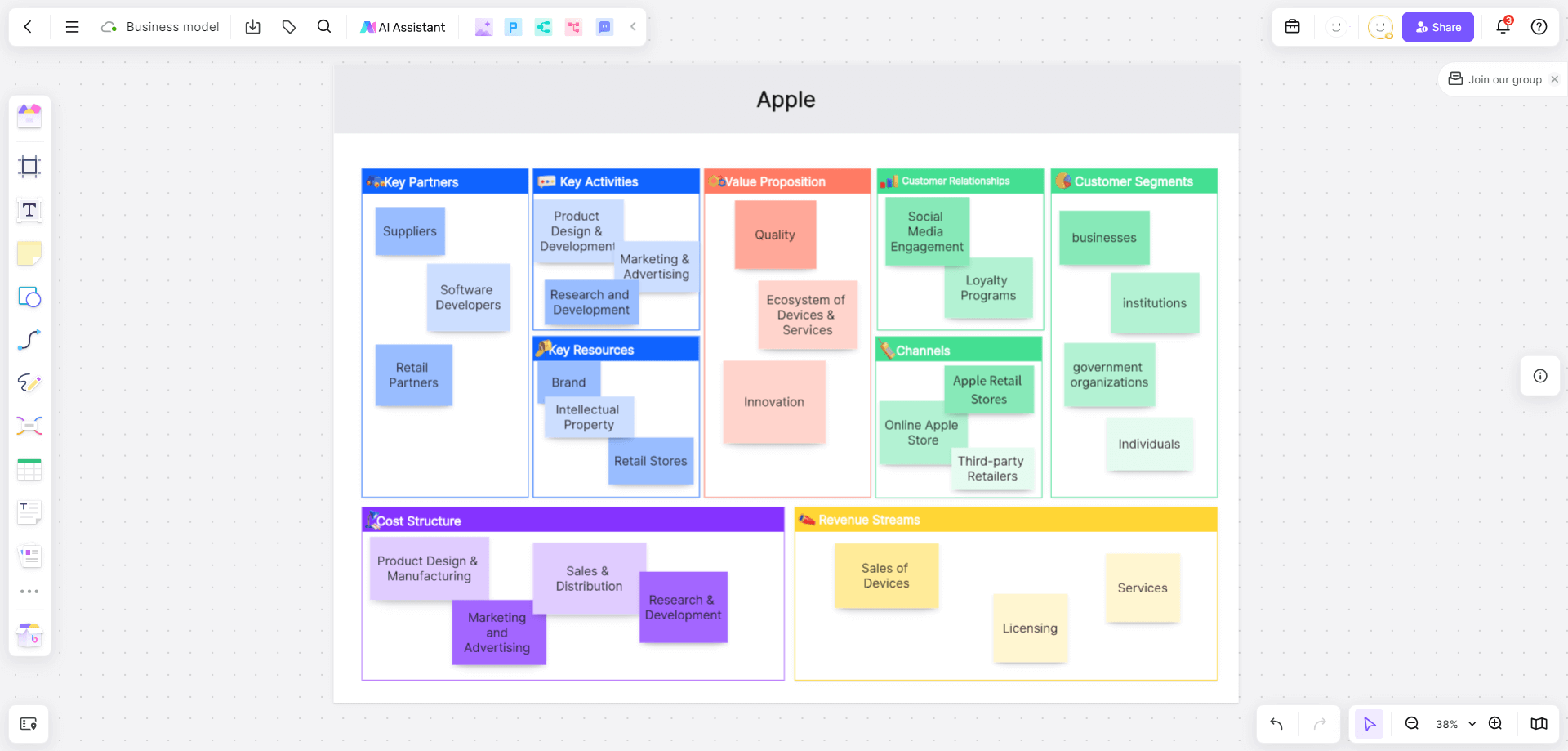
Apple Business Model Canvas
The canvas separates documented activities from analytical conclusions. When applying it, choose a specific offering because iPhone, Mac, wearables, payments, cloud storage, and media subscriptions do not have identical customers or economics.
Value Propositions
Apple offers integrated products and services designed around usability, privacy and security features, performance, design, support, and continuity across devices. The strength of each proposition should be assessed for the specific product and customer.
Customer Segments
Segments include individual consumers, families, creative and technical professionals, education, businesses, government organizations, developers, and service subscribers. For audience positioning, keep this canvas distinct from Apple's segmentation, targeting, and positioning.
Channels
Channels include Apple retail stores, apple.com, device software, the App Store, direct business and education sales, telecom carriers, authorized resellers, distributors, and service partners.
Customer Relationships
Relationships are supported through product setup, software updates, subscriptions, retail assistance, online support, warranties, AppleCare, developer programs, and the continuity of accounts, purchases, and data across devices.
Revenue Streams
Revenue comes from iPhone, Mac, iPad, wearables, home and accessories, and Services. Services includes multiple activities, so it should not be reduced to subscriptions alone.
Key Resources
Key resources include the Apple brand, industrial design and engineering capabilities, operating systems, chips and other intellectual property, employees, the installed base, developer relationships, retail presence, supply-chain capacity, and cash resources.
Key Activities
Core activities include product and chip design, software and service development, supply-chain and quality management, platform governance, privacy and security work, marketing, retail and channel operations, customer support, and R&D.
Key Partners
Partners include component suppliers, manufacturing and logistics providers, carriers, resellers, developers, content owners, payment networks, cloud and technology providers, and enterprise service partners.
Cost Structure
Important costs include components, manufacturing, logistics, warranties, content and service delivery, R&D, employees, retail operations, data infrastructure, sales and marketing, and payment or distribution arrangements.
How Does Apple Make Money?
Apple makes money from device and accessory sales and from Services delivered across its installed base. The company's fiscal 2025 results reported $416 billion in full-year revenue and described record annual performance. The release also reported a September-quarter record for iPhone revenue and an all-time quarterly record for Services.
Products and Services should be analyzed together but not conflated. A device sale creates immediate product revenue and may also support future app, cloud, media, payment, support, or advertising activity. Conversely, strong Services engagement can add utility and switching friction to the device ecosystem. That relationship is an analytical interpretation; the reported revenue figures remain the evidence.
For a more recent checkpoint, Apple's fiscal 2026 third-quarter results reported $109.4 billion in quarterly revenue and June-quarter revenue records for iPhone, Mac, and Services. This update supports the current relevance of those revenue engines without replacing the full-year 2025 basis used above.
- Products: iPhone, Mac, iPad, wearables, home products, and accessories.
- Digital services and transactions: Cloud, media, apps, payments, advertising, and other platform activity.
- Support: AppleCare and related service arrangements.
- Channel economics: Direct sales and third-party distribution affect reach, customer experience, and costs differently.
How to Analyze Apple's Business Model
- Select one offering and customer. Do not assume that an iPhone buyer, developer, enterprise IT team, and media subscriber have the same job to be done.
- Trace the ecosystem connection. Show which devices, software, services, accessories, and partners are necessary to deliver the stated value.
- Separate the sale from follow-on revenue. Identify what is paid once, what may recur, and what depends on third-party transactions.
- Attach evidence. Date financial data and distinguish Apple disclosures from observations or competitive interpretation.
- Test the constraint. Ask what happens if component supply, regulation, developer participation, customer upgrades, or service adoption changes.
Risks and Strategic Tensions
The model depends on successful product transitions, supplier and manufacturing capacity, platform security, developer and content relationships, regulatory compliance, and continued customer demand. Integration can improve consistency but also concentrates operational and regulatory responsibility. These are analytical tensions, not forecasts.
Key Takeaways
Apple's model is an ecosystem rather than a collection of unrelated products. Devices establish the customer relationship, software coordinates the experience, services extend engagement and revenue, and partners make global production, distribution, content, and applications possible.
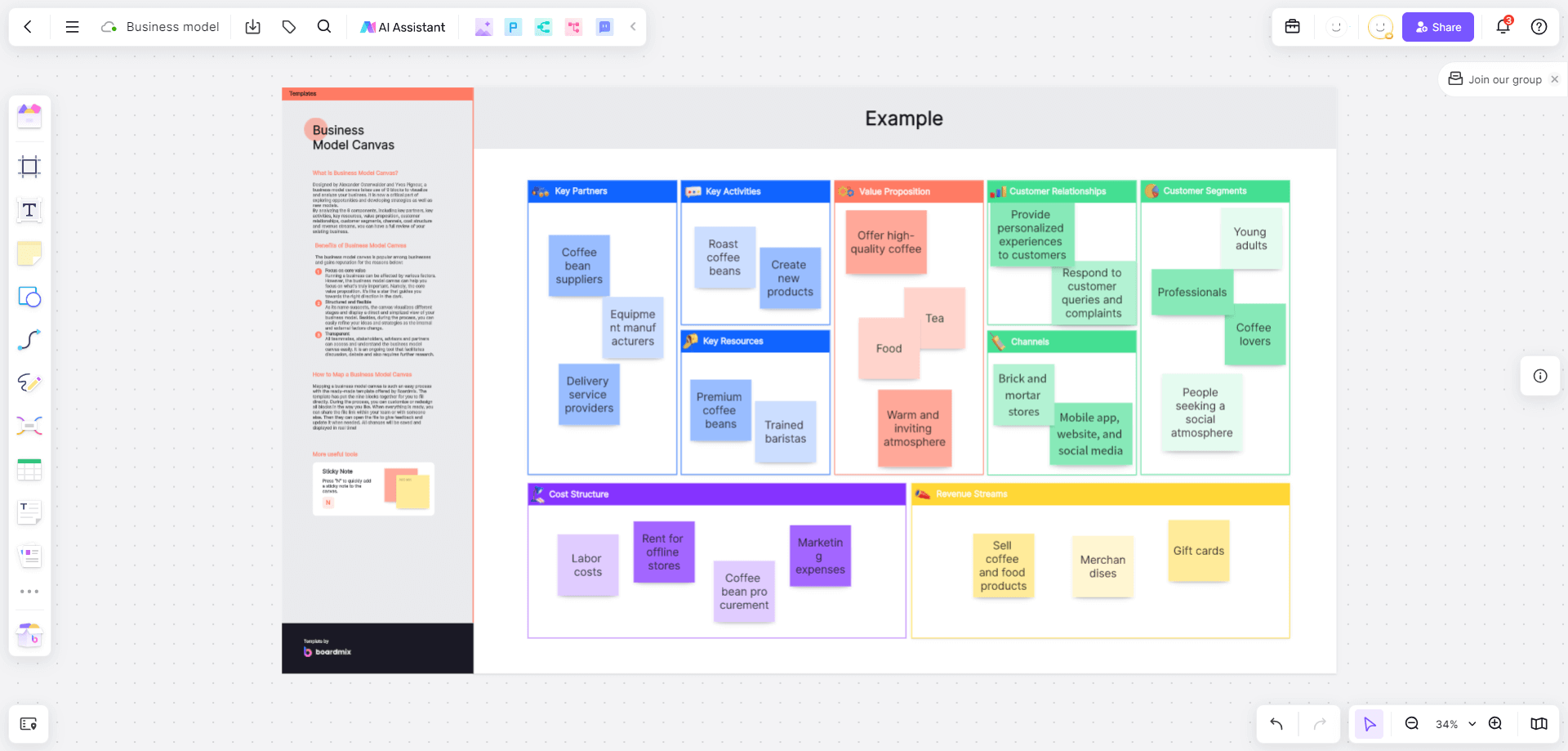
Use Boardmix's online whiteboard with the business model canvas template to map one Apple offering at a time, connect devices, services, channels, and partners, and keep a dated source beside each material claim. Compare the structure with other business model canvas examples before the team finalizes it.