A remote design critique works when the team separates observation, interpretation and decision. Give people the frame before the call, assign a facilitator and presenter, and end with named actions.

Prepare the board and invite
Create one frame for the brief, one for the design under review, one for questions and one for decisions. Add the user goal, constraints and the feedback you need before inviting people. An online whiteboard for UX design keeps these frames visible during the session.
Use roles and a short agenda
A facilitator protects the agenda, the presenter explains the intent, reviewers describe what they see, and the decision owner resolves trade-offs. A 45-minute agenda can be 5 minutes context, 25 minutes critique, 10 minutes prioritisation and 5 minutes actions.
Move from observation to decision
Ask reviewers to write observations before proposing fixes. Cluster repeated observations, name the design principle involved, then decide whether to change, investigate or accept the issue. This prevents the loudest opinion from becoming the outcome.
Worked example: checkout flow
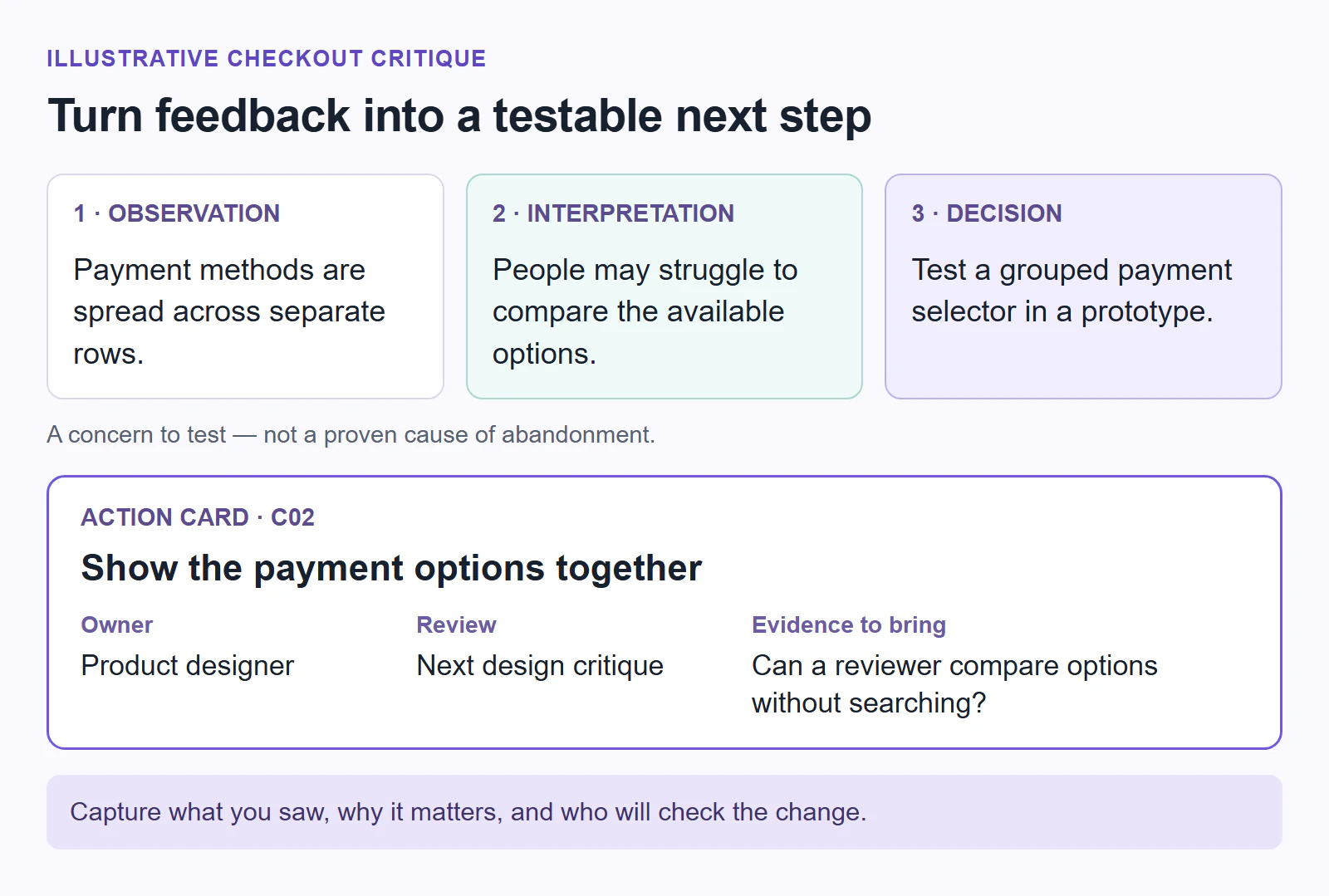
For a checkout critique, reviewers might observe that the payment method is hard to compare, connect it to the goal of reducing hesitation, and decide to test a grouped selector. The decision card records the owner and the next prototype.
Close with owners and follow-up
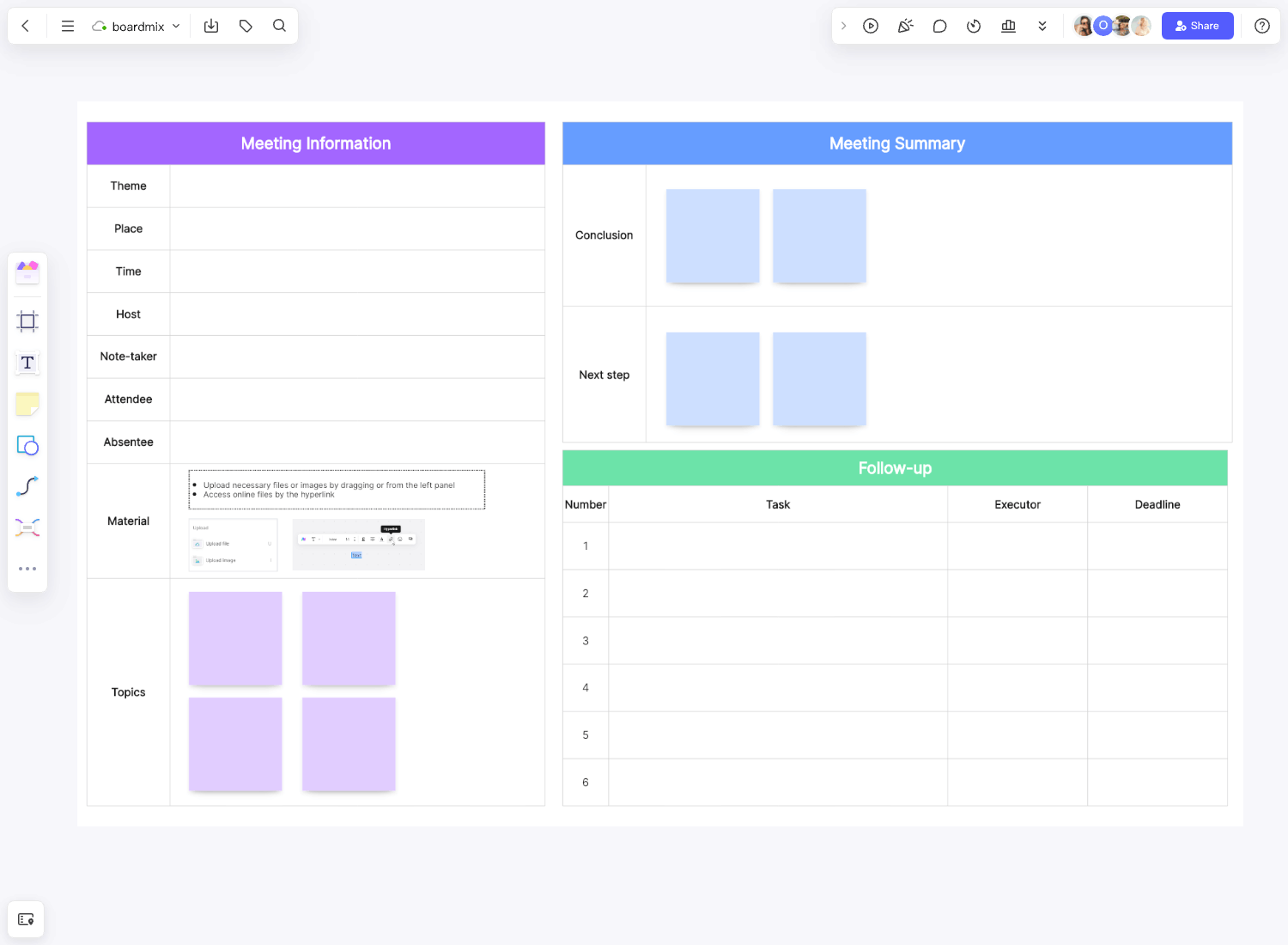
Send the decision frame and actions after the call. Keep unresolved questions visible, add a due date, and link the next review to the original frame so the team can see what changed.
In this checkout critique example, the observation is that payment methods sit in separate rows. The interpretation is that they may be hard to compare; the critique has not established a cause of abandonment. Action C02 asks the product designer to prototype a grouped selector. At the next review, check whether someone can compare the options without searching across the screen. Record the answer alongside the prototype before deciding whether to adopt it.