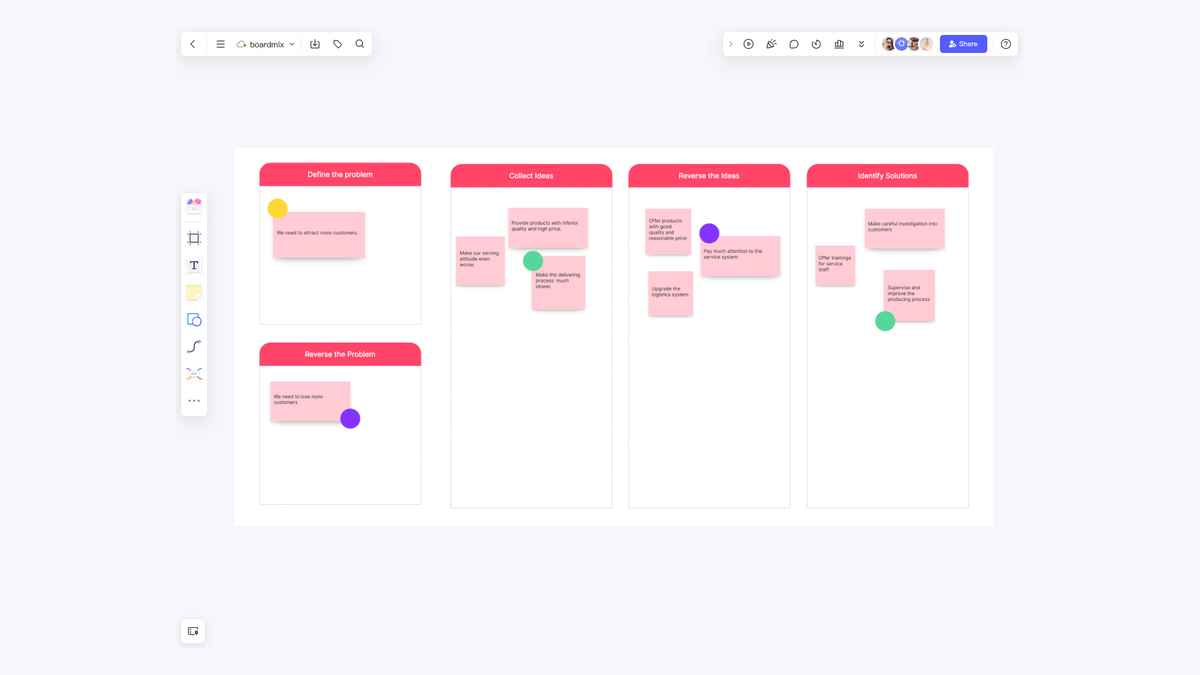
A reverse brainstorming template helps a team ask, “What would make this problem worse?” and turn the answers into practical changes. It is especially useful when a discussion keeps returning to broad advice such as “improve service.” On Boardmix’s shared whiteboard, keep each harmful action beside its proposed response so the team can see whether the reversal produces a useful change.
What is reverse brainstorming?
Reverse brainstorming combines brainstorming and reversal techniques. It’s a different approach to idea generation and problem-solving that turns the creative process upside down. It urges team members to flip the perspective—the objective is to come up with factors that worsen the issue. It does the opposite of brainstorming, which is to find solutions.
Build Reverse Brainstorming for Free
Also called negative brainstorming, this tool helps you suggest possible causes and failure points; it does not establish the root cause on its own. More importantly, it helps you develop alternative solutions to pressing issues in your business or organization.
The key point of this method is reversing the ideas to come up with better answers to tackle an obstacle. It’s good to use when the normal brainstorming process doesn’t work. Using a reverse brainstorming template can make idea generation more engaging and fun, especially for remote teams.
How many steps are in reverse brainstorming?
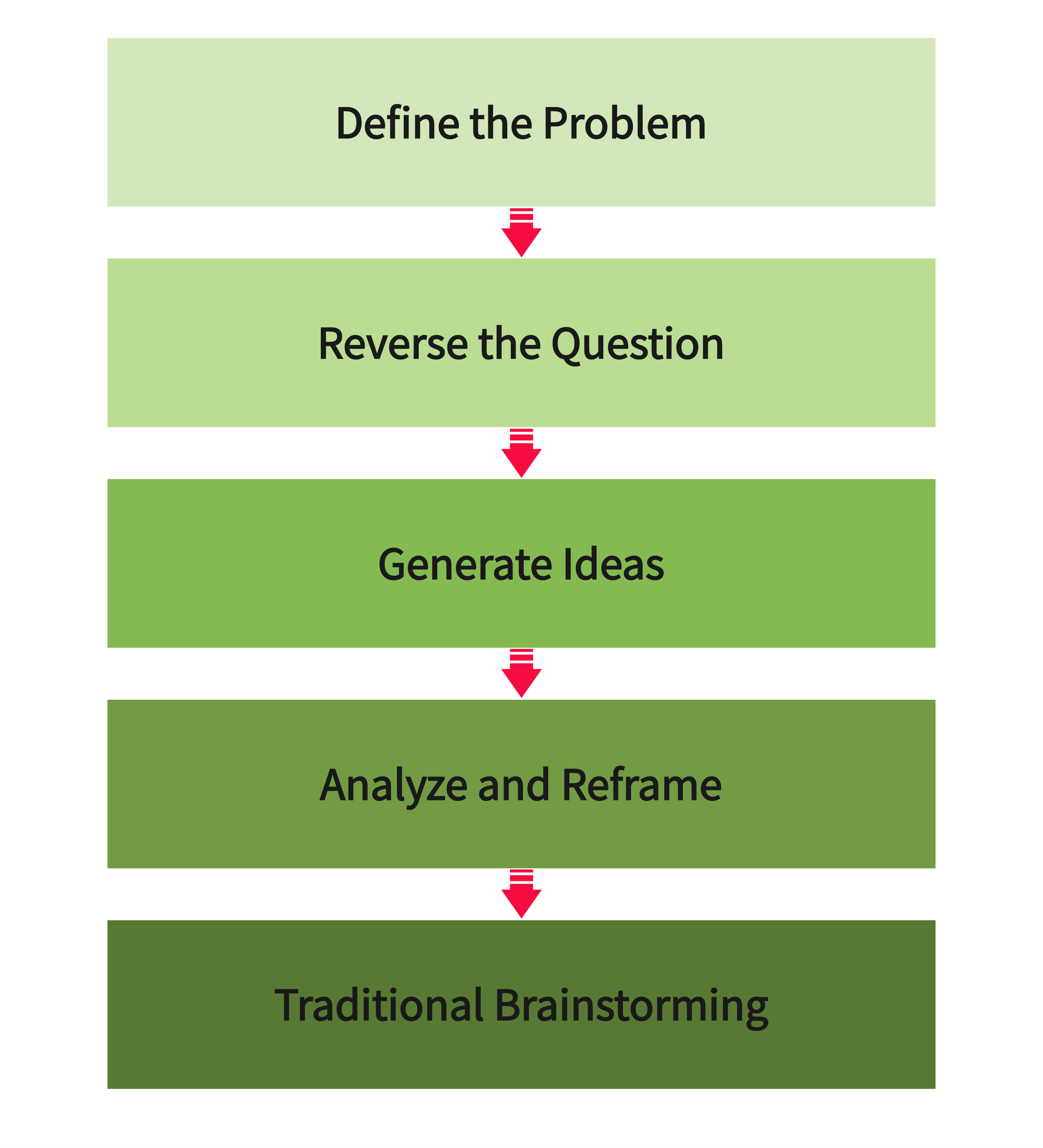
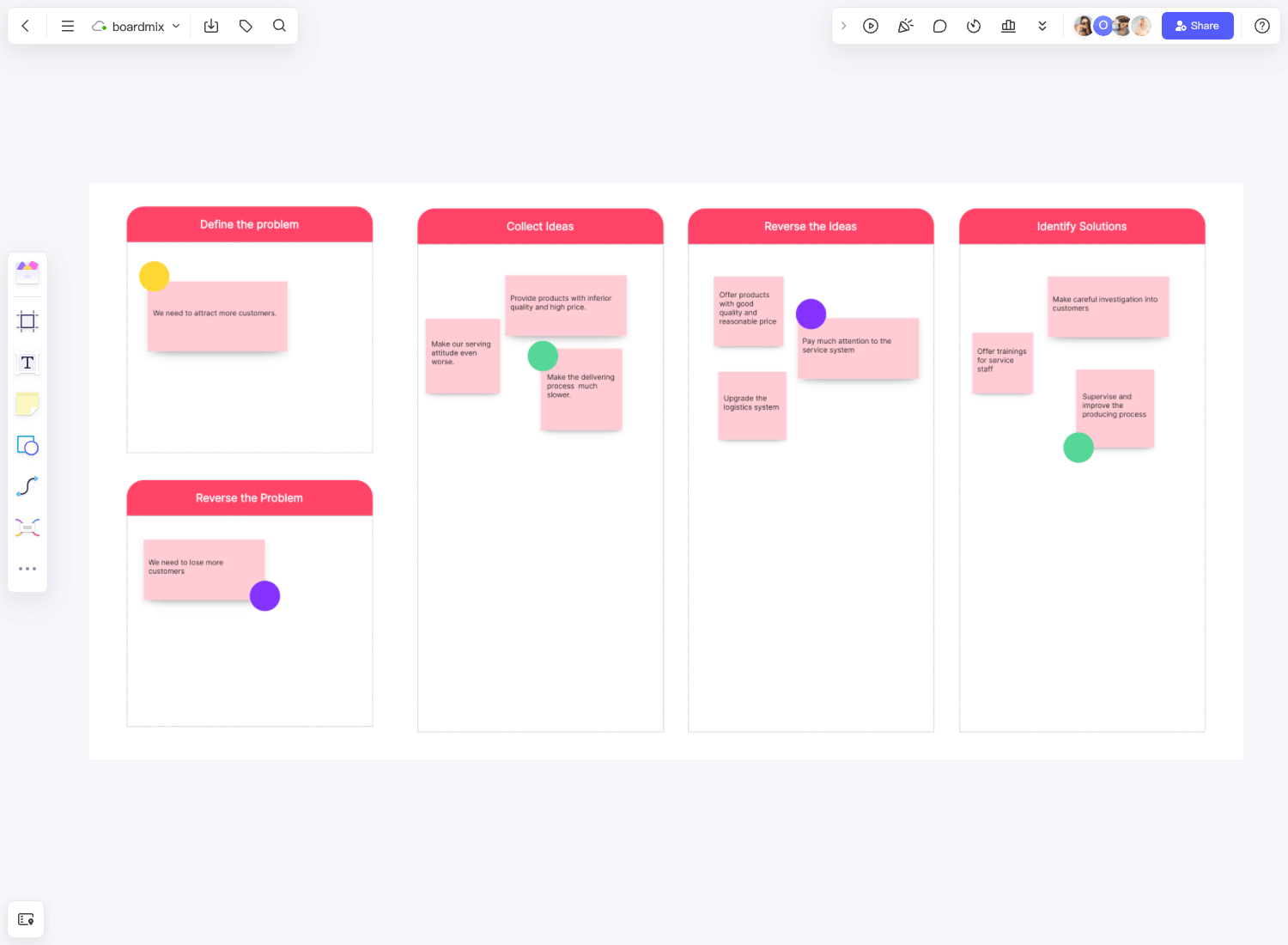
Step 1: Define the problem
The first step to this technique is identifying the current pain points that are a top priority. If it’s a project, you can determine the problematic areas and include them on the list. For instance, when a team needs to increase sales, the biggest problem is how to attract customers.
Step 2: Reverse the problem
Once you define the issue, it’s now easy to think about the opposite outcome. If you need to gain more customers, then using the reversal technique, you must brainstorm the ways to lose customers.
Step 3: Collect ideas
Next, brainstorm how to make these issues worse. Taking the example from the first step, making the problem worse could mean:
- Providing bad service and displaying a problematic attitude
- Selling poor-quality, expensive products
- Slow turnaround and delivery times
Collecting ideas after applying the reverse technique is the next step of this process. You can ask team members to list their thoughts about the problems, underlying factors, causes, and actions that make them worse. Every idea counts—it’s better to accept the thoughts everyone nominates to broaden the selection.
Step 4: Reverse the ideas
Reverse each harmful action into something the team could do differently. A response such as “provide good service” points in the right direction, but it is not yet an action someone can carry out. Start with broad reversals, such as:
- Offering good quality and reasonably priced products
- Improving the service system
- Enhancing the logistics process
Then make the response specific. “Keep customers uninformed about a delay” could become “send a revised delivery date when a delay is confirmed.” The reversal should address the mechanism that causes the problem, not merely swap a negative adjective for a positive one. If a suggestion says “remove every approval,” ask which delay it is meant to solve and which checks must remain.
Step 5: Identify solutions
After reversing the ideas, assess their feasibility, cost, and likely impact. Turn the strongest ideas into actions you can test. In the customer-service example below, “respond faster” could become “assign an owner to unanswered requests and compare response times before and after the change.” Decide what evidence would justify keeping or changing the action.
Benefits of reverse brainstorming
Reverse brainstorming is a powerful tool that offers numerous benefits from fostering innovation to promoting team unity. So why not give it a try? Turn your thinking upside down and see what incredible ideas come pouring out!
Build Reverse Brainstorming for Free
First off, it's an effective tool for problem-solving. Traditional brainstorming methods have you seeking solutions, but reverse brainstorming flips the script. It asks you to think of ways to cause the problem instead. This unique perspective allows you to identify potential pitfalls and address them head-on, making your solution more robust and comprehensive.
Secondly, it encourages creativity and innovation. When you're asked to think in reverse or consider the worst-case scenarios, your mind is pushed out of its comfort zone. This leads to more innovative ideas that can lead to groundbreaking solutions.
Moreover, it promotes team collaboration. Reverse brainstorming requires a group effort where everyone's input is valued. This creates a sense of unity and fosters a positive work environment where everyone feels heard and appreciated.
Lastly, it's simply fun! The unconventional approach of reverse brainstorming adds an element of surprise and excitement to the process. It keeps participants engaged and motivated, leading to more productive sessions.
Reverse Brainstorming Template in Boardmix
1. Product Development Reverse Brainstorming
Problem: Customers are not satisfied with our product.
Reverse Question: What can we do to make sure our product is the worst in the market?
Ideas Generated:
- Sell the product at an unreasonably high price
- Ignore the customer feedback and suggestions
- Provide no after-sales service or support
- Make the product hard to use
The solution from Reverse Ideas:
- Offer competitive pricing for our product
- Actively seek and respond to customer feedback
- Establish an efficient after-sales service system
- Enhance the user-friendliness of the product
2. Customer Service Reverse Brainstorming
Problem: We are not retaining our customers.
Reverse Question: What can we do to drive our customers away?
Ideas Generated:
- Provide slow and unresponsive customer service
- Make our policies rigid and inflexible
- Show indifference to customer complaints
The solution from Reverse Ideas:
- Ensure quick and efficient customer service
- Implement flexible policies that cater to customer needs
- Address customer complaints promptly and effectively
To turn this customer-service example into a useful session, narrow the problem to “Customers have to chase us after their first support reply.” The negative ideas now reveal specific points where the conversation can stall:
- “Leave a transferred request without an owner.” Reverse it to “Name the receiving owner before the first agent hands over.” On the board, write the handoff action next to the negative idea, not in an unrelated list of improvements.
- “Ask the customer for the same details twice.” Reverse it to “Carry the existing request summary into the handoff and ask only for missing information.” Check which details the receiving person actually needs before expanding the form.
- “Stay silent while waiting for another team.” Reverse it to “Tell the customer what is pending and when they can expect the next update.” Agree on an update interval the team can realistically maintain.
Suppose the team chooses the ownership change for a one-week trial. The support lead checks a small set of transferred requests for a named receiving owner and notes any requests that still need chasing. Keep those observations beside the proposed change. If ownership is clear but replies still stall, investigate capacity or missing information rather than declaring the reversal a success.
3. Team Performance Reverse Brainstorming
Problem: Our team's performance is below par.
Reverse Question: How can we make our team perform even worse?
Ideas Generated:
- Promote a culture of blame and finger-pointing
- Give no recognition or rewards for good work
- Overload team members with work, creating burnout
The solution from Reverse Ideas:
- Encourage a supportive and collaborative team culture
- Recognize and reward excellent performance
- Balance workload among team members to prevent burnout
How to use a reverse brainstorming template in Boardmix
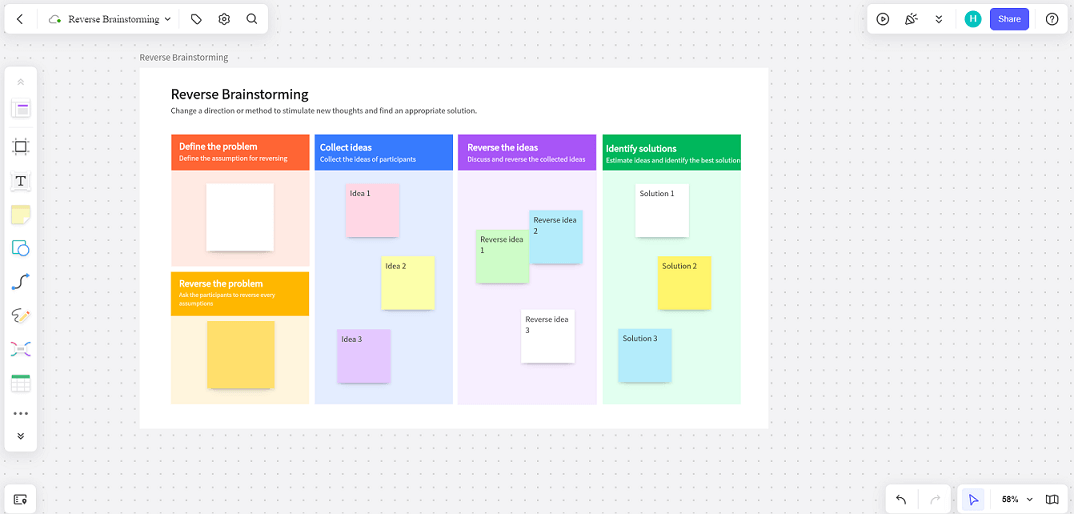
The Boardmix reverse brainstorming template provides sections for the problem, its reversal, negative ideas, and possible responses. Add a sticky note for each idea, then place the response beside it so the connection remains visible. For the support example, use the same short reference on a pair of notes, such as N1 “No receiving owner” and R1 “Confirm receiving owner before transfer.” This preserves the connection when you move the notes during discussion.
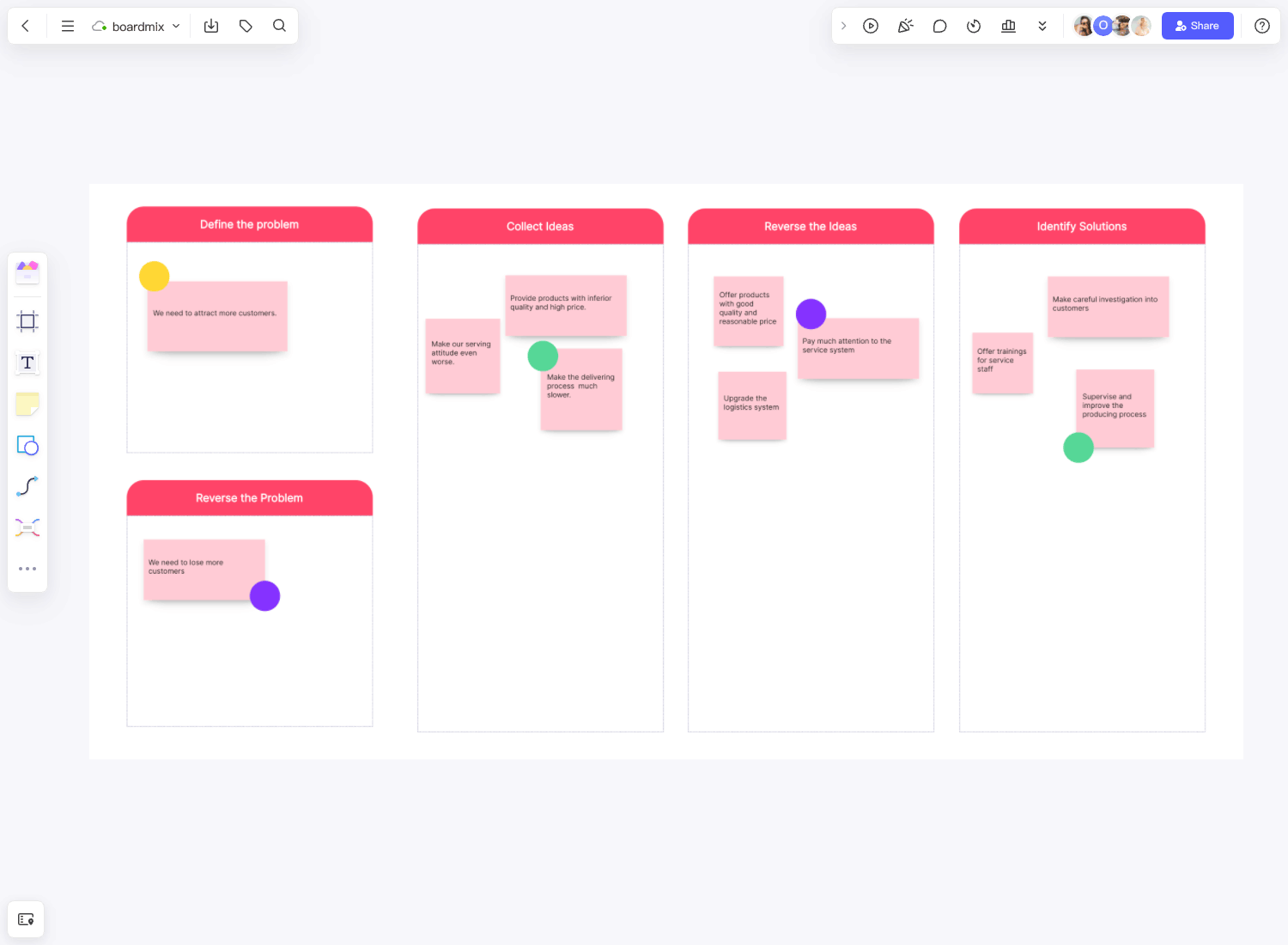
Team members can contribute to the shared Boardmix canvas during a remote session. Check editing permissions beforehand, then give everyone time to write before discussing the ideas together. Keep criticism focused on actions and conditions, not named colleagues. If a note says “The support team does not care,” ask for an observable event such as “A transferred request has no named owner.” The second version gives the group something it can investigate and change.
1. Access Boardmix
Log in to your Boardmix account or create a new one if you don't have an account already.
2. Select a Template
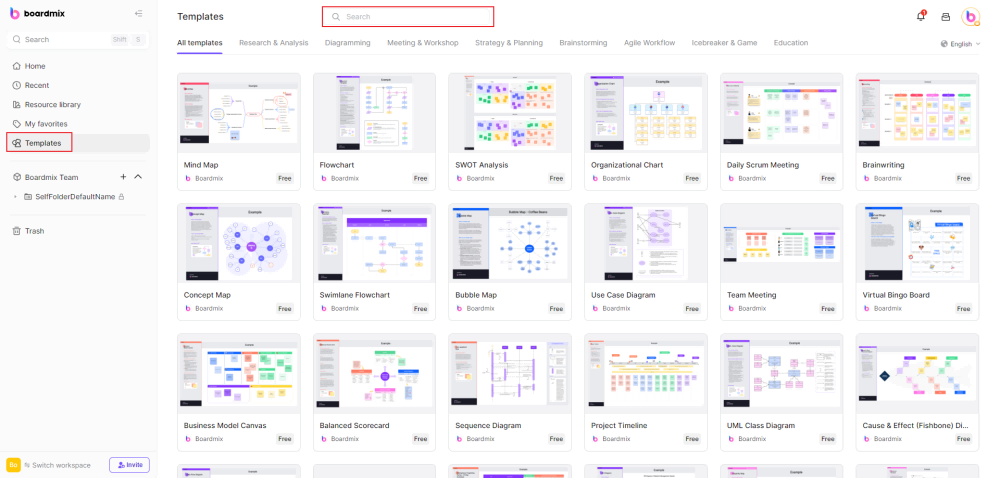
Browse through the available templates in Boardmix and choose the one that suits your needs. There is a reverse brainstorming template available in the template library, or you can select a general brainstorming template and customize it accordingly.
3. Customize the Template
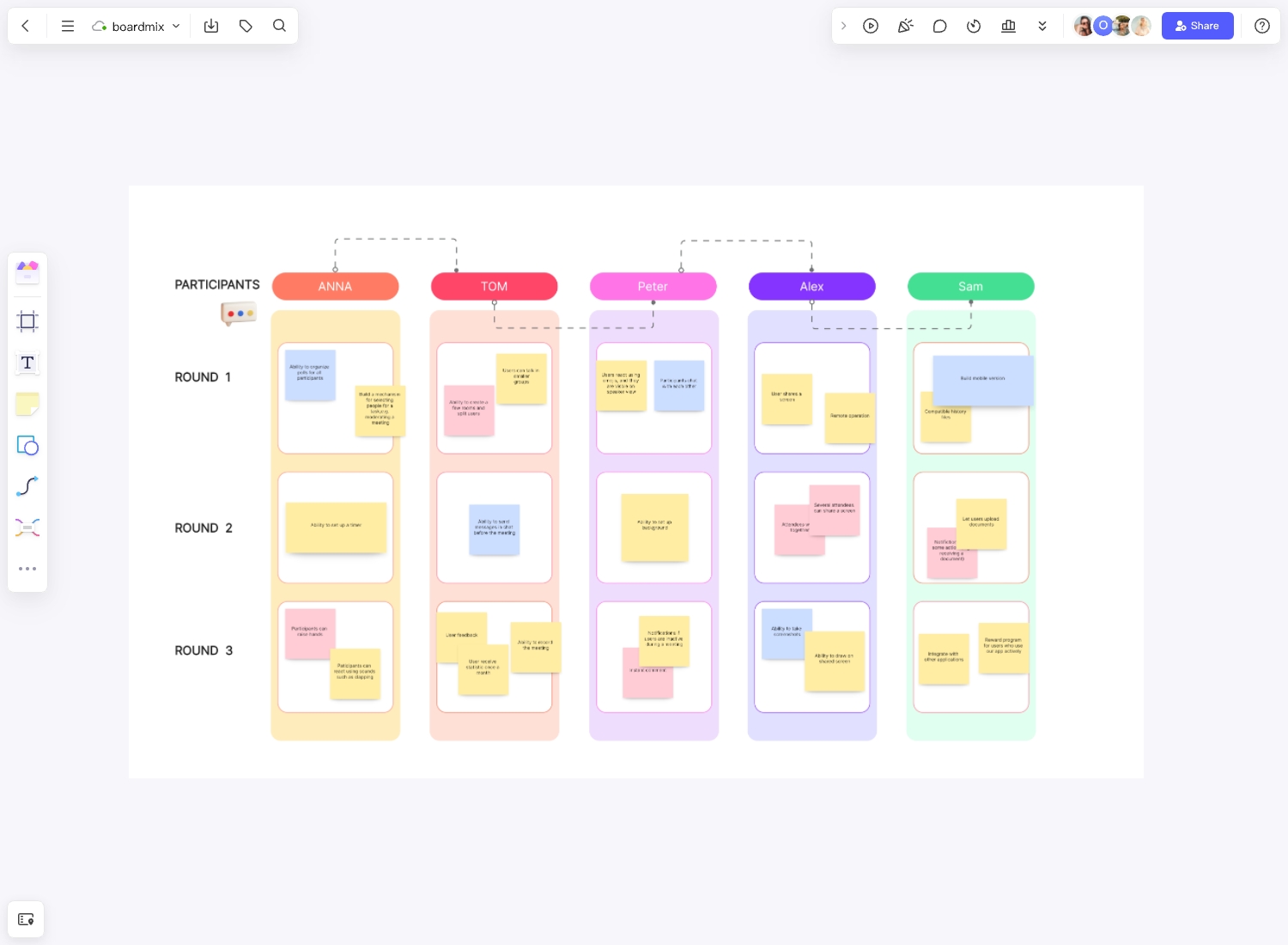
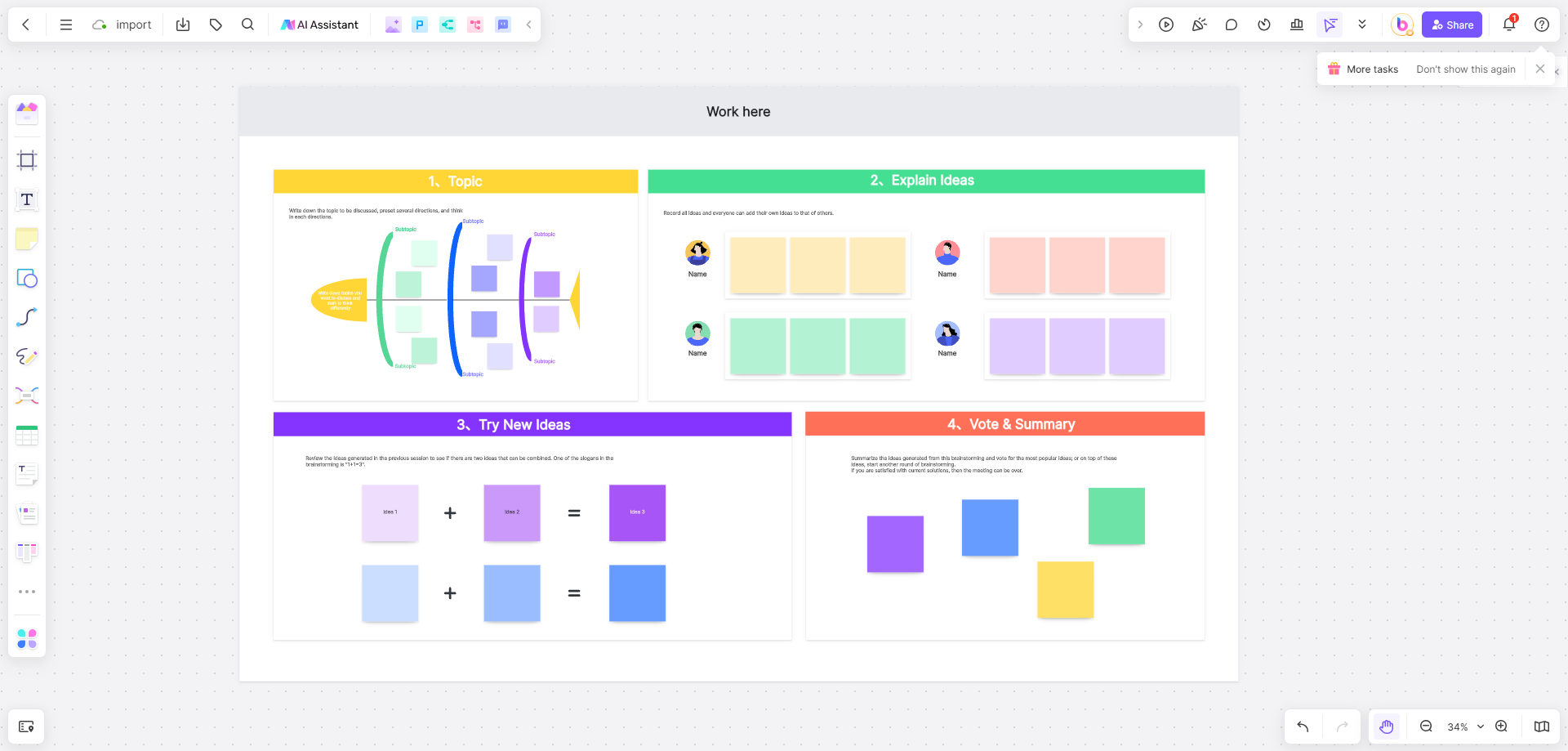
Once you have selected a template, add prompts, questions, or data for your specific problem. The general brainstorming layout shown below is another starting point: rename its sections for the problem, reversed question, negative ideas, and responses before using it for reverse brainstorming. Leave a small area beside the responses for the selected trial, its owner, and the observation you will review. Keep unselected ideas on the canvas so a later discussion can return to them.
4. Invite Participants
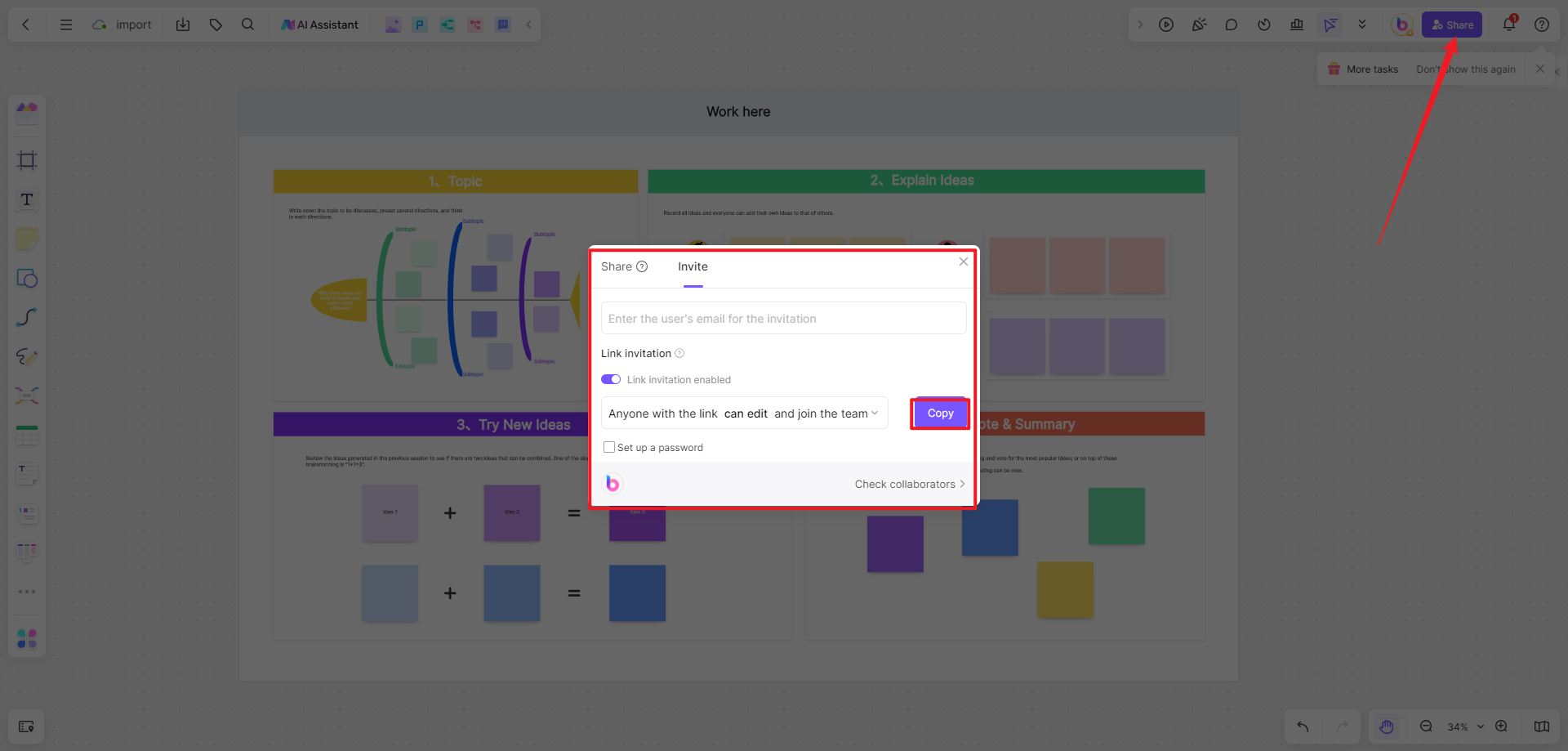
Share the template with the participants of your guided brainstorming session. You can invite them via email or share a link to the template. Make sure everyone has access to the template and can contribute their ideas.
End with a response that someone can act on and a question the trial should answer. In the support example, that means testing the receiving-owner handoff—not simply leaving the session with “better customer service” written on the board.