




The best AI tools for marketing solve a defined job. Boardmix helps teams organize research and campaign decisions; general assistants support analysis and drafting; specialist tools address copy, design, email, social, SEO, or automation. No product fits every task, so the choice depends on workflow, data rules, review, and output quality.
This guide compares 15 options by use case. It helps marketers select a tool or assemble a small stack. For a hands-on workflow, see how to use AI for marketing step by step.
Best AI Tools for Marketing at a Glance
Use the table as a shortlist, then test the tools that match your highest-value tasks. Features, access controls, and integrations can change, so confirm current details before adoption.
| Tool | Best suited to | What to evaluate |
|---|---|---|
| Boardmix | Visual campaign planning and team alignment | Whether the canvas fits your review and handoff process |
| Notion AI | Assistance inside a shared documentation workspace | Source organization, permissions, and editorial review |
| Surfer SEO | Search-focused briefs and on-page guidance | Intent fit and natural coverage rather than keyword density |
| Content at Scale | Structured long-form content production | Research quality, differentiation, and editing effort |
| Originality AI | Supporting originality and authorship review | False results and the need for documented human judgment |
| Writer | Governed enterprise content workflows | Approved knowledge, access controls, and brand consistency |
| Zapier | Automating handoffs between marketing tools | Permission scope, failure handling, and maintenance |
| Chatfuel | Structured conversational marketing workflows | Channel rules, escalation paths, and customer consent |
| Albert.ai | Assistance with paid-media optimization | Data quality, attribution limits, and human controls |
| Acrolinx | Enterprise content quality and terminology governance | Rule quality, exceptions, and adoption across teams |
| Brand24 | Monitoring brand and topic mentions | Noise, sentiment context, and response ownership |
| Emarsys | Customer engagement and lifecycle workflows | Consent, segmentation quality, and platform fit |
| Hootsuite | Social content ideation and adaptation | Channel accuracy and editorial approval |
| Lumen5 | Turning approved material into video drafts | Visual accuracy, pacing, rights, and accessibility |
| MarketMuse | Content planning and topic coverage analysis | Whether recommendations improve the reader's task |
How to Choose an AI Marketing Tool
Start with the job, not the product list. A useful evaluation gives every candidate the same inputs and measures the result against the same criteria.
- Define one task. Examples include campaign mapping, content planning, quality review, social listening, lifecycle work, video adaptation, or workflow automation.
- Set a quality baseline. Use a strong existing brief or human-produced asset so reviewers can compare accuracy, usefulness, and editing time.
- Check evidence handling. Determine whether the tool follows supplied sources, signals uncertainty, and avoids unsupported claims.
- Review data controls. Confirm what can be uploaded, who can access it, how it is retained, and which account settings apply.
- Measure workflow fit. Count the manual handoffs removed as well as new review, formatting, and maintenance work created.
- Require human approval. Name the person responsible for facts, brand, legal considerations, and final publication.
- Limit overlap. Prefer a small stack with clear ownership over several products that perform the same job.
Tool selection also affects planning capacity and handoffs. For that operational layer, compare project management software for marketing teams separately from AI content tools.
15 AI Marketing Tools Compared by Use Case
1. Boardmix: Best for Visual Campaign Planning
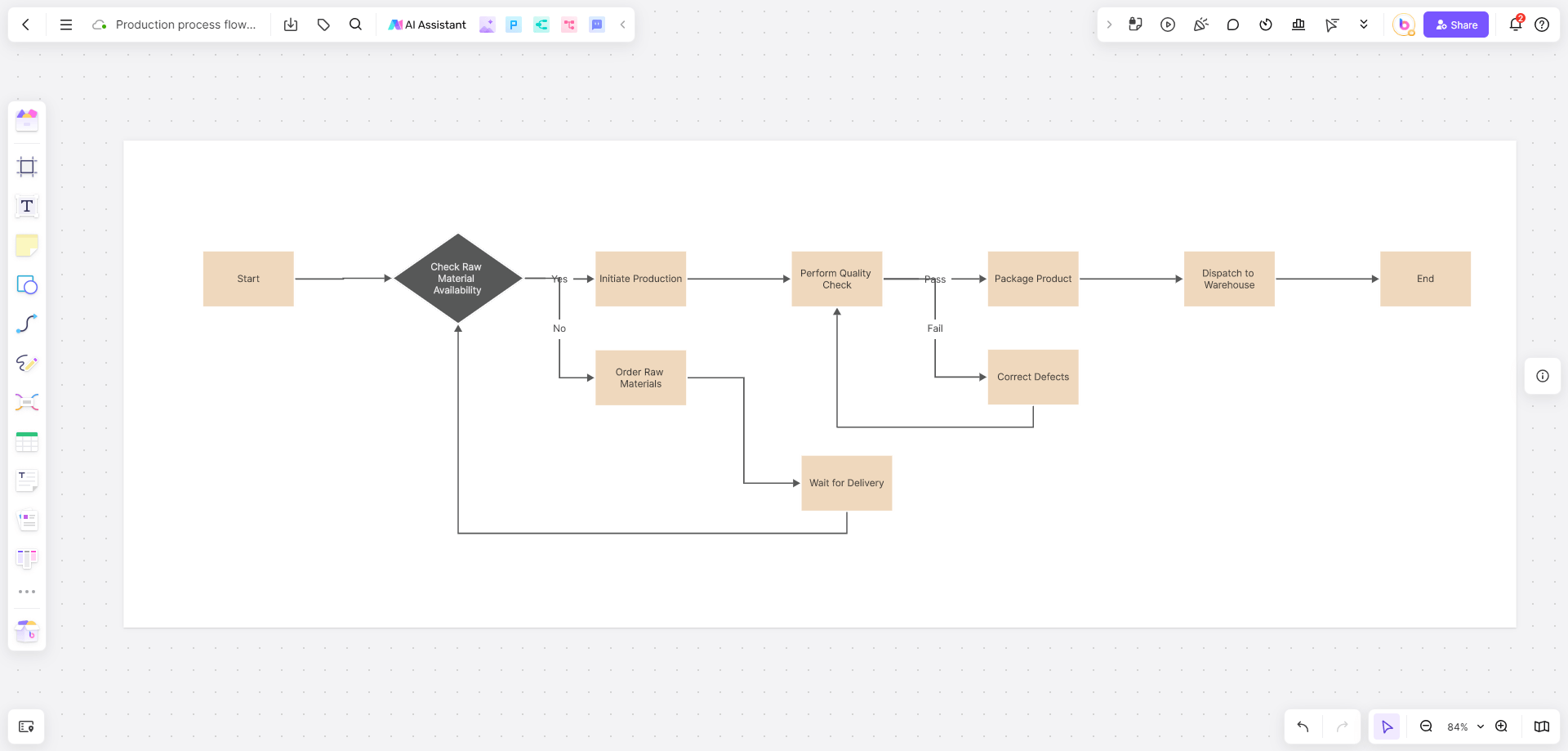
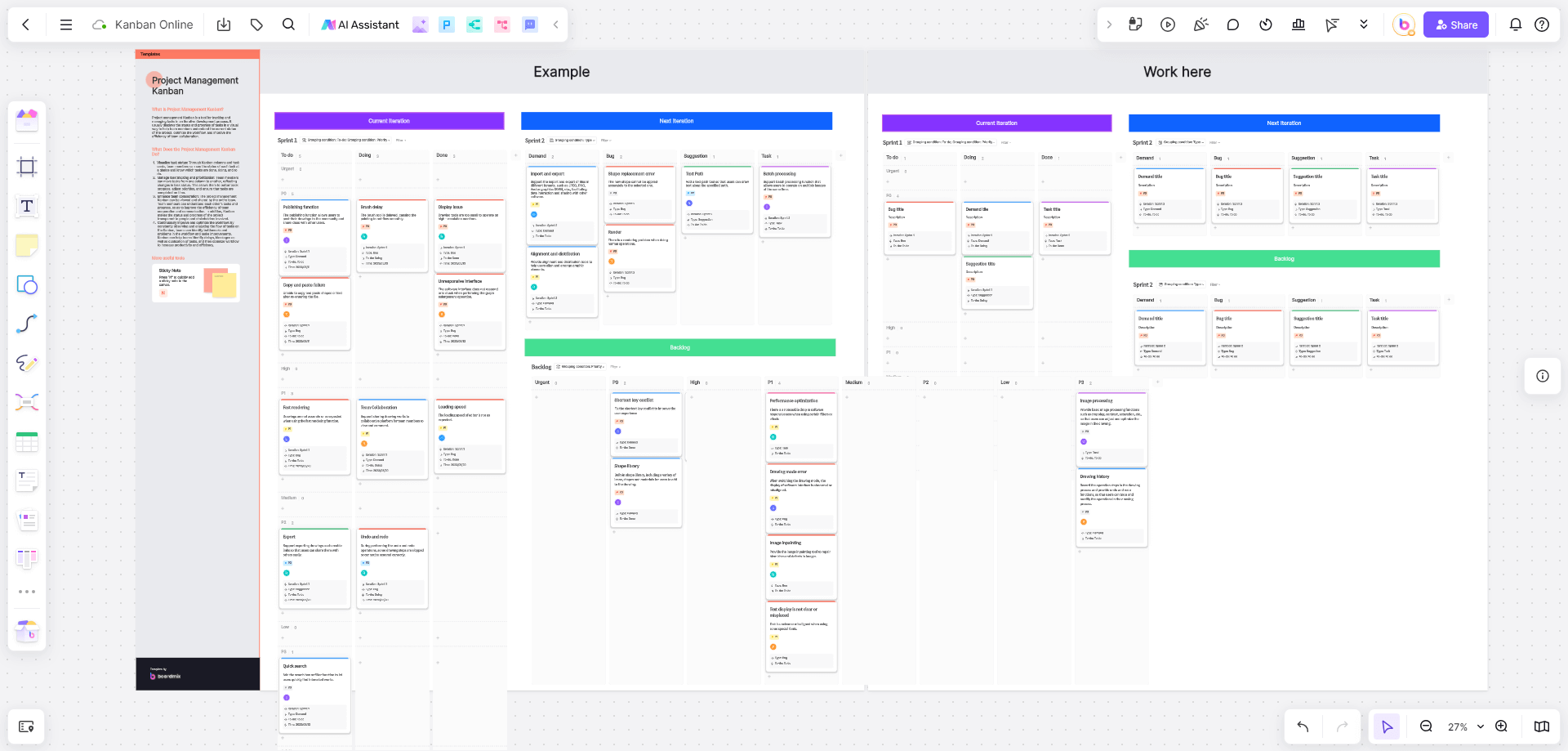
Boardmix is most useful when the marketing problem is visual and collaborative. A team can arrange audience notes, campaign goals, messages, channel plans, funnel stages, and feedback in one shared space. That makes it easier to see dependencies and unresolved decisions before content production begins. Treat AI-generated ideas as working material, then assign owners to verify claims, choose priorities, and approve the final plan.
2. Notion AI: Best for Workspace-Based Content Support
Notion AI can be considered when briefs, meeting notes, campaign documentation, and draft content already live in a shared workspace. Test whether it can summarize approved material and help structure a first draft without losing source context. Workspace access still requires careful governance: confirm who can see the underlying pages, what information may be processed, and who approves the final copy.
3. Surfer SEO: Best for Search-Focused Content Guidance
Surfer SEO can help prepare a search-focused brief and identify possible coverage gaps. Its recommendations should inform an editor, not dictate prose. Validate the search intent first, then include only concepts that help the reader complete the task. Avoid repeating exact phrases to reach an interface score; clarity, evidence, and distinct page ownership are more important than mechanical keyword use.
4. Content at Scale: Best for Structured Long-Form Production
Content at Scale can be evaluated by teams producing recurring long-form drafts. Use a representative assignment and measure how much research, rewriting, fact-checking, and formatting the output still needs. A longer draft is not automatically complete or original. Require verified sources, a clear editorial angle, and a named reviewer before any generated material enters the publication workflow.
5. Originality AI: Best for Supporting Content Review
Originality AI may support plagiarism and AI-authorship review, but detection results are probabilistic and can be wrong. Do not use one score as proof of misconduct or as the only publication gate. Combine any automated signal with source checks, revision history, editorial review, and a documented decision process. The goal is accountable content, not chasing a detector score.
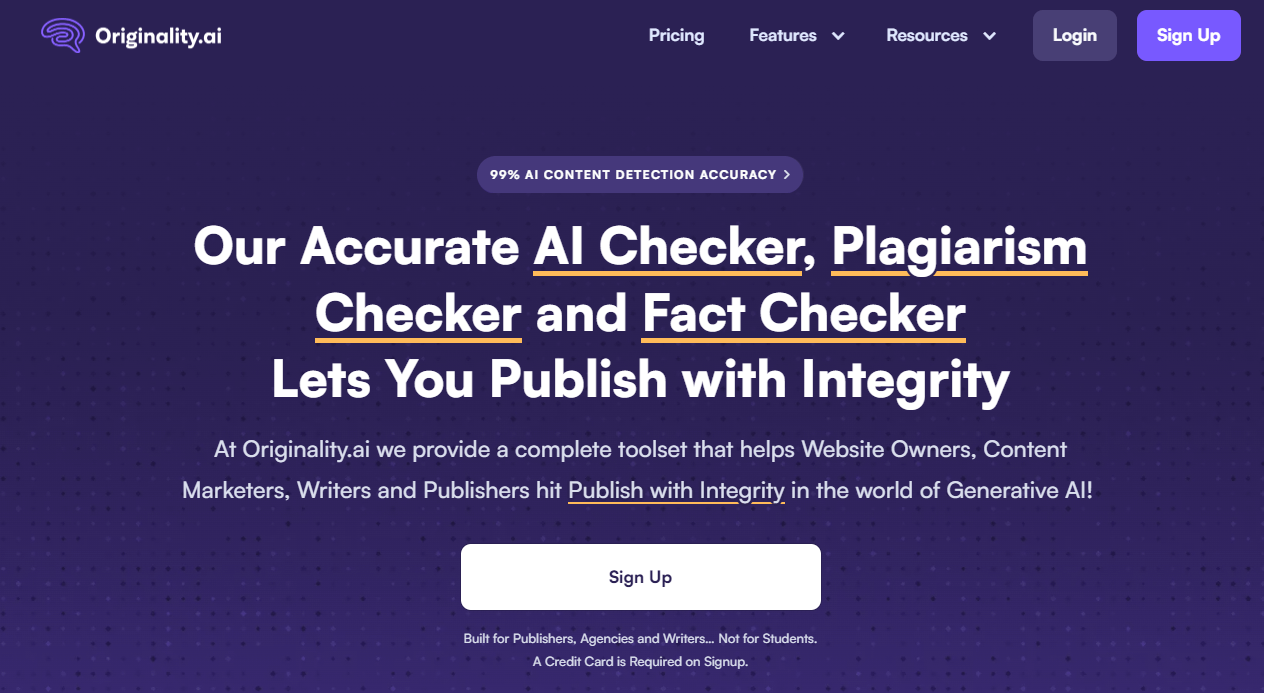
6. Writer: Best for Governed Enterprise Content Workflows
Writer can be assessed by larger teams that need approved terminology, knowledge sources, permissions, and repeatable content processes. Test whether it follows your real policy and brand rules, handles exceptions clearly, and produces material reviewers can trace. Governance features do not remove accountability; subject-matter owners must still verify claims and approve external communication.
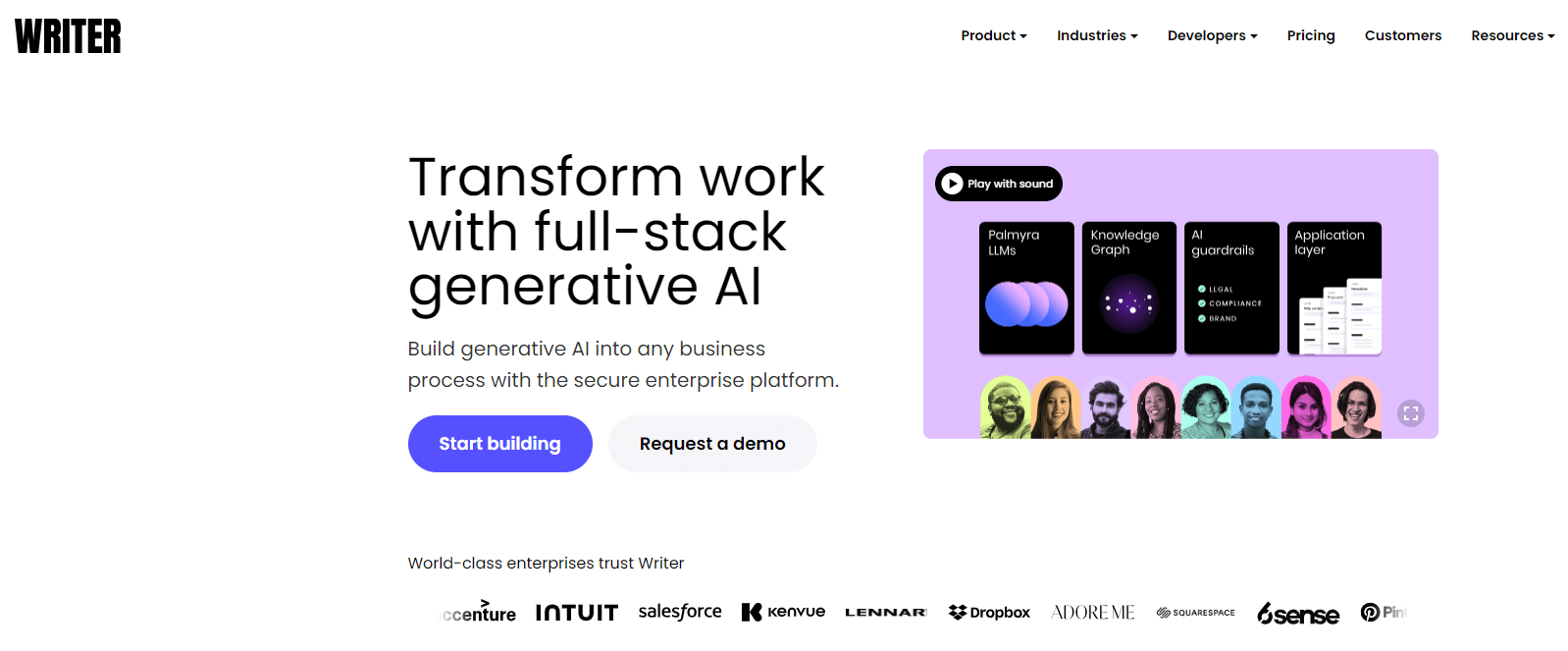
7. Zapier: Best for Marketing Workflow Automation
Zapier can connect approved steps across a marketing stack, such as routing a reviewed submission into a defined follow-up process. Begin with a narrow workflow, least-privilege access, explicit error handling, and an owner who monitors failures. Automation should remove a known handoff, not hide an unclear process behind more software.
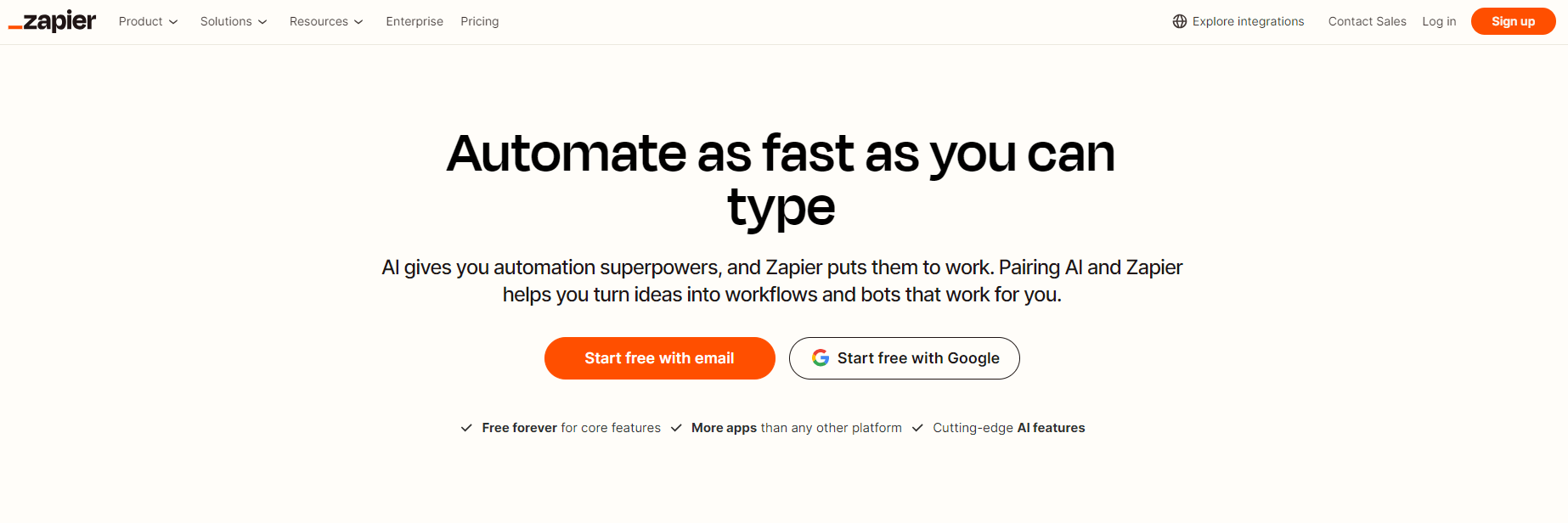
8. Chatfuel: Best for Structured Conversational Workflows
Chatfuel can be evaluated for supported messaging and conversational marketing use cases. Start with a narrow customer question, approved responses, clear consent, and a visible path to a person. Channel policies and available features may change, so confirm the current setup before launch. Review conversation logs for unresolved intent rather than measuring success only by automated response volume.
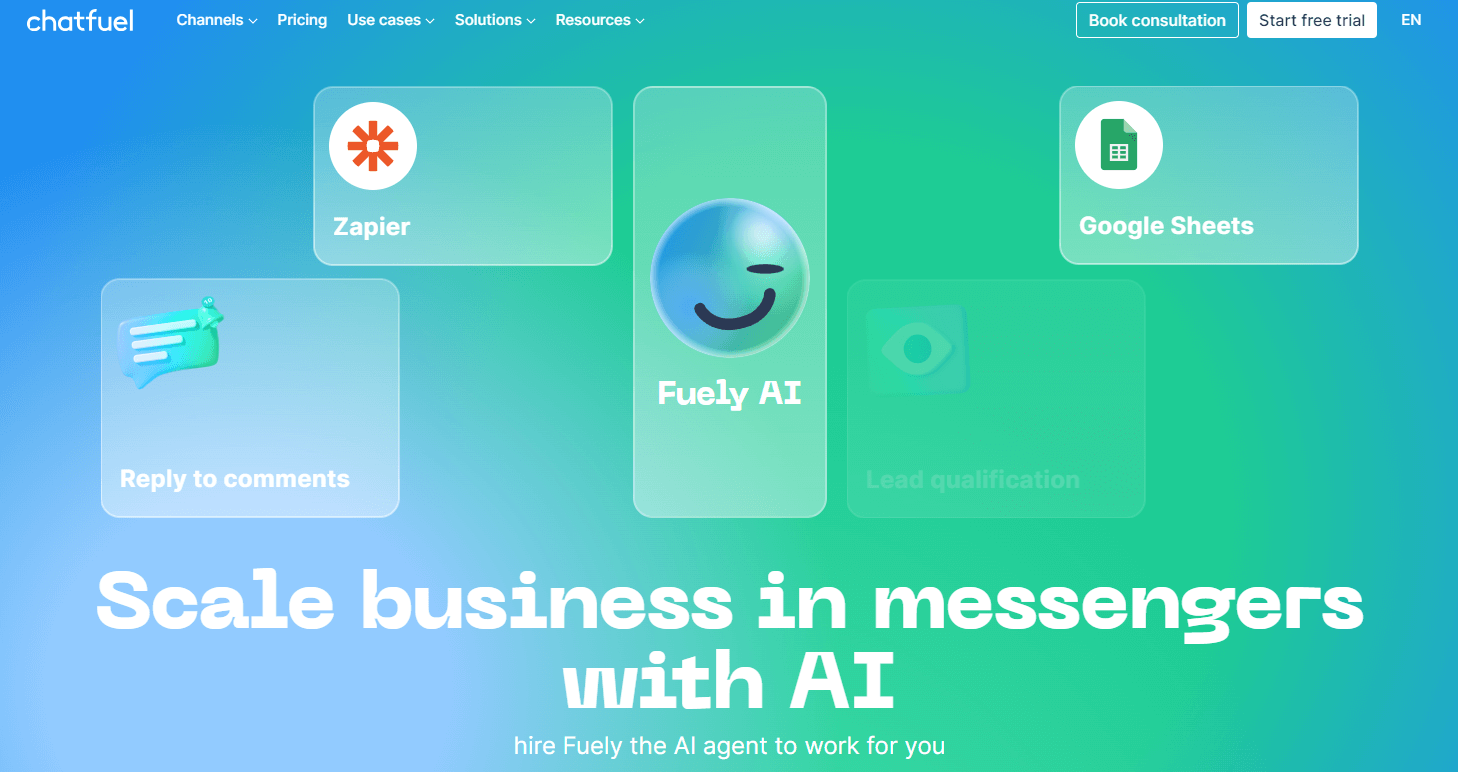
9. Albert.ai: Best for Paid-Media Optimization Support
Albert.ai is relevant to teams assessing AI-assisted paid-media optimization. Evaluate it against an agreed baseline and document which decisions remain under human control. Results depend on data quality, campaign structure, attribution assumptions, and sufficient learning time. Marketing owners should review budget constraints, brand safety, audience exclusions, and unexpected changes instead of treating optimization as a black box.
10. Acrolinx: Best for Enterprise Content Quality
Acrolinx can help organizations apply terminology, style, and content-quality guidance across teams. Its usefulness depends on the quality of the rules and how exceptions are handled. Test it on several content types, review false positives, and assign owners to maintain the guidance. Consistency is valuable only when it preserves technical accuracy and natural language.
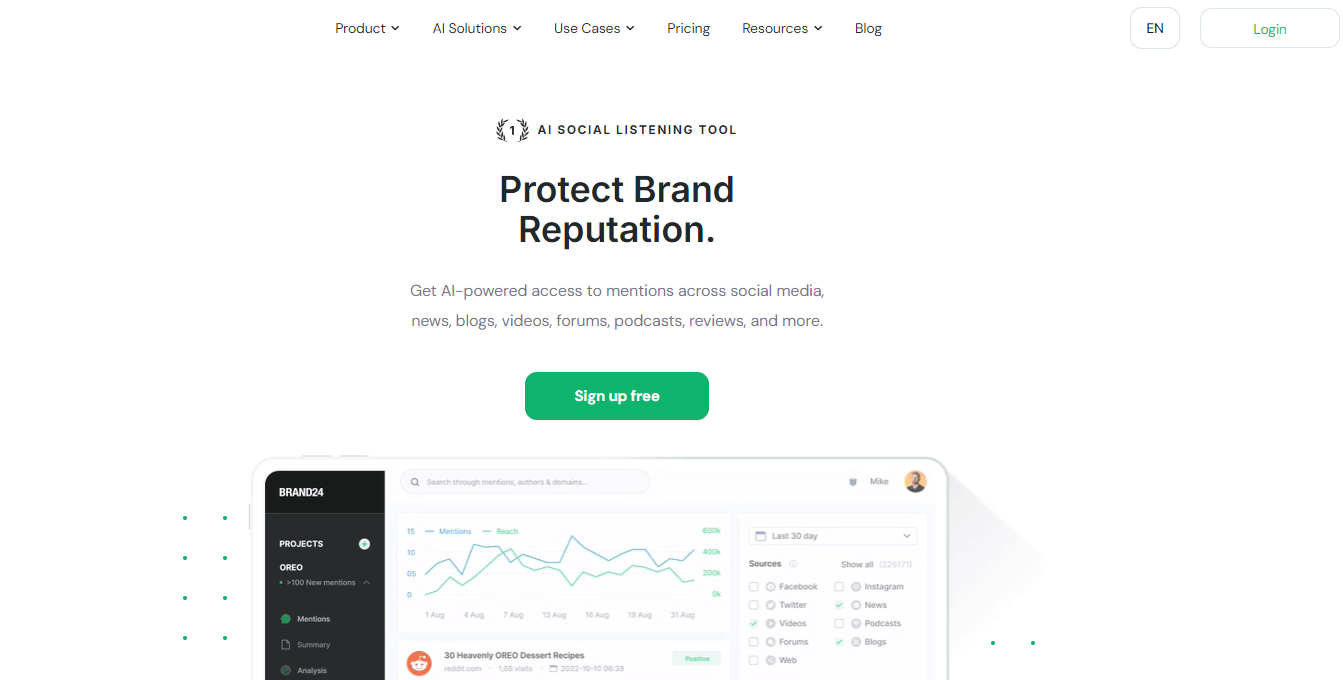
11. Brand24: Best for Brand and Topic Monitoring
Brand24 can support monitoring of brand, competitor, or topic mentions and help teams organize a large stream of signals. Automated sentiment or summaries still need context: sarcasm, ambiguous names, and irrelevant mentions can distort the picture. Define the queries, exclusions, escalation rules, and response owner before using monitoring data to make campaign decisions.
12. Emarsys: Best for Lifecycle Marketing Workflows
Emarsys may suit teams evaluating customer engagement and lifecycle workflows. The quality of any assistance depends on lawful data collection, accurate segmentation, and a clear contact strategy. Test a limited use case and monitor customer-level outcomes and guardrails. Do not let automation increase message frequency or personalize claims beyond what the underlying data supports.
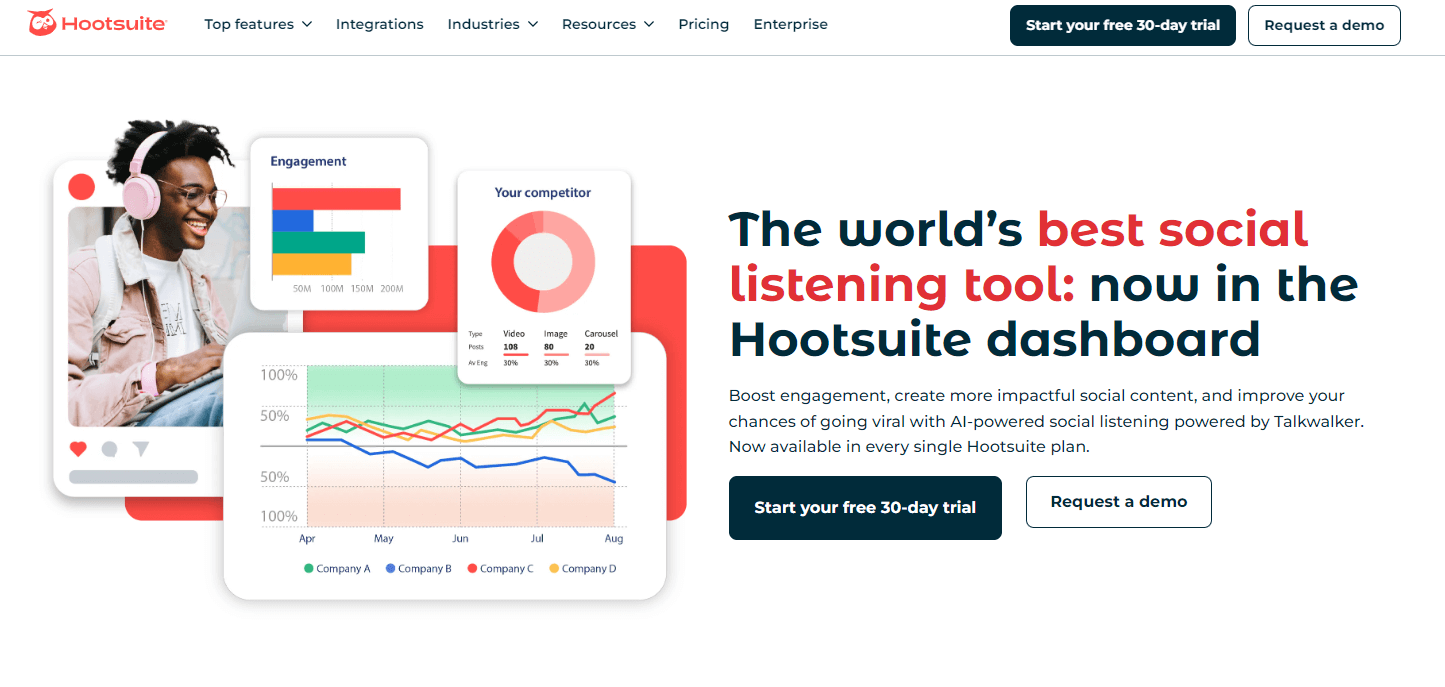
13. Hootsuite: Best for Social Content Adaptation
Hootsuite can help a social team turn an approved campaign idea into channel-specific starting points. Review each draft for platform context, timing, claims, and tone; one message copied across networks is rarely a sound strategy. Keep escalation and approval rules in place for regulated topics, customer responses, and fast-moving events.
14. Lumen5: Best for Video Drafts from Approved Content
Lumen5 can be considered when a team wants to adapt an approved article or script into an initial video sequence. Review every scene for meaning, crop, pacing, captions, brand fit, and asset rights. Automated selection can make a plausible-looking video that misrepresents the source, so a person should control the narrative and final edit.

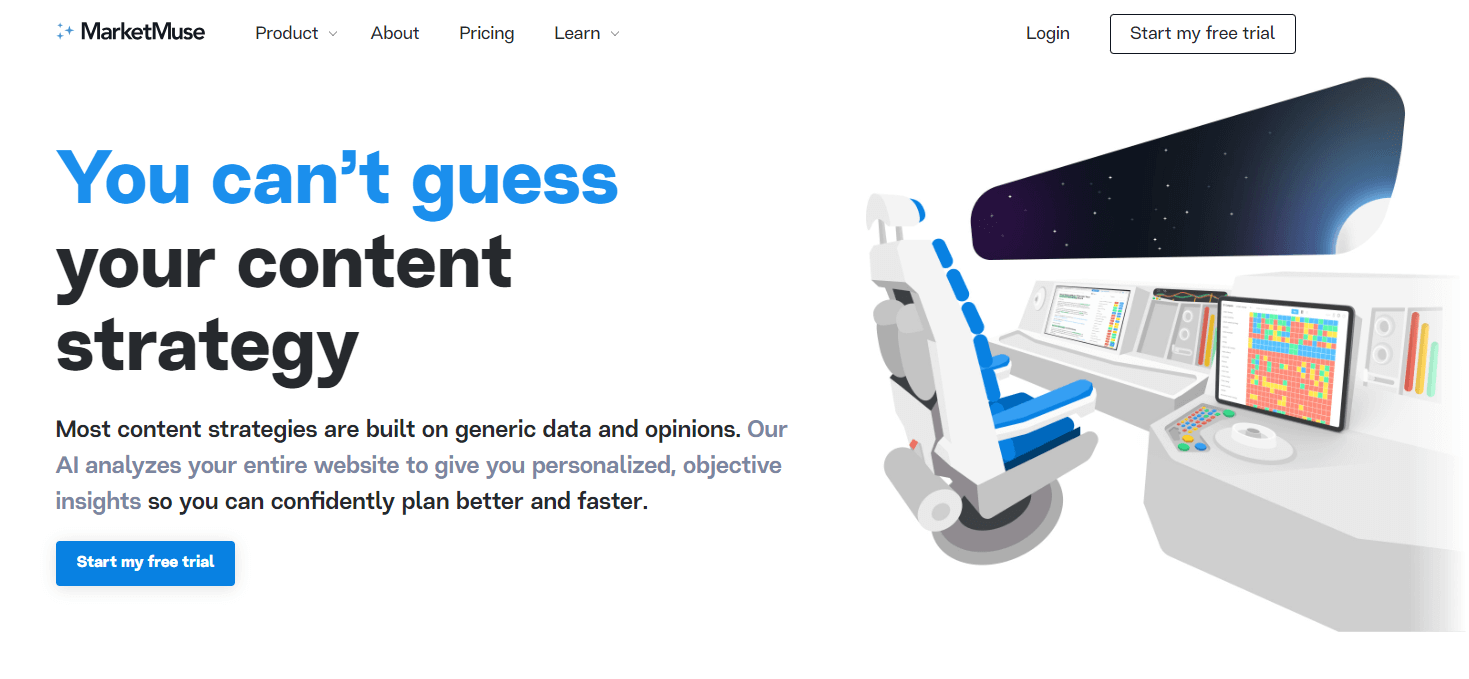
15. MarketMuse: Best for Content Planning and Coverage
MarketMuse can support topic research, content planning, and the review of potential coverage gaps. Use recommendations to ask better editorial questions, not to expand an article without purpose. Confirm the page's unique search task, examine competing content manually, and add evidence or analysis that improves the answer. Teams comparing drafting tools can separately review AI copy generators for marketing copy.
A Practical Small-Stack Model
Most teams do not need all 15 products. A manageable stack usually has four roles: one planning space, one general assistant, one specialist tool for the team's highest-volume task, and one controlled automation layer. Give each role a named owner and a documented purpose. Review the stack quarterly, remove duplicate functions, and retain the source briefs and decisions needed to reproduce important work.
A pilot should show whether the tool improves the outcome, reduces total cycle time after review, and avoids unacceptable factual, privacy, or maintenance risk. If the evidence is unclear, do not scale it.
Frequently Asked Questions
What is the best AI tool for marketing?
There is no universal best option. Boardmix is suited to visual planning and alignment, while other tools specialize in writing, design, email, search, social media, CRM workflows, or automation. Select against a defined task and a consistent test.
How many AI tools does a marketing team need?
Usually fewer than a long comparison list suggests. Begin with one planning system, one general assistant, and one specialist for a high-value bottleneck. Add another product only when it has a distinct owner and removes measurable work.
Can AI marketing tools create a complete campaign?
They can assist with research organization, options, drafts, and production, but people must set the objective, supply reliable evidence, make strategic choices, review claims, and approve publication. A generated package is not automatically a coherent campaign.
How should a team test an AI marketing tool?
Use the same realistic brief for each candidate. Compare factual accuracy, relevance, brand fit, editing time, collaboration, privacy controls, and failure behavior. A short controlled pilot provides better evidence than a feature checklist alone.
What is the biggest risk of using too many AI marketing tools?
Overlapping tools create inconsistent messages, duplicated data, unclear ownership, and more review work. A smaller stack with explicit roles, approved source material, and human accountability is easier to govern and improve.