



For most students, the thesis outline stage is the most paralyzing moment in the entire writing process. You have a research topic. You have done some reading. But translating that into a structured, chapter-by-chapter plan feels impossibly abstract. Where do you start? What belongs where? How detailed does it actually need to be?
A well-built thesis outline answers all of those questions before you write a single sentence of prose. It is the architectural plan of your argument — and skipping it almost always costs you more time during drafting than building it properly costs you now.
This guide covers everything: what a thesis outline is, the formats available to you, what each major section should contain, and exactly how to use Boardmix AI to generate a structured first draft directly on the canvas — without leaving your workspace.
Why Students Struggle at the Outlining Stage
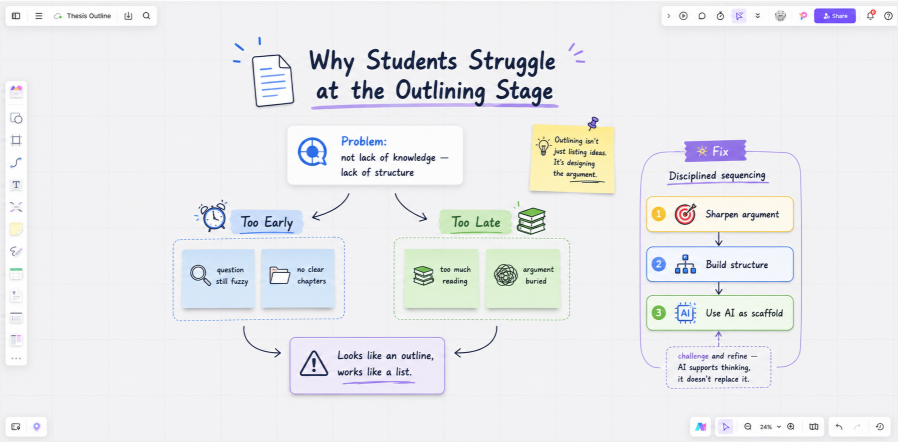
The problem is rarely a lack of knowledge. It is a lack of structure. Most students approach the thesis outline the way they approach a brainstorm — they open a blank document, type a few headings, and hope the rest fills itself in. It doesn’t.
Two failure modes are common. The first is outlining too early, before the research question is tight enough to define clear chapters. The second is outlining too late, after so much reading has accumulated that the shape of the argument is buried under competing ideas. Both produce the same result: a document that looks like an outline but functions like a list.
The fix is disciplined sequencing. Sharpen the argument first. Build the structure from it. Then use AI to accelerate that process — not to replace your thinking, but to give you a scaffold to challenge and refine.
What Is a Thesis Outline?
A thesis outline is a hierarchical map of your entire thesis — a document that lists every major section, the core argument or content of each, and the logical order in which they appear. It is not a summary of your research. It is the skeleton of your argument made visible.
A strong thesis outline does three things at once: it tests whether your argument has a defensible logical sequence, it surfaces gaps in your evidence before you have written around them, and it gives your supervisor something concrete to respond to before significant drafting time is committed.
Think of it as the cheapest feedback mechanism available to you. A thirty-minute conversation about your outline catches the same structural problems that would otherwise take months to address in a draft.
How to Write a Thesis Outline with Boardmix AI
Boardmix is an infinite-canvas whiteboard with a built-in AI agent you invoke directly on the canvas. You enter your topic or thesis statement, and the AI generates a structured outline or mind map on the whiteboard — no switching tabs, no copying between tools. The AI produces a starting structure; you review, challenge, and own the final version.
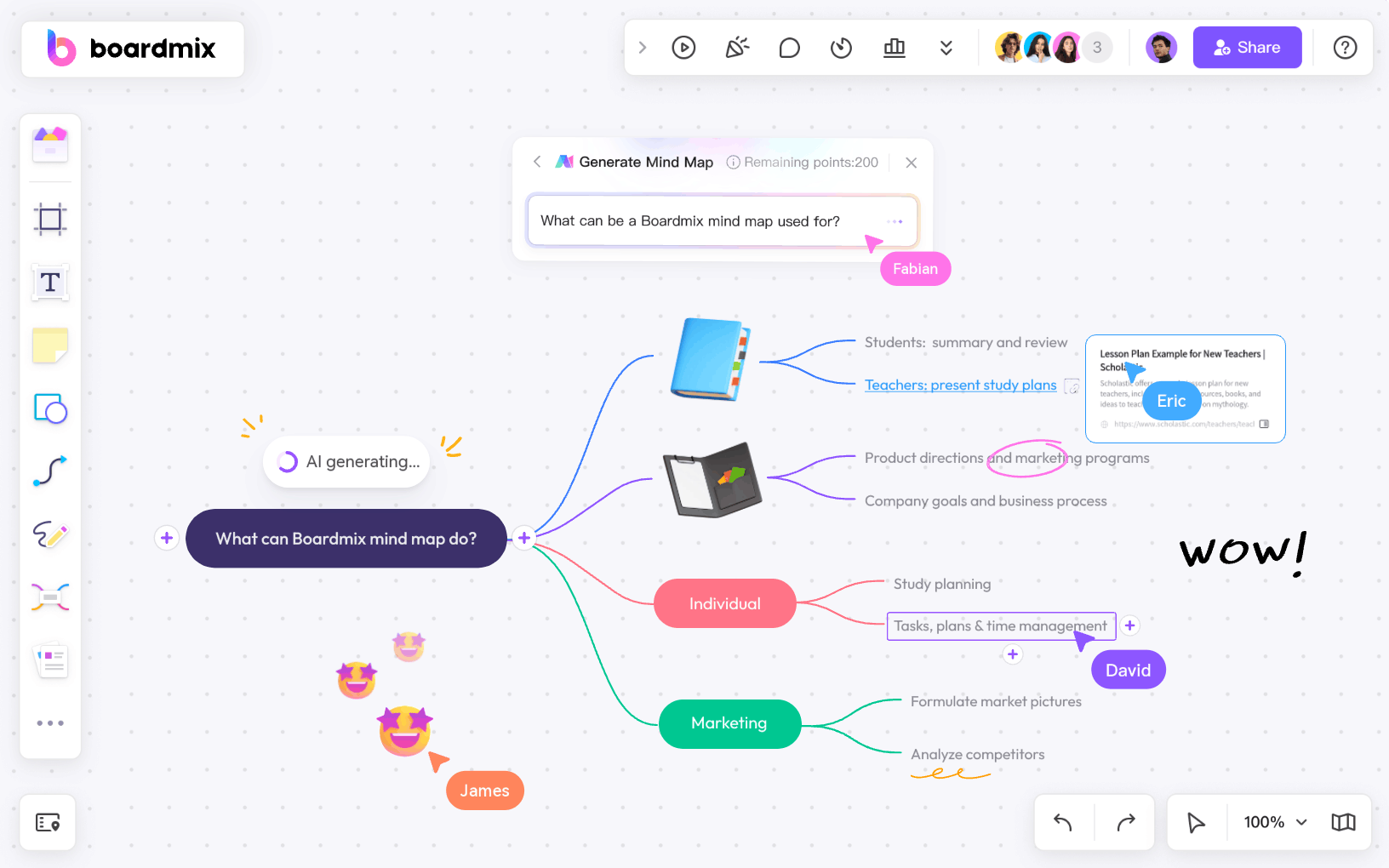
Step 1: Open Boardmix and start a new whiteboard.
Go to Try Boardmix for free and sign in. Create a new whiteboard. This is your working canvas for the entire outlining session. The infinite canvas means your outline can expand in any direction as your structure develops — there are no edges to compress against.
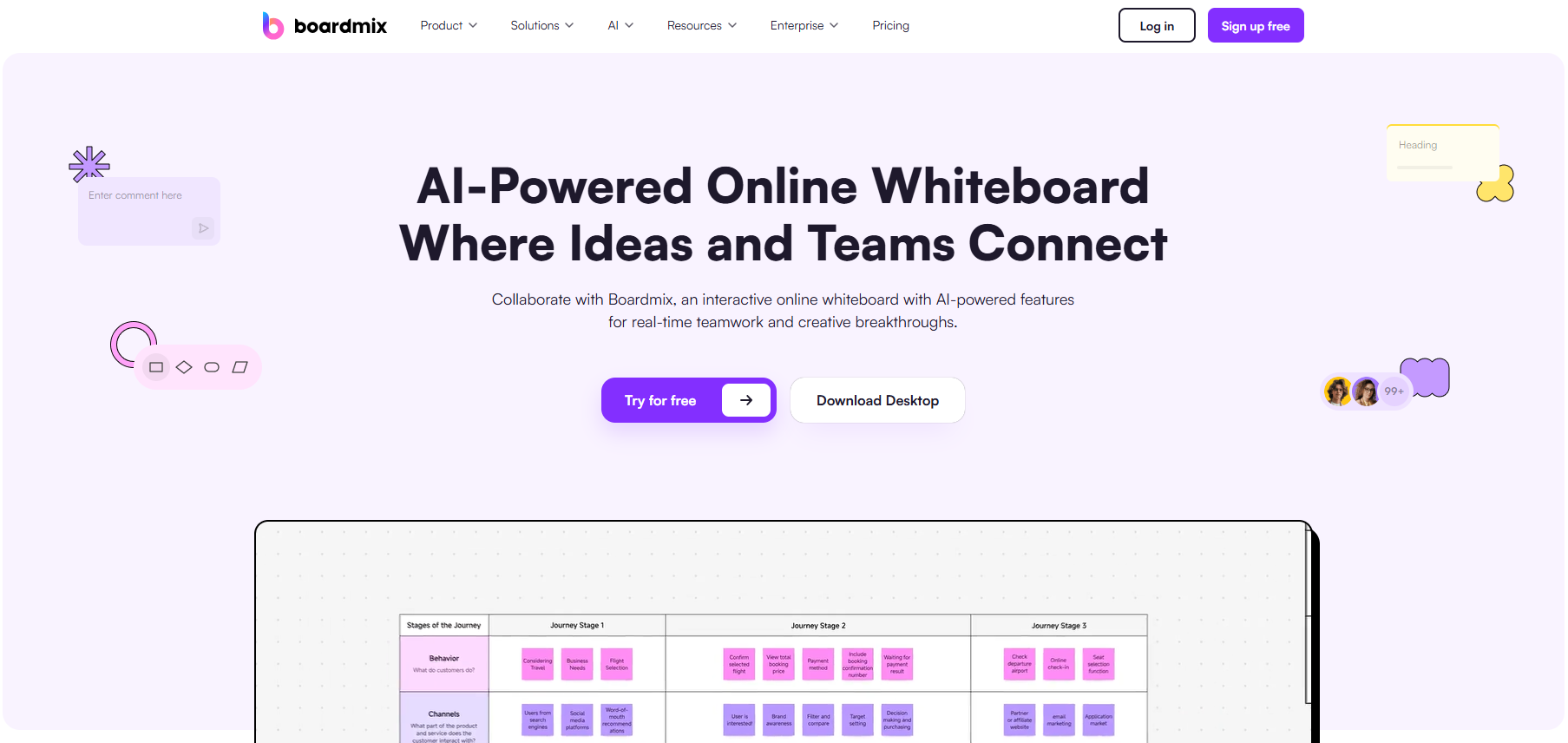
Step 2: Enter your topic or thesis statement into the AI agent.
Click to invoke the built-in AI agent on the canvas. Type your research topic, your central question, or a working thesis statement directly into the input field. Precision matters here. “Thesis on the long-term psychological effects of social media use on adolescent self-perception and anxiety” produces a more targeted structure than “social media and teenagers.” The quality of the AI’s output scales directly with the specificity of your input.
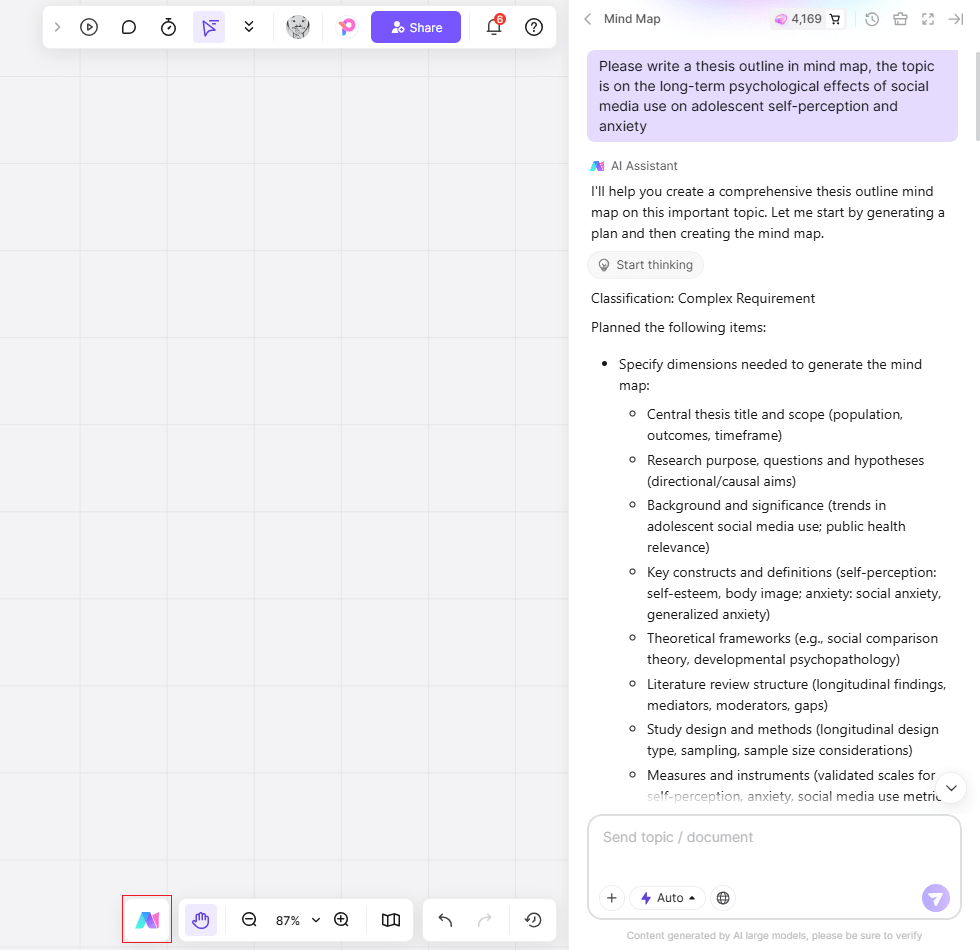
Step 3: Generate a structured outline or mind map on the canvas.
The AI agent produces a structured first draft on the whiteboard — either as a hierarchical outline or as a visual mind map with branches for Introduction, Literature Review, Methodology, Results, Discussion, and Conclusion. Each section appears as a node on the canvas, with sub-branches for key content within that section. This is a scaffold. It is not your thesis structure yet — it is the starting point your thinking will reshape.
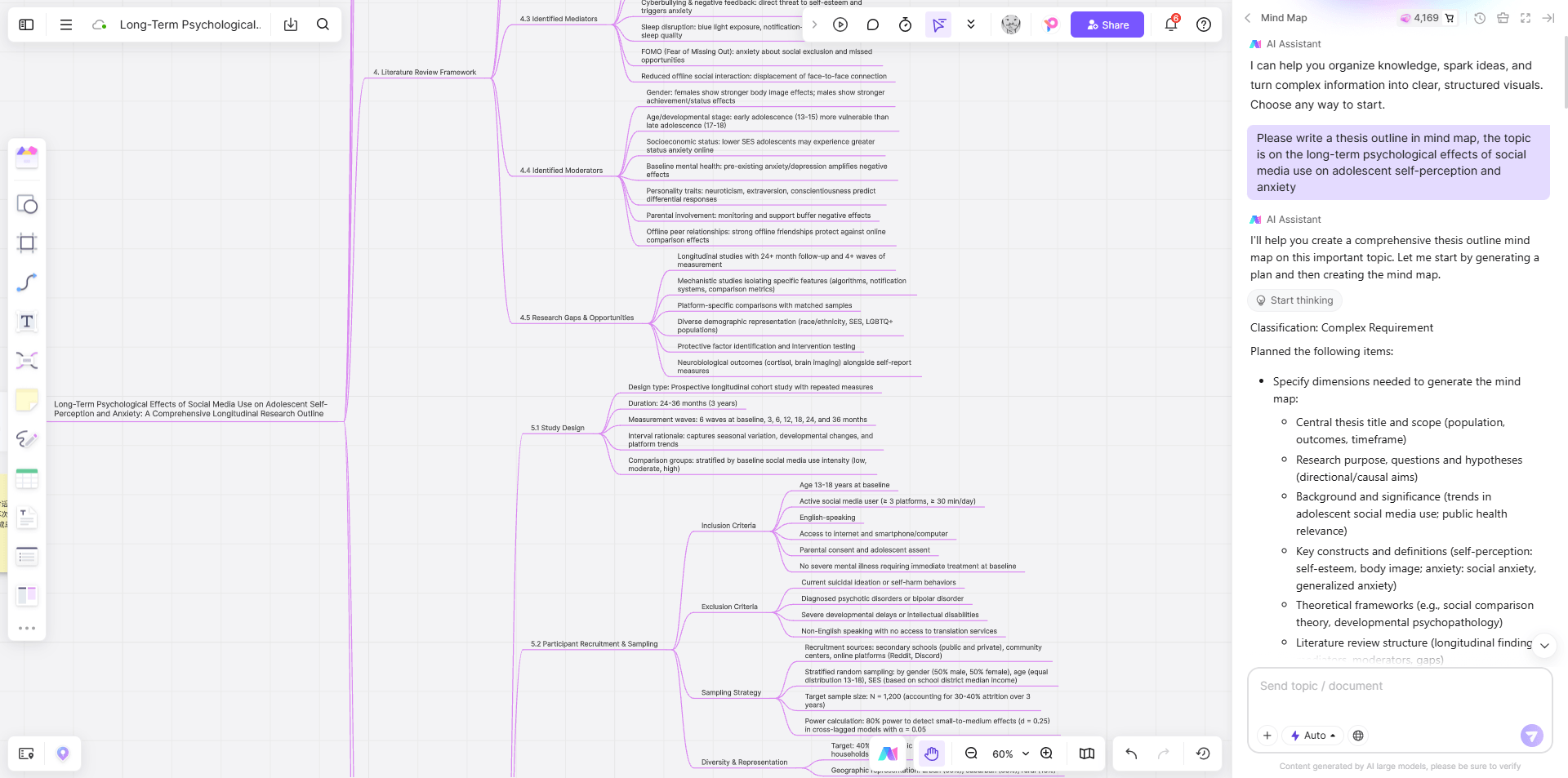
Step 4: Review, edit, and expand branches on the infinite canvas.
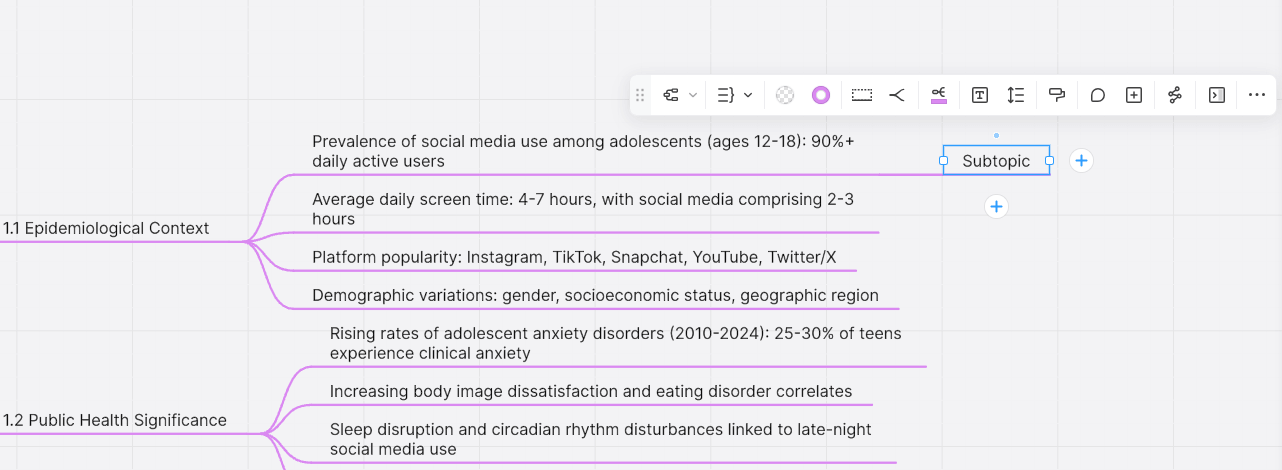
This step is where the real work happens. Move through every branch the AI has generated and interrogate it. Does this section follow logically from the one before it? Is the methodology appropriate for the research question? Is the literature review organized by the right principle for your argument? Delete branches that don’t belong. Add sub-nodes where more granularity is needed. Rename headings to match your discipline’s conventions. The canvas gives you space to spread the full structure out visually and reorganize pieces without losing sight of the whole. For complementary approaches to visual academic organization, see this mind mapping tools for students guide.
Step 5: Export or convert for use in your document.
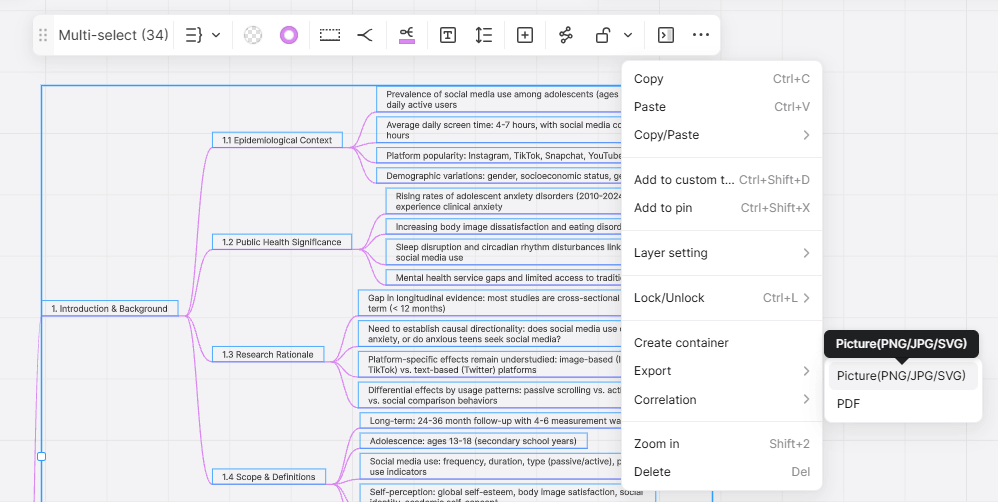
When your outline is solid, export it directly from Boardmix as a PDF, image, or structured text file — or convert the canvas into AI-generated presentation slides for your thesis proposal meeting. You can also copy the outline hierarchy into Word or Google Docs. For guidance on taking this structure into full draft mode, the AI paper writing guide covers every stage from outline to final submission.
What a Strong Thesis Outline Includes
The structure below applies to most empirical and analytical theses across disciplines. Adjust section names and sub-divisions to match your field’s conventions.
1. Introduction
Your introduction outline should identify: the research problem, your central research question, the scope of the study, your thesis statement, and a brief chapter map. It is not a summary of findings — it is a statement of what you are investigating and why it matters.
2. Literature Review
The literature review outline should show how you are organizing existing scholarship — by theme, chronology, methodology, or theoretical framework. For each sub-section, note the scholarly conversation you are entering and where your argument positions itself within it.
3. Methodology
Your methodology outline should specify the research design, data sources or participants, collection methods, and analytic approach. A well-outlined methodology section lets reviewers assess whether your approach fits your research question before you invest time executing it.
4. Results
In empirical work, the results outline maps how findings will be presented — which results appear first, how they are organized, and what visual elements accompany them. In qualitative work, it outlines the thematic or narrative categories structuring your analysis.
5. Discussion
The discussion outline is where many students underinvest. It should show explicitly how each finding connects to the literature, what the results mean in context, and how they advance or complicate existing scholarship. If the outline’s discussion section is thin, the finished chapter will be too.
6. Conclusion
Your conclusion outline should cover: a synthesis of key findings (not a point-by-point summary), the broader implications of your research, study limitations, and recommendations for future work. One sentence per item is sufficient at this stage.
Thesis Outline Example
The following is a sentence outline for a social science thesis on gig economy employment and financial precarity among urban young adults.
I. Introduction
A. Platform-based gig work has fundamentally altered employment stability for adults under 35 in major metropolitan areas.
B. Research question: To what extent does gig economy participation correlate with financial precarity, controlling for education and prior employment history?
C. Thesis statement: Gig work functions as a structural driver of precarity rather than a freely chosen flexibility arrangement.
II. Literature Review
A. Theoretical frameworks: precarity, labour market segmentation, platform capitalism
B. Existing scholarship on gig work and income volatility
C. Gap: limited longitudinal data on urban young adult populations in English-speaking markets
III. Methodology
A. Mixed-methods design: survey data (n=340) and semi-structured interviews (n=20)
B. Sampling: urban centres in the UK and Australia
C. Analytic framework: thematic analysis combined with regression modelling
IV. Results
A. Quantitative findings: income volatility patterns by employment type
B. Qualitative findings: participants’ accounts of financial control and future planning
V. Discussion
A. Findings in relation to labour market segmentation theory
B. Policy implications: portable benefits, income smoothing mechanisms
C. Limitations: cross-sectional data, self-selection in interview sample
VI. Conclusion
A. Synthesis: gig work increases precarity systematically, not incidentally
B. Future research: longitudinal cohort studies in platform economies
C. Broader implications for labour policy and welfare design
Common Mistakes to Avoid When Outlining a Thesis
Outlining before the argument is clear. The structure should grow from your research question. If you cannot state your central argument in one sentence, the outline will reflect that confusion in every section.
Using vague headings. “Background” and “Analysis” communicate nothing specific. “Labour market segmentation theory and its application to platform-based employment” tells you exactly what the section argues. Write headings that commit to a function.
Making every section equally detailed. Different chapters warrant different levels of depth in the outline. Your methodology section may need more sub-nodes than your introduction. Let the complexity of the content drive the granularity.
Outlining without supervisor input. Your outline should be reviewed before significant drafting begins. Structural problems caught at the outline stage take minutes to fix. The same problems caught in a draft take weeks.
Treating the first version as final. An outline is a working document. The AI-generated starting structure is a provocation — revise it aggressively until every section reflects your own thinking.
Frequently Asked Questions
Q: What is the difference between a thesis outline and a thesis proposal?
A: A thesis outline maps the internal structure of the thesis — what each chapter will contain and argue. A thesis proposal is a formal document submitted for institutional approval that explains what you plan to research, why it matters, and how you will conduct it. The outline is a component of a proposal, but a proposal also includes a rationale, a preliminary literature review, and a justification of methodology.
Q: How detailed should a thesis outline be?
A: Detailed enough that a reader unfamiliar with your project can understand what each section will argue — not just what topic it will cover. A sentence outline achieves this more reliably than a topic outline. At minimum, each major section should have one sentence describing its specific argument or function, and complex chapters should show their internal sub-structure.
Q: Can I use an AI tool to generate my thesis outline without compromising academic integrity?
A: Yes, provided you treat the AI output as a starting draft rather than a finished product. The AI agent generates an initial scaffold based on your input. You review, reshape, and own the final structure. Your argument, your evidence, and your analytical judgments remain yours entirely. This is equivalent to using a template, a textbook example, or feedback from a writing centre — the intellectual work is still your own.
Q: What outline format should I use — alphanumeric or decimal?
A: Follow your discipline’s conventions. STEM and technical fields use decimal format, which mirrors scientific publication structure. Humanities and social sciences typically use alphanumeric format. When in doubt, check your department’s submission guidelines or ask your supervisor directly before you invest time in the wrong format.
Q: How long does it take to build a thesis outline with Boardmix AI?
A: The AI agent generates an initial structure in under a minute. The review and refinement work that follows — challenging each branch, adding detail, testing the logic — typically takes one to three hours for a complete thesis outline. That investment is returned many times over during drafting, when a solid outline prevents the structural revisions that consume most of a student’s rewriting time.
Conclusion
A strong thesis outline is not a preliminary task you complete before the writing begins. It is the writing — the moment you test whether your argument holds, your structure is defensible, and your evidence is sufficient before investing thousands of words in a direction that might need to change.
The process does not need to be slow. Define your research question precisely. Choose an outline format matched to your discipline. Build each section with enough detail to commit to a specific argument. And use Boardmix AI to generate your starting structure on the canvas, so your energy goes into shaping and challenging — not building from scratch.
Try Boardmix for free and use the built-in AI agent to generate your thesis outline directly on the whiteboard. Your first structured draft is less than five minutes from now.