


The most useful Miro mind map examples are not decorative diagrams. They are repeatable structures built for a specific job: generating ideas, planning a project, capturing a meeting, studying a subject, outlining an essay, making a decision, tracing a root cause, or turning a goal into action. Start with the outcome you need, choose the matching structure below, and keep every branch parallel and easy to scan.
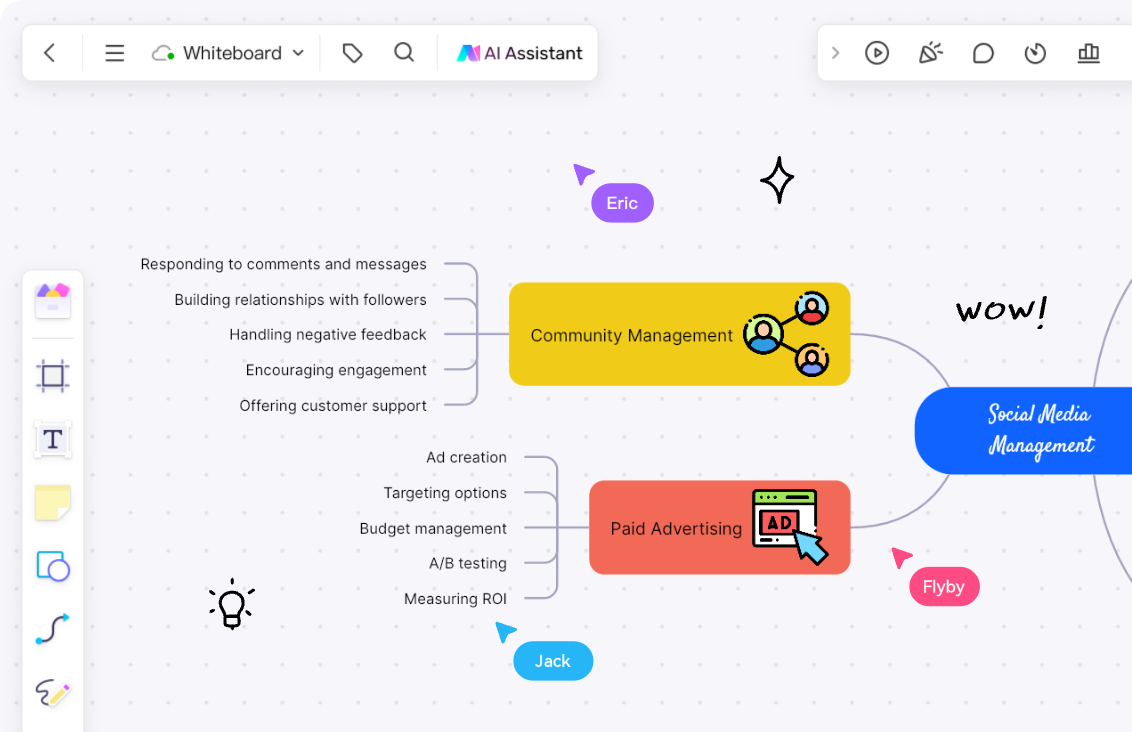
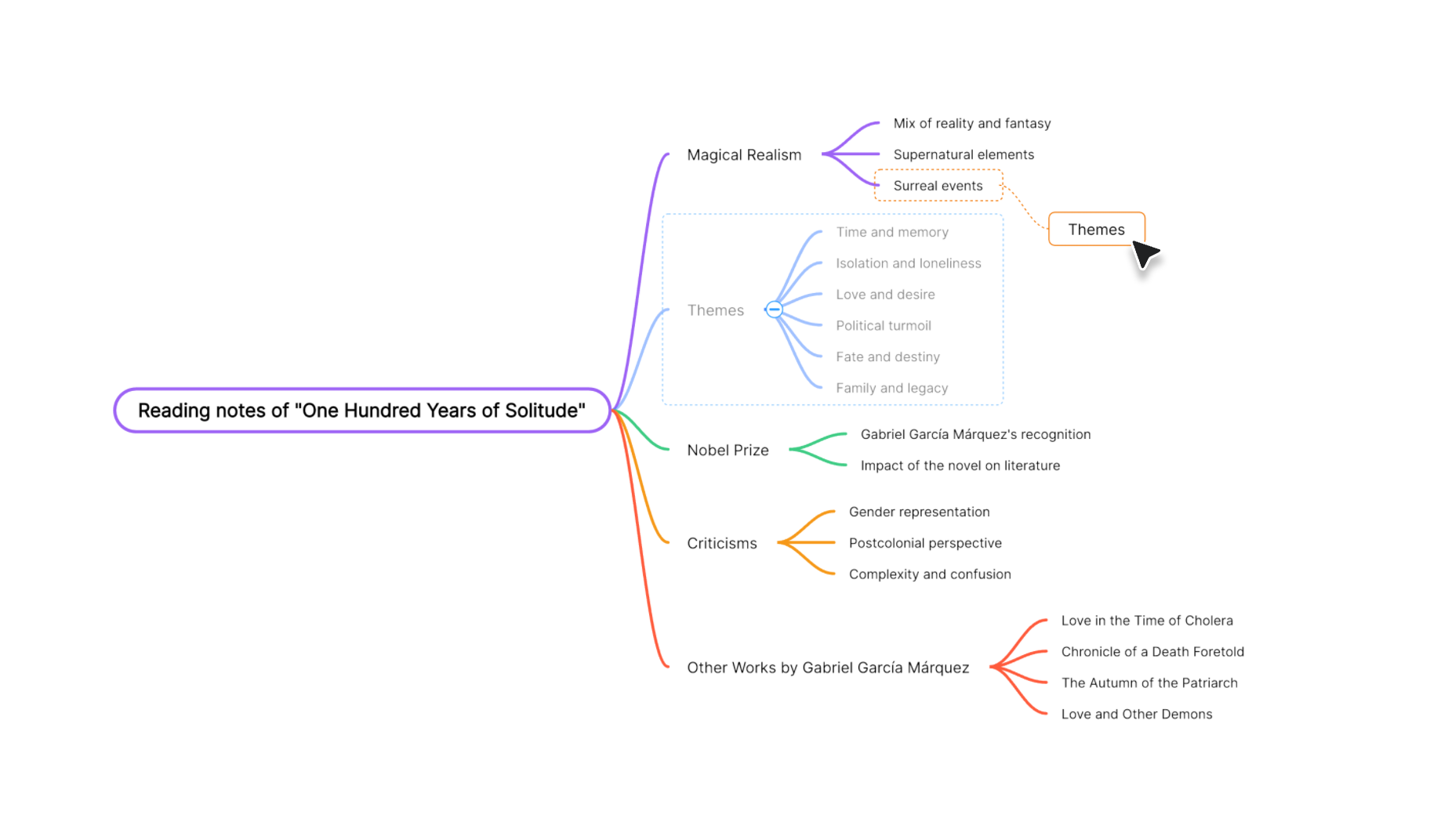
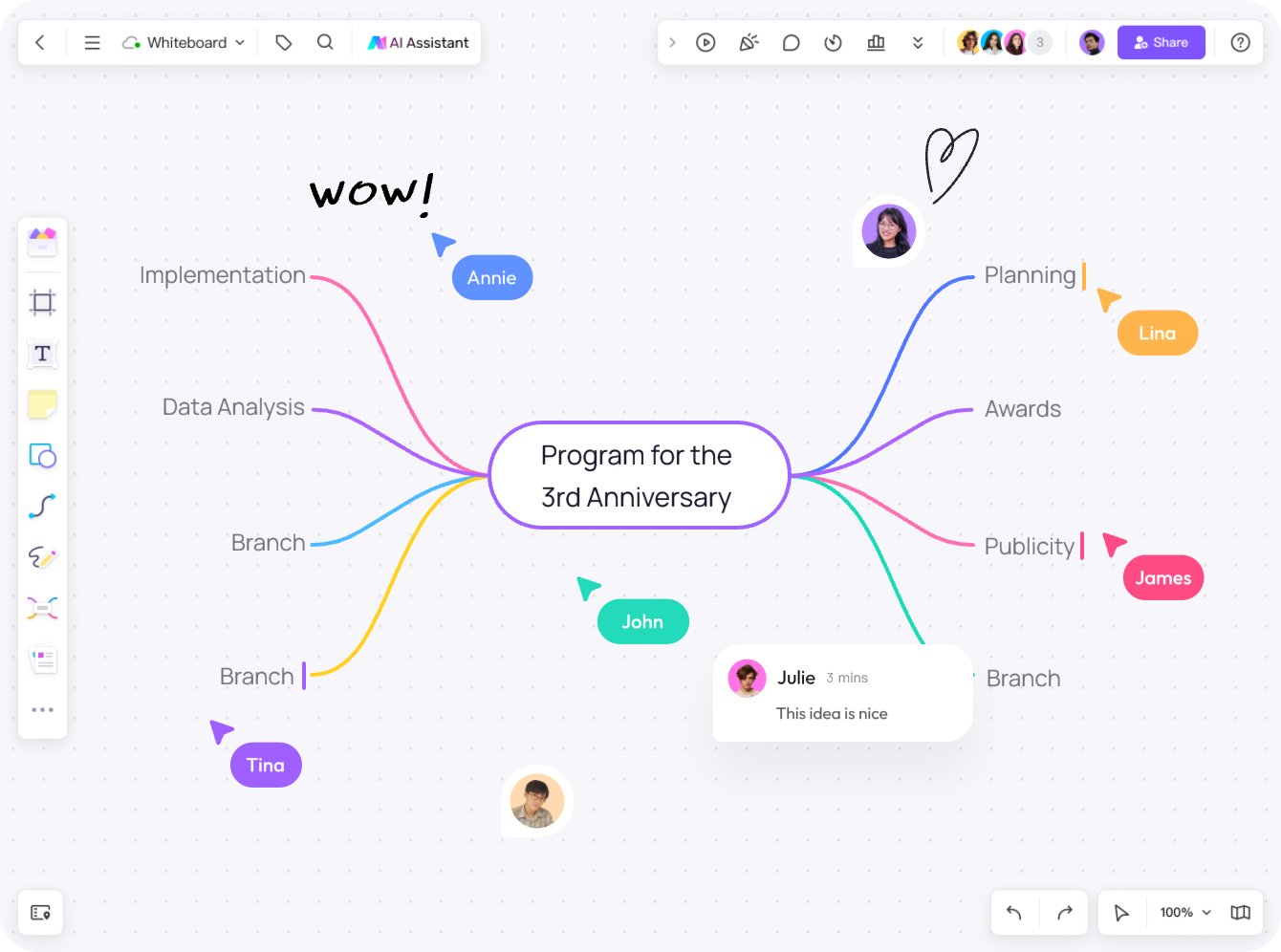
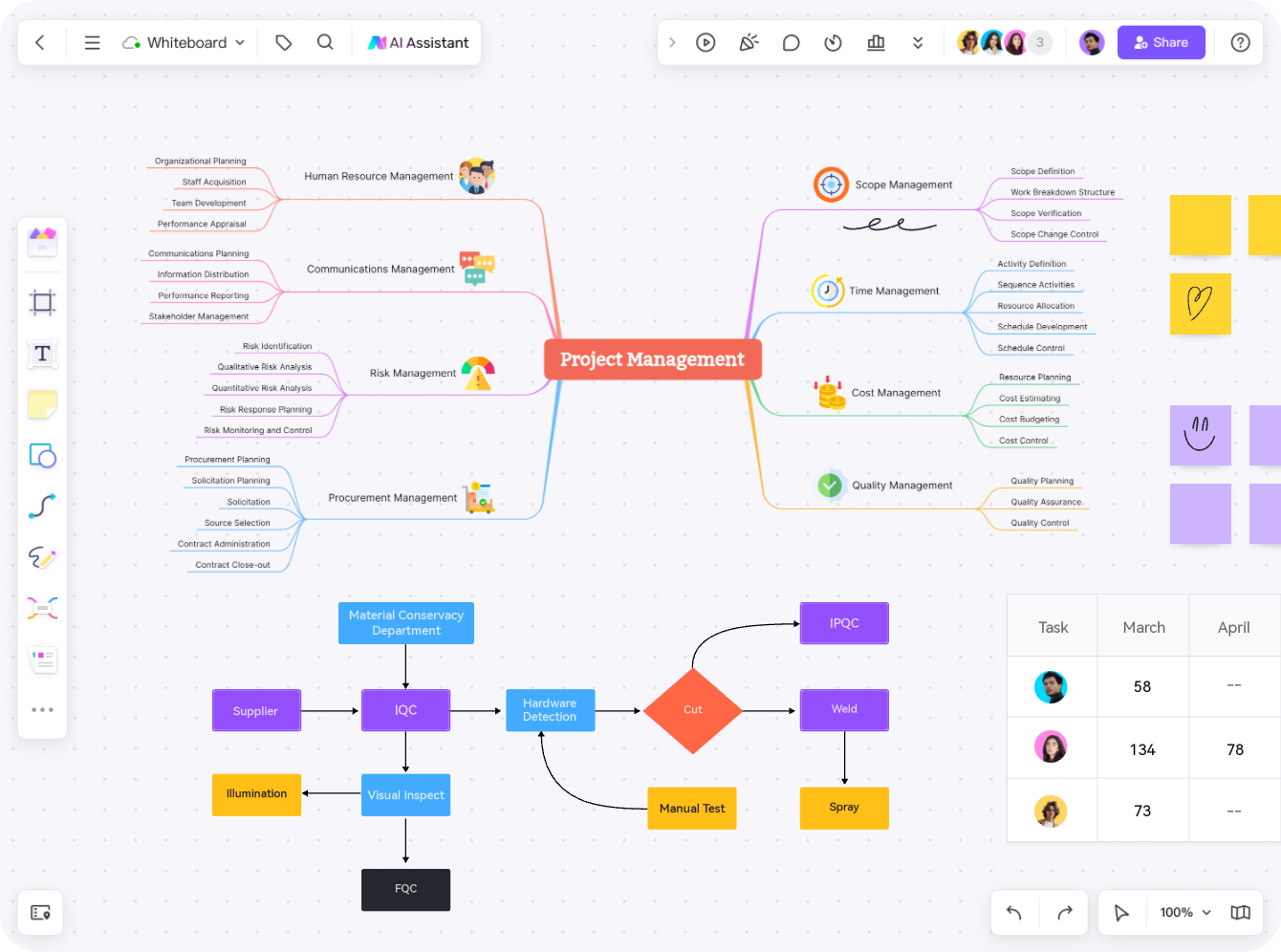
This guide focuses on eight practical structures rather than comparing Miro with another tool. The structures are tool-independent, so you can recreate them in Miro or in an online mind mapping workspace. The retained product screenshots in this article illustrate how similar structures can be continued in Boardmix; they should not be read as screenshots of Miro.
Eight Miro Mind Map Examples at a Glance
| Example | Use it when | Recommended first-level branches | Useful output |
|---|---|---|---|
| Brainstorm map | You need many possibilities before judging them | Audience, problems, ideas, constraints | A grouped idea pool ready for prioritization |
| Project planning map | A broad objective must become coordinated work | Outcomes, workstreams, owners, risks | A project outline that can feed a task plan |
| Meeting map | A discussion needs structure and follow-through | Agenda, evidence, decisions, actions | A concise record of what was decided and who acts next |
| Study map | You need to understand and recall a topic | Definitions, mechanisms, examples, questions | A review sheet that exposes knowledge gaps |
| Essay outline map | A claim needs a logical written structure | Thesis, reasons, evidence, counterpoint | A draft-ready outline rather than disconnected notes |
| Decision map | Several options must be evaluated consistently | Criteria, options, evidence, trade-offs | A documented recommendation with assumptions |
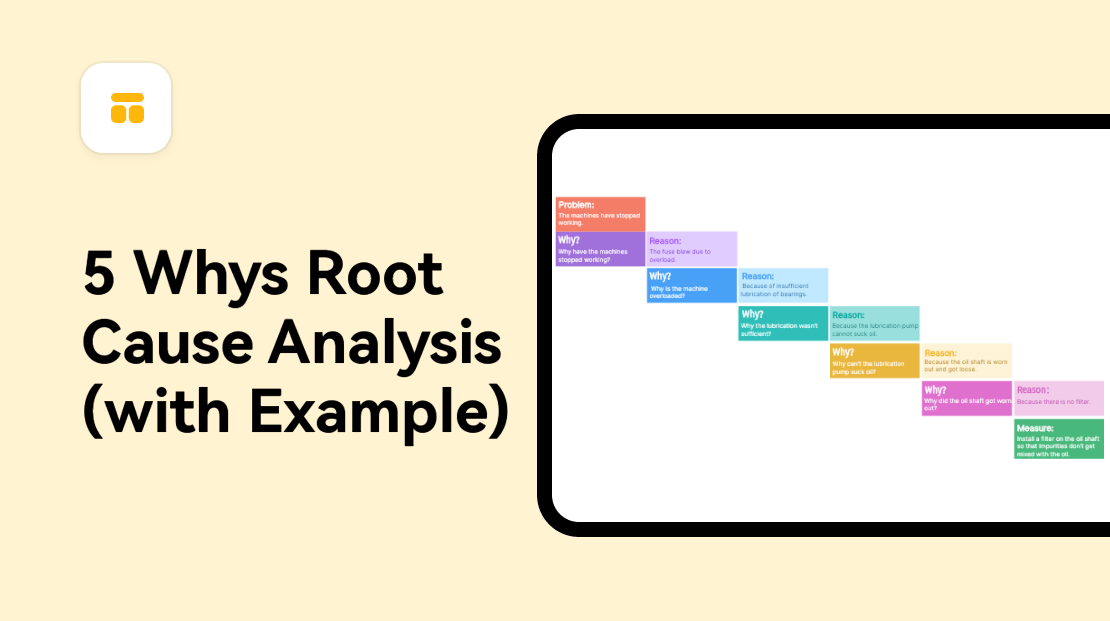
| Root-cause map | A recurring problem has several possible drivers | People, process, tools, environment | Testable cause hypotheses, not a premature diagnosis |
| Personal goal map | An intention must become a workable routine | Outcome, milestones, habits, obstacles | A next-action plan with review points |
These are structures you can build, not claims about named templates in any current product library. Template names and interfaces can change, while the reasoning pattern remains useful.
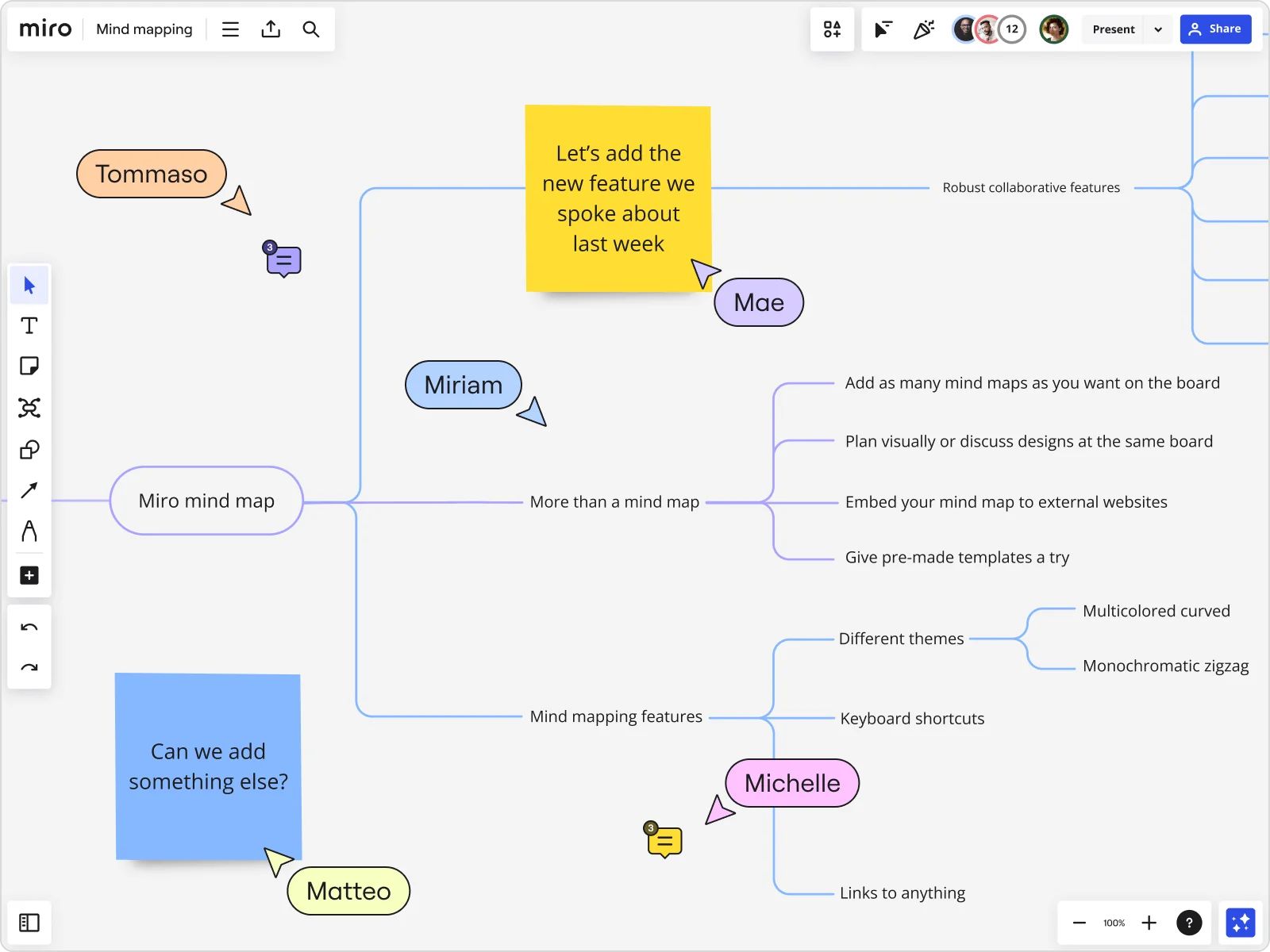
Recreate an Example with Boardmix Mind Mapping
Before drawing, write one sentence that defines the map's job. For example: This map will help the team choose three campaign ideas for testing. That sentence limits the scope and gives you a way to judge whether the finished map is useful. The following examples explain how to translate that job into branches.
1. Brainstorm Map: Generate First, Evaluate Later
Best for: early ideation, naming, campaign concepts, research questions, and solution exploration.
Put a precise challenge in the center, such as How might we reduce first-week user confusion? Create first-level branches for audiences, friction points, moments in the journey, possible interventions, and constraints. During generation, capture short phrases without ranking them. During a separate review pass, merge duplicates, label assumptions, and mark the few ideas that deserve testing.
A brainstorm map fails when its center is vague or when participants debate every idea as soon as it appears. Separate divergent thinking from selection. The deliverable is not the largest map; it is a grouped set of possibilities with a documented next step.
2. Project Planning Map: Turn an Outcome into Workstreams
Best for: project kickoff, launch planning, event preparation, and cross-functional initiatives.
Use the intended outcome as the center. Make the first branches workstreams rather than departments: research, design, production, launch, and measurement are clearer than a list of team names. Under each branch, add deliverables, an accountable owner, dependencies, decision dates, and risks. If an item cannot be assigned or verified, mark it as an open question instead of hiding uncertainty inside a long node.
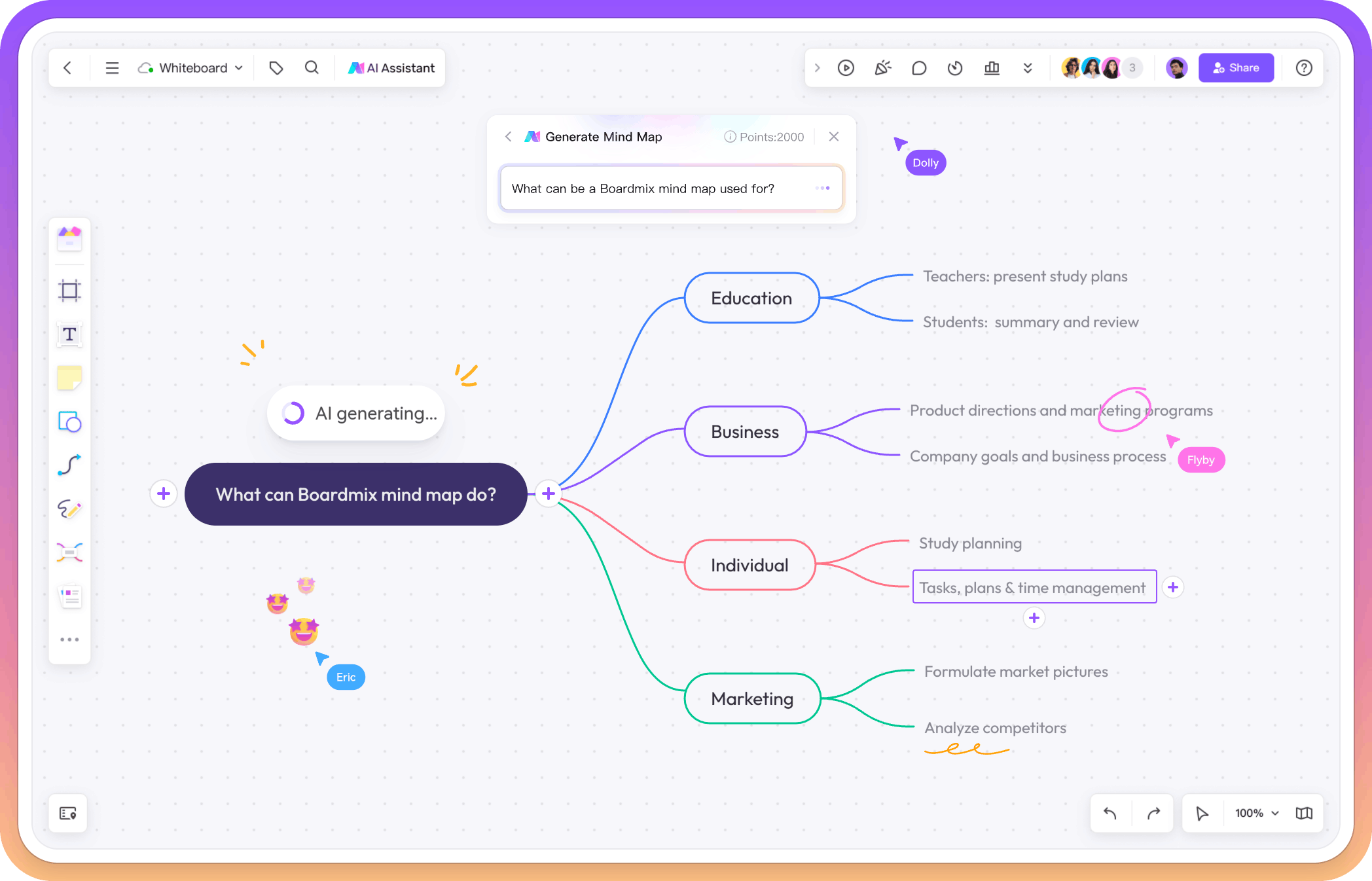
3. Meeting Map: Capture Decisions, Not a Transcript
Best for: planning sessions, retrospectives, discovery calls, and decision meetings.
Begin with the meeting purpose and create four stable branches: agenda, evidence, decisions, and actions. Add discussion points beneath the relevant agenda item, but move a conclusion to the decisions branch once the group agrees. Every action should state an owner and a completion condition. Questions that remain unresolved belong in a separate parking-lot branch with a named person responsible for closing them.
This structure is more useful than chronological notes because a reader can locate the outcome without replaying the conversation. After the meeting, remove abandoned fragments and share a view centered on decisions and actions.
4. Study Map: Connect Definitions, Mechanisms, and Examples
Best for: exam review, lecture synthesis, reading notes, and learning a new domain.
Place the topic or learning objective in the center. Use first-level branches for key terms, how the system works, examples, exceptions, and unanswered questions. Under each definition, add one example and one non-example. Under each mechanism, show the sequence or causal relationship. This forces recall and explanation instead of copying sentences from a source.
Finish by hiding or covering selected branches and explaining them from memory. Any branch you cannot reconstruct becomes a targeted review item. Keep source references close to claims that may need checking.
5. Essay Outline Map: Build an Argument Before Drafting
Best for: essays, reports, proposals, presentations, and long-form articles.
Use the working thesis as the center. Create branches for the main reasons that support it, then add evidence, examples, and implications beneath each reason. Include one counterargument branch and a response branch. If two branches make the same point, combine them; if a branch contains no evidence, research it before drafting.
The finished map should convert cleanly into an outline: each first-level branch becomes a major section, and each child node becomes a paragraph claim or supporting item. A map that only lists topics has not yet established an argument.
6. Decision Map: Compare Options Against the Same Criteria
Best for: vendor selection, prioritization, location choices, and selecting among proposed approaches.
Put the decision question in the center. Create branches for decision criteria, candidate options, evidence, trade-offs, and unknowns. Define each criterion before assessing options so the evaluation does not shift to favor a preferred answer. Keep facts separate from judgments, and record the assumption behind any estimate.
End with a recommendation branch that states the chosen option, the reason, the main downside, and the condition that would trigger reconsideration. The map supports a decision; it should not disguise uncertainty as certainty.
7. Root-Cause Map: Organize Hypotheses for Testing
Best for: recurring quality problems, workflow delays, customer complaints, and operational incidents.
Describe the observable problem in the center without inserting a cause. Use neutral categories such as people, process, tools, inputs, and environment. Beneath each category, add possible causes and the evidence that would confirm or reject them. Distinguish correlation, observation, and verified cause with labels or colors.
A root-cause map should produce an investigation plan. Assign the highest-impact uncertain branches to evidence owners, then update the map as hypotheses are tested. Do not use the visual hierarchy to imply that an unverified branch is true.
8. Personal Goal Map: Connect a Goal to Weekly Behavior
Best for: skill development, study plans, portfolio work, health routines, and personal projects.
Write a measurable outcome in the center. Branch into milestones, weekly habits, resources, obstacles, and review dates. Keep habits small enough to schedule, and connect each habit to a milestone so activity does not replace progress. Add a fallback action for predictable obstacles, such as a shorter practice session when the full session is not possible.
How to Choose the Right Example
- Name the decision or deliverable. If you cannot state what should exist after the session, the map is not ready to start.
- Choose one primary reasoning pattern. Generate, plan, record, learn, argue, decide, diagnose, or act. Do not combine every pattern at the top level.
- Write parallel first-level branches. Branches should represent comparable categories, not a mixture of actions, people, and random notes.
- Set a stopping rule. Decide whether completion means three tested ideas, an assigned action list, a supported recommendation, or another observable result.
- Review for missing evidence. Label assumptions, sources, owners, and unanswered questions before sharing the map.
If you want a generated starting structure, use an AI mind map generator for the first draft, then verify, rename, and reorganize every branch against your actual objective. Generated branches are prompts for thinking, not evidence.
Miro Mind Map Examples FAQ
What is the best Miro mind map example for beginners?
A focused brainstorm map is usually the simplest starting point. Use one concrete question in the center and three to five first-level categories. Keep node text short, group duplicates, and finish by selecting a small number of ideas for the next action.
How many branches should a mind map have?
There is no universal number. Use enough first-level branches to cover the task without forcing readers to scan a crowded center. If categories overlap, consolidate them; if one branch becomes much deeper than the others, consider giving it a separate map.
Can one mind map combine several examples?
Yes, but only when the relationship is clear. A project map may contain a decision branch or a meeting map may feed an action plan. Preserve one primary purpose and move complex secondary work into a linked or separate map.
Are these official Miro templates?
No. They are practical information structures that can be created in Miro and other mind mapping tools. Current template names and availability should be checked in the product interface.
Conclusion
Choose a Miro mind map example by the work it must produce. Brainstorm maps expand possibilities; project and meeting maps coordinate action; study and essay maps organize understanding; decision and root-cause maps make reasoning inspectable; goal maps connect an outcome to behavior. A useful map ends with a clearer decision, deliverable, or next step - not merely a larger collection of nodes.