The best flowchart software depends on what must happen after the diagram is drawn. Boardmix is a strong all-round choice for teams that need a collaborative canvas; diagrams.net is a practical free and offline option; Microsoft Visio suits Microsoft-centered process work; and Mermaid fits flowcharts that belong in code or technical documentation.
This comparison covers 11 free and paid tools across collaboration, platform access, templates, AI assistance, formal notation, data linking, and export. Use the table for a shortlist, then read the product trade-offs before choosing the editor that will own your process diagrams.

Quick Answer: Which Flowchart Software Should You Choose?
Choose Boardmix for collaborative flowcharts and mixed visual work, diagrams.net for a free no-account or offline editor, ClickUp when the chart must become project work, Canva for presentation-ready visuals, Miro for facilitated workshops, Visio for Microsoft-centered formal processes, and Mermaid for diagrams maintained as text. The remaining tools fill more specific business, Atlassian, desktop-library, data-linked, and browser-diagramming needs.
Compare 11 Flowchart Software Tools
For most buyers, the decisive question is not how quickly a tool draws the first box. It is whether the diagram remains editable, shareable, reviewable, and portable in the workflow that follows. Compare the free boundary and main trade-off before spending time building a large process library.
| Tool | Best for | Where it runs | Free entry point | Main trade-off |
|---|---|---|---|---|
| Boardmix | Collaborative flowcharts and mixed visual work | Browser | 3 editable boards; 100 objects per board | Board and export limits on Free |
| ClickUp | Flowcharts connected to project work | Browser, desktop, mobile | Free Forever includes limited Whiteboards | Best value comes from the wider ClickUp workspace |
| Canva | Presentation-ready visual flowcharts | Browser, desktop, mobile | Free editor, templates, and sharing | Some assets and brand features are premium |
| diagrams.net | Free no-account and offline diagramming | Browser and desktop | Free and open source | Fewer built-in workflow-management features |
| Miro | Remote workshops and large canvases | Browser, desktop, mobile | 3 editable boards on Free | Private-board and advanced export needs may require paid access |
| Gliffy | Flowcharts inside Atlassian work | Browser and Atlassian apps | Trial or plan-based access | Less compelling outside its integration ecosystem |
| EdrawMax | Broad desktop diagram library | Desktop, browser, mobile | Free version with practical limits | Free exports carry a watermark |
| SmartDraw | Data-linked business diagrams | Browser | Paid product | Broader capability can mean a heavier learning curve |
| Lucidchart | Browser-based business diagramming | Browser and mobile | Limited editable documents and objects; no premium templates | Larger diagrams and advanced interchange require paid access |
| Microsoft Visio | Microsoft 365 and BPMN-heavy organizations | Browser; Windows desktop on Plan 2 | Basic web app in eligible Microsoft 365 business plans | Full desktop and advanced diagramming are paid |
| Mermaid | Text-based diagrams in code and documentation | Browser, local builds, integrations | Open-source Mermaid.js and Live Editor | Not a drag-and-drop workshop canvas |
Need a narrower list? See the dedicated comparisons of free flowchart makers, browser-based flowchart software, AI flowchart generators, and code-to-flowchart tools.
How to Choose Flowchart Software
Start with the artifact you must maintain, not the longest feature list. A workshop team needs simultaneous editing and comments; a compliance team may require BPMN, permissions, and governance; a developer may prefer text source in Git; and an occasional user may value a free offline editor above every collaboration feature.
AI should accelerate a draft, not approve the process
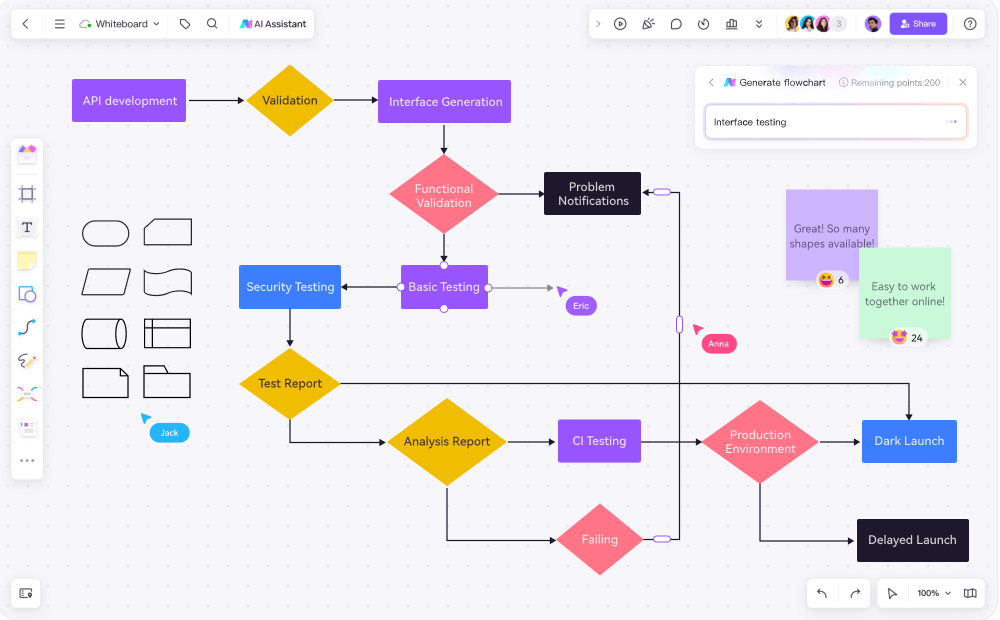
AI-assisted tools can convert a prompt or source text into a starting flowchart and reduce repetitive layout work. The useful test is whether the result remains editable. Review generated steps against the source, add missing exceptions, verify decision labels, and ask the process owner to approve the final logic.
Templates should match the diagram you actually create
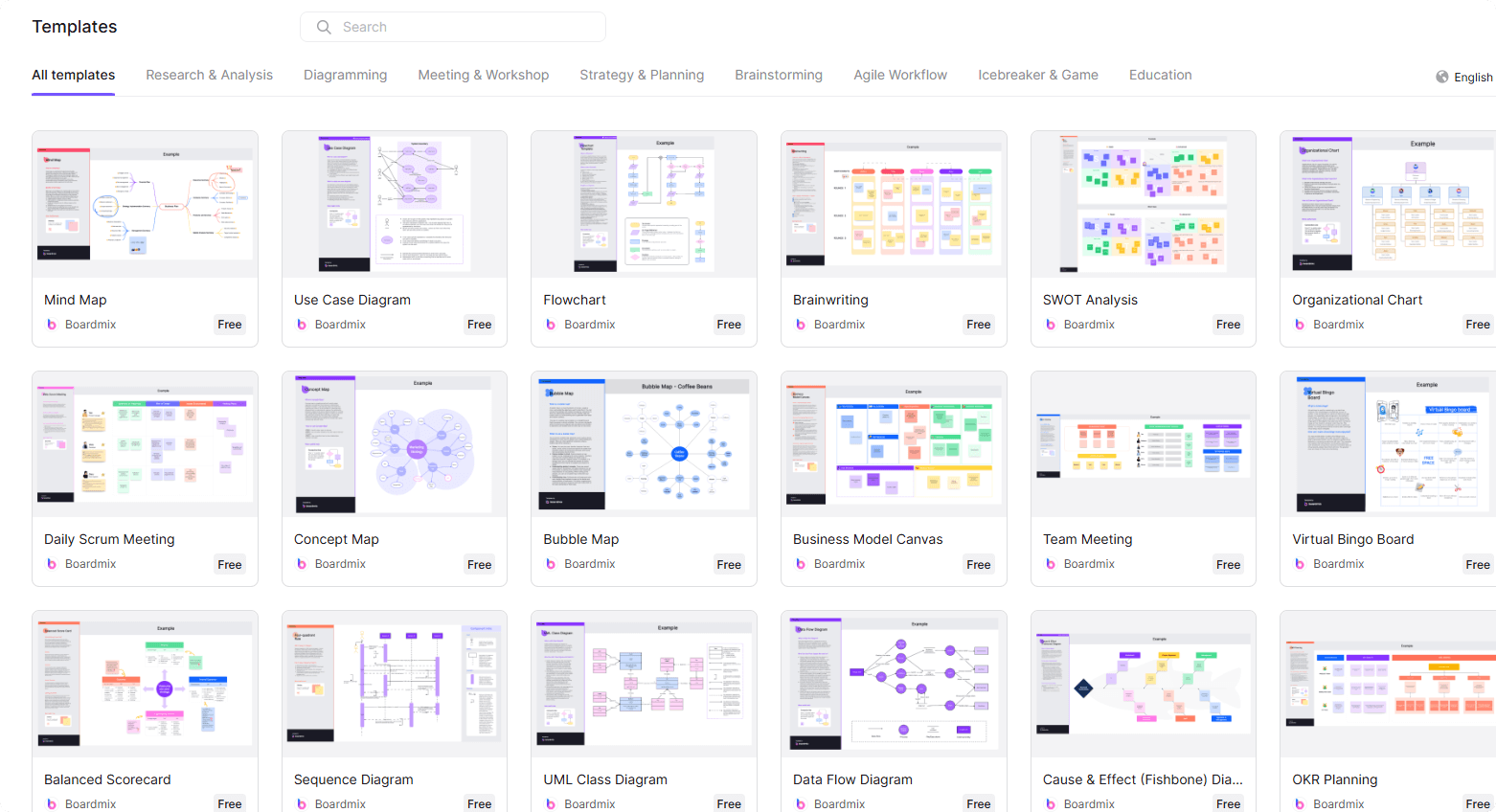
General flowchart templates help with onboarding, approvals, service workflows, and decision trees. Technical teams may also need UML, network, data-flow, or BPMN libraries. A large template count is less important than having the right notation and being able to change it without breaking connectors or alignment.
Collaboration requires more than a share link
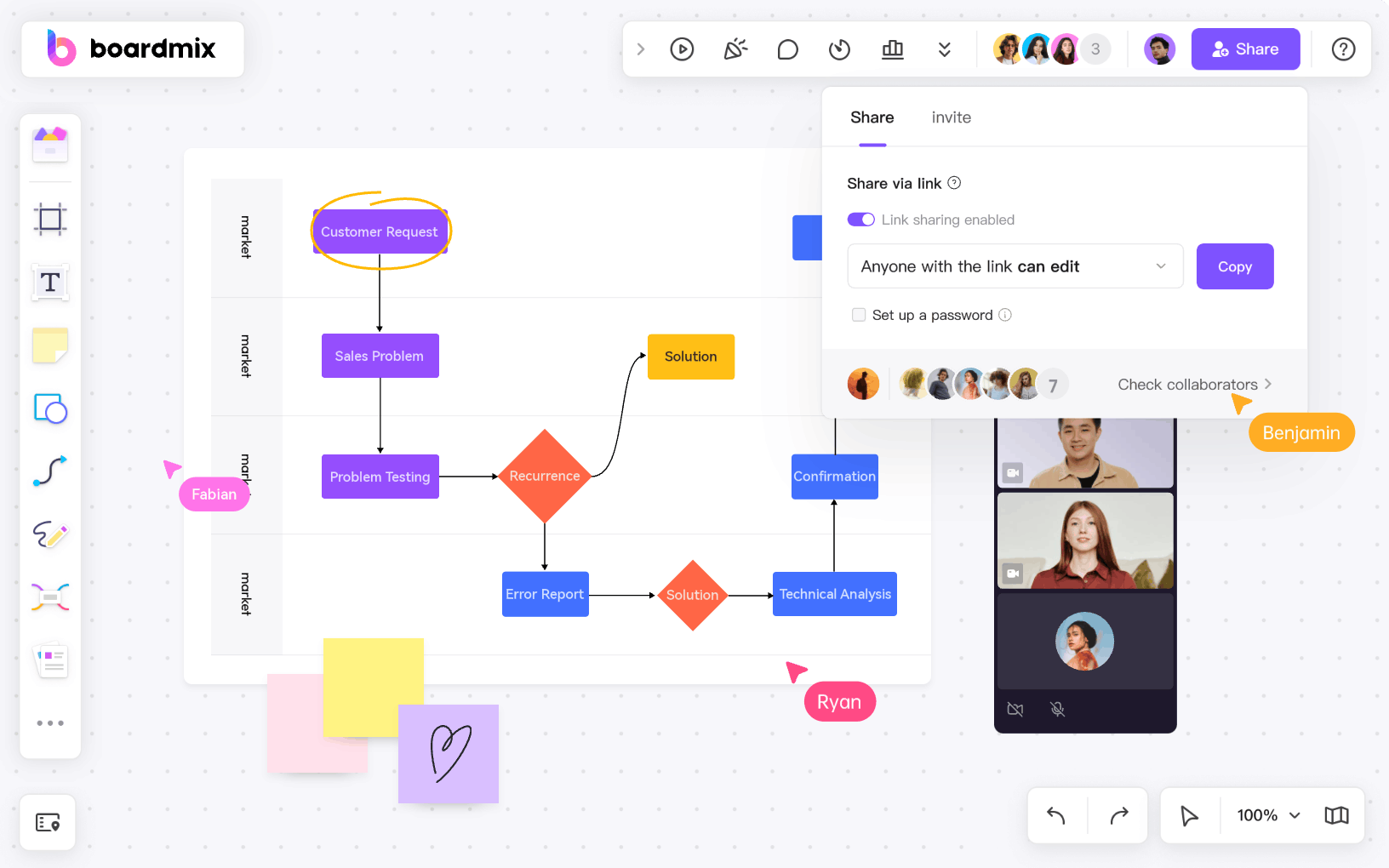
Check simultaneous editing, comments, guest access, roles, version history, and whether a free board is visible to the whole team. Sensitive workflows may also need workspace administration, controlled external sharing, or an approved storage location.
Shapes, connectors, and layout determine long-term readability
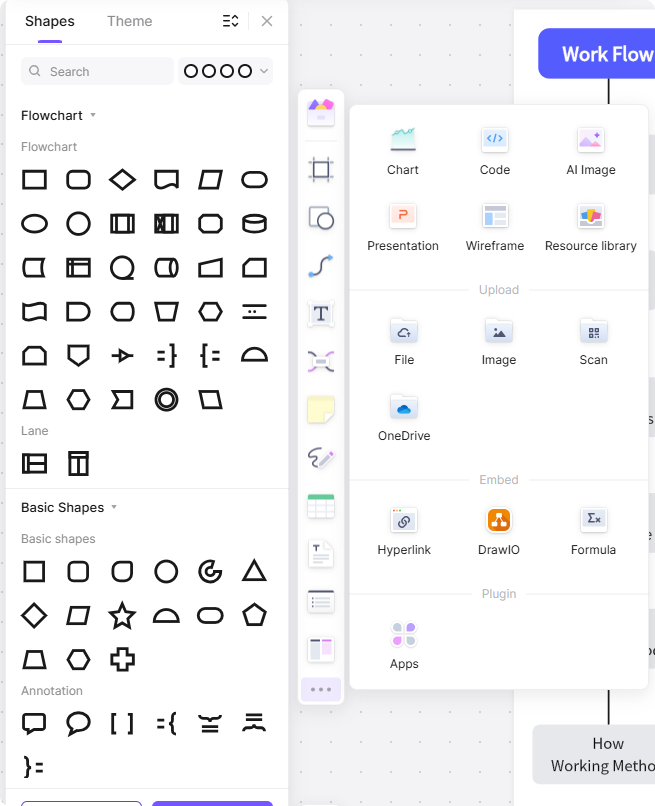
A useful editor keeps connectors attached when shapes move, supports clear decision labels, and makes large charts readable. If you need formal notation, confirm the exact stencil or standard rather than assuming that a generic process rectangle is enough.
Imports and exports must survive the next step
Decide whether the handoff is an editable source file, SVG, PDF, presentation, image, embedded diagram, or code block. Reopen one representative export in the next tool before standardizing on a platform. A visually correct PNG is not a substitute for an editable diagram when another team must maintain the process.
11 Best Flowchart Software Tools
For each tool, compare its best fit, practical strengths, key limits, and available entry point. Plan allowances can vary by account and region, so confirm a limit on the linked first-party page when it affects procurement.
Boardmix - best for collaborative flowcharts and mixed visual work
Best for: teams that want flowcharts, whiteboarding, comments, and related diagrams in one shared workspace.
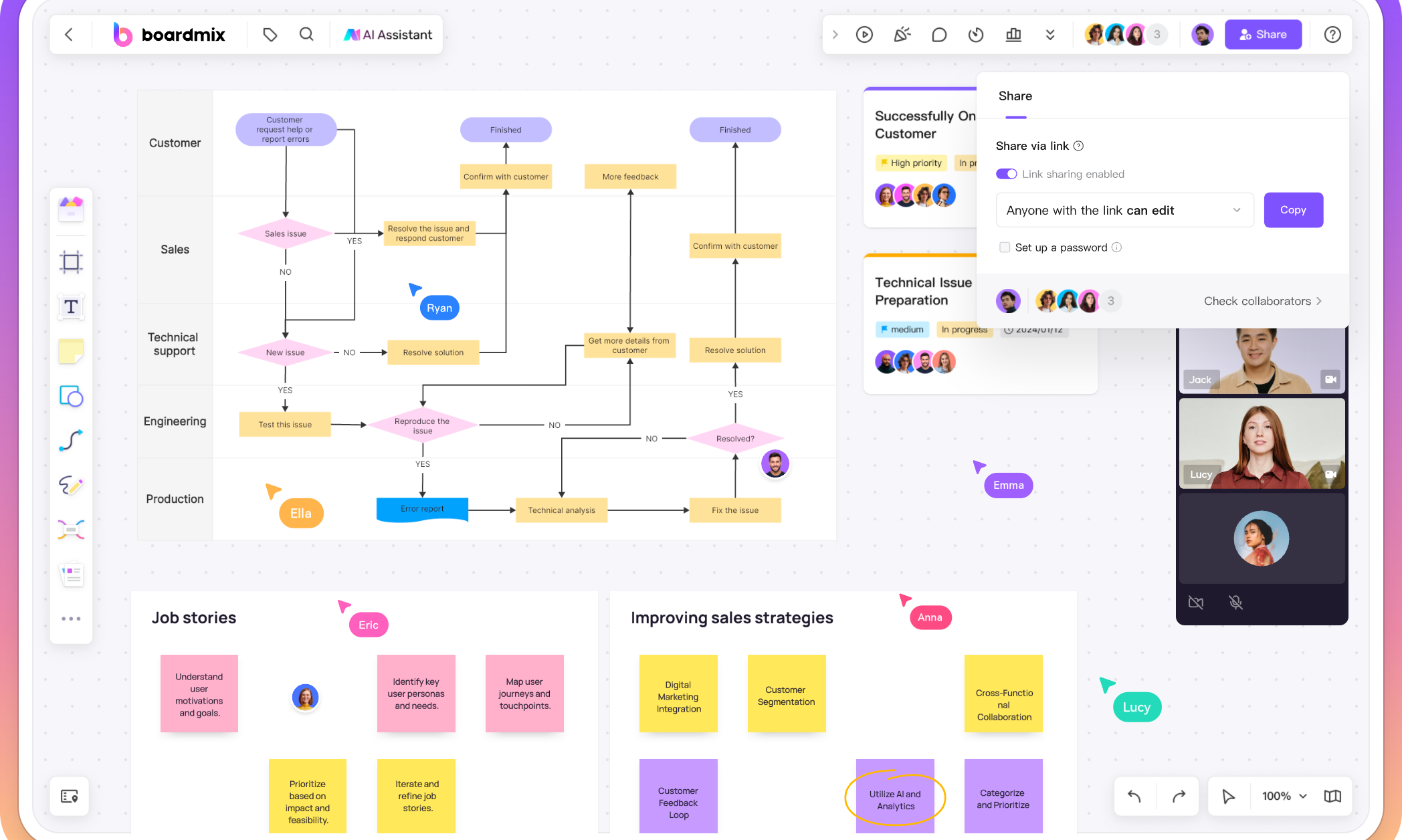
Why choose it: Boardmix's flowchart workspace combines templates, connectors, shapes, and real-time collaboration on an online whiteboard. A process map can remain beside notes, references, mind maps, or a project discussion instead of becoming an isolated file.
The AI flowchart tool can turn a prompt into an editable starting structure. Treat that output as a draft: verify every step, decision, label, and exception before using it as an operational process.
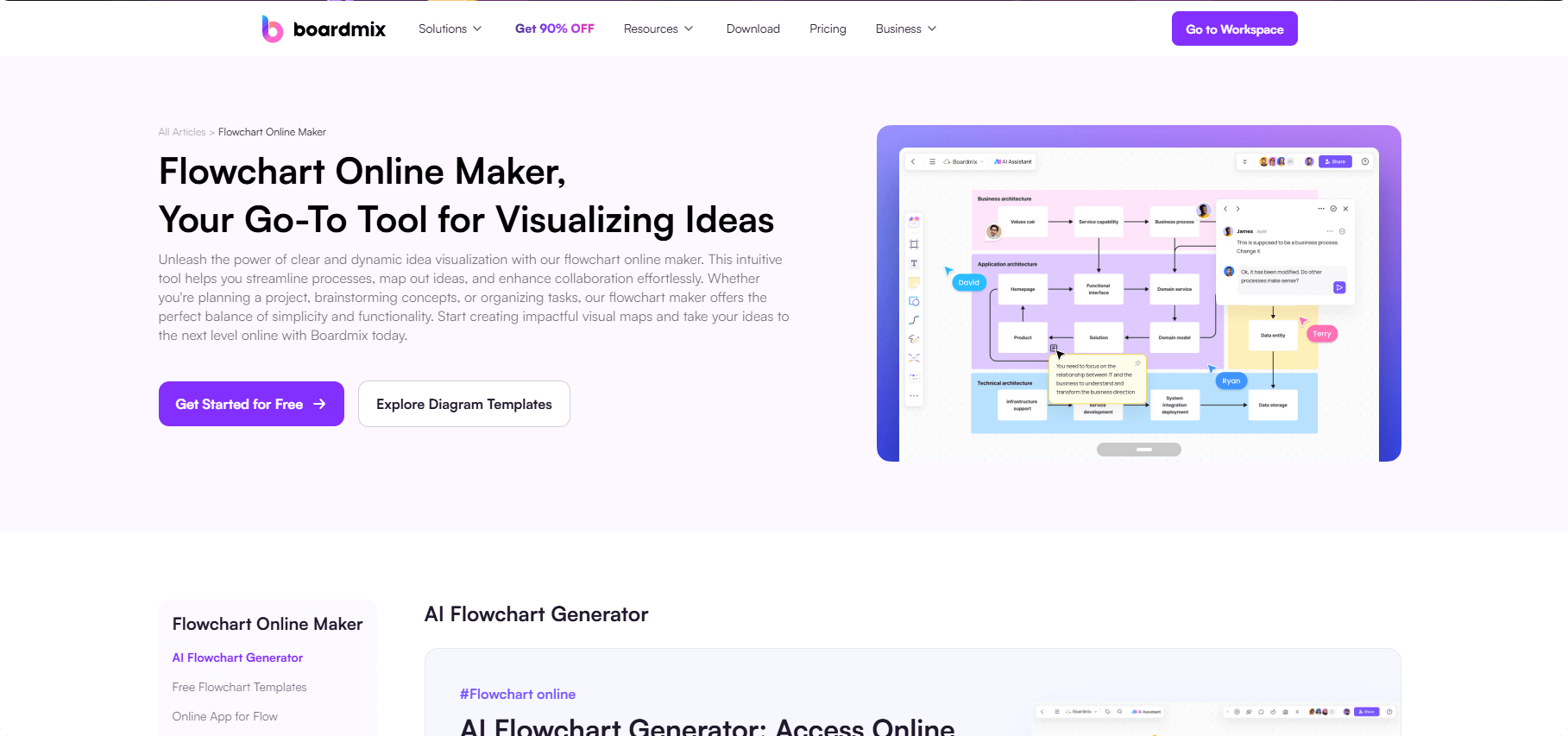
- Strengths: real-time editing, a flexible canvas, templates, multiple diagram types, and a natural path from workshop to documented workflow.
- Limitations: the Free plan limits editable boards, objects, storage, export quality, and history; detailed formal modeling is not its main purpose.
- Access: Boardmix Free includes one team workspace, three editable boards, up to 100 objects per board, 1 GB of storage, standard-definition export, and ten history records.
ClickUp - best for flowcharts tied to tasks and projects
Best for: teams already managing work in ClickUp that want diagrams close to tasks, Docs, and delivery status.
Why choose it: ClickUp Whiteboards supports flowcharts, freehand planning, links, and real-time collaboration. Whiteboard objects can connect to the rest of the workspace, so a planning diagram can lead into assigned work rather than stopping at presentation.
Choose it when the diagram is one layer of project execution. If you need formal process notation, extensive specialist symbols, or reliable interchange with another diagramming suite, test those requirements before committing a large library of charts.
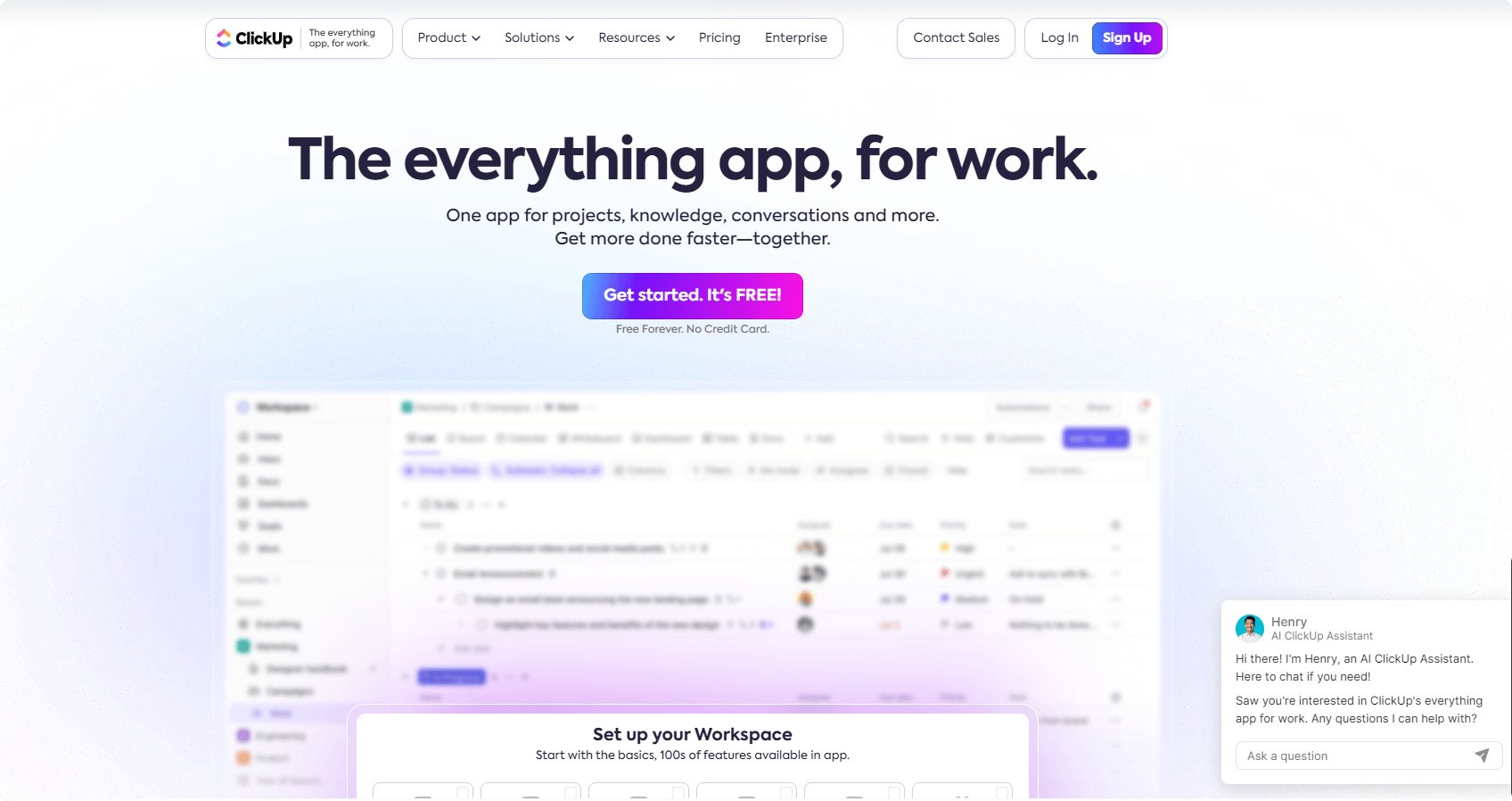
- Strengths: close connection between visual planning and project work, live collaboration, templates, and a familiar workspace for ClickUp teams.
- Limitations: limited Whiteboards on Free Forever and less specialist diagram depth than dedicated diagramming software.
- Access: Free Forever includes limited Whiteboards; paid workspace plans expand Whiteboard and AI availability.
Canva - best for polished visual flowcharts
Best for: marketing, education, and presentation workflows where visual style matters as much as process logic.
Why choose it: Canva's flowchart maker uses an infinite whiteboard, templates, connectors, icons, comments, and sharing tools. It is easy to turn a simple process into a branded visual that fits a slide deck, handout, or social asset.
Canva is less suited to a large technical process that depends on strict notation, data linking, or editable interchange with specialist diagram tools. Keep complex logic readable and confirm that the final export format serves the next person who must edit it.
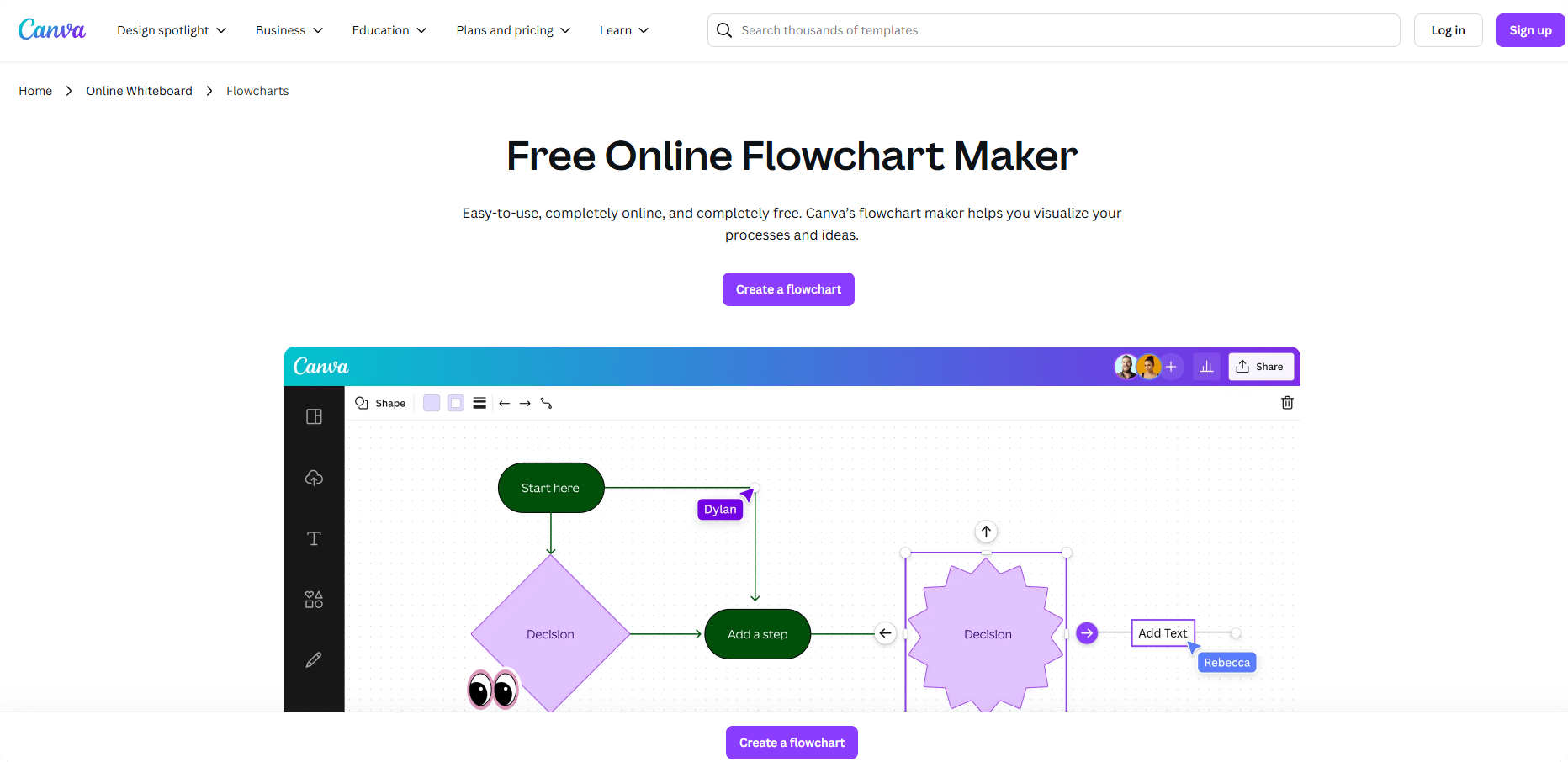
- Strengths: approachable templates, rich visual assets, straightforward collaboration, and easy reuse in presentations and other designs.
- Limitations: premium assets and brand features may require paid access, while formal modeling and technical interchange are not the core workflow.
- Access: the free editor provides flowchart templates and sharing; paid plans expand premium content and brand controls.
diagrams.net (draw.io) - best free no-account option
Best for: users who want a free browser editor, local files, or an offline desktop application without creating an account.
Why choose it: diagrams.net is open source and supports flowcharts, technical diagrams, local storage, popular cloud drives, and a desktop app for Windows, macOS, and Linux. It can export editable draw.io files as well as common image and document formats.
Its strength is control and portability rather than built-in project management. Collaboration depends on the storage integration and workflow you choose, so teams should confirm simultaneous editing and file ownership in their intended environment.
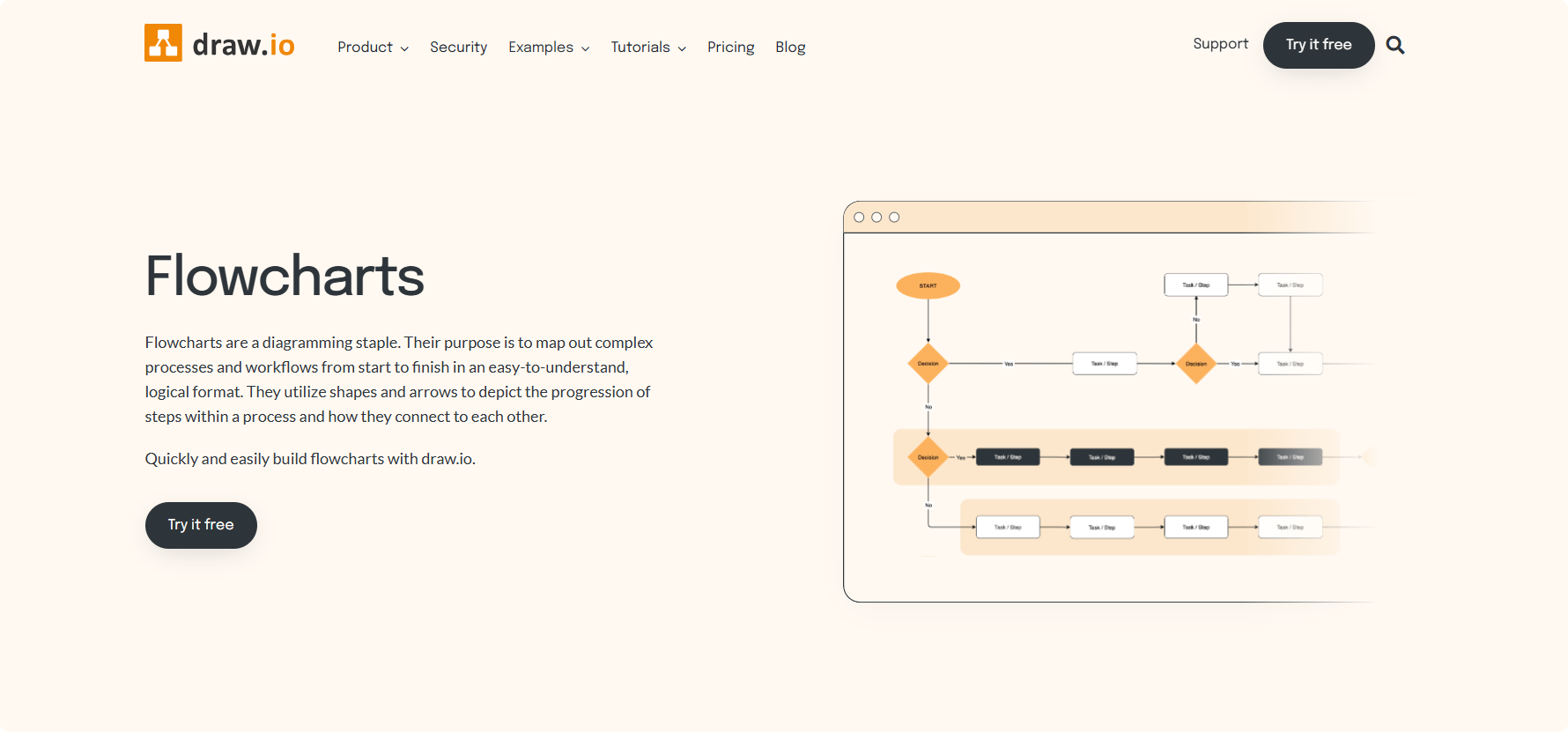
- Strengths: free and open source, no mandatory account, offline desktop apps, flexible storage, and broad import/export support.
- Limitations: the interface can feel utilitarian, and workflow management, approvals, and guided AI are outside its central value.
- Access: free to use in the browser or desktop app; no paid plan is required for the core editor.
Miro - best for remote workshops
Best for: distributed teams that build a flowchart during facilitation, brainstorming, research, or planning sessions.
Why choose it: Miro's flowchart maker combines diagram shapes with an expansive collaborative canvas, templates, comments, voting, and presentation features. Multiple people can edit together, which makes it effective for mapping a process before the final documentation is fixed.
The Free plan is useful for evaluation but exposes only three editable boards. Teams that need private working areas, advanced controls, or broader export options should compare the relevant paid tier with the number of editors and guests they expect to invite.
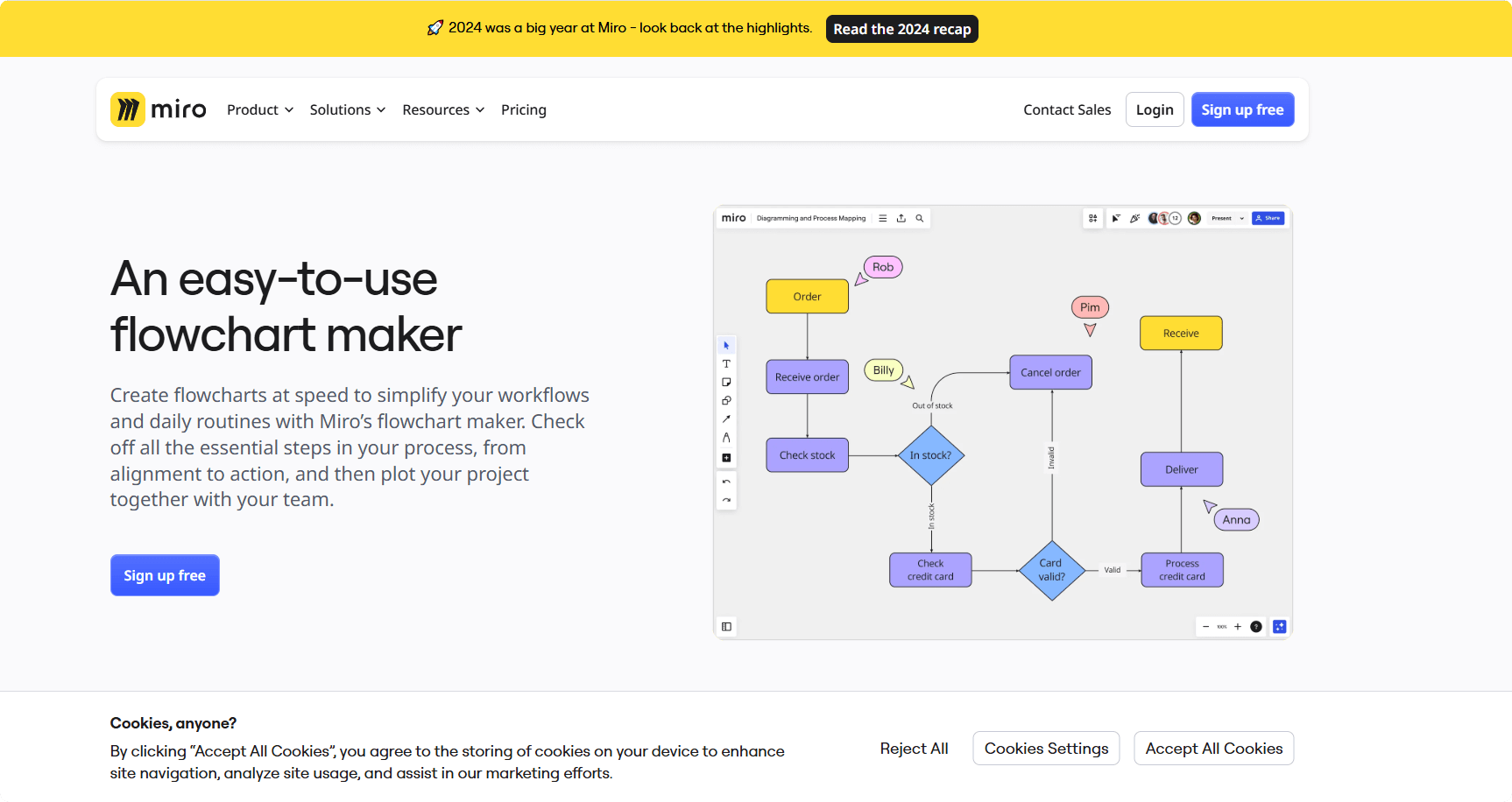
- Strengths: mature workshop collaboration, many templates, integrations, and enough canvas space for research around the process.
- Limitations: the broad whiteboard interface can be excessive for a small diagram, and key privacy, governance, or export needs may require paid access.
- Access: Miro Free provides three editable boards and a limited AI allowance for the team.
Gliffy - best for Atlassian-centered documentation
Best for: teams that want flowcharts and diagrams embedded in Confluence or connected to Jira work.
Why choose it: Gliffy provides a drag-and-drop diagram editor for flowcharts, network diagrams, UML, org charts, and other business visuals. Its strongest differentiation is the Atlassian workflow: teams can keep a diagram close to the page or issue that explains it.
Gliffy's AI diagramming tools can help create a first draft, but generated structures still need manual review for missing paths and incorrect decisions. Teams outside Confluence or Jira should compare its standalone value with broader free and collaborative alternatives.
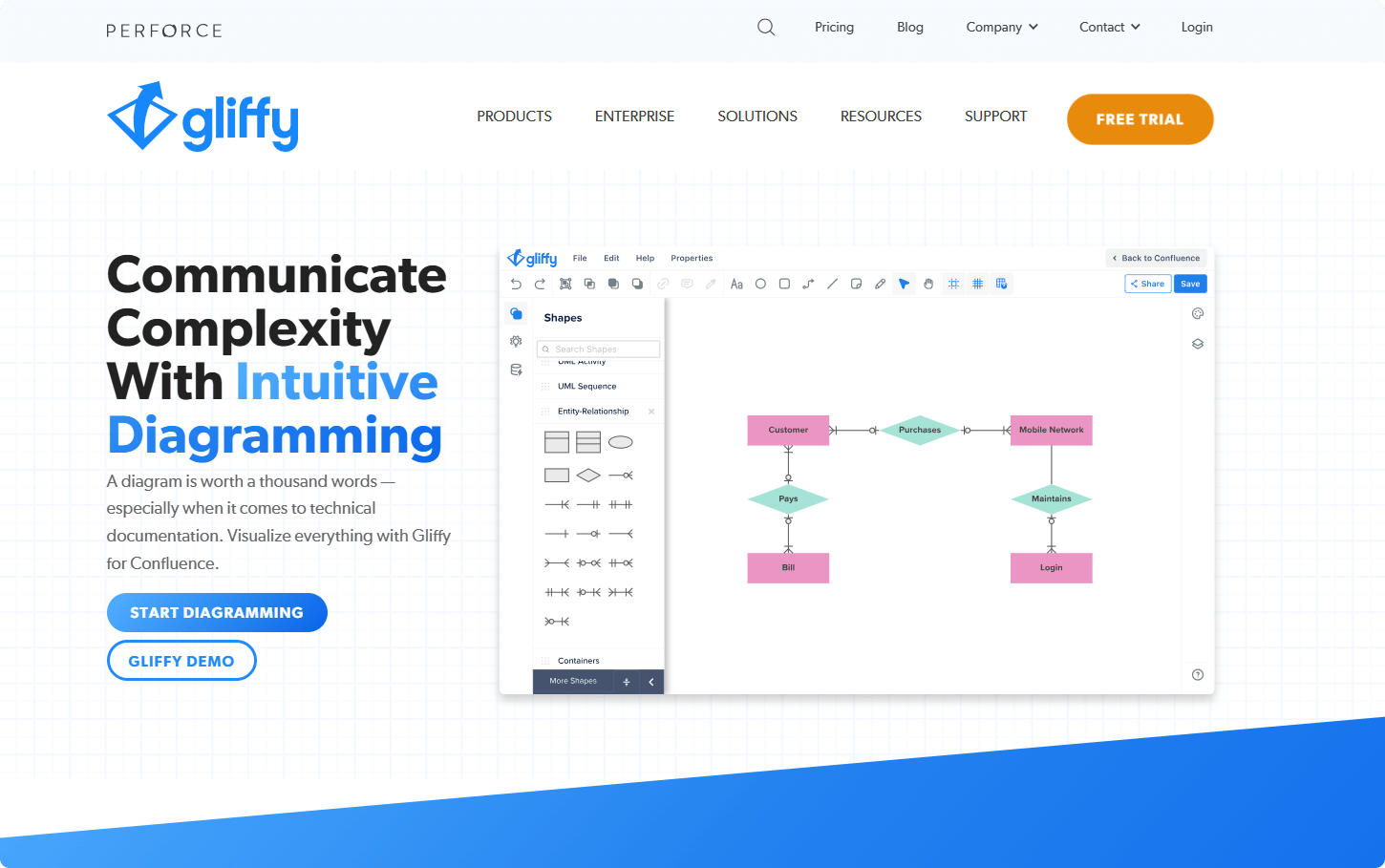
- Strengths: simple drag-and-drop diagramming and close integration with Atlassian documentation and issue workflows.
- Limitations: less differentiated outside Atlassian, and AI output cannot replace process-owner validation.
- Access: availability and limits depend on the Gliffy Online or Atlassian app plan; use the official plan path for the deployment you need.
EdrawMax - best for a broad desktop diagram library
Best for: people who want one cross-platform application for flowcharts, technical diagrams, organizational charts, and many other formats.
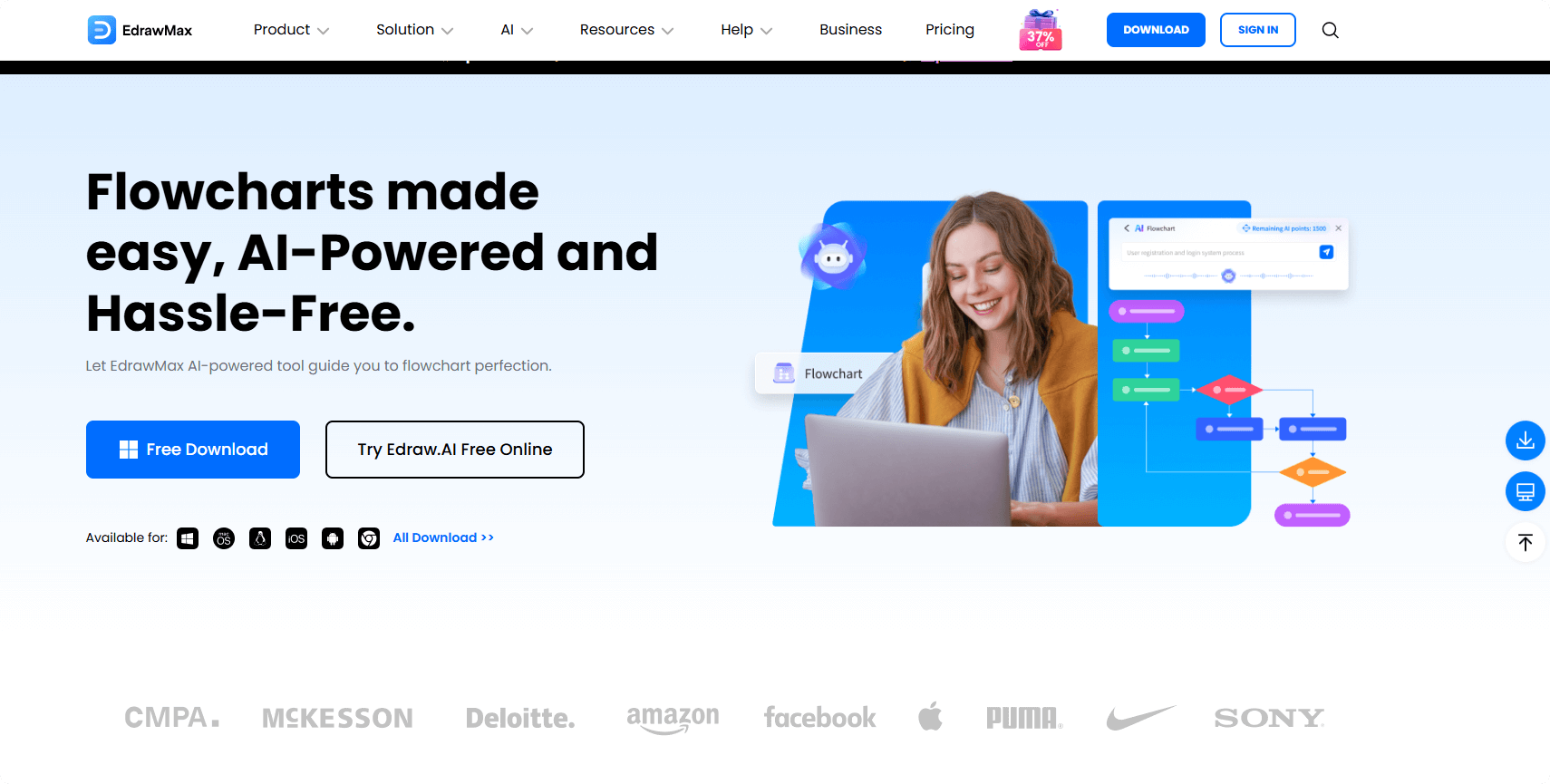
Why choose it: EdrawMax offers a large symbol and template library across desktop, web, and mobile workflows. It suits users who create several diagram types and prefer a conventional application with detailed formatting controls.
The breadth can be harder for a first-time user than a focused flowchart editor. According to the official free-version guide, free exports use a watermark and standard quality, cloud storage is limited to 100 MB, and only three cloud files can be edited.
- Strengths: many diagram categories, deep symbol libraries, desktop applications, and common visual export formats.
- Limitations: a denser interface, watermarked Free-version exports, and limited free cloud editing.
- Access: a limited free version is available; paid access removes practical export and cloud restrictions.
SmartDraw - best for data-linked business diagrams
Best for: organizations that need structured business diagrams, data-driven generation, and integrations with common office platforms.
Why choose it: SmartDraw's flowchart maker supports automatic formatting, collaborative editing, and a broad diagram catalog. It can create data-driven visuals from sources such as Google Sheets or CSV and connects with Microsoft, Google Workspace, and Atlassian environments.
Exports include PDF, PNG, and SVG, which is useful for distribution but should not be confused with full editable interchange in every destination. SmartDraw is a paid product, so evaluate its data and integration advantages against the number of people who need authoring access.
- Strengths: automatic layout, data-linked diagram options, business integrations, and a wide range of diagram types.
- Limitations: paid access and a feature-rich interface that may be more than occasional flowchart users need.
- Access: SmartDraw plans are paid; use the plan page rather than temporary promotional pricing for budgeting.
Lucidchart - best for browser-based business diagramming
Best for: business teams that need a focused online diagram editor with comments, sharing, templates, and common file imports.
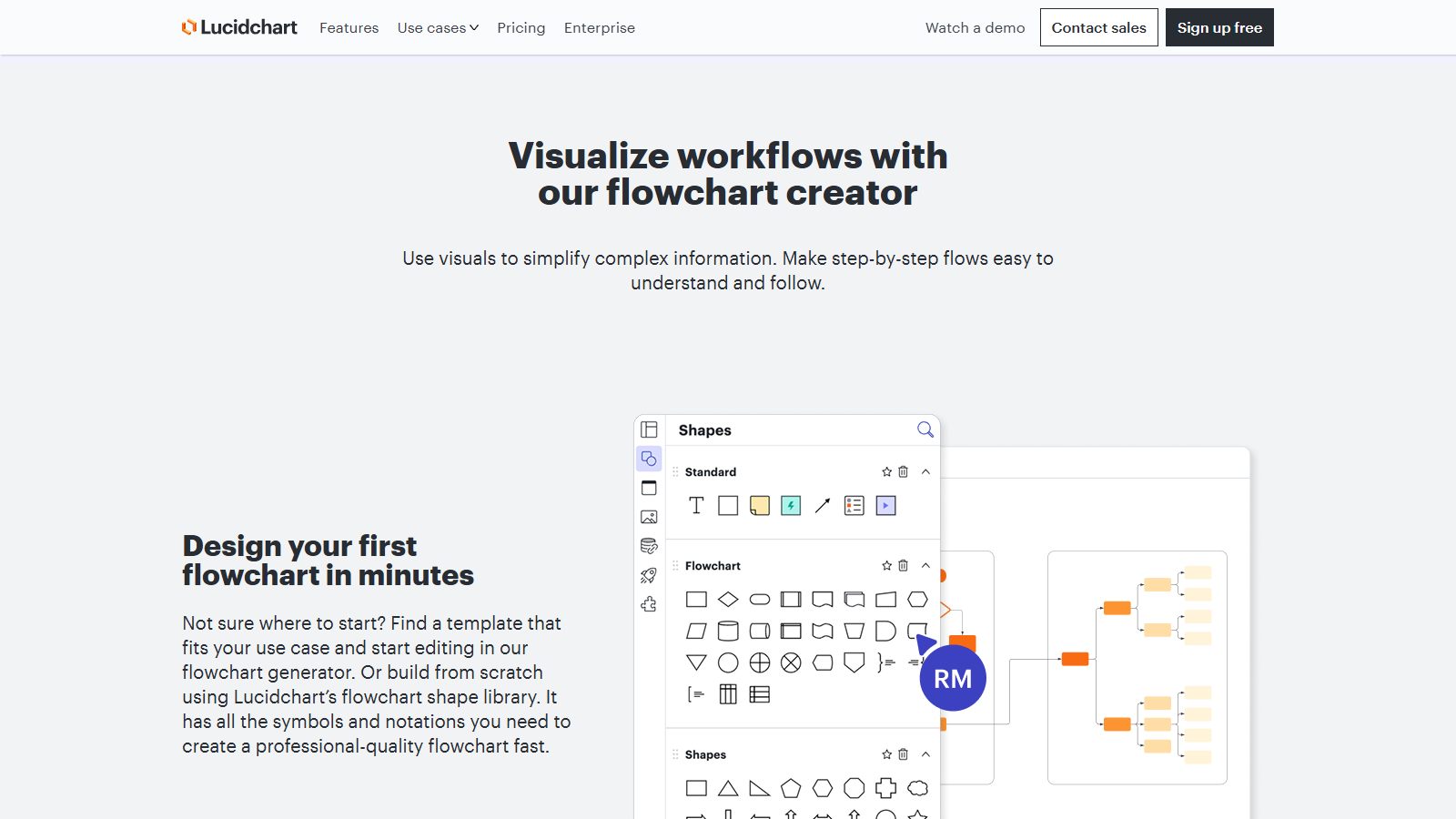
Why choose it: Lucidchart's flowchart guide covers shape libraries, connectors, formatting, and collaborative sharing in a browser. It is a practical middle ground between a general whiteboard and a formal desktop modeling suite.
The Lucidchart plan comparison describes Free as having limited editable documents and objects per document, without premium templates. Larger diagrams, advanced imports or exports, and broader team controls require the appropriate paid tier.
- Strengths: approachable browser editing, real-time collaboration, business templates, and integrations for common team workflows.
- Limitations: the Free plan limits both document count and object count, which can constrain real process maps quickly.
- Access: Free provides limited editable documents and objects without premium templates; paid plans expand capacity and advanced features.
Microsoft Visio - best for Microsoft 365 and formal process work
Best for: organizations that already rely on Microsoft 365, need BPMN or detailed professional diagrams, and may require a Windows desktop app.
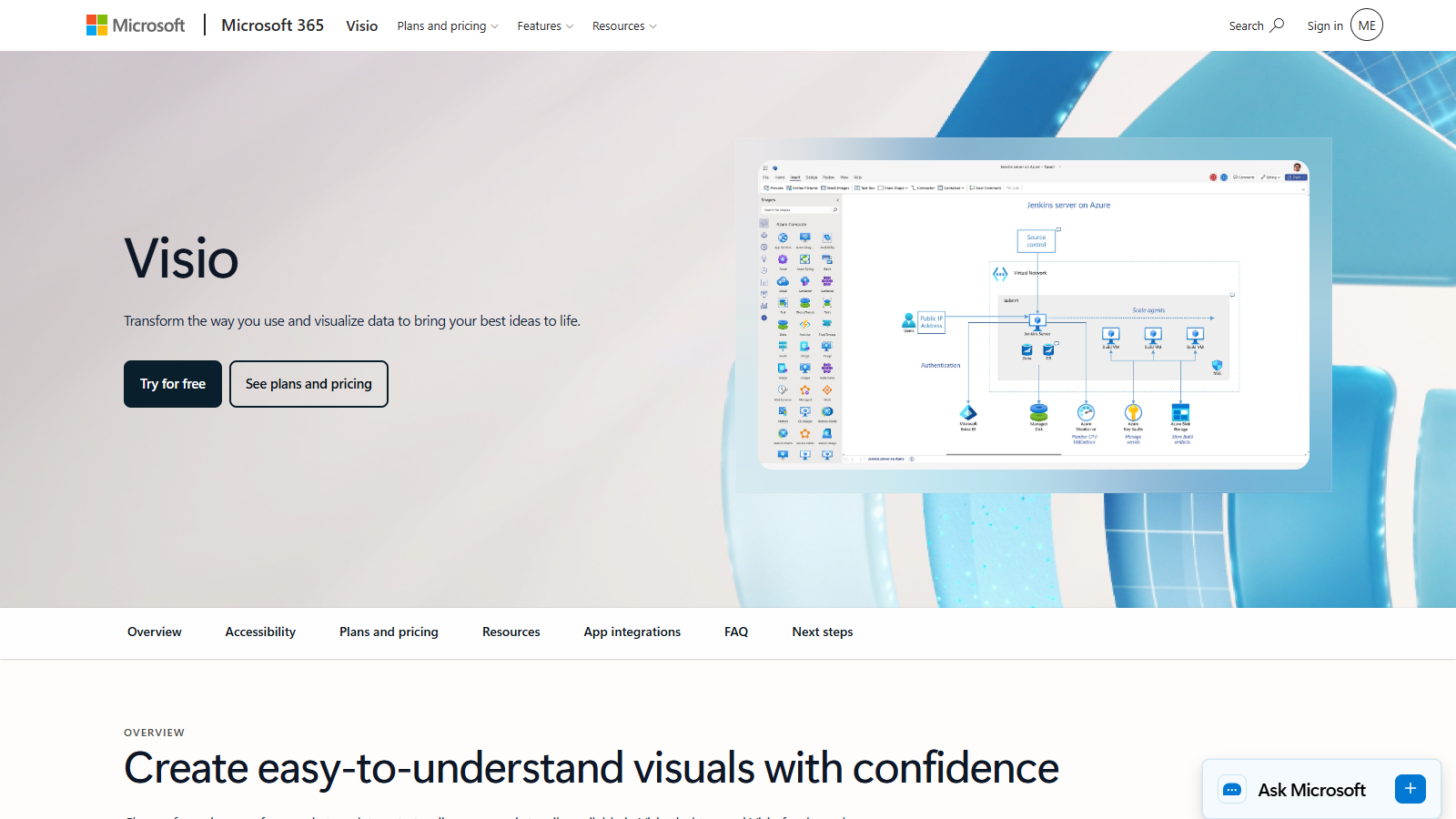
Why choose it: Microsoft's Visio flowchart guide uses standard process, decision, document, and data shapes with connectors and reusable templates. The web experience covers browser editing, while the full Windows application serves more advanced diagramming and offline work.
Microsoft's Visio plan comparison distinguishes the basic Visio web app included in eligible Microsoft 365 commercial plans, web-focused Plan 1, and Plan 2 with the desktop app, BPMN, data linking, and advanced diagrams. Mac-first teams should verify their editing workflow because the full desktop client is Windows-based.
- Strengths: familiar Microsoft ecosystem, detailed process notation, strong templates, and advanced desktop capabilities on Plan 2.
- Limitations: no general standalone free plan, more complex licensing, and the full desktop application is Windows-based.
- Access: basic web diagramming is included with eligible Microsoft 365 commercial plans; advanced web and desktop capabilities use paid Visio plans.
Mermaid - best for flowcharts as code
Best for: developers and documentation teams that want diagram source stored as text in Markdown, repositories, or automated documentation.
Why choose it: Mermaid.js is an open-source text syntax for flowcharts and other diagrams. The Mermaid Live Editor can render a diagram without an account, and integrations can keep diagram source close to the documentation it explains. Text works naturally with version control because changes can be reviewed as diffs.
Mermaid Chart adds a hosted workspace with a Basic plan that lists three diagrams and limited AI use; paid tiers add collaboration and presentation features. Mermaid is not the best choice for a nontechnical workshop that depends on direct shape manipulation or precise manual placement.
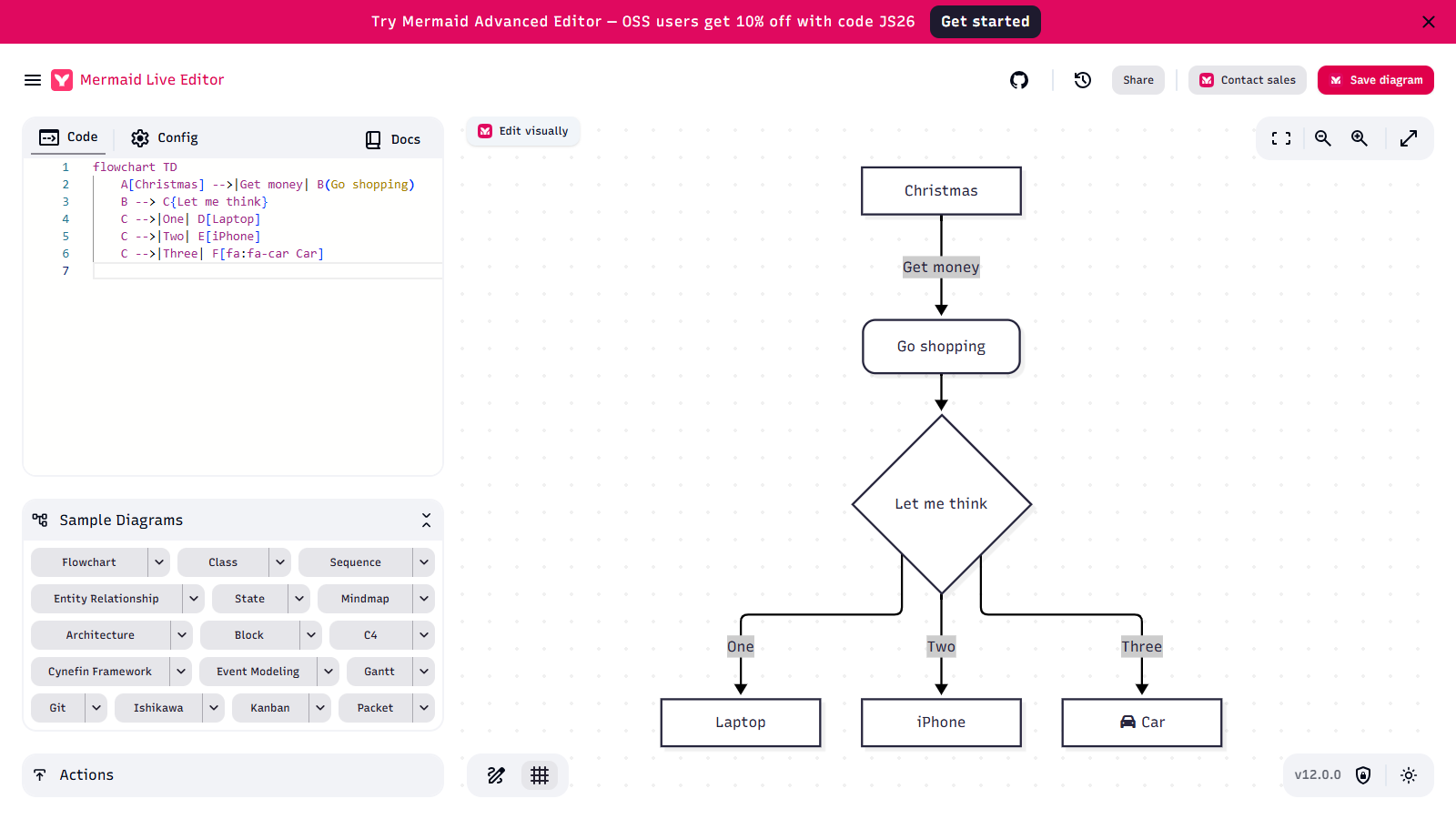
- Strengths: open-source syntax, version-control-friendly source, repeatable rendering, and broad documentation integrations.
- Limitations: requires learning text syntax, uses automatic layout, and offers less direct canvas control for nontechnical editors.
- Access: Mermaid.js and the Live Editor are free; Mermaid Chart has a limited Basic plan and paid collaboration tiers.
How to Create a Flowchart in Boardmix
Boardmix works best when the flowchart is part of a collaborative planning process rather than a file created by one person and emailed for approval. Use this four-step workflow to keep the diagram readable and reviewable.
- Define the scope. Write one start event, one end result, the people or systems involved, and the exceptions that must appear. A clear boundary prevents an unreadable map of the entire organization.
- Start from a template or draft. Open the flowchart workspace, choose a relevant template, or use AI to generate an editable first structure from a concise source. Do not treat generated logic as approved logic.
- Build and label the flow. Use consistent process, decision, input/output, and connector shapes. Label both branches from every decision and keep the main path visually dominant.
- Review with the people who run the process. Invite collaborators, resolve comments, test at least one exception path, then export or share the final board in the format the next audience can use.
Common Flowchart Software Use Cases
Workflow and process maps
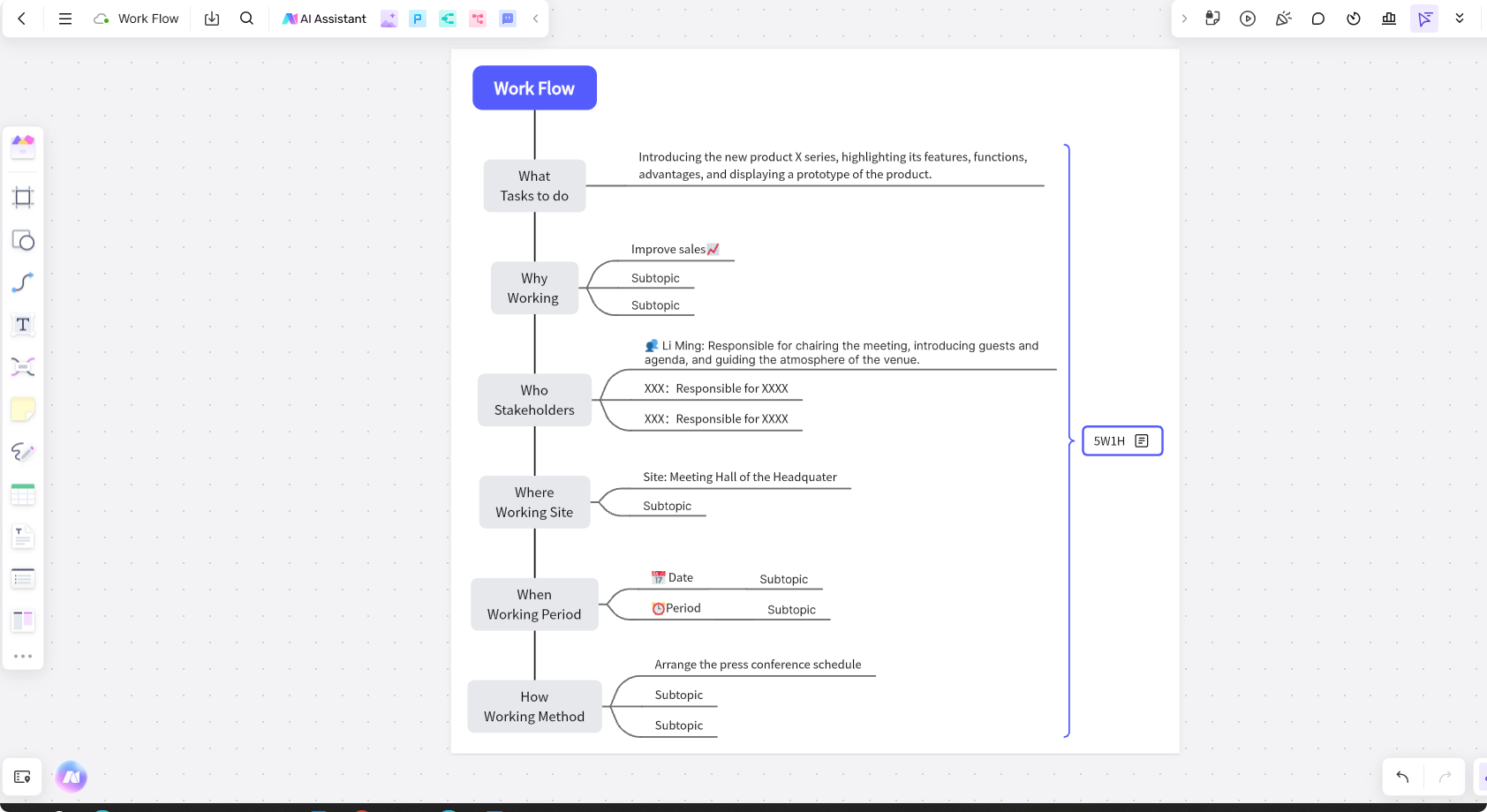
Workflow charts make tasks, roles, decisions, and handoffs visible. They are useful for onboarding, standard operating procedures, service design, approval chains, and process improvement. Add ownership to each critical step, then review bottlenecks and exception paths with the people who perform the work.
Algorithm and program logic
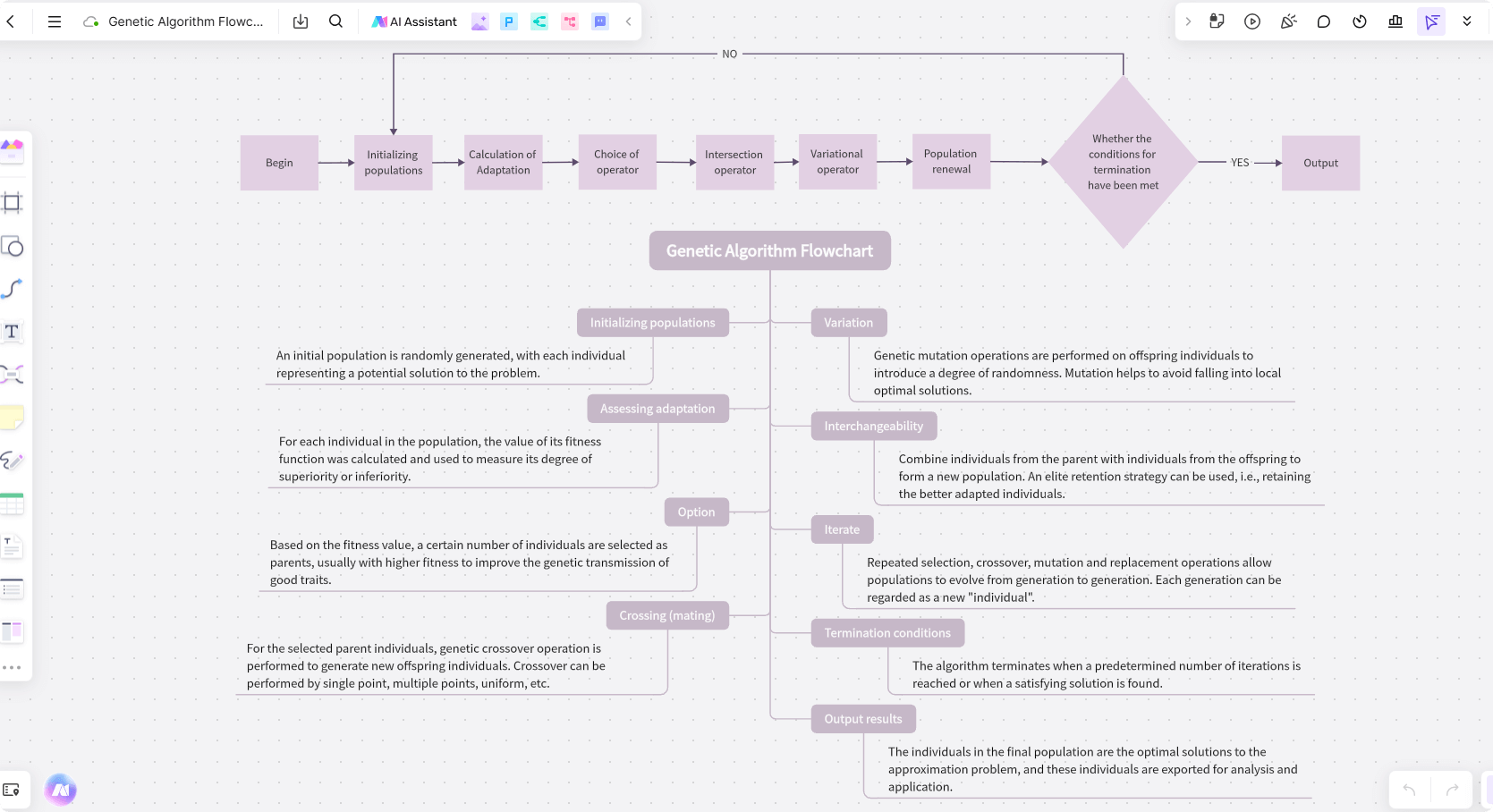
Algorithm flowcharts translate program logic into a sequence of inputs, processing steps, decisions, and outputs. They can clarify an approach before implementation and help explain logic to a mixed audience. For documentation maintained beside code, a text-based option such as Mermaid may reduce the gap between diagram changes and code review.
Swimlane and cross-functional processes
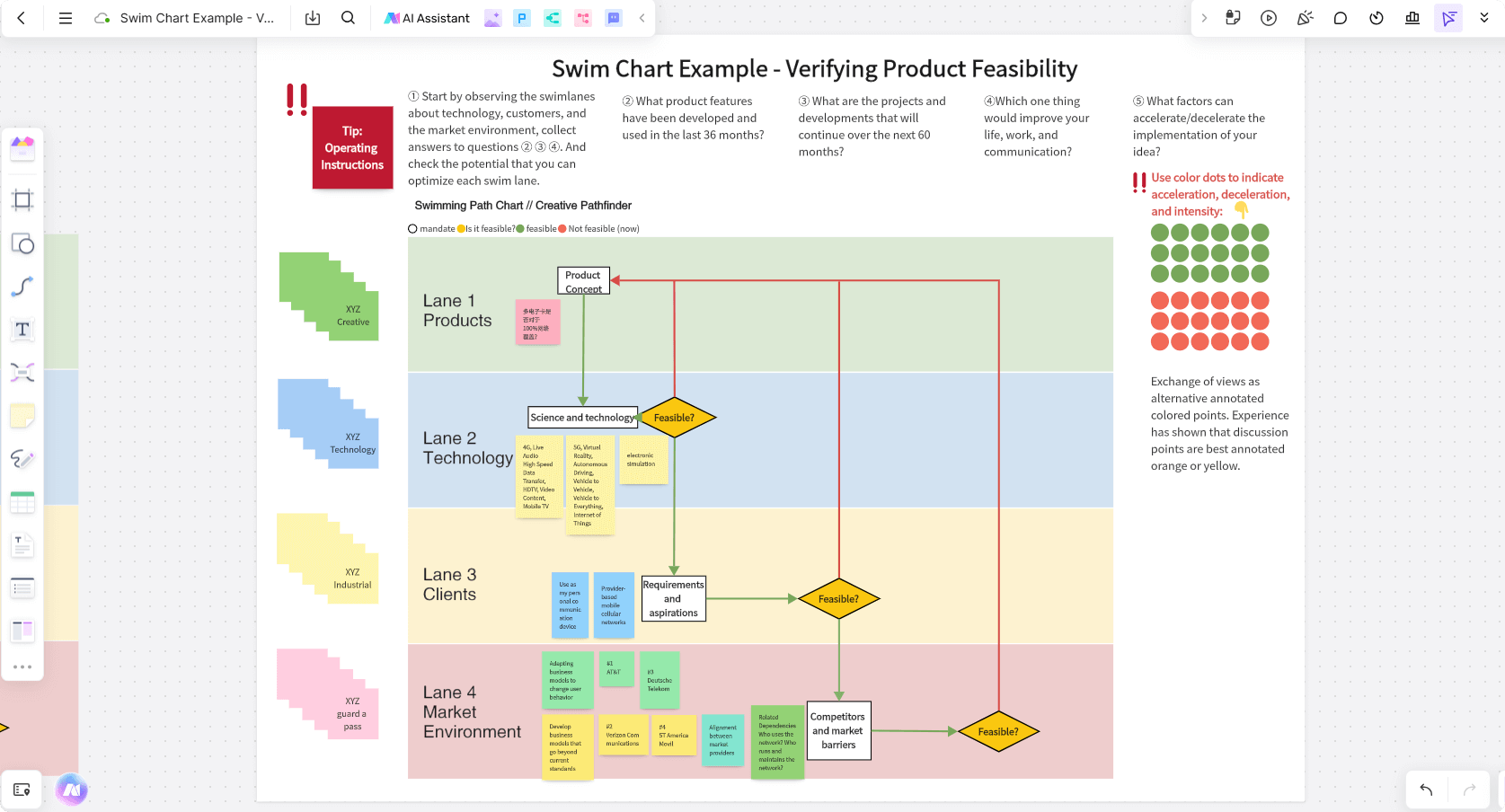
Swimlane flowcharts divide a process by person, department, system, or stage. They are especially useful when delays occur at handoffs. Keep lanes limited to the roles that affect the process, show where responsibility changes, and avoid using a lane as a substitute for a clear decision.
Decision trees and personal planning
A simple flowchart can guide budgeting, troubleshooting, eligibility checks, customer support, or recurring personal decisions. Use explicit yes/no or named outcomes at every branch. If the decision is probabilistic or scored rather than rule-based, a decision table or weighted matrix may communicate it better than a large branching chart.
Flowchart Software FAQs
What is the best flowchart software overall?
Boardmix is a strong all-round choice when teams need real-time collaboration, a flexible canvas, templates, and related visual work in one workspace. The best specialist answer changes by constraint: diagrams.net for free offline editing, Visio for Microsoft-centered formal process work, SmartDraw for data-linked business diagrams, and Mermaid for flowcharts stored as text.
What is the best free flowchart software?
diagrams.net is a practical free editor because it is open source, works without an account, and offers offline desktop apps. Boardmix is better for collaborative free use but limits boards and objects. Mermaid is free and version-control-friendly for technical users who prefer text over drag-and-drop editing.
Which flowchart software works offline?
The diagrams.net desktop app works offline on Windows, macOS, and Linux. EdrawMax offers desktop applications, and Microsoft Visio Plan 2 includes the Windows desktop app. Browser-first tools may cache some content, but do not assume offline editing unless the vendor documents it for the product and plan you use.
Can AI create an accurate flowchart from text?
AI can create an editable first draft from a prompt or source text, but it can omit exceptions, invent a step, or label a decision incorrectly. Compare the output with the source, verify it with the process owner, and test at least one normal path and one exception path before publishing or automating anything.
Should I choose flowchart software with BPMN support?
Choose BPMN support when teams need a shared formal notation for business processes, handoffs, events, gateways, and audit-ready documentation. A general flowchart is usually easier for informal explanations. Microsoft Visio and other specialist modeling tools fit the formal use case better than a lightweight visual editor.
What export format should a flowchart tool support?
Use SVG or PDF for crisp distribution, PNG for simple embedding, and an editable native or interchange format when another person must continue editing. Developers may prefer Mermaid text stored with documentation. Test the actual handoff because a tool can support an export format without preserving every editable object in the destination.
Is a whiteboard or dedicated diagramming tool better?
A whiteboard is better for workshops, discovery, comments, and keeping evidence around the diagram. A dedicated diagramming tool is better for strict notation, dense technical drawings, data linking, or a controlled desktop workflow. Choose based on who maintains the chart after the workshop, not only who draws the first version.
Final Recommendation
Choose Boardmix when collaboration and surrounding visual context matter most. Choose diagrams.net for free and offline diagramming, ClickUp when a flowchart must become project work, Canva for polished presentation visuals, Miro for facilitated workshops, Gliffy for Atlassian documentation, EdrawMax for a broad desktop library, SmartDraw for data-linked business diagrams, Lucidchart for focused browser collaboration, Visio for Microsoft-centered formal processes, and Mermaid for diagrams maintained as code.
Before standardizing, build one representative process, invite one real reviewer, follow an exception path, and open the required export in its next destination. The tool that preserves that complete workflow is more valuable than the one with the longest feature list.