



It's easy to underestimate digital sticky notes. They're just small colored rectangles with text on them — nothing about them looks like the foundation of serious strategic work. But spend time in enough strategy sessions, roadmap reviews, and prioritization workshops, and a pattern emerges: the teams doing the sharpest thinking are almost always the ones moving sticky notes around a canvas, not the ones staring at a slide deck or a spreadsheet.
There's a reason for that, and it's not nostalgia for physical Post-its. This piece looks at why digital sticky notes remain one of the most effective tools for strategic thinking, how top teams actually use them, and what separates a sticky-note session that produces real clarity from one that produces a wall of clutter.
Why Something So Simple Works So Well
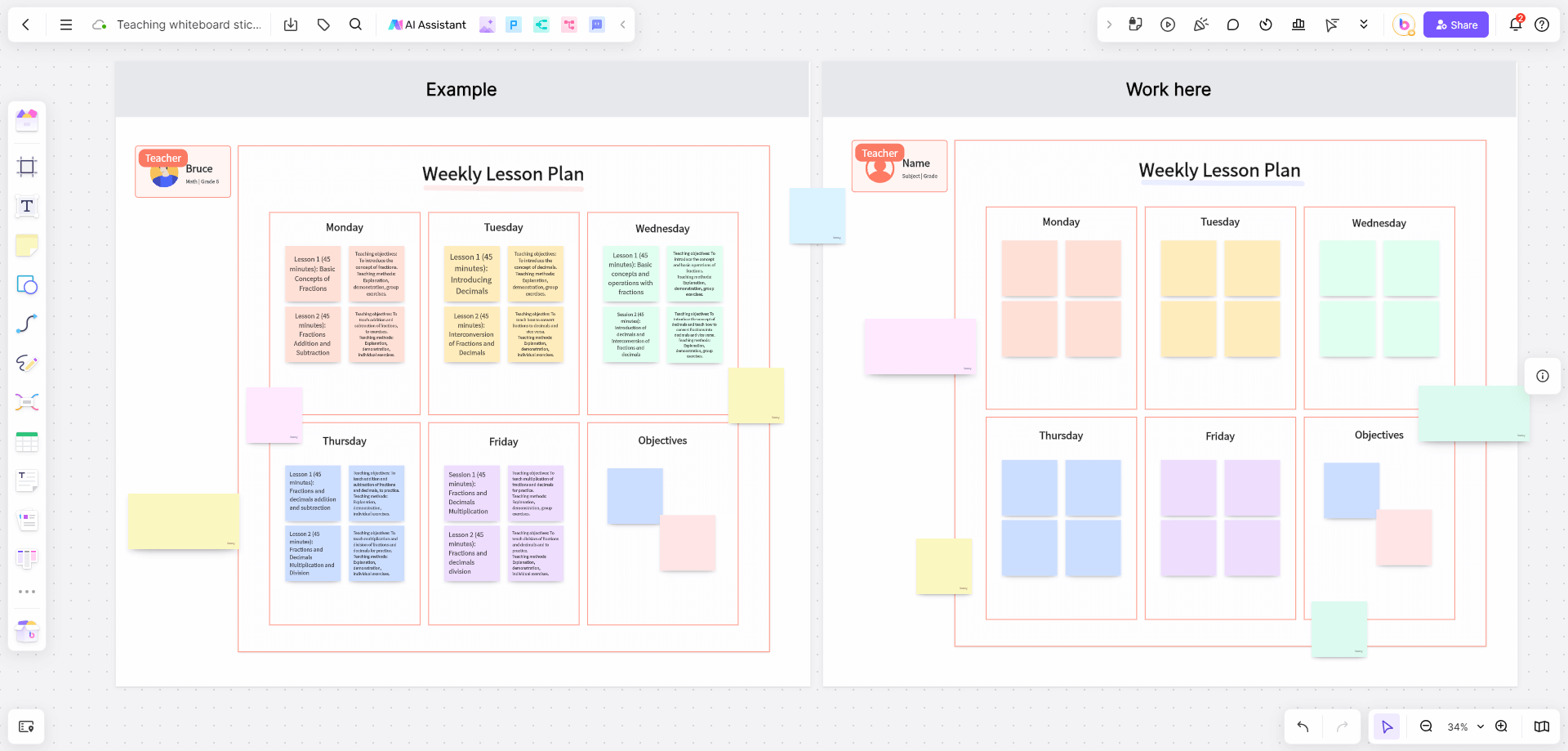
The power of digital sticky notes comes from a combination of low friction and high flexibility — a pairing that's surprisingly rare in software. Creating a sticky note takes seconds. Moving it takes a drag. Deleting it costs nothing. That low cost of action matters enormously for strategic thinking, which depends on being able to externalize a thought quickly, see it next to other thoughts, and rearrange everything without friction as understanding evolves.
Compare this to a spreadsheet, where restructuring an idea means editing cells and formulas, or a slide deck, where rearranging content means fighting with layouts. Sticky notes remove that overhead entirely. Each one is a discrete, atomic unit of thought — small enough to write quickly, but substantial enough to hold a real idea. That atomicity is what makes them so good at supporting the messy, iterative process of actual thinking, as opposed to the tidy, linear process of presenting conclusions after the thinking is done.
Where Digital Sticky Notes Outperform Physical Ones
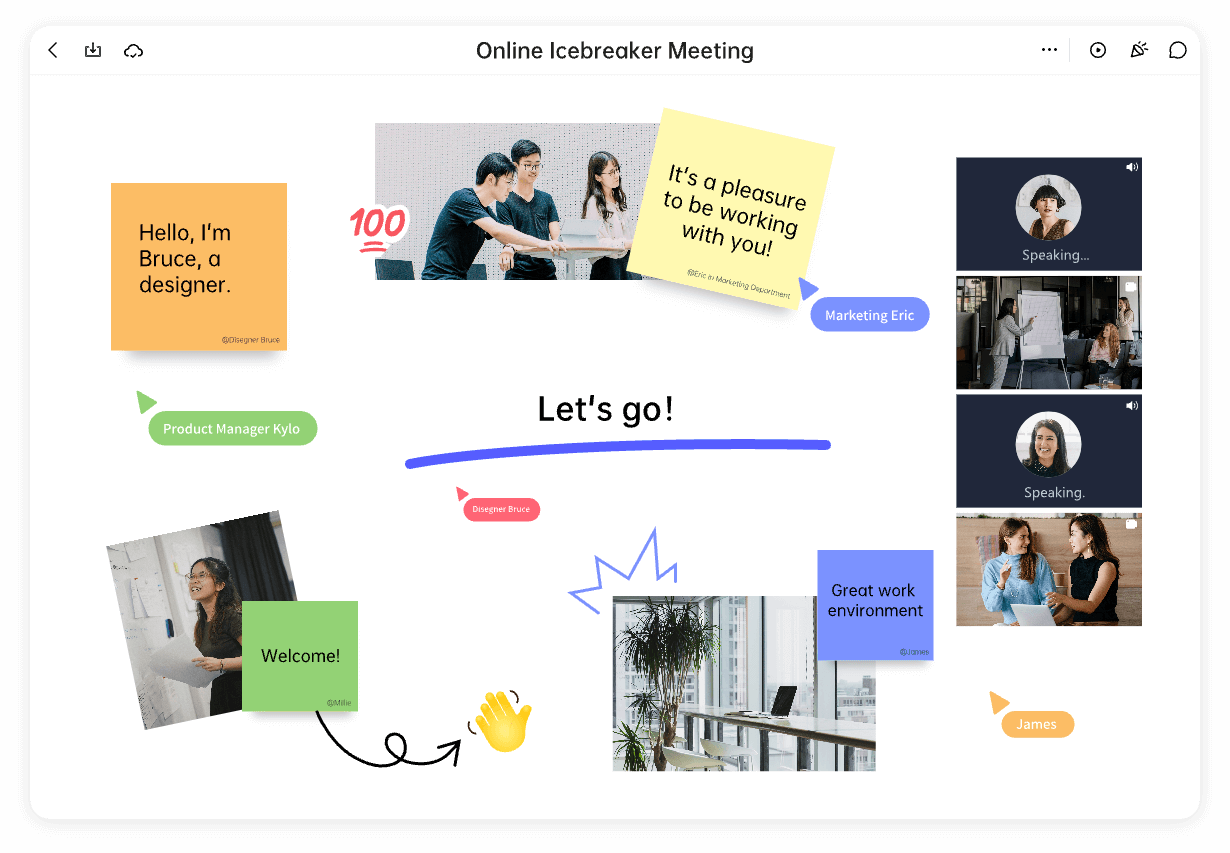
Physical sticky notes have real charm, and plenty of teams still love a wall covered in Post-its. But digital sticky notes solve several practical problems that physical ones can't:
- They survive the meeting. A photo of a physical sticky-note wall is a static snapshot; a digital board remains editable and searchable long after the session ends.
- They work for distributed teams. Remote and hybrid teams can't gather around the same physical wall — a digital canvas makes the same exercise possible regardless of location.
- They scale without running out of space. An infinite canvas never runs out of wall, unlike a literal whiteboard that fills up halfway through a big session.
- They support structure that paper can't. Digital sticky notes can be color-coded, tagged, voted on, filtered, or summarized by AI — none of which a physical Post-it can do on its own.
- They're easy to revisit and reuse. A digital board from a strategy session three months ago is still there, unchanged, ready to be referenced or built on — a physical wall gets torn down the moment the room is needed again.
Four Strategic Use Cases for Digital Sticky Notes
1. SWOT and Competitive Analysis
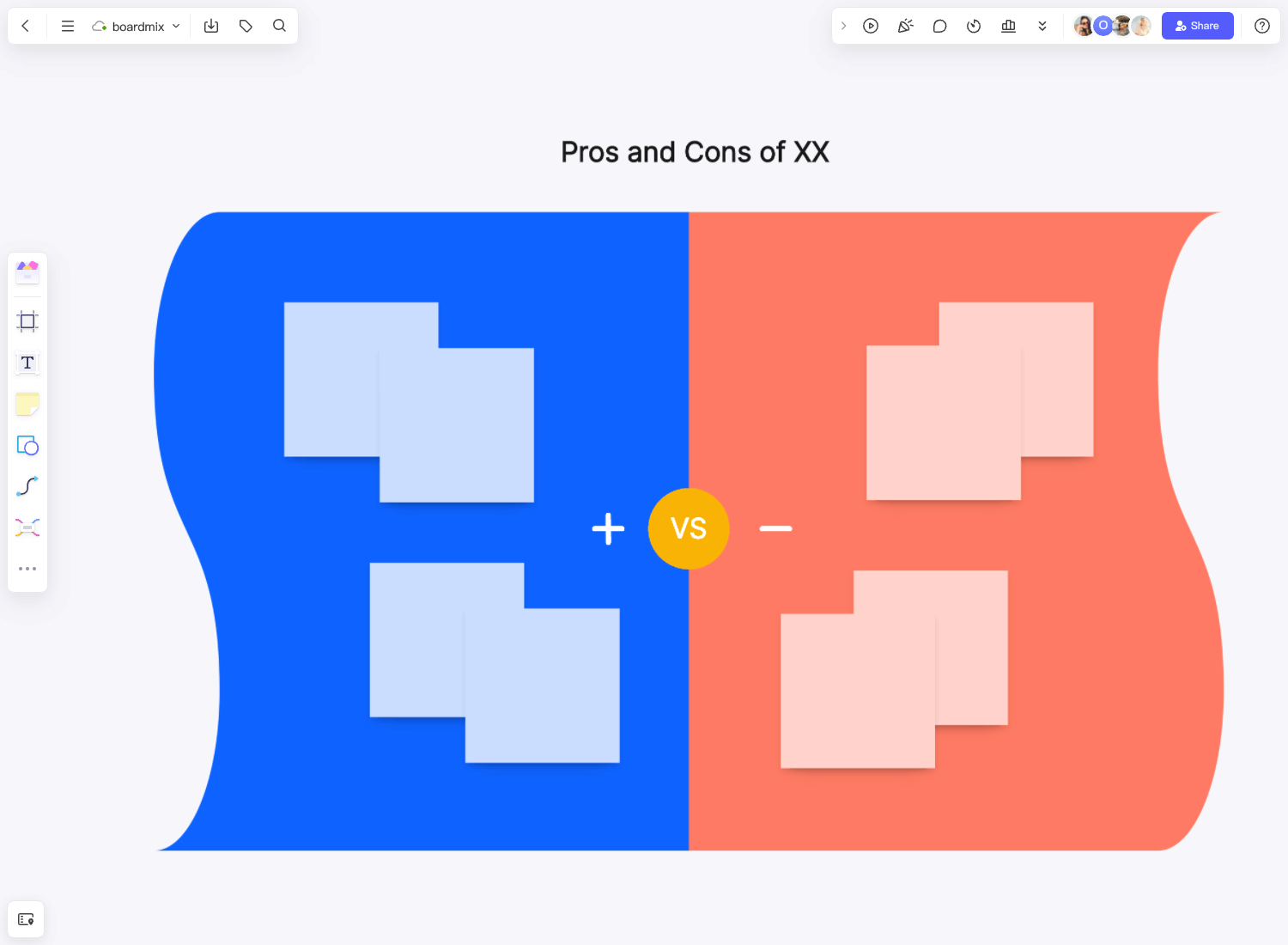
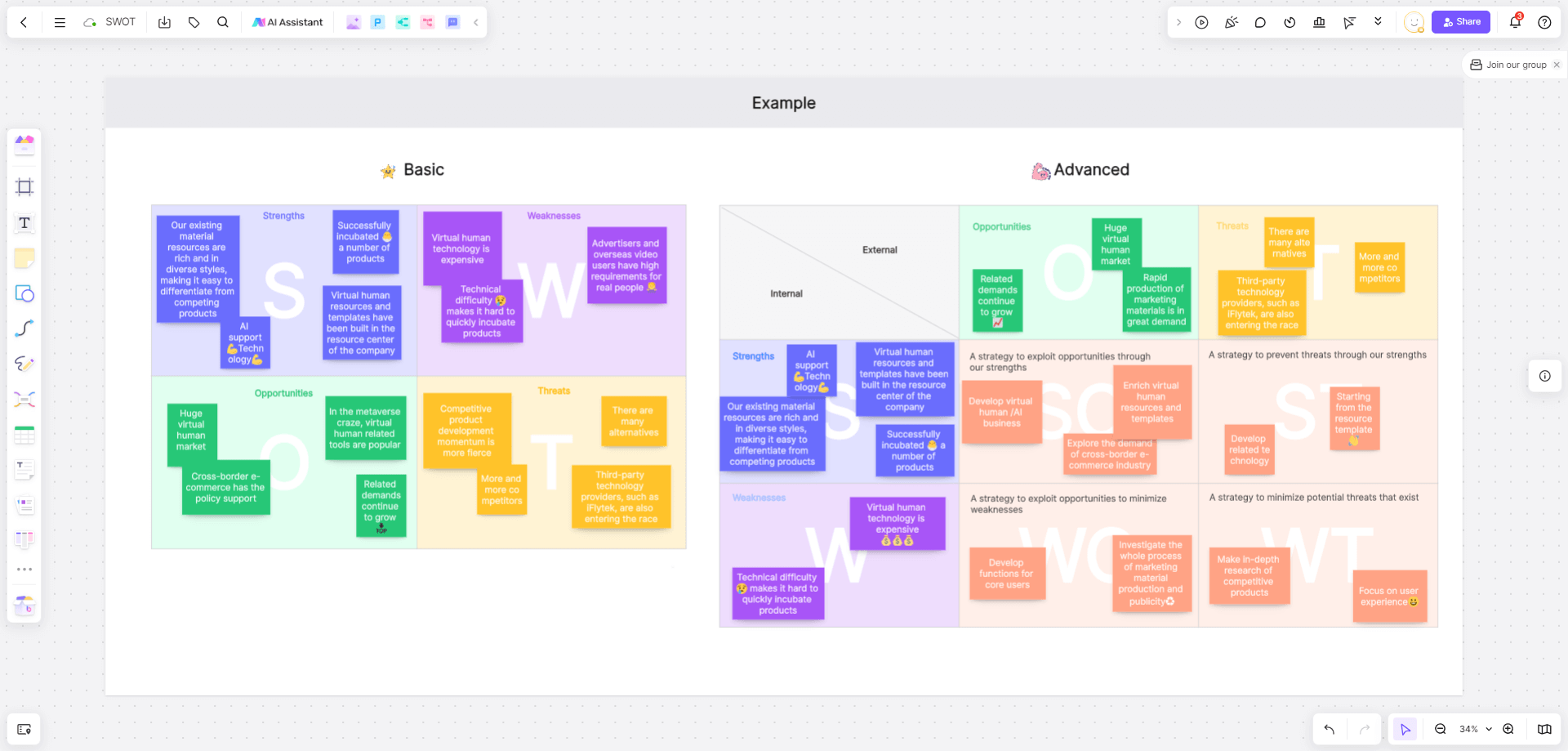
Strengths, Weaknesses, Opportunities, and Threats map naturally onto a four-quadrant board, with each sticky note representing a single observation. The format's simplicity is exactly why it endures — a cluttered SWOT with paragraphs of text per quadrant is far less useful than one with a dozen crisp, single-idea sticky notes that the team can scan in seconds.
2. Prioritization Matrices
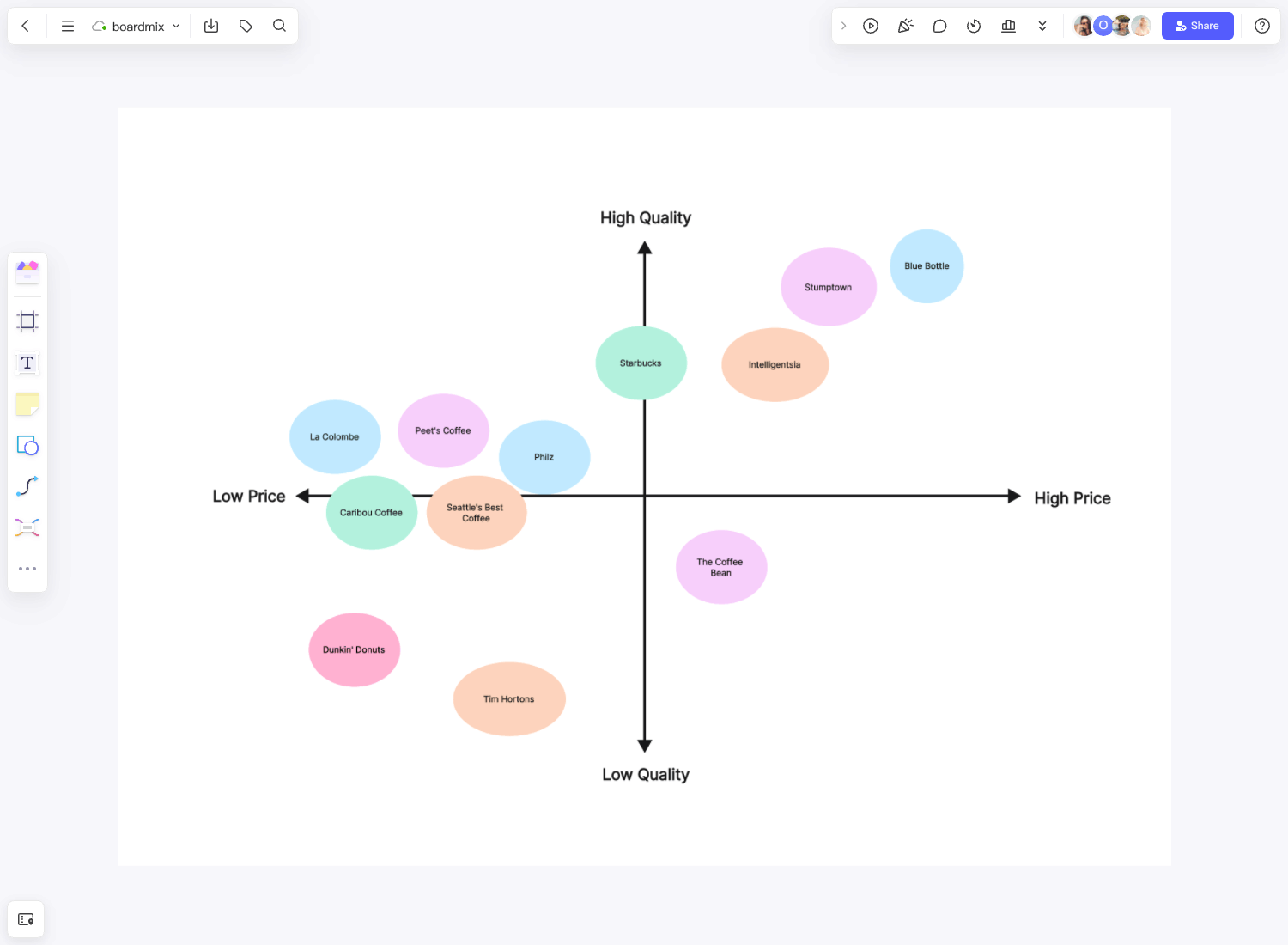
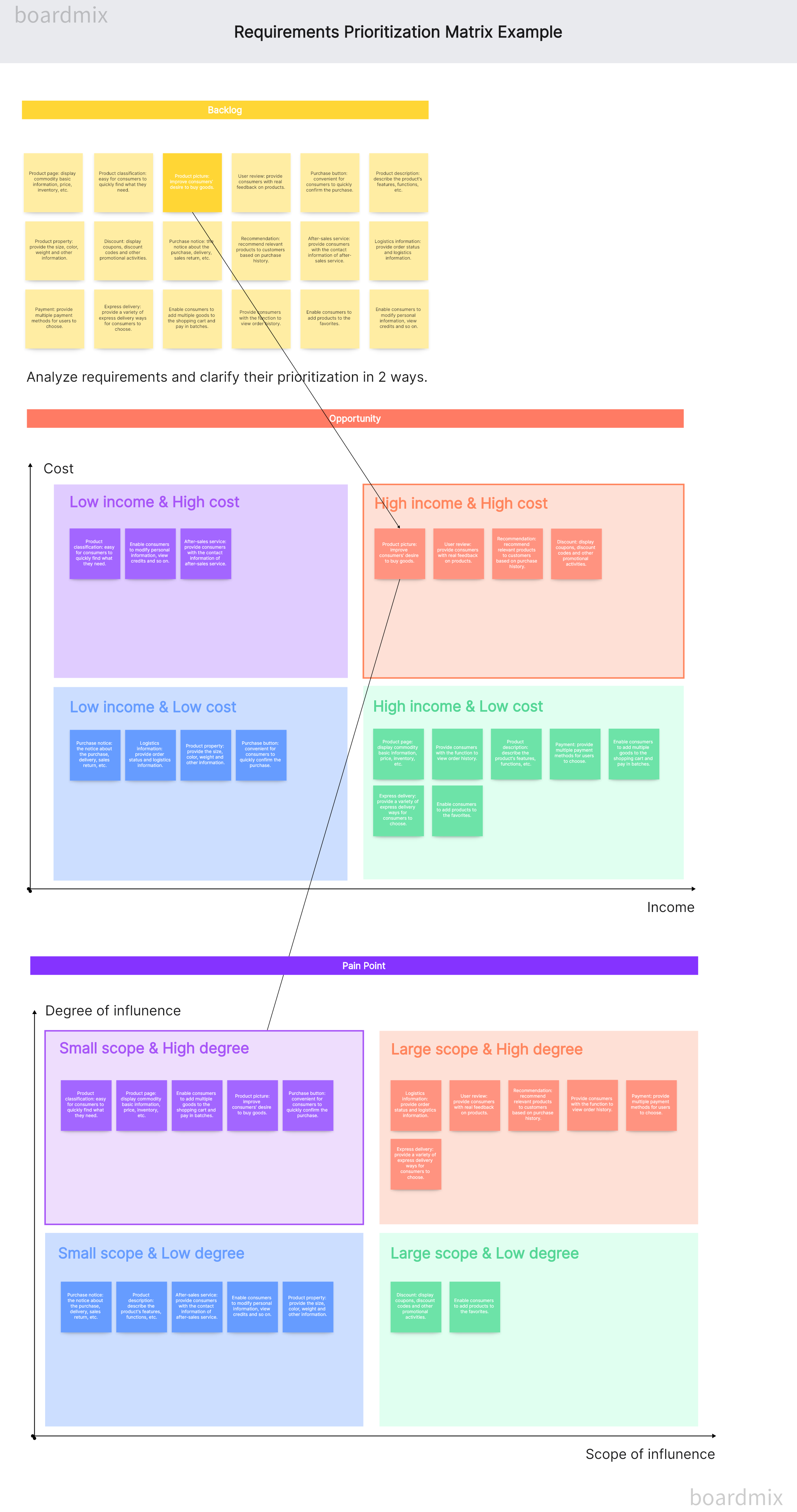
Plotting initiatives on an impact/effort grid (or any two-axis framework) turns sticky notes into a genuinely decision-making tool, not just a brainstorming one. Because each note can be dragged freely, the team can debate placement in real time — "is this really high-impact, or does it just feel urgent?" — with the visual position of the note forcing that debate to happen explicitly rather than staying implicit.
3. Stakeholder and Root-Cause Mapping
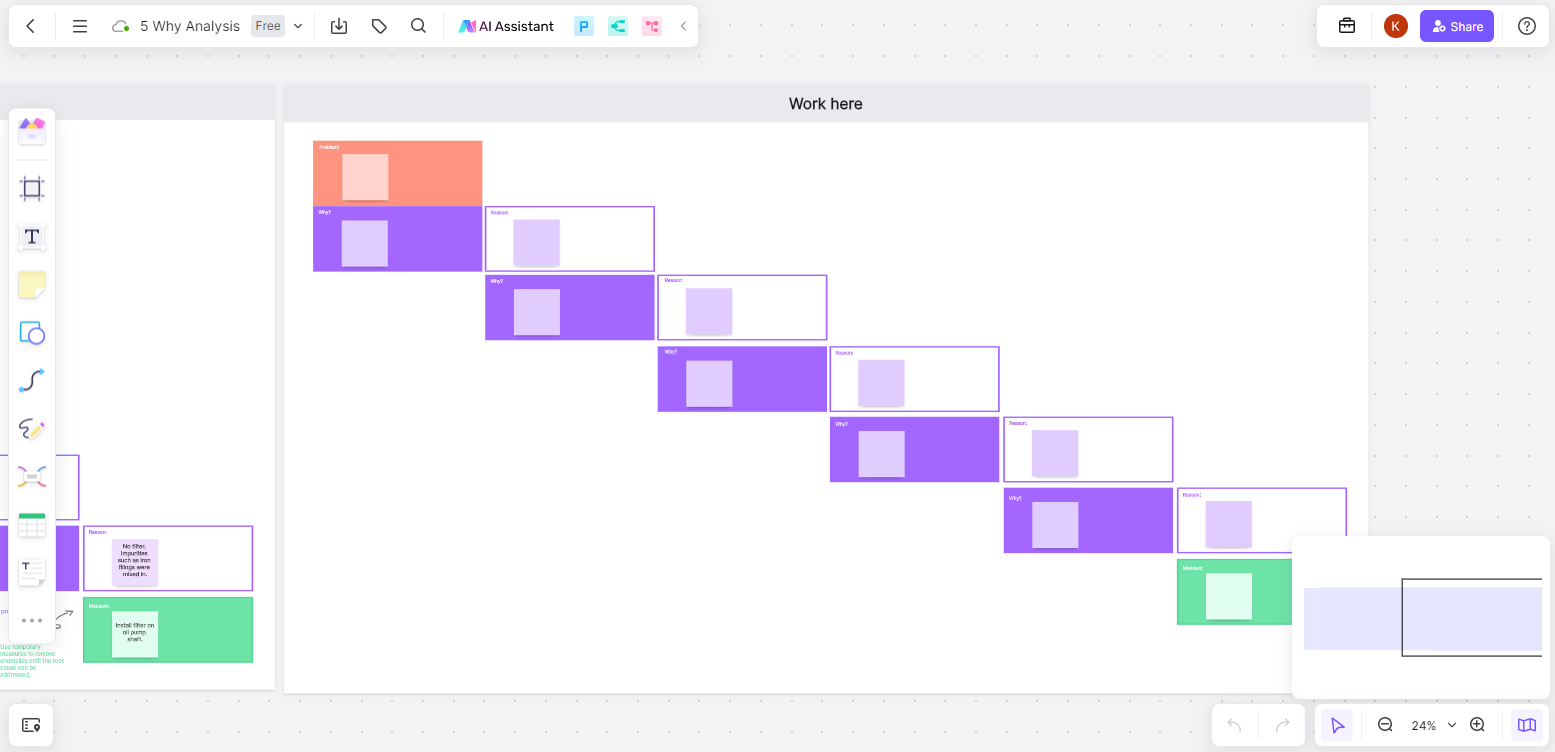
Techniques like the "5 Whys" or stakeholder influence maps benefit enormously from the ability to add a note, connect it to a cause, and keep drilling down — building a visual trail of reasoning that's much easier to follow than a written analysis after the fact.
4. OKR and Goal-Setting Workshops
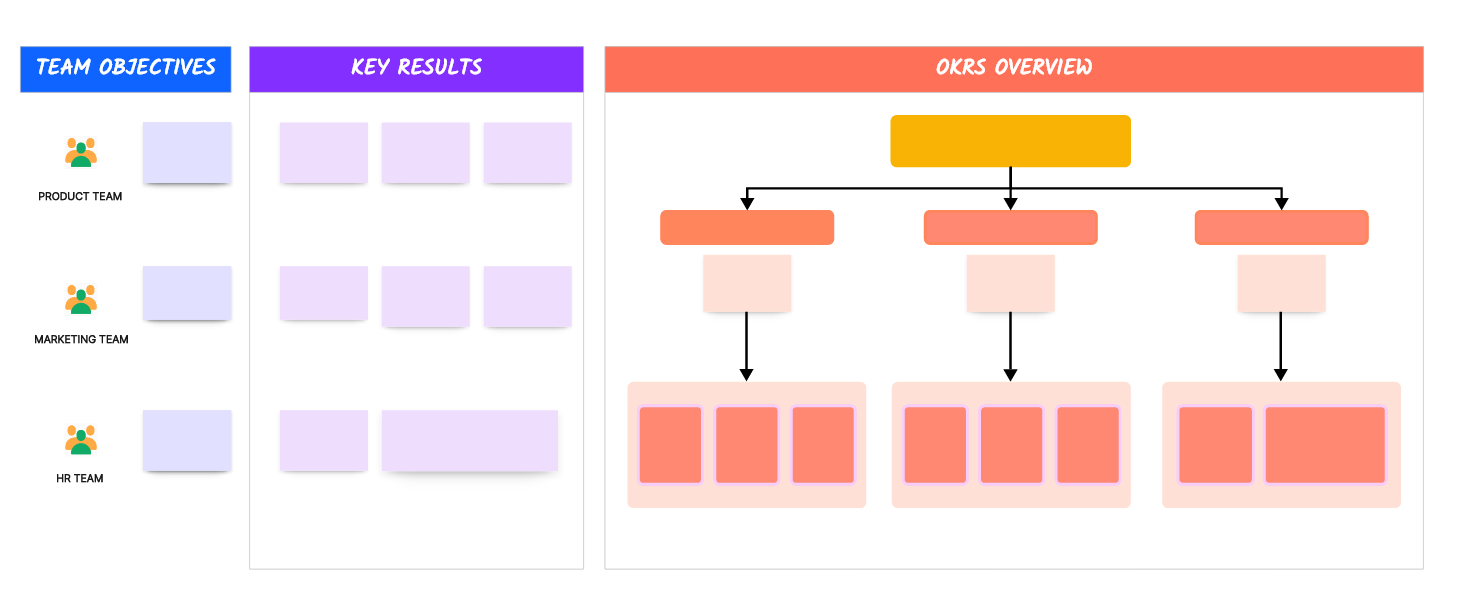
Objectives and key results often start messy — a pile of aspirational ideas that need to be filtered down to what's actually achievable and measurable. Sticky notes let a team draft rough goals quickly, then cluster, prioritize, and refine them into a smaller, sharper set without the friction of rewriting a formal document at every iteration.
What Separates a Great Sticky-Note Session From a Cluttered One
Not every sticky-note exercise produces clarity — plenty produce a colorful mess that nobody wants to look at again. A few habits distinguish sessions that actually work:
- One idea per note. Cramming multiple thoughts onto a single sticky note defeats the purpose — atomicity is what makes clustering and rearranging useful.
- Keep text short. A note with a sentence or two is scannable; a note with a paragraph becomes a document masquerading as a sticky note.
- Use color with intention. Color-coding by category, owner, or priority adds real information. Color chosen at random just adds visual noise.
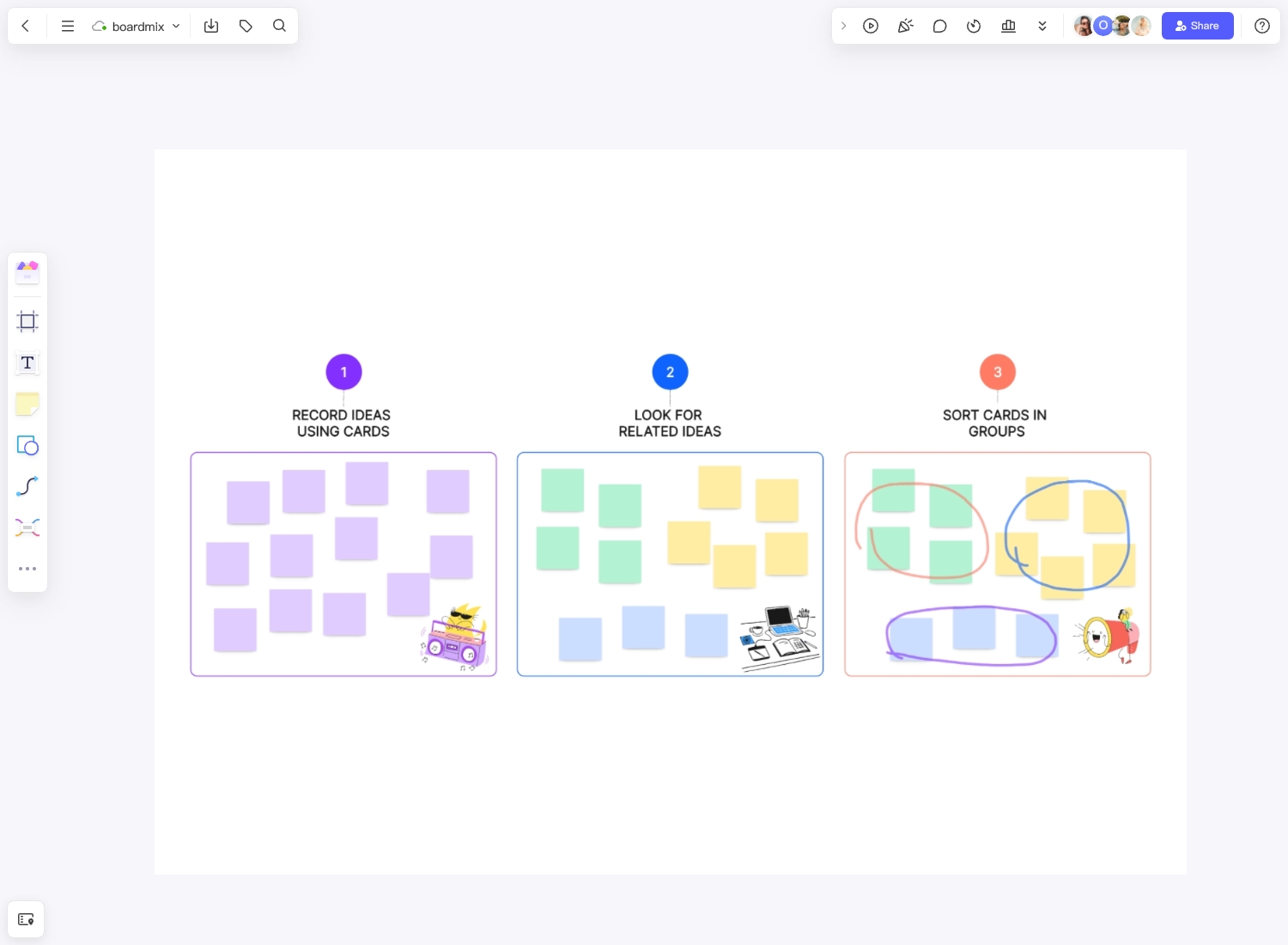
- Cluster deliberately. Leave time in the session specifically for grouping and labeling clusters — the insight usually comes from this step, not from the initial idea generation.
- Close the loop. A session full of sticky notes that never gets synthesized into a decision or action item is a missed opportunity — the notes are a means to clarity, not the end goal themselves.
How Boardmix Makes Digital Sticky Notes More Powerful
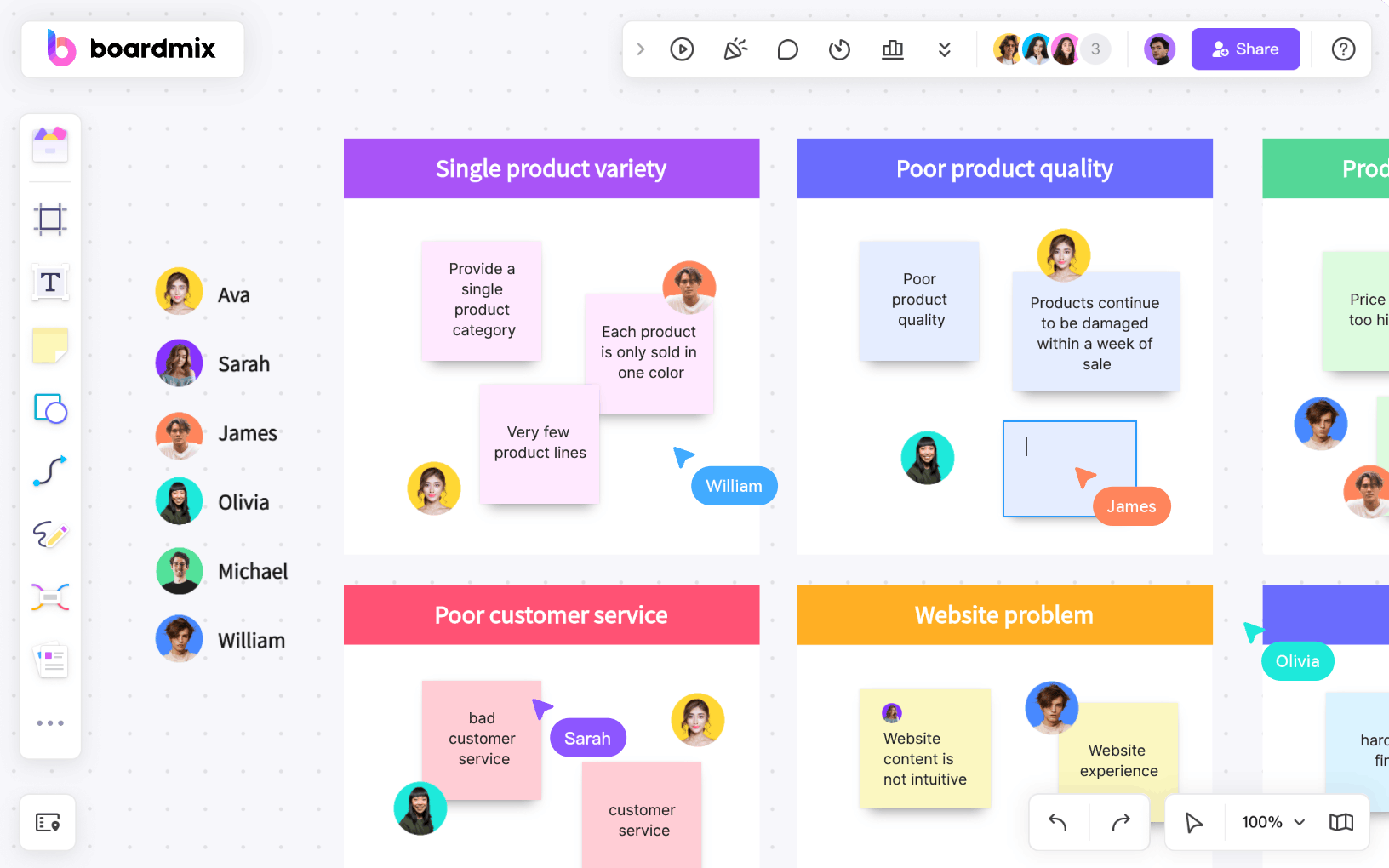
Boardmix treats digital sticky notes as a first-class tool on its infinite canvas, with several features designed specifically to support the strategic use cases above:
- Fast creation and color-coding: Notes can be created, colored, and organized in seconds, keeping the friction of capturing an idea as low as possible during fast-moving sessions.
- Templates for common frameworks: Boardmix includes ready-made layouts for SWOT analysis, prioritization matrices, and OKR planning, so teams can drop straight into structured sticky-note work instead of building the grid from scratch.
- AI-assisted clustering and summarization: For sessions that generate a large volume of sticky notes, Boardmix's AI can group similar notes into themes and summarize clusters — turning what would be a tedious manual sorting task into a quick starting point the team can refine together.
- Real-time collaboration: Every participant can add and move sticky notes simultaneously, with live cursors making group sessions feel closer to standing around a shared wall than clicking through separate individual documents.
- Voting directly on notes: Built-in dot voting lets teams prioritize a large set of sticky notes quickly, turning open-ended brainstorming into a clear, ranked outcome.
- Persistent, searchable boards: Unlike a physical wall, a Boardmix canvas full of digital sticky notes stays exactly as the team left it, ready to be revisited, referenced, or built upon in a future session.
The tool itself doesn't do the strategic thinking — that's still the team's job. But good digital sticky notes remove the friction between having a thought and getting it onto the canvas where it can actually be examined, compared, and acted on, which is often the real bottleneck in strategic work.
Frequently Asked Questions
Are digital sticky notes actually better than physical ones for strategy work?
For distributed teams, or for any session whose output needs to be revisited later, digital sticky notes offer clear practical advantages — persistence, searchability, and the ability to add structure like color-coding and voting. Some teams still prefer physical sticky notes for the tactile experience of an in-person session, but even then, many transcribe the results into a digital board afterward to preserve them.
How many sticky notes is too many for one session?
There's no fixed number, but if a board has grown large enough that the group can no longer visually scan it and spot patterns, it's usually time to cluster and synthesize before adding more. AI-assisted summarization can help manage this at scale, but even without it, scheduling a clustering pass partway through a large session keeps things from becoming unmanageable.
What's the biggest mistake teams make with digital sticky notes?
Treating idea generation as the finish line rather than the starting point. A board full of ungrouped, unprioritized sticky notes doesn't produce a decision on its own — the real value comes from the clustering, prioritization, and synthesis steps that turn raw ideas into a clear direction.
Can digital sticky notes work for individual strategic thinking, not just group sessions?
Yes. Many people use digital sticky notes solo to externalize their own thinking — drafting ideas, rearranging priorities, or mapping out a problem before bringing it to a team discussion. The same benefits of low-friction capture and spatial organization apply whether it's one person or a full team working on the canvas.
Final Thoughts
Digital sticky notes earn their reputation as a strategy powerhouse not because they're complicated, but because they're not. Their simplicity is what makes them fast enough to keep up with real thinking — capturing an idea, comparing it to others, rearranging the picture as understanding shifts, all without the friction of more rigid tools. The strategy work still has to happen in the team's heads; digital sticky notes just get out of the way and let it happen faster.
Try Boardmix's digital sticky notes for your next SWOT analysis, prioritization session, or OKR workshop, and see how much faster structured thinking moves when the tool isn't slowing you down.