



If you've worked on a remote or hybrid team in the last few years, chances are you've been invited to a "Miro board" at least once — whether it was for a sprint planning session, a brainstorm, or a customer journey map. Miro has become something of a shorthand for online whiteboarding, the way "Google it" became shorthand for search.
But Miro boards aren't right for every team, every budget, or every use case. This guide breaks down exactly what a Miro board is, what it's genuinely good at, where teams commonly run into friction, and how it compares to Boardmix — one of the most practical alternatives for teams that want the same core visual collaboration experience with an easier learning curve, more accessible pricing, and — for security-conscious organizations — the option of private deployment.
What Is a Miro Board?
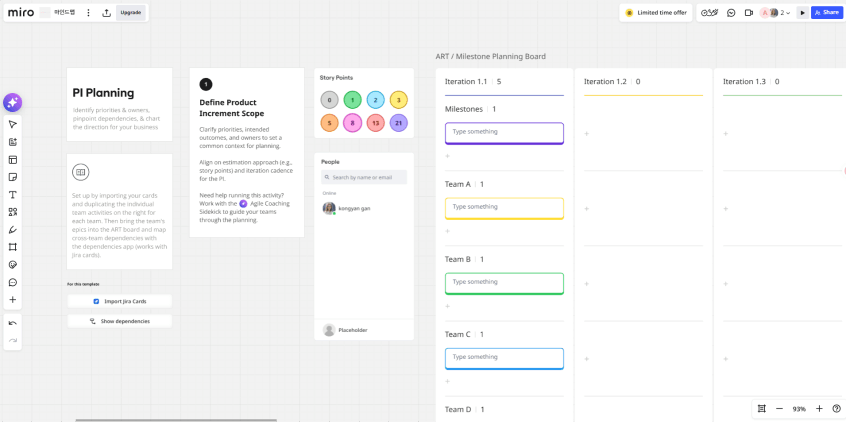
A Miro board is an infinite digital canvas where teams can add sticky notes, diagrams, images, documents, and other visual elements, then collaborate on them in real time. Think of it as a virtual whiteboard that never runs out of space — you can zoom in to focus on a single flowchart or zoom out to see an entire project mapped across dozens of frames.
Miro boards are commonly used for:
- Brainstorming and ideation sessions, where teams add sticky notes and group ideas visually.
- Agile ceremonies like sprint planning, retrospectives, and Kanban-style task tracking.
- Diagramming and flowcharts, from simple process maps to complex system architecture.
- Workshops and facilitation, using templates, timers, and voting tools to guide group sessions.
- Strategic planning, such as roadmaps, SWOT analyses, and OKR tracking.
- Design and product reviews, where teams can drop in mockups, wireframes, and feedback comments.
Miro's core appeal is its combination of an unlimited canvas with a massive template library and deep integrations — it plugs into tools like Slack, Jira, Asana, Google Workspace, and Microsoft Teams, which makes it easy to slot into existing workflows.
Key Features of Miro Boards
1. Infinite Canvas
Miro's canvas has no fixed boundaries, so teams can keep adding content without needing to create new files or worry about running out of room. This is especially useful for ongoing projects that evolve over time, like a product roadmap or a growing knowledge base of process diagrams.
2. Extensive Template Library
Miro offers thousands of templates covering everything from business model canvases to user persona templates to retrospective formats. For teams that don't want to design a layout from scratch, this is a significant time-saver.
3. Real-Time Collaboration
Multiple users can work on the same board simultaneously, with visible cursors, live comments, and @mentions. Miro also supports asynchronous collaboration well, with features like voting, timers, and video chat built into the board itself.
4. Integrations
Miro connects with a long list of third-party tools, allowing teams to embed Jira tickets, sync with Asana tasks, or pull in content from Google Drive directly onto the board. This breadth of integrations is one of Miro's strongest differentiators, particularly for organizations already running a complex stack of project management and communication tools.
5. Enterprise-Grade Admin Controls
For larger organizations, Miro offers granular permission settings, single sign-on (SSO), audit logs, and other governance features that IT and security teams often require.
Where Teams Run Into Friction with Miro
Miro is a genuinely capable platform, and for many enterprise teams, its depth of features is exactly what they need. That said, it's worth being clear-eyed about the trade-offs that lead some teams to look for alternatives:
- Pricing scales quickly. Miro's free plan is limited in the number of editable boards, and paid tiers can get expensive as team size grows — particularly once you need features like advanced permissions or unlimited boards.
- Feature depth can mean complexity. New users sometimes find Miro's interface has a learning curve, especially with the sheer number of tools, panels, and template categories available.
- Performance on large boards. Some users report that boards with a very high volume of elements can feel slower to navigate, particularly on lower-powered devices.
- Data residency and deployment constraints. Miro is a cloud-hosted SaaS product, so organizations with strict data residency requirements or a need to keep data entirely within their own infrastructure have limited flexibility here.
- Not all teams need enterprise-level features. Smaller teams or startups sometimes find themselves paying for admin and governance tools they don't use, when what they really need is a simple, fast collaborative canvas.
None of this means Miro is a bad product — for many organizations, it's the right tool. But it does explain why "Miro alternatives" is such a common search, especially among smaller teams, budget-conscious startups, regulated industries with strict data policies, or anyone who wants a simpler onboarding experience.
The Best Miro Alternative: Boardmix
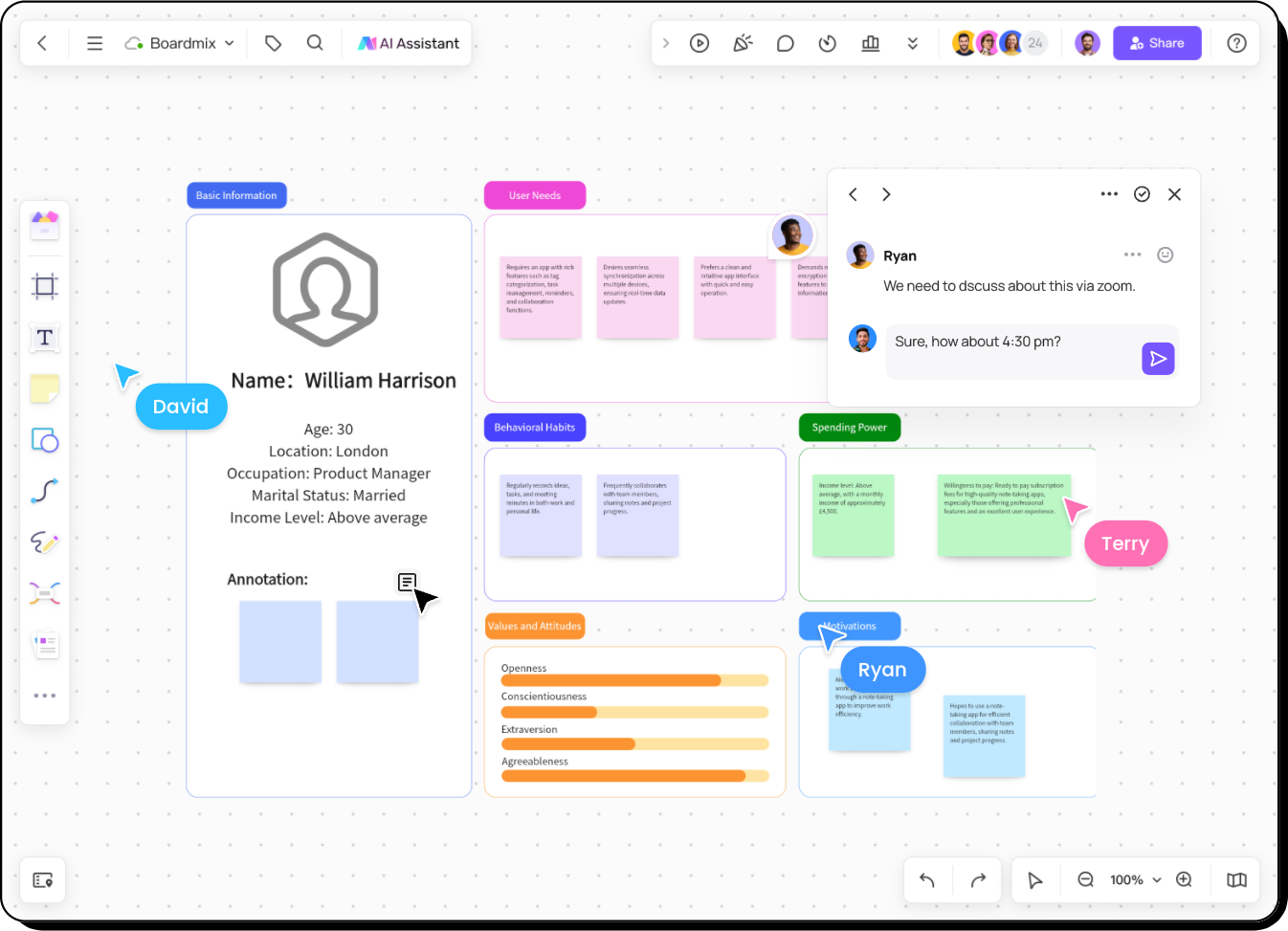
Of the tools built to solve the same problem as Miro, Boardmix has become one of the most complete alternatives — largely because it aims to cover the same core workflow (infinite canvas, templates, real-time collaboration) while also addressing two areas that matter a lot to specific groups of teams: cost-conscious onboarding, and enterprise-grade data security through private deployment.
Here's what stands out about Boardmix for teams coming from, or evaluating against, Miro:
1. A Comparable Free Plan, More Affordable Room to Grow
Both Miro and Boardmix offer a similar starting point on their free plans, with each providing up to three editable boards at no cost — enough for individuals and small teams to explore templates, run a handful of sessions, and get a real feel for the collaboration experience before committing to a paid plan. Where the two diverge is in what happens next: as teams grow past that initial free allowance, Boardmix's paid tiers are generally positioned as a more affordable step up, which is why many teams outgrowing their free plan look to Boardmix rather than upgrading directly within Miro.
2. Private Deployment and SDK for Enterprise Security
This is one of the clearest differentiators between the two platforms. Miro is offered exclusively as a cloud-hosted SaaS product, which works well for most teams but can be a blocker for organizations with strict data residency requirements, regulated industries (finance, healthcare, government), or internal policies requiring on-premise infrastructure.
Boardmix offers a private deployment option, allowing organizations to run the platform within their own infrastructure rather than relying solely on the public cloud. It also provides an SDK for teams that want to embed whiteboard functionality directly into their own internal tools or products. For security and compliance teams evaluating collaboration software, this gives Boardmix a meaningfully different value proposition than Miro — less about the number of integrations, and more about control over where data lives and how the tool is embedded into existing systems.
It's worth noting that Boardmix isn't behind on standard enterprise controls either — SSO and audit/log controls are available on its enterprise plans as well, so security-conscious teams aren't trading away baseline governance features to get private deployment; they're gaining an additional deployment option on top of them.
3. Combined Sketching and Structured Diagramming
Boardmix lets teams freehand sketch and build precise, connector-based flowcharts, UML diagrams, and org charts on the same canvas. This means teams don't need to switch between a sketching tool and a diagramming tool depending on the task at hand.
4. Built-In AI Assistance
Boardmix includes AI-assisted diagram generation — turning a text prompt into a flowchart or mind map — as well as AI summarization for sticky notes. This is particularly useful for speeding up workshop facilitation, turning a messy brainstorm into an organized output without a lot of manual cleanup.
5. A Shorter Learning Curve
Miro's depth is a strength for power users, but it can be a lot to absorb for someone joining their first board session. Boardmix is designed with a simpler interface, so new team members and workshop participants can start contributing within minutes rather than needing a walkthrough.
6. Real-Time Collaboration That Scales with Teams
Multiple users can co-edit a Boardmix board with live cursors, comments, and permission controls — the same collaborative core that makes tools like Miro useful for distributed teams — along with workspace organization for managing multiple boards across projects.
7. A Solid Template Library
Boardmix offers templates across common use cases — brainstorming, agile ceremonies, mind mapping, business planning, and more — so teams aren't starting from a blank canvas for recurring workflows.
8. Cross-Platform Access
Boardmix is available via browser desktop app, and ipad, supporting teams that work across different devices and locations.
For teams that want the essential visual collaboration experience — canvas, templates, real-time editing, AI assistance — plus the option of private deployment for stricter security needs, Boardmix is generally one of the most complete alternatives to start with.
Miro vs Boardmix: Detailed Comparison
| Feature | Miro | Boardmix |
|---|---|---|
| Infinite Canvas | Yes | Yes |
| Free Plan | 3 free editable boards | 3 free editable boards, with more affordable paid tiers to scale up |
| Template Library | Very extensive (thousands of templates) | Broad coverage across common use cases |
| AI Features | Yes (AI diagramming, summarization) | Yes (AI-generated flowcharts/mind maps, summarization) |
| Learning Curve | Moderate to steep, given feature depth | Shorter, designed for quick onboarding |
| Third-Party Integrations | Extensive (Jira, Slack, Asana, etc.) — a core strength | Core integrations, growing over time |
| SSO & Audit Logs | Yes | Yes |
| Deployment Options | Cloud-hosted SaaS only | Cloud-hosted, plus private/on-premise deployment — a core strength |
| SDK for Embedding | Limited | Yes |
| Best For | Large enterprises needing deep tool integrations | Teams wanting an affordable, easy-to-learn whiteboard — or enterprises with strict data security/on-premise requirements |
The honest takeaway: Miro's edge is the breadth of its integration ecosystem — if your workflow depends on syncing deeply with Jira, Asana, or a dozen other tools, that maturity is hard to beat. Boardmix's edge on the enterprise side is different but equally important for some organizations: private deployment and SDK access give security and compliance teams a level of infrastructure control that a pure SaaS product like Miro doesn't offer, while still matching Miro on baseline governance features like SSO and audit logs.
Real-World Use Cases: Which Tool Fits Best
Startups and Small Teams on a Budget
For early-stage startups that need visual collaboration without a large software budget, Boardmix's free plan and lower-cost paid tiers typically offer more usable value than Miro's free plan, which can feel restrictive once a team starts running regular sessions.
Enterprise Teams with Complex Integration Needs
Organizations that rely heavily on integrations with Jira, Slack, and other tools in their daily workflow will likely find Miro's integration ecosystem hard to beat.
Enterprises with Strict Data Security or Compliance Requirements
Organizations in regulated industries, or those with internal policies requiring data to stay within their own infrastructure, are a case where Boardmix's private deployment option becomes a decisive advantage — something a cloud-only platform like Miro cannot offer regardless of its other enterprise controls.
Remote Teams Running Frequent Workshops
Teams running frequent brainstorms, retrospectives, or planning sessions benefit from AI-assisted features that speed up documentation. Both Miro and Boardmix offer AI tools here, making either a solid choice — the deciding factor often comes down to budget and team size.
Teams Needing Both Sketching and Precise Diagrams
For teams that move between rough sketches and structured flowcharts or UML diagrams, Boardmix's combined toolset on a single canvas can reduce the need to switch between multiple apps.
Products Wanting to Embed Whiteboard Functionality
Teams building their own internal tools or customer-facing products that need embedded canvas functionality can use Boardmix's SDK, which isn't something Miro offers in the same way.
Frequently Asked Questions
Is there a truly free Miro alternative?
Yes. Boardmix offers a free plan that includes core whiteboard functionality, templates, and collaboration features, making it a practical option for individuals and small teams before committing to a paid plan.
Is Boardmix as powerful as Miro?
Boardmix covers the core features most teams use day-to-day — infinite canvas, templates, real-time collaboration, and AI-assisted diagramming. Miro has a broader third-party integration ecosystem, which matters most for organizations with complex, multi-tool workflows. Boardmix, in turn, offers private deployment and SDK access, which Miro doesn't provide as a cloud-only product. Which one is "more powerful" really depends on whether your priority is integration breadth or infrastructure control.
Can I import my existing Miro boards into Boardmix?
Yes. Boardmix supports importing boards from Miro, which makes switching over considerably easier for teams migrating existing projects, templates, and diagrams rather than needing to rebuild them from scratch.
Does Boardmix support private or on-premise deployment?
Yes. Boardmix offers a private deployment option, allowing organizations to run the platform within their own infrastructure — a useful feature for companies with strict data residency, compliance, or internal security requirements. This is offered alongside standard enterprise controls like SSO and audit logs.
Which tool is easier to learn: Miro or Boardmix?
Boardmix is generally considered to have a shorter learning curve, since its interface is designed around getting new users creating and collaborating quickly. Miro's larger feature set offers more depth but can take longer to fully explore.
Does Boardmix support agile workflows like sprint planning and retrospectives?
Yes. Boardmix includes templates and tools suited for agile ceremonies, including Kanban boards, retrospective formats, and sprint planning layouts.
Should I choose Miro or Boardmix for my team?
If your organization depends on deep integrations with tools like Jira and Slack as part of daily workflows, Miro's ecosystem is a strong, mature choice. If you're a smaller team wanting an easier-to-learn, more affordable tool — or an enterprise with strict data security requirements that need private deployment — Boardmix is worth trying first.
Final Thoughts
Miro earned its reputation as a leading online whiteboard for good reason — its template library, integration ecosystem, and cloud collaboration features make it a strong fit for organizations with complex, multi-tool workflows. But "best" always depends on your team's size, budget, and — increasingly — your organization's data security requirements.
If you're a smaller team looking for a more affordable and easier-to-learn visual collaboration tool, or an enterprise that needs the added control of private deployment and SDK access, Boardmix is worth a serious look. And since Boardmix supports importing boards directly from Miro, switching over doesn't mean starting from scratch.
The best way to know which tool fits your team is to test it on a real project. Try Boardmix's free plan and see how it compares for your next brainstorm, planning session, or diagram.