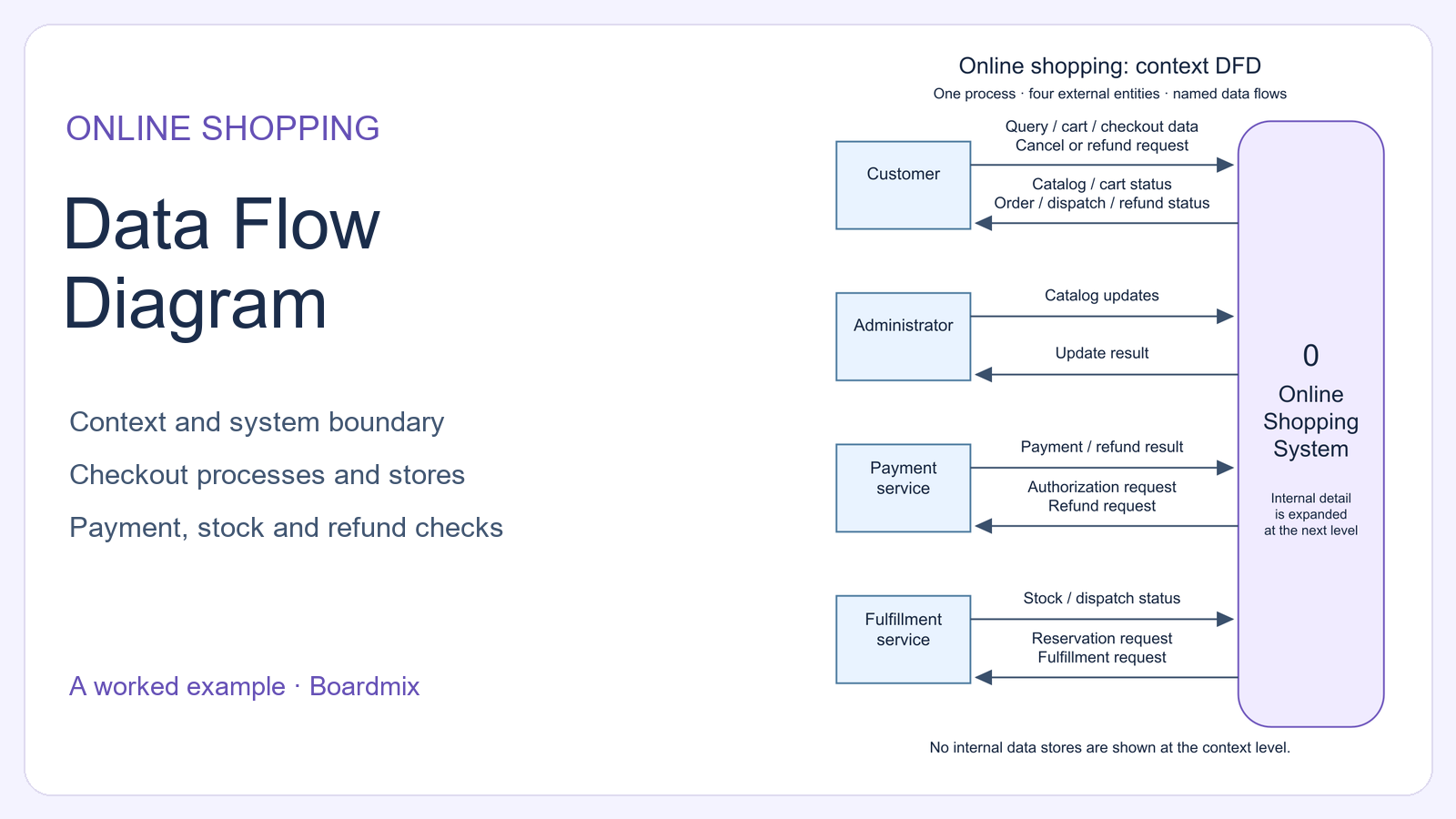
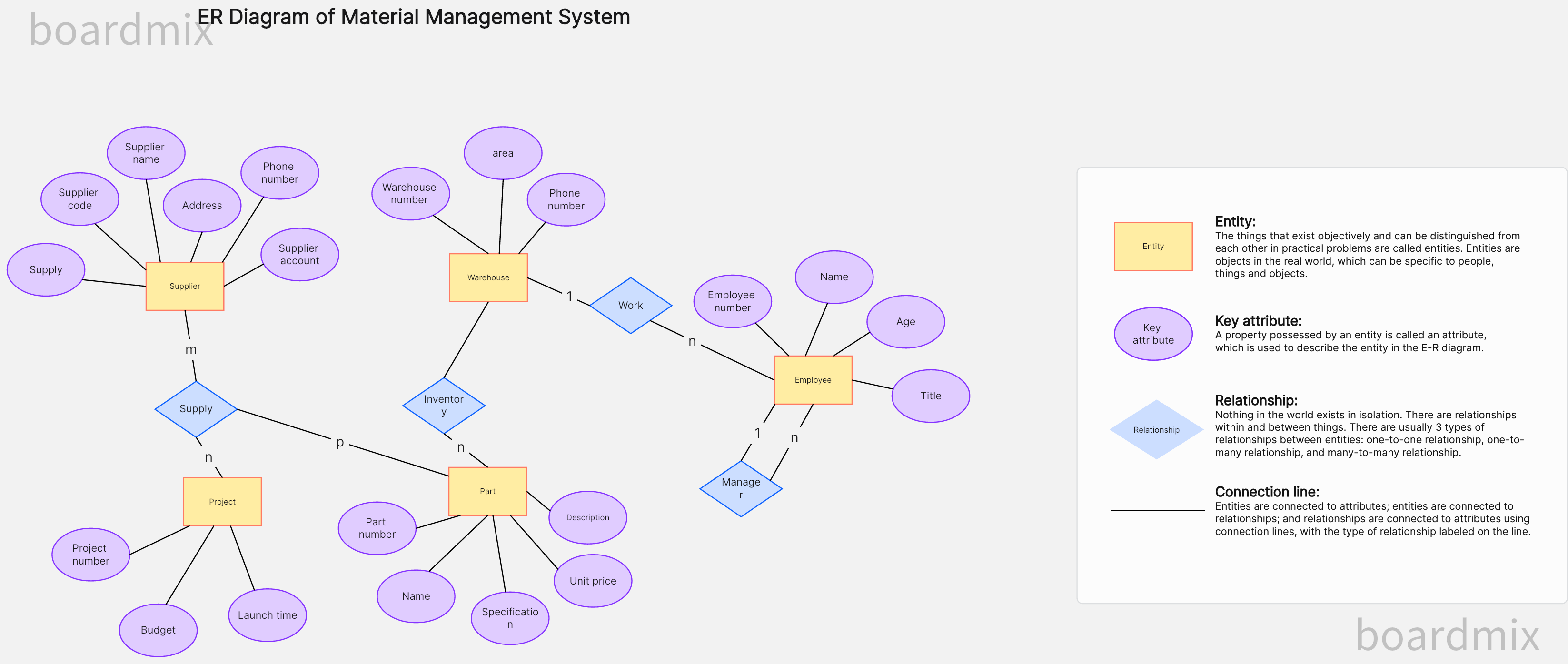
A purchasing and procurement process flowchart shows how a need becomes an authorized order, a delivery, and a settled invoice. Put each activity in the responsible team's lane, connect the handoffs, and show what happens when a request is incomplete, a delivery is short, or an invoice does not match.
You can map this workflow with the Boardmix flowchart maker. Start with your current process, then use the office-equipment example below to make decisions and handoffs explicit. The same structure can be adapted to goods or services without assuming that every organization has the same approval rules.
What is Procurement Process Flow?
The procurement process flow refers to the sequential steps that an organization undertakes when procuring goods or services. It encapsulates all stages of a procurement journey, from identifying needs and sourcing suppliers to contract negotiations, delivery, and evaluation.
While the specifics of this flow may vary from organization to organization, the aim remains consistent: acquire the necessary goods or services in a timely, cost-effective, and efficient manner.

Types of Procurement Process
Procurement can be classified by what is bought and how it supports the business. Direct and indirect describe its use; services describe the nature of the purchase, so these categories can overlap.
1. Direct Procurement Process
This type primarily deals with purchasing raw materials or goods directly used in the production of products or services. Direct procurement is mission-critical as it directly affects the production process and impacts the company's bottom line.
2. Indirect Procurement Process
Indirect procurement refers to acquiring goods or services not directly involved in production but essential for day-to-day operations, like office supplies, cleaning services, or software subscriptions. While not directly linked to production, efficient management of indirect procurement can result in significant cost savings.
3. Service Procurement Process
Service procurement relates to procuring professional services that are crucial for an organization's operations. This might include legal services, consulting, marketing, IT services, among others. It's vital to manage service procurement strategically since the quality and efficiency of procured services directly impact business performance.
What's the Difference between a Purchasing Process and a Procurement Process?
The terms purchasing and procurement are often used interchangeably, but they represent distinct processes within an organizational context.
The purchasing process usually refers to the transactional work of requesting, ordering, receiving, and paying for goods or services. Procurement has a broader scope: it also covers defining requirements, choosing suppliers, negotiating terms, managing risks, and reviewing supplier performance.
Define which part you are drawing before choosing the start and end. A request-to-payment chart can end when an invoice is settled; a sourcing chart may end when a supplier is selected. Connecting those two processes at a named handoff is clearer than putting every supplier-management activity into one crowded diagram.
Worked example: buying office chairs, including a short delivery
Consider a fictional team buying 12 chairs for a new office area. The supplier is already selected. The map starts with a purchase request and ends when the agreed delivery and payment are complete. Use five lanes: Requester, Budget owner, Purchasing, Receiving, and Accounts payable. These are example responsibilities, not a required organizational structure.
- Requester — describe the need. Submit the chair specification, quantity of 12, delivery location, and required date. If the specification is missing, the request goes back to the requester for that information; it does not advance as an approved purchase.
- Budget owner — record the decision. Review the request under the organization's actual approval rules. An approval goes to Purchasing with the approved scope. A rejection returns to the requester with the reason and closes this request. A request for more information remains open and returns for completion. The purchase approval workflow example shows these three outcomes in more detail.
- Purchasing — issue the order. Create a purchase order for the approved 12 chairs and the agreed terms. Send it to the supplier and give Receiving the order reference and expected delivery details. If the quantity or agreed price changes before ordering, return the changed scope to the relevant approver instead of treating the old decision as permission for a different purchase.
- Receiving — record what actually arrived. Suppose the first delivery contains 10 chairs. Record 10 received, keep the remaining 2 outstanding, and send that receipt information to Purchasing and Accounts payable. Do not mark the whole order complete because a delivery occurred.
- Accounts payable — compare the documents. Suppose the supplier invoices for all 12 chairs. Compare the invoice with the order and the receipt record. In this example, the quantity difference is sent to Purchasing for resolution, and the invoice remains unresolved under the team's chosen process.
- Purchasing and Receiving — resolve the difference. Purchasing confirms that the supplier will deliver the remaining 2 chairs. Receiving records that second delivery when it happens and passes the updated receipt record to Accounts payable. If the supplier instead proposes an amended order or invoice, show who agrees to that change and which document is updated.
- Accounts payable — complete the payment step. After the discrepancy is resolved and the required approval is recorded, process payment according to the agreed terms. Record the payment reference and close the settled invoice. Purchasing closes the order only when the delivery obligations are also complete.
Comparing the purchase order, goods receipt, and invoice is commonly called a three-way match. SAP's procure-to-pay overview explains this document relationship. The workflow above is a drawing example; the handling of partial deliveries and payments should reflect the organization's actual terms and process.
On the diagram, label the return paths as well as the forward path: “Information missing,” “Not approved,” and “Invoice quantity differs.” Send each one to the person who can act on it. A single arrow labelled “Issue” does not explain whether the requester, buyer, receiver, or supplier needs to do something.
Why You Need a Flowchart for Purchasing & Procurement Process?
Navigating through these steps can become increasingly challenging without a well-structured system. Here's where a purchasing & procurement process flowchart becomes instrumental.
A process flowchart visually represents the sequential steps in a process, making it easier to understand and manage. By visually mapping out your purchasing & procurement operations, you can reap multiple benefits:
- Clear handoffs: See who receives the request, order, receipt, or invoice at each step, and identify work without a clear recipient.
- A common procedure: Compare how teams actually handle the same request and agree on the intended sequence and exceptions.
- More focused investigation: Add observed waiting times or return reasons to the relevant steps. The drawing locates the work; those records help explain where delays occur.
What Are the Three Key Components of the Procurement Process Flowchart?
When constructing a procurement process flowchart, three critical components should always be in focus: people, process, and paperwork. Understanding these components is fundamental to creating an effective and efficient flowchart.
People
At the heart of every procurement process are the people who bring it to life. They are the decision-makers, negotiators, and managers who identify needs, source suppliers, evaluate proposals, negotiate contracts, and ensure delivery.
Key individuals in a procurement process may include procurement officers, managers, financial analysts, contract specialists, and internal stakeholders from departments requiring procurement.
Understanding the roles and responsibilities of each of these individuals will greatly aid in the design of your procurement process flowchart. It is crucial to involve them in the creation process to accurately capture their tasks and decision-making authority at each step.
Process
The process refers to the sequence of steps undertaken during procurement, from identifying a need through to evaluation and feedback after delivery. It involves decision-making at various stages and requires a clear delineation of responsibilities.
Understanding the sequence and specifics of your organization's procurement process is crucial for designing an effective flowchart. A well-defined process contributes to smoother operations, increased efficiency, improved supplier relationships, and potential cost savings.
Remember, every organization's procurement process may vary based on its specific needs, size, industry regulations, and strategic goals. Therefore, your flowchart should be tailored to fit these unique circumstances.
Paperwork
Documentation connects a request with the decisions, orders, deliveries, and payments that follow. It helps teams understand what was agreed and investigate a discrepancy. The documents and retention requirements should follow the organization's applicable policies.
The paperwork in procurement can include purchase orders, invoices, contracts, delivery receipts, and evaluation reports. In your flowchart, you'll need to identify where these documents come into play and who's responsible for their completion and approval.
While paperwork can be time-consuming and cumbersome, it is integral to the procurement process. Advances in technology have enabled many organizations to move towards digitizing this aspect - leading to increased efficiency and accuracy.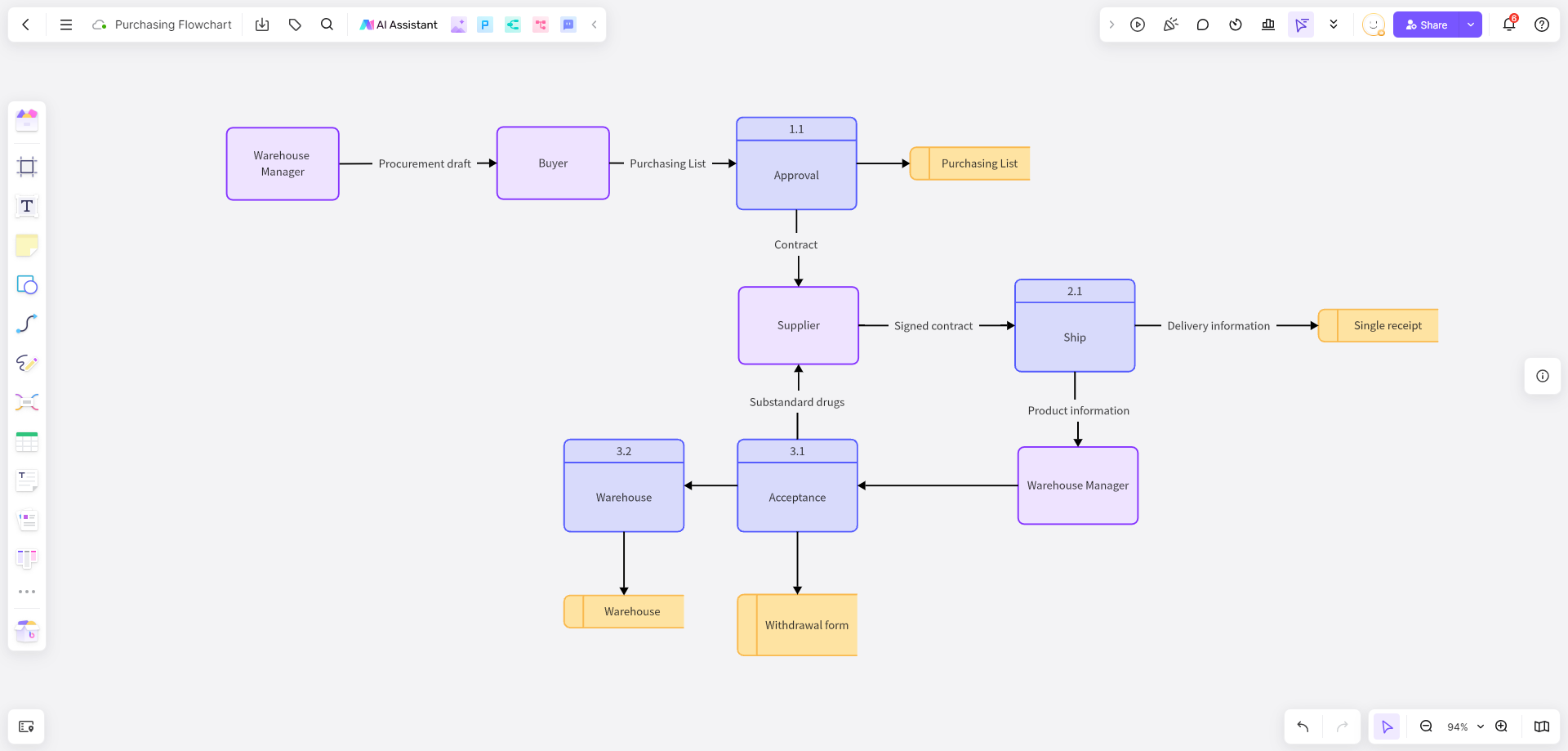
7 Steps to Create Your Purchasing & Procurement Process Flowchart
The steps below turn the process into a diagram your colleagues can follow. Use the same real request throughout the discussion so the map reflects actual handoffs.
Step 1: Identify the Steps in Your Procurement Process
The first step in creating a flowchart is to understand the specific processes involved in your organization's procurement. This should include all the tasks from start to finish, such as identifying needs, selecting vendors, negotiating contracts, making purchases, receiving goods or services, processing invoices, and maintaining records.
Every organization has unique operations; hence, it's crucial to adapt this list according to your context. Seek input from various team members who are part of the procurement process to ensure all stages are covered accurately.
Step 2: Sequence the Steps
Order the activities as they actually happen and assign each one to a responsible role. In the chair example, Receiving records a delivery before Accounts payable can compare the received quantity with the invoice. Draw the missing-information and discrepancy routes while arranging the main path, not as an afterthought.
Step 3: Choose Flowchart Symbols for Each Step
Flowcharts use standard symbols to depict various aspects of a process. Choosing suitable symbols for each step of your procurement process will enhance the readability and understandability of your chart. Some commonly used symbols are:
- Rectangles for actions or processes
- Diamonds for decision points
- Ovals for the start or end points
- Arrows to indicate the directional flow
Each symbol has a unique implication, so choose wisely.
Step 4: Draw the Flowchart
In Boardmix, arrange the responsible roles in lanes, add a shape for each activity, and connect them in order. Begin with the starting event, such as “Purchase request submitted.” Use rectangles for work and diamonds for questions such as “Required information complete?” Label each outgoing decision path and connect it to a specific next activity.
Remember, your flowchart should be simple and clean. Avoid cluttering it with too many details.
Step 5: Validate and Review Your Flowchart
Ask people from the relevant roles to trace one completed request and one exception. For the chair example, follow the first receipt of 10 chairs and the invoice for 12. The map should show who sees the discrepancy, who contacts the supplier, and what allows the invoice to move forward.
Revise your chart based on feedback received and review it one last time before finalizing. This iterative process helps ensure that your final flowchart is an accurate and effective representation of your procurement process.
Step 6: Share and Implement Your Flowchart
After finalizing your flowchart, share it with relevant team members. Provide training sessions if required, to ensure everyone understands how to interpret the chart. Implement it as part of your procurement strategy and regularly update it as your process evolves.
Step 7: Assign ownership and keep the map current
Name a person or team responsible for maintaining the process map. Keep the current version accessible beside the request instructions, and record the scope and date of important changes. When approval authority, supplier arrangements, or receipt handling changes, update the affected activities and the information passed between roles.
Keep a proposed improvement separate from the current process until it is agreed. For example, if you want Receiving to send receipt details directly to Accounts payable, show that as a proposed handoff until both teams have a working way to exchange the information.

Visualizing Your Procurement Process with Boardmix
Purchasing & procurement flowchart process visualization using tools like Boardmix is a powerful way to manage your operations strategically. The clear visuals can help you streamline the process and spot potential bottlenecks or efficiencies.
Start with one purchase your team recognizes. Put its request, authorization, order, receipt, and invoice beside the relevant steps on the board. Then ask the people doing the work to explain each handoff. The useful result is a shared picture of what happens next, including when the purchase does not go as planned.